Many folks are rediscovering the joy of small-caliber firearms for recreational shooting and hunting, but the greatest value of the rimfire for many students is their stand-in role for practical pistol training
by Bob Campbell
Understudy. Backup. Reserve. Alternate.
They all mean different things.
An understudy, by definition, is an alternate actor who rushes in to fill a role when the primary cannot because of some calamity. Many shooters regard the .22 rimfire as a great understudy for training. It is, but the .22 is also a great standalone for many types of recreational shooting and hunting. I think that most shooters have owned the .22 simply as a matter of course. It is what shooters do. Unfortunately, the more modern shooter seems to have forgotten these lessons. Truth be told, I had as well. I was spoiled by inexpensive centerfire ammunition. Then the pandemic and panic buying came along and sent ammunition prices through the roof. I was scraping to find enough ammunition for training classes, and even so, my students were getting scalped.
When I wasn’t on the couch for 26 days with Covid, I was bemoaning the price of ammunition. But when I was back up and rolling, I could care less about the price of anything as long as I could breathe and move. (Considering my retirement account took a 35-percent, hit ammunition cost wasn’t the biggest heartache.) Yet one smart thing for which I can boast is that over the previous few years, I had put up a ton of 22 LR ammunition — even a brick or two of 22 Short. I had about 5,000 rounds of easily storable rimfire ammunition with only a few hundred dollars invested.
The concept of understudy began to mean more.
The company guns used by students included a Ruger 22/45, Browning Buckmark, and Colt Official Police .22. I was in like Flynn. The students were shooting and having a good experience, and I had some time to ponder the effectiveness of the understudy gun.
With ammunition prices stable — even attractive in some locales — now seems a good time to examine the value of the understudy gun and the right way to utilize the .22 for training. The .22 is a fine target gun, and if simple plinking is your goal, that’s fine. But there is a process or procedure to follow to reap maximum benefit from .22 training. I have been spending more time with my .22s and enjoying it a great deal. I haven’t forgotten how much fun a rimfire can be; I simply had not been applying the logic of rimfire training as I should have. Along the way, I rediscovered a few things about the .22.
Rimfire Twins?
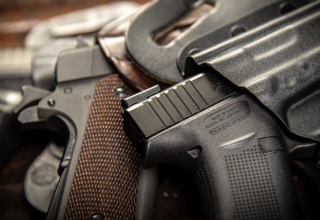
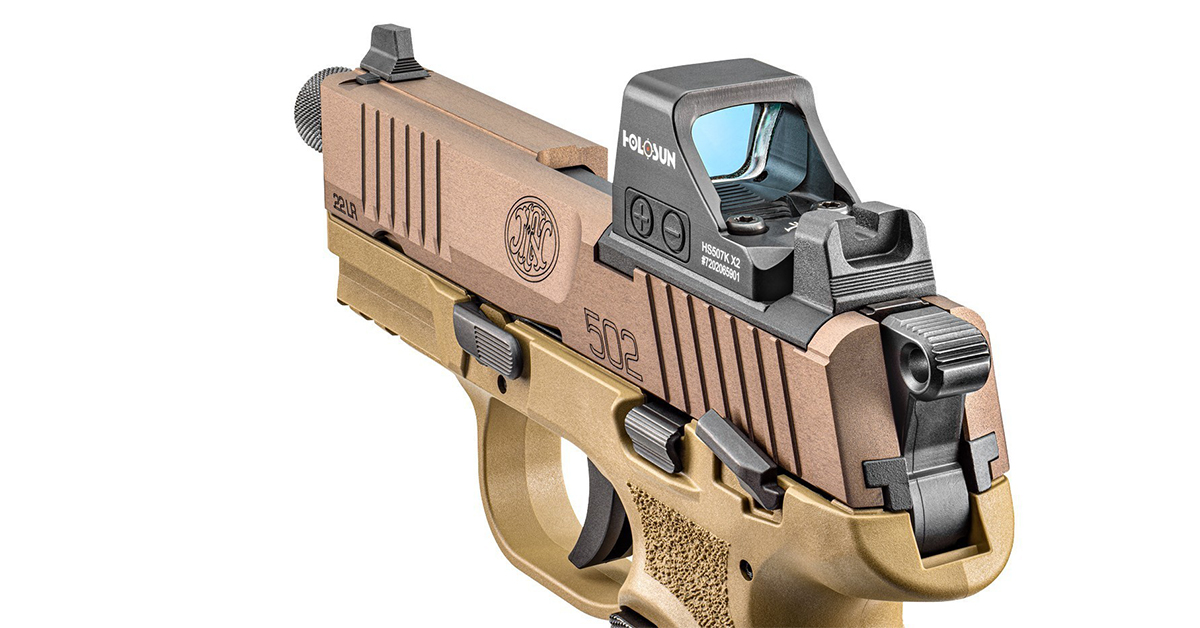
It isn’t a bad idea to have a .22 as close as possible to your primary centerfire handgun. A Glock 44 .22 pistol is a good idea, but it isn’t optics ready. That puts a damper on our plans if your carry gun is fitted with a carry optic. Whatever the carry gun, a SIG P322 or FN 502 is an excellent substitute for a striker-fired polymer frame 9mm. These are hammer fired guns that make a good choice for training in the general polymer frame configuration. Each is optic-ready. The guns should be close in fit and feel to the carry gun, but they don’t have to be identical. It isn’t feasible to own an understudy with the exact same weight, heft, trigger action, and sights as the centerfire handgun.
Then there are the .22 conversion units. Some are better than others. Overall, I don’t like them. I would rather own two guns than a gun and a unit. You may easily use each gun on the same range trip without the necessity of changing the gun over to one or the other. You may wish to carry your 9mm to the range and train with the .22. Seldom is a rimfire conversion unit as reliable as a rimfire firearm.
There are good choices for those preferring a metal frame .22. If you own a Browning Buckmark or Ruger Mark V .22 set up for an optics rail, you may adapt a red dot sight to the pistol. I don’t like the Weaver type mount. I prefer the Rucker Machine mount for the RMR footprint. I mounted a Hi-Lux red dot sight to the Buckmark with excellent results. The sight picture closely resembles my carry optics. This is a superb-handling pistol. Often, a simple tool invented by a talented craftsman transforms a firearm. The Rucker Machine mount is one of these. Don’t go cheap on the understudy’s optics. The SIG P322 features the RMSc footprint Hi-Lux enclosed emitter red dot sight. This sight is enclosed in a metal frame to prevent damage. It is a formidable setup for a 9mm and makes for a good understudy.
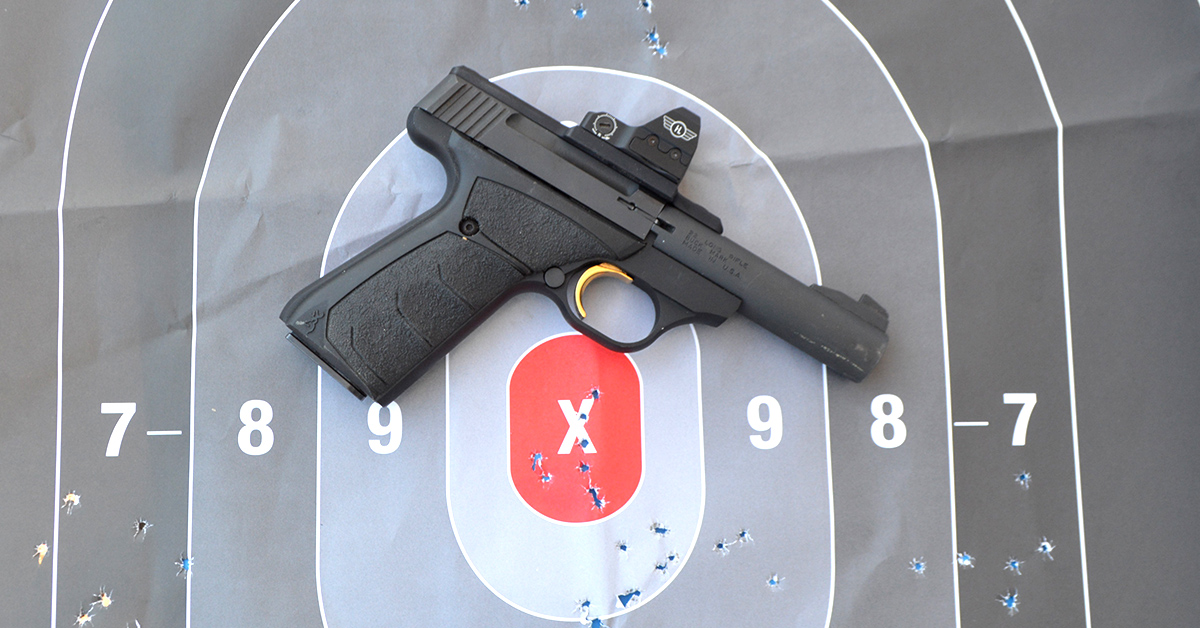
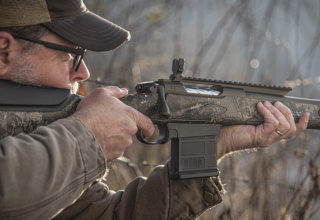
Another piece I use often is the Ruger .22 Charger. The Charger, with its short, stiff barrel, is usually as accurate as the average Ruger 10/22. I mounted a Riton Optic on it. The Riton features several reticle options. It is middle-of-the-road affordable and works well. I find this a great understudy to the AR pistol or even the AR carbine.
Ruger X magazines are famously reliable. This little firearm is a joy to shoot and a great aid in learning to quickly get on target. My favorite is the stabilizing brace version. These .22s aren’t just starter guns or beginner’s guns; they are suitable for use by professionals in tactical training.
How To Train the Right Way With a .22
Skill-building exercises must be as complete as time, finances, and motivation allow. Put some work into training! Push yourself. If you are going to make a mistake, training is the time to do so.
The obvious advantage of the .22 is low cost. That is a given. The .22 has little recoil impulse, which is another advantage. Is training with the rimfire worthwhile without the flash and blast of a centerfire firearm? Yes! Rimfire training is valid, providing the student follows the proper course. The primary requirement is that the student keeps a firm grip on the firearm and treats it with the same diligence as a centerfire firearm. Some tend to release the grip’s pressure and not exert as much effort in controlling the firearm. That isn’t the way to train. You may end up not gripping the centerfire properly. During training, be certain to keep a firm and steady grip. Use the same grip and trigger press as with the centerfire firearm and you will profit from training. Work just as hard with the .22 as you do with the centerfire handgun or rifle.
Reliability
Reliability is the bane of the 22 LR cartridge. With its heel-based lead bullet, rimfire priming, and often dirty powder, the 22 LR doesn’t fare as well as we would like in self-loading actions; however, some firearm and ammunition combinations are very dependable.
The development of high-quality loads such as the Federal Auto Match goes a long way in increasing reliability. Not long ago, I went 1600 rounds in training with this load without a single failure to feed, extract, or fire. That is something of a record for the rimfire.
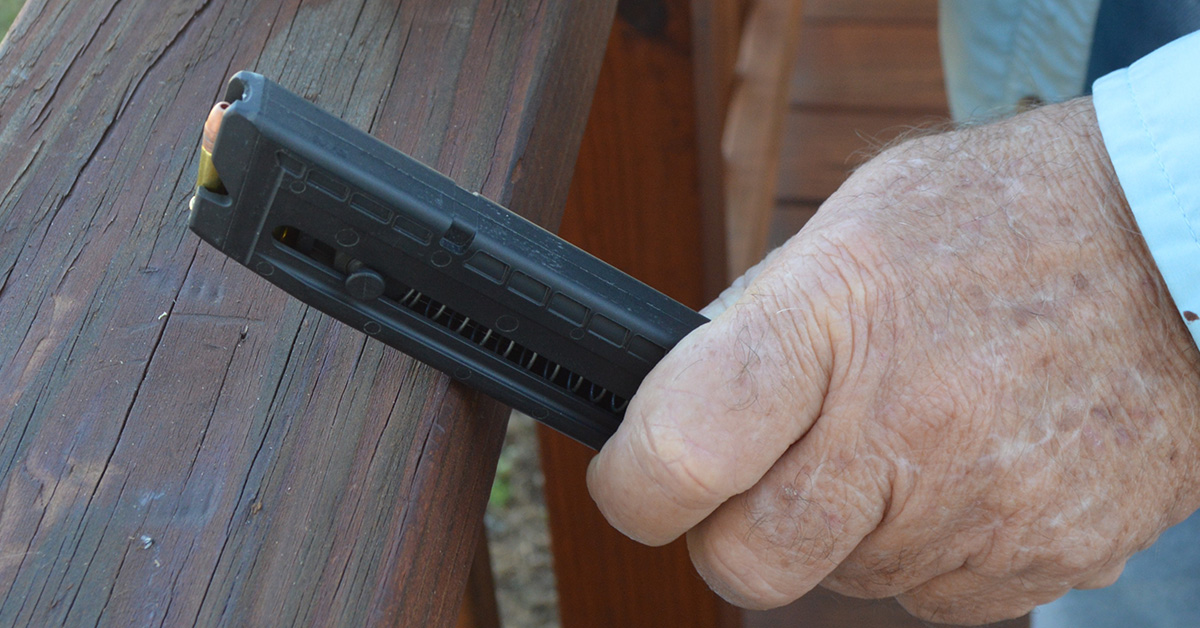
Properly loading magazines is another requirement. As an example, when loading the P322 magazine, I load one at a time. I don’t run the follower to the bottom and dump all 20 cartridges into the magazine. After loading one cartridge at a time for four or five rounds, I tap the back of the magazine against a table or board and seat the cartridges. I follow the same procedure for Ruger X magazines. This provides excellent reliability. Just the same, there will be occasional failures of the primer to ignite and less often the heel-based bullet will tilt in the case and tie the gun up. Use this as an opportunity to practice malfunction clearance drills.
Training Scores
It is tempting to machine gun the target with a light recoiling .22. That’s OK sometimes for recreational shooting. In training, the cadence of fire should not exceed what you are capable of with the centerfire rifle or handgun. Put a limiter on your speed in this situation. The .22 offers every advantage in training save one. You may learn trigger press, grip, sight picture, speed to a first shot hit, and even the presentation. You won’t learn as much about recoil control. Don’t speed through a magazine because you can. Keep speed aligned with your best times with the centerfire and learn to work the trigger and keep a good sight picture.
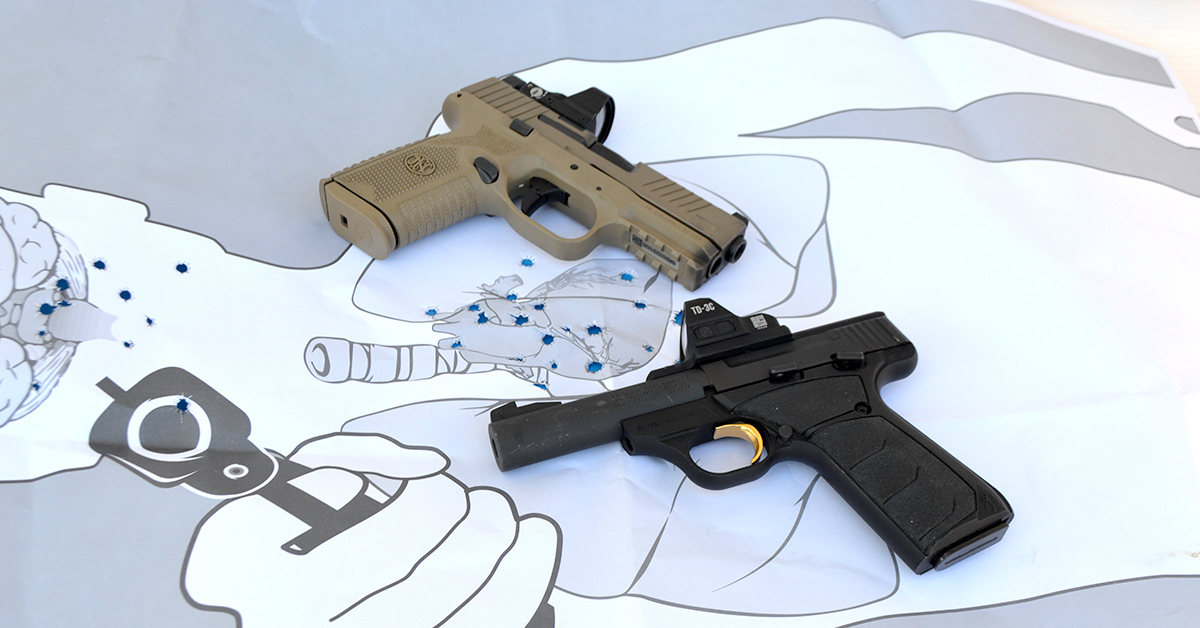
I recently fired the SIG P322 .22 and FN 509 9mm against the other. I fired as quickly as possible while maintaining good accuracy with the FN 9mm but paced myself with the SIG .22. Results were very good. Sometimes I fire the .22 first but usually the .22 is fired in one range trip and the 9mm on the other. Occasionally, I fire the 9mm right over my .22 results on the same target. The goal is to train not to shoot the .22 faster than the 9mm. The objective is consistency in picking up the sight picture and speed to a first shot hit. Keep that in mind as you practice and concentrate on accuracy. You will see a real difference in performance with centerfire guns in a few weeks. You may also cure any flinch —involuntary tightening of muscles in anticipation of recoil — you have picked up.
One caution: don’t start thinking that the .22 rimfire is fine for personal defense as you become self-impressed with your results. The .22 is not adequate for personal defense. No real debate there. A rimfire firearm is better than nothing, yes, but as a pinch hitter it is only good enough until we have the real thing in our hands. There is a side argument for arming slightly built children and seniors with a .22 but that is a debate for another time.
The .22 rimfire is a great all-around shooter for training purposes. Carefully consider your needs and the budget for training time. The firearm is the least of the investment. Training and ongoing ammunition purchases over years of training are the real expense. The .22 rimfire helps you remain solvent as you train hard.