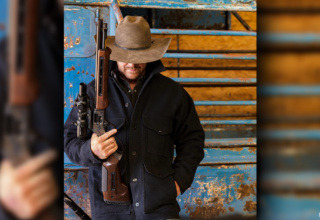
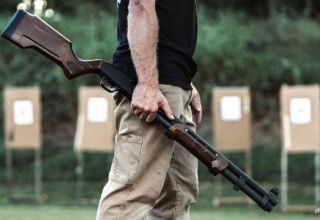
The time for backcountry camping and hiking is here, but that doesn’t mean it’s OK to slack in the personal defense department. Here are some things to consider for your trail gun selection.
by Bob Campbell
A love of nature often has me removed one step from humanity. Unfortunately, there are some that are permanently removed from humanity, having taken a right-angle pivot from decency. This makes the subject of defending our life in the great outdoors worthy of study. The field is so broad we could spend a great deal of time on it. In this report, we cover the most important bases, and I will add the results of my research.
Getting away from the dark sewers of the city is a good thing, but sometimes the city follows us. There are many mean, ugly-spirited types in the country. They are not as rare in that environment as they once were. I am not trying to scare you to get an angle for a story — far from it. But as of this writing, there have been several unfortunate incidents in the field and on the trails. These incidents involved both human and animal attackers. Feral men and feral dogs are dangerous. Wild animals are normally much less so, yet anything can happen.
In Maine, a paddleboarder was murdered while enjoying the outdoors. In Arkansas, a couple were murdered on a trail. Each crime seems senseless. One murderer was 17 years old, the other was a schoolteacher. A mountain lion killed a man in Oregon. Within fifty miles of my home, a bobcat, later found to be rabid, bit seven campers. In Helen, Georgia, a gang attacked a man and his daughter at a campground, seriously injuring them. There were three men and a woman involved.
My wife and I have visited those grounds. We found them peaceful. Law enforcement quickly apprehended all the criminals. That is commendable, but the victims are either dead or permanently injured.
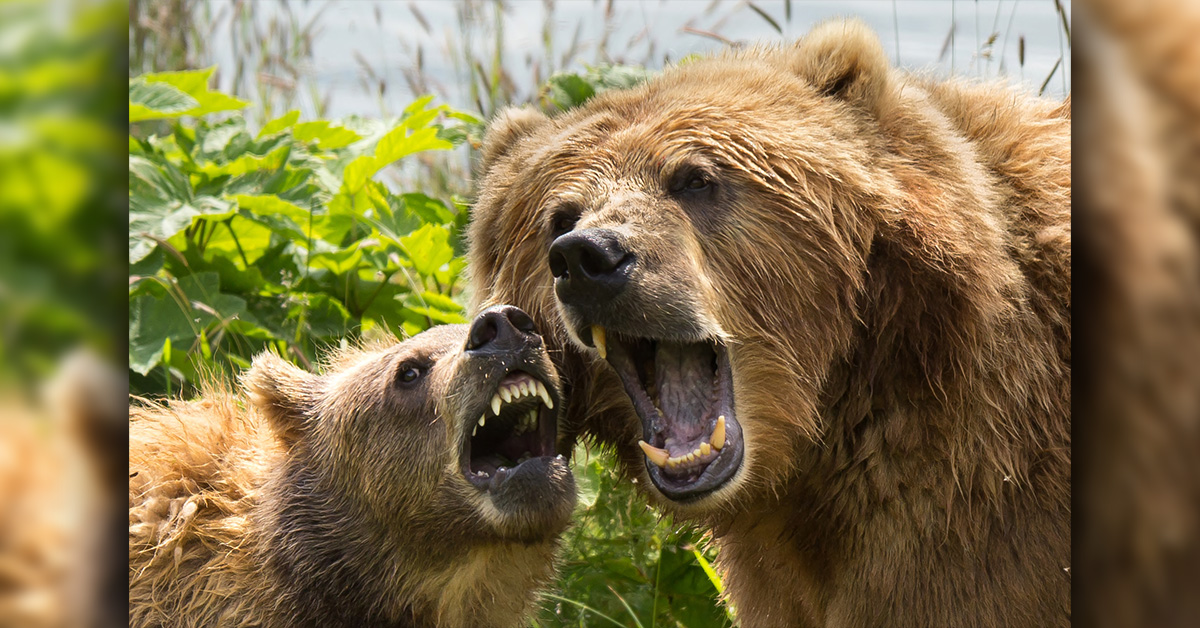
A bear attack in Alaska was handled by pepper spray. In Florida, a man was killed by a bear according to the DNR — the first fatal bear attack in Florida history. The victim’s dog was also killed. In California, a woman was killed by dogs in a park.
These are frightening situations. Animal attacks are terrible and difficult to train for. Animal defense is a much different type of shooting than hunting. It isn’t hunting to try to stop a bounding, charging animal of any size.
In South Carolina, dog attacks in a state forest resulted in injuries but no fatalities. Two of three of the dogs were killed and one was wounded and hopefully did not survive. Man’s best friend is sometimes dangerous. On the other hand, in the bear attack in Alaska, the man’s dog stood off the bear long enough for this individual to deploy bear spray. In another incident that could have turned out much worse, a woman’s dog — about a 35-pounder, normally docile — drove off a human attacker and the woman escaped an assault.
This isn’t a list that took long to compile. All these incidents save one occurred from May to July 2025. That is scary. I have given some thought to such dangers before and carry a handgun in the wild when possible. It wasn’t possible in the walled cities of Chartes or Carcassonne, but then the only thing I ran into was bats in the castle. In Washington, D.C., I was unable to carry so I kept my eyes open and stayed in a group. Fortunately, Major M. Campbell, my son, and I had a safe time of it.
In the wild, I recommend bear spray if that is a concern. Shooting a feral dog or rabid coyote is one thing. Bears are hard to kill. The shooting of an animal, either off season or an animal on the protected list, must be justified, which is reasonable, but best avoided.
I am concerned with outdoors defense, but when walking in parks and the neighborhood, the wife and I carry gas in addition to handguns. Canines are much more sensitive to gas than we are, and it is better to dissuade the dog than to start a war with our neighbors.
Be aware that pepper spray may not be effective against large, aggressive dogs. But then a couple of .38s may not be effective, either. If you are in a fist fight, you will take a hit or two. In a knife fight, you will be cut. In a gunfight, you may be shot. When using pepper spray, it tends to be all inclusive and drift back on the user. If you have a respiratory problem, the effect may be serious. The gas may blow onto your family.
Don’t carry gas without practice in hitting the mark. Get isolated, aim for a target, and determine if the stream runs high or low, and judge the distance at which you may be effective. While gas is often effective on animals, there is the occasional human that is affected little. I ran into clouds of gas twice while assisting other officers. It isn’t pretty. Gas is an option, but like the handgun, it must be studied and mastered.
Realities
When relaxing in the wild, a gun fits just fine to my way of life. I have slept with a revolver on my chest in the sleeping bag more than once. Not that I feared a Wendigo, it was simply a good spot, and I wasn’t going to roll over on it. Some find every piece of gear a burden. Water, a First Aid kit, camp tools, a sleeping bag, add up in weight. A good backpack is essential. Don’t keep the gun in the backpack! The latest criminal actions were perpetrated by brutes with a knife or blunt tools. But a few years ago, a cheap .22 was used by a murderer on the Appalachian trail and in another case a machete was used.
You need a gun and one you can access quickly.
About a decade ago, a female martial artist was murdered by an ex-con with knife on a trail — and her dog fled. We haven’t bred them for protection, and if they are formidable against humans, they may be too dangerous to be around strangers. As for the handgun, we are already burdened with gear. We need a handgun, but unless we are in bear territory, we will not be carrying a four-inch .44 Magnum or a six-inch .357 Magnum. When an authority recommends such a choice, it dissuades some folks from trying to deploy a handgun in the field. Against human threats, what works in the city works in mountains as well.
A point worth making is I don’t hike or climb for exercise. I exercise on the machines at home, walk, and take care of myself. I am then able to exert myself on the trail. Weight is at a premium, and there are good choices that will not weigh you down too much. Something is better than nothing and that something should be something effective. Anti-gun types become sensible when they know danger may be about. I have known many, and their favorite carry guns are either a .25 automatic or a .22 Magnum revolver. Something is better than nothing, I suppose. My friends in the gun shop tell me the .380 ACP has made inroads with this type of attitude. It is “almost” like having a gun.
The primary life-saving skill you must develop is situational awareness. I stay aware of my surroundings, including those who populate those areas. I have encountered two pickpockets in the cities and a pervert lounging about the restroom at a campground. I spotted seedy characters and avoided them. Police experience and lifelong study convince me I have been inordinately lucky. But then, situational awareness and a nose for avoiding trouble have served well. My wife has led me through foreign rail transports by utilizing color-coded signage and kept us on the right trail in the Appalachians. We have been aware and unarmed and unafraid at times. On the other hand, there are places I would not visit on a bet if I were not armed, and I tend to avoid them if possible.
The gun is a tool, and like the poncho and adequate water, is essential. I often keep a small hatchet handy, and this has been the one tool I really needed in an emergency. I was caught in a storm some years ago and quickly made a hasty shelter of boughs. I got wet but not drenched and actually enjoyed the hours of downpour as I sat under my canopy and watched the water run downhill. So, I don’t wish to give up that tool. It hangs on the side of a good backpack if the trip is to be longer than usual. I have room for a handgun, and the realistic minimum is a .38 Special or 9mm Luger. Each is available in well-made and lightweight examples with impressive reliability. Long range accuracy doesn’t matter as much. After all, animals must close to tooth-and-claw distance.
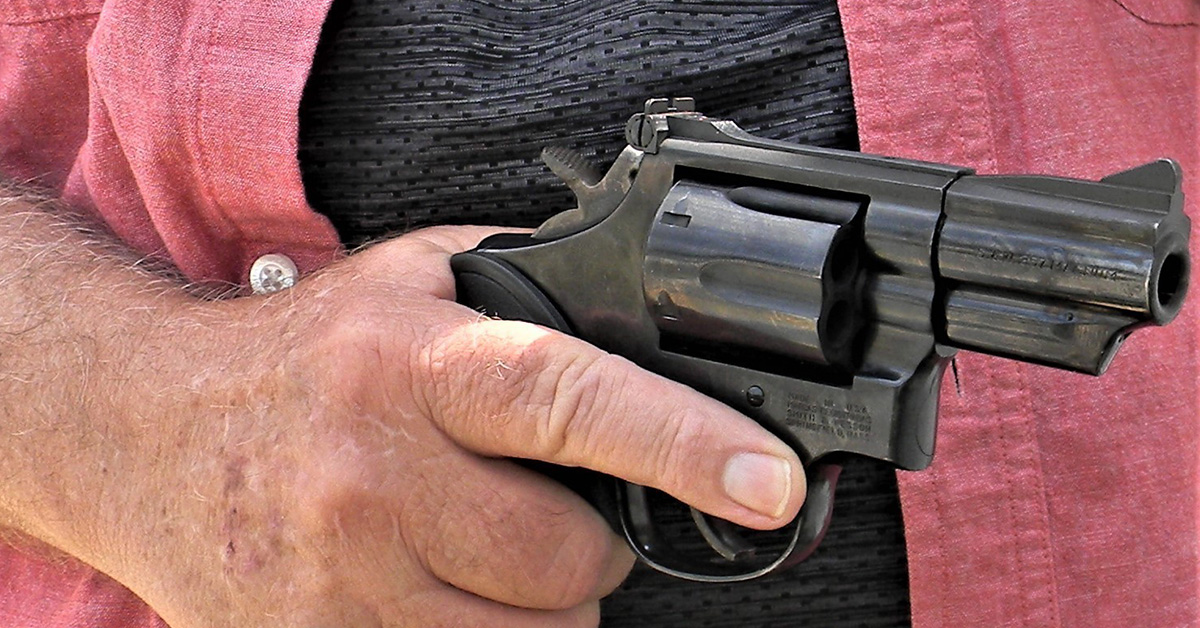
Also, consider a good revolver. Animal attacks can come quickly and out of nowhere. They go for the neck or head, although feral dogs sometimes attack the legs. If the animal is on you, a revolver may be pressed into the animal’s body and fired repeatably. An automatic would jam at the first shot.
I cannot convince you to carry something I don’t carry myself, and a big-frame Magnum is just too much extra weight. My boots get heavy after a few thousand paces in the hiker’s rhythm.
I own several revolvers, and my favorites are small-frame .38s or .357s. The aluminum frame guns are a joy to carry but not to fire. These are not guns you may leave in the safe until you need them; they demand practice. A steel-frame S&W 640 Pro is the gun I carry most often. It is bearable with heavy loads but hits hard. Only the most reliable and durable handguns should be considered.
For those who practice, a good quality .38 with heavy loads is a great defender. A 9mm compact isn’t a bad choice at all. With a high hit probability and a generous ammunition reserve, these handguns will save your life if you use them well. The Smith & Wesson CSXE is a favorite. The Glock 48 is a fail-safe reliable handgun. A trade-in Glock 17 9mm found for a pittance is a good companion.
Ammunition
Ammunition should be the same hollow point load you carry for concealed carry in the home and city. That is fine for defense against assailants and dangerous dogs. Coyotes and the big but thin-skinned cats may be handled with these loads if you shoot straight. Where black bears are a concern, hard cast bullets at +P velocity are a better choice. Buffalo Bore offers Outdoorsman loads in .38 and 9mm, and each is a great performer with plenty of penetration. These loads are designed to break bones and penetrate — specifically the skull bones of heavy animals.
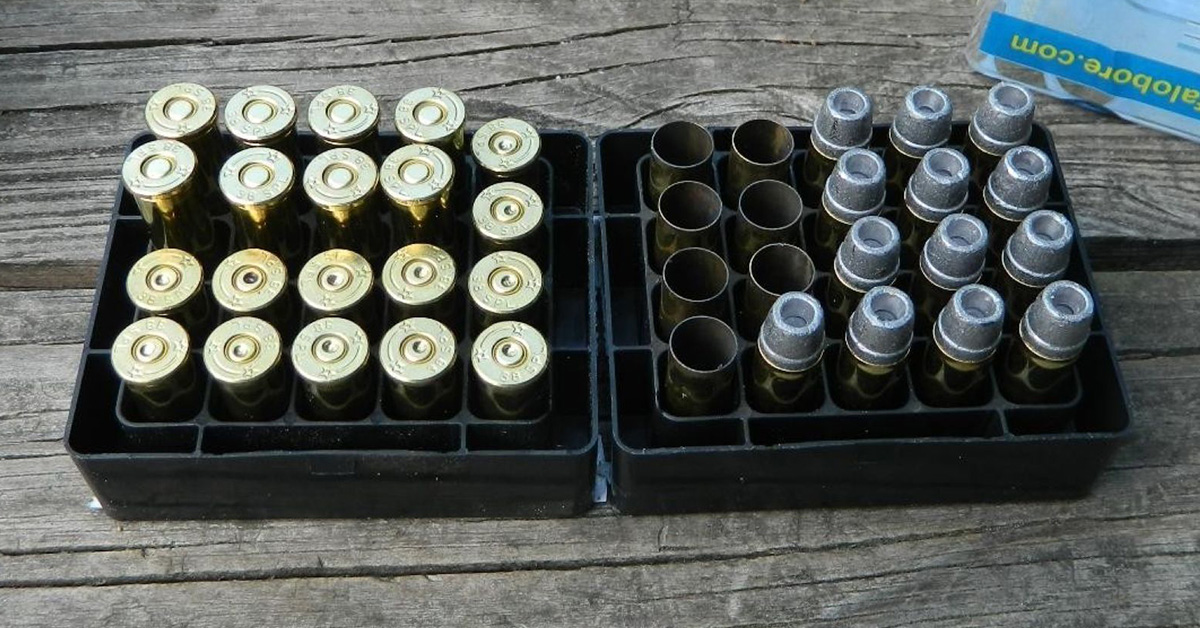
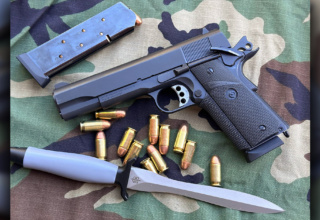
I sometimes carry heavier guns. The Manuhrin MR 88 is my favorite revolver. With the Buffalo Bore Outdoorsman load, this revolver will cut a 1.5-inch five-shot group at 25 yards. It is a heavy revolver yet docile. Sometimes, it just feels right. Other times the 1911 .45 feels right. It isn’t well known but the original specifications for the 1911 .45 called for a load capable of defending soldiers against animals such as jaguars.
Load Bearing Gear
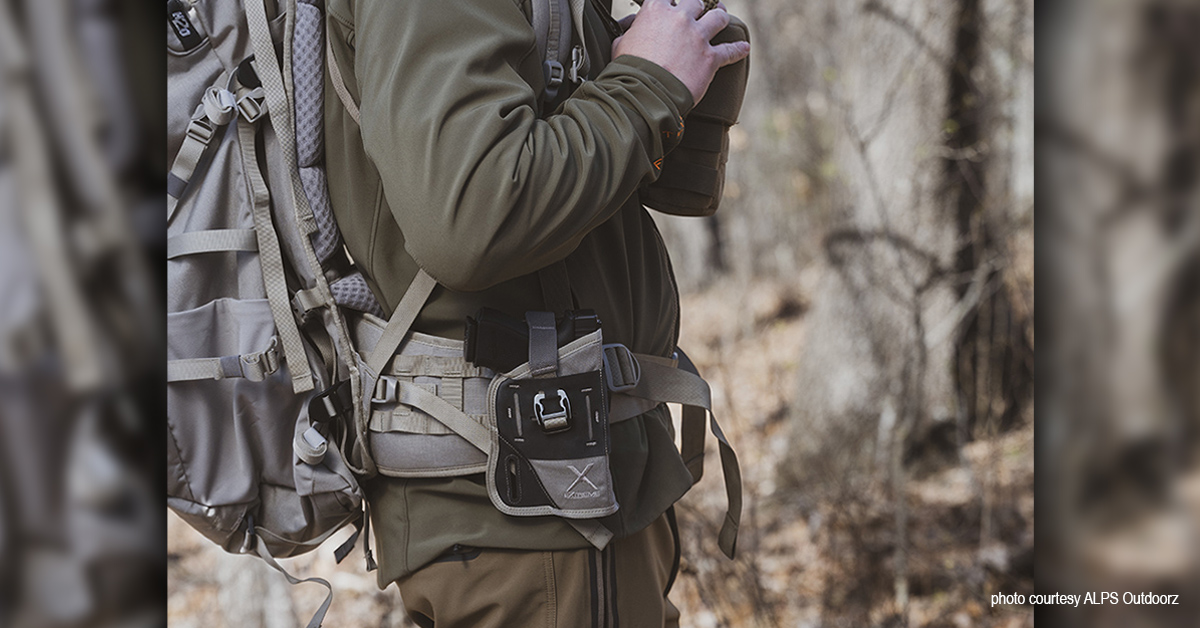
As our editor points out, there is a huge difference between a day in the field and a three-day camp. With a minimal load, you may carry pretty much what you want; with a heavy pack, the choice becomes limited. As the military has learned, there is a limit to human endurance before back pain begins. Be certain to choose a holster that will keep the handgun secure. You need speed and access but also security.
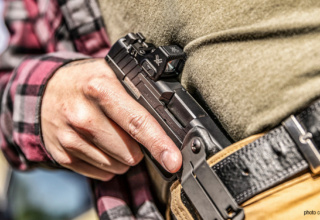
Most of my concealed carry holsters are open top. In some areas, a chest holster is a great thing to have. I like to keep the handgun concealed but then in some areas everyone carries open.
Let’s be honest — the belt strap on a pack suitable for a longer hike interferes with the belt holster. The draw is difficult and the carry is miserable if the pants sag. A crossdraw holster starts to look good. A friend carries his handgun in a paddle holster outdoors, which may seem an odd choice at first. He attaches the paddle over his backpack strap and then moves the holster around as need be for different situations. He is clear headed and quick to adjust to change. This concept works for him.
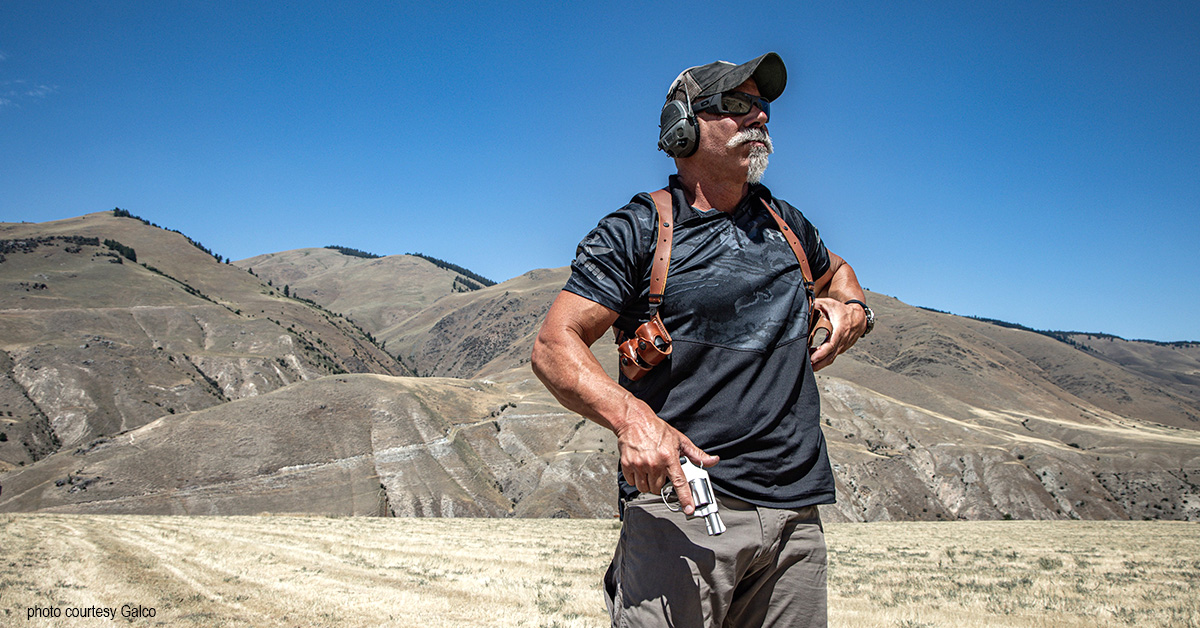
As you may imagine, there is a huge difference between a day’s walk in the wild and an extended stay. The more food and supplies the heavier the pack. Some chest holsters like the Galco allow a great deal of adjustment, but adjustment isn’t infinite. The user must practice wearing the chest holster. If you need that heavy gun for bear, you must find a way.
I have tested the thigh holster/drop holster with some success. It is usually worn by those who should know better. In this situation, a well-designed thigh holster is out of the way of the pack, and if the handgun isn’t too heavy and you don’t mind the Rambo look in the wild, the drop holster has merit. In all cases, most holsters designed for personal defense feature a high ride. A lower riding design is preferable for outdoors carry. A cowboy holster — those with a hammer thong — is surprisingly useful in certain situations.
Practice
Self-defense shooting demands training and practice. You should gear up exactly as you will find yourself on the trail and draw from the same holster you will be using. Practice hitting the retention strap and drawing the handgun. Deploy the pistol from seated, kneeling, and even supine positions. Be certain there are no conflicts. On the range, practice shooting multiple targets. The cruds travel in gangs. Get the shot where it will do the most good.
Animals are Different
If the animal is on you, simply press the gun into the body and fire…if you have a revolver. With the semi-auto pistol, you need to practice retention. I will stress that all live-fire training has an element of danger. Be careful. Keep the weak side limb away from the body. Keep the gun in hard against the ribs, slightly tilted, with plenty of room for the slide to reciprocate. That is retention, and it will keep the pistol going.
If the animal is coming toward you, be careful of your point of aim. Aiming for center mass on a feral dog may send the bullets low and cause little damage.
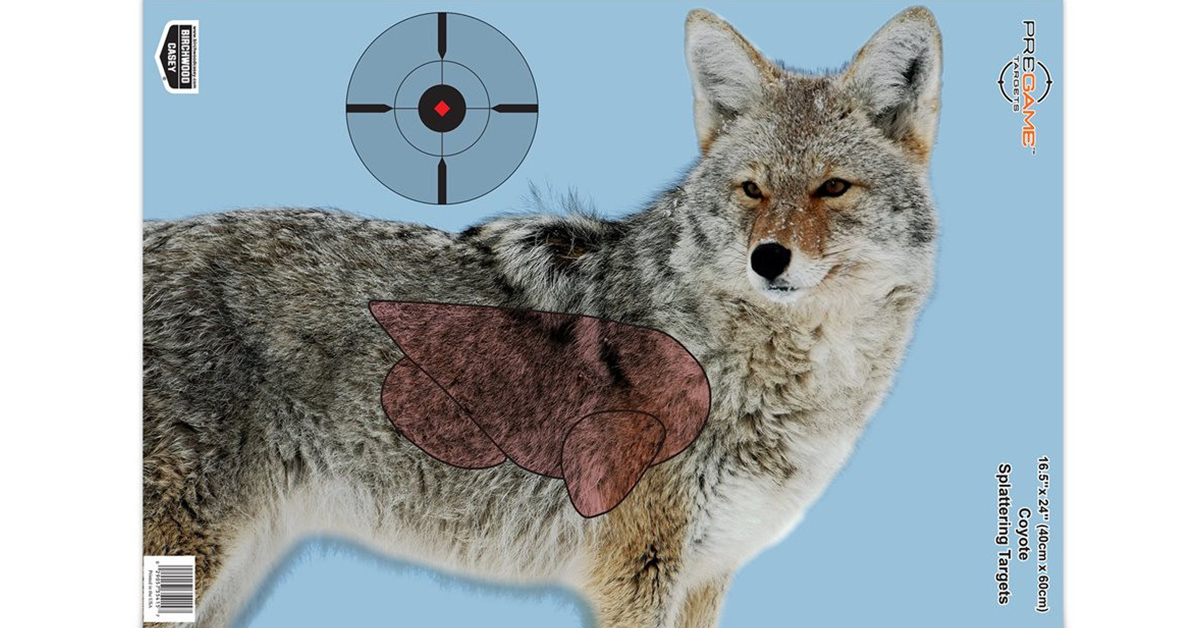
In several unfortunate incidents dealing with dogs, including drug dealer guard dogs and bait dogs, I learned that dogs are hard to kill. During warrant service, a fleeing felon put his dog on my team. (Our backups caught him coming out the back door. He simply added assault to his charges.) The animal came bounding toward us. I hammered him at ten feet with two .45 hollow points. He went down, then got back up and ran. I was told he recovered.
When dealing with an animal head-on, you need to aim about at the base of the neck. Study perspective. A chest shot will often traverse down. Aiming higher provides a raking shot. As hunters know, an animal hit with a raking shot will often drop. A chest shot may allow them to run. Be certain to give this shot some thought.
Getting into nature is called “living well” in my book. Just remember…whether you’re in the metro/suburbs or in the wilds, threats are ever-present. Don’t be slack in your situational awareness and always be armed and ready for the condition.