Combining the best of rimfire accuracy and sound suppression, the Christensen Arms Ranger 22 and the Dead Air RXD22Ti Suppressor make a potent pairing for small-game hunters and target punchers alike
by Larry Case
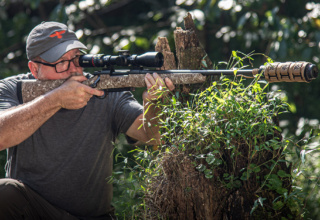
The big male fox squirrel crashed onto a limb in the hickory tree directly in front of me. I had been watching this squirrel for at least thirty minutes in hopes of getting a shot. It was early season, the foliage was heavy, and a fleeting glimpse of his reddish-brown hide was all I was getting. Common lore among many squirrel hunters would advise you to use a shotgun in these conditions. This day, I wanted to use the deadly .22 rifle combination resting on my knee.
When he finally stopped in a small opening to cut on a hickory nut, I directed the crosshair reticle of the scope to the base of the squirrel’s ear and sent the .22 bullet on its way. The suppressed .22 made a low decibel snap followed by the satisfying plop of the bullet striking home. The fox squirrel fell to the forest floor and that was that. I had another fox squirrel and a gray squirrel already in the bag and figured that was all the skinning I wanted to do this morning, so I headed out of the woods.
The combination that made this successful morning possible was the Christensen Arms Ranger .22 rifle and the Dead Air RXD22Ti suppressor.
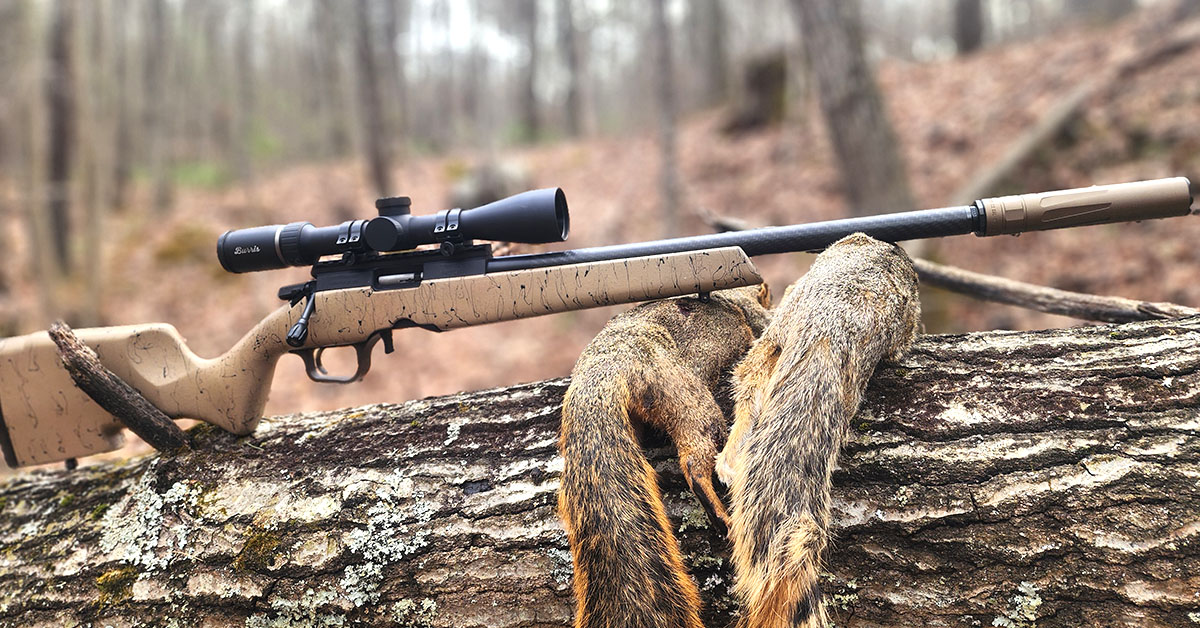
Everyone needs a good .22 rifle. I am not the only one to ever recognize this, but any hunter and shooter requires a good .22. As an old mentor shooter and reloader told me long ago, “You need a .22 rifle to just shoot.” By that he meant you can do a lot a shooting and working on your marksmanship skills with a .22 rifle. (More than you would normally do with a centerfire.) You can do it cheaper and with less noise, especially if you employ the use of a suppressor. A good .22 rifle is, in short, the workhorse of any rifleman’s arsenal. Inexpensive to shoot, no recoil, and noise is minimal — perfect for kids and new shooters, particularly when combined with a suppressor.
Now, we all know there are plenty of average-quality and lower-cost .22 rifles out there to choose from. In truth, many of these might be OK for many plinking, hunting, and pest control jobs. Most serious shooters, though, want at least one higher-end .22 rifle in their stable. They want a quality firearm they proudly take out of the gun safe, admire the beauty of the gun, and be totally confident that this rifle is an absolute tack-driver.
Enter the Christensen Arms Ranger .22 rifle.
Advanced Technology and Old School Quality
In 1995, the Christesen family from Utah brought their expertise in aerospace technology to the firearms world. The founder, Roland Christensen, with over four decades in composites engineering, revolutionized the world of carbon fiber-wrapped barrels. To say he knows a lot about carbon fiber is like saying Sandy Kofax knows a little about throwing a baseball.
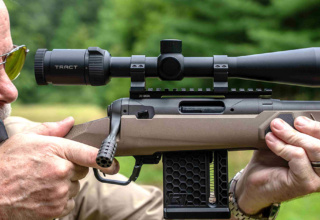
The 18-inch barrel on the Ranger features a 416R stainless steel blank that is hand-lapped and turned down to a very narrow configuration. The barrel is fitted with a carbon fiber sleeve and a steel muzzle device to bring tension to the carbon fiber. This delivers a very stiff barrel that is light in weight. The twist rate is 1:16, it is threaded 1/2×28, and it comes topped with a thread protector.
The Christensen Ranger .22 includes a Bench Match chamber, which was developed to enhance accuracy and to ensure ease of loading and extraction. The stock is also carbon fiber and has a high fixed comb to help the shooter align with a mounted optic. The configuration of the stock assists with different shooting positions often found in competition shooting as well as hunting. The stock also features a palm “hook” on the bottom to help on a bench rest. It is available in two colors — black with gray webbing and tan with black webbing. While there are no fixed sights on the Ranger .22, the rifle has a 0- MOA Picatinny rail installed with oversize hex screws, making for a very secure mount for your chosen optic.
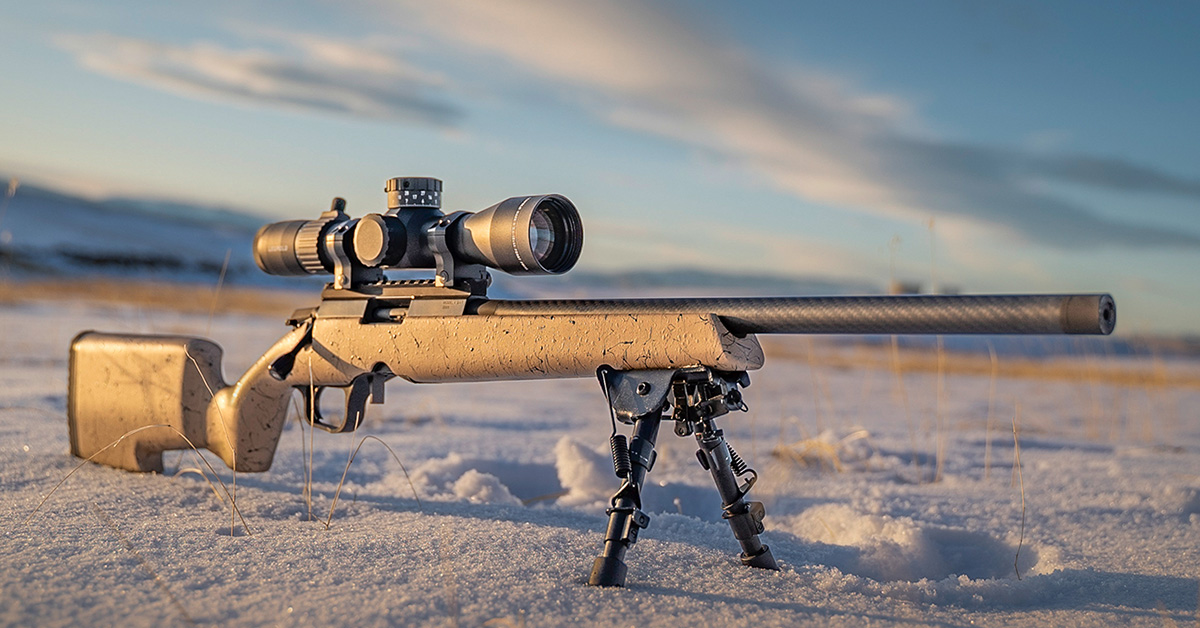
Christensen Arms made a great move in designing this rifle by having it accept the Ruger 10/22 magazine. You can find these magazines almost anywhere, and this makes the Ranger compatible with a legion of aftermarket 10/22 items. So, maybe you want a 25-round magazine? Go for it. The magazine is injection molded polymer, and the paddle-style magazine release is to the rear of the magazine port. The magazine has finger grooves on the side should the shooter need to grab and pull it out.
The fire control on the Ranger .22 is a Trigger Tech Field trigger, which is compatible with any replacements for the Remington 700-style triggers, such as Timney or others. The supplied trigger is user-adjustable and the rifle I tested was set at just a hair over three pounds. I thought it was fine and saw no need to adjust it.
In keeping the Ranger .22 lightweight, Christesen made the action with a high-grade aluminum material. The bolt is steel and features two rear locking lugs, two extractors, and the ejector is fixed and works like a charm. I experienced no problems with loading and ejecting the spent rounds. The trigger guard is plenty big enough to allow the use of gloves.
Is the Ranger .22 a high-end .22 rifle? Maybe, but with an MSRP of $1269.79, there are certainly much higher priced .22 rifles out there.
Keeping It Quiet
Dead Air Silencers knocked it out of park with the RXD22Ti. Unless you have been living under that proverbial rock we talk about, you know that the suppressor market has exploded in recent years. Recent changes in ATF requirements, including the elimination of the $200 tax stamp and the speed at which applications for suppressors are processed have brought more shooters to gun counters and into the fold of those using suppressors. I know there are some hunters and shooters out there who are still skeptical about putting a suppressor on their rifle. Just to be blunt, I am now in the camp of I don’t know why you wouldn’t install a suppressor on your hunting or competition rifle.
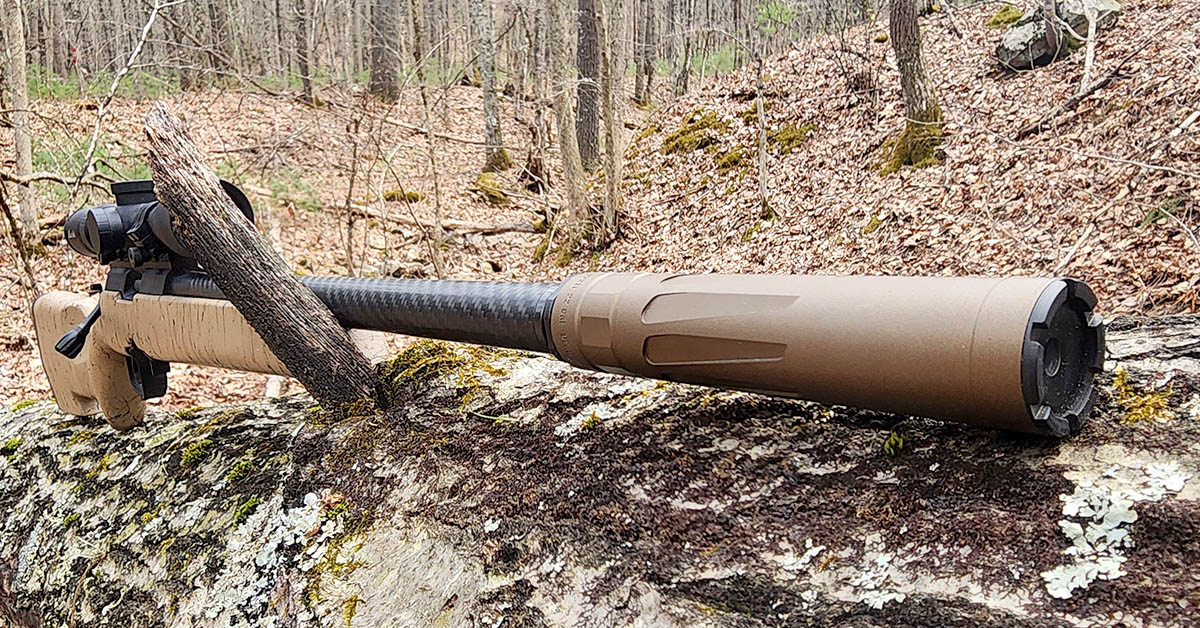
The reasons for this are many. Noise reduction is a win-win for everybody. (A suppressor is, after all, just a muffler for the noise of shooting a firearm.) These days, we are often faced with shooting areas close to neighbors and areas where less noise is better. A suppressor is a perfect aid in introducing kids and new shooters to hunting and recreational shooting. New and old shooters alike are affected by the blast of rifles. Less noise andmore comfort equates to greater accuracy potential and just making the whole experience more fun. (We are supposed to be having fun doing this, remember?)
Sometimes, I don’t even know why we must explain why the suppressor is better on a hunting rifle. Many hunters spend years learning how to be quiet in the woods, to not break any sticks, to walk quietly, and no loud talking. We top it all off while in game country with a blast that deafens the hunter and surrounding animals. Suppressed shooting simply allows the hunter to be stealthier in the woods.
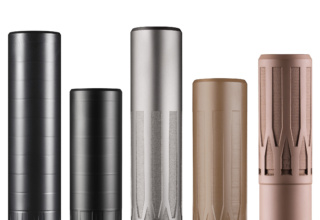
Dead Air Silencers has been offering high-tech, state-of-the-art suppressors for several years now. The RXD22Ti is an innovative model comprised of a Titanium tube, a 3D-printed, PVD coated single-piece Triskelion core, a titanium retaining cap, and an all-new XRF muzzle brake specially designed to enhance performance and capture lead. This suppressor is lightweight at 5.6 ounces and pairs perfectly with the Christensen Arms Ranger 22.
That “capture lead” thing back there is important. Although the design of the RXD suppressors makes for easy disassembly and cleaning, the muzzle brake feature allows for the capture of lead before it enters the internal parts of the suppressor. If, like me, you are not a big fan of cleaning guns or anything else, this is a plus. The Dead Air RXD22Ti is rated for the 22LR, 22Mag, 17HMR, 17WSM, and 5.7×28 calibers, and has a full-auto rating for the .22LR. It is offered with a Black or Burnt Bronze high-temperature Cerakote exterior finish.
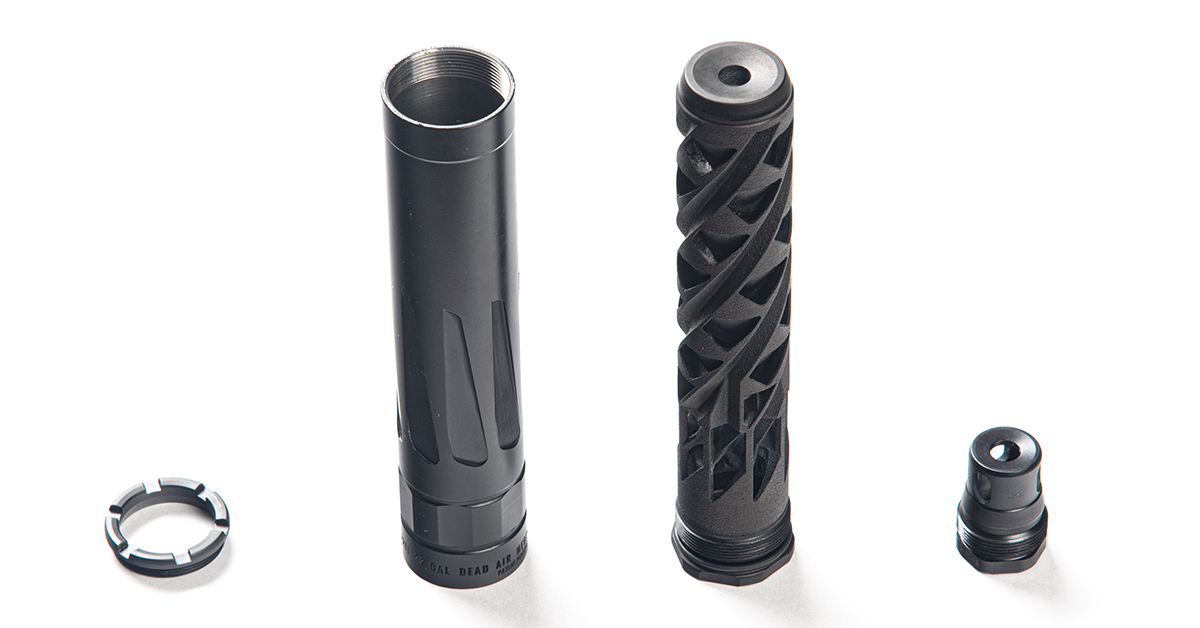
The RXD22Ti manages 850 ft/lbs of energy at the muzzle, and Dead Air Silencer’s Gas Management System allows for decreased ejection port and back pressure noise. If you decide to install the Dead Air suppressor on a semi-auto .22, you will see a difference in the back pressure area. Also, there are no barrel length restrictions on the RXD22Ti. Shooting a semi-auto .22 pistol suppressed may be the most fun you will have on the range (except maybe squirrel hunting with one.)
On the Range and In the Woods
Right out of the box, the Ranger 22 rifle is advertised for sub-MOA at 50 yards. I have had this rifle for some time, so I didn’t really have any doubts the gun could live up to this claim. What surprised me was that the rifle could do this — shooting tight groups with a variety of ammo.
It is no secret that most .22 rifles do not shoot high velocity ammunition as well as standard speed ammo. This held to be true, for the most part, with the Christensen Arms Ranger 22 I was testing. Understand the groups I shot with higher velocity ammo were not terrible, they just were not always the hole-touching groups achieved with standard-speed “target” type ammo. The results with some of the zippier high-velocity loads were fine for any hunting and plinking work for a .22 rifle.
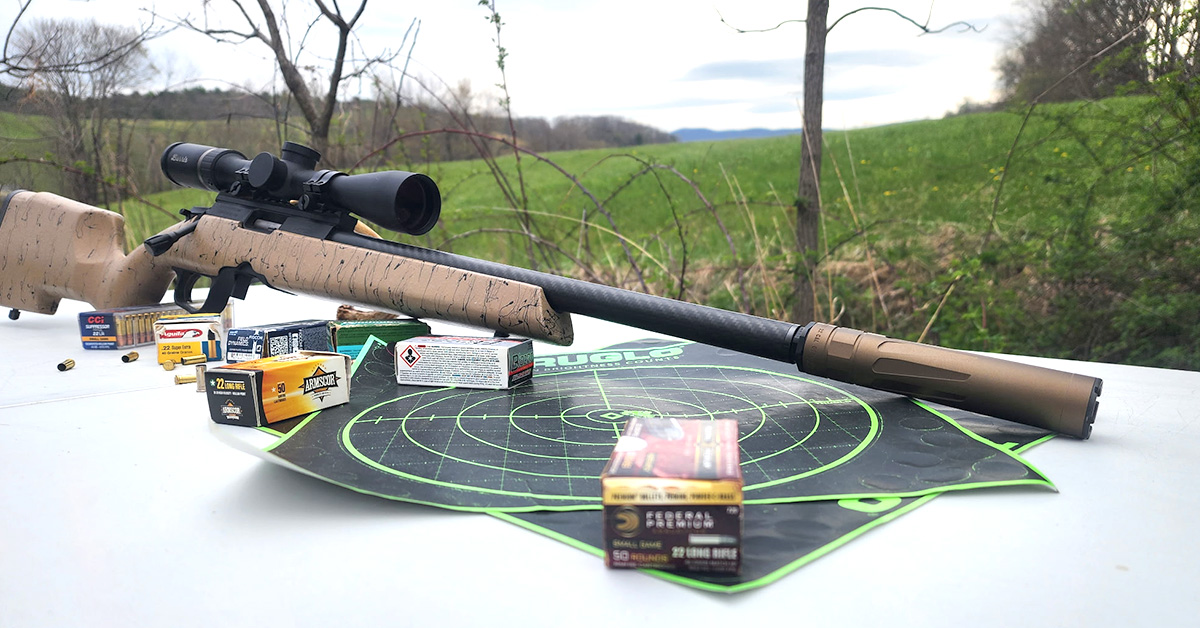
Among the .22 ammo that was used in this testing was the Fiocchi Field Dynamics .22 load, with a copper-plated round nose bullet, the old standby Remington standard velocity Target load, Blazer .22 Long Rifle (loaded by CCI), Armscor .22 Long Rifle (this shot very well for lower cost ammo), Federal Premium Hunter Match (1200 FPS velocity), and the CCI Suppressor Max (segmented hollow point bullet). This is not the complete list of .22 ammo we ran through the Ranger .22 for this project, but these ammo options shot as well or better than any tested.
While the results were often close on some of the groups, when the smoke cleared the Federal Premium Hunter Match round was declared the winner.
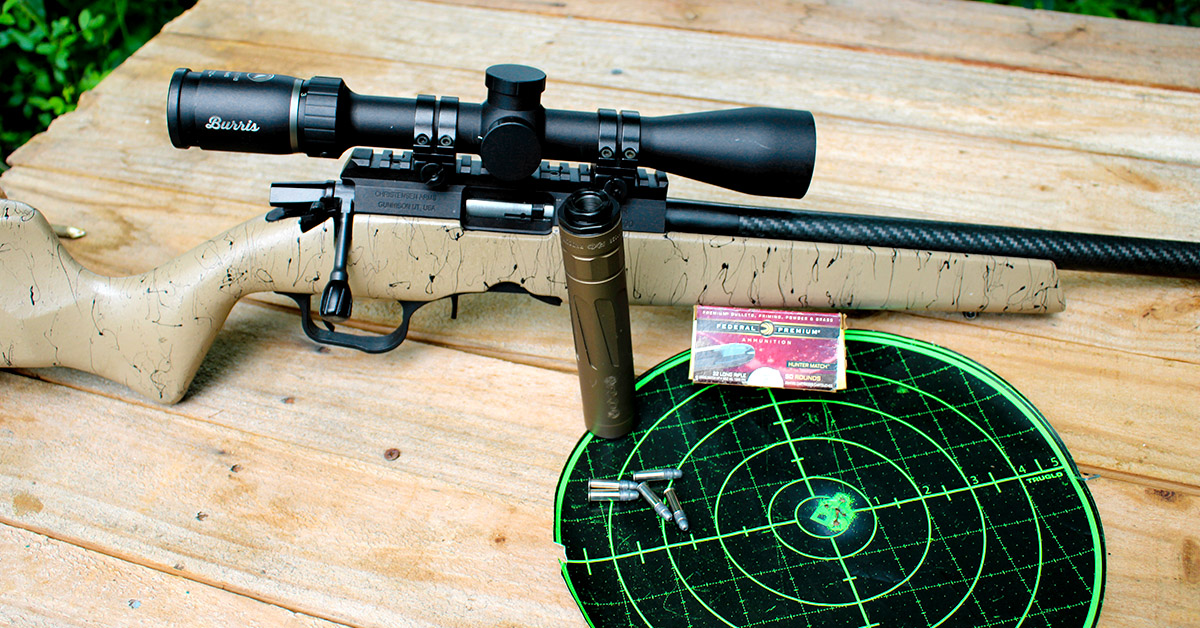
Now, before you say anything, this surprised me, too. As noted earlier, it is quite common for rifles — rimfire and centerfire — to like one type of ammo better than others. What surprised me here is that the Ranger 22 shot the Federal Hunter Match round as well if not better than lower velocity .22 ammo. Personally, I don’t lose a lot of sleep about all this. If you get a Christensen Arms Ranger 22 and shoot a lot of this same ammo, you may get slightly different results. Again, different rifles often prefer different ammo. The reasons for this are only known in heaven.
As far as accuracy with the Dead Air RXD22Ti suppressor, I saw no problems. I will confess I thought the addition of the suppressor on an accurate rifle like the Ranger might, in some way, affect how the rifle shot. I did not see that after running a lot of ammo through the gun. In talking to and reading what other shooters have done with .22 suppressors, I was interested in their conclusions regarding accuracy. My main concern was that the accuracy would not be any less after adding the suppressor.
I found the accuracy did not suffer at all with the suppressor installed, and those I talked to and read about said the same. The point of impact may change when you install a suppressor and you may have to zero the rifle again, but the accuracy will not decrease. We fired five-round groups for this testing and allowed the barrel and suppressor to cool for a few minutes between strings.
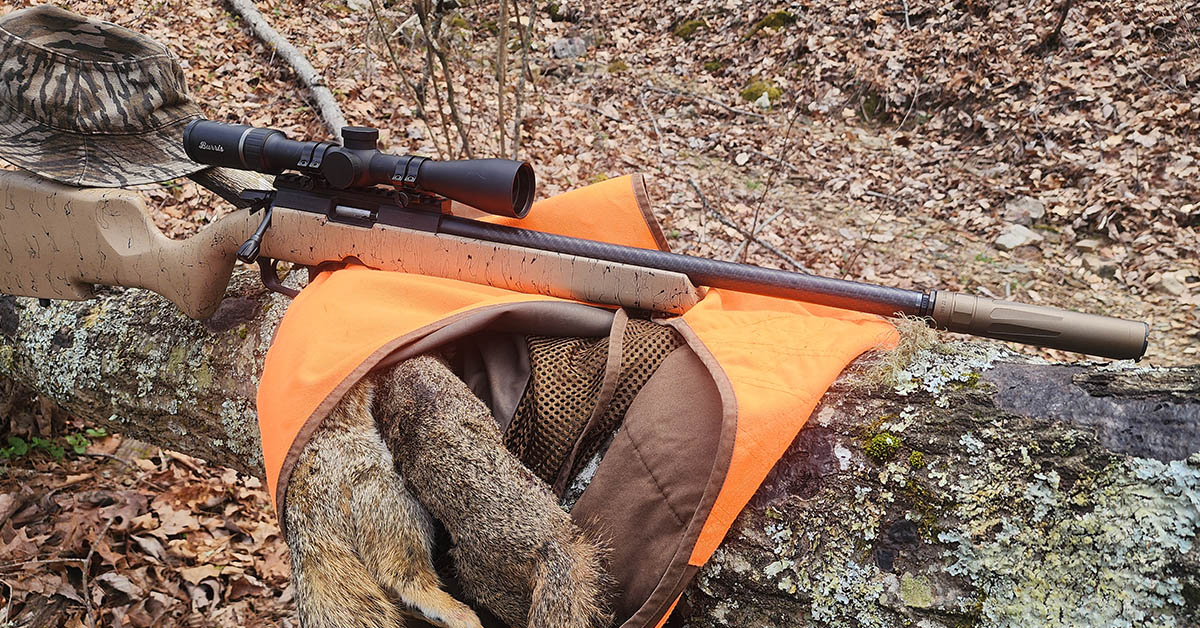
In hunting situations, I found the Ranger 22 and the Dead Air suppressor to be an ideal combo. Weight is one of the biggest considerations here. With the Ranger 22 coming in at less than six pounds and the Dead Air RXD22Ti weighing 5.6 ounces, this is a combination that is a joy to carry in the squirrel woods.