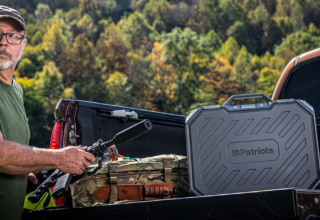
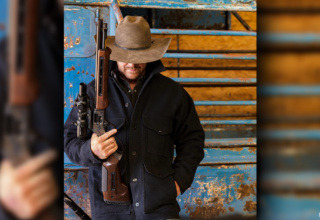
This versatile six-rifle battery covers everything from hunting to home defense
by Brad Fitzpatrick
My wife would argue that I have far more firearms than I need, and while that may be true, I believe there’s value in having a rifle that’s suitable for every circumstance. Recently, Shoot ON editor Rob Reaser posed an interesting question to me: If I had to whittle my collection down to the bare essentials, which five rifles would I choose?
I bent the rules and expanded the list to six rifles. The larger point is to identify the rifle categories that give a collection real capability, but the specific makes and models matter, too. The rifles named here are my preferred examples within each category, chosen for how well they fit the job, how they handle, and what they bring to the table. What follows is a breakdown of the half-dozen rifle types every collection should include to manage almost any practical task.
I say almost because there are highly specialized rifle categories that did not make the cut. I haven’t listed any competition-specific guns designed exclusively for use in PRS and other long-range applications. Nor have I included the big bore stopping rifles like the 416 Rigby, 458 Lott, and the various Nitro Express cartridges that are so favored by African PHs. Big bore stopping rifles are an entirely different class of guns, and unless you have hippos, rhinos, and elephants wandering in your backyard, your making space for a 470 Nitro Express as you’re whittling your gun collection down to a half-dozen firearms doesn’t make a great deal of sense.
Drawing on my experience, I think that the following six classes of rifles make for a versatile collection capable of performing most any task. It should be noted, I think, that for my own collection, I would have a suppressor for each of these rifles. The availability of suppressors and their many benefits (reduced noise, muzzle blast, and noise) make adding a can a sensible choice. But your six-gun collection may look different than mine, and you may build out your battery in a way that suits you.
#1 The Rimfire: Plinking and Pest Control
I’m always going to have a rimfire rifle around, if for no other reason than rimfires are loads of fun to shoot. Were I forced to choose just one rimfire, I would select a 22 LR simply because of the availability and modest price of ammunition. A 22 LR is a joy to shoot, especially if it is suppressed, and I can buy 500 rounds of ammunition for a reasonable price.
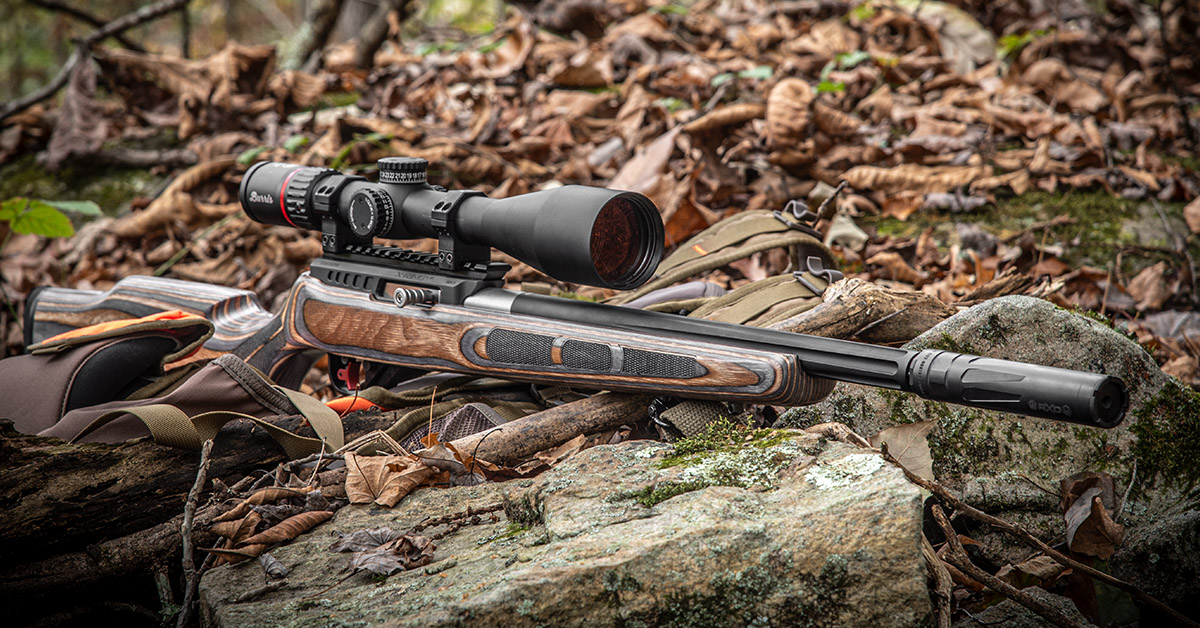
The 22 LR is also a highly effective small game round provided shots are kept within a reasonable range. There are gads of 22 LR guns from which to choose, but you simply cannot go wrong with Ruger’s 10/22. This reliable autoloader is extremely accurate and a great option for all your rimfire needs. Lever guns like the Henry Golden Boy are also a fantastic option, but I’m a bolt-action fan and would very likely choose something along the lines of the new Winchester Xpert Suppressor Ready.
#2 The Home Defense Carbine: Powerful Protection
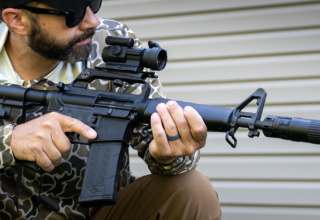
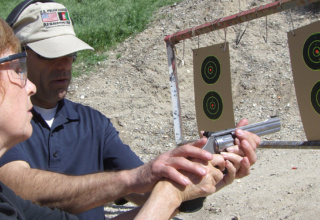
There’s a saying among defensive shooting instructors that if you’re fighting with a pistol, it’s only because you’re trying to reach cover or your carbine. I believe this is sage advice. Shooting a handgun accurately — especially under duress — requires skill and training. A 16-inch carbine with a red dot sight and accessories like a sling and weapon light is a far more formidable and effective choice. The obvious option here is an AR-15 carbine, and you’ll hear no argument from me.
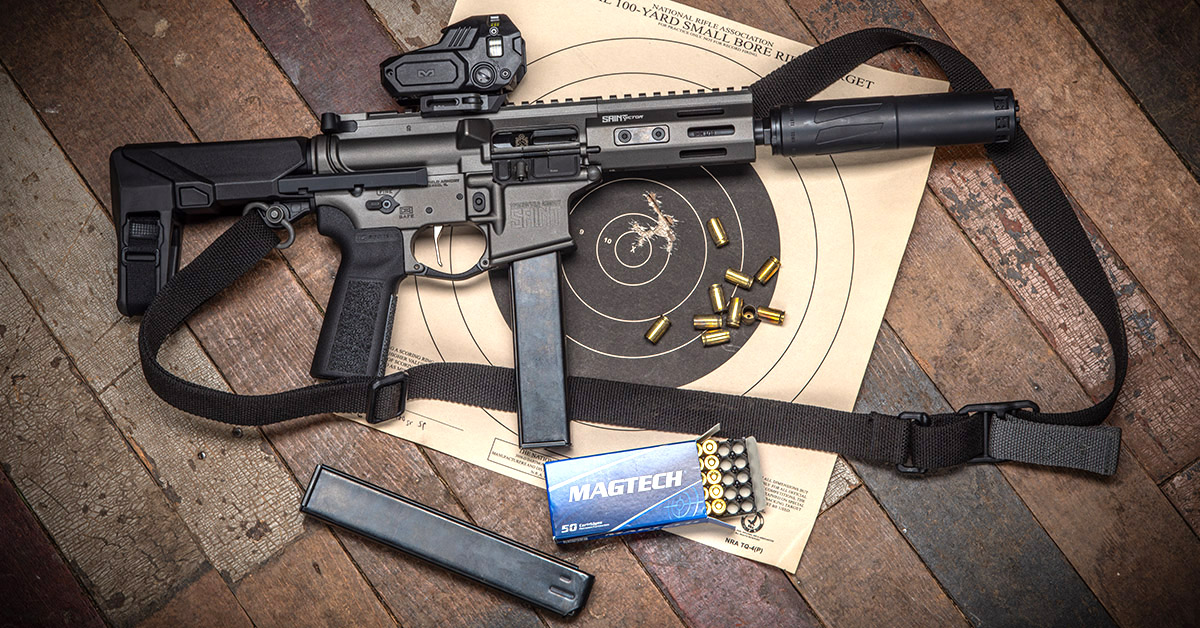
The AR is a proven platform that’s user-serviceable and extremely effective. Most AR owners opt for the 5.56/223 Remington chambering — a sound choice since there are so many defensive load options and ammo is affordable and widely available; however, the 300 Blackout is another good option, and pistol caliber carbines (PCC) like Springfield’s outstanding Saint Victor 9mm Carbine are also effective defensive weapons.
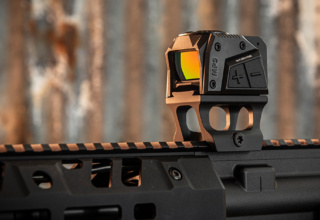
I think a light, sling, reflex optic, and suppressor are important additions to the home defense guns simply because I want every advantage possible should I encounter violence.
Your home defense carbine doesn’t have to be an AR. Ruger’s autoloading PC Carbine is another great option, and lever guns like Smith & Wesson’s 1854 lever-action in 357 Magnum work well, too.
#3 The Dedicated .22 Centerfire: Predators, Varmints, and Precision
If you count the . 223 AR carbine above, you’ll see that this is the third .22 I’ve listed on this compilation of six rifles, meaning that half of your rifle battery may consist of .22s. That’s no problem since today’s .22 is so darn versatile. This rifle will serve as your dedicated coyote, woodchuck, and prairie dog rifle — a more versatile and powerful alternative to your handy rimfire rifle.
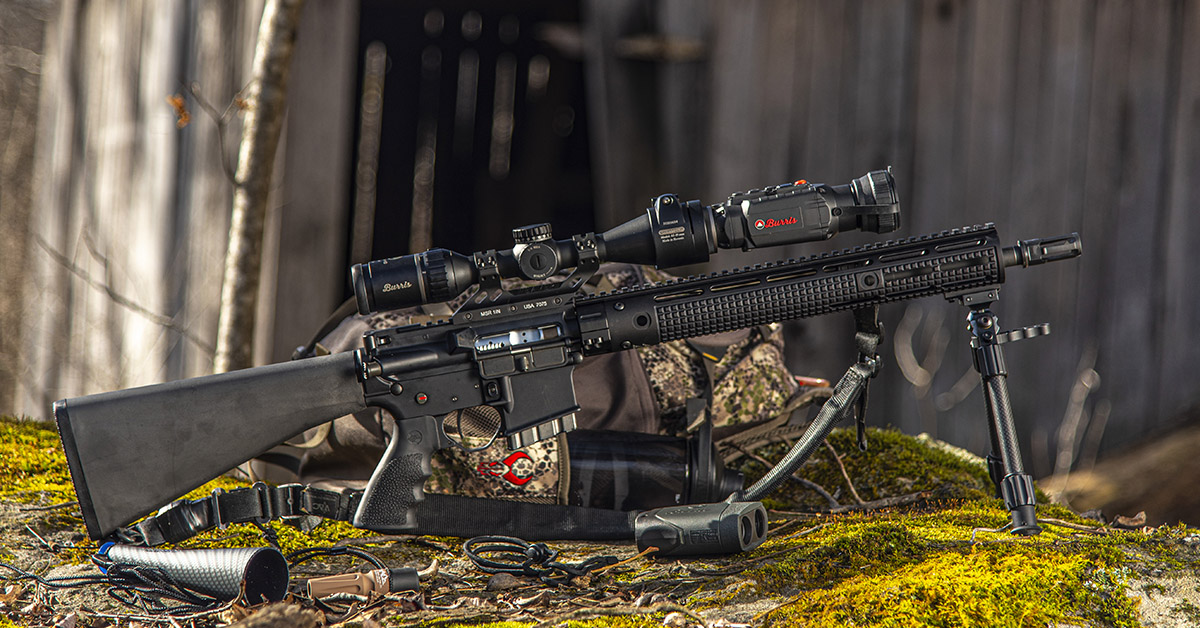
Here again, I believe that an AR-15 rifle chambered in 5.56/223 is a sound option, but my dedicated varmint/target/training AR would look very different from my home defense carbine. This gun may have a 16-inch barrel, but it will likely have an 18-inch barrel and will wear a bipod on its M-LOK handguard in place of a weapon light. It will also have a variable power scope and, if I can afford it, a thermal clip-on for hunting in the dark. Unless the gun ships with a premium trigger, I’ll probably add one of my own, perhaps Timney’s outstanding AR-15 Competition Trigger.
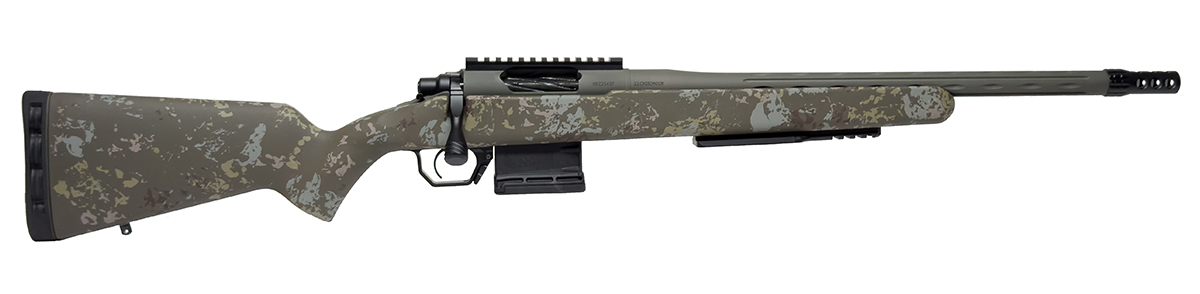
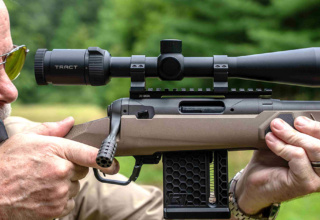
As I said, I’m a bolt gun guy, and as such, my precision .22 will likely be something along the lines of the outstanding Horizon Vandal 2. If my budget didn’t support the Horizon rifle, I’d probably opt for something like the Savage’s 110 Core Hunter chambered in 22 ARC or 22 Creedmoor. Given my druthers, I’d stick with either of those cartridges. Sure, ammo will likely be more expensive than .223, but the ability to utilize heavy-for-caliber .22 bullets is worth the added cost because I may make long shots on varmints or predators and cartridges like the 22 ARC and 22 Creedmoor are better for long-range target shooting.
#4 The Medium-Bore Bolt-Action: My Go-To Hunting Rig
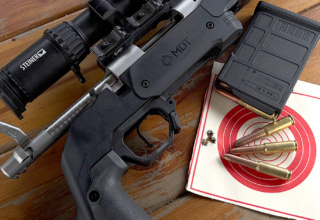
My medium-bore (.25 to .28 caliber) hunting rifle will be perhaps the most versatile rifle in my collection. I want it to be sporter weight, which means I don’t need a steel bull barrel and heavy chassis system on this gun. It will wear a versatile mid-power scope, one of my favorites being the Steiner H6Xi 2-12×42, and I prefer bare rifle weight to be somewhere between 5.5 and 7 pounds. My own mid-bore hunting rifle is a Seekins Havak Element in 6.5 PRC — a light, tough, and deadly accurate rifle that’s suitable for hunting anything from deer and antelope to elk. It’s also great for shooting steel targets with match ammo out to a half-mile or more.
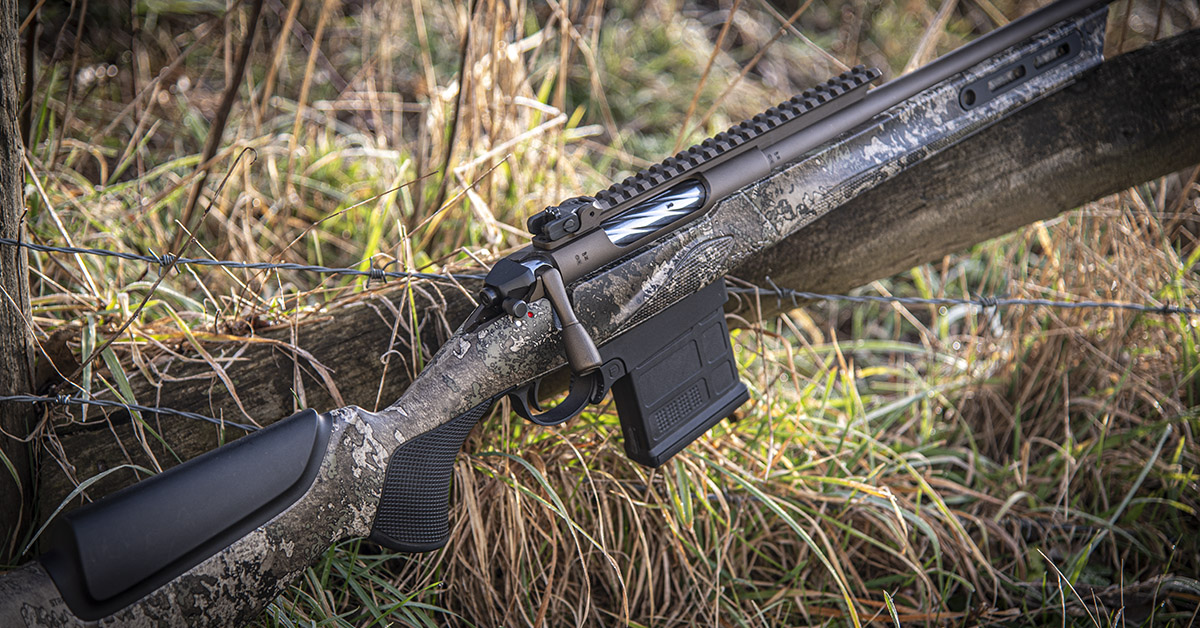
Your own medium-bore may be something altogether different. If you like bolt guns, Franchi’s Momentum Elite in 6.5 Creedmoor, 6.5 PRC, or even 308 Winchester (a .30-caliber cartridge I class with the mediums because of its versatility, mild recoil, and short action). Hunters who prefer classic guns may choose a pre-’64 Winchester Model 70 in 270 Winchester, or semi-auto fans may choose an AR-10 or other semi-auto like Browning’s new BAR MK 4 Hunter. There are even lever guns options that foot the mid-bore bill.
#5 The Heavy: Long Range, Big Game
To complement your versatile mid-bore rifle, you’ll also want a larger caliber rifle that’s designed for tough shots on steel targets or big game. The go-to cartridge for this application is the 300 Winchester Magnum.
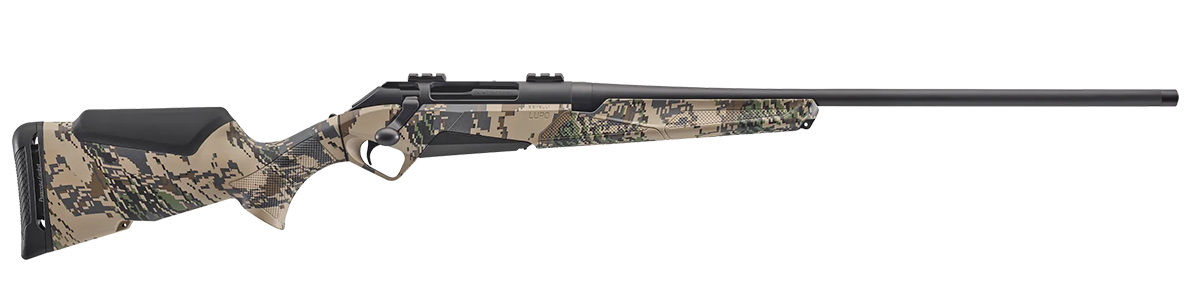
I used a Benelli Lupo chambered in 300 Win Mag on my recent Alaskan black bear hunt and found that the rifle performed extremely well, dropping my bear with a single shot in the last moments of daylight. Other classic cartridges like the 338 Win Mag and modern cartridges like the 7mm and 300 PRC also foot the bill as a “heavy” big game rifle. Speaking of heavy, I want this rifle to have more heft than my mid-bore. Big guns produce big recoil, and a .300 magnum in the 7 to 8.5-pound range is far more comfortable to shoot than a really light gun.
If I were building my own heavy rifle, it would probably be a Benelli BE.S.T. Lupo bolt-action rifle 300 Win Mag, and I’d top it with a versatile Leupold VX-5HD scope in 3-15×44. With that rig, I could hunt deer, elk, or moose at any reasonable range and even large bears and bison. I could also take that rifle to the local rifle range and ring steel targets way out where the daisies grow.
#6 The Big-Bore: Batting Cleanup
Five slots are filled in my rifle rack, but I know just the gun that gets the last position: a big-bore lever gun. These rifles aren’t as specialized as the precision guns or the home defense carbine listed above, but if you hunt enough, you’ll find plenty of applications for your big-bore lever gun.
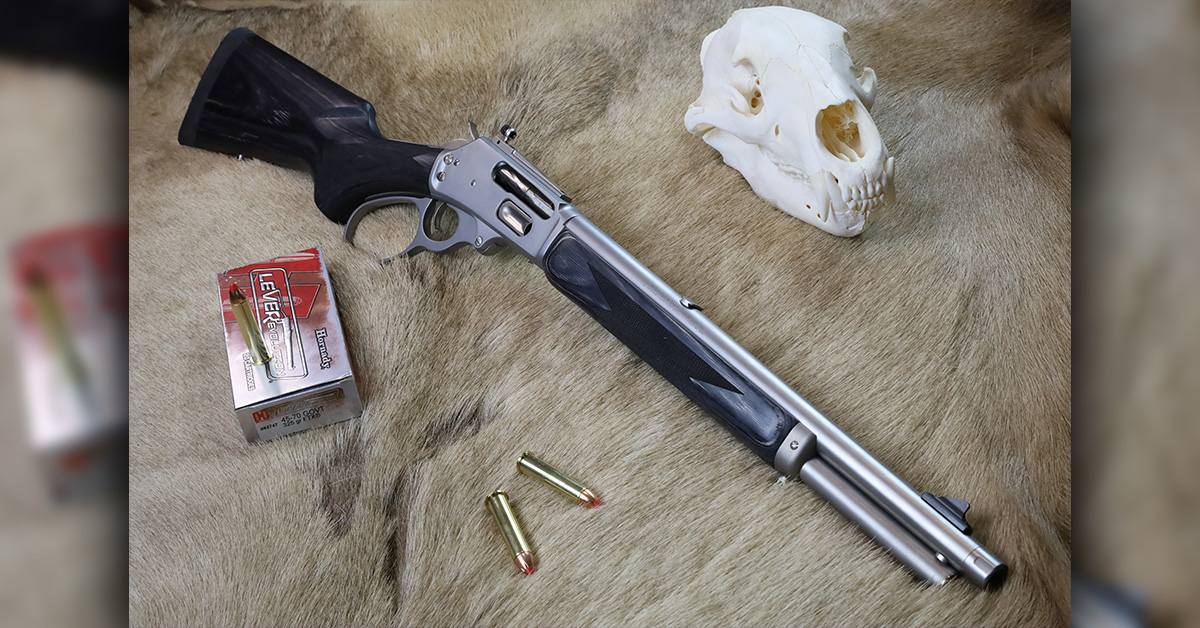
I live in Ohio where rules require the use of straight-wall cartridges for hunting deer. My 6.5 and .300 are out, but a lever action 45-70 like Marlin’s 1895 Trapper fits the bill perfectly. If you look at the Marlin’s spec sheet, you’ll see that the Trapper comes with a 16.17-inch cold hammer-forged stainless-steel barrel, and that keeps overall length under 35-inches. Good. I want my big bore to be handy enough to carry while following bear dogs along the tangled North Carolina coast. I want this gun to be maneuverable in a deer blind or tree stand, and I want to be able to hunt hogs in thick cover and make fast follow-up shots. I certainly don’t want to find myself in the sights of a charging grizzly, but if I do, I’d rather have a 45-70 lever gun with iron or reflex sights and a tube full of hard cast ammo than any handgun ever created.
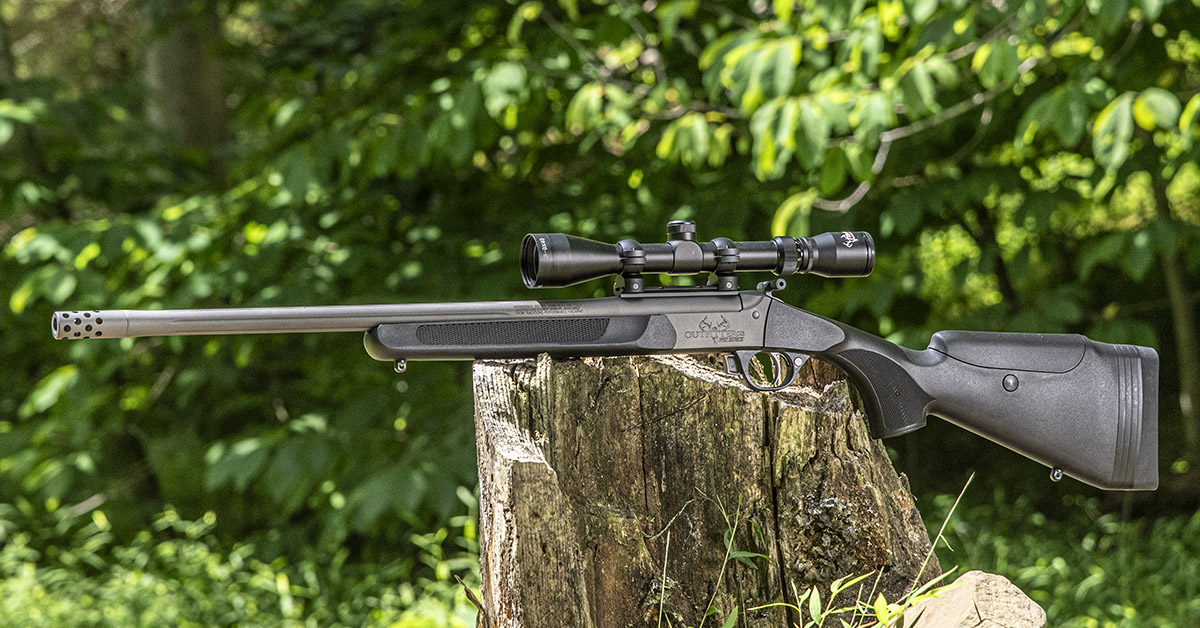
Your “big” gun doesn’t have to be a lever-action, and it doesn’t have to be chambered in 45-70. Maybe it’s a single-shot like a Traditions Outfitter G3 Takedown in 450 Bushmaster or a 400 Legend, or perhaps an AR like the Rock River Arms LAR-15M 458 SOCOM. Whatever you choose, I believe you’ll find more uses for your versatile big-bore than you may imagine.

- This Year’s Top Hunting Suppressors - July 1, 2026
- The Six Rifles Everyone Should Have - May 26, 2026
- Talking About Firearms to Anti-Gun Friends - April 20, 2026