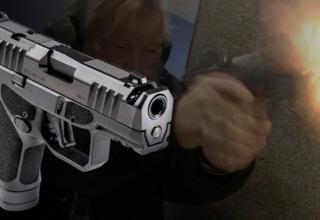
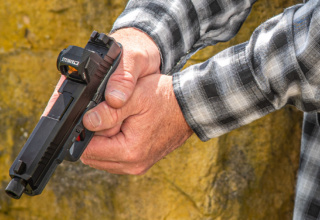
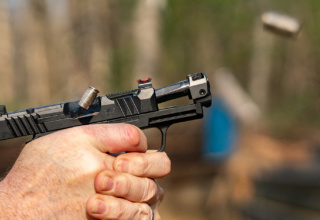
The dots are here to stay, which means your holster will need to accommodate. Here are some considerations for choosing the right optic-compatible holster.
by Bob Campbell
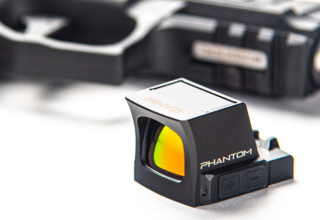
I have been eye-deep in carry optics for more than a few years. The field is fascinating on many levels. The technology is interesting and the handguns carry optics mount to are formidable firearms.
When you adopt a handgun and carry optic, the loadout — that is, the amount of gear that is carried — is more complicated and more expensive. A modern polymer-frame striker-fired handgun may be affordable, but when a carry optic and light are added, the total price may easily be double that of the handgun.
Training and ammunition must also be factored into the equation. This is a consideration for those who wish to be all they can be. The market has moved to adapt to these shooters’ needs.
There have been other trends that have not survived.
Laser sights are seldom seen and are largely a footnote in handgun history these days. A number of handguns have come and gone, along with what I call trick ammunition that never lived up to the hype. Carry optics are another thing. Proven in competition first and now in use with many police and federal agencies, carry optics are here to stay.
Support gear is important.
An overlooked component of the loadout is the carry holster. It takes some planning before you purchase a handgun. Be certain you can mount the carry optic of choice on the handgun. If the pistol is a common template, such as the Glock, holsters and support gear are plentiful. With other types, options diminish. If you feel that another handgun, such as the Walther PDP or CZ P10 C, offers an advantage in the trigger action or handling — and they may well be best for your needs — be certain you are able to obtain spare magazines and proper optic mounts. A price advantage in the initial purchase evaporates when you must purchase red dot mounts and magazines that are more expensive than the pistol.
A new model of concealed carry is the optics-ready holster.
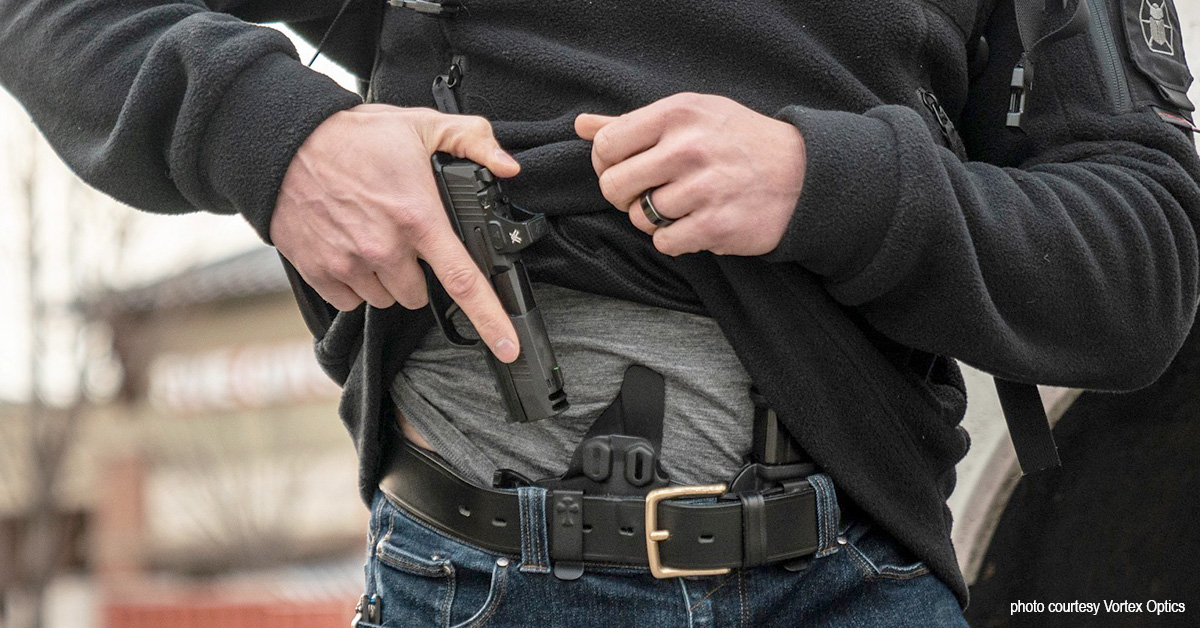
When you choose an optics-ready holster, the basics of construction remain the same. There is a spine, a holstering welt, molding, and a specific angle or cant. But there is more to the equation. All optics-ready holsters are not equal. Some simply feature a relieved section to accommodate the optic but without sufficient support to make up for the cut-out.
An optics-ready holster must be properly designed. Sure, some are re-designs of existing holsters, but they take retention and balance into consideration.
A long time ago, the first semi-automatic pistol service holsters were charitably revolver holsters with the cylinder bulge ironed out. Eventually, we got better. A proper holster is critical for personal safety. It is important for the safety of those around you as the holster must keep the handgun secure. The balance of speed and retention are critical. It is important to note that while a holster designed for a light requires the light to be mounted for proper retention, an optics ready holster may be used with a handgun featuring standard sights.
An Insider’s Perspective
I looked to Mike Barham at a premier American holster company, Galco, for insight into the trends for optics-ready holsters. Mike took time to lay it out well:
“Obviously, carry optics are selling and appear to be here to stay in one form or another,” Mike said. “Unlike a lot of trends, though, the carry optic movement is across-the-board. Young shooters, who are typically the early adopters of a ‘new’ technology, are demanding optics on almost all their guns. The current, limited exception is with pocket/deep-concealment guns, and even that’s changing fast. Look at the new KelTec PR-3AT, for example.
“There’s a strong subset of young shooters who’ll only carry a full-sized pistol with an optic and a weapon-mounted light in the appendix position, but even aside from that hardcore group, a large overall percentage of even more-casual younger shooters seem to prefer carry optics.
“It gets more interesting when we look at the seasoned shooters who comprise a big chunk of Galco’s customer base, though. These shooters are typically more conservative and slower to adopt newer technology; however, one of the perils of advancing age is presbyopia, the eye condition that makes all our arms too short to clearly see the fine print — or the front sight. These shooters have also adopted pistol optics in large numbers. Considering how optics have taken over so much of the handgun market — and their broad appeal to everyone from hunters to concealed carriers — Galco has made carry optic compatibility a major priority. For the last few years, most of our new designs have been laid out with optics in mind. Some holsters, like our Hawkeye IWB, were designed specifically FOR optic-equipped handguns. You’ll see more of that going forward.”
Mike continued, “Not only that, we’re also retrofitting many of our popular legacy designs to accommodate optics. For example, we just redesigned about a dozen of our extremely popular Stow-N-Go IWB fits to work with optics. Fortunately, in many cases, we’re able to do make these changes without compromising our older designs. There are some designs, of course, that don’t lend themselves well to these changes, but they’re in the minority. As I mentioned, unlike some of the hot trends of the past that went cold, it really seems like pistol-mounted optics are here to stay. We’re doing our best to stay on top of that trend.”
Choosing Your Holster
Optics ready handguns are used in all fields, from competition and hunting to personal defense. The most important consideration is to understand the handgun’s intended task. There are impractical choices, such as drop leg, forward rake holsters suitable for range use and little else. My primary focus is personal defense, with field use a secondary consideration. For field use, as in hunting or hiking, a holster that doesn’t rub or chafe on long hikes is essential. The holster cannot conflict with leg movement.
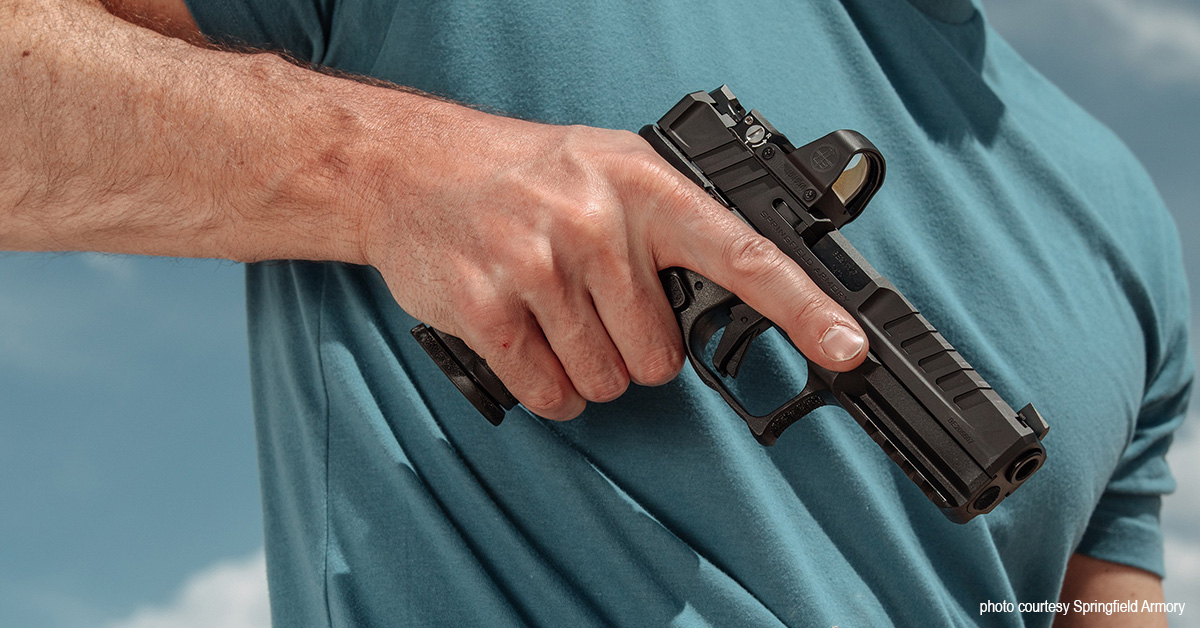
Some of us prefer a crossdraw for this type of duty. A flap that covers the optic isn’t necessary for most of us, but if you are traveling in the ice and snow and wish to keep the sight window open, a full flap is a great option.
For concealed carry, the holster must present the handgun at the proper draw angle.
The first step is deciding where the handgun will be carried. Behind the hip over the right rear pocket is good for inside the waistband holsters and slightly behind the hip for standard belt holsters. Midway between the hip and belt buckle is good for appendix carry. Crossdraw holsters are worn in front of the hip on the non-dominant side of the body.
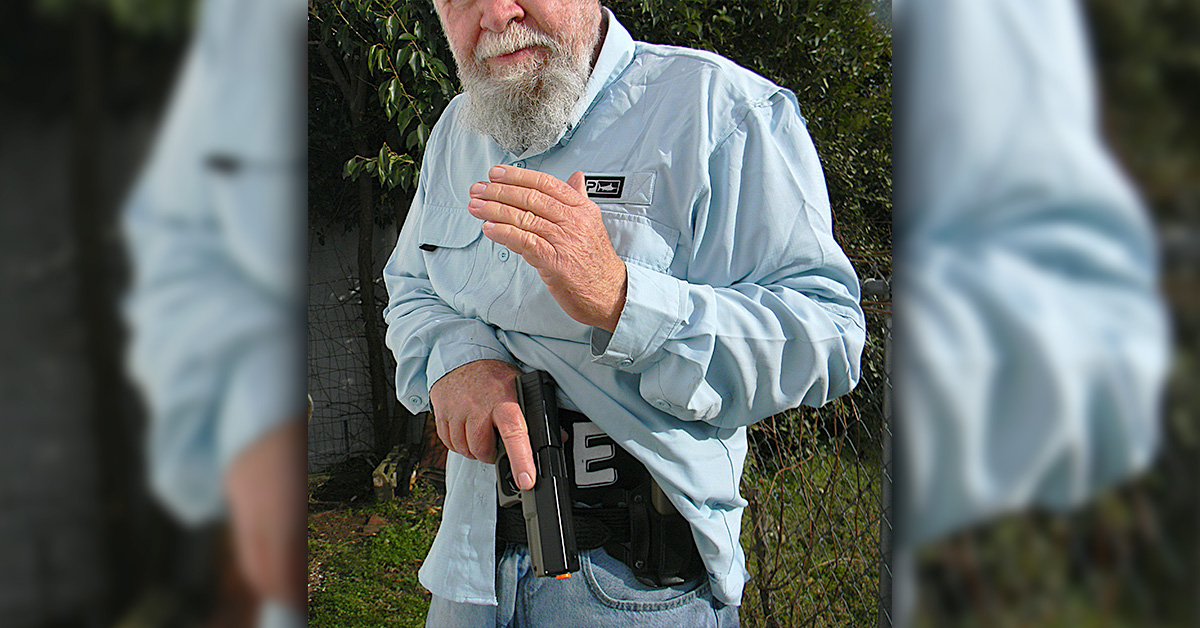
A fake gun is useful for scoping out the validity of each carry position. It doesn’t have to be a Ring’s training gun. A ten-dollar flea market Glock is fine. Don’t scoff. My example is dimensionally correct and even accepts a combat light! It is a great training aid, as only a fool uses a real gun in certain training situations. Place the fake in the waistband, behind and in front of the hip, and crossdraw. Practice the draw. Consider how often you walk, sit, or run. How comfortable is the carry option? How accessible is the draw?
The angle of the holster is termed tilt, rake, or cant. Only the tallest person will adopt a neutral cant and even then, only if they have a long waist. The higher the waist the deeper the draw angle is desirable.
Many shooters prefer a 15-degree forward rake with the handle ahead of the muzzle as viewed from the side. This is the standard cant for many concealed carry holsters. It was once called the FBI tilt because it was a good angle for use under a suit coat. Rear rake is used in competition holsters worn ahead of the hip and lower than most. They offer a very sharp draw but are useless for concealed carry or service carry.
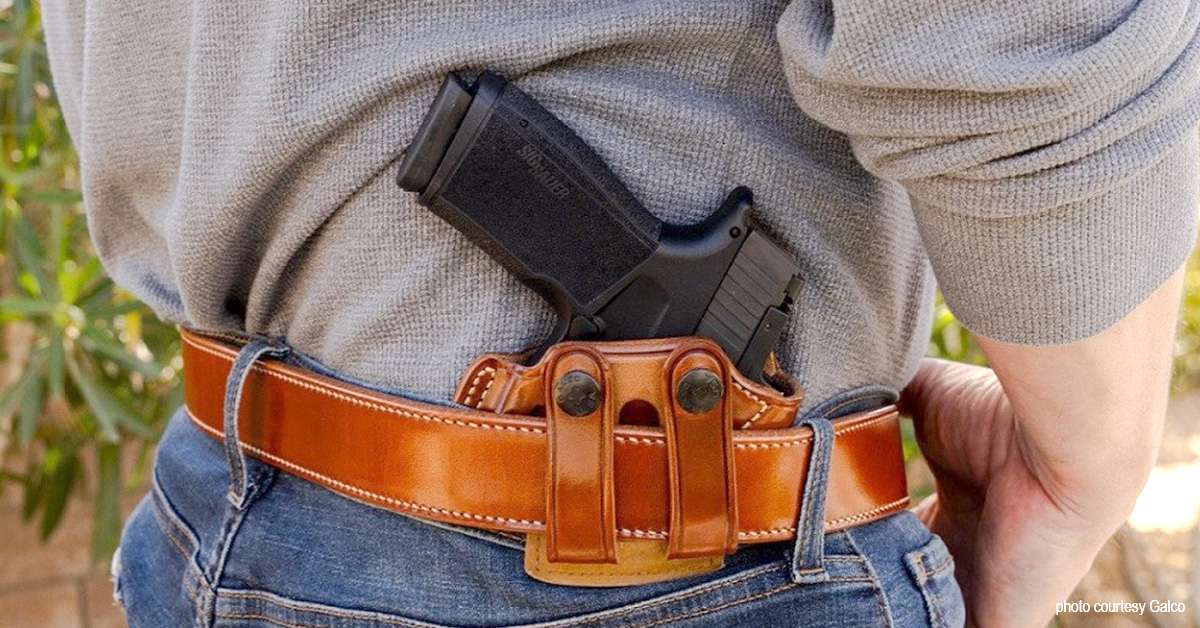
Another consideration is drop. Drop is the height of the holster above or below the waistline. For an IWB holster, a high ride is desirable in order to provide a good draw angle. For some types of concealed carry, a deeper ride in the waistline is preferred. A high-ride holster with forward rake is the most desirable for OWB-type holsters. Drop and rake play together for speed and security.
An IWB holster is best for deep concealed carry and offers many advantages. A full-size handgun is more easily concealed when the holster is worn inside the pants. The longest part of the handgun is buried in the trousers. A long covering garment isn’t needed to cover the holster, only the exposed part of the handgun need be concealed. A heavy T-shirt is adequate to cover most IWB holsters. A full sports shirt is needed for other types.
While the draw is compromised by a holster worn inside the waistband, with practice, speed can be good.
Also, be certain the holster features good retention. I like to turn the holster upside down and ensure the unloaded handgun is retained. An IWB with a looser fit — but not too forgiving — will retain a handgun well since body compression aids in keeping the handgun secure. A shoulder holster will feature a retention strap; a chest holster may be well molded without a strap.
Whatever type of holster you choose, Kydex or leather, IWB or OWB, there are rules for the holster. The handgun must be properly retained. A sweat guard protecting the handgun from body oils also protects the body from sharp edges. Secure attachment to a proper gun belt is vital to security and speed. The holster absolutely must remain in position during movement.
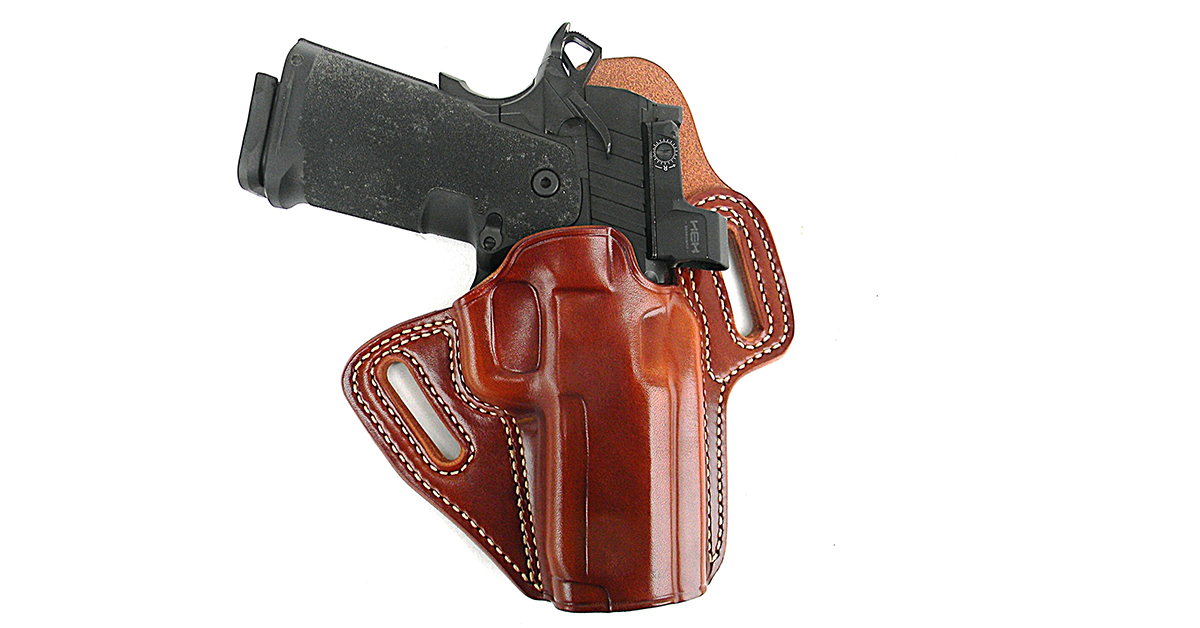
How the optic glides into the holster and how the handgun is drawn are important. In my experience, it is best if the optic, when holstered, doesn’t quite touch the holster mouth. Holster fit should stop the optic just a fraction before it touches the holster welt.
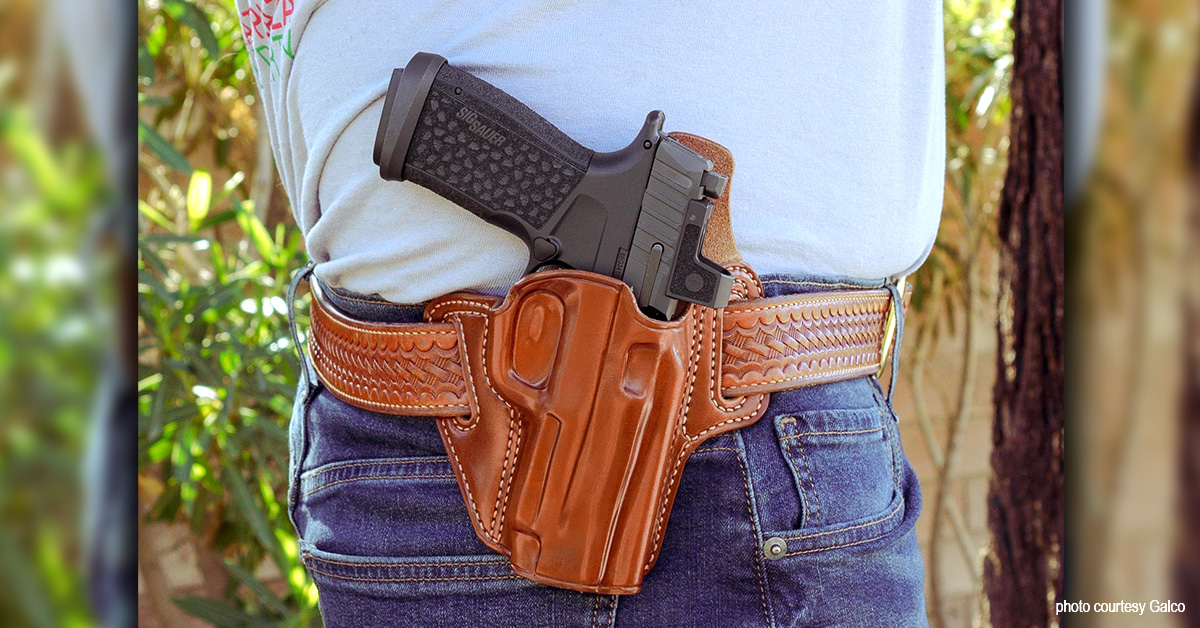
A new type of holster features an accommodating pocket for the carry optic. The Galco Hawkeye is one example. This leather IWB holster features dual belt loops that keep the holster cinched in closely to the body. The holster is delivered with a desirable forward tilt. The optics shroud is well designed and offers protection for the red dot sight. At present, the Hawkeye is available only for compact handguns.
On The Shoulders
The shoulder holster isn’t for everyone, but it is a viable option for concealed carry. These harnesses take weight off aching backs and are suitable for concealed carry with practice. They feature a retention strap in most cases, as retention must be a little more generous due to the nature of the draw. These holsters lend themselves well to optics-ready modification. I don’t use chest holsters often.
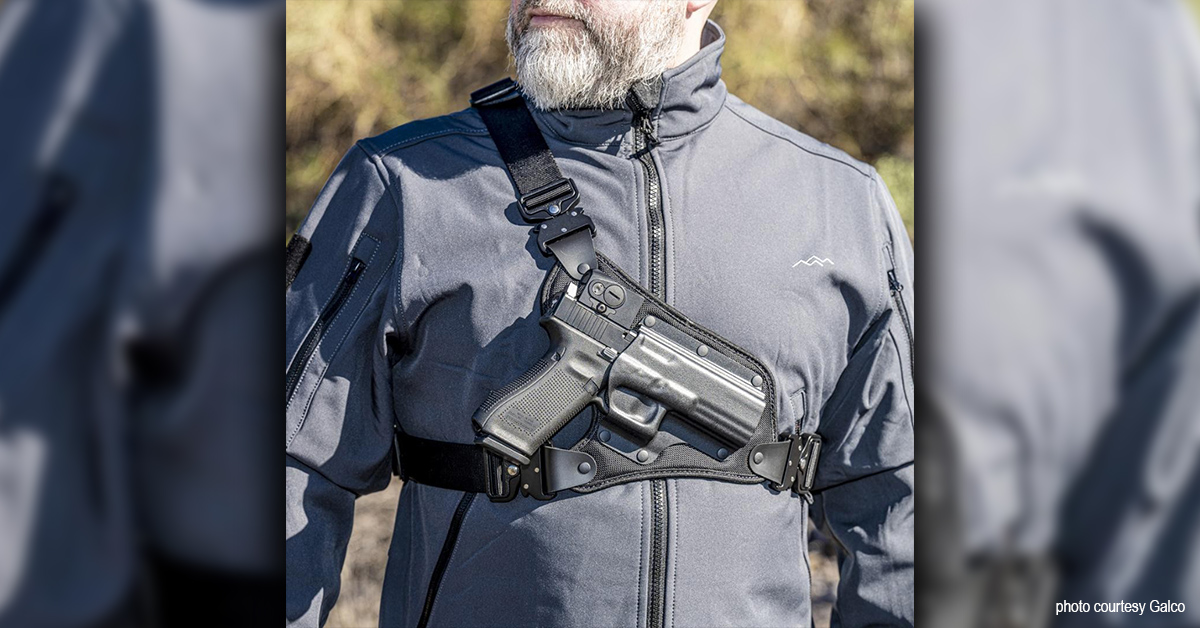
During the cleanup for Hurricane Helene, I saw many citizens and officers utilizing chest holsters. They kept the handgun out of the way during work and offered a secure platform with a reasonably sharp draw. No retention strap is needed for some of the designs, and they work well for outdoors use.
The Presentation
The elements of the presentation with a carry optic-equipped handgun are not much different on the draw. Shoot the elbow to the rear as the hand comes up from underneath to scoop the handgun out of the holster. I don’t complicate matters with a three-step draw. I practice enough to get the pistol up and out toward the threat, and I don’t begin with my hand on the pistol. I begin practice with hands up and at shoulder height. The difference in the presentation is in how the handgun is presented to the target.
A sharp draw leads to the firing stance and getting the sight on target. Keep both eyes open and superimpose the red dot on the target. This results in rapid target acquisition and accuracy. That is the key — getting the pistol into action quickly and making an accurate shot. Do not place the finger on the trigger until you are ready to fire.
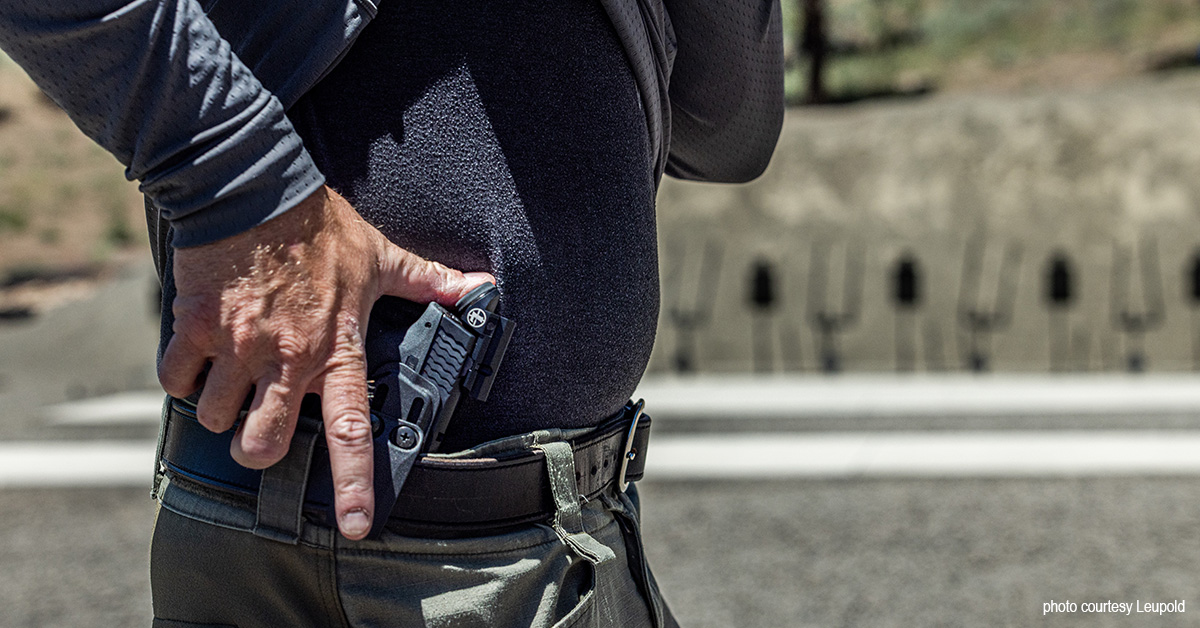
A carry optic is an important addition to a defensive handgun, but don’t neglect the important choice of a weight-bearing device that offers real speed and security. The optics-compatible holster deserves study before you make your choice.