The CZ 75 is said to be the only 9mm pistol to receive Col. Jeff Cooper’s nod
by Paul G Markel
The year 2026 includes a number of significant anniversaries and reasons to pause and consider where we are versus where we were. The United States of America is celebrating our Semiquincentennial (250 years). For those of us who were around in 1976, the word “bicentennial” was much easier to pronounce and discuss in conversations.
This year, Beretta celebrates their 500th birthday and the 50-year anniversary of the Model 92 pistol (M9). Over in the neighboring Czech Republic, CZ (Česká zbrojovka a.s.) or simply the Czech armoury, is celebrating fifty years of their signature CZ 75 pistol. Despite the “75” in the name, the CZ 75 was developed in 1975 but not fully released to the public until 1976.
Of course, when it comes to the true birthday of a gun, or any product, there is always some gray area. Historians will say things such as, “Well, John Browning actually drew up the plans for his new pistol in 1909 and started making prototypes in 1910. So, the gun pre-dates 1911.”
Interestingly, out in the Arizona desert, a full stone’s through from Prescott, Gunsite Academy is celebrating their 50-year anniversary as well.
As I mentioned at the beginning, 2026 is a big year.
The Year Was 1976
For those who were either in diapers or not yet born, in 1976, while the USA was celebrating our 200-year birthday, the world was in the middle of the Cold War. Americans truly wanted to take a break just to have a party in July of ’76. The sting of the Vietnam War surrender was still on people’s minds. The Nixon/Watergate scandal had led to a place-filler president in the form of Gerald Ford and the nation was naively about to elect a peanut farmer from Georgia.
The USSR and Warsaw Pact nations were still very much a threat, attempting to spread the evils of communism throughout Europe, Asia, Africa, and Central and South America. Although the United States and the Soviet Union never fought directly, their proxies did so all over the globe in places like Korea, Vietnam, Angola, Rhodesia, Sudan, Lebanon, Afghanistan, Malaysia, Nicaragua, Laos, Thailand, and many more.
NATO and the Warsaw Pact were in a constant process of upgrading and improving their arsenals from the antiquated rifles and pistols used to fight WWI and WWII. On both sides of the iron curtain, small arms manufacturers were building and testing new guns. Czechoslovakia was no exception. Yes, during the Cold War, the CZ plant was in Czechoslovakia.
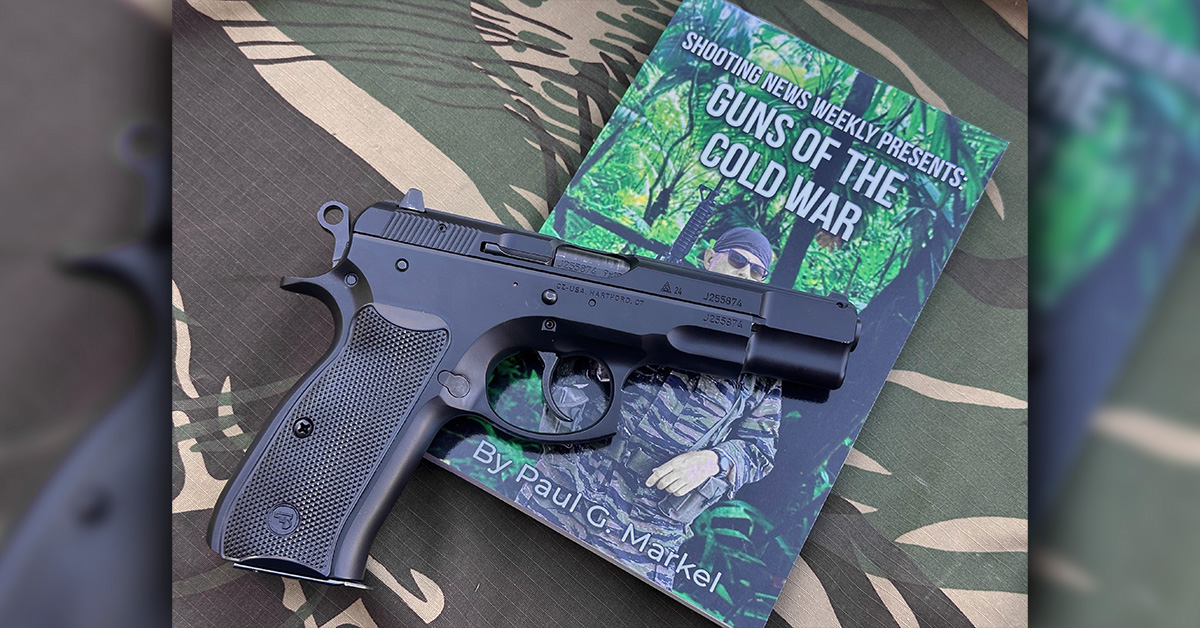
The Czechs were unique amongst Warsaw Pact members in that they did not just license and copy whichever guns happened to be coming out of the Soviet Union. Another distinction was that while a member of the Warsaw Pact, Czechoslovakia was never a member of the Union of Soviet Socialist Republics.
CZ 75 Pistol
The truth is that the CZ 75 pistol was more on par with the pistols being made in Europe than those in the Soviet Union at that time. The Italian double-action Beretta Model 92 shares a 1976 birthdate. The DA SIG Sauer P 226 did not arrive on the scene until nearly ten years later. Of course, in the United States, Smith & Wesson had the Model 39 DA/SA pistol which the US Navy Seals used for some time in Vietnam. From a historical standpoint, the most successful DA/SA pistol up to that point was the original Walther P38, and it was that handgun which laid the groundwork for others to follow.
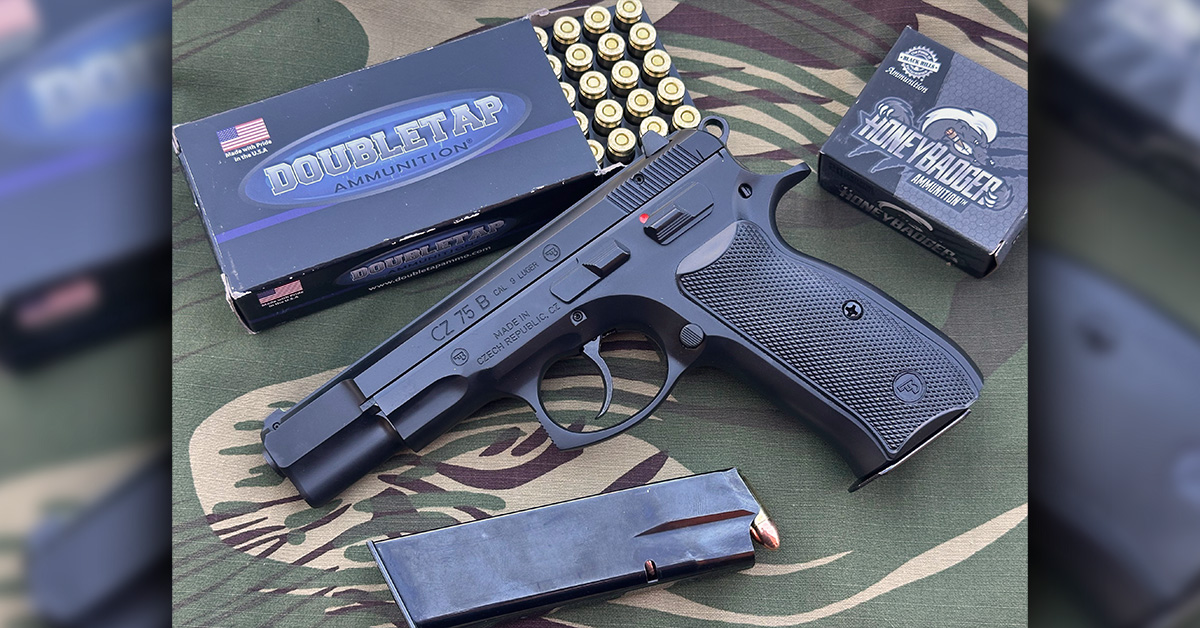
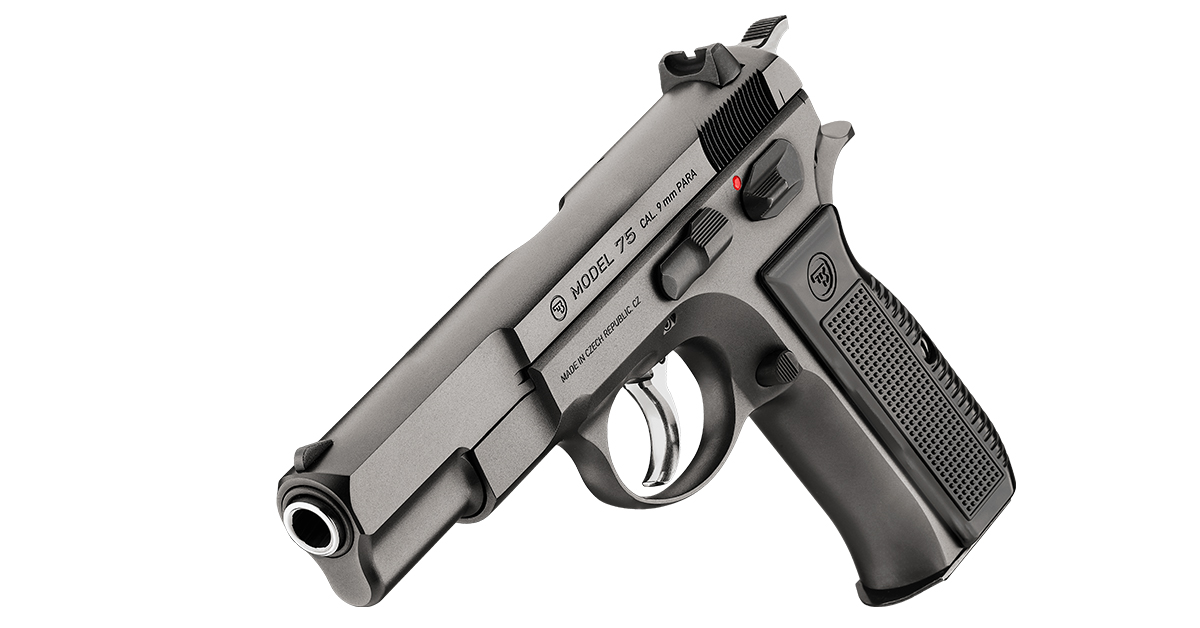
Quite the robust pistol, the CZ 75 was constructed of a forged steel receiver and slide with black polymer grips. Unique to most pistols being manufactured at the time, the slide of the CZ 75 is recessed into the rails on the frame, not the other way around as most all modern semi-automatic handguns are constructed. This feature is credited with giving the “75” reliable accuracy as well as sturdy function. The frame on this pistol is also referred to as a “short rail” frame.
Controls on the CZ 75 include the curved trigger, an exposed hammer that has come in both spur and rounded configurations. Speaking of the hammer, the pistol has a “hammer notch” safety à la M1911, and there is an internal firing pin block.
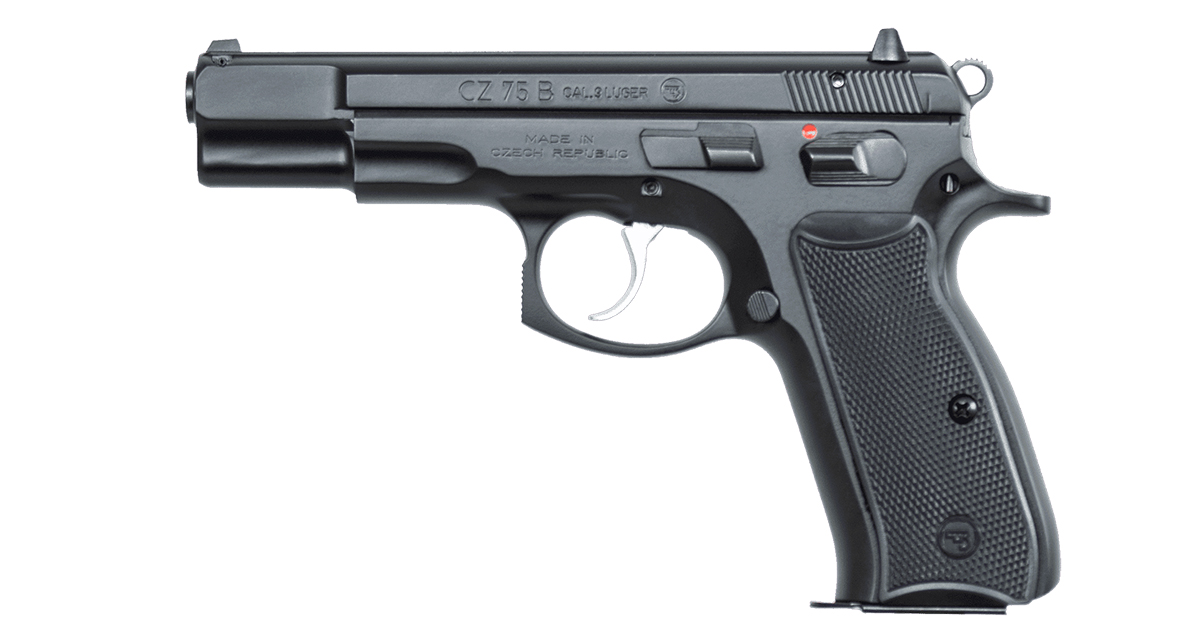
On the left side of the frame, you will find a manual safety lever in the normal location for the right thumb to activate and a slide lock lever in front of it. The magazine release button is found to the rear of the trigger guard on the left side. The manual safety can only be engaged when the pistol is cocked in the single-action mode. If the hammer is all the way down or in the notch safety position, the manual safety lever cannot be engaged.
The design of the frame has been aptly described as “ergonomic” and “shooter friendly” and it certainly is both of those. Over the years, many clones of the CZ 75 have been made replicating the grip angle and design.
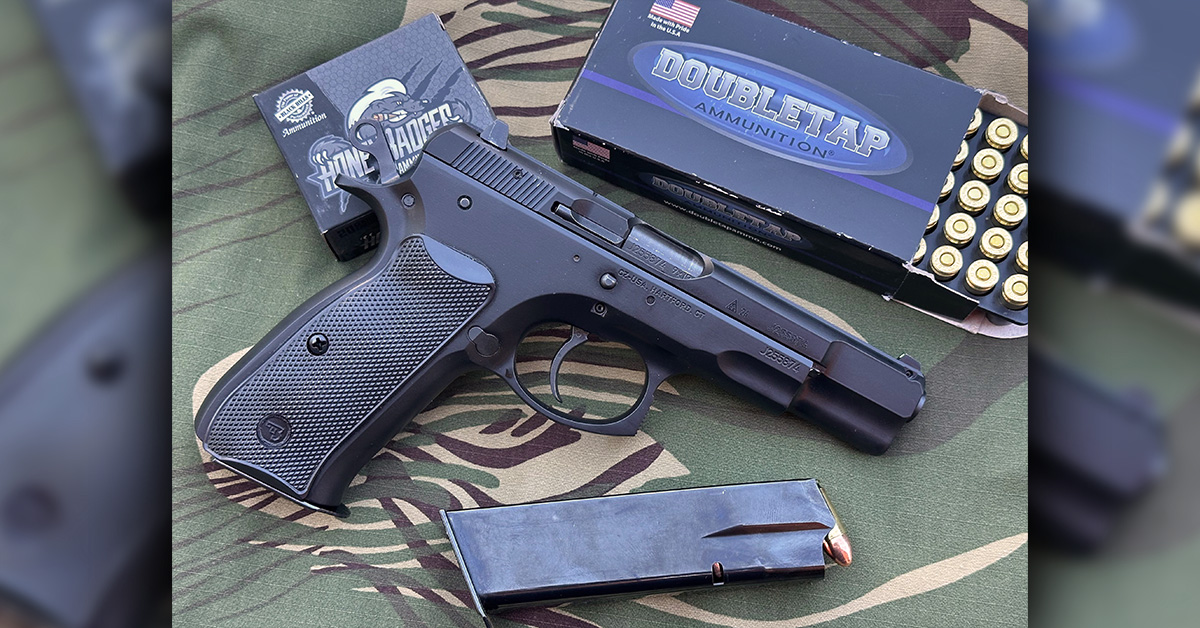
Interestingly, unlike the Beretta, SIG, and Smith & Wesson DA/SA pistols mentioned earlier, the original CZ 75 does not have a decocking lever. When a round is chambered, the hammer is set in single-action mode and the user can simply engage the manual safety lever and carry the pistol as you would an M1911A1 or a Browning P35 Hi-Power. The only way to lower the hammer to the “notch safety” is to pinch it between the thumb and forefinger of the non-shooting hand and very slowly and carefully press the trigger to release it. Naturally, this is not a technique for neophytes and should be done while exercising the most extreme amount of caution. A better way is to simply practice chambering a round and engaging the manual safety.
Although I cannot say for certain what was going on in the minds of the Czech engineers fifty years ago, I can say that at that time the common practice for soldiers was to carry their handguns with the hammers down on an empty chamber and a loaded magazine inserted. When I entered the United States Marine Corps in 1987, that method of carry was still the official practice for the M1911A1 and it did not change until units were issued their Beretta M9 pistols. Were I a betting man, I would venture to say that in 1976, soldiers in the Army of Czechoslovakia were not allowed to chamber a round in their pistols until they intended to fire them, as in chamber-empty carry.
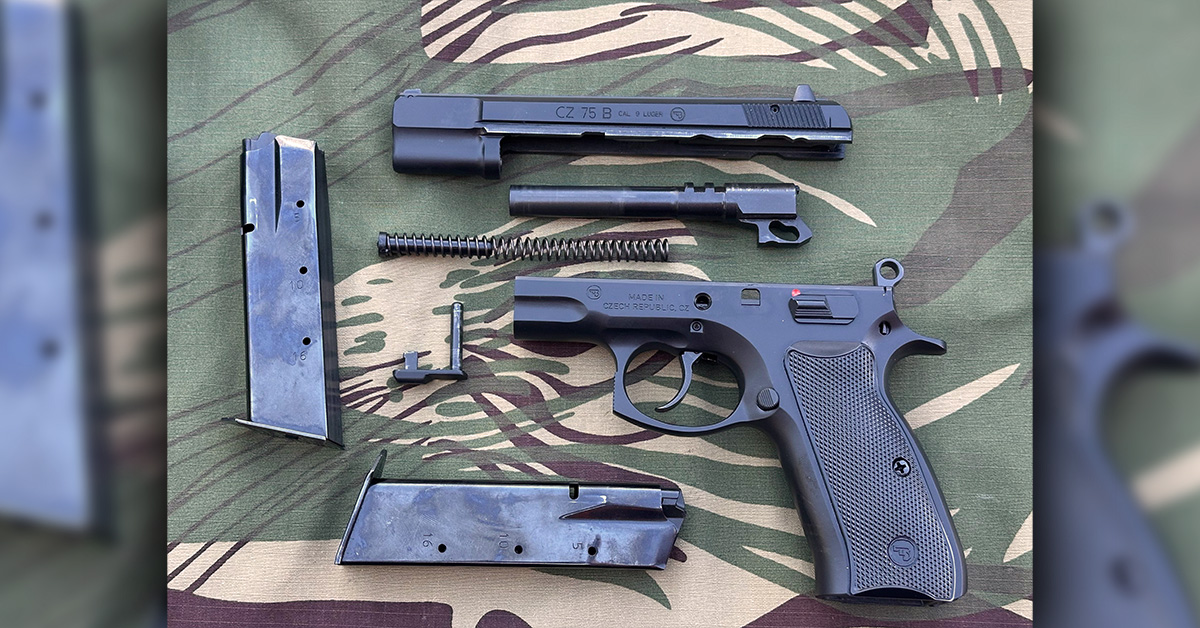
Chambering the 9x19mm cartridge, the CZ 75 used a staggered or dual-column 16-round magazine. This gave the pistol three more rounds than the P35 and one more round than the M9 and the P226. The choice to use a 9x19mm round was rather rebellious as the Soviet Union was using both the 7.62x25mm and the 9x18mm Makarov cartridges at that time and the 9mm Luger was also dubbed 9mm NATO, the choice of the western enemy. The Czech engineers did produce a CZ 83 in 9x18mm Makarov, as well as a .380 ACP version of that same gun.
Gunsite, Col. Cooper, and the CZ 75
After retired Lt. Col. Jeff Cooper left California and moved east to the desert outside of Prescott, Arizona, he found a permanent home for his American Pistol Institute, Gunsite, or more formally Gunsite Training Academy. It was fitting that Col. Cooper would found Gunsite during our nation’s bicentennial birthday.
For those who know their American firearms history and the lore surrounding training, it is no secret that Col. Cooper, the father of the Modern Technique, was a huge fan of the M1911A1 pistol and the .45 ACP cartridge. Those who grew up reading Cooper’s works clearly understood that he did not have much use for the “European caliber” that was the 9mm Luger nor for most any pistol chambering that round.
It is absolutely canon, though, that Col. Cooper made the exception to the rule when it came to the CZ 75. One could argue that the CZ 75 was the only 9mm handgun of which Jeff openly approved. So taken by the CZ 75 was he that his baby, the Bren Ten, was designed based upon the CZ 75. A beefed up 10mm Auto version of the CZ 75, the Bren Ten would not see commercial success much beyond the notoriety of being carried by Don Johnson as “Sonny Crocket” during the initial run of Miami Vice.
Shooting a Real Steel Gun
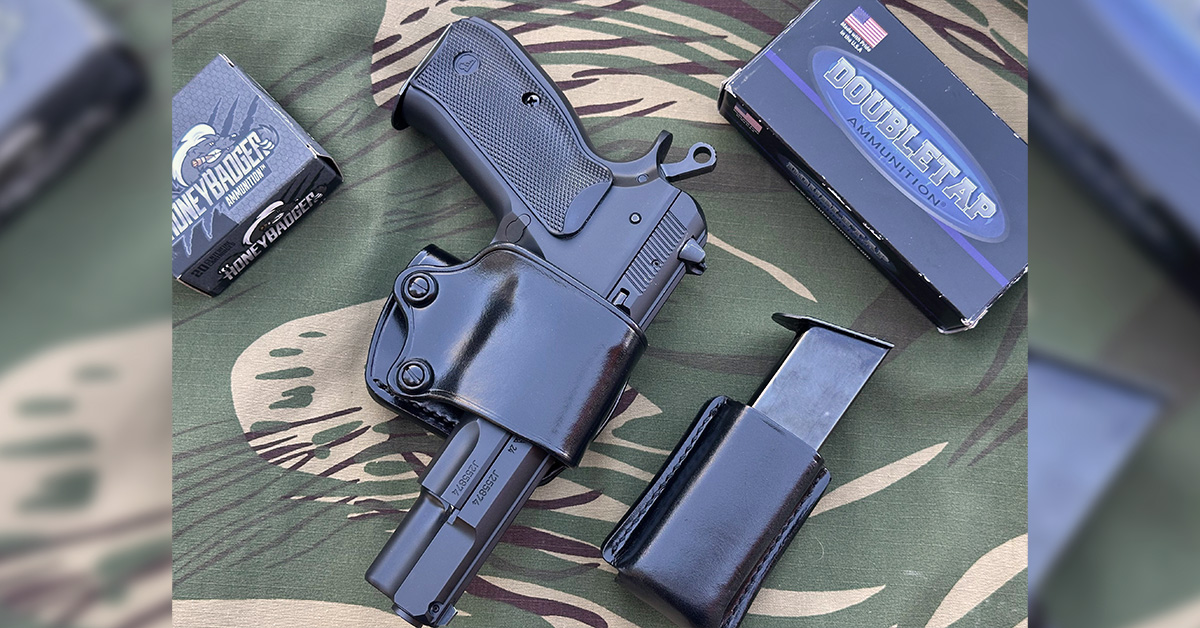
For this review, I tapped my pals at Galco for a “Yaqui Slide” genuine leather holster, the go-to of Col. Cooper himself. The black leather holster was paired with a leather mag pouch and belt, both from the Galco catalog. The only plastic in this review would be the black grips on the pistol. Other range accessories would be 9x19mm ammunition from Black Hills ammo and Double Tap as well as an extended capacity Mec-Gar magazine that I picked up.
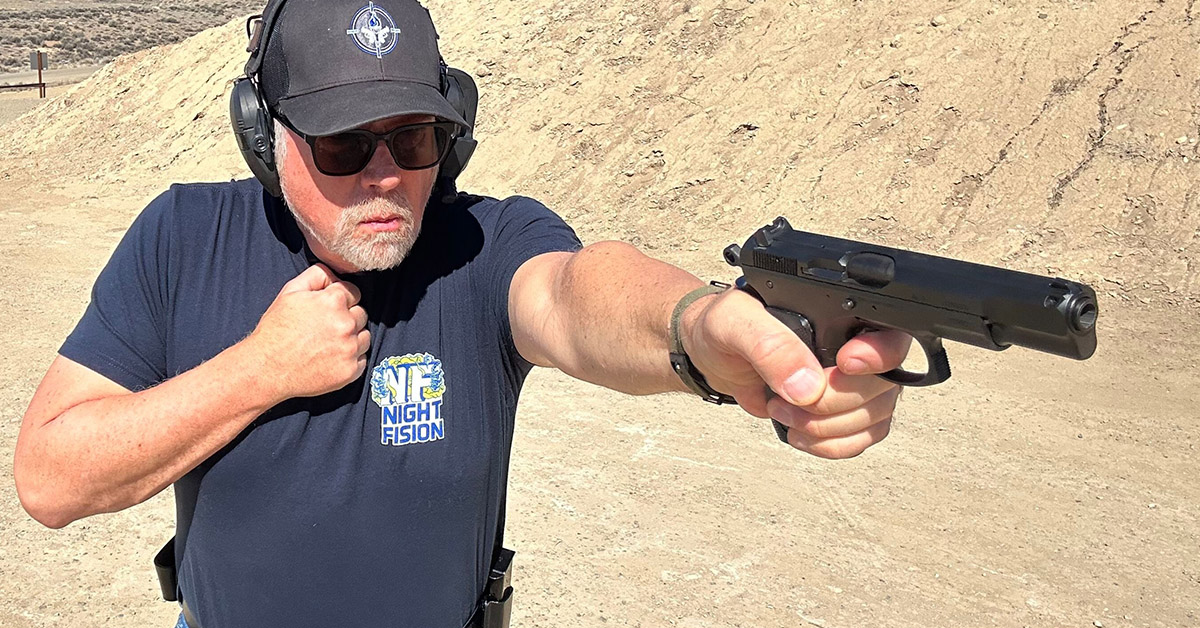
I must admit that I do spend a considerable amount of time training with and testing the modern polymer-framed, striker-fired (PFSF) guns. This opportunity to shoot a 100-percent steel DA/SA pistol was like reuniting with an old friend. The original CZ 75 has iron sights and no optic mount feature. The slide is solid without any superfluous holes carved in it so you can see the barrel. Somehow, back in the Cold War, shooters were able to manage the massive recoil of the 9mm cartridge without the aid of ports or compensators.
In 1976, if you wanted your M1911A1 to cycle controlled-expansion (hollow-point) ammunition, such required the attention of a qualified gunsmith. Not so with handguns chambering the 9mm NATO. The OG CZ 75 cycled all manner of ammunition, to include the hollow-points and the FTM “HoneyBadger” with monotonous reliability. The all-steel pistol tips the scales at 35 ounces — plenty of mass to keep the gun on target and dampen felt recoil.
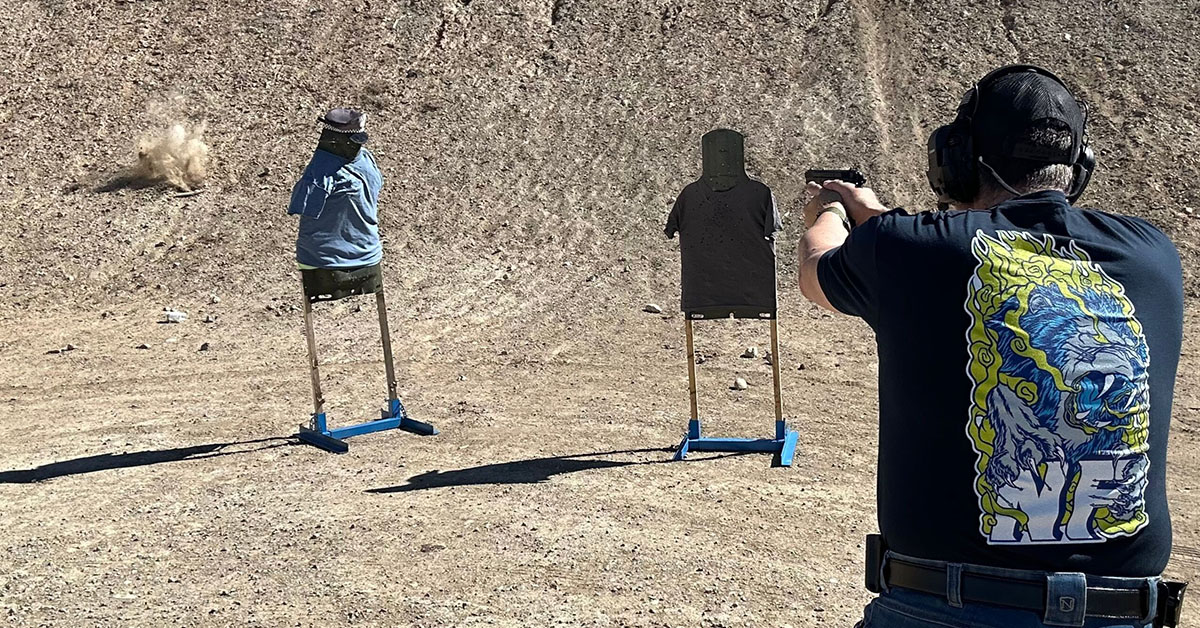
I spread out my range time over a couple of unusually warm days up here in the mountains. Before I sat down to type these words, I generated a few hundred pieces of once-fired brass. No, that’s not a “torture test” but hundreds and thousands of men who came before me already took care of that.
As strange as it sounds, chatter in the community has shifted back to double-action pistols. Whether or not such talk ever gains any traction, I find it interesting to take some time to consider where we are today versus where we were not so long ago. If someone were to wave a magic wand and make all the PFSF pistols disappear, I don’t feel that I would be undergunned or at a disadvantage with an old Cold Warrior like the CZ 75.