Lessons from yet another tragic incident point to the role of responsible citizens and the internal processes involved in a gunfight
by Paul G Markel
Once more, we are dealing with a mixed bag of feelings regarding a rampage killing at a school and the justifiable use of deadly force by an armed citizen. Again, we have an evil teenage monster, so corrupted and rotten that he would murder innocent children. Three children and a teacher were murdered after the killer shot through the locked doors to enter the school. Had it not been for the rapid action of the armed citizen, Mr. Kaylub Giamanco, the death toll would most certainly have been much higher.
In typical fashion, after the obligatory “attaboys” from politicians and other government officials, those who create “Gun Free Kill Zones” — the places that 99% of rampage killers seek out — they are all done talking about the situation. In this case, the killer used a Maverick shotgun, not an AR-15; therefore, sensationalizing the gun or calling for more bans don’t really have any sticking power.
For the thoughtful and mentally mature members of the audience, though, we expect that there has been a lot of introspection and consideration regarding the reality that only a good guy with a gun can stop a bad guy with a gun.
Over the weekend, I saw a post that stated words to the effect that, “How long a rampage killing lasts is directly tied to the time it takes for a second gun to arrive.”
Examining that statement with an honest mind reveals no falsehood.
While we applaud the good Samaritan from afar, it is easy to focus on the brief moment in time that was the actual gunfight between two armed persons. That is the World During the Noise; however, there are three different worlds that must be considered when we are looking at the justifiable use of deadly force.
The 3 Worlds of the Gunfight: World 1
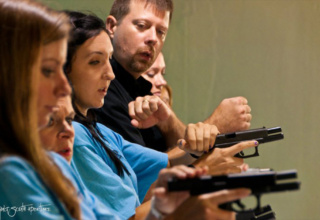
We have explained to our students that there are three “worlds” that exist or surround a gunfight. There is the “World Before the Noise” (WBN). This is your pre-fight world, where you are going about your life as scheduled. How prepared or unprepared you are to deal with a fight is determined by your mindset. Did you engage in rigorous and serious training before this moment? Do you practice to maintain a level of skill? Are you even carrying your gun today? All those decisions were made or not made by your prefrontal cortex (PFC). Remember, if you chose not to decide, you still have made a choice.
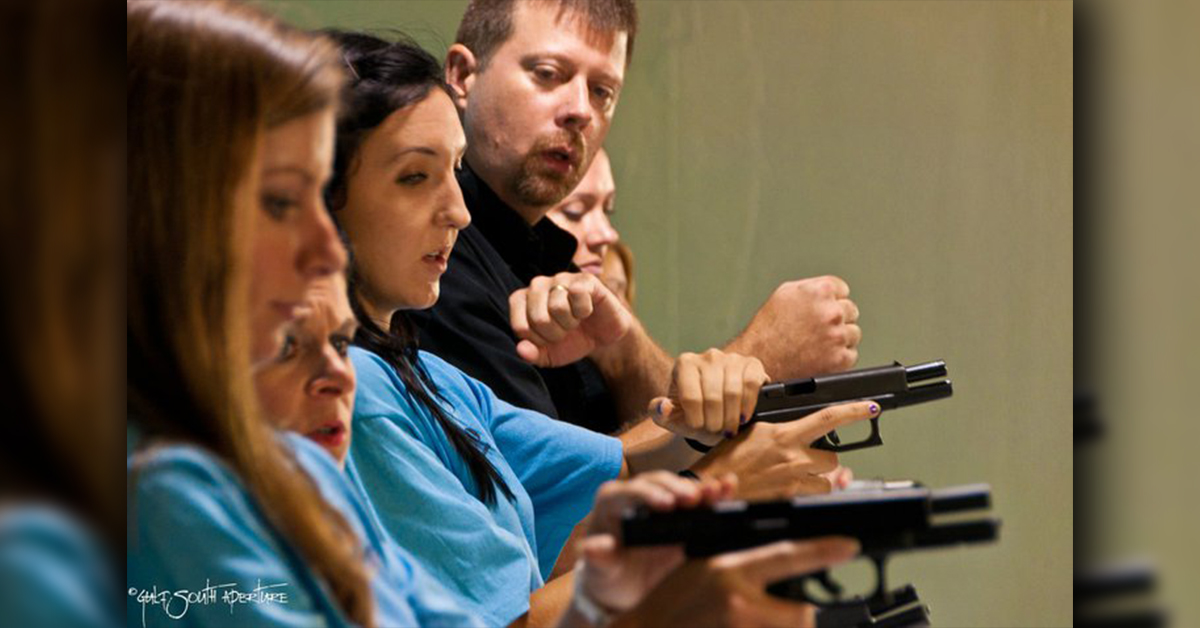
Your choice to be aware of your surroundings first begins as a deliberate decision made by the PFC. Altering your behavior from being oblivious to being aware will eventually fall into the habit formation, or routine, as controlled by the basal ganglia (BG). You don’t think about keeping your head up and being aware, you just do so as a habit. Every time you walk out of the store into the parking lot, you reflexively take in the entire scene. That is a habit.
The WBN is the world where your PFC recognizes the information, or signals, that indicate a deadly threat has materialized or is likely. The information processing begins and the amount of time that your brain requires to come to a decision will be largely based upon experience and training as well as the brain’s actual health and processing ability.
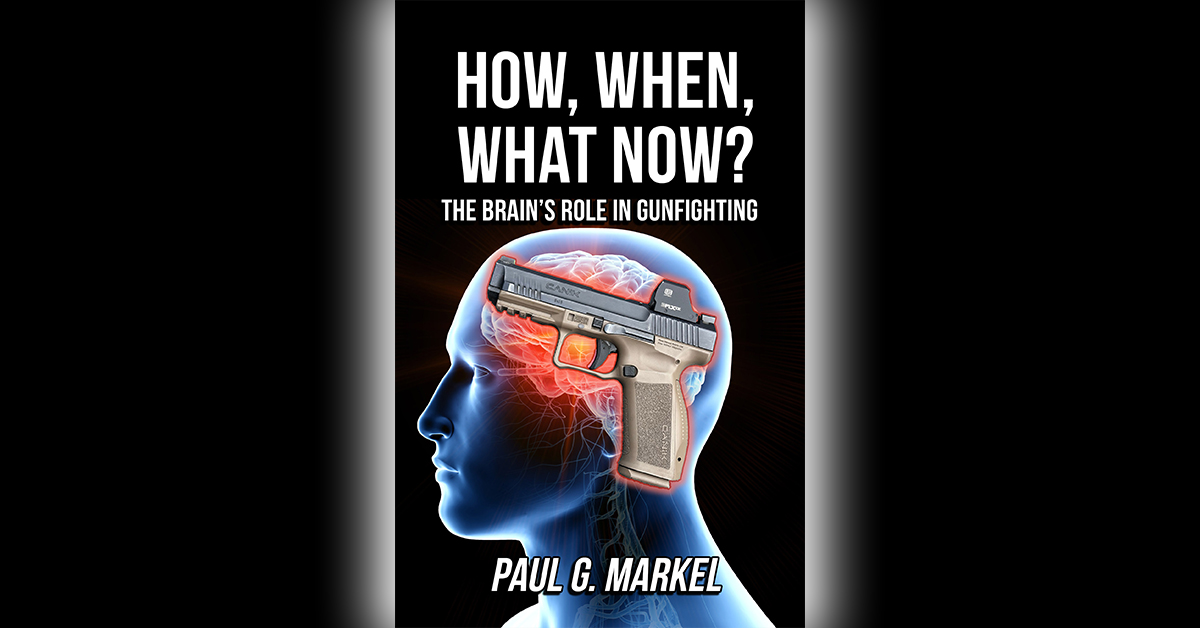
Coming to the realization that a deadly threat is present, the basal ganglia springs into action. Whatever you have programmed your body to do, it will do. I have spoken to police officers who related the first time they had to draw a gun on a threat. The common response was, “I saw the threat and the next thing I knew, my gun was in my hand and pointed at it.”
That is how it is supposed to work. We would not want the PFC going through the deliberation process and saying, “Hey, where is your gun?”
“Remember to deactivate the retention mechanism on your holster.”
Or, “Draw your gun, push it out, and find the sights.”
We pre-program all the necessary movements into our habit formation center to clear the deck for the PFC. The only decision process that the PFC should be making at that moment is “press the trigger” or “don’t press the trigger.”
The 3 Worlds of the Gunfight: World 2
The “World During the Noise” (WDN) occurs the moment all the information has been processed and the PFC has given the command to fire the gun. During the WDN, once again, you will perform as you have been trained and practiced. You will keep shooting until the threat is no longer present or the situation changes to the point where you need to stop shooting.
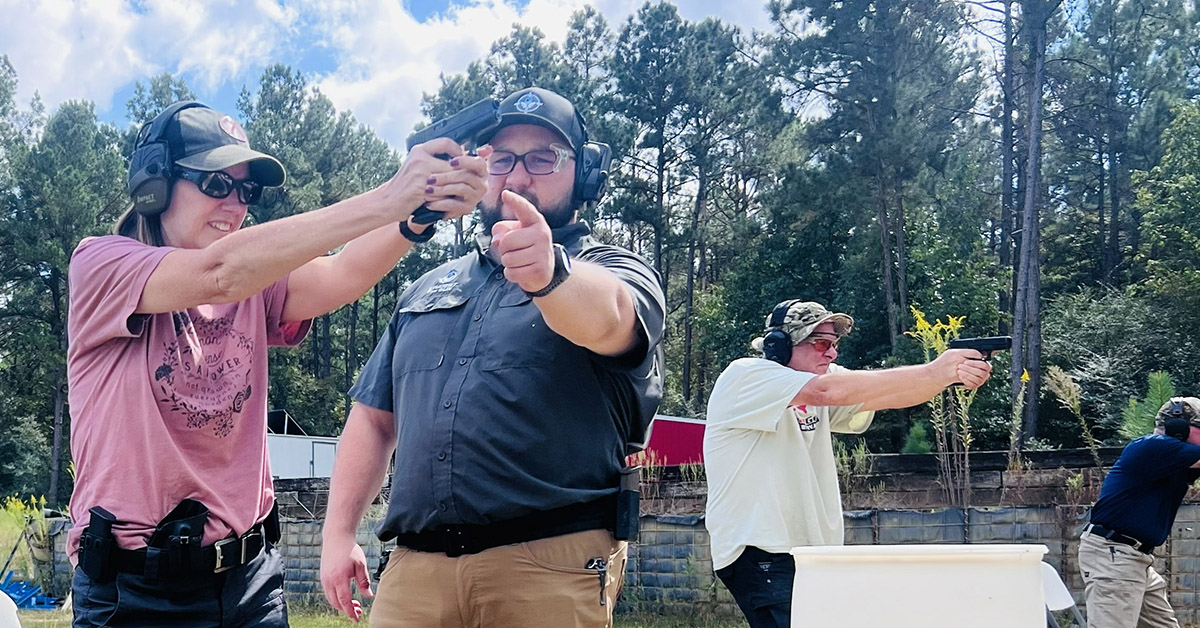
Even during the WDN, we don’t send the PFC on vacation. The PFC and BG are working in concert. For example, if your gun is supposed to be making noise during the WDN but stops, the BG makes you get your gun running again. If your gun runs out of bullets, your BG finds more and instantly feeds your gun — all without having to stop and make a conscious PFC decision to do so. That is, unless you have pre-programmed conflicting information into your cerebellum and motor complex.
The 3 Worlds of the Gunfight: World 3
The WDN is hyper-violent and generally over rather quickly. Then we need to deal with the “World After the Noise” (WAN).
What we reinforce to our students is that the WBN and the WAN are going to be two dramatically different worlds. Things have changed. This is when you must assess and scan. You need to take in the whole world around you, not just what is directly in front of you. Tunnel vision or target fixation is built into our human survival instinct. The animal wants to see the threat. The surest way to break out of this state is to physically turn your entire body, not just your head, and force yourself to examine the world.
Where are the people who were standing next to you in the WBN? Are there more threats present? Bad guys bring friends and accomplices. When we scan the world, we are looking for good guys and bad guys. If you spot another threat, the WDN could begin all over again. Are the good guys injured? Are you injured? Yes, you could be shot/hurt and not realize it yet.
Is the situation stabilizing or coming apart? Do you need to make a hasty exit? Where is the safest, best exit? Remember, the herd of sheep will rush toward whichever entrance they came in. Your best route might be an alternate exit.
As you can imagine, during the WAN, as well as the WDN, your prefrontal cortex is going to be in 5th gear. You are rapidly taking in new information and processing it. The chemical cocktail that was dumped into your veins when your brain perceived a deadly threat can do strange things. There will be time/space distortion. Most people say that time “slows down” under the effects of adrenaline. Actually, what is happening is your prefrontal cortex is taking in and processing information, primarily visual, at a much faster rate than normal.
Most people experience auditory exclusion as the brain attempts to shut out distractions. Your physical abilities will not “rise to the occasion.” What will occur is that your body will do whatever you have programmed it to do, and by that we understand that your brain will make your body do what it has been programmed to do.
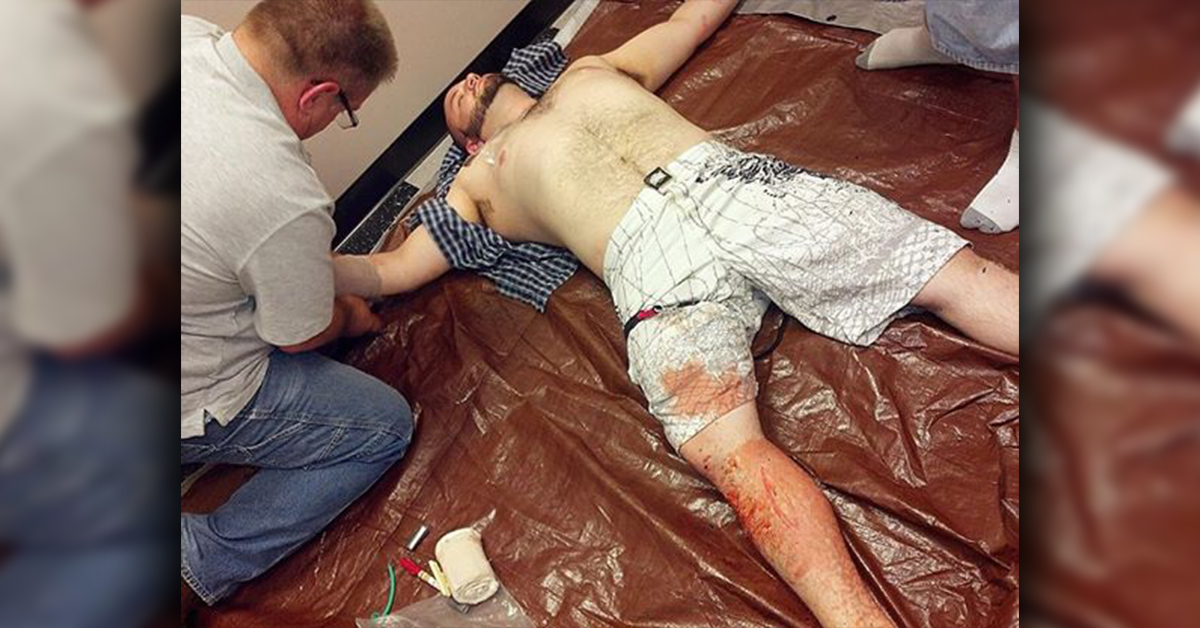
If you need to apply traumatic medical aid, put a tourniquet on yourself or someone else, your ability to do so will either be spot on and rapid because you programmed your cerebellum to do so or it will be a disaster as you haphazardly try to get it on. Did your mindset, your PFC, make you put a med kit in your pocket that day (WBN) or did you decide to leave it on the dresser?
More Brain Stuff
Let’s take a moment to consider a critical part of the human brain that is largely overlooked: the anterior Midcingulate Cortex (aMCC). We know that the aMCC is the portion of the brain responsible for willpower and the will to live. Additionally, we have discovered that the aMCC can grow or diminish (strengthen or weaken) based upon our behavior and habits.
During the WDN and the WAN, you may have experienced injury. You may be undergoing psychological shock from being suddenly forced into a life-or-death situation. Your ability to fight through the shock, the pain, the injury, or your succumbing to those will be determined by the strength and health of your aMCC.
Scientific research has proven that the aMCC actually grows and strengthens from voluntary hardship. I suppose we should settle on a definition of what voluntary hardship means to us for this discussion.
While voluntary hardship might be slightly different for each person, we consider it to be deliberately engaging in an activity that is not comfortable, not convenient, and not the easiest way. The perfect example is barbell strength training, specifically, the barbell squat. Go to your favorite gym and most of the time the squat rack will be empty while people flock to the cable machines. Why? Because performing a correct barbell squat is hard. Doing so with consistently heavier weight is hard. It is not comfortable. Therefore, most people, even those who strength-train regularly, will not squat. The good news is that just as we can strengthen and improve our prefrontal cortex, our hippocampus, and other portions of the brain, you can strengthen your anterior Midcingulate Cortex and strengthen your will to live.
On the Other Side
In the World After the Noise, there may very well be innocent people bleeding to death around you. Life is not a video game. Shooting and killing the bad guy does not instantly heal the injured. My good friend, Jay Gibson, constantly reminds his students that, “Just because the noise stopped does not mean the fight is over. There is still a lot to be done.”
As you take stock of your own personal readiness to be that good Samaritan if called upon, you need to consider the three worlds of the gunfight and understand that having a gun is only one part of the total equation.
Your responsibility to be ready for the fight never ends.