Classically styled with a functional twist, the Case Axe Handle slip-joint folder is an everyday/everyman pocketknife
by Dexter Ewing; photos by Marty Stanfield, Marty Stanfield Photography
If you are into custom-made slip-joint knives, chances are high that you have heard of Bill Ruple. He is currently one of the leading slip-joint custom makers. Ruple hails from Pleasanton, Texas, and is a member of the group of Texas-based knifemakers known as the “Slip-Joint Cartel.”
In 2024, Case unveiled their new Axe Handle single-blade slip-joint folder, designed entirely by Ruple. If you’ve always wanted one of his custom slip-joints but were unable to afford a custom, here is your chance to own one of Ruple’s designs.
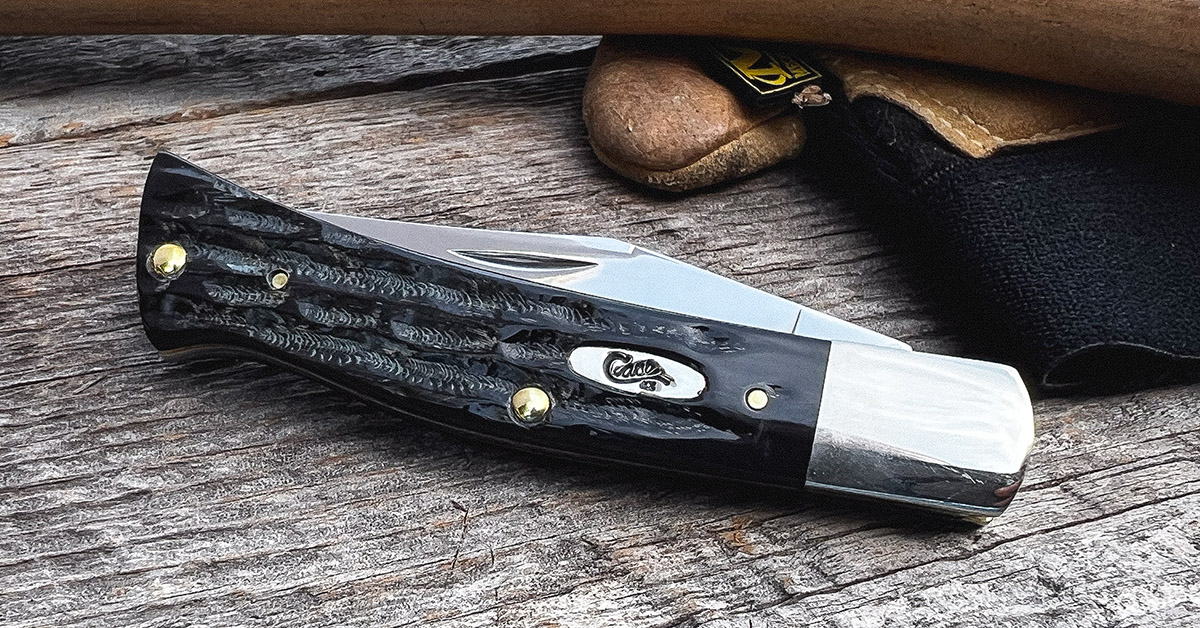
Arguably one of the more unique slip-joint folders in the entire Case lineup, the Axe Handle receives its moniker from the way the butt end of the handle is shaped, which is reminiscent of some axe handles and the way the end of the handle is distinctly shaped. This feature alone makes the knife stand out not only among Case slip-joints but the entire slip-joint market as well. There is no other knife like it. Its clip-point blade measures a comfy three inches long and is made from Case’s Tru Sharp stainless steel. The handle measures four inches long, which means the overall length of the knife is around seven inches. This translates to a single blade slip-joint that rides in the bottom of the pocket easily and disappears until you need it.
If you have followed the Case brand for any length of time, you are aware the company offers multiple handle options for each pattern. The Axe Handle is no different.
The Axe Handle’s handle material options are as follows: Pocketworn Old Red jigbone, 6.5 BoneStag, jigged buffalo horn, Peach Seed jigged bone, Crandall jigged Tequila Sunrise bone, sawcut jigged Caribbean blue bone, Rogers jigged Navy blue bone, and possibly other variants as time progresses. You, therefore, should be able to find a handle material to your liking.
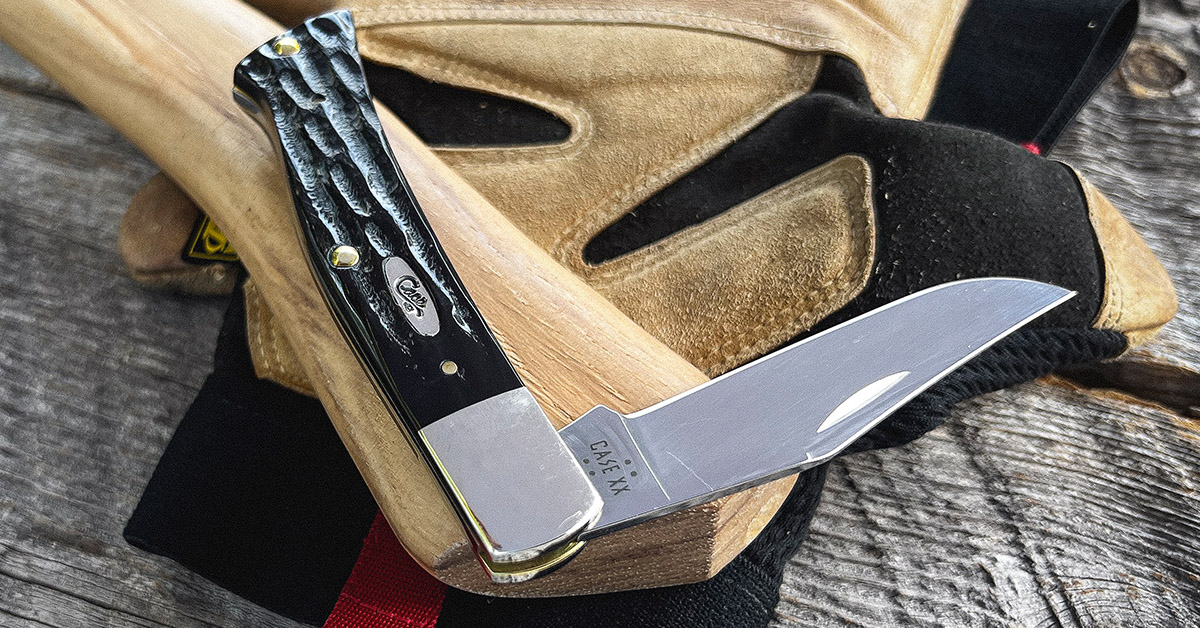
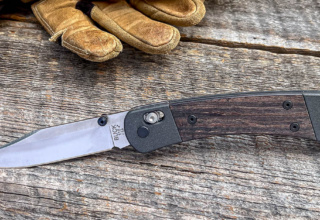
Case sent us the jigged buffalo horn handle. The striking contrast of black and polished steel is classic. Consider motorcycles. Nothing beats a black bike with a chromed engine and pipes. The buffalo horn features a long and deep jigging pattern that feels great in the hand and helps to boost traction. There is a single polished bolster at the pivot end and a standard Case logo shield inlaid into the handle.
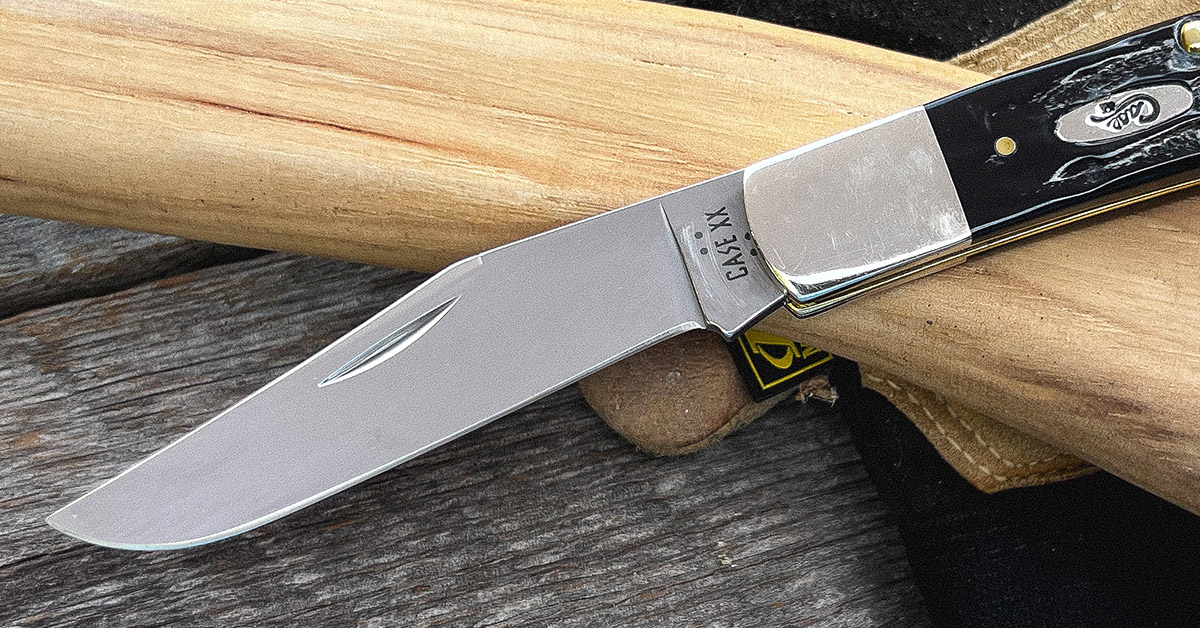
The clip-point blade is a favorite among many knife users as being a blade shape that is highly adaptable to just about any cutting task. The clip point’s defined blade tip allows for precise cuts or piercing, and the blade’s belly accentuates slicing power.
There is a single standard nail nick to assist in opening the blade.
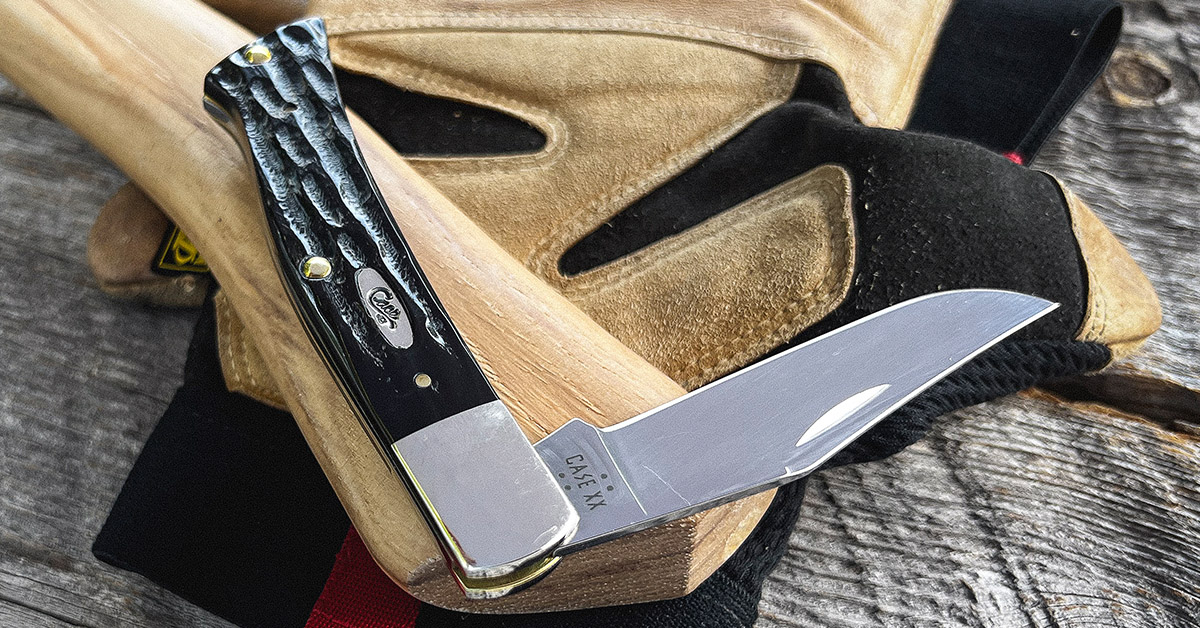
Another blade feature is a half-stop, which is welcome in slip-joints because it gives you a positive, tactile update on where the blade is during the opening or closing cycle. You do not need to look down at the blade to know where the cutting edge is when opening or closing — so, you know not to put your other fingers in the way.
I find this size of blade to be ideal for everyday carry. It’s neither too large nor is it too small. And it lies in the pocket easily, without feeling bulky.
The Axe Handle is adept at opening mail, packages, breaking down cardboard boxes, or anything else for which you would use a pocketknife. While multi-blade pocketknives, like stockman and Congress patterns, give you a selection of blades to choose from to match the task, they can be bulky in the pocket, depending on the size. The single-blade slip-joint like the Axe Handle keeps weight and bulk to an absolute minimum.
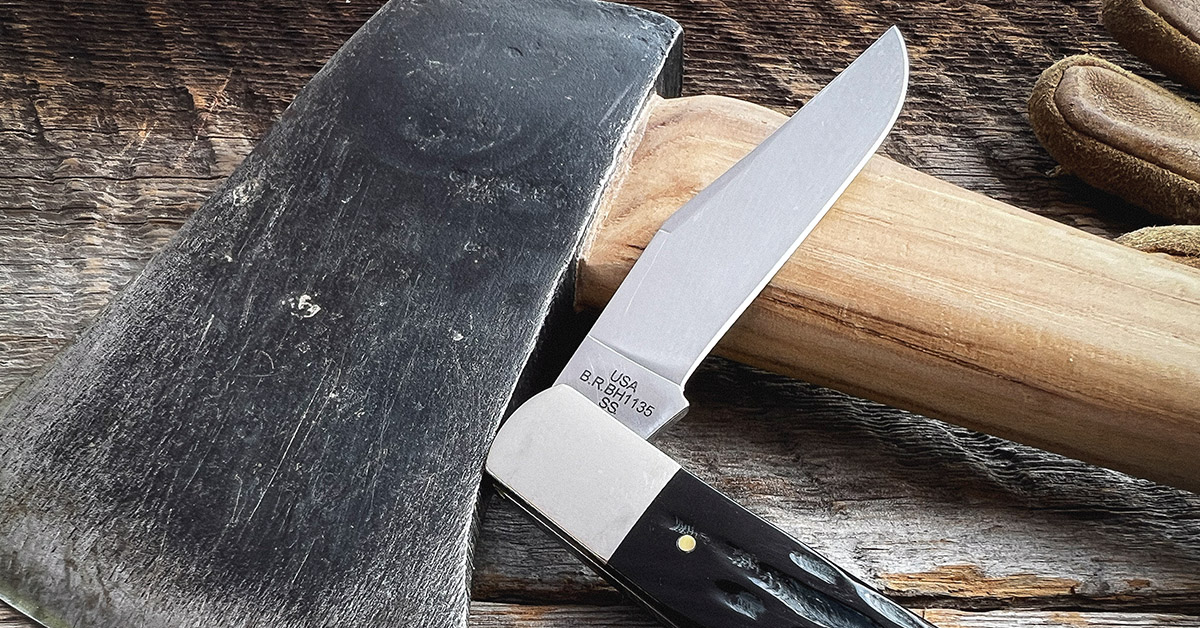
Out of the box, the cutting edge was sharp and would cut, but it wasn’t as sharp as I prefer and I could already tell that it could be improved upon. Normally, you would not have to sharpen a factory-fresh knife right out of the box, but I did with this one. After I sharpened it, I could immediately tell the blade was much more efficient at cutting.
One thing about Tru Sharp steel is that it doesn’t hold an edge as long as the higher grades of stainless-steel knife blades. Conversely, Tru Sharp is easier to resharpen when the time comes using ceramic or diamond hones.
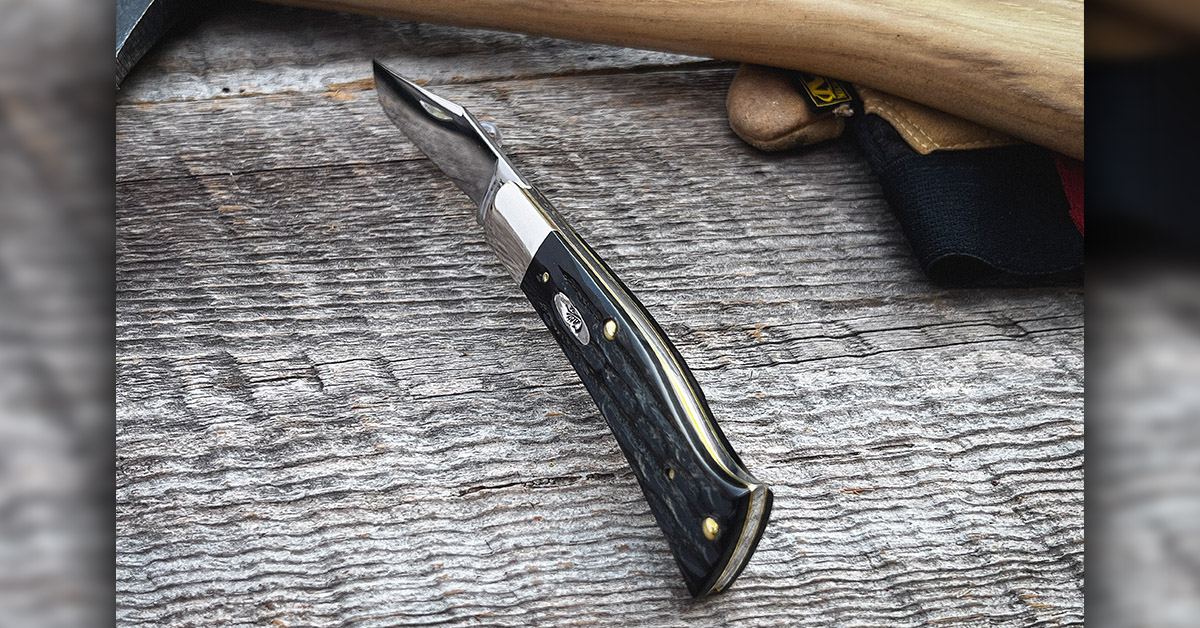
Another thing that I feel Case could improve upon is the tension of the backspring. The tension could have been stiffer, further enhancing walk-and-talk, which is so satisfying with slip-joints. The stiffer backspring also makes it harder for the blade to accidentally close. A stiffer backspring holds the blade open a bit more securely. But don’t worry. If you are not rough with the knife while cutting with it, there is no concern that the blade might accidentally close on you.
In closing, I would agree that the Axe Handle from Case is an exciting new pattern that breathes new life into the company’s product line. It’s a well-made slip-joint all around. Everything fits up nicely and the blade action is smooth.
Being able to review a Case knife for the first time for Shoot ON is particularly exciting for me because over 30 years ago, when I first started getting serious about knife collecting, the first brand I bought multiples of was Case. The foundation of my knife hobby was built by buying Case. So, understandably, I was excited to find out that Case was working with Bill Ruple on a collaboration.
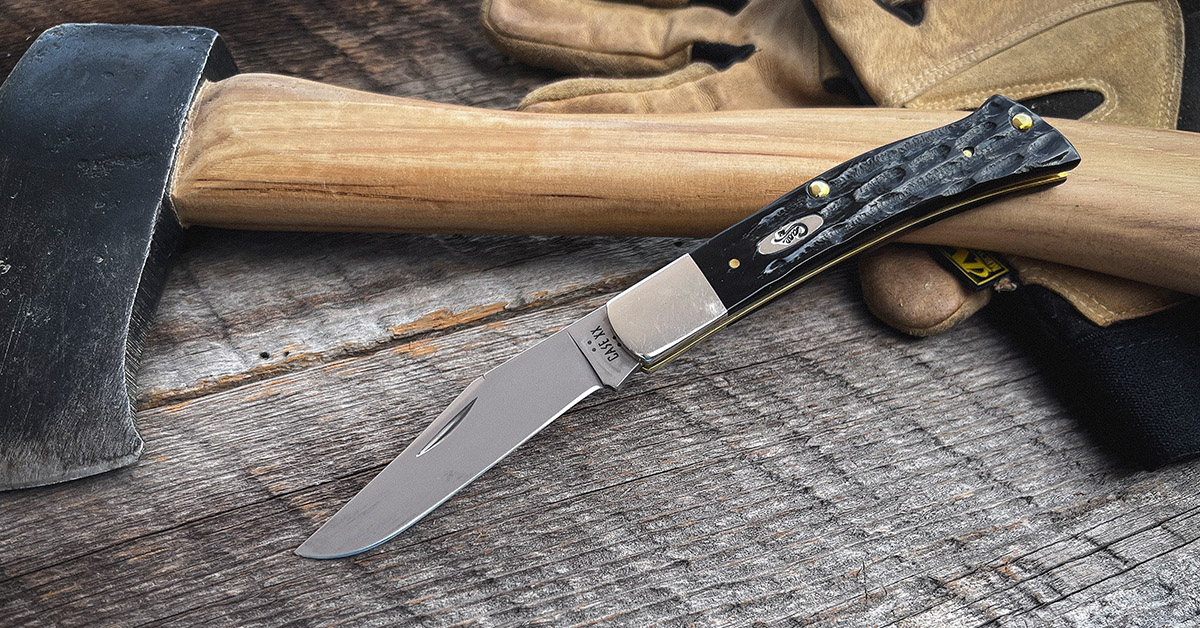
The Case Axe Handle doesn’t disappoint. It brings high utility with distinct style to your collection. MSRPs begin around $70 and vary according to the handle material chosen.