None of us have the means to put a prospective defensive handgun through an exhaustive, agency-level testing trial, but we can shorten the distance by considering handgun selection the institutional way
by Bob Campbell
When a handgun is chosen for personal defense, important factors are often ignored — criteria that never seem to come up with some shooters.
Those with police and military experience have a different idea of choosing handguns and what is reliable. It isn’t what’s cool or looks good and it certainly isn’t what is cheapest. Nor is it what goes only three hundred rounds without cleaning!
Police instructors with long experience are most often straight shooters and trustworthy. They have seen all types of firearms fail. Extractors break, feed ramps choke up, barrels crack or burst, magazines self-destruct. And these are duty-grade handguns, not second-tier clone guns.
My education and experience lead me to see things and people clearly. My choices are not without financial analysis and are framed with an institutional outlook. My service was filled with both injury and expertise, and these continue to be part of my internal guidance.
I have learned not to take death and injury as an abstract but a reality — that means second-rate gear isn’t to be tolerated for serious use.
Institutional studies are interesting if they sometimes conflict. As an example, the FBI did a study finding that a duty gun heavier than 35 ounces was not well suited to constant carry. I agree. Yet at about the same time, they adopted the 10mm cartridge and the huge S&W 1076.
Even earlier the .41 Magnum revolver, being offered as a police service gun, boggles the conventional mind. Why a heavy revolver that is slow on presentation and difficult to control in rapid fire when we already had the Model 19 Combat Magnum? Clouded and unrealistic thinking is all I can imagine, as there were much more appropriate choices.
It is imperative that an instructor base his recommendation on current conditions, not those of his early service, which may have been thirty years ago.
Paradigms
A test that was immensely influential yet seldom studied was the 1970s German Police Trials. During the first wave of terrorism, Europe was sadly unprepared. A mix of .32 ACP and .380 ACP pistols and .38 revolvers were in common use. The West German Police Trials introduced the tactical doctrine of simplicity. The service gun need not have a manual safety, but it should incorporate safety features such as a positive firing pin block.
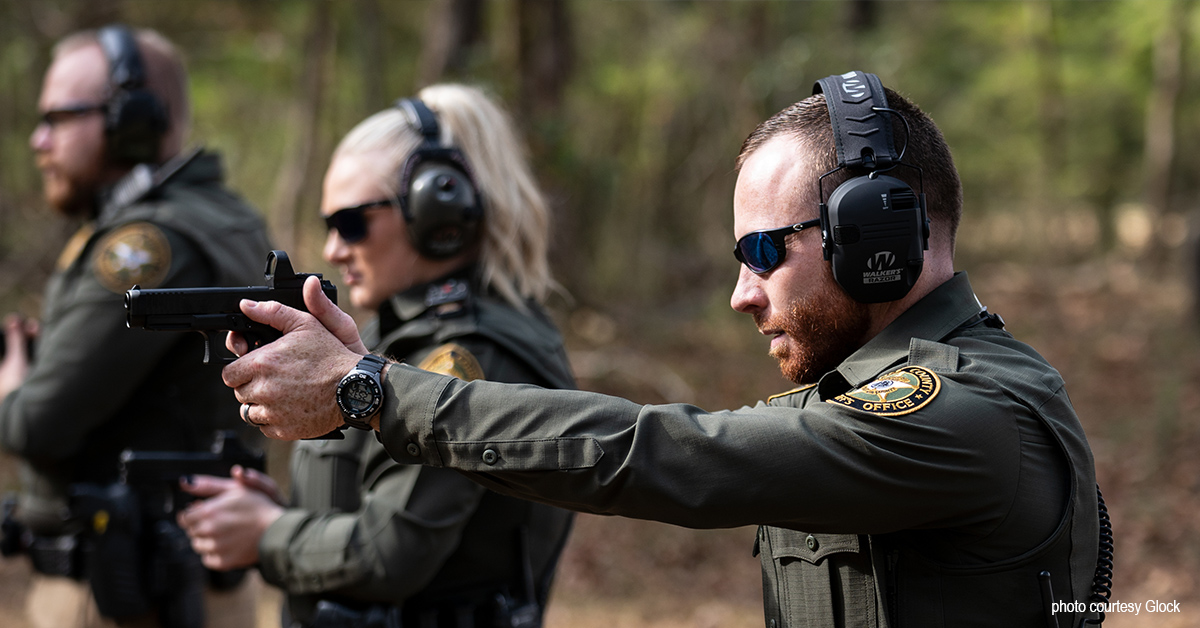
After this testing, no service gun without a drop safety was considered — Colt even modified the 1911 into the Series 80 with a firing pin block. Absolute reliability and good accuracy were stressed. The SIG P220 and later the P226 and P228 were considered ideal because of the German police test programs. You may be certain Gaston Glock was familiar with these trials.
A good handgun only goes so far, and training must accompany the handgun. Some handguns simplify training. Others require more effort in training, but the result of training is a more formidable shooter.
I have been luckier than some of God’s creatures, having traveled a road peopled with bad men and women. I never did so with second-rate gear and traded up for every advantage. So should you.
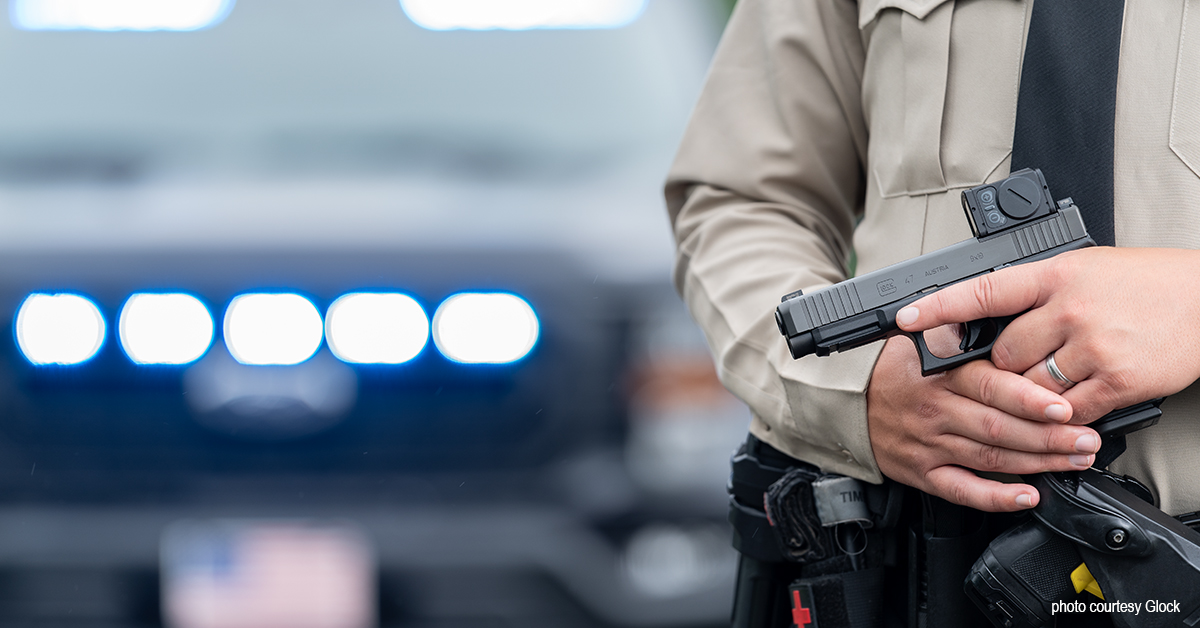
Recently, I was interested to see the Colorado State Patrol and the West Virgina State Police adopt the Shadow Systems pistol, and that the LAPD now issues a FN 509 variant. Pennsylvania adopted the Walther PDP. This illustrates that agencies do not always purchase the low bid but obtain what performs best.
For a person wishing to deploy a handgun suitable for personal defense, what program should you follow? You may obtain the same handgun issued to these agencies, but it is best to follow their basis for procedure carefully and understand the differences between what you need and don’t need and what these agencies need.
In some particulars, we cannot duplicate the test program run by major agencies. Eight- to 10,000 rounds in testing isn’t feasible financially or physically for most of us. (If you have been a part of a group of physically fit officers firing 10,000 rounds in a few days, the fanboy’s claims of a 10,000-round burnout on the weekend are hollow. They must be men among men! I take these claims with a healthy dose of skepticism. This is tiring work that may induce muscle spasms and eye strain.) Yet we may study test results and make our choice among top performing handguns.
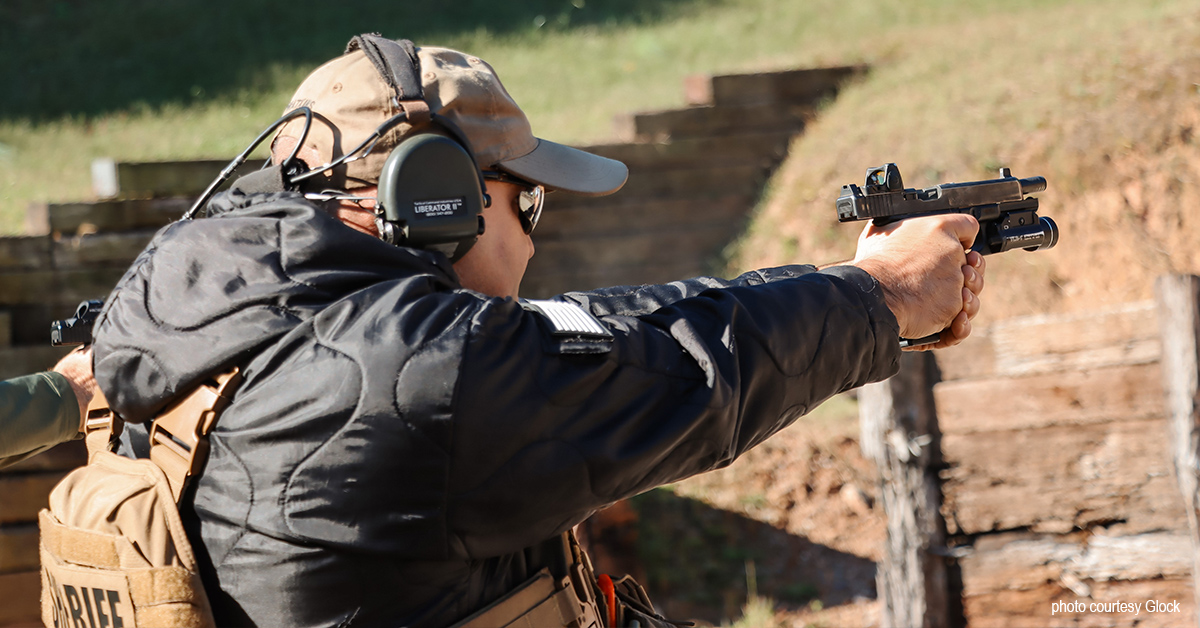
For now, let’s study procedure and determine if your choice in a sidearm would even be considered in institutional testing.
Handguns Under Scrutiny
For financial and legal reasons, the handgun receives more oversight than police uniforms or vehicles, in my experience. The choice must be defensible.
Most of us will own a handgun that we contemplate replacing. It is good to first make an evaluation of existing equipment. Some equipment is obviously worn. Some are no longer supported by the factory. Some are still reliable but there are better choices.
Handguns that are no longer current with the demands of law enforcement or are well worn should be replaced. As an example, a major state agency recently re-evaluated their Smith & Wesson Military & Police handguns and stayed with the type, simply ordering new handguns of the latest generation. The new guns feature flat triggers and are optic-ready. They were happy with Smith & Wesson and upgraded.
Is your carry gun worn or of a second- or third-tier quality? Have you trained to the point you feel limited by it? Moving to an optic-compatible model is a good reason to choose another handgun.
Most agencies use shooting data and past performance in qualification to evaluate the current issue, which will be matched against the handguns to be evaluated for replacement. Often, the issue is clear cut. After on-duty malfunctions during shooting incidents, the Ohio State Patrol conducted a 228,000-round test to choose a new duty pistol. There were nineteen different types of handguns tested, if memory serves. The winner was the SIG P226 DAO. It wasn’t simply reliability but also ergonomics and a broad-based firing test program that decided the SIG.
Other agencies replaced their .40 caliber pistols with the 9mm while some transitioned to pistols with light rails and more modern versions of the original issue handgun. As an example, the Glock Generation 5 pistol is demonstrably superior to older Glock handguns.
Demand Reliability and Reputation
You want a gun with a proven service history. Don’t be the first to adopt a new handgun. The major agencies do not adopt a handgun that has not been extensively tested by smaller agencies, like-size agencies, or the military. The performance of the SIG P226 and Beretta 92, for instance, in US military trials led to the adoption of one or the other by agencies, often decided on the low bid, for many years. More recently, the FBI’s Glock testing has done the same for the Glock. A handgun that has been in production for several years with good field reports is a minimal requirement. This ensures that the pistol has been vetted and proofed and spares, such as magazines and springs, will be available.
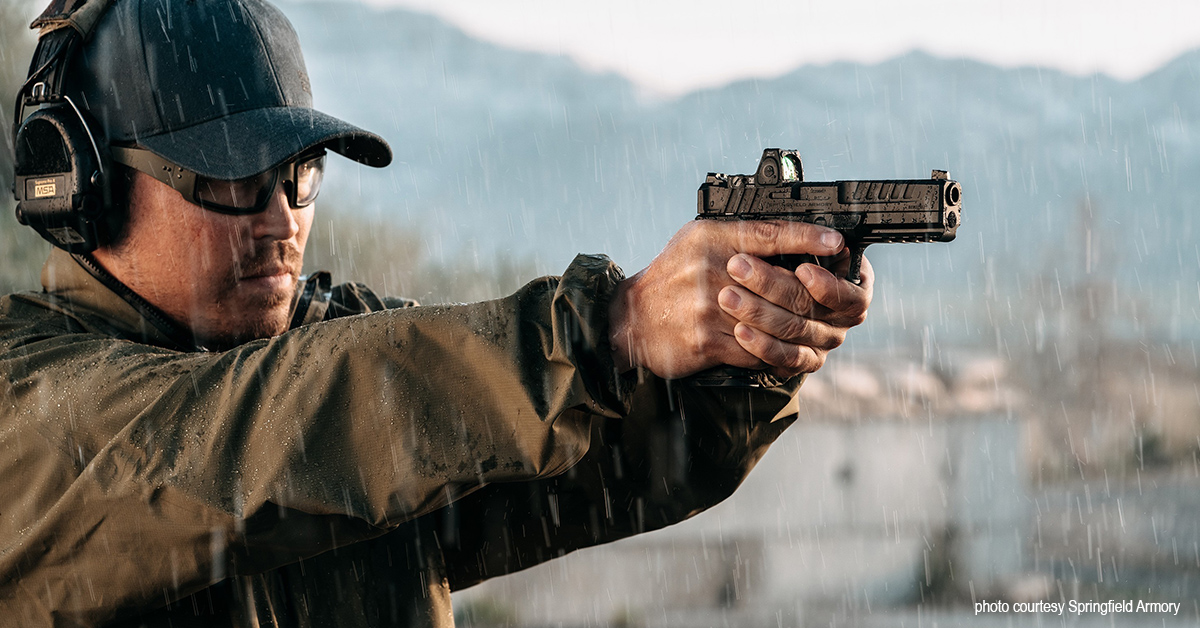
With this in mind, how may we choose our carry own with a degree of validity? Will the Ruger RXM serve in place of a Glock 19 if we like the Ruger’s grip better and shoot it better? How about the CZ P-10 C Ported, which hasn’t been agency tested? What about a unique pistol like the Daniel Defense H9? We shoot these guns better than the cop guns, don’t we? May we do a short term test with a measure of validity? Perhaps more to the point, agencies do not routinely test compact handguns. Our carry guns must be proofed in some manner.
Use a Fair Evaluation and Process
Some handguns will be more accurate in long-range fire due to the trigger action and sights; some will be more impressive in rapid fire; some fit most hands well. It is important to compare each fairly with the same ammunition types at the same range and with the same personnel.
Ambidextrous controls are important. Is the handgun going to be a family gun? The smallest family member must be able to comfortably fire and use the chosen home defense gun.
As for price — pick two or three or four likely handguns. Some agencies limit their testing to the two lowest bidders. We may test two handguns that fall within our personal budget by renting pistols at the indoor range. In this testing, few major agencies fire less than 6,000 rounds during the evaluation, usually a mix of full metal jacket, non-toxic, and expanding bullet duty loads. (My understanding is that non-toxic loads present the most challenge for reliability.)
Most of us will be well served with a 500-round test to evaluate a handgun. At present, 9mm Luger ammunition is less expensive than buying the wrong gun and then trading again. The choice must be plain in order to get our money’s worth.
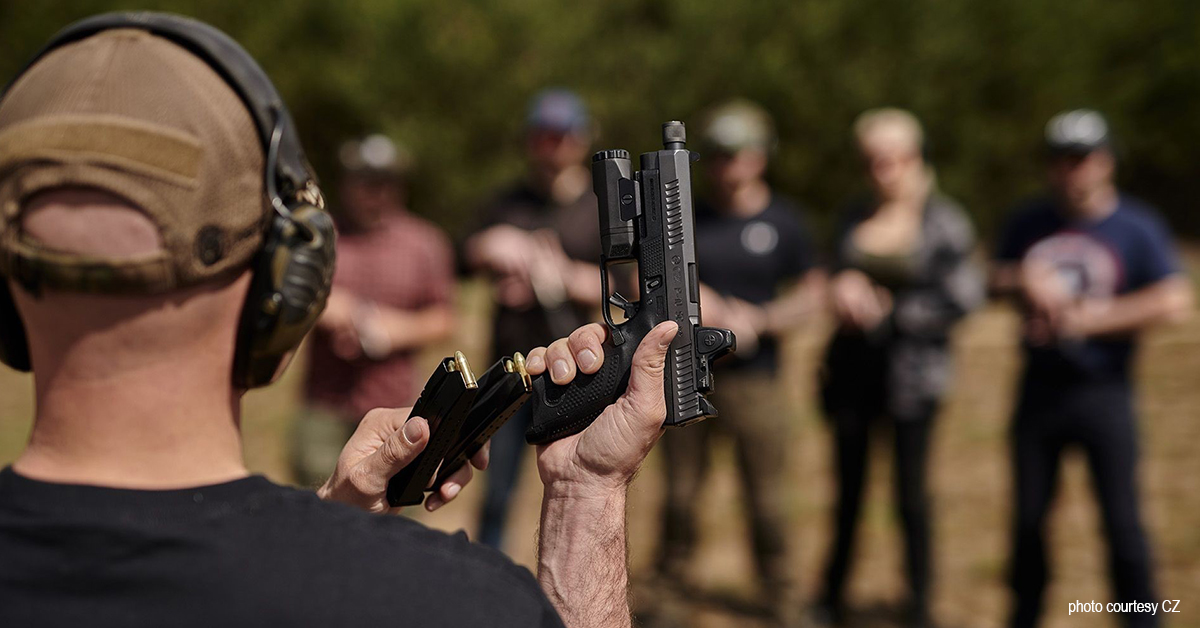
An agency will conduct a thorough program with verifiable results to avoid protests or a demand for a re-test by a manufacturer. In practice, this seldom occurs, although it has happened.
The level of lubrication must be consistent. If there is a malfunction of any type, the shooter should be qualified to determine if the malfunction was related to the gun, the shooter, or the ammunition. In an extensive firing test, shooter error is responsible for two out of three malfunctions, according to documentation. That fits well into my experience. One in three failures is ammunition related. The situation was once different, but today, handgun reliability seems to have outstripped ammunition reliability.
For example, when recently testing a new 9mm handgun from a maker I was not familiar with, a 147-grain FMJ load failed to chamber and would not chamber in the second example of the same pistol. I tried the cartridge in a long-serving Glock 17, and the loading would not chamber in the Glock, either. This is a qualified ammunition failure — one in 500 cartridges fired.
The instructor and raters must be able to understand and qualify the differences. If the handgun seems reliable but the shooter tends to engage the slide lock in recoil, that is a design problem. If training ammunition doesn’t perform…well, training ammunition is the bulk of the round count expected to be fired in the handgun. None of these drawbacks are acceptable. The bottom line is reliability.
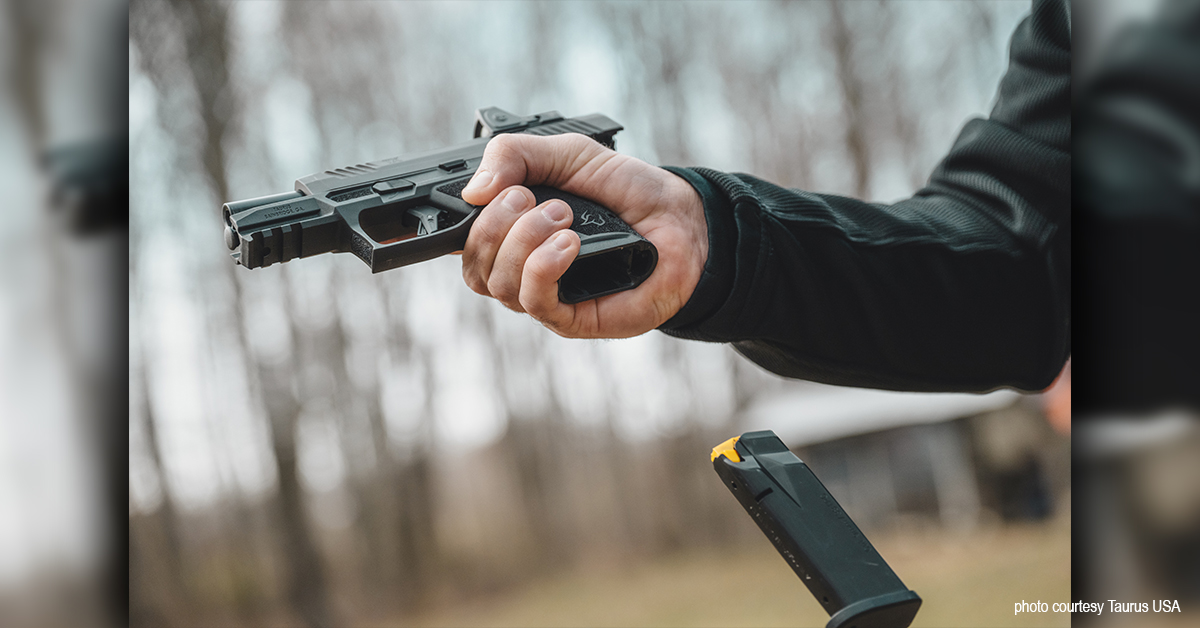
During the firing program, the ability to quickly speed-load the pistol is tested. This is important in administrative handling and the ability to load and unload the pistol smoothly.
Often enough, you will be required to load and unload the pistol several times a week as you enter and exit the jail and other areas in which officers are prohibited from carrying. Perhaps storing the handgun safely in the home may have similar demands. Some of us don’t like to store a handgun loaded in the safe, and this requires frequent loading and unloading.
Support Gear
When you are considering the handgun, support gear is important. It takes a while for the major makers to get up and running with a new holster. With the Glock, FN, Springfield, and S&W, this isn’t a problem. By extension, close clones are usually a good fit.
Most agencies have an armorer, and the supplying maker must have an armorer’s class available. You don’t have to rise to that level, but owning a handgun that is easily supportable by local gunsmiths is beneficial.
Some makers offer a pistol pack option with a minimum of three magazines (although five is better — one in the gun, two on the belt, and two spares). I rotate magazines to allow the spares to “rest.” Most of us will carry a single spare magazine. But spares are important.
On a personal basis, magazine availability plays a role in handgun selection. A Glock 19X is deployed with Glock magazines, yet I use affordable Magpul magazines for training. Shadow Systems pistols also use Glock magazines. FN magazines are more expensive, but I love my FN guns and bite the bullet and bend the credit card.
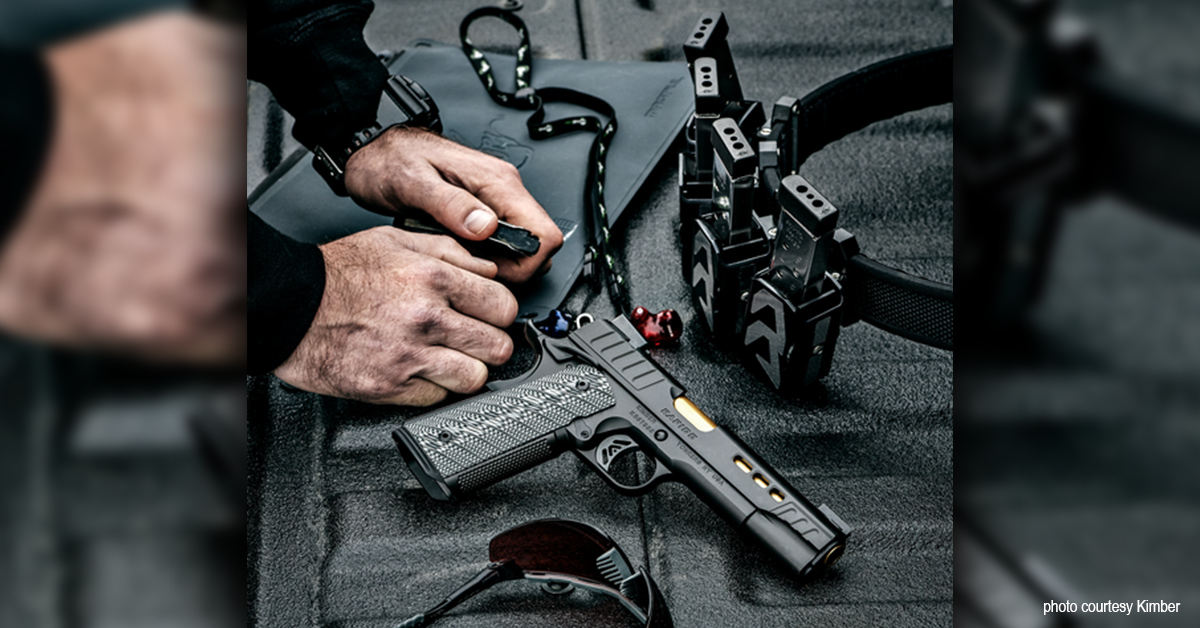
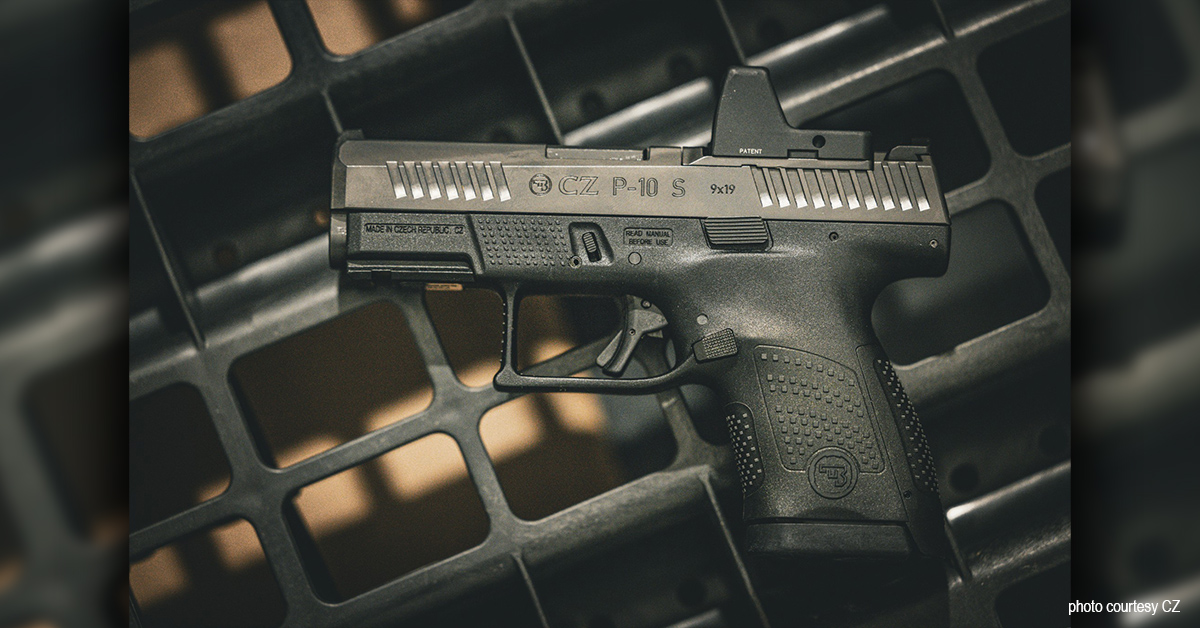
A warning — some of the ‘off brand’ pistols use proprietary magazines that are more expensive than Glock mags. This brings into question the wisdom of choosing such a firearm. The excellent CZ P-10 cost a little less than the Glock and it is a good shooter. It was recently adopted by the German Army, so reliability is not a question. That puts the CZ in the “proven by institutional testing” category; however, optic plates are more expensive and offer less options, and the magazines are more expensive.
Duty holster will probably be a Safariland of some type and it will be optics-ready with good retention. This isn’t the type of holster, though, that most of us will deploy for concealed carry. Never go cheap on this piece of life saving gear. Presentation from concealment is vital and only first-class gear should be obtained. Don’t go to the rack at a box store and purchase a fabric holster!
Being thorough in choosing a handgun and support gear is standard for me. Agencies spend considerable time and effort selecting the duty handgun. So should we. There are three criteria for choosing any emergency gear: personal experience, testing by reputable and knowledgeable individuals, and documentation. Apply this criteria to your handgun.
Regarding Ammunition
If there are occasional failures with the best ammunition, imagine results in the long term with ammunition suffering poor quality control.
Three agencies, in my experience, were plagued by ammunition purchased on the low bid. In one incident, transition training was thrown off course by JAM, JAM, JAM, and more JAMS with remanufactured ammunition. Another agency suffered failures to stop on duty with 9mm ammunition. The loads had not been tested in ballistic gelatin because an ‘authority’ had opinioned that “all 124 grain 9mm perform the same.” The ammunition purchased on the low bid for 9mm loads did not expand if they hit a brick wall.
When the .357 SIG was adopted in another agency, the ammunition delivered developed no more velocity than a warm 9mm and less than the 9mm +P+ with the same bullet.
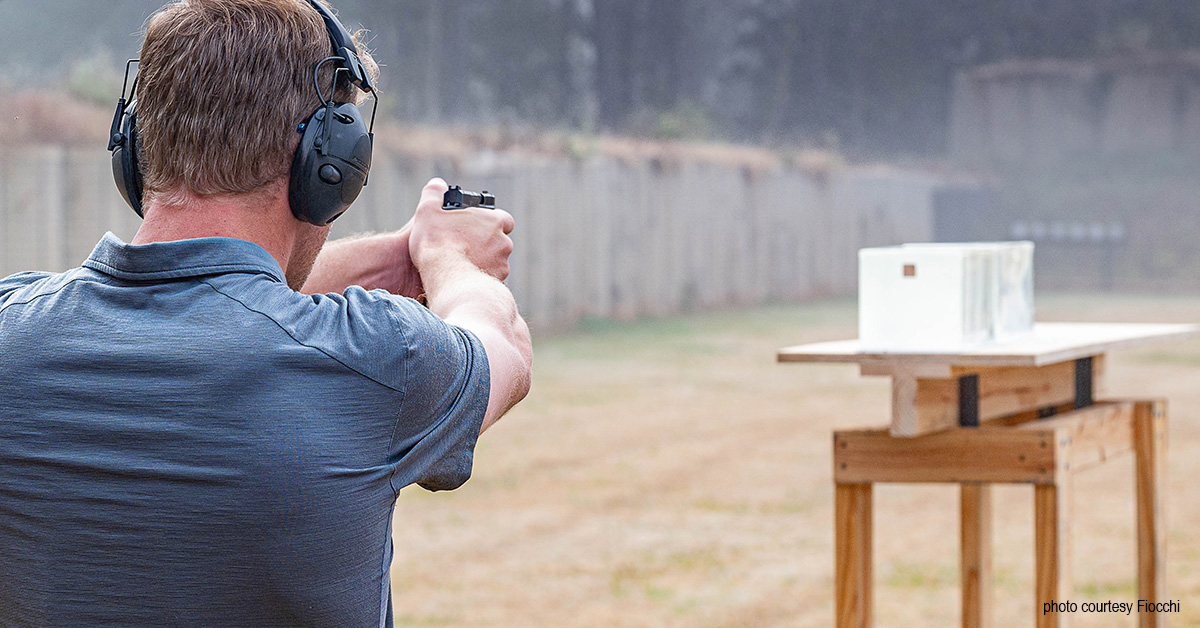
A chronograph and gelatin blocks keep us honest. Today, ammunition performance is much more stringent. Accuracy, low muzzle signature, a clean powder burn, and a balance of penetration and expansion are gauged.
I assure you that anyone on staff in an agency quoting ‘stopping power studies’ as often published for entertainment purposes would be laughed off the committee. Unverifiable and unrepeatable studies with secret sources do not contain enough validity to be considered in a small town traffic court!
We may do our own testing on a limited scale with Clear Ballistics gel and a chronograph, with reliability as the first priority. When an agency adopts the Federal HST, Hornady Critical Duty, Speer Gold Dot, or Winchester Ranger, many factors other than wound ballistics are considered. A clean powder burn with little ash left over and good accuracy are at the top of the list.
When lives are on the line and there may be civil and criminal penalties for poorly chosen equipment, it only makes sense to do things the right way — the proven way. The life you save may be your own.
Validity of Firearms Testing
If the test program is more than a decade old, results may be respected but not accepted at face value. There have been changes, and both SIG and Beretta handguns differ from those handguns tested in the US Military trials.
It is often pointed out that the original Colt 1911 was tested to 6,000 rounds of ammunition and passed other testing between 1910 and 1911. This Colt was made of the best material by trained craftsmen. This isn’t the same 1911 made today. Various economy grade 1911 handguns resemble the original but that is as far as it goes. They are not comparable to that made by Colt in 1911. On the other hand, premium grade 1911s such as the Dan Wesson and Les Baer are better. As an example, original military testing called for a five-inch group at 25 yards and a ten-inch group at 50 yards. A premium 1911 is much more accurate — perhaps a three-inch group at 50 yards — but may begin to be sluggish in cycling in less than 1,000 rounds of ammunition.
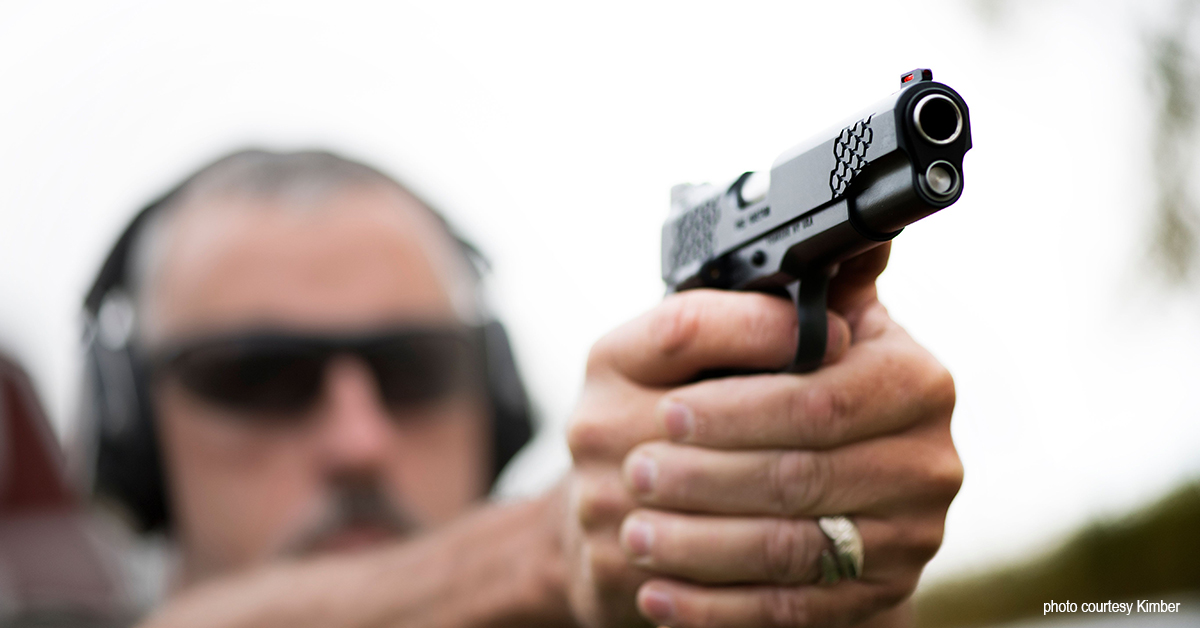
An exception is the LAPD-adopted Kimber pistol — a fairly ordinary handgun with night sights and front strap checkering. It may not be as accurate as the best custom guns, but it runs well.
The most proven modern 1911 by a margin is the Springfield Professional. Other agencies have adopted a TRP variation of the Springfield based on flawless 20,000-round testing.
As for revolvers, most of the testing data is dated and not very impressive. For instance, .357 Magnum revolvers were not proof tested per se but rather used in training, and it was there that the revolvers were proven or not. Broken gas rings and eroded chamber throats were common with Magnum ammunition. On the other hand, the French Manurhin 73 was proofed for 100,000 cartridges. (The French are serious about longevity. They expended 700,000 cartridges before adopting the SIG SP2022 that arms every cop, soldier, sailor, marine, and airman in France.) The MR 73 is so expensive the MR 88 was designed to cost less than half the price of the MR 73, but it is only rated for 50,000 cartridges. Only!
While Smith & Wesson and Ruger offer reliable revolvers, their reputation is built on longevity and use in training rather than a short-term high round count test. These are different parameters. At present, the only revolver qualified for duty use in modern police agency testing is the Manurhin MR 73 and the out of production MR 88.
The primary test procedure for your handgun is, ultimately, live fire and plenty of it. Get with the program and shoot that pistol with a variety of loads.