A quick miss is no more helpful than a slow one. A hit in time is the only hit that matters.
by Wayne van Zwoll
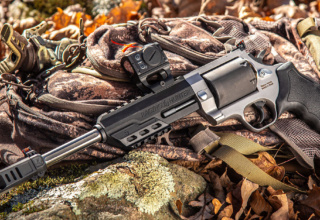
On July 28, 1952, Hosea Sarber left Petersburg on patrol for the Alaska Department of Fish and Game. He would not be seen again. Speculation had it he’d run afoul of poachers; then, years later, a human skeleton was found in a remote place within range of his boat. Also recovered: an 1886 Winchester in .33 and a S&W .38/44 Outdoorsman, both badly rusted. The rifle was empty; the revolver held empty cases. The remains of a bear lay close by. The man’s identity is still unknown.
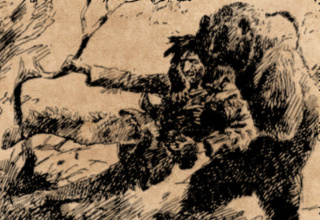
Josif Chincisian did not die alone, though the Montana herder lived that way. Having often dealt with sheep-killing predators, he recognized the ruckus that September night in 1947. Grabbing his Krag and a light, he hurried from his wagon. The bear gave him a one-shot deadline. The bullet did not stop the bear. Buried in a willow thicket, Josif later crawled free. Found the next day, he survived brain surgery in hospital but died without waking. The grizzly was never found.
A beast close enough to shoot without aiming should be easy to kill; but center shots still matter.
Of course, few hurried shots are life-changing wagers. The big whitetail buck Jeff Brunk missed had posed no threat. Still, the sting of that failure lingered for the season. It was with him when, one late afternoon in a nearby wood, a deer rocketed from a cedar thicket. A great crown of antlers caught Jeff’s breath. His single-shot 20-bore leaped to cheek. Bang! The deer pitched forward and tumbled to a stop. Its massive rack had 12-points; field-dressed, the carcass would scale 215 pounds. His first buck!
“I’ve never seen a bigger deer,” marveled his father. “You may never match it.”
Actually, he would. A following season would bring Jeff antlers that beat the top-ranking typical rack in Missouri records by nearly 14 inches! But that’s another story.
Jeff would replace his cheap shotgun with a .30-06. But while fine rifles can boost your odds of making a shot, they can’t put deer in your sights or ensure one urgent shot strikes home.
My first rifle, a $30 surplus SMLE with open sights, tumbled a whitetail streaking through Michigan “popples.” That shot keeps it dear in memory as better rifles have come along. Winchester’s 1894, Marlin’s 1893, and Savage’s 1899 carbines were short and trim, with open, slender wrists, tight oval waists. Light enough to point fast, they had “gunny” balance, with a tilt to muzzle that brought them on target without help and settled them promptly.
Among early bolt rifles so blessed, the 1903 Mannlicher-Schoenauer stands out. In the decades since, myriad hunting rifles have appeared, the best before bipods and thick, steep-wristed stocks played to the long-range market. Lively rifles of carnivorous line and balance have faded; but they’re not gone.
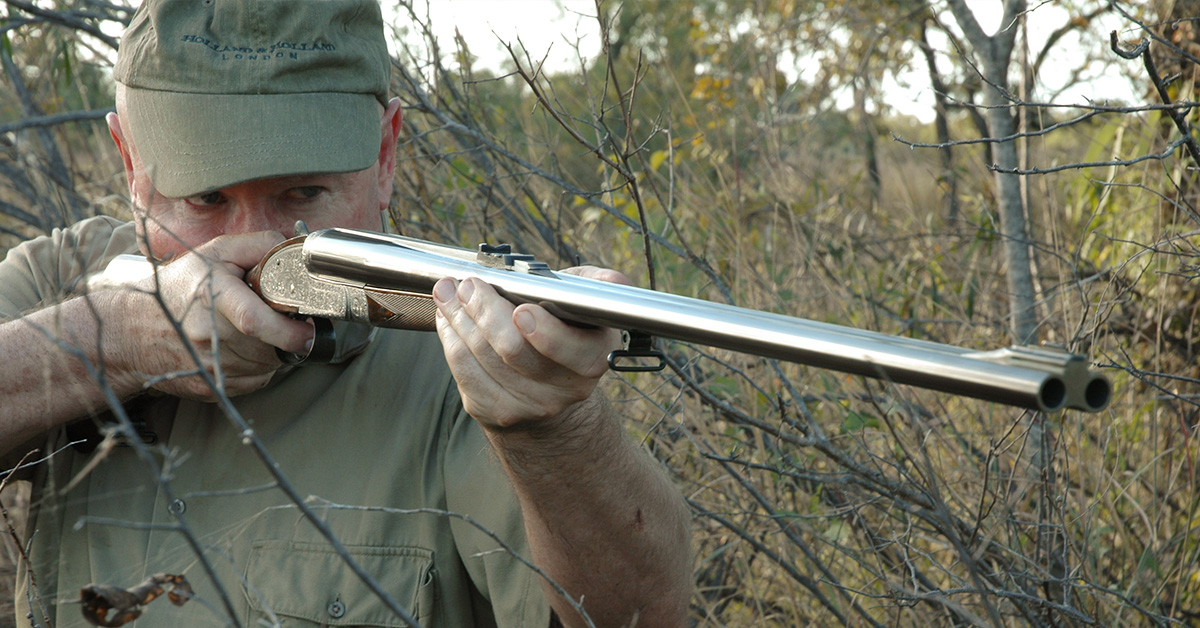
Few hunts have put outstanding beasts in my sights. Hurried shots, though, have come often, as they do for many hunters. Once, as I crept through Namibian bush toward promising horn tips, a gust of wind flung my scent. The impala panicked and, not placing the smell, dashed my way. The first limb-snap brought my rifle up, its front sight by chance centering the tawny blur, twisting suddenly in mid-air mere feet from the rifle. The ram flopped dead.
I would later miss a deer no farther off, a humbling event because I had plenty of time.
Who Hesitates is Lost
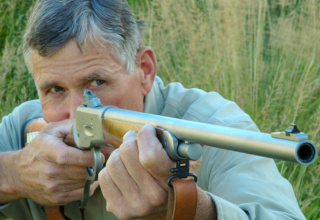
The outcome of any shot depends a lot on your body’s position. If the rifle naturally points where you wish when it comes to cheek, odds are the bullet will land where you wish, provided you don’t flinch. When there’s no time for conscious aim, you hit the way shotgunners break targets at the No. 8 station in skeet: pointing your feet correctly and firing when your body tells you the rifle aligns with the mark. That is how exhibition shooters hit. With hundreds of spectators watching, they could hardly afford to miss.
Nineteenth-century ace Doc Carver spent 10 days firing 11 Winchester 1890 .22s at 60,000 tossed 2 1/2-inch glass balls. Disappointed with his score, he bettered it on a second run, missing 650. Then B.A. Bartlett shattered 59,720 of 60,000. In 1907, Winchester’s Ad Topperwein turned 10 Winchester 1903s on 50,000 tossed wooden blocks 2 1/4 inches on the side. More ammo arrived. Of 72,500 blocks, Ad missed nine. His 120-hour marathon included a run of 14,500 hits. Nor until 1966 was that performance eclipsed. With Remington Nylon 66 rifles, Tom Frye hit 100,004 of 100,010 blocks, missing two of the first 43,725.
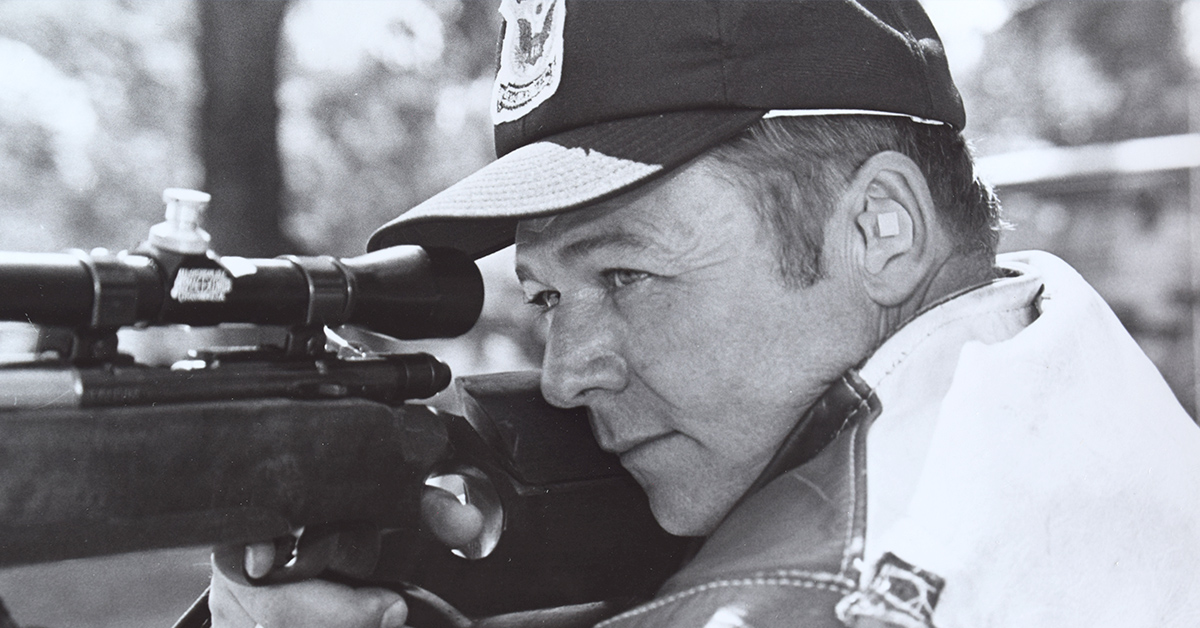
To Lones Wigger, a decorated Olympic shooter and career marksman for the U.S. Army, hitting with every shot was the result of careful repetition. En route to 29 world records in bullseye competition, he practiced “three or four days a week, up to 200 shots four hours a day.” He told me: “If you can’t fire live ammo daily, dry-fire. Make the rifle an extension of your body. In all positions, support it with your bones, not your muscles. Mind the rifle’s natural point of aim. Relax into it. When you can’t send a good shot, stop! Don’t practice poor technique!” Wigger won with rimfire and centerfire rifles across multiple disciplines. He was unbeatable prone. Winning the Critchfield Trophy in 1975, he fired a score of 6399 of a possible 6400 with 556 Xs. To my knowledge, that score has yet to be matched.
Quick, accurate shots at game take practice, too. In Scandinavia, where moose are commonly shot during drives that push them past standers, hunter must qualify offhand on moving targets. I bungled my first attempt. The life-size, electrically driven moose did not change pace, leap over logs, pause, or swerve. But its “vitals” were small, the markings invisible from the line. Cycling my Sako fast between a pair of shots, I saw the beast outrun my crosswire. On the return, the shots felt good.
“You must repeat,” sighed the Finn at the controls, as if keeping bullets inside the forward ribs of a moose on rails at 80 yards was child’s play. Honestly, it should have been. Locals hit thrice per run. My passing score earned a weak smile from the Finn. “Do not delay. Moose don’t.” I slunk off.
Sights for Instant Aim
Sixteen years ago, Andy Larsson was “hobby gunsmithing” and making ammunition for Buffalo Bore in Montana when Tim Skinner, a retired teacher in nearby Ronan showed him an aperture sight he had designed. “Tim made only a few copies,” Andy told me, “for four rifle models, including his Marlin. He peddled them on E-Bay. The sight was very good. I figured it deserved a bigger market. So, when he offered to sell me the business, I bought it.” He branded the nascent line of sights with Skinner’s name.
Soon the 12×24 shop on Andy’s plot outside St. Ignatius gave way to a bigger building, replaced later by a 5,000-square-foot structure “across the road.”
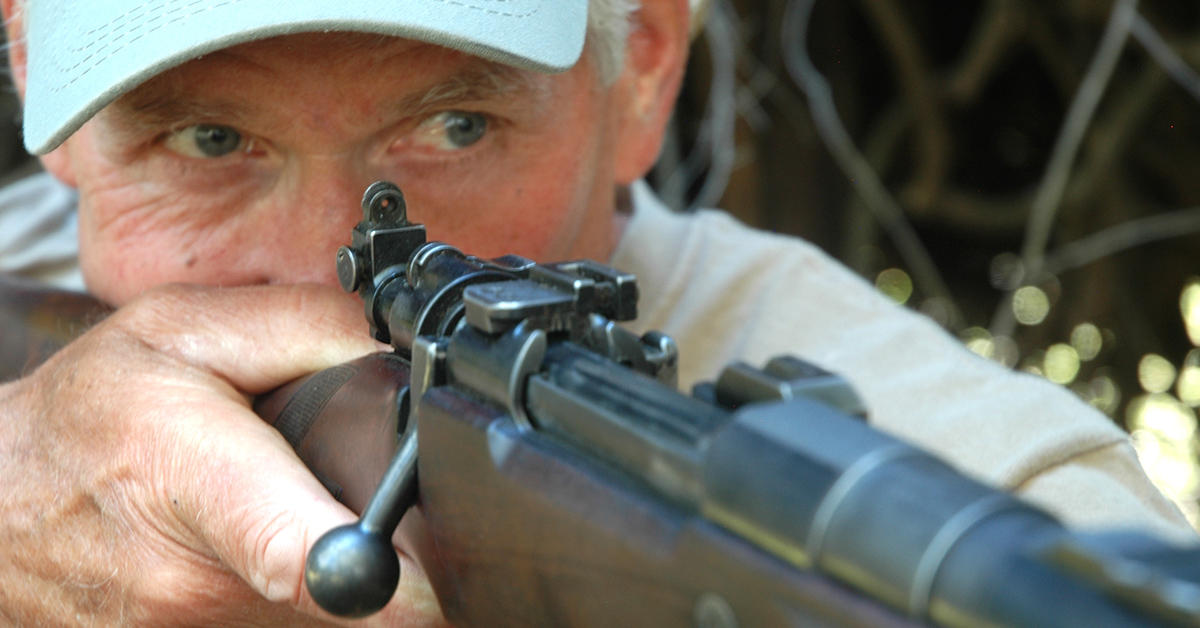
Like many hunters, I’ve found the Skinner Express an ideal sight for fast shooting. No relation to the barrel-mounted, multiple-leaf “Express” sights on traditional British double rifles, it’s a cleanly crafted, receiver-mounted “peep” sight, petite but strong and adjustable for windage and elevation. No platform, staff, or elevation screw obstructs your view. The aperture is essentially a hole in a trim “lollipop.” Andy has expanded his offerings to include bolt-mounted sights for open-top lever rifles. The sight ships with a .096-diameter aperture. That hole size, with equal ring thickness, is a near match to the .1 measure I’ve long thought ideal. Four other apertures are available, at $11 apiece: 040, .070, .125 and .155. Aperture removed, the Skinner Express becomes a “ghost ring” sight. Though ghost rings deliver huge fields of view, I find they can momentarily pull my focus from the front sight to ensure it is centered. A delay.
Andy machines his sights from ordnance steel or stainless. A dressy brass insert distinguishes his “Black Gold” option. Marble’s supplies Skinner-spec’ed front sights: flat-faced .062-diameter gold beads. (Hemispherical beads reflect light on the edge toward the sun so attract your eye to a false point of aim). The slender supporting blades come in nine heights, .260 to .570, and fit standard 3/8 dovetail slots. “But many hunters prefer instead our Bear Buster front blades,” says Andy. They’re machined in-house. Blued, brass, or “white-face,” they’re .08 wide, .500 or .560 high, with a serrated, angled face that kills glare and won’t catch brush. A six o’clock hold doesn’t obscure the target, and unlike beads, needn’t be matched to a certain barrel length. A bead appropriate for a 20-inch barrel can appear too big on a 16-inch barrel, too small for quick aim with a 24-inch.
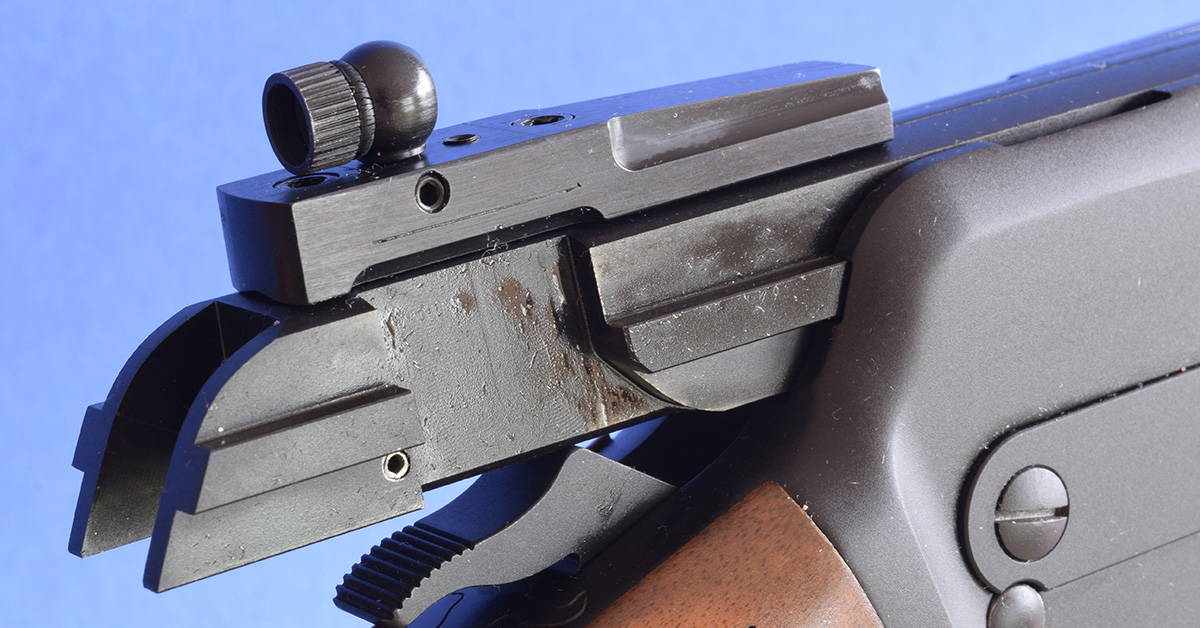
Skinner sights are factory-installed on Marlin, Henry, and Bighorn Armory rifles. Chiappa makes them in Italy under license. They’re made for bolt rifles, too. A 1917 Enfield I bought after its rear-sight “ears” had been milled off now has a Skinner Express on the bridge. Another went on an early Remington 700 with a 20-inch barrel, a “carbine” now wonderfully quick in hand.
For hunters who insist on a barrel-mounted sight, there’s a Skinner aperture that fits the dovetail standard for open sights. It’s as fast as a notch, obscures none of the target, and improves field accuracy.
What About Glass?
Before the crash of ’29, a survey crew had named it Olympus, after an Indian legend. “Mountain of the gods.” The trails were difficult, sheep sightings few as days slid by. Allowing for pack-train travel back to the Alcan, the hunter figured he had a day left to kill a ram. So, though the animal in the spotting scope was too far to judge, he committed to a closer look. Climbing into the sun, he didn’t see his quarry until it was sprinting along the skyline 225 yards off. Right away he dropped prone; but his pulse was still pounding. His bullet missed. So did another. A third shot as the ram paused at 300 yards struck home. Its heavy, broomed horns taped 38 inches, well up on Boone and Crockett’s records list for Stone’s sheep.
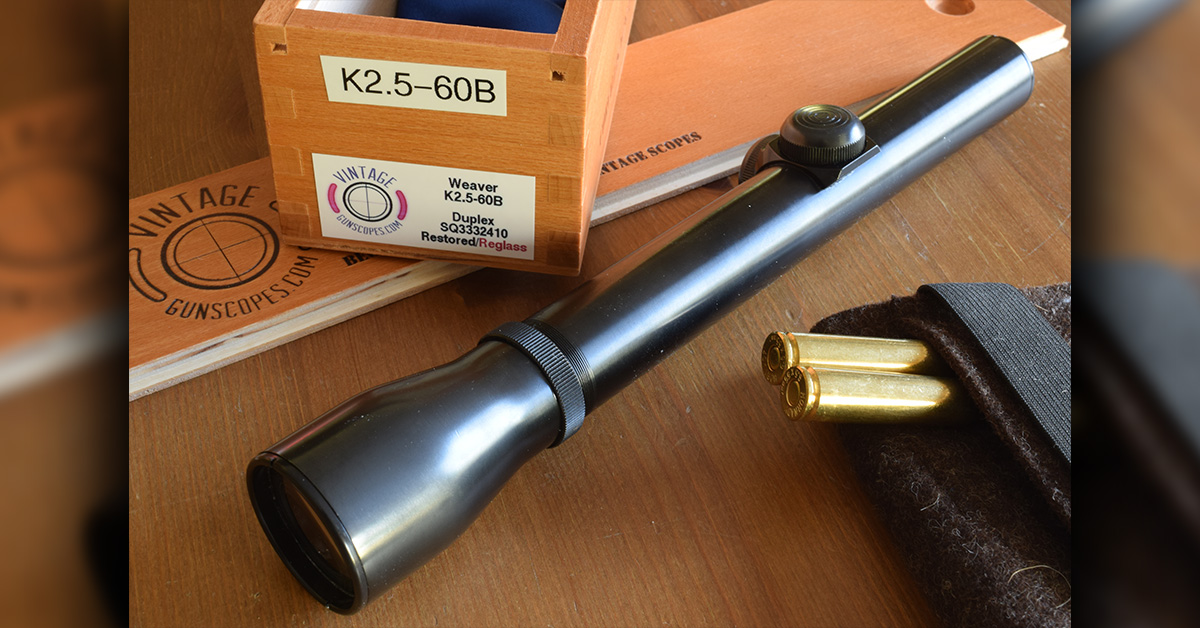
To help with make-or-break shots, most hunters now would carry a mid-range variable and for a 300-yard poke dial up the power. But for 30 years, Grancel Fitz stayed with his 2 ¾x Hensoldt to collect specimens of all North American big game. Other hunters of his day used similar sights. During the 1930s and ’40s, Outdoor Life’s Jack O’Connor favored 2 ½x and 3x scopes. In mid-career, he turned to 4x glass but allowed that 2 ½x sufficed for “90 percent of [shots] to 250 or 300 yards.” Field & Stream’s Warren Page liked 4x scopes, insisting that for hunting rifles “4x is just about right…to 450 [yards].”
By the mid-1960s Leupold, Redfield, and Weaver were selling 3-9x scopes by the bushel. Late to the party stateside in 1976, Swarovski saw variables dominate sales. Within 20 years, its 4x and 6x scopes would account for just one percent of scopes shipped! So sad. A lightweight 4x (Leupold’s M8 4x scaled 9 ounces) still excels as an all-around sight. The rifle feels as snappy in hand as it does with metallic sights.
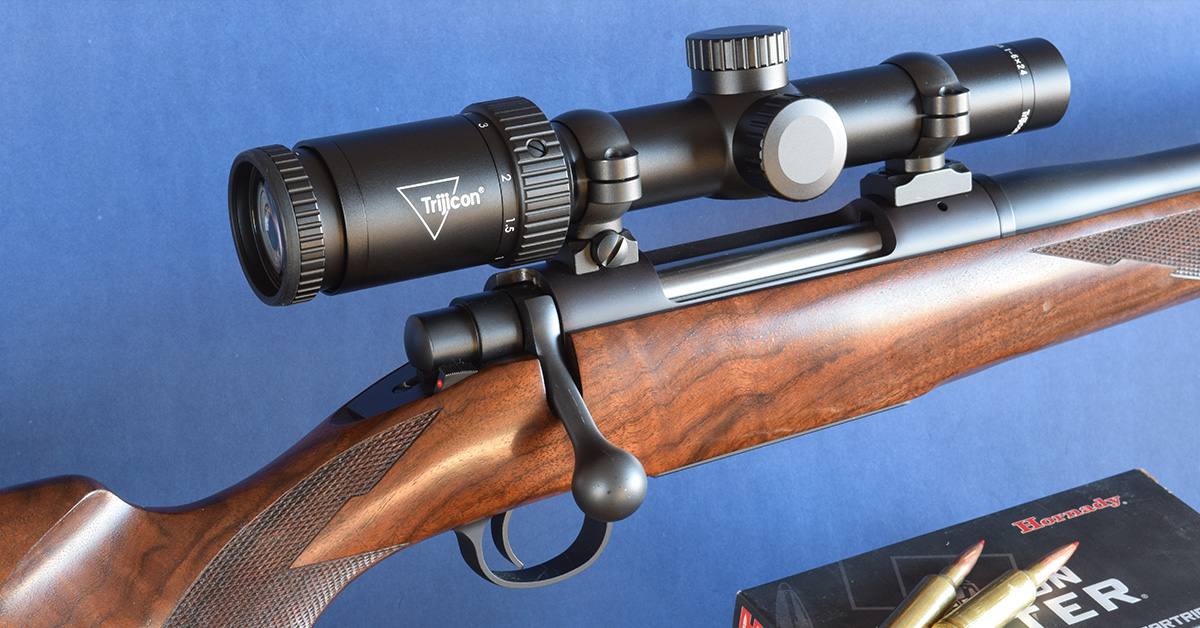
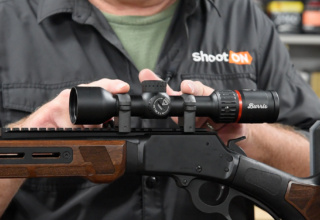
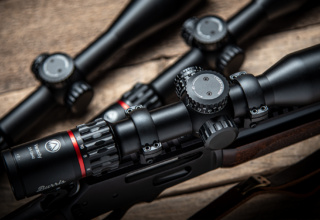
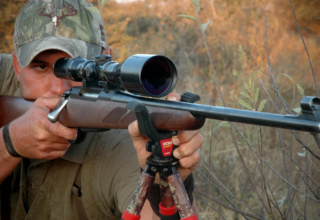
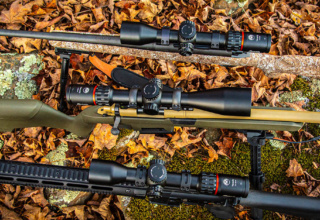
If there’s a modern substitute for such scopes, it’s a 1.5-6×24. The 30mm tube with bigger lenses and improved coatings bring better images with their added ounces. The 24mm front lens is 23.5-percent greater in area than glass in 1-inch tubes, ushering in more light. A four-times power range — the top four times the bottom — makes a 1.5-6x truly versatile. With many, you get four inches of non-critical eye relief. A full field comes instantly to eye when you must fire from less-than-ideal positions. With no front bell, a 1.5-6×24 has enough free tube for mounting on long receivers. It’s an easy fit for low rings, keeping rifle weight properly balanced low between your hands.
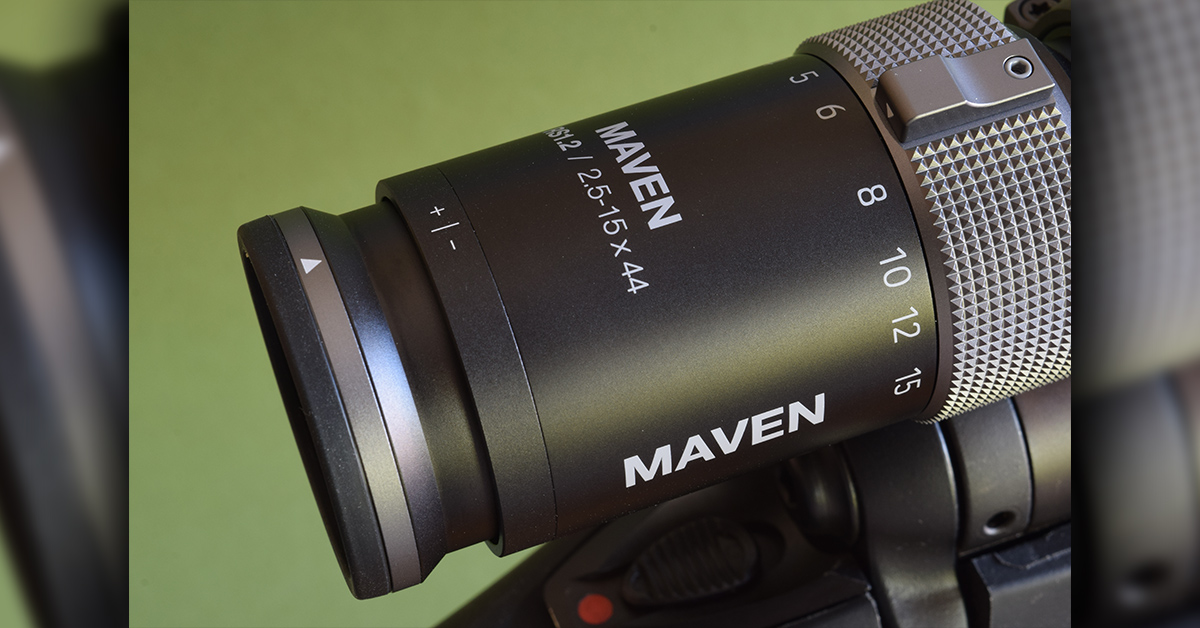
A 1-6×24 scope has all the advantages of a 1.5-6×24 — though arguably no others. I don’t turn the power dial below 2.5x. That setting yields a broad field, but images aren’t so magnified that I must adjust to a “new reality.” In an instant, my eye recognizes what it saw unaided.
Unlike fixed-power scopes, 1.5-6x24s are proliferating. You can pay a lot for one; but mid-priced models include great values. My illuminated Athlon Midas lists for $750.
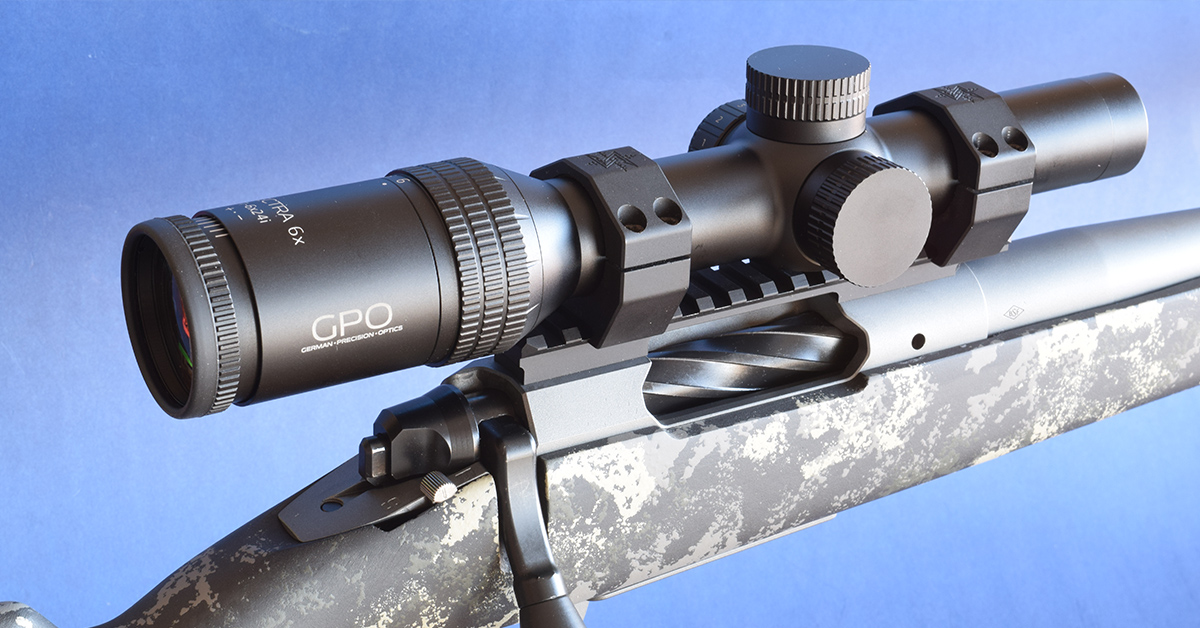
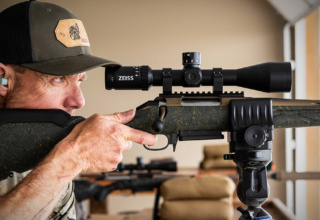
With no front and rear sight to align and nothing but the reticle imposed upon the target, a 1.5-6×24 at a middle setting may be your best sight ever for shots that just won’t wait.