Even recalling it, you’re luckier than some. Before North America had hunters, it bred adventurers.
by Wayne van Zwoll
Yes, misery loves company. It also begs comparisons: You had a bad day compared to whom?
We don’t know how Hugh Glass met the grizzly — only how it changed his fortunes. Comatose for three days after his 1823 mauling in the central Rockies, the Pennsylvania native was left for dead by companions who feared discovery by Indians. But Glass regained his senses, dragged himself to a creek, and survived a week on berries there. Then he crawled toward the Missouri, sustained along the way by a wolf-killed buffalo.
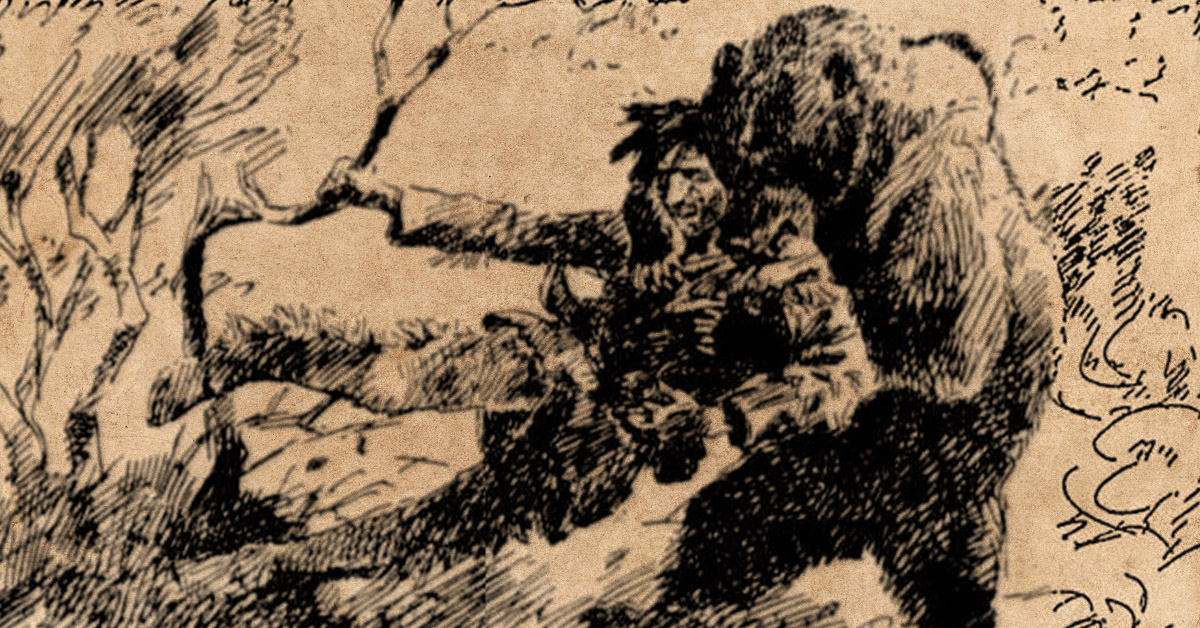
Found by trappers, he was taken upriver in their pirogue. After he left them to travel afoot, Arikaras slaughtered all five. On a horse from Mandans, Glass reached Fort Henry and got his rifle back, with “fixins” for the trail. Shelving plans for revenge, he continued to trap in the Rockies. Arikaras caught up with him and two others on the Yellowstone in 1833. He was 50.
That era forged men of uncommon grit. It began in 1803 after France ceded 828,000 square miles of wilderness to the U.S. for $15 million — 4 cents an acre. The Louisiana Purchase effectively doubled the size of our young country. President Jefferson tapped Meriwether Louis and Willam Clark to explore it. In its 1804-1806 odyssey, the Corps of Discovery lost just one man. The fur trade would claim many more. Of hazards, bears would prove only a nuisance.
The Blackfeet came with the dawn, swiftly, 400 warriors strong. Bridger, ending his night watch, shouted: “Don’t get excited, boys. Be sure of your aim!” The first run left wounded men on both sides. In the next, a stricken horse fell from under a tall Indian. He made for Bridger, knife in one hand, club in the other. Fending off the club with his rifle and dodging the knife, the trapper struck the warrior “square in the forehead and smashed his skull.”
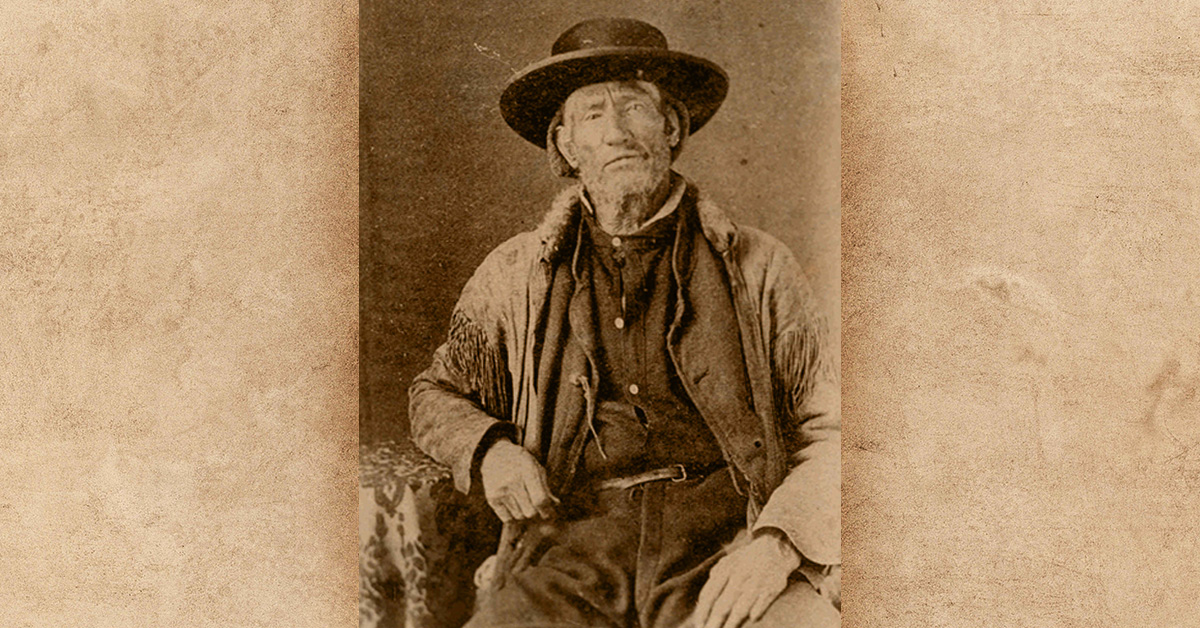
However embellished the records, the lives of mountain men carried no guarantee of tomorrows. Jim Bridger, born in Virginia in 1804, lasted more than most, passing at 77 on his Missouri farm. The fur trade was then decades gone.
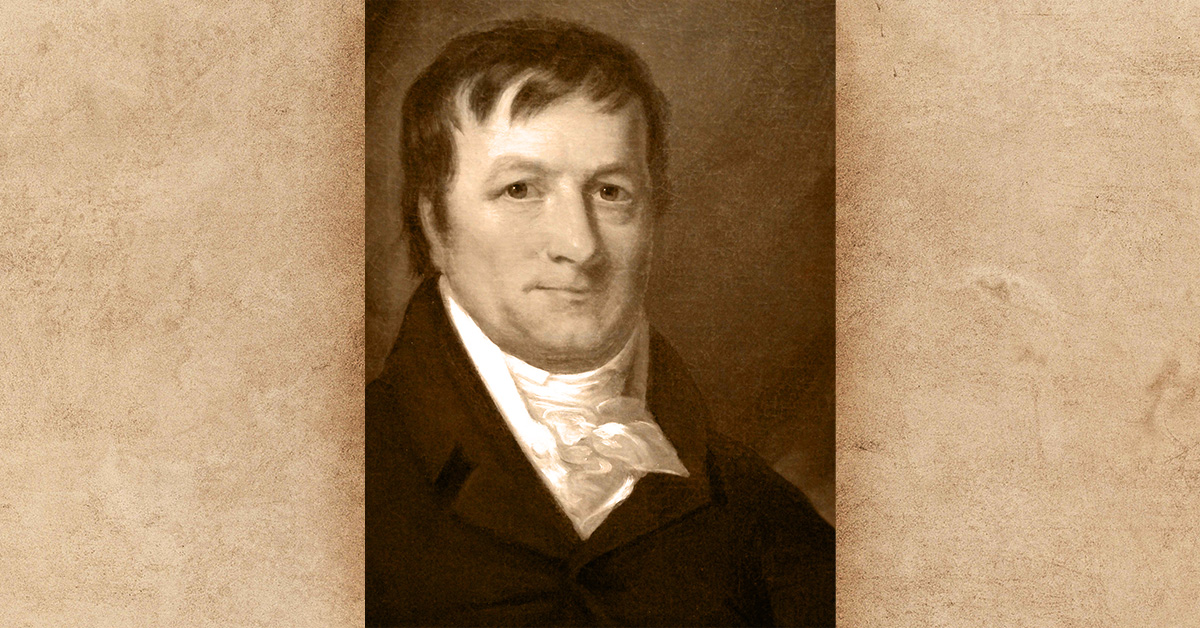
The British-Canadian Hudson’s Bay Co. and North West Co. were pulling beavers from streams above the Missouri when John Jacob Astor formed the American Fur Co. in 1808. His plan: to dominate that industry from the Pacific Coast across the Rockies, the Northern Plains, and the Great Lakes. Papers were signed in New York in 1808; an Oregon subsidiary, the Pacific Fur Co., followed in 1810.
The Illinois Territory, where Bridger’s family moved during Jim’s boyhood, was bloodied by the War of 1812. As Tecumseh’s Indian confederacy seized Forts Detroit and Dearborn farther east, warriors killed 68 men, women, and children at Chigagou, (“the onion field”). Massacres on both sides followed. In 1816, Jim lost his mother to an illness; then his brother and father died. He worked for a gunsmith before an Indian agent paid him $15 a month plus 20 cents a day to fix firearms in Potawatomi villages.
A Missouri Gazette ad in December 1818 caught Jim’s eye. Andrew Henry and William Ashley wanted 100 men to ascend the Missouri. A boat would take them 1,500 miles; they’d go another 1,000 by horse and canoe. Henry and Ashley would pay half the value of the catch if the trappers brought pelts east and supplies west. Henry, who’d crossed the Rockies 12 years earlier, would lead the expeditions. Ashley, Missouri’s lieutenant governor, would manage the business from St. Louis. Each trapper would be given a rifle, powder, balls, and traps, plus credit at a company store.
“Push now!” bellowed boatman Mike Fink, April 3, 1822, as recruits planted poles in the muck of the Missouri’s union with the Mississippi. On each side of the keelboat, men faced its stern, legs straining as they moved toward it a slow step at a time. Then they raced to the bow in turn to repeat. The Yellowstone lay four million steps upstream.
(A century later, re-enactments would feature a true-to-image keelboat…with a 350 Chevy V8 in its belly. Some days, even that worked hard to buck the current, a tribute to “Ashley’s Hundred” of 1822!)
A second boat capsized when, 300 miles on, its mast caught a branch. Craft and cargo were lost. Poling hard, 47 fresh recruits on a hastily-fitted replacement met the first group months later at the mouth of the Yellowstone, well shy of a fort that Henry had started in 1810. It had been abandoned when Indians butchered three trappers there. One was George Drouillard, earlier an interpreter for Lewis and Clark.
Henry and Ashley, as the Rocky Mountain Fur Co., were licensed to trade on Indian land, not to trap. But competition bent the rules, enforcement of which was far away in St. Louis. Whoever prevailed in the Rockies could best reach lands beyond. Hudson’s Bay Co. would get beavers the Americans didn’t.
Even tribes not hostile to intruders could be trouble. Camped in a small wood on the high plains, the new trappers returned a welcoming salute fired by a group of Assiniboines. Rifles emptied, they had no response when the clever Indians swooped in and stole 25 horses.
The fur trade bore other hazards. Neither the company nor the West suffered fools. One man fell off a boat and drowned. Three others loading a powder keg were blown up by a careless smoker. Another got a ramrod through the knees when a rifle accidentally discharged. During a tiff with a trapper, Fink set a cup of whiskey on the youth’s head to settle the spat. His aim was low and lethal. The lad was avenged later by a friend. Blackfeet slew and dismembered a group of four trappers, then another of eleven…
An Indian death at the hands of a trapper endangered all whites. Two Arikaras killed by Missouri Fur Company men triggered a raid on Ashley’s party as it slept. Toll: 14 dead, 10 wounded. The brigade lost a boat in that skirmish, plus 19 horses, 31 rifles, and half its remaining trappers in desertions.
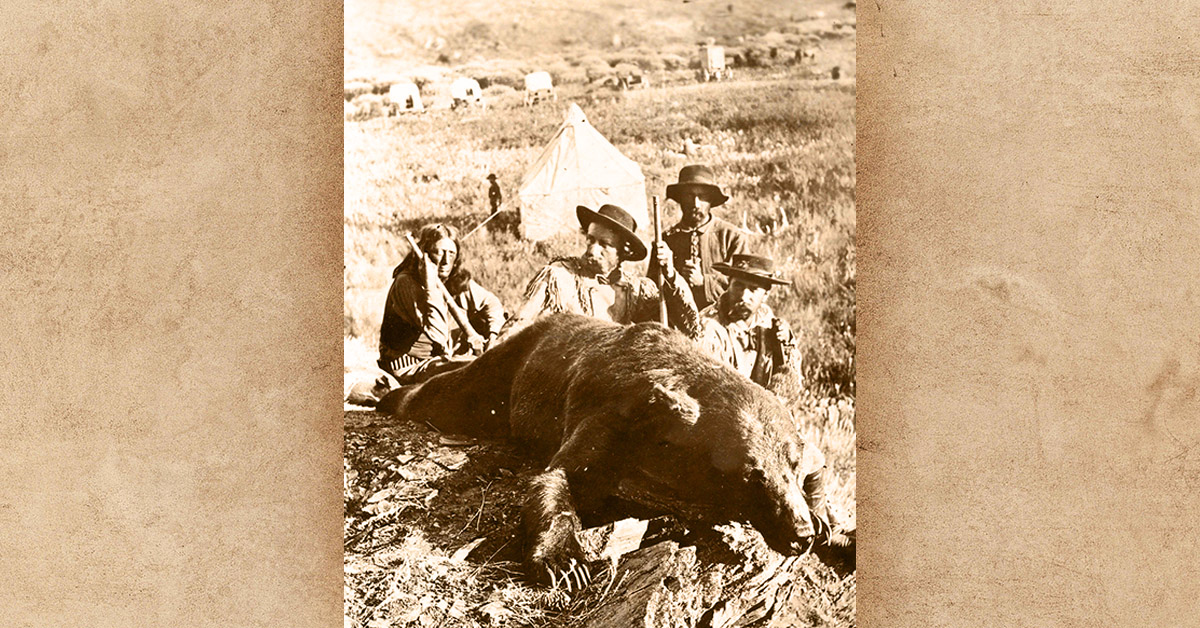
In 1823, William Sublette began trapping for Ashley’s Hundred. So did his four brothers. All got a lesson in vigilance when, on the first of June, 600 Arikaras attacked 70 trappers, killing 12. Exploring for productive water and better routes, Sublette earned the respect of his peers. Sketches in sand by friendly Crows showed a saddle in the Wind River Range. This South Pass, first discovered by Robert Stuart, soon brought trapping brigades to the Green River. Resident Shoshonis, though, considered the Green theirs. They stole from companies taking beavers on the Green; then they killed 13 trappers.
Late in 1824 into 1825, Bridger trapped the Bear River, along the west slope of the Uintas to Bear Lake. His route brought him to the north shore of a white-capped sea. The water tasted of salt — as it had to Etienne Provost, who’d earlier reached the water’s south shore. The Great Salt Lake.
The farther trappers ranged from St. Louis the harder it was to get supplies and bring pelts east. Bull-boats — half-spheres of buffalo hides stretched over frames of springy limbs and sealed with tallow — floated loads down quiet water but fared poorly in rapids.
Trappers led by Peter Skene Ogden of the Hudson’s Bay Co. brought stiff competition to Henry and Ashley’s enterprise. After visiting an HBC post, Jedediah Smith reported it had trapped and traded for 80,000 pelts. Bridger said his brigade had discouraged HBC by offering “free trappers” in Ogden’s camp $3.50 a pelt, topping the price set by the British. That deal cost HBC 700 pelts and 23 defecting trappers.
The race for pelts spared no river. Trappers tapped the Powder, Tongue, and Green; the Popo Agie and Henry’s Fork; the Judith and Musselshell; the Portneuf and Jefferson. Some would host rendezvous.
In October 1824, Ashley and 25 men led 50 packhorses from St. Louis west on the South Platte through what is now Colorado, then up the North Platte and across the Divide. At the Green in April, he sent his trappers out with notice of a July gathering. Trail markers and buried notes funneled 120 widely scattered mountain men from the vastness of the Rockies to Henry’s Fork. Clerks weighed pelts and sold provisions. Sugar and gunpowder fetched $1.50 a pound, flints $1.00 a dozen, triple the St. Louis prices. But St. Louis was a 1,000-mile walk east.
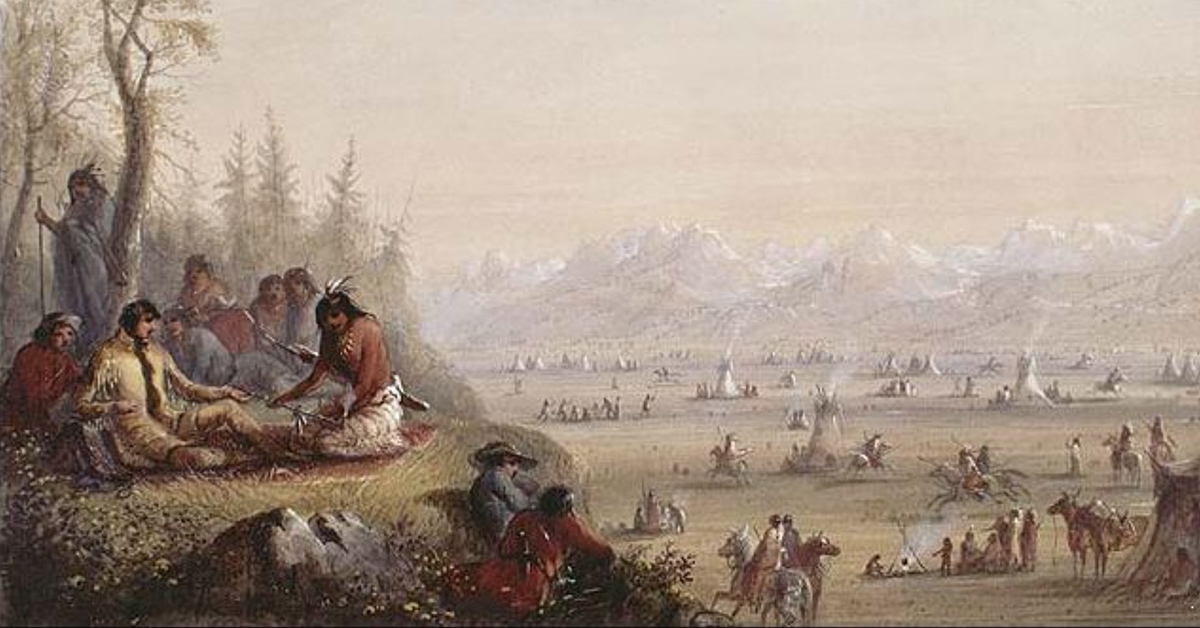
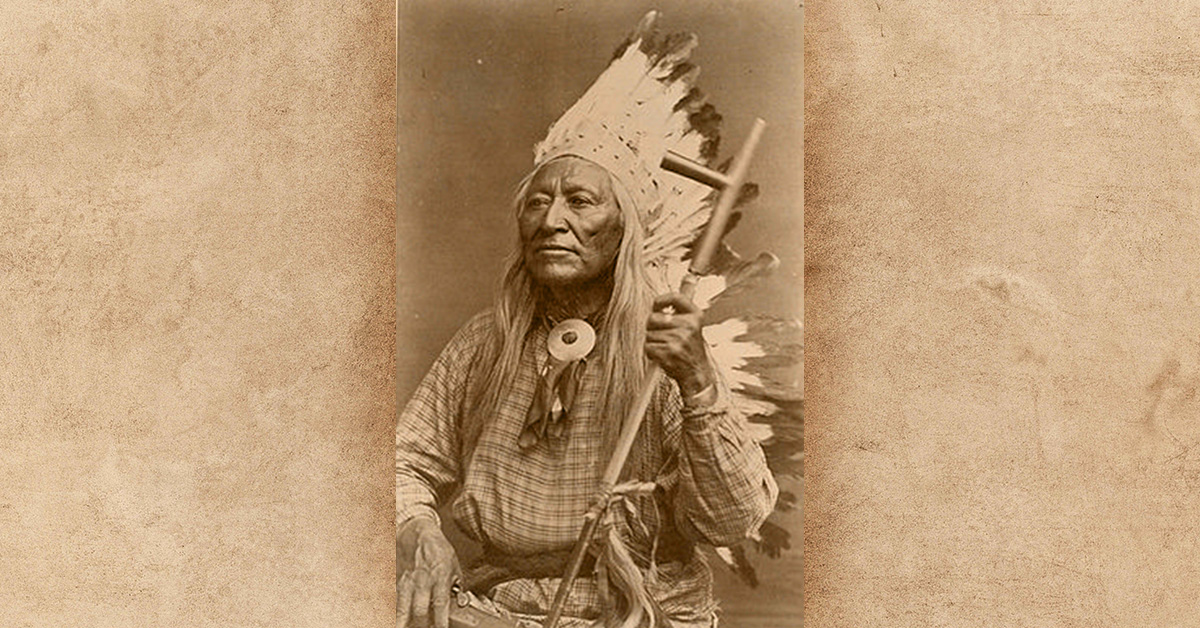
The idea of a Rendezvous wasn’t new. Indians had such gatherings. French trappers on the Great Lakes met to trade and party and catch up on news at Prairie du Chien in what is now Wisconsin. After the 1825 Rendezvous, Jedediah Smith replaced Henry as Ashley’s partner. Not all trappers approved. John Weber, whose name endures in Utah, left the mountains and, in 1859, killed himself. Sublette replaced him as a brigade leader.
Bridger stayed with Sublette and was among 50 men guarding furs on the Yellowstone when an attack by 60 Blackfeet ran off 53 of the party’s 55 horses. A couple of tense days later, Smith reached the stranded trappers to move pelts. Deep snow in the winter of 1825-1826 drove the trappers off foothills to The Great Salt Lake, where they camped with Shoshonis. Come spring, Bridger’s brigade marched up-valley and dug a vault to cache 75 packs of furs. Near completion, the cavern’s wall collapsed, burying one of their group. The cache site was his grave. This drainage became Cache Valley.
The U.S. turned fifty on the Fourth of July, 1826. In Massachusetts and Virginia, John Adams and Thomas Jefferson died within hours of each other. That year, Ashley peddled his mountain operations to Jedediah Smith, David Jackson, and William Sublette. That fall, Bridger’s brigade went with Henry up the Yellowstone. When rapids at the Powder denied their boat, they cached it and walked, trading on the way for 47 horses from the Crows. Where the Yellowstone met the Bighorn, they built a new Fort Henry.
Bridger and Sublette explored Pierre’s Hole west of the Tetons and trapped their way over Teton Pass into Jackson’s Hole, where the earth bubbled up on a lakeshore, releasing hot spray. John Colter had seen this wonder in 1807. From the Yellowstone, Sublette took Black Harris east to fetch supplies for the 1827 rendezvous. Their trek consumed 94 days. They suffered bitter cold and ate their pack dog.
In 1828, after caching 1,500 pounds of pelts, Jedediah Smith’s brigade came late from California to Pierre’s Hole. He had lost 10 men to Indians as they tried to cross the Colorado in 1827, then 15 more on the Umpqua. Bridger’s 7,400 pounds of beaver pelts and 102 of otter skins had also cost lives. Over the next year, Blackfeet and Shoshonis would kill 16 men.
Trappers spared the arrow and cudgel of hostiles, and subsequent dismemberment, had a daunting career just enduring. In 1829, Bridger guided Sublette and Smith up the Snake, then to the headwaters of the Missouri. Winter caught them in the mountains, at a cost of several pack animals. On Christmas Day, Sublette and Harris began another walk to St. Louis. In deep snow on the Powder, Bridger’s men stripped cottonwood bark to feed their horses and posted guards to keep buffalo from trampling their lodges. Ice broke in April, 1830. When swift current at a river crossing swept 30 horses to their deaths, with a loss of 300 traps, Bridger’s brigade trudged to the Rosebud and floated their kit across in bull-boats.
For Virginia’s young Joe Meek, that winter was a brutal introduction to the Rockies. But summer could bring hardship, too. He’d later recall survival as “eating ants and drinking mule’s blood” — or just staying in the saddle: “I heard a rustling in the bushes, [then] pop pop pop …. The guns were so close that through the smoke I could see the blanket wads coming out of the muskets.” A ball hit Meek’s horse, Too Shebit, in the neck. “We pitched heels over head, but Too Shebit raised running and I on his back…”
Still, even veteran mountain men couldn’t cheat the odds. After one skirmish, trappers tugged an arrow from Bridger’s back. A second shaft pulled free of its head. That would pain him most of his life.
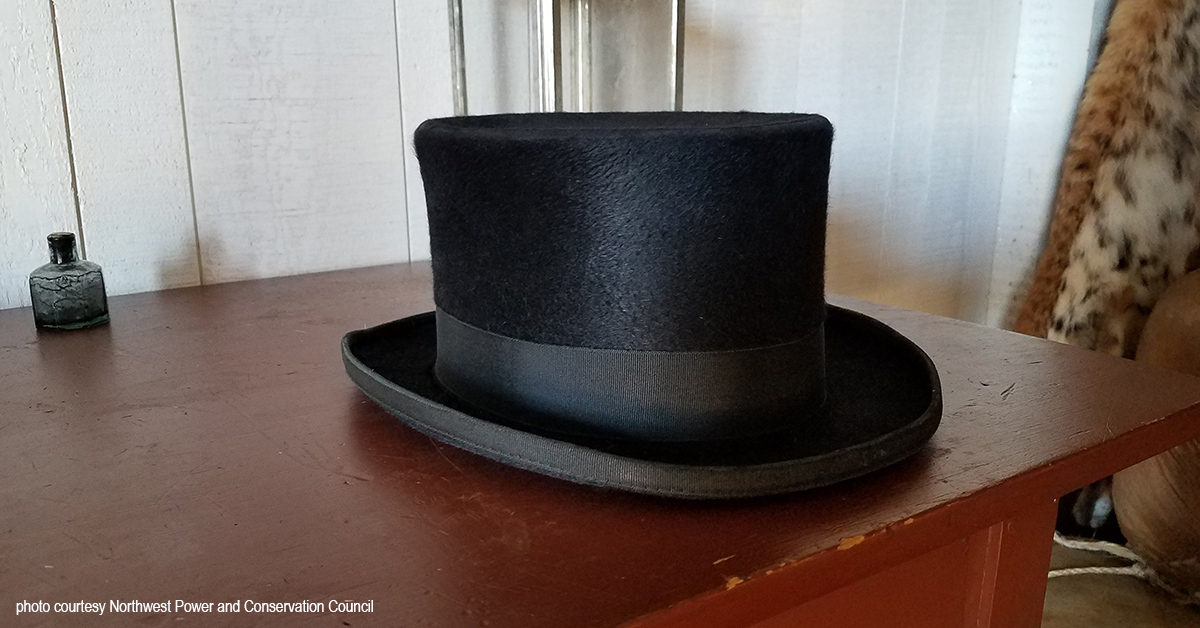
By 1832, the scale of the Hudson’s Bay Co. and American Fur Co. was quashing competition. Hat fashions were changing, too, silk replacing fur. Beaver numbers were on a slide. And emigrant tides were alarming tribes that had accepted trappers who’d learned to live with them, even marry into them. Crows and Shoshonis, once content to steal horses, now killed whites. Arikaras and Blackfeet stepped up attacks. Between 1827 and 1830 Smith, Jackson, and Sublette lost 44 men and $43,000 in livestock, traps, and furs. The trio sold out to Bridger and four other trappers, who would formally adopt the name Rocky Mountain Fur Co. originally applied in 1822.
Bridger’s brigades ranged south to Taos in 1832, then returned to hunt Wyoming buffalo. “Hump rib [sizzled] at every blaze…fat pudding and marrow gut were seething in every pan [as] the pack-mules [rolled] their blood-smeared coats in the dust.”
The mountain man’s day was waning when, threatened by insolvency, the Rocky Mountain Fur Co. sold all assets to the American Fur Co. in 1834.
The last rendezvous of record, on the Green in 1840, marked the end of a brief period defined by extraordinary men, blessed merely to escape and endure – a standard now long abandoned.