Our author delves deep into one of the more enigmatic cartridges out there — the 8.6 Blackout
by Jeromy Knepp
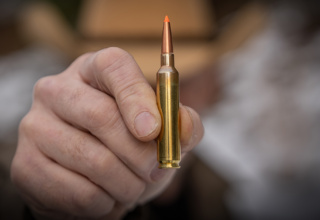
In 2022, an obscure company named by a single letter quietly designed and created a hard-hitting, silent killer. Mad scientists…well, engineers…looked at an empty 6.5 Creedmoor case and said, “How can we make this cooler?”
I have no idea if they said that, but it’s my story and speculation. Deciding to shorten the Creedmoor case almost three hundred thousandths and stretching the neck three quarters of a thousandths gave birth to the 8.6 Blackout.
Why?
Why…it’s a great question. The obvious question is why not?
The shooting sports is the most innovative group of intelligent rednecks and educated engineering nerds that can agree to create new cartridges. Dating back to as far as the first combustible powder in use in China, humans have developed ways to fling or shoot projectiles at animals and one another. Doing so also promoted more creative and accurate ways to do it.
Move innovation forward several centuries and nothing has changed. Tinkering, designing, thinking, divorces, and drinking beer sure created many of the popular cartridges we shoot today. Someone, deciding to take the venerable 30-06 Springfield and neck it down to 270 Winchester, created a more popular option. My family all used, owned, and killed deer with this cartridge.
Then someone said, “Let’s neck it down even further to .257 inches, producing the 25-06 Remington. This created yet another popular cartridge for both varmint hunting and deer hunting. I have personally taken several deer while hunting with this cartridge. Then someone said, “We should neck it up to .338-caliber. This created the 338 A-Square. Versatile, heavy hitting, and used as an alternative to the hard-recoiling 338 magnums.
What I am getting at is that one cartridge can create a plethora of possibilities.
Q LLC had a dream and they built it. Originally developed for AR-10 platform rifles, they created a cartridge that can be shot from pistol-length barrels, performing as well or better than most standard pistol cartridges on the market. It equals or exceeds some of the magnum pistol cartridges (excluding the 454 Casull, 460 and 500 S&W) on the market. How do I know? Crunching numbers using the Brian Litz ballistics app provides energy results down-range using voodoo mathematics. I must believe it because I am terrible with numbers and Brian is a shooting mathematical genius.
What are we talking about?
The 8.6mm Blackout.
Nerding Out!
Q designed this cartridge to be portable, potent, and devastating. Watching many of the YouTube videos out there and the gel blocks tell the tale. Utilizing a 1:3-inch twist made it revolutionary. Centrifugal energy became the new hot take with this cartridge. That is what is taught and pushed. Watching the 340- to 350-grain bullet corkscrew through ballistics gel is impressive at subsonic speeds. Depending on the loading and velocity, the bullet can spin from 300,000 to 500,000 rotations per minute.
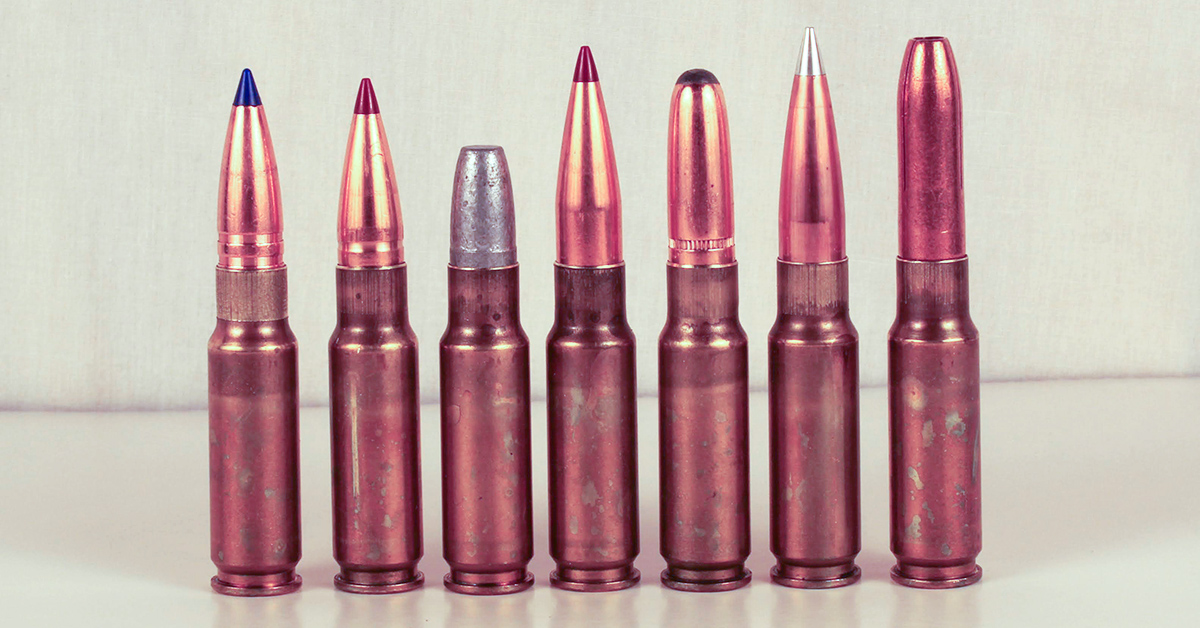
That is as much as I’m going to give you from the computer of universal opinion. I have one, and I’m going to share it. Do you need a 1:3 twist? Nope! Do you want a 1:3 twist? Well…that’s on you and how cool you want to be. I like cheap bullets; therefore, I chose to go with a 1:6 twist.
Why 1:6?
Like I stated above…cheap bullets. This cartridge can be unfriendly to your wallet. Using a tighter twist requires using more expensive mono-metal bullets. These bullets can cost anywhere from $0.92 up to $2.40 each. This is a larger variation in cost, but still, almost a dollar a bullet can set a guy back. Brass can be a little spendy as well, with the cheapest being Starline at $0.74 per case. That’s a bargain compared to Gorilla ($1.00 per) and Alpha Munitions ($1.30 per).
Handloading is essential for this cartridge to trim costs where you can. I found that Midway USA sells Hunters Supply slick coat hardcast bullets at $0.12 per bullet. At 200 grains, this bullet, shot at subsonic speeds, kicks less than a 22LR. It’s a hoot to shoot! Another cost-saver for this cartridge is the Sierra 250-gr. MatchKing when they run factory seconds at $0.48 per bullet sold in quantities of 100.
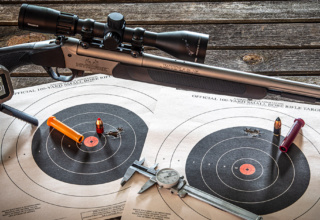
This cartridge is capable of extraordinary distances, but realistically, this is a 300- to 400-yard plinker subsonic. I have taken it to 700 yards with confirmed hits on a steel ram at that distance. With just a mere 46 MILs (!), it can be done.
The Build
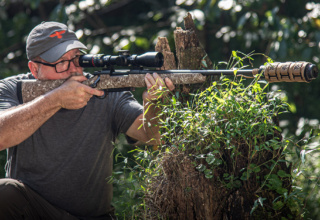
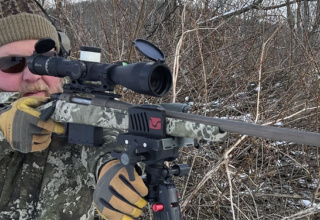
This was a project that took a long time to get together. With the help of MDT, EGW, Steiner, Accu-Tac, Silencer Central, Trigger Tech, Hodgdon, IMR, and Hornady, we had a rifle. The barrel is a 16-inch Pac-Nor Super Match 4-groove in 1:6 twist with a 5/8-24 tenon for suppressor use. The action is a Remington SA stainless steel with a Trigger Tech Diamond installed and set to one and a half pounds for hunting purposes.
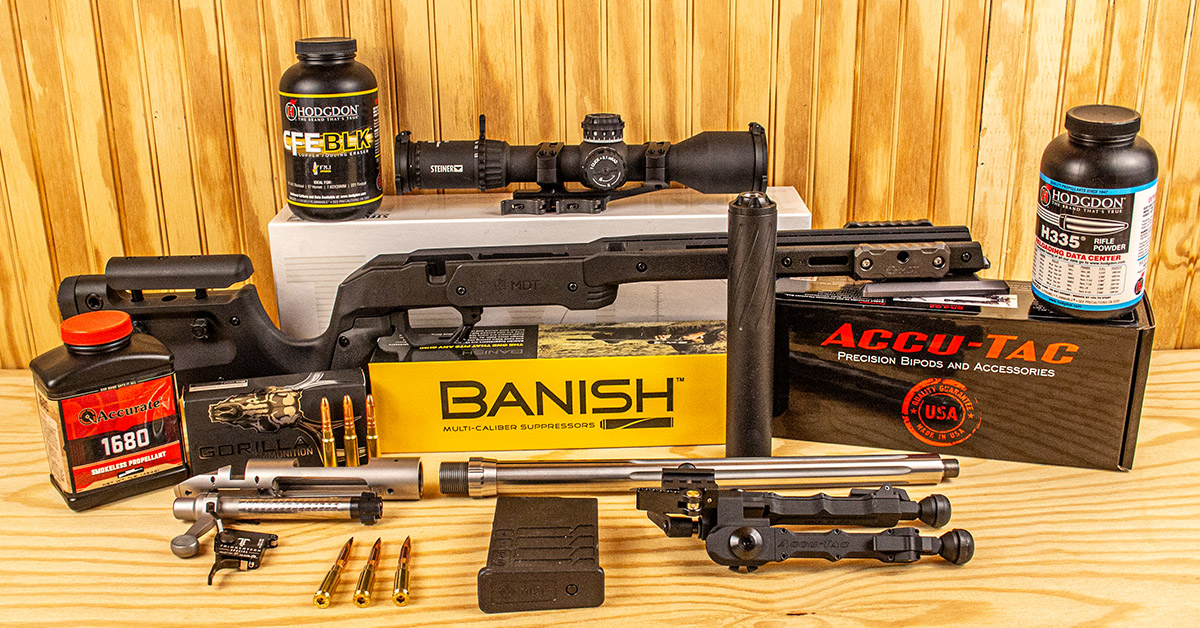
MDT provided the chassis. Utilizing the XRS Chassis system provides great stability. Not the best option for hunting, but that is what I chose. The XRS offers versatility, adjustability, and carries well with a sling. MDT also includes M-LOK slots for personalization plus QD sling mounts. Two different grips allow for a straight pull grip or slightly canted. This chassis fits standard AICS magazines.
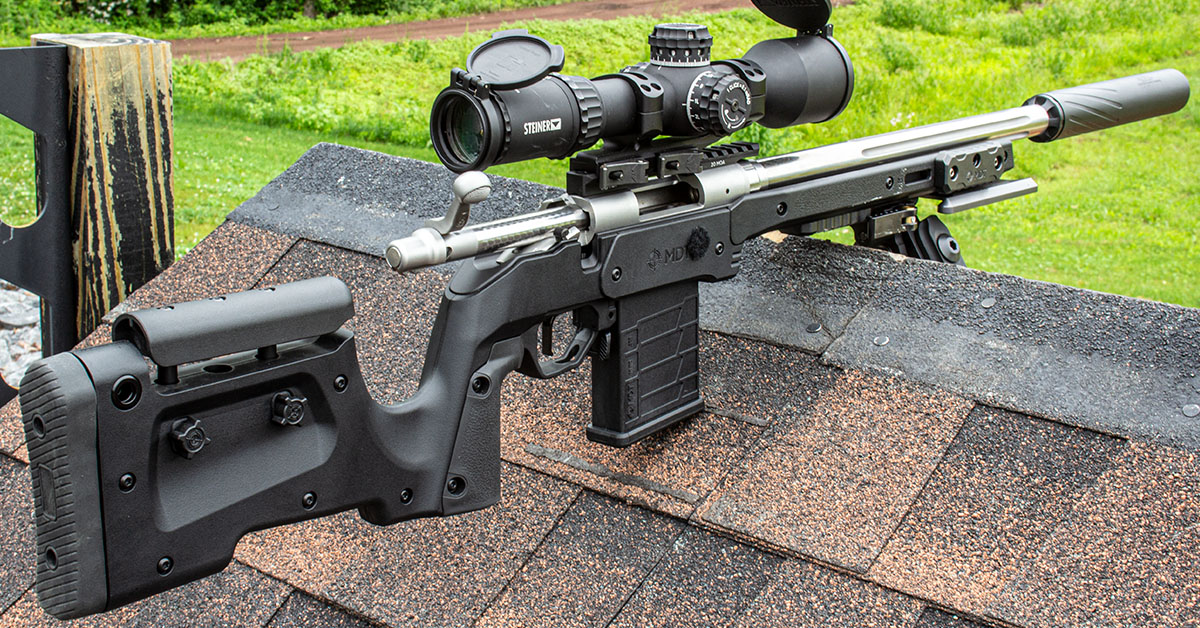
MDT also provided a 20 MOA Picatinny base. If you plan to shoot far with this cartridge, 20 MOA is a minimum — 30 MOA would be better, along with an optic with as much elevation as possible.
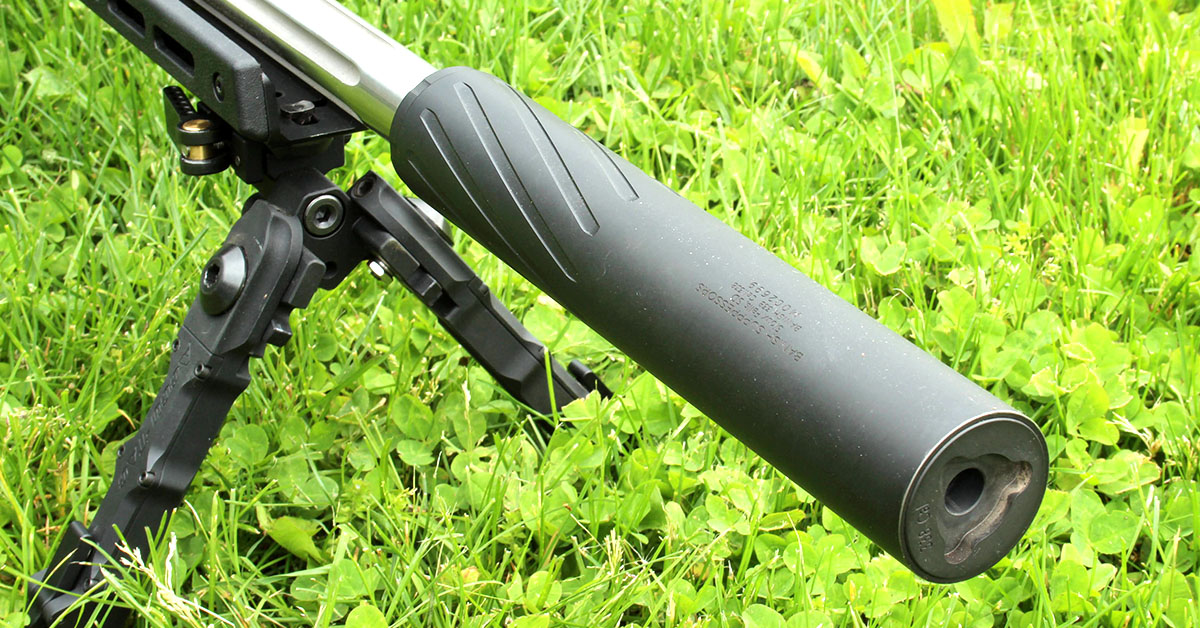
Silencer Central sourced their Banish 338. I’ve pitted Silence Central’s Banish suppressors against other mainstream suppressors. In my opinion, they are unmatched for sound mitigation and suppression. I can sit on a bench all day without hearing protection — supersonic or subsonic — when by myself.
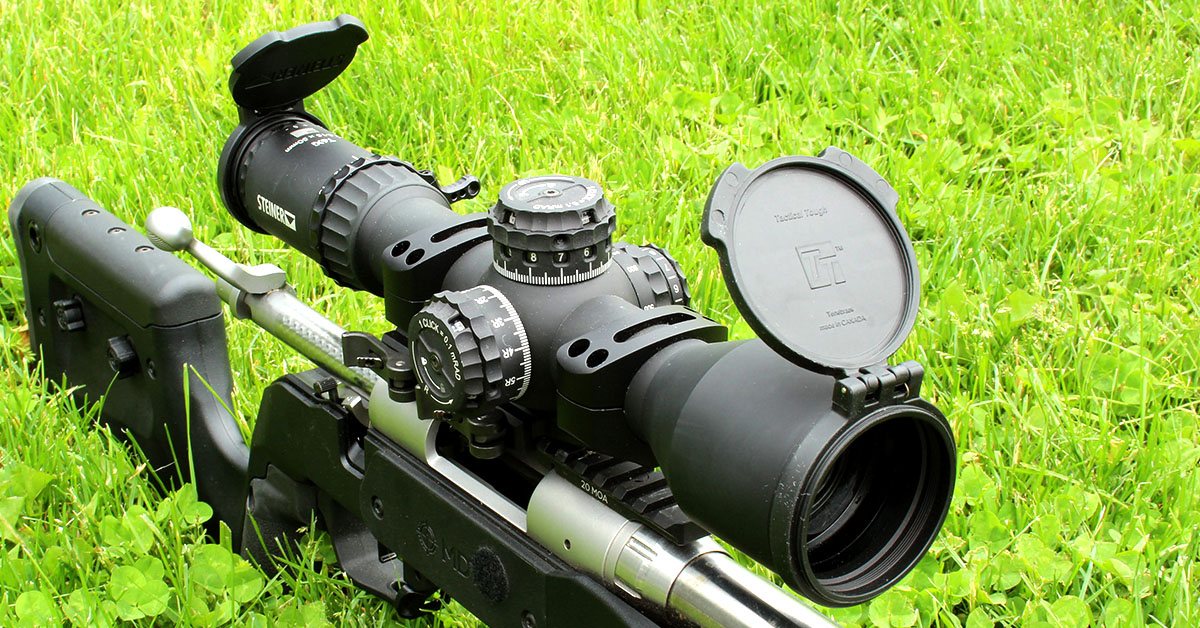
Stiener provided a T6Xi 2.5-15x50mm scope with a proprietary QD mount. This scope is a bit heavy but is feature-rich. With my zero, I have 23.1 MILs max elevation in the elevation turret and an additional 20 MILs utilizing their SCR MIL reticle. The T6Xi provides locking windage and elevation, low-profile never-lost turrets, second rotation indicator, and illumination. Also provided is a power adjust lever and scope caps that lay flat when opened.
Accu-Tac provided a BR-4 G2 bipod — the epitome of stability and strength. The BR-4 G2 gives great results from the ground and bench. Rubber feet are pliable on hard surfaces, limiting rebound under recoil. Accu-Tac is the tinker toy of bipods. Shooters can add leg extensions and different foot options, depending on terrain and usage.
Identity?
Where does this cartridge fit? With a little research, I put it somewhere along with or between the 30-30 Winchester and its larger cousin the 33 WCF. All three are capable of the same bullets in the lighter bullet category. The 30-30’s common loadings are the 150-gr. FP (max velocity 2300 fps per Sierra loading data) and the 175-gr. Sub-X (max velocity 2150 fps per Hornady reloading data). My handload of H335 and the Barnes produced a velocity of 2462 fps, exceeding Sierra load data by 162 fps. The 33 WCF, according to the Hornady manual, with a 200-gr. Flex-Tip can attain 2200 fps. But standard loading for the original put this loading somewhere in the 1800 fps realm. Careful loading resulted in the Sierra BTHP 250-gr. SMK averaging a velocity of 1863 fps and matching the same speed with the Hornady A-Tip 300-gr.
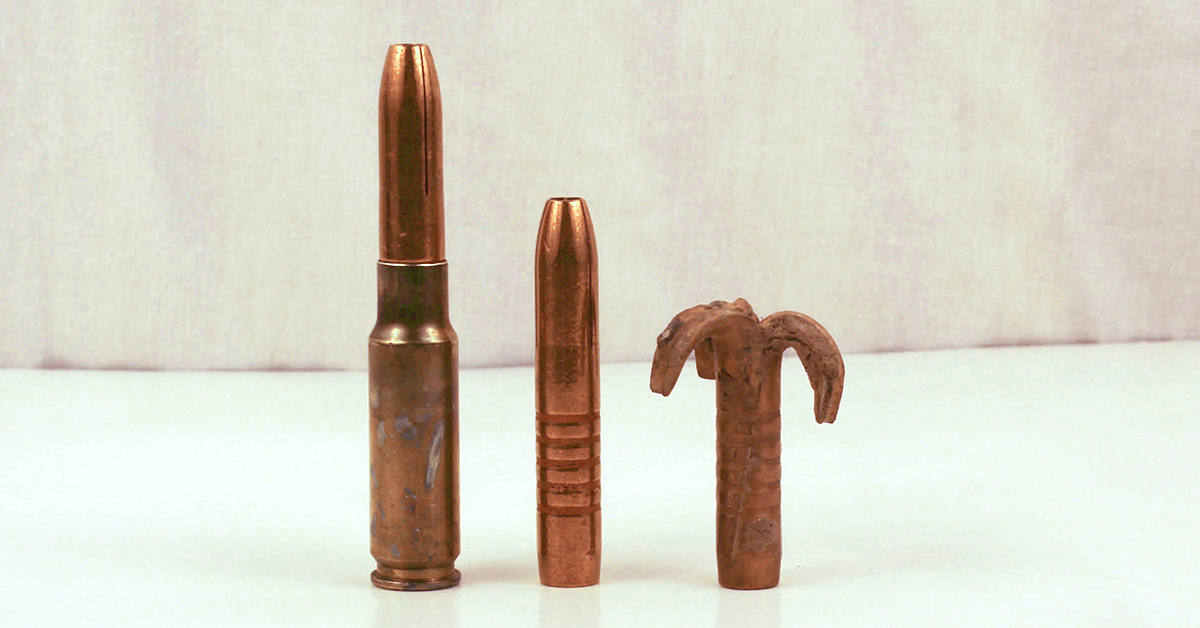
The 8.6 Blackout relies heavily on new powders, bullet construction, and modern load data. No one has this in a manual. You can find load data on the interwebs, but I say load with caution. This cartridge is not for the new reloader. It takes time to know and choose powders suitable for the application and bullet.
Pistols and shotgun powders work best for the subsonic loadings. There is a ton of data using Accurate 1680. There is some load data gleaned from Sniper’s Hide using H335 and IMR 4198. Me being me, I found Alliant’s Unique to work great for subsonic loadings with heavy bullets. CFE BLK is another contender, depending on bullet weight. I’ve played with Winchester StaBall Match, Varget, and Shooter’s World powders with varying degrees of success for supersonic loadings. The real limitation of this cartridge is its lack of volume.
I will say that the heavy bullets in the 250-gr. and up category slap hard on steel up to distances of 700 yards. We had no problems hearing impacts at that distance. It just took a hilarious amount of flight time to get there.
Boom! Wait, wait, and wait some more…clang! It was fun!
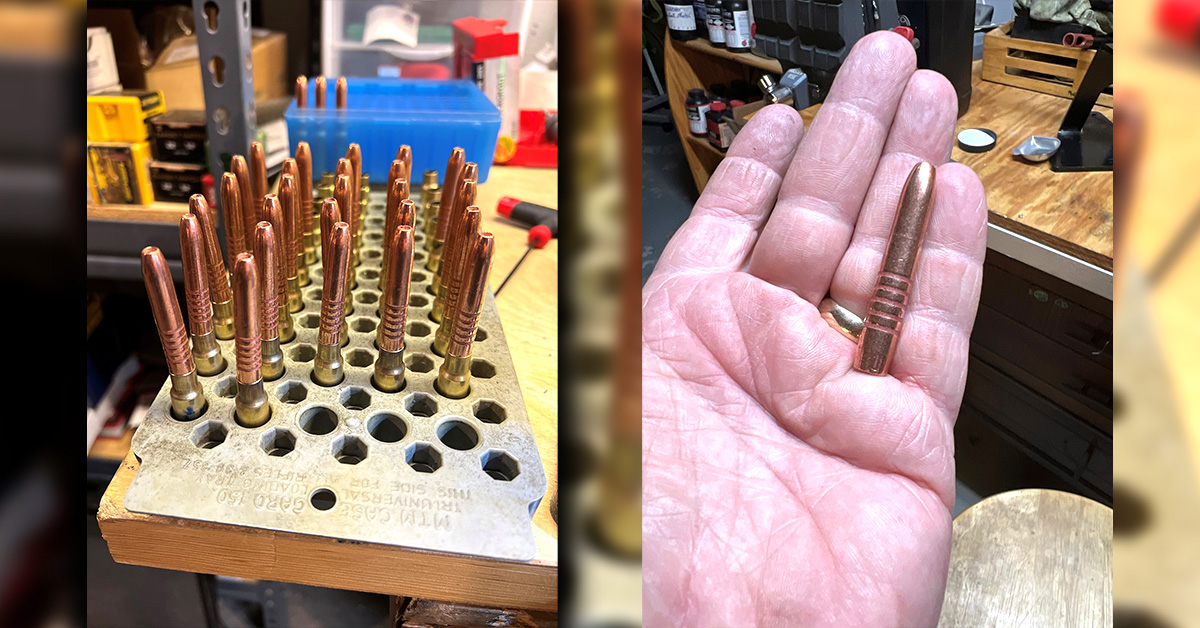
The 160-gr. TTSX from Barnes at supersonic speeds humbles the 30-30 Win. in energy at matching speeds. Loadings of 185- to 225-gr. far exceed the 30-30 Win. and match or exceed the 33 WCF. A part of me wants to rebuild this rifle with a 22- to 24-inch barrel in 1:7-1:8 twist to see if using slower powders, like the aforementioned Varget, TAC, Shooters World, and StaBall Match increase this cartridge’s potential.
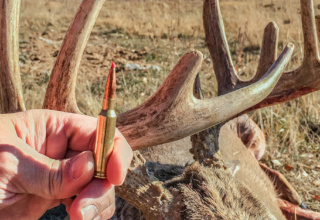
But…and it’s a large one…its true calling is found in pistol-length barrels developed specifically for subsonic hunting. If there is something to be said about the 300 Blackout, it’s that it is a little anemic for large game hunting purposes. I’ve heard personal experiences from experienced hunters having bullet failures, passthroughs, and lost deer with the 300 Blackout. The 8.6 Blackout, by all indications from ballistic data, fix this issue. Unfortunately, we were unable to harvest a deer with the 8.6 Blackout last year. Deer were scarce in the PA woods where we hunt. Fortunately, a new season is almost upon us.
Final Thoughts
Where am I at with this cartridge? To be honest, I love it. I think it’s fun and fascinating. We giggle every time my family and friends shoot it. The recoil is non-existent with subsonic loadings in any weight bullet. It’s a continual experiment and experience like no other, except maybe the first time you shoot a 50 BMG. How does it compare to the new kid on the block, Hornady’s 338 ARC? This cartridge provides more velocity and bullet options. The 338 ARC is just as niche but is limited much more so in powder capacity and bullet.
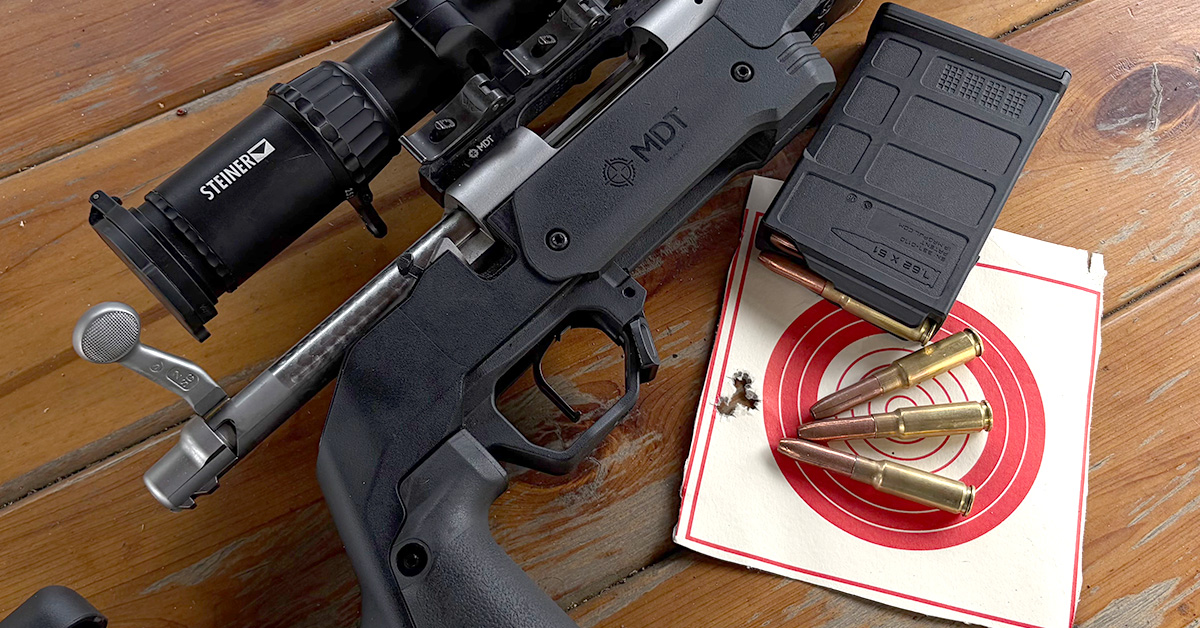
I don’t own any of the Q-made firearms; however, I have my own home-built rifle. That makes it special to me.
I think anyone who experiences the 8.6 Blackout will enjoy it. Now that it has been made SAMMI-approved, I think we could see a lot more reliable data to come.
But don’t take my word for it. Try it and form your own opinion.
- Quiet Strength: The 8.6 Blackout - September 4, 2026
- TESTED: Henry Lever Action Supreme - February 2, 2026
- FIELD TEST: Savage Axis 2 - July 25, 2025