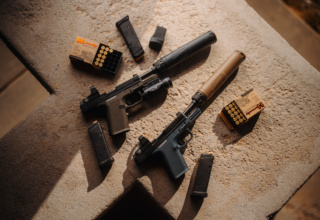
In this final installment in our suppressor basics series, we examine the variables involved in adapting suppressors for rifle use
by Jeremy D. Clough
First, temper your expectations.
Suppressors dampen the sound from combustion gases escaping the muzzle of a rifle, but do nothing to reduce the high-pitched, echoing crack from the bullet breaking the sound barrier. While some of the classic rifle calibers do have subsonic options, most do not — and those that do come with significant compromises.
I have limited experience with these, but it didn’t take long for the shortcomings to appear. Subsonic .308 from my 16-inch Ruger Scout Rifle with a Dead Air Sandman X attached is almost giggle quiet. It’s especially fun when that 220-grain bullet slams into steel — but it comes at a cost.
First is the rainbow trajectory, with the bullet dropping somewhere around 18 inches at 100 yards compared to the standard ammo for which the rifle was zeroed.
Second is highly inconsistent velocity. Without getting too deep into internal ballistics, at which I am no expert, every cartridge has a set amount of space into which the powder fits. The degree to which that powder charge fills, or doesn’t fill, the space has a great effect on performance. Leave enough empty space and the powder can explode rather than burn — a well-known phenomenon with light handloads for bullseye pistols as well as reduced loads for centerfire rifle cartridges.
The need to fill that empty space is why some reduced load data includes adding inert material like kapok or Dacron into the casing. A case not fully filled can also lead to inconsistencies in how the powder is distributed across the casing, which affects how well it burns, leading to variations in pressure and accuracy. If you’ve ever wondered why some custom .22 rimfires are offered with a 6 o’clock firing pin, it’s an attempt to minimize this effect.
An obvious exception are calibers specifically designed to be subsonic, such as the .338 Spectre and, best known of all, the .300 Blackout.
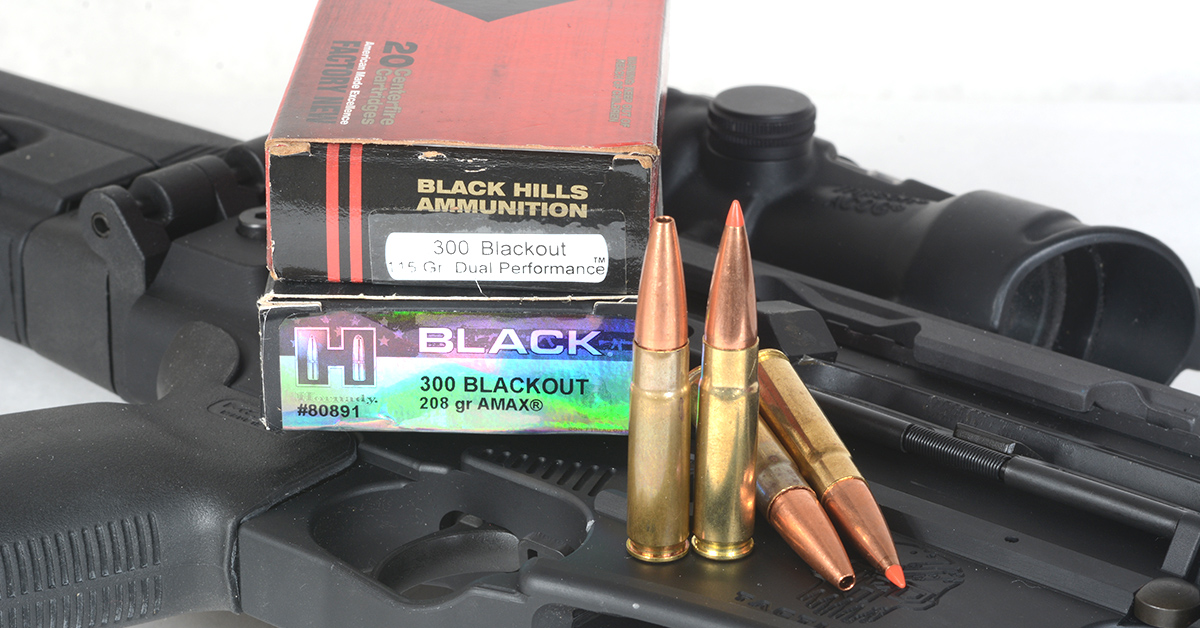
An evolution of the earlier .300 Whisper created by wildcat cartridge impresario J.D. Jones, the Blackout is essentially two variations: a supersonic loading and a subsonic.
The general idea is that a single rifle should be able to cycle reliably with supersonic ammo unsuppressed and with subsonic when used with a suppressor. The reality may or may not work out that way, depending on your particular gun.
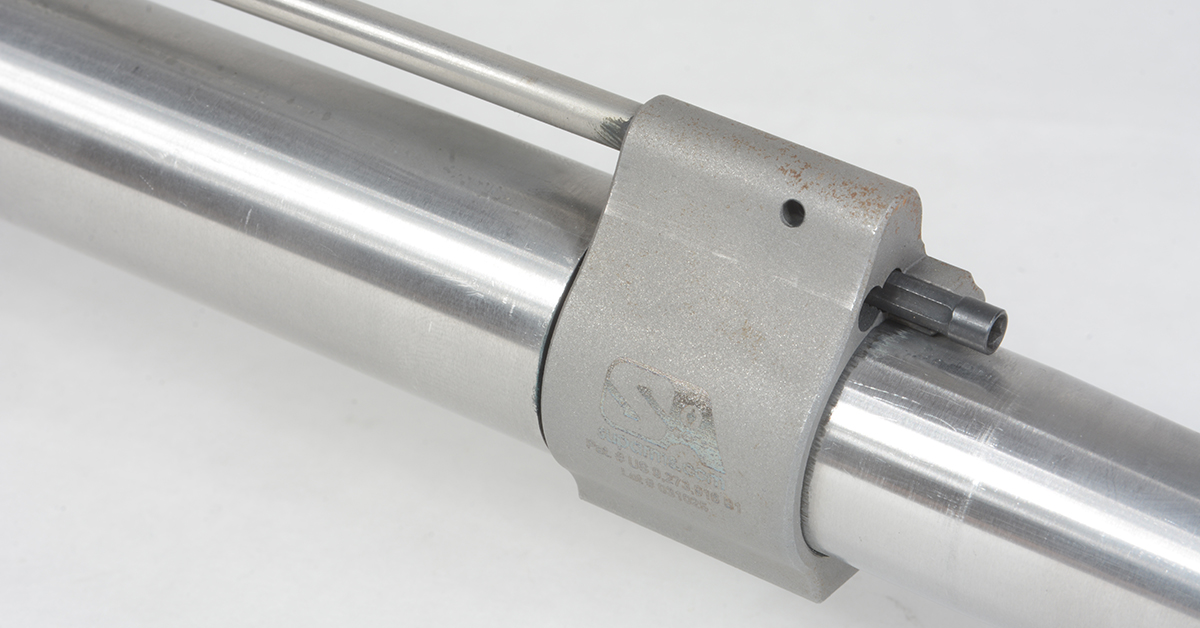
I’ve had quite a bit of trouble adjusting the gas system on mine — acquired over a decade ago, before the caliber was as prolific — to get reliable performance, but since I focus more on .308 and .223, I’ve not put much time into it. So far, the barrel I have simply doesn’t supply enough gas to cycle the action with either option, so next up is opening the gas port, which is no amateur’s task. Considering the caliber’s wide acceptance since (including by the US military), I’m confident current offerings perform better with less tinkering.
Dealing with Backpressure
And that brings us to the dreaded backpressure.
Suppressors work by trapping or diverting gas and, historically, the structure inside the can that trapped the gas (read: baffles) redirected it back down the barrel and into the action of the firearm. It’s my understanding the term “flow through” is trademarked, so I’m not going to use it, but the burst of technology in rifle suppressor design is in finding ways to divert gas, substantially reducing the pressure inside the can and, as a result, the gun it’s attached to. Different models do this more or less well. Just know that many models will have some backpressure, and legacy suppressors will have quite a bit. Usually, you’ll see a difference in ejection pattern, but serious complications can range from barrel erosion that starts at the muzzle and goes backwards to functional problems with the gun.
Bolt Mechanics
Now we need to talk a bit about mechanisms. Every self-loading mechanism represents a balance between the pressure created when the gun fires and the forces that oppose it. In a blowback like a .22, those forces consist of the weight of the bolt or slide and the spring that holds it shut. Although some modern rifles use long recoil or roller delay — we’ll get to that in a minute — most are gas operated, with the chamber locked closed by a rotating bolt.
Gas exits the barrel through a port and passes backwards through a tube, where it pushes either a piston or a carrier that will turn the bolt, unlocking it so it can move backwards and cycle after the chamber pressures have dropped to a safe level. The amount of gas — determined by variables like the size of the port in the barrel, the block through which it passes, and the size of the tube — is critical to the timing of the bolt unlocking, which controls both how well it feeds and whether the gun is even safe. Obviously, blasting a bunch of extra gas backwards at the same time is going to change that balance. In the case of a direct-impingement AR, it also blows various gunk back into your action and magazine, and through the charging handle slot into your face — just one of many, many reasons you never shoot without eye protection. Piston guns run cleaner, but we still have the gas pressure to deal with.
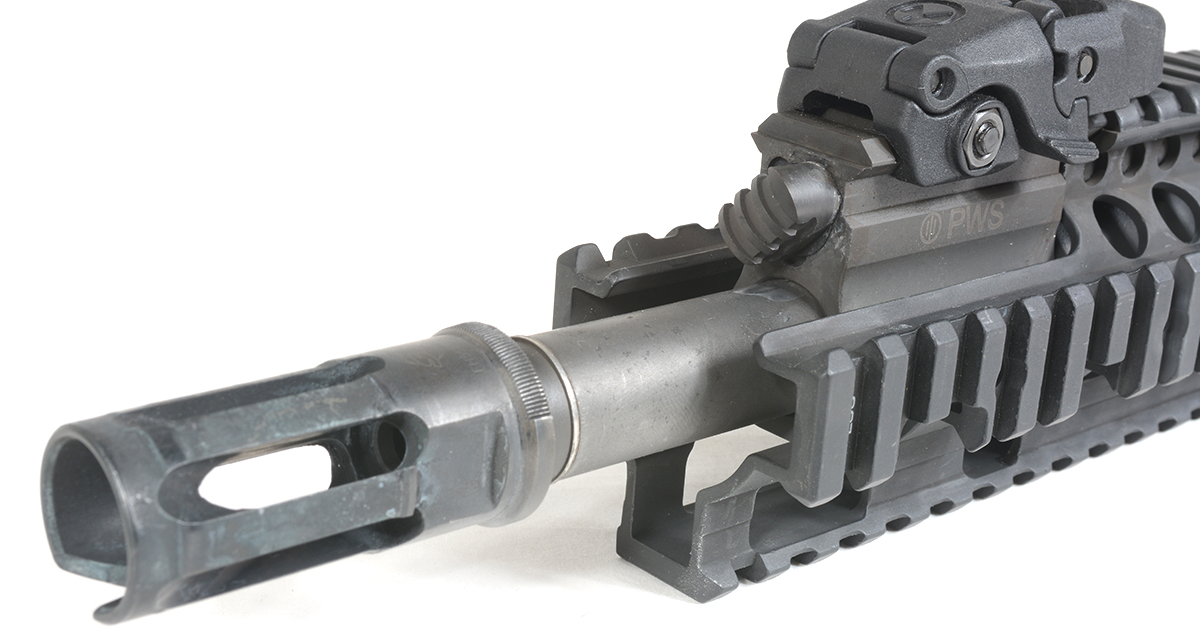
Options include an adjustable gas block that changes the size of the hole through which the gas passes as it enters the gas tube. I have an 11.5-inch AR with an early PWS piston system that has a three-position gas block: suppressed, unsuppressed, and complete gas shutoff. As long as the switch is in the correct position, it has never malfunctioned. Other versions use an adjustable screw.
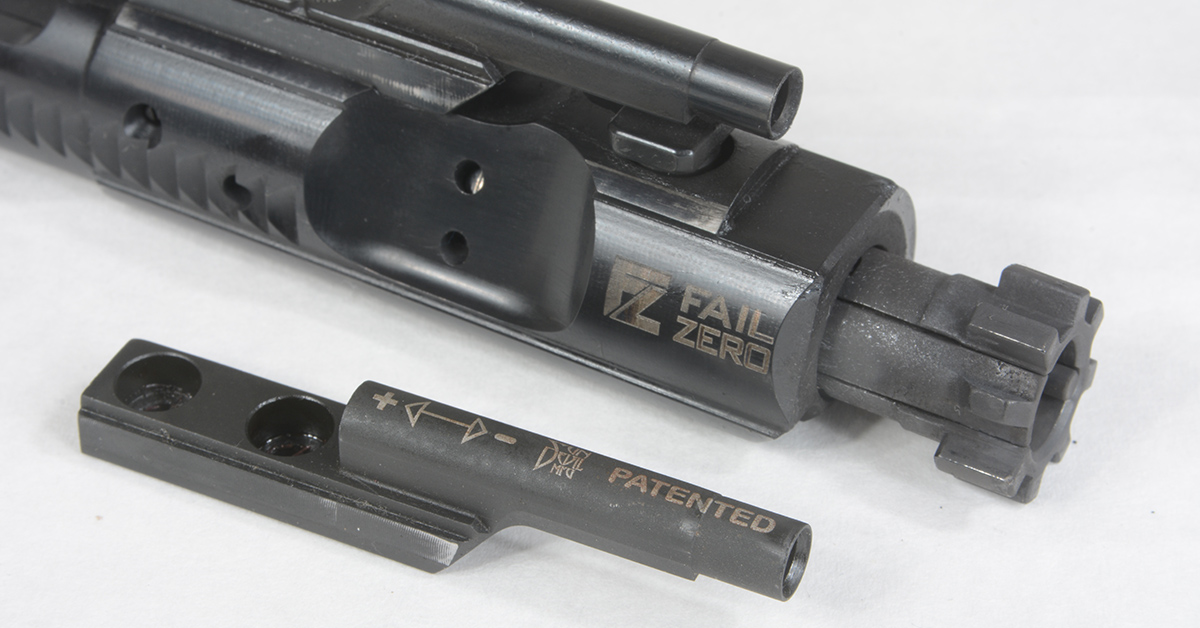
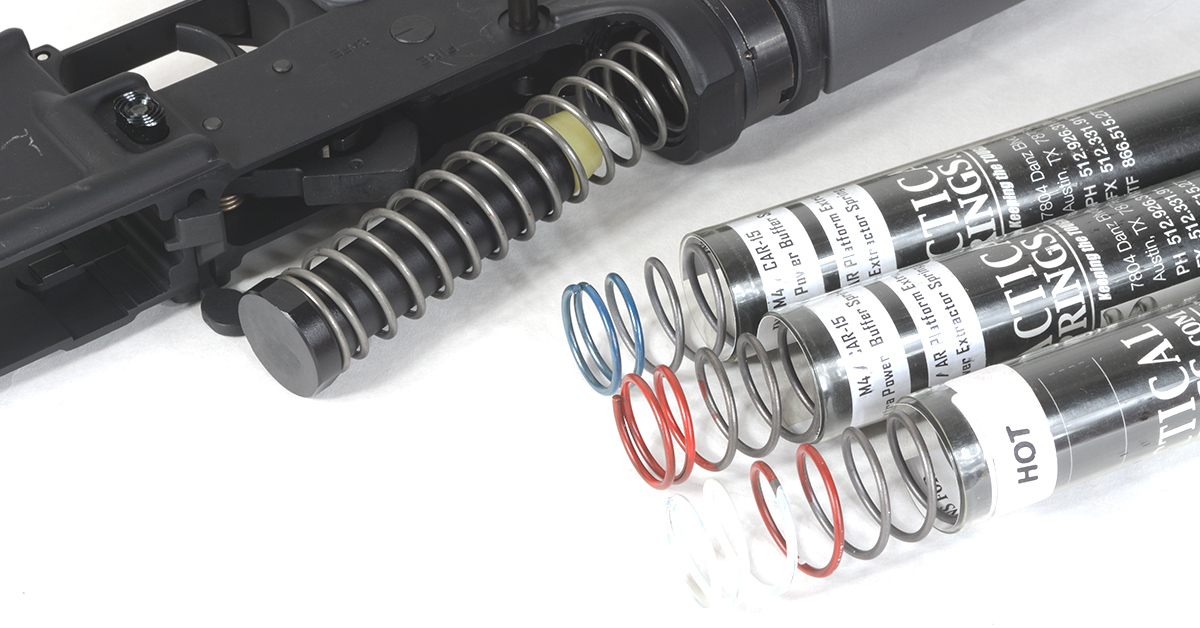
Also, remember the back half of the gun, which includes using a wider, gas-blocking charging handle to keep the gas out of your eyes. The now-defunct Sun Devil Manufacturing, which OEM’d for several big names, offered a patented gas key that adjusted with a set screw to control pressure at the carrier. Buffer weight and springs are also part of the calculus to make sure your rifle runs well with a can.
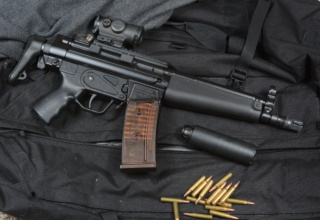
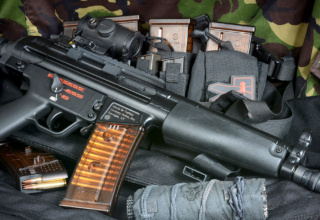
Roller locks, which include the G3, MP5, and others, are enjoying a bit of a golden era night now. Instead of a gas system, the action is kept shut by two opposing rollers in the bolt that are forced into recesses in the barrel trunnion by a locking piece that wedges them into place. Technically a roller delayed blowback system, the gas pressure forces the bolt backwards against the leverage exerted on the rollers by the locking piece until it forces them inwards, allowing the bolt to come back.
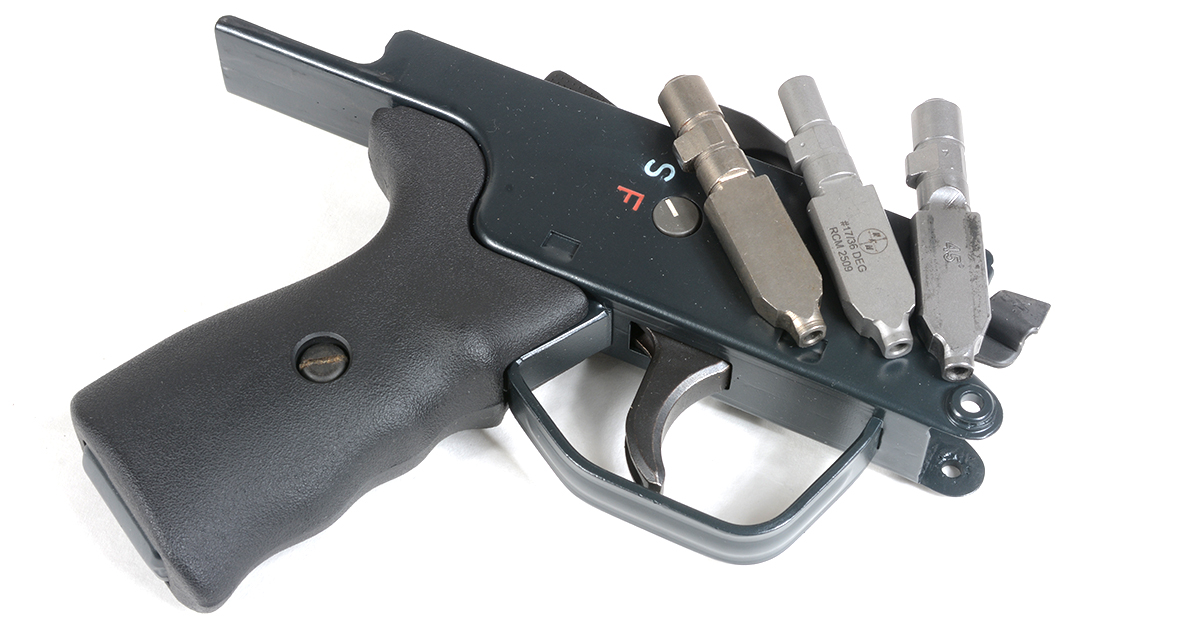
Different locking pieces have different angles, depending on caliber, barrel length, and other variables. HK numbered these, and the various number/angle charts are easy to find online. From the factory, some pieces are marked and some are not. If they’re not, good luck determining the angle. Required angle will likely vary for suppressed use. For the G3/91, the #17/36 degree locking piece is often recommended. Whether or not you need one will depend on the gun, ammo you choose, and the amount of backpressure yours can deliver. But failing to match them can leave you with serious problems. One of these is dents in the rear of the sheet metal receiver from the rollers popping outwards when the bolt carrier slams into the buffer at the end of its travel.
That said, I’ve been shooting both a 12-inch PTR K3P in .308 (which comes with a 45-degree locking piece) and a 5.56mm AP53 from Century Arms suppressed with zero problems using Dead Air’s Sandman X. Advertised as a low backpressure model, it seems to have no impact on either gun’s cycling, and I’ve noticed no real change in recoil or case ejection pattern; or, oddly, in measured bullet velocity on the .308.
Impact Shift
One unavoidable change from suppressing a rifle is impact shift: the bullet will go someplace different with a suppressor installed. At 100 yards, I’ve seen this vary from as little as an inch or so to completely off the steel. The “why” is simple. Rifle accuracy is affected by the harmonic vibrations of the barrel. Think about a tuning fork. I have a particularly accurate AR with a Lothar Walther barrel that, when you flick it at the muzzle, will literally ring.
Full-length bedding is a traditional approach to dampening those vibrations, while free-floating a rifle barrel is intended to do the opposite.
Barrel length also influences harmonics, which is the reasoning behind the old BOSS system that basically adjusted barrel length to dial in accuracy.
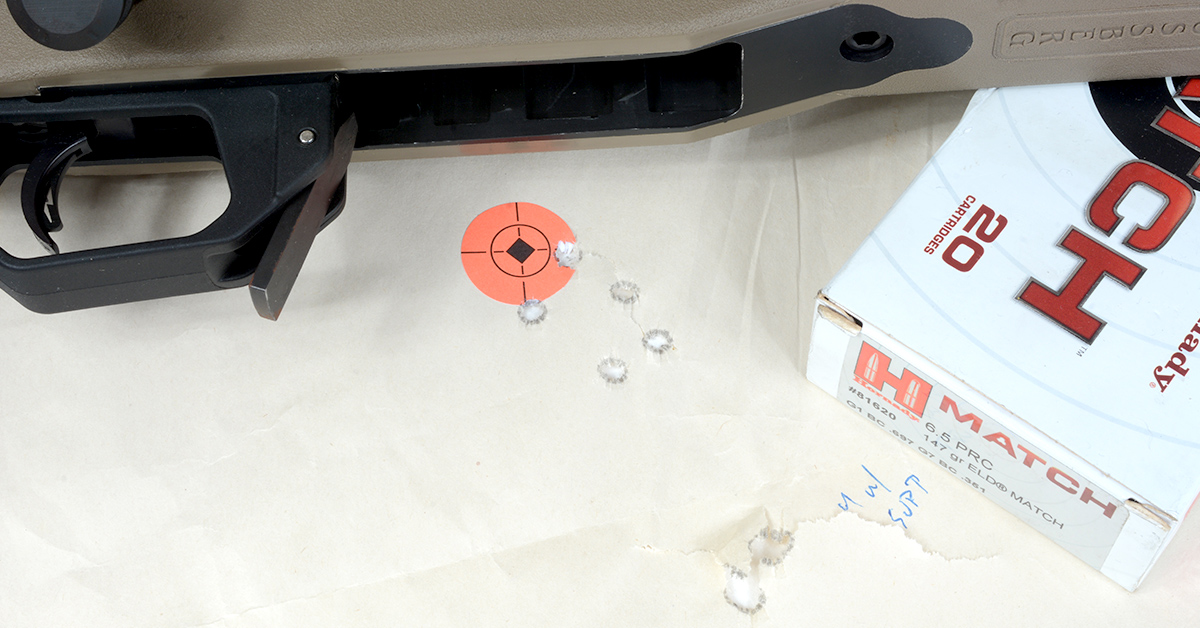
The short answer is that you put the gun on paper both with and without the suppressor to see the shift. Choose which one you want to zero for and make a record of the shift for when you’re shooting the other way. This presumes that the shift is consistent. Just don’t make the mistake of assuming the shift will be identical for different loads. You’ll have to check them all and expect the unexpected.
Imagine my surprise when I shot the K3P (which, like most G3 derivatives, has a free-floated barrel) with Fiocchi’s SBR load and found no discernable shift at 100 yards. And don’t be surprised if your groups tighten up with a suppressor.
Suppressor Mounting
And that brings us to mounting systems.
If the suppressor does not mount the same way every time you put it on, you have reason to expect the impact shift to change. This is one weakness of threads: as they wear, the point of final rest moves. They can also unscrew during firing, which both shifts impact and can be seriously dangerous.
When dinosaurs roamed the earth and Fudds ruled the ranges, it was basically the only option. Your can came threaded as it came, and you made do. Now we have two advantages: several different adaptors that can be threaded to your rifle, and cans that can accept multiple mounting interfaces, many of which are manufactured with the HUB thread pattern.
For those who are unfamiliar with HUB, the rear tube of the suppressor is internally threaded at 1.375×24, allowing you to either use the adaptor supplied with the can or replace it with one from another manufacturer.
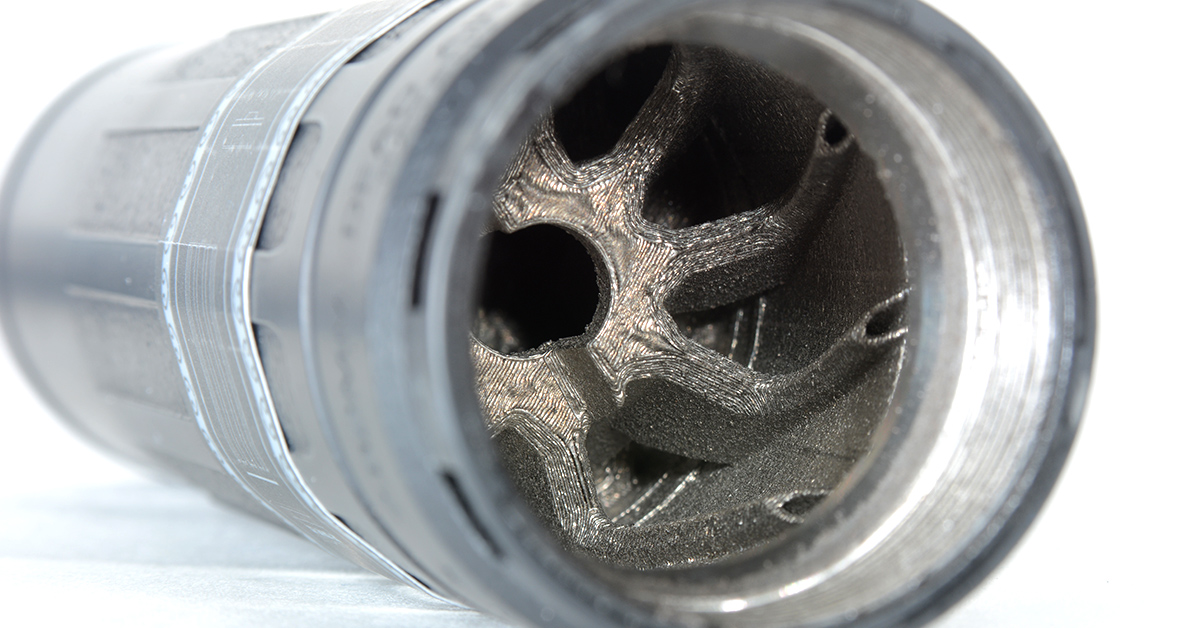
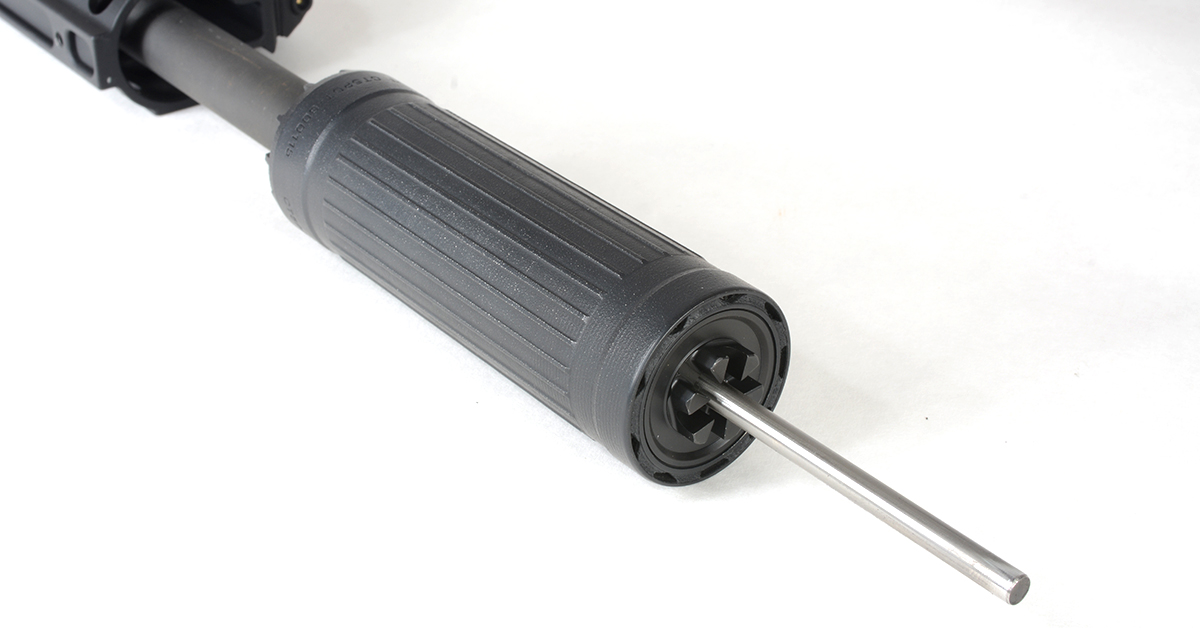
Word to the wise: anytime you screw things together, you are introducing the concept of tolerance and running the risk that things won’t line up correctly. The more things that screw together, the greater that risk is. This is the dreaded “tolerance stack.” Most suppressor parts are made to very demanding specs, but checking concentricity with an alignment rod remains a wise idea.
Adaptor Particulars
Assuming your suppressor is HUB-compatible, there are three things to consider in selecting parts.
The first is the thread pitch on the muzzle of the gun you want to suppress, which is usually standardized by caliber (1/2×28 for .223, 5/8×24 for .308, etc.). Next is what you want the muzzle device to do when the suppressor isn’t installed — a muzzle brake to reduce recoil (such as I used on the K3P) or a flash hider like I installed on the short AP53 5.56. Third is the adaptor that serves as the interface between the muzzle device and the suppressor.
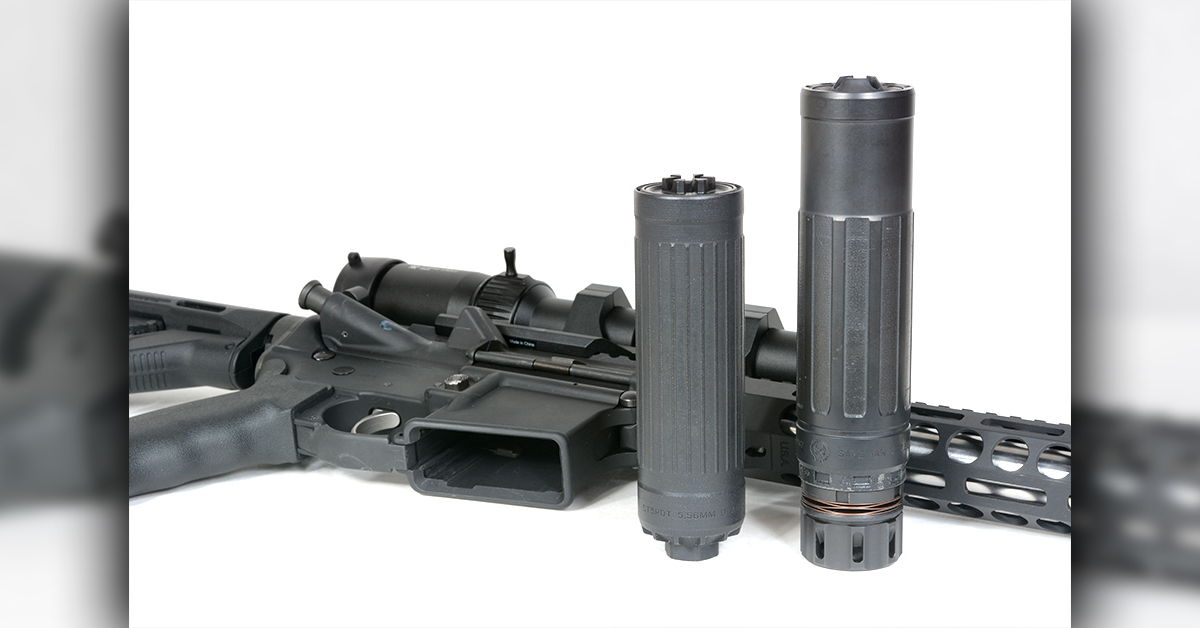
Muzzle threads and the HUB pattern may be standardized, but the mating arrangements are usually proprietary and must be matched to one another. I have others, but the two Dead Air systems I’ve been using lately are the Xeno and KeyMo. Xeno is a thread-on system, but with left-hand threads that reduce the chance of inadvertently unscrewing the muzzle device along with the can should things get sticky. KeyMo is a longer and more complex system that ratchets to lock the suppressor in place, eliminating the risk of it unscrewing during long strings of fire.
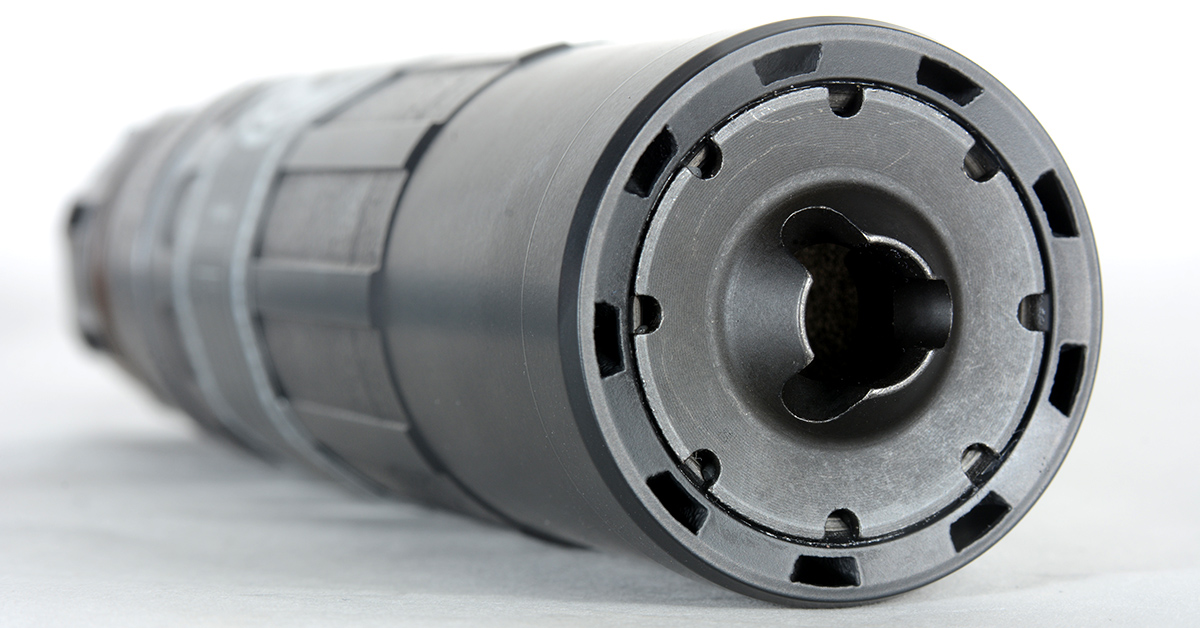
The $200 tax is gone, but suppressors still cost money, and this flexibility lets you run one can on many firearms.
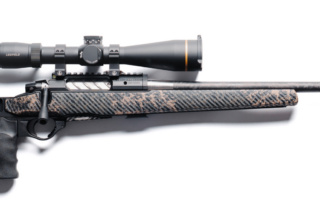
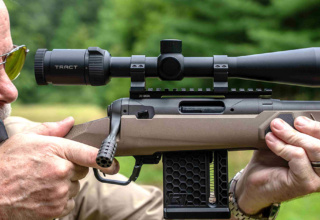
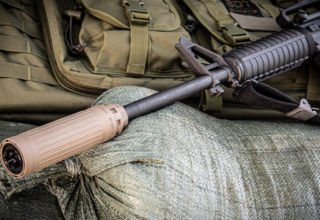
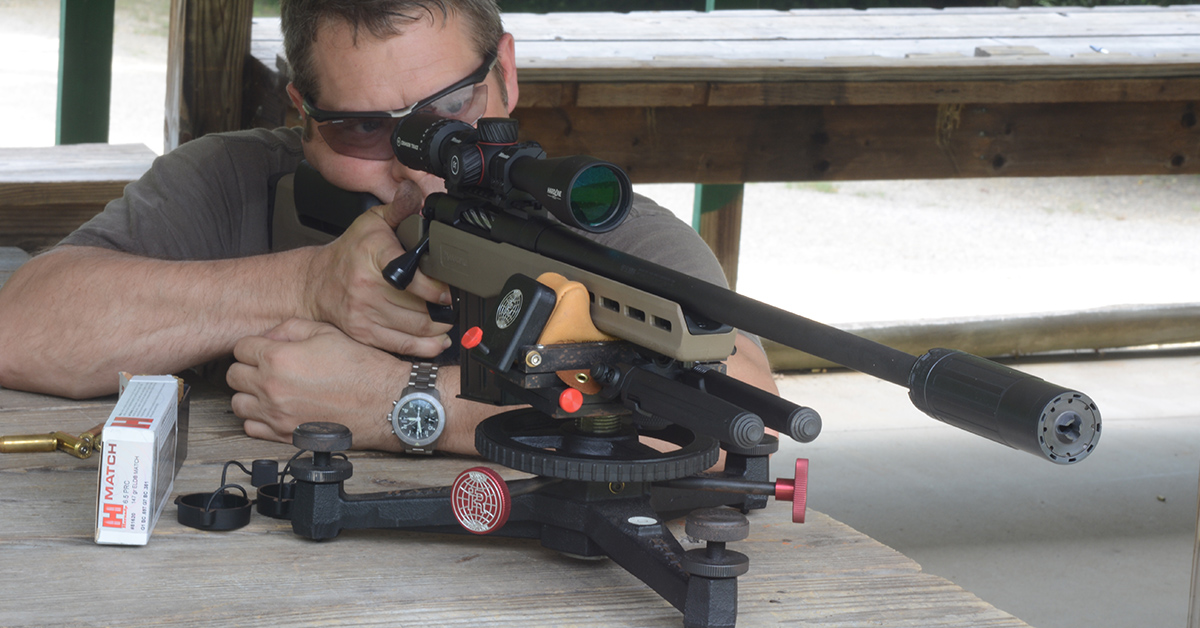
For a practicum, I’ve been spending a lot of time with Dead Air’s Sandman X, which is HUB-compatible. Wanting to use it on a broad range of guns, I ordered it with reverse-threaded Xeno muzzle devices for shorter rifles in .308 and .223, and longer KeyMo components for .308 and .300 Blackout. I also requested a direct-thread adaptor and have now used the Sandman X on seven different rifles, from the shorty 5.56mm AP53 to a Mossberg precision bolt gun in 6.5mm PRC. Length varies from 6.4 to 6.9 inches, depending on which adaptor is installed.
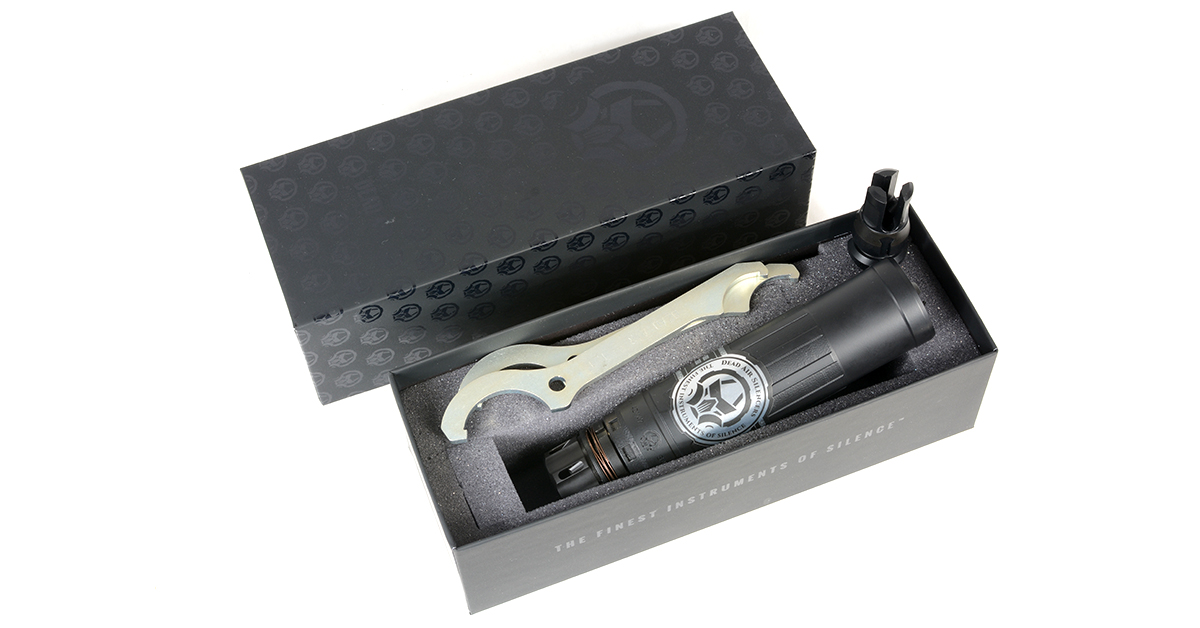
Of course, designing a can to receive adaptors means making allowance for machining the threads and physical space around it. This influences overall size and cost. The most compact and least expensive models are likely to be fixed-thread on versions such as Dead Air’s CT5P Patrol. I’ve been shooting the 1/2×28 direct-thread version lately and am pleased with it. Intended as a compact, handy suppressor to accompany a patrol rifle, its small size and simplicity make it a perfect solution for an AR.
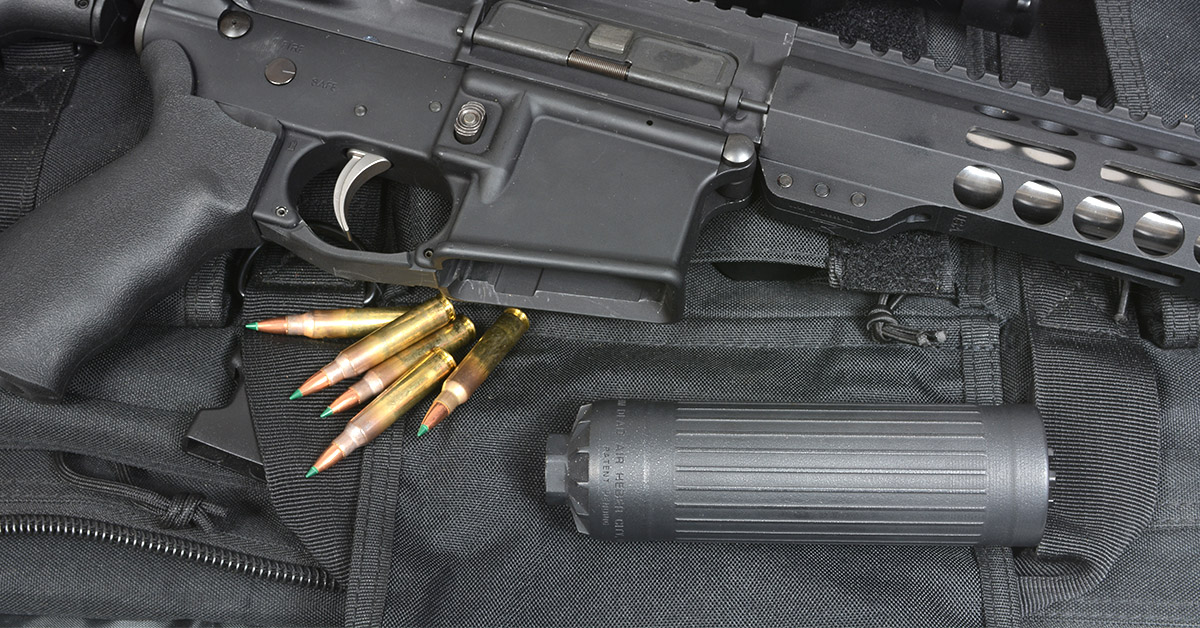
Another feature you’ll notice about the CT5P and other modern suppressors is the texture of the lengthwise grooves running down the tube. Having used strap wrenches and other things to remove various smooth tubes from rifles, the grooves make it a lot easier to grip the suppressor for installation or removal, especially when you’re wearing gloves.
And, yes, bring gloves to the range with you. Rifle suppressors get hot fast, and gloves, mitts, or a cover of some sort are mandatory to avoid serious burns to your hands.
After all…everyone knows suppressors are hot right now.
EDITOR’S NOTE: In case you missed the first installments in our suppressor fundamentals series, here you go…
HUSH 101, Part 2: Suppressors for Rimfires
- HUSH 101, Part 3: Centerfire Rifle Suppressors - October 16, 2026
- Making the Century AP53 a Short-Barreled Rifle - June 3, 2026
- HUSH 101, Part 2: Suppressors for Rimfires - April 29, 2026