In the second part of our suppressor basics series, our author runs through the possibilities of outfitting rimfires for suppressed action
by Jeremy D. Clough
[Editor’s Note: In Part 1 of our HUSH 101 series on suppressors, author Jeremy Clough hit the high points of suppressor basics. Be sure to check it out. In Part 2, Jeremy focuses on rimfire suppressor options and considerations.]
Twenty-two-caliber suppressors were once the bread-and-butter of the gun hushing industry, and for good reason. They’re usually inexpensive — often costing around the same as the now-expired $200 transfer tax — easy to install, and generally the quietest of the lot. And they’re just fun. In the current market, it would not surprise me if centerfire rifle suppressors had closed the gap, but rimfire cans are still a bit of an on-ramp into the suppressor world, and like tattoos, once you get the first one you tend to want more.
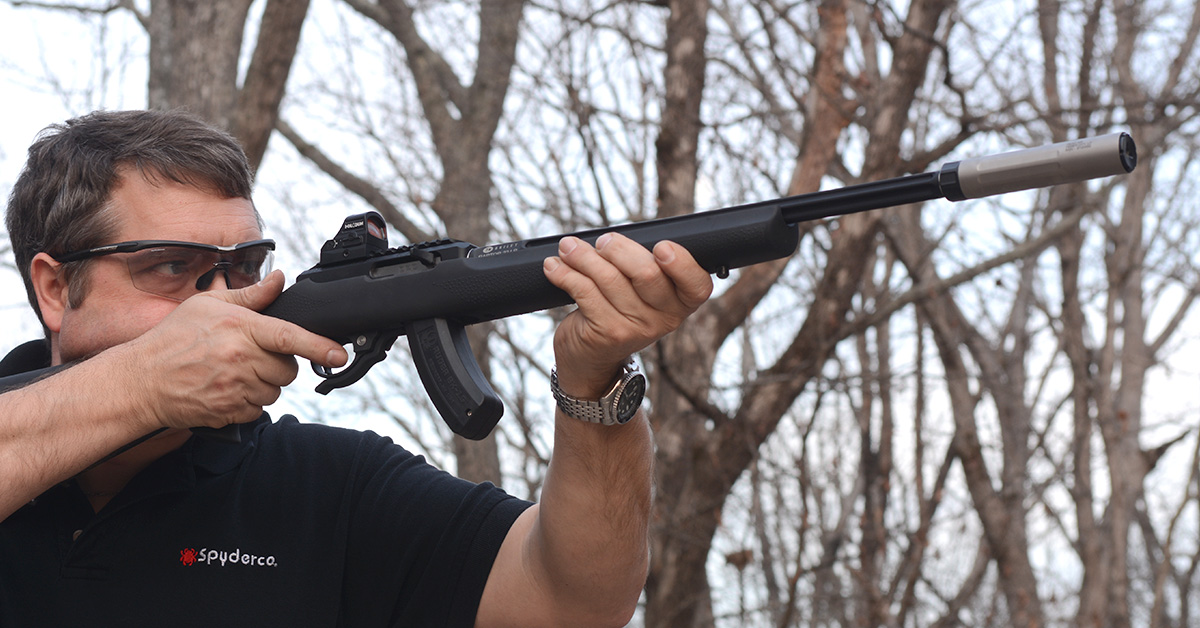
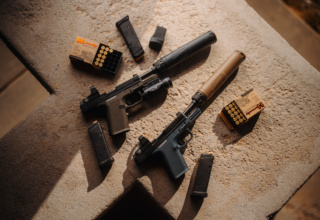
Two of my favorite guns to shoot are a Powder River Rubicon and an FCW/Marvel Unit 2 pistol. Both are available with threaded barrels, making it easy to install a suppressor, such as Dead Air’s Mask.
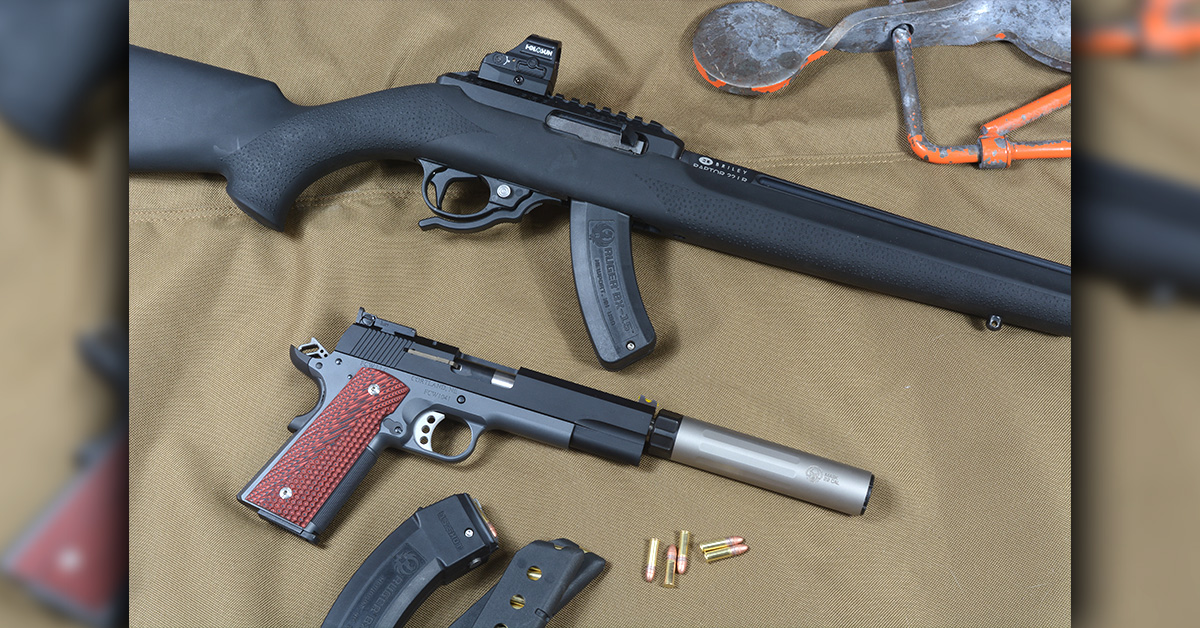
Compared to the technology involved in low backpressure rifle cans and piston-equipped pistol models, the rimfire suppressor is a much simpler creature. While they have benefitted from the same technology around things like flow that improved their bigger siblings, they don’t typically require exotic materials or innovative manufacturing like 3D printing in order to be effective.
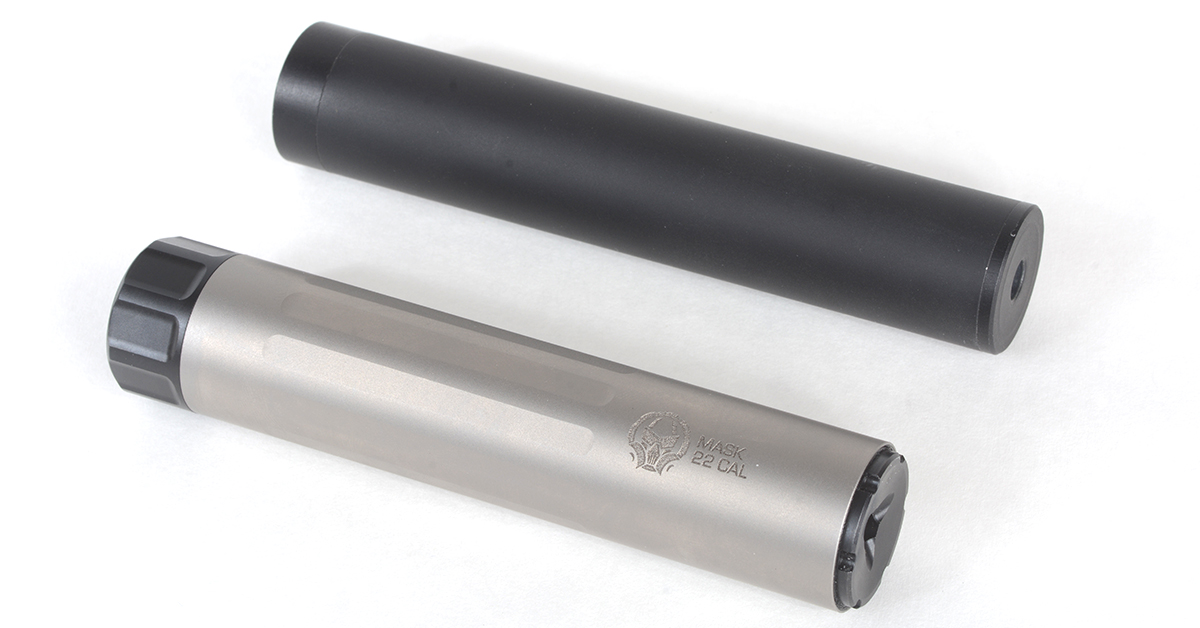
Traditionally, a .22 suppressor was one inch in diameter and six inches long, threaded 1/2×28, and could not be disassembled. If you’ve shot a lot of .22 ammo, especially through anything with a ported muzzle device, that last part will immediately get your attention.
I was told years ago that bulk .22 ammo is loaded with floor sweepings, and that’s about right. I’ve seen stuff I can’t identify fall out of dirty .22s, not to mention the guns tend to spit small lead fragments (remember, there are no jacketed .22 LR bullets, just lightly plated ones). My first accurate .22 pistol had a muzzle brake that filled with lead so quickly and thoroughly I had to melt it out in a wood burning stove — not an option with a suppressor. Back then, you weighed your suppressor every so often to check on the lead accumulation and sent it in for service when it hit a certain weight. Seriously.
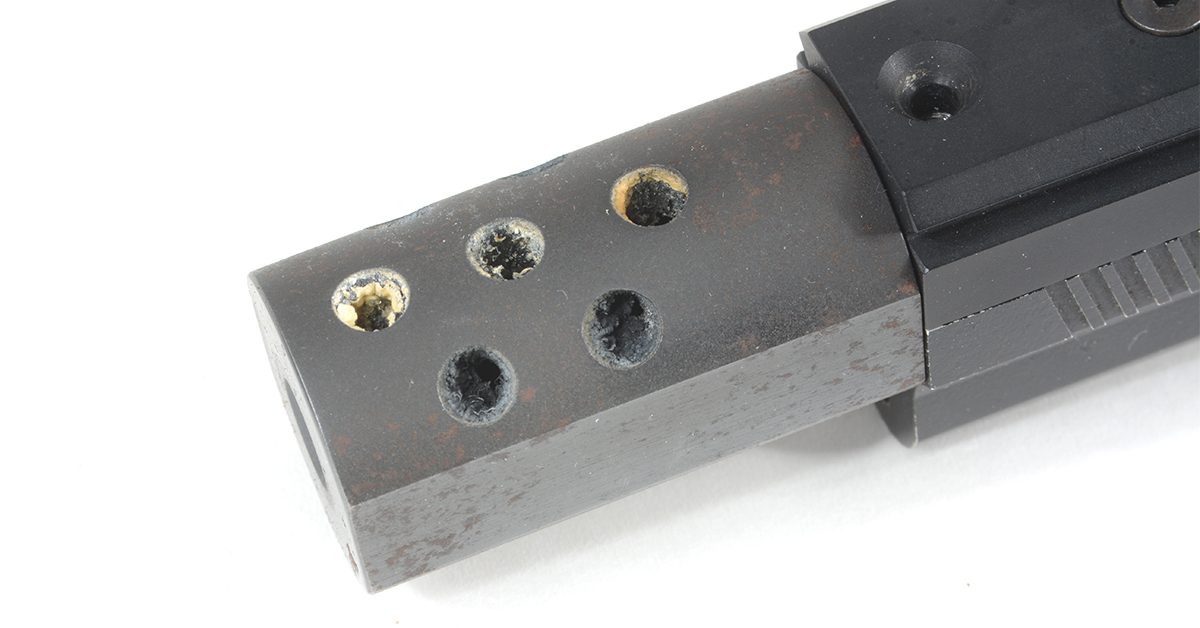
I’m sure there are still some like that on the market, but, fortunately, user-serviceable is now the standard. And they’ve gotten smaller. Dead Air’s Mask, which they supplied for this article, is about an inch shorter.
To disassemble, screw off an endcap and the baffle stack slides out. That’s it.
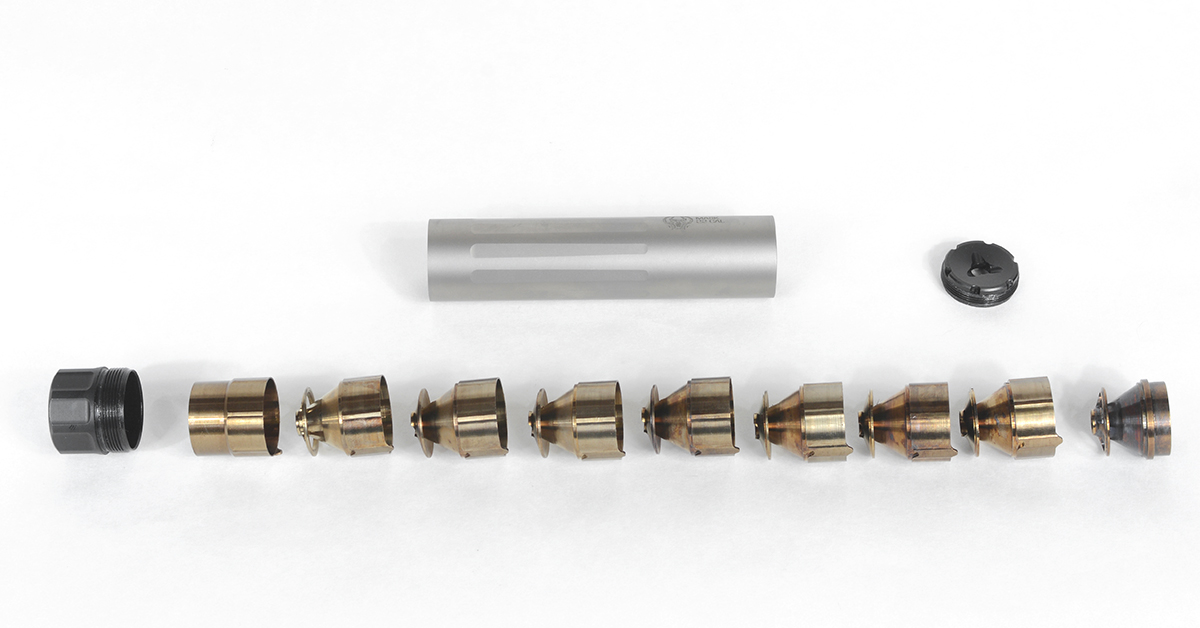
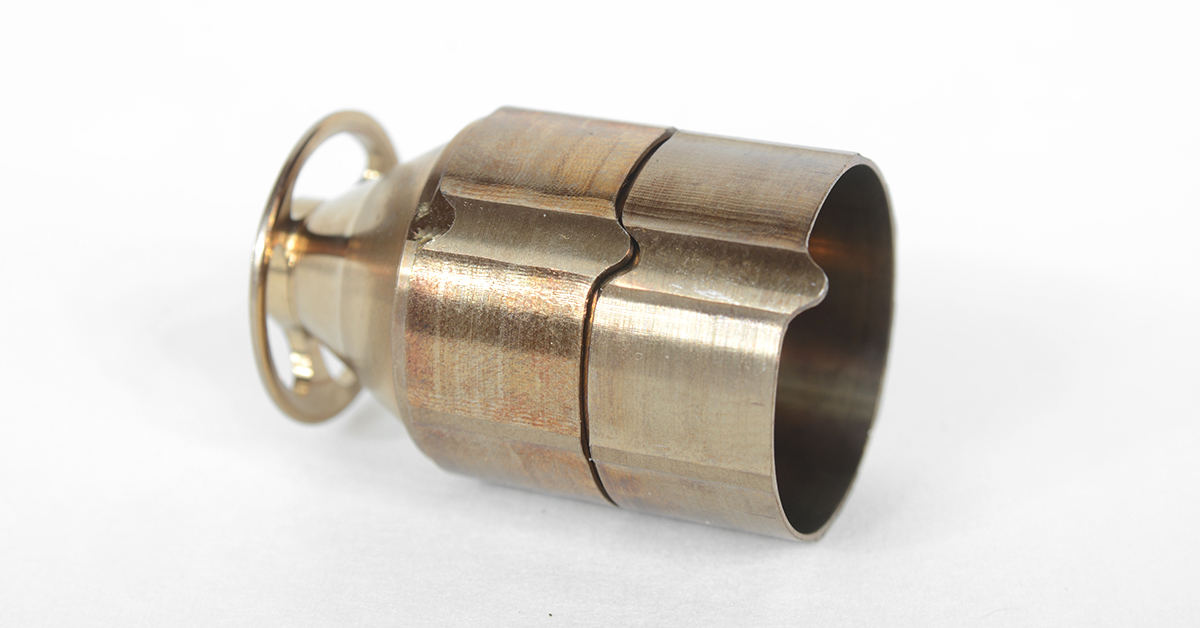
The common shape is the “K” baffle, and if you look at one closely, you’ll see relief cuts around the central passage through the baffle, which I’m told is there to give debris a place to collect so it doesn’t simply start making the passage smaller. Common sense tells us if these notches aren’t all oriented correctly, it will affect accuracy, so the baffles are keyed so they’ll only align in the correct positions.
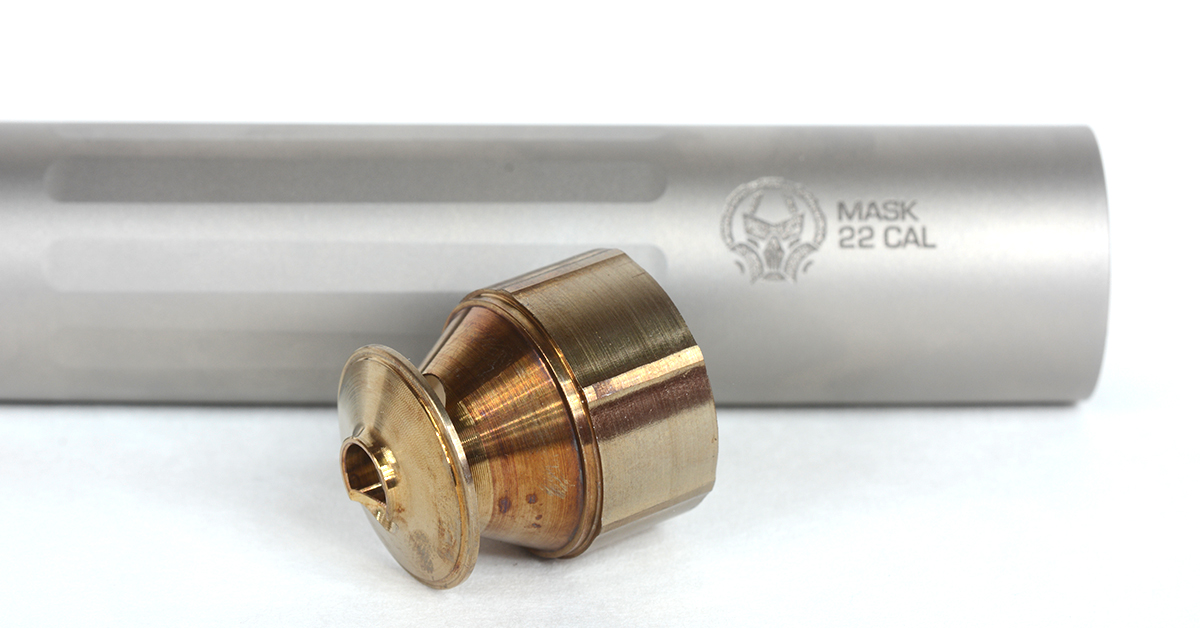
In centerfire cans, the baffle through which the bullet passes is often welded to the suppressor’s outside tube in order to create chambers to trap the gas and maintain the correct spacing between them. The “K” baffle design incorporates the chamber into the baffle.
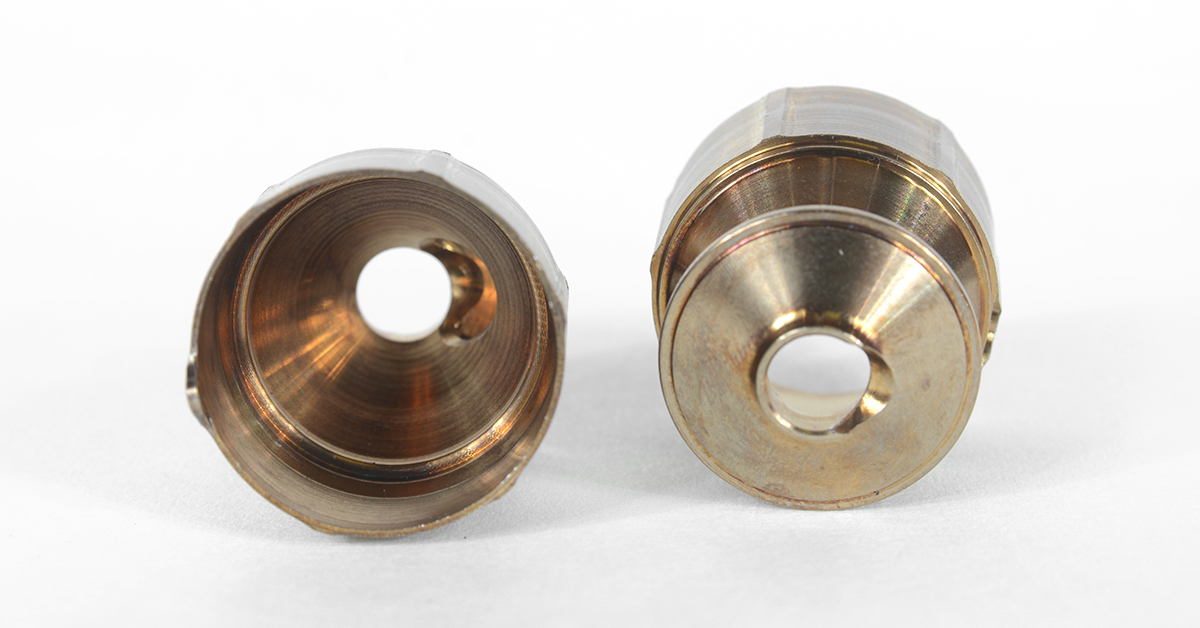
Many baffles have asymmetrical passages or clearance cuts to help direct the gas flow or give fouling a place to collect.
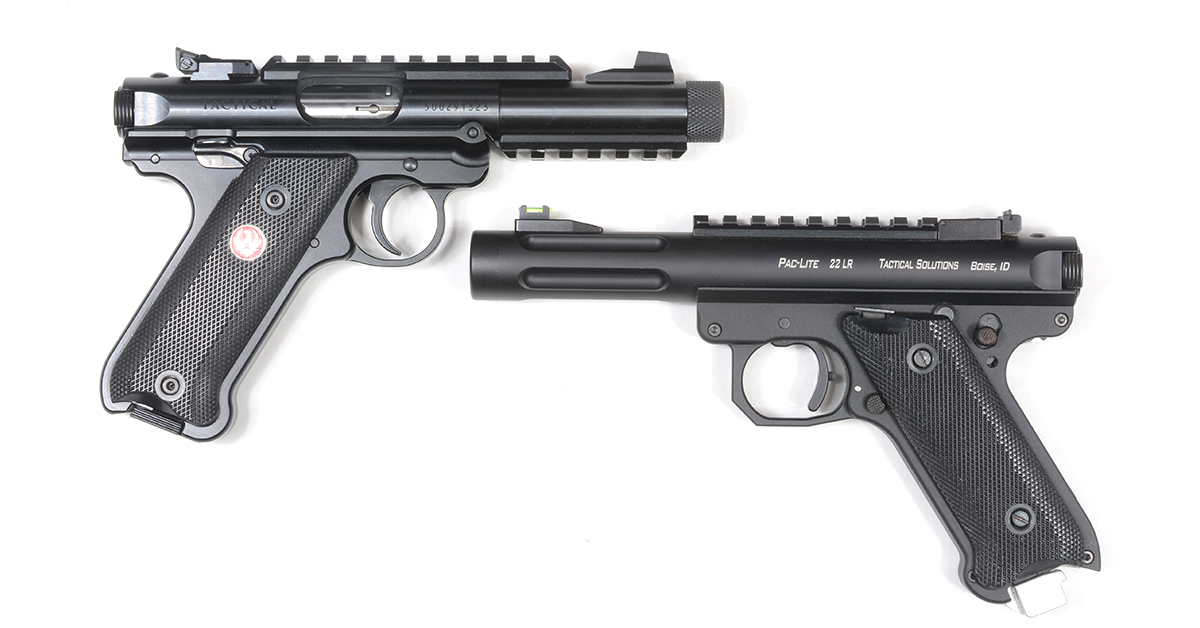
Because of the steady increase in suppressor popularity, .22s are some of the easiest guns to make quieter. Ruger’s MkIV and 10/22 platforms, which are the standards for rimfires, are available with barrels threaded at 1/2×28, which is still the standard for rimfire suppressors. If you don’t like the factory offerings, both platforms have vast aftermarket support. I have a lightweight Tactical Solutions-threaded MkIII upper that makes for a great teaching tool, and my favorite .22 rifle to shoot is a PRP Rubicon. Similarly light and with a threaded Briley barrel, it’s just ridiculously fun.
As a safety point, it’s important to remember that just because your suppressor screws onto a gun does not mean it’s safe. Guns in 9mm and .223 are also commonly threaded at 1/2×28, but if the bore passage is too small or the suppressor is not built to handle the pressure a certain caliber produces (well over 50,000 psi for a .223), you can expect immediate and total destruction of the suppressor and serious injury to yourself and anyone around. Be absolutely certain the suppressor is rated for the caliber you wish to shoot through it.
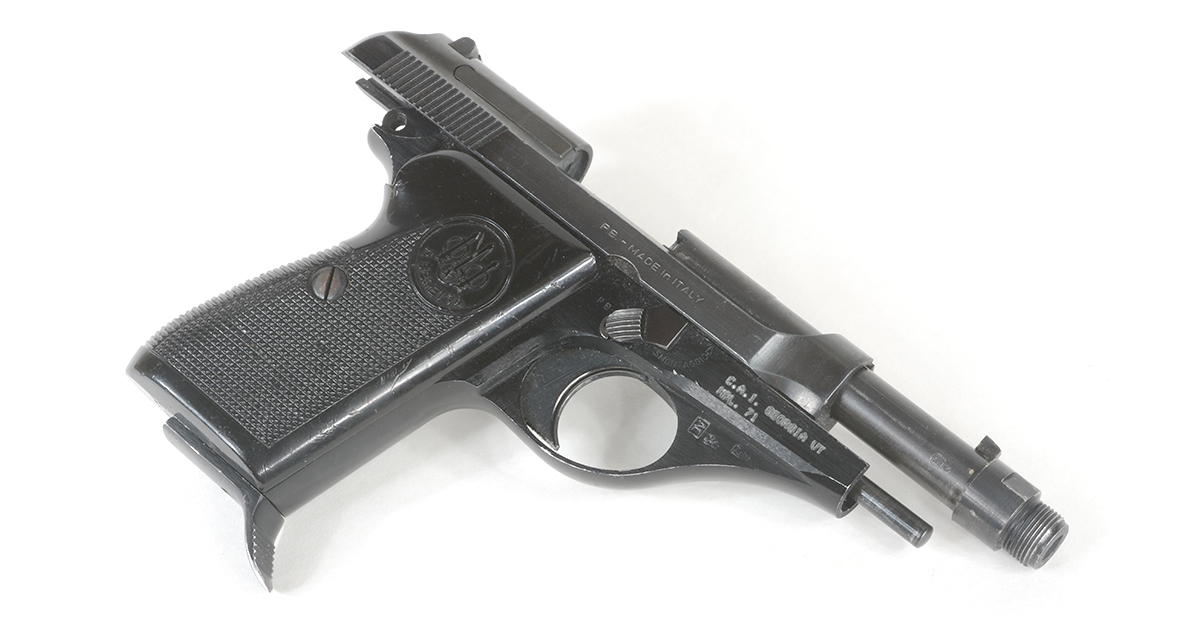
Be aware that not all states allow threaded barrels (if you live in one, you probably know it, but if you’re not sure, make sure), and not all barrels are threaded 1/2×28. I have a surplus Beretta 71 that came from Israel with a strange metric thread. Not wanting to buy another suppressor just for it, I turned down an adapter.
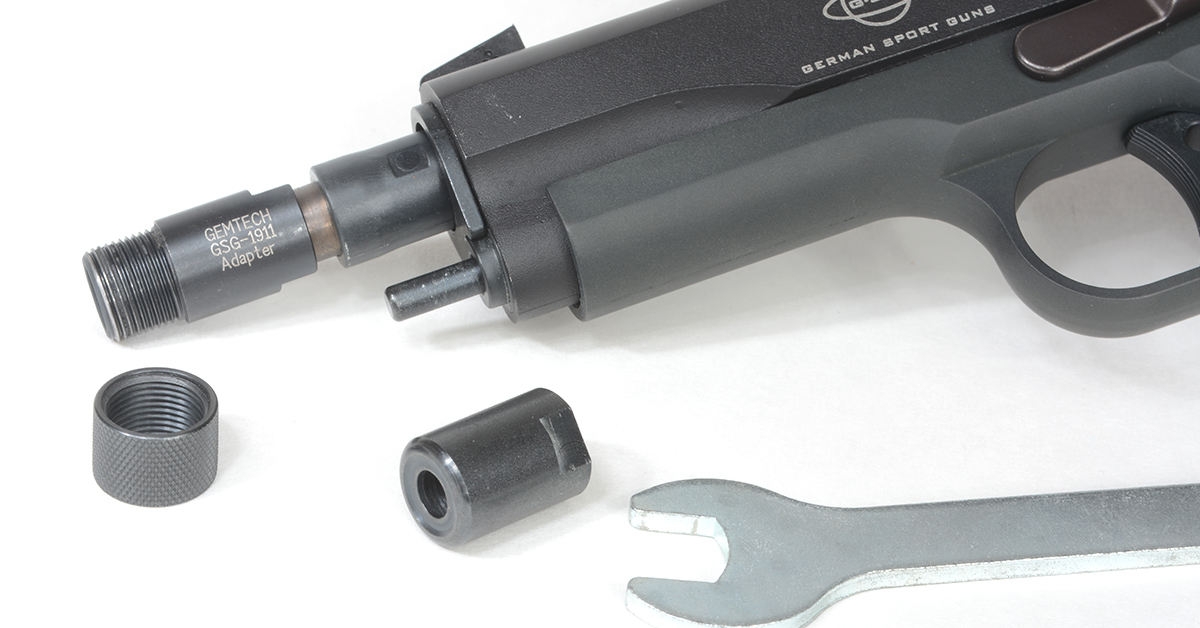
The more common place you’ll need an adapter is with pistol barrels that do not extend beyond the end of the slide but have a threaded cap that can be screwed off to reveal threads beneath. The first of these was the Walther P22, which could be handily suppressed, but not as it came; you needed an adapter small enough at the rear not to interfere with slide cycling but long enough (and threaded correctly) so a suppressor would fit.
One of the best applications for a .22 suppressor is for quiet practice, and I’ve always preferred practice with an understudy gun to whatever it was I was carrying for self-defense — often some version of a 1911 .45. That brings us to .22 conversions, which are very much not just a 1911 thing.
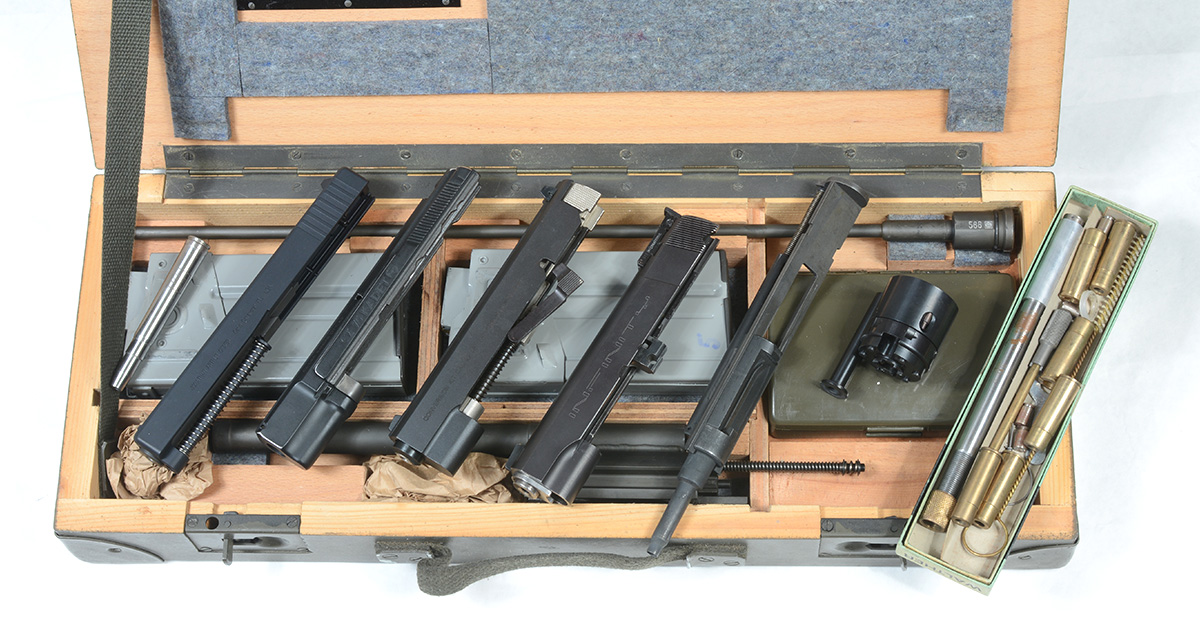
As I write this, I have conversions for 1911s, Hi-Powers, Glocks in two sizes, a CZ 75, ARs, a G3 .308 rifle, a .375 Holland & Holland express rifle, .44 Magnum and .45 Colt revolvers, and both .36- and .44-caliber blackpowder pistols. I’ve personally seen them for a Luger, P38, Makarov, FN FAL, Mini-14, SIG P245, and P210.
I wasn’t the first person to write about suppressing a 1911 conversion; Tom Clancy covered it in Without Remorse in 1993. I was, though, one of the first gun writers to do so about a decade later. I talked Marvel Precision, maker of an astoundingly accurate .22 conversion, into providing me with an extended barrel for a suppressor article on the condition I’d make it clear they wouldn’t offer a factory threaded barrel (another conversion maker wouldn’t sell one under any circumstances). Apparently, neither one of us had foreseen the demand. Jarvis introduced the first suppressor-ready 1911 .22 unit not long after that. Threaded barrels became a catalog item for Marvel/FCW, and Gemtech started a later-abandoned Glock conversion.
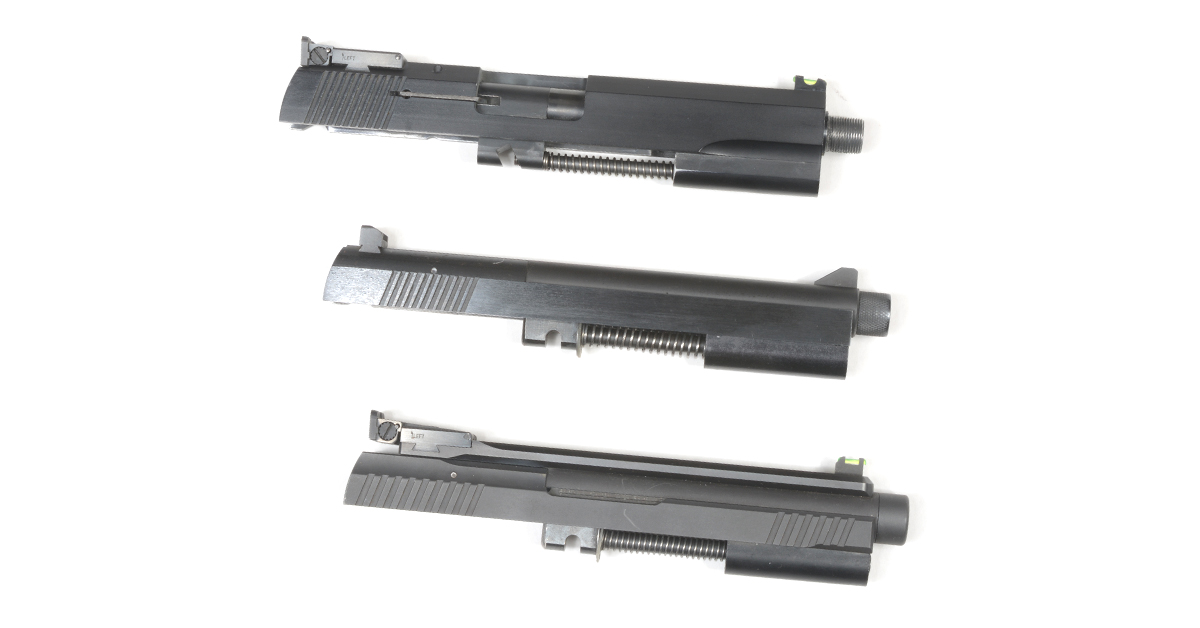
As for why it was abandoned, .22 conversions have unusual dynamics because they are built around the size of the gun they fit rather than a smaller size or lighter weight more appropriate to the caliber. That’s why they often have aluminum slides and require high velocity ammo — there’s just not enough recoil impulse to cycle a heavy slide. Since there hasn’t been a big push to make reduced backpressure .22 suppressors, though, the added pressure of a silencer will often even out a conversion that’s stumbling a bit. But be warned: split-slide designs such as the Jarvis, Tactical Solutions, and Unit 1 conversions will let some of the gas and debris exit into your face. Shooting glasses are never optional, but it’s especially important you have adequate protection for your eyes while shooting suppressed. If you have a choice, a closed-slide design is much more pleasant.
And trust me, the only thing cooler than shooting your Glock 19 in .22 is doing it suppressed.
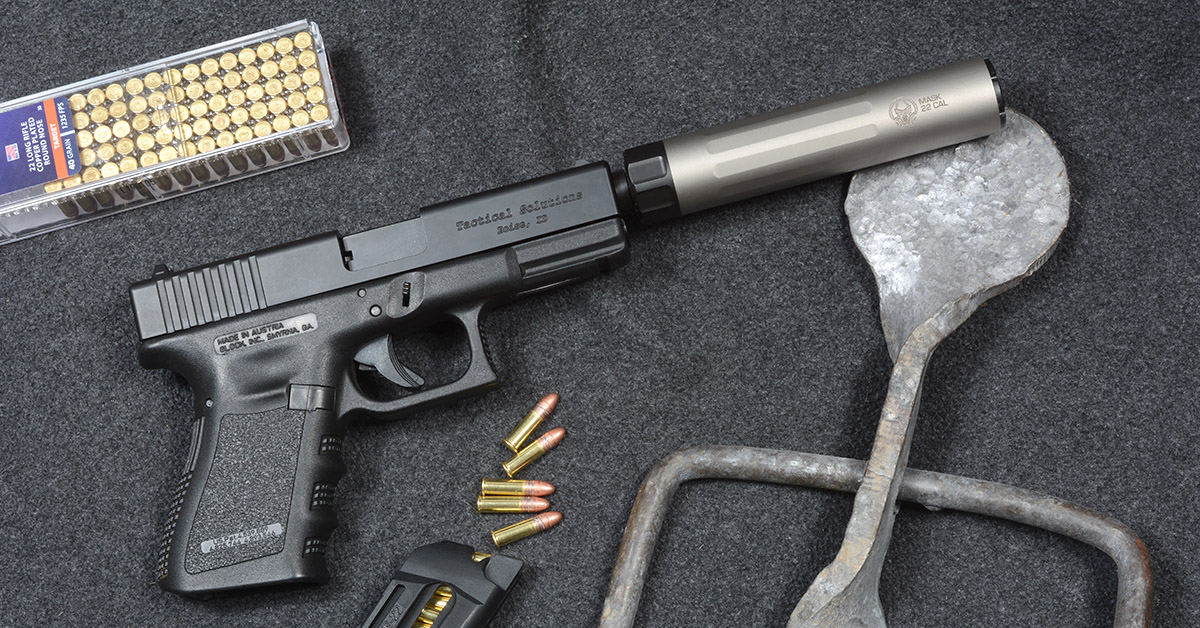
If there’s more fun to be had with your carry pistol than shooting it suppressed in .22, I haven’t found it yet. This is a 3rd Gen Glock 19 with a Tactical Solutions conversion unit.
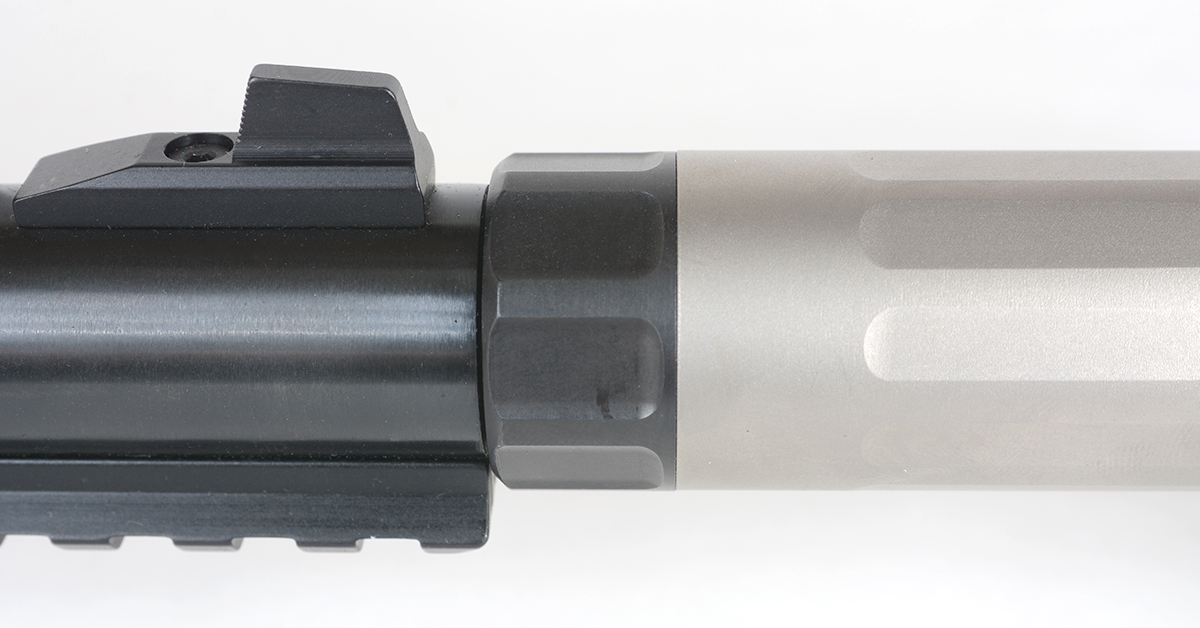
So far, what we’ve covered is fairly simple and can be summed up as “buying parts,” but sometimes you want something a bit different. To me, the most exciting thing about the end of the $200 tax and streamlining of the application process is the innovation I expect to see as the new, lower cost of entry makes it possible for more people to experiment.
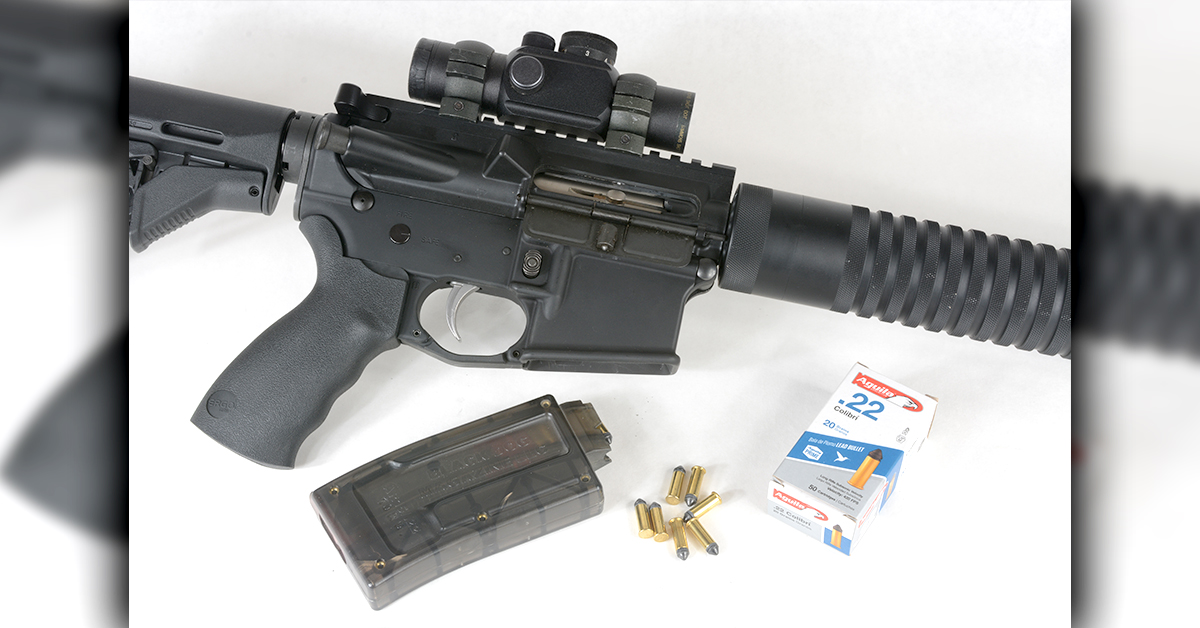
One example is a pair of Lothar Walther AR pistol barrels I happen to have, both of which are rifled for .22 LR at different twist rates in an attempt to find out what would best stabilize Aguila’s SSS. Aguila’s Sniper Subsonic SSS .22 load sends a 60-grain lead slug out into the world at an advertised 950 fps. With the heavy bullet, that adds a good deal more punch than the usual 36 or 40 grain bullets, but it should be obvious that sucker ain’t gonna stabilize in the 1:16 twist of most .22s. This is especially serious with suppressors, as you don’t want to spin one directly into your baffle stack. Aguila acknowledged this, advertising that it should be used in barrels of 1:12 or faster, while the interwebs suggest 1:9. I don’t have enough SSS on hand to experiment, but I look forward to seeing how the different twists perform when I do.
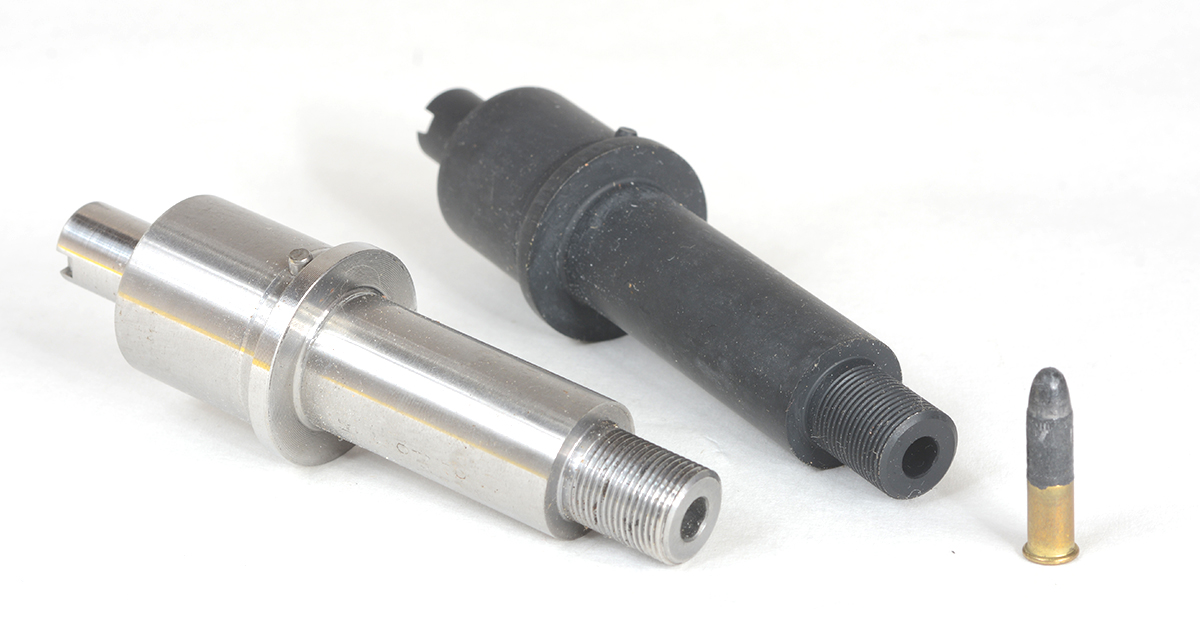
In an earlier article, I mentioned shooting a prototype rifle with an integral suppressor and a barrel shortened enough to render any ammunition subsonic. With this in mind, I bought a pair of Ruger MkIV barreled receivers priced so ridiculously low I couldn’t resist and set about seeing how short they could get. One was cut to 1 1/2 inches of rifling, which I was told by Paul Liebenberg, previous head of S&W’s Performance Center, is adequate to stabilize a bullet. I machined a spacer to which I added a Novak dovetail front sight, screwed on the Dead Air Mask, and headed to the range with a box of Federal Auto Match and a couple other .22s for comparison.
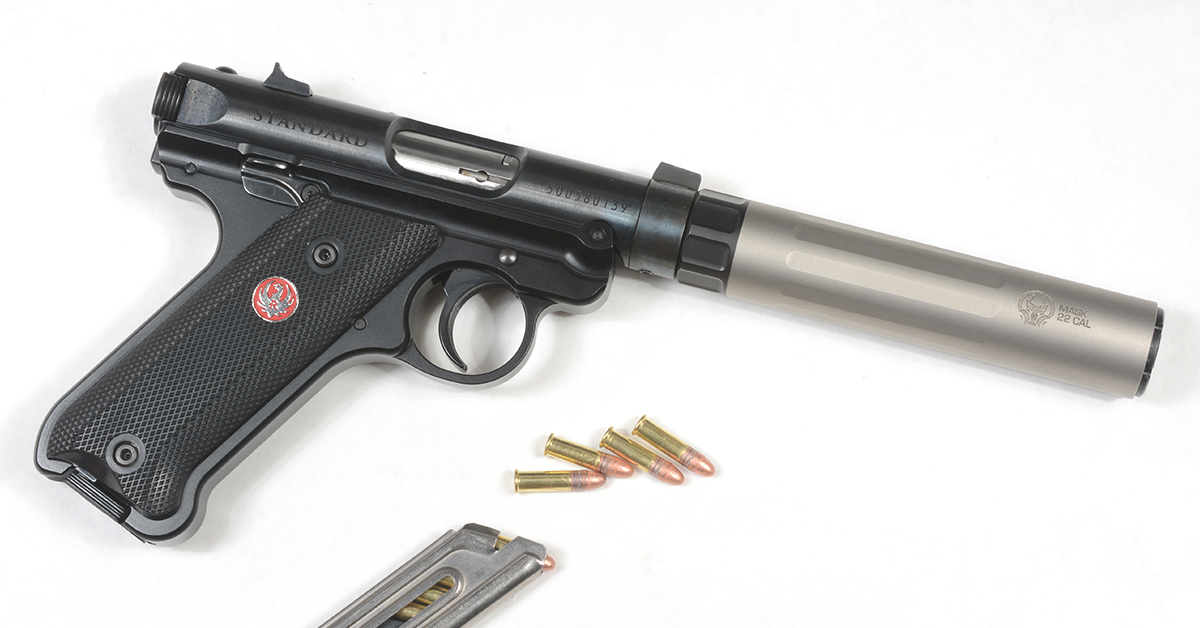
You may recall the two shortened Ruger MkIV uppers we talked about in the last installation. This is the shortest, from which we learned some interesting things. Note the collar near the muzzle, which gives it a continuous profile and provides a place to mount the dovetail front sight.
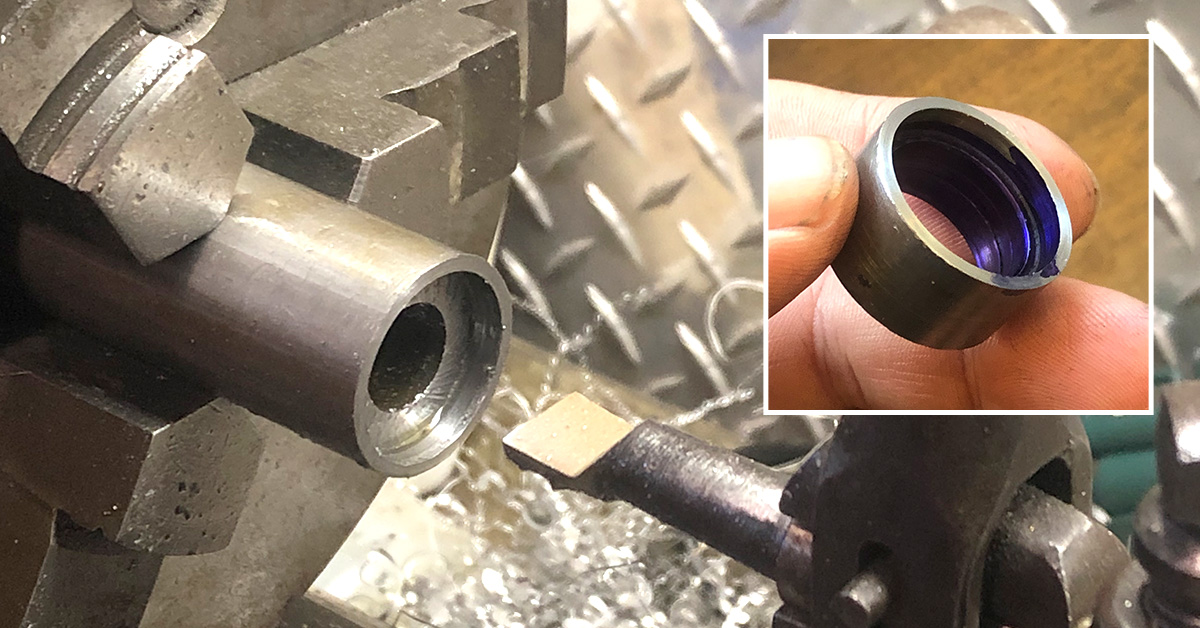
The collar was turned on a lathe, machined for a dovetail front sight, then drilled and tapped for a set screw to keep it in place. You could expect to pay around $300 in labor to have the upper shortened and threaded, and have this part made.
You won’t be surprised that, while supersonic in my PRP Rubicon rifle, lopping that much barrel off dropped the velocity some 350 fps to a cool 785 fps when fired without a suppressor. Adding the Mask suppressor brought this up to 825, and a couple legacy suppressors I used provided a similar boost in velocity, though the Mask was noticeably quieter than the older ones — especially the one I’ve had for over 20 years. In a 4.4-inch barreled MkIV, the average velocity was 959, which bumped up to 997 in a 5.5-inch MkIII.
The short gun was almost pellet gun quiet, but the bullet was in the barrel for such a short time that it could not develop enough pressure to cycle consistently. CCI Mini Mag cycled readily, while staying subsonic.
Next to come is a little added experimentation with hammer springs and different ammo to maximize reliability, and some centerfire pistol projects that will appear here soon.
- Making the Century AP53 a Short-Barreled Rifle - June 3, 2026
- HUSH 101, Part 2: Suppressors for Rimfires - April 29, 2026
- TESTED: Century Arms’ AP53 5.56mm Pistol - March 2, 2026