More accurate than it should be? A do-it-all semi-auto suitable for dispatching two- and four-legged predators? The Dan Wesson long-slide Kodiak 10mm gave our reviewer much to consider…
by Richard Mann
Many younger shooters may not realize the significance of, and the history behind, Dan Wesson Firearms. One hundred and seventy-four years ago, D.B. Wesson co-founded Smith & Wesson. Then, 116 years later, Daniel B. Wesson II incorporated Dan Wesson Arms in Monson, Massachusetts, to build premium quality, American-made revolvers, which began shipping in 1970. These revolvers were revolutionary because they allowed the end user to swap barrels. In 1996, with a move and new ownership, Dan Wesson began manufacturing 1911 pistols. Now, CZ-USA owns the company. They’re located in Norwich, New York, and pistols are all they manufacture. I think one of the coolest Dan Wesson pistols is their long-slide Kodiak in 10mm.
The 10 Again
When the 10mm Automatic pistol cartridge was introduced in 1983, it caused a stir. This was during the pinnacle of Jeff Cooper’s notoriety, and he had a hand in the cartridge’s origin. After the FBI’s shootout debacle in Miami in 1986, the FBI later transitioned to the 10mm Auto for duty pistols and this brought the cartridge even more fame; however, a decade later the 40 S&W took over and the 10mm was largely forgotten. Interestingly, when the FBI transitioned back to the 9mm, shooters almost wholesale abandoned the 40 S&W and now the 10mm is seeing a massive resurgence.
I’ve never been a member of the 10mm fan club, mostly because I always felt a pistol small enough to carry comfortably and conceal with ease was quite a handful with full-power 10mm ammunition. Unsurprisingly, the FBI felt the same way; their duty loads were not full power loads, although with the right ammunition, the 10mm is suitable for predator defense from a pistol that’s easier to carry and shoot than a 44 Magnum revolver. Additionally, in the right pistol, I believe the 10mm can be a great cartridge for deer and hog hunters, and after spending two months with the Dan Wesson Kodiak, I think it’s a perfect example of what that “right pistol” should be.
The Kodiak
The 1911 platform has been with us for 115 years and might be at its pinnacle of popularity. It’s so ubiquitous that a detailed explanation of its design is hardly warranted. The Dan Wesson Kodiak, though, is a bit different and it deserves some discussion.
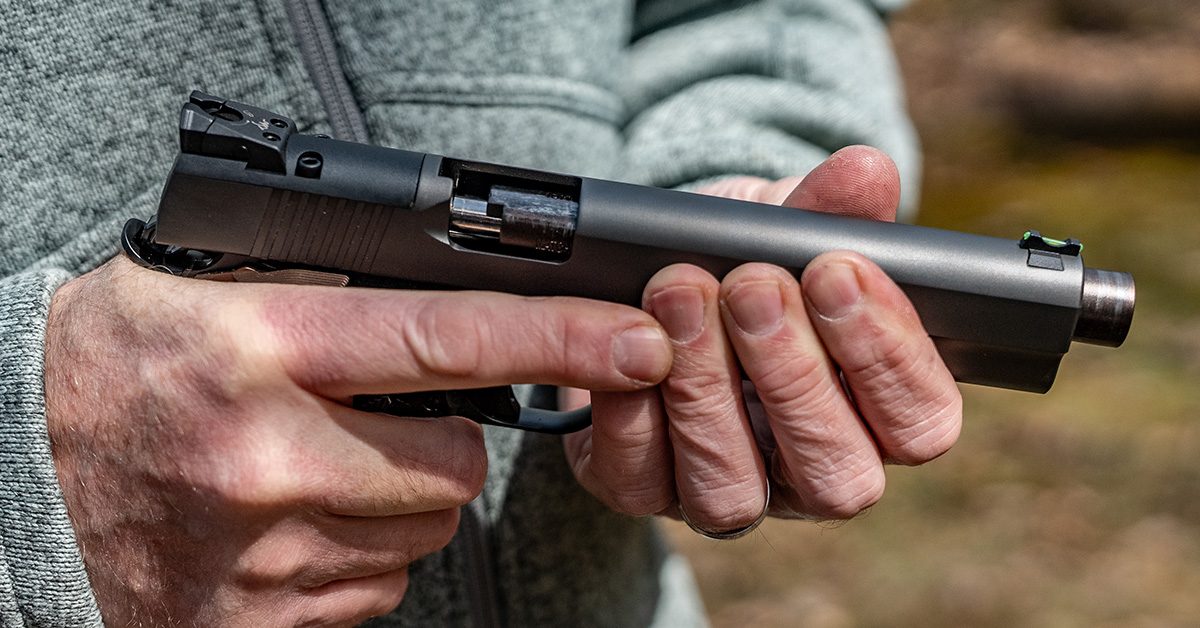
Instead of a barrel bushing, the Kodiak utilizes a coned barrel that’s been fitted to the end of its longer-than-normal slide. Additionally, the pistol utilizes a reverse spring plug that’s removed to the rear instead of the front. This spring plug is longer than normal, and it is also slotted to slide over the link on the six-inch barrel. Aside from that and the longer spring guide, everything else about the Kodiak will seem normal to anyone familiar with 1911 pistols.
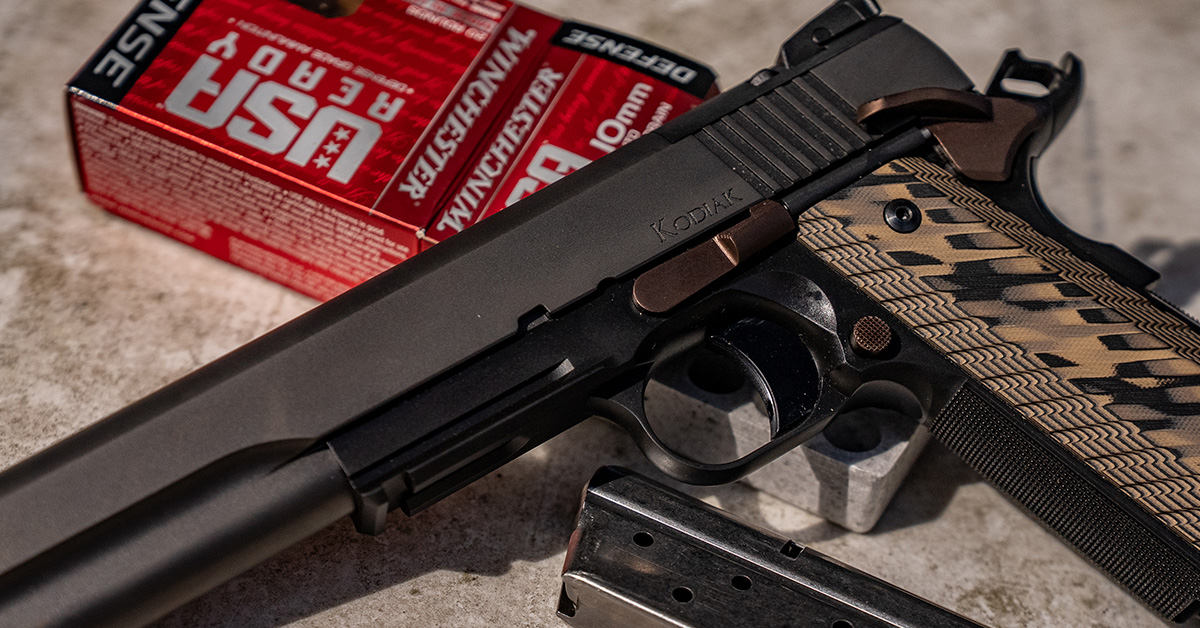
The Kodiak is a steel-framed pistol, and its six-inch barrel and matching slide give it a different look. The slide has a PVD finish and angled grasping grooves at the rear, and it also has an optics plate held in place with two screws. Various optics mounting plates are available from Dan Wesson. The plate is also cut for Dan Wesson’s proprietary rear sight that is drift-adjustable for windage and screw-adjustable for elevation. It pairs with a fiber-optic front sight that’s dovetailed into the slide.
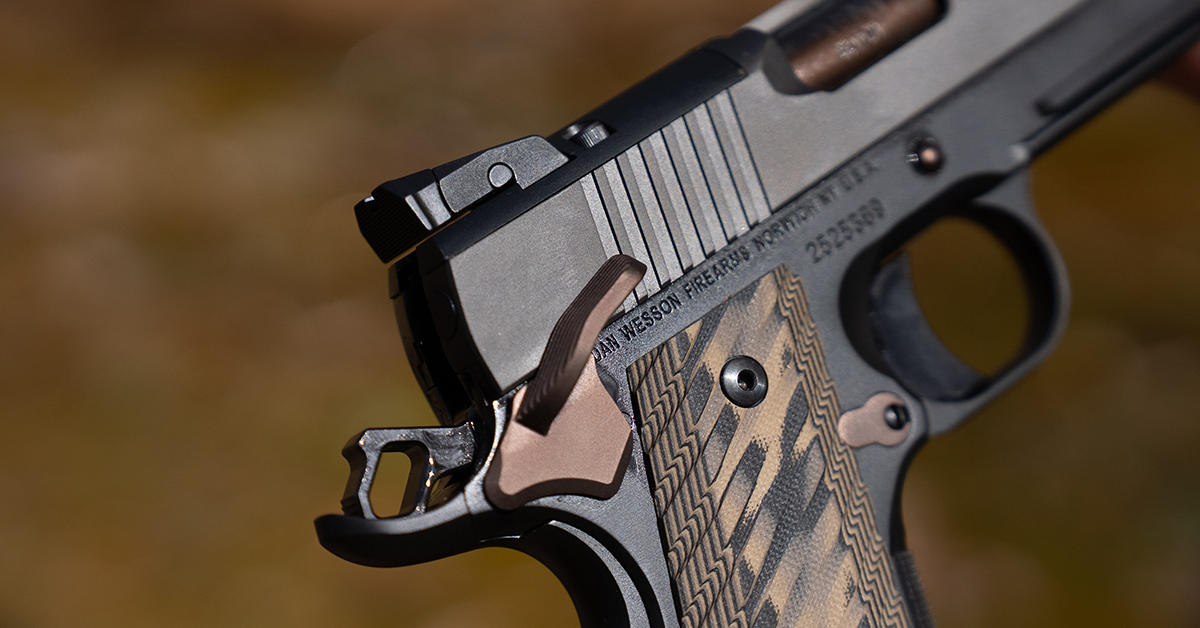
The Kodiak’s frame has a Nitride finish, it is fitted with an upswept beavertail grip safety, an extended and flared magazine well, and the front strap and main spring housing are checkered at 20 lines per inch. The ambidextrous thumb safety and magazine release have a bronze finish to match the barrel, and they contrast nicely with the tan and black G10 grips. Additionally, the grip frame’s dust cover has an integral rail with a single slot for mounting a light or laser. The fit and finish on this pistol was top tier. The trigger broke at a consistent and clean 3.0 pounds with just a tad bit of overtravel, and the action was as smooth as a lying politician with solid lock-up and slide-to-frame fit.
From the Bench
My goal with this test was twofold. First, I wanted to see what level of precision the Kodiak could deliver from a sandbag rest with a wide range of munitions. Since the Kodiak is optics-ready, I could have opted to use a reflex sight but instead I chose to rely on the factory open sights.
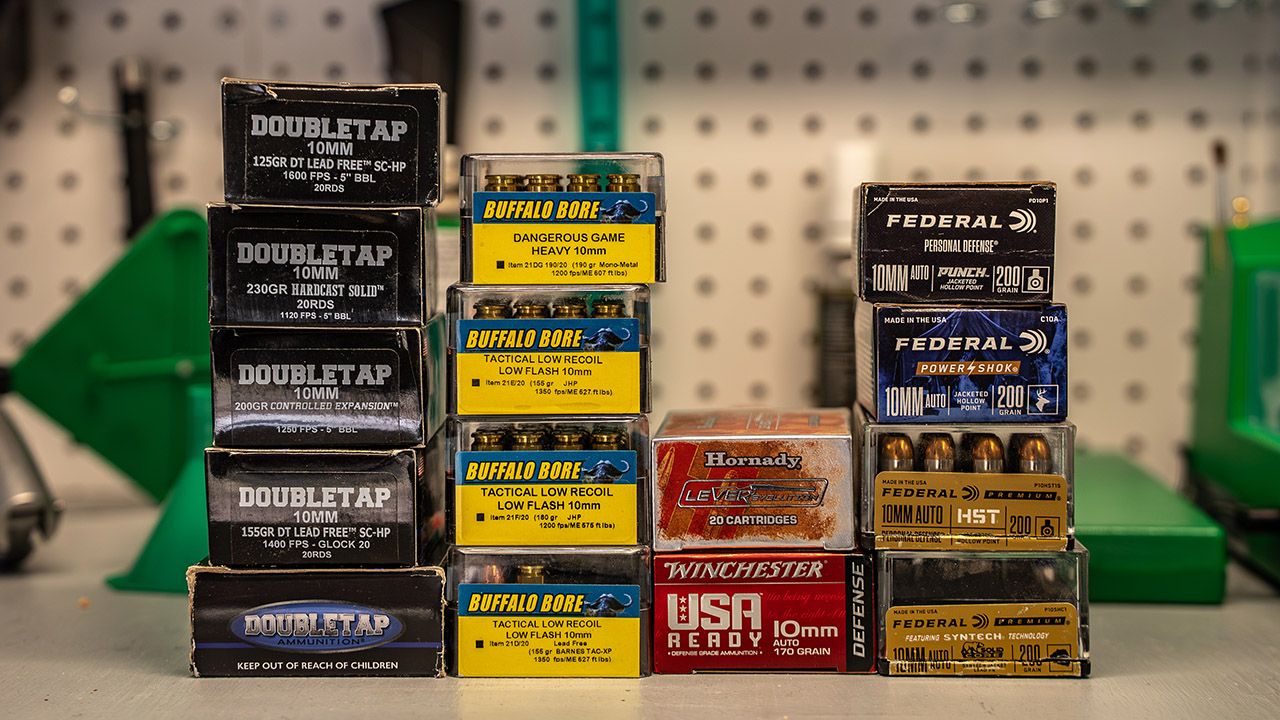
I assembled a good selection of factory loads from five different manufacturers with bullets ranging in weight from as light as 125 grains to as heavy as 230 grains. In total from the bench, I fired a little more than 150 rounds without a single failure to feed, fire, extract, or eject. The overall average group size for the 30 five-shot groups fired was 1.33 inches. Based on the mass of pistols I have tested over the years, this is way better than average performance.
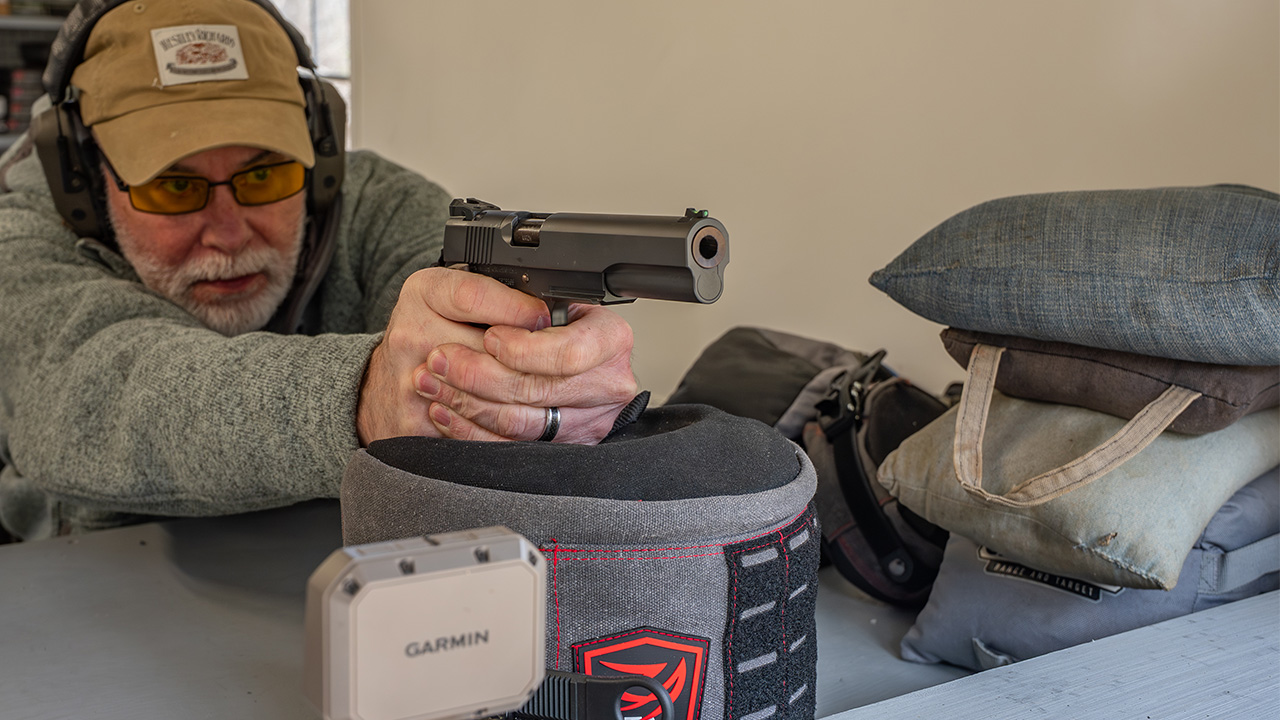
I said there were no failures with the Kodiak and that’s true regarding the ammo I was able to load in the eight-round magazine that came with the pistol; however, the Buffalo Bore hardcast Outdoorsman load’s overall length was just a wee bit too long to load into and function properly with the magazine, so that load was not tested. Also, a few rounds of the Winchester 170-grain load were just a wee bit too long as well.
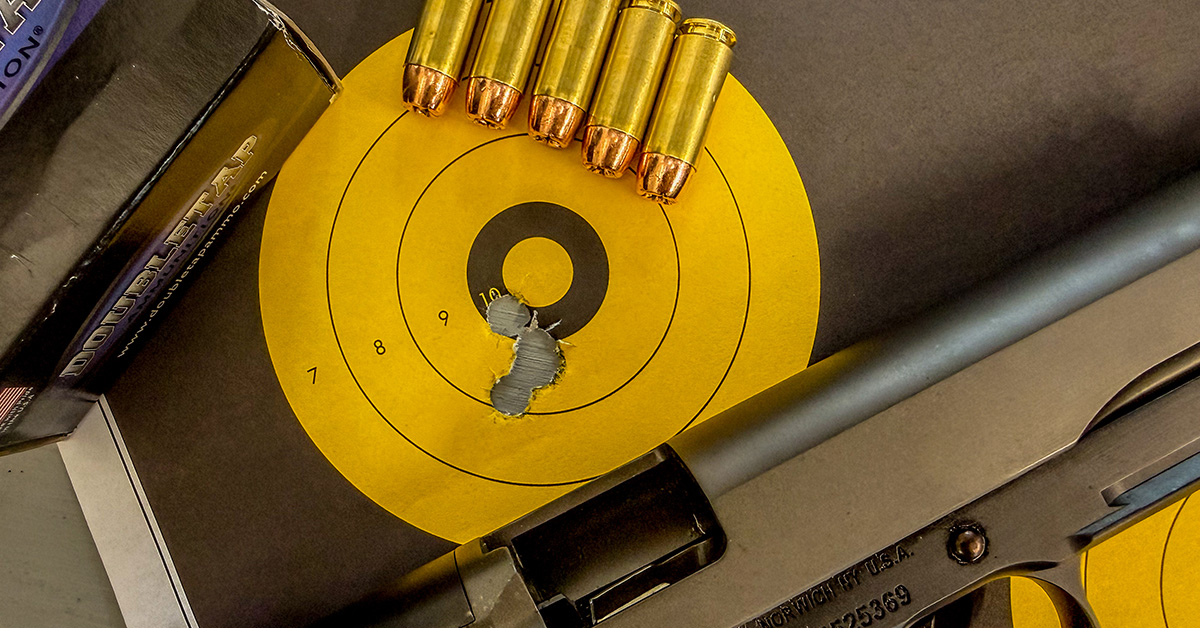
But I had a good supply of the 170-grain USA Ready carry load, and after culling a few cartridges and the bench testing at 10 yards, I started working on some of the steel targets I have at between 50 and 60 yards. It seemed like I could not miss, so I put up a target on the 50-yard stand. I fired a single five-shot group at 50 yards from the sandbag rest and it measured a brag-worthy 2.19 inches, impacting about six inches above my six o’clock point of aim.
The second reason I tested so many loads was since I am not really a 10mm lover, I’d not previously tested a lot of 10mm loads. I wanted to see exactly what one could expect from the cartridge out of a six-inch barrel.
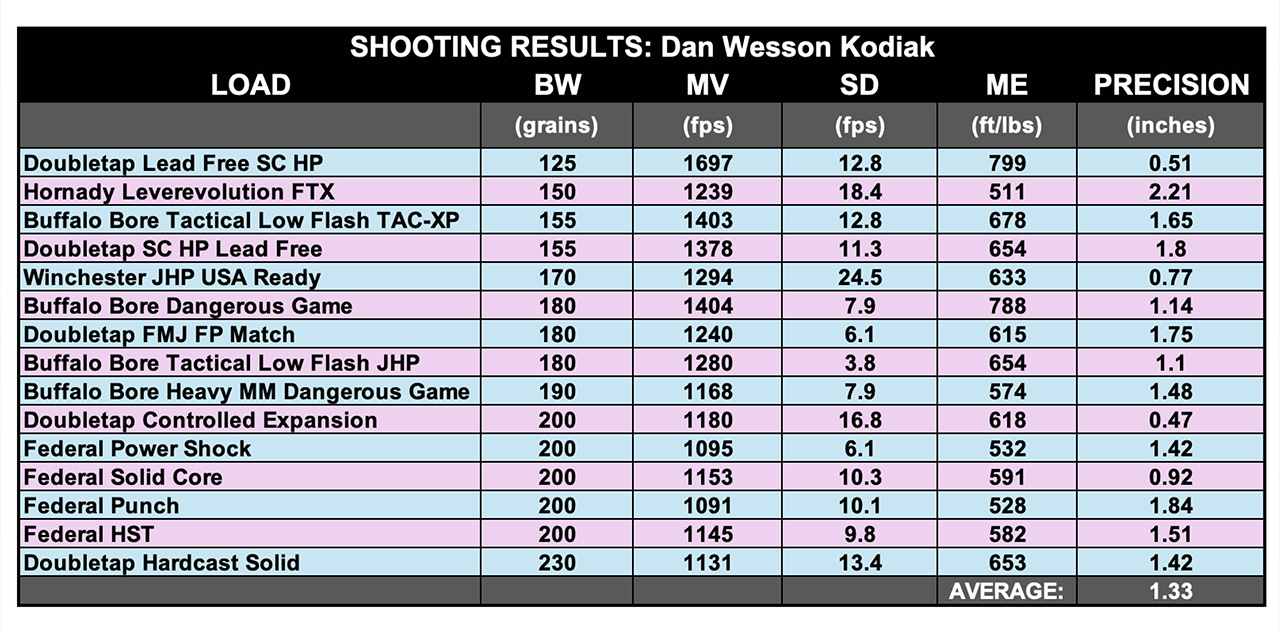
With bullets weights from 125 to 230 grains, the pistol delivered an average velocity of 1260 fps with an average standard velocity deviation of 11.5 fps and an average muzzle energy of 627 foot-pounds. Felt recoil varied a great deal, with some loads producing nearly twice that of others. Regardless of what your application might be, one of these loads should be ideal, though I would suggest some terminal performance testing before actual use.
Off-Hand
The Kodiak was a fun to shoot because it shot so well, but also because even with the harder recoiling loads, it was comfortable. So, I put another 150 rounds through the pistol, working through various drills and just plinking out as far as 100 yards. Bench rest testing is important for ammo evaluation and can provide some feedback with regards to ammo reliability, but shooting a pistol through practical drills can often highlight shooter interface issues that don’t show up during slow and seriously controlled precision testing.
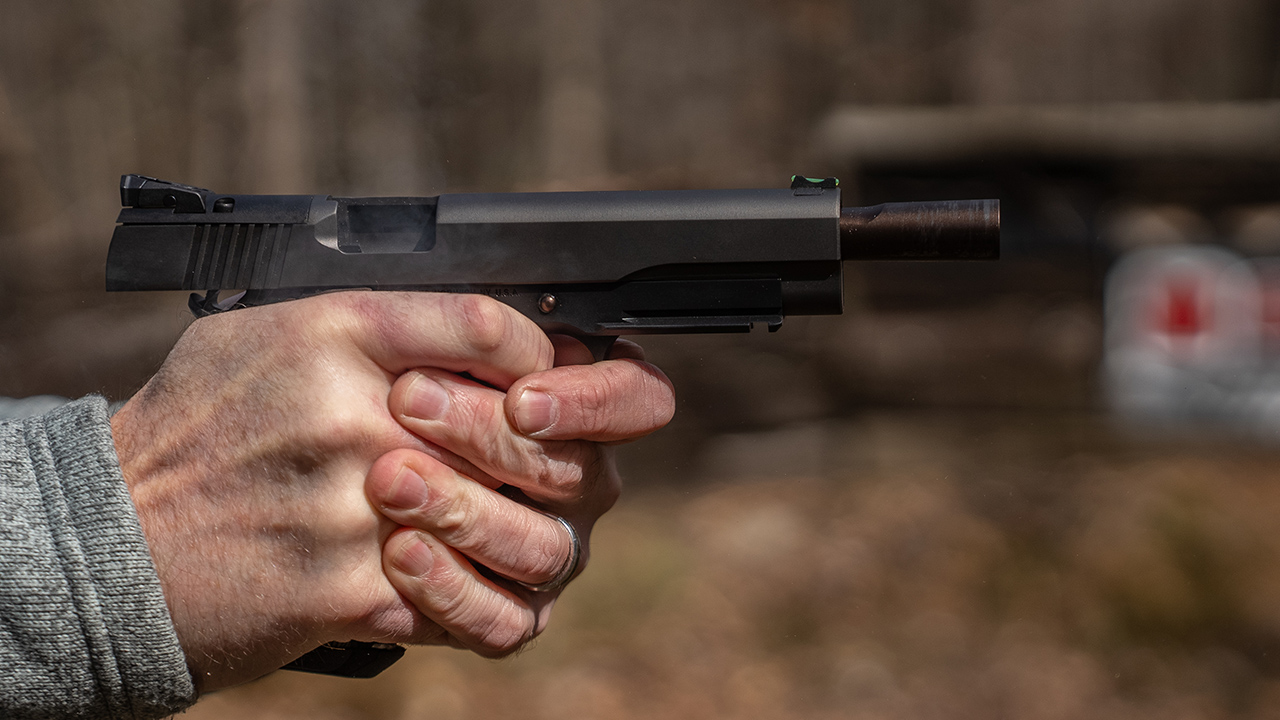
Admittedly, with its six-inch barrel, the Kodiak is not really a carry gun — at least in terms of carrying for personal protection against two-leg predators. Aside from its size, though, the gun performed splendidly during all the drills, allowing me good hits and fast follow up shots while delivering — notwithstanding the two loads that were incompatible with the magazine — 100% reliability.
Final Word
I’ve been testing and reporting on guns for more than a quarter-century. The experience I’ve gained during that time allows me to often decide how much I like a gun before any shots are fired. It’s rare I receive a gun for testing and end up being surprised at how well it performs and/or how much I like it. At the fear of sounding like a broken record, I’ll repeat that I’m not a 10mm fan boy; however, I really, really, liked the Kodiak. Fortunately, it’s a pistol I do not need, otherwise my credit card would need some financial attention I cannot provide.
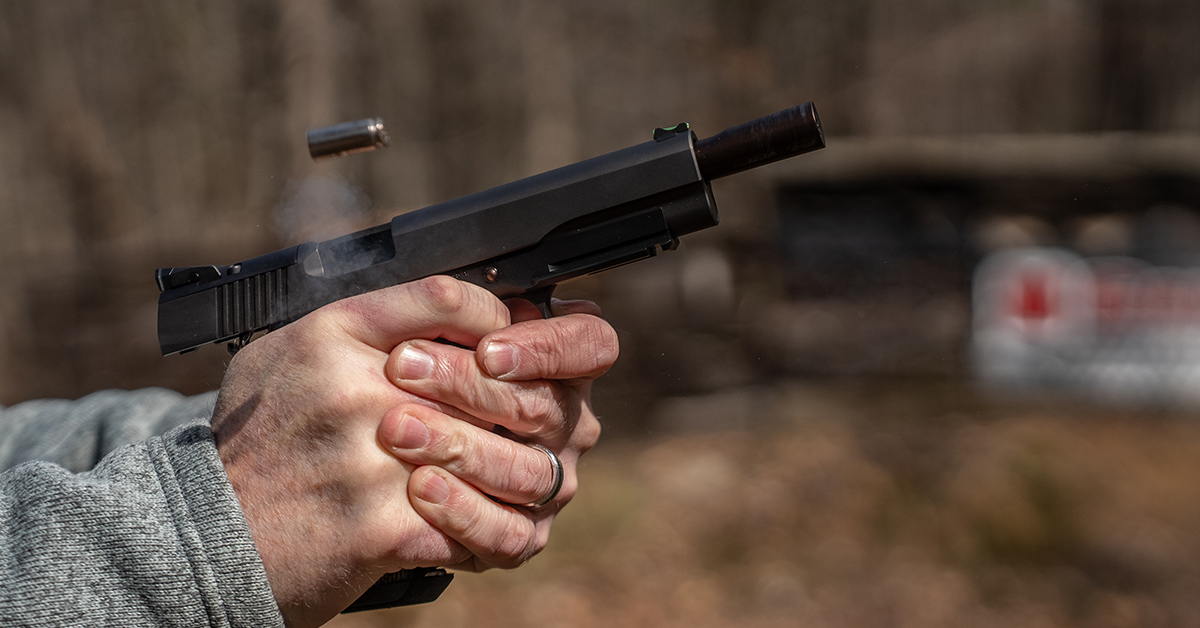
My preference for a hunting handgun is a revolver. I’m not saying they’re better; they’re just what I prefer. If, on the other hand, I was in the market for a pistol with which to hunt, my search would start and, quite possibly, end with the Dan Wesson Kodiak. If I lived in a location where a predator defense handgun was considered more of a necessity than an accessory, the same would be true.
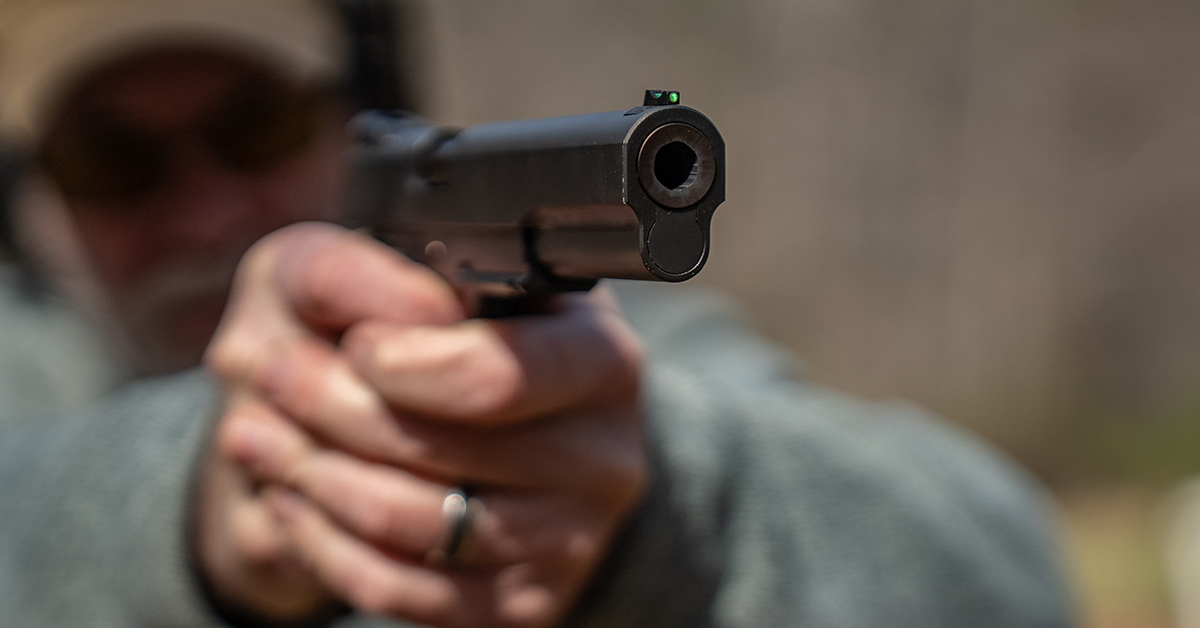
The Dan Wesson Kodiak is a well-put-together 1911 pistol. It functioned flawlessly and smoothly, the trigger was very good, it comes with good sights, but it is also optics-ready, and Dan Wesson offers a variety of adapter plates for various optical sights. It’s also an attractive pistol and, yeah, it’s pricey, but the build quality and performance are on par with the big-name legacy custom 1911 makers.
I’d not be embarrassed to pull the Kodiak out on any range, around any campfire, and even — with the right ammo — in the face of a pissed-off grizzly bear.
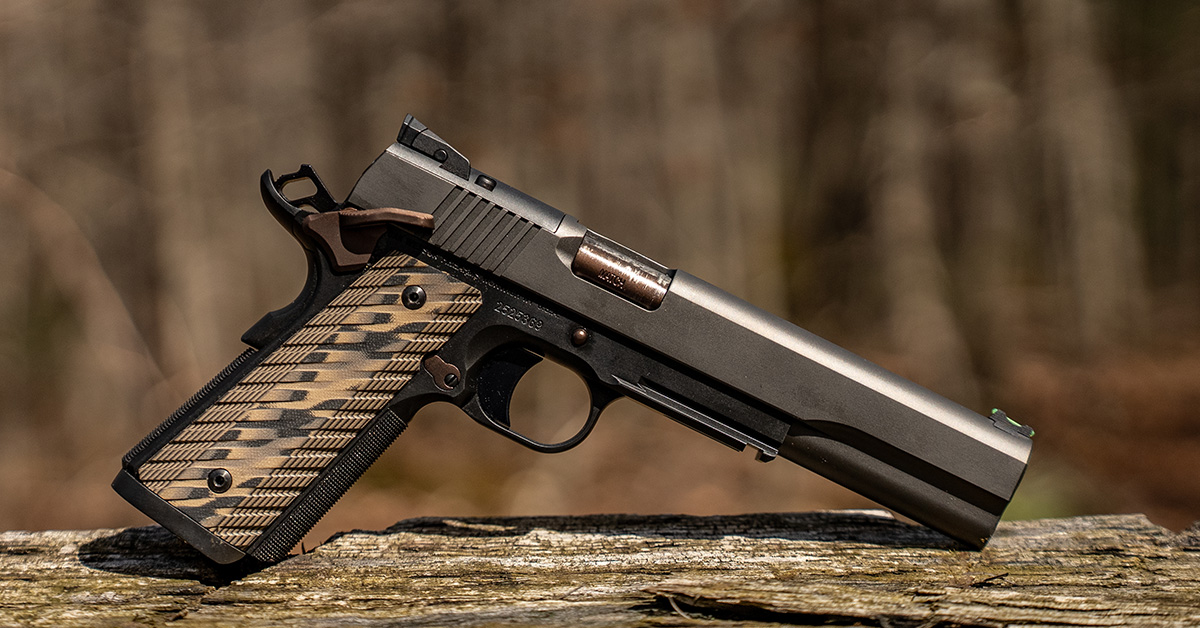
Dan Wesson Kodiak Specifications
- Chambering: 10mm Automatic
- Barrel: 6 in.
- Capacity: 8+1
- Length: 9.7 in.
- Height: 5.8 in.
- Width: 1.5 in.
- Weight: 47 oz.
- Frame Finish: Nitride
- Slide Finish: PVD
- Grips: G10
- Sights: adjustable rear, fiber-optic front, optics plate compatible
- Trigger: 3.0 lbs. (as tested)
- MSRP: $3699

- TESTED: Tract Optics Rimfire Riflescopes - October 2, 2026
- TESTED: Dan Wesson Kodiak 10mm Auto - August 19, 2026
- The 25 RPM: Weatherby’s New Quarter-Bore - June 22, 2026