A tiny unit with big upsides, the FML 19 thermal pistol sight from Infitac USA isn’t just for handguns…even long-gun hunters can get in on this action
by Brian McCombie
High-tech products often follow a predictable manufacturing timeline. The first models are usually large and bulky — often too big for practical use. The follow-up models tend to reduce in size even as the technology inside gets more powerful and useful.
So it is with today’s thermal imaging technology. The forerunner to the today’s thermal units appeared in 1929 as a night-time camera prototype for British air defense. The next version came out approximately 20 years later. The one photo I found of it showed a unit the size of a larger microwave oven.
The first handheld thermal units took another 50 years to arrive, with rifle-mounted weapon sights soon following.
Going Small
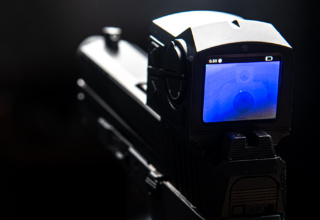
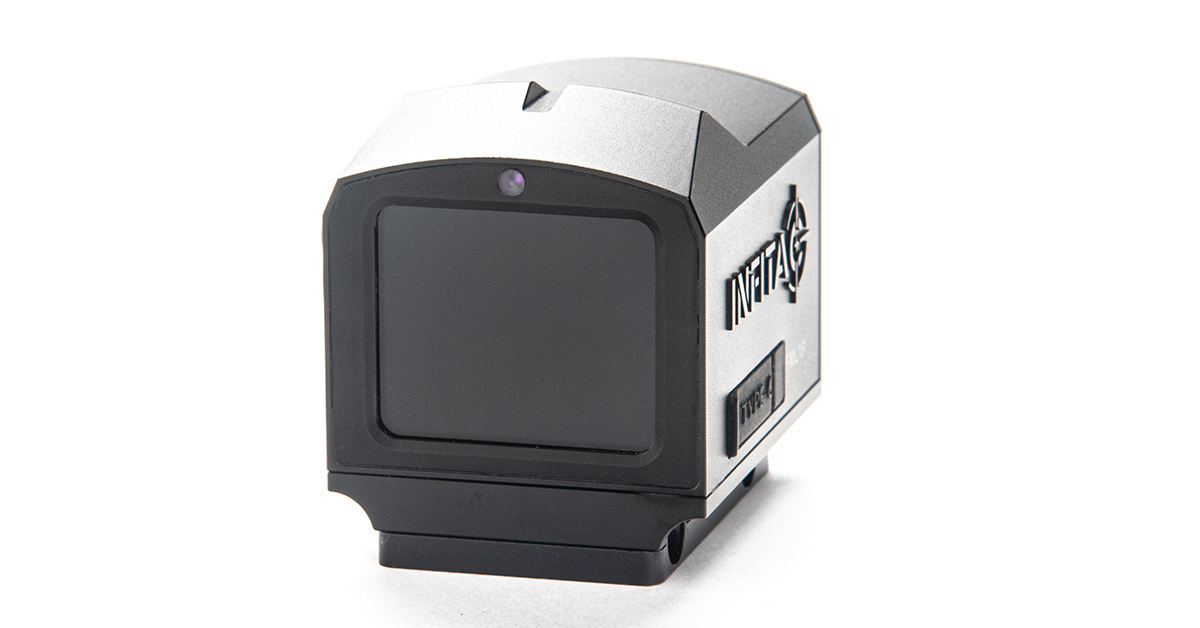
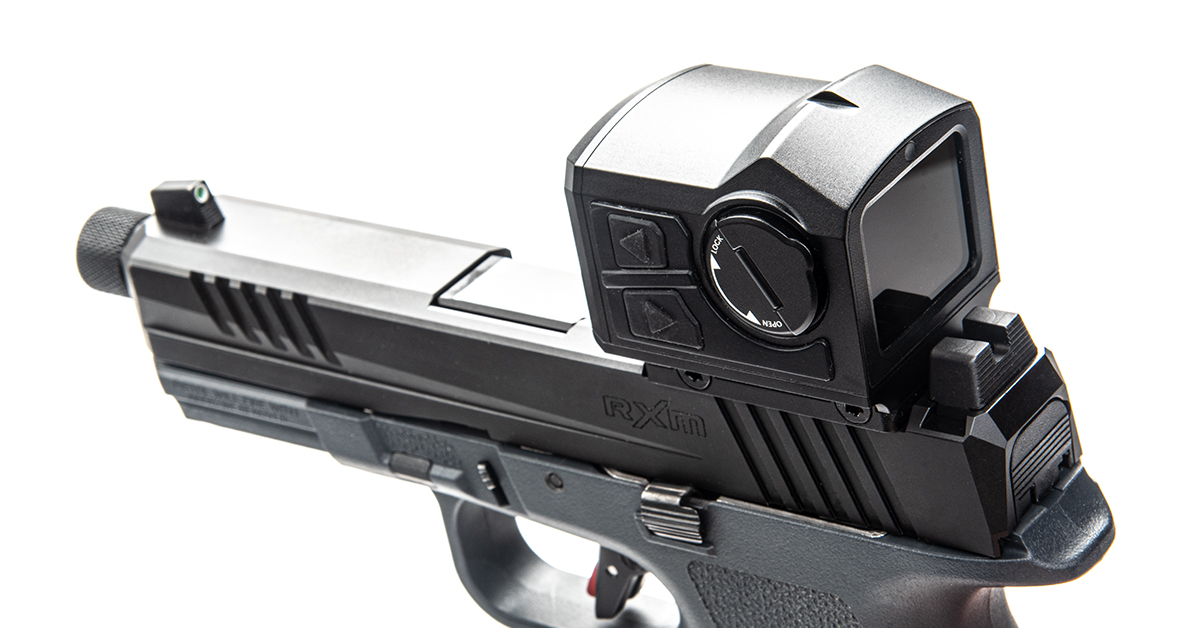
Today, the thermal tech is so refined that one company, Infitac USA, produces a pair of thermals small enough to mount onto a pistol. Infitac USA’s Fast Mini FMP 13 and FML 19 thermals look like an enclosed reflex optic but actually contain some impressive thermal tech.
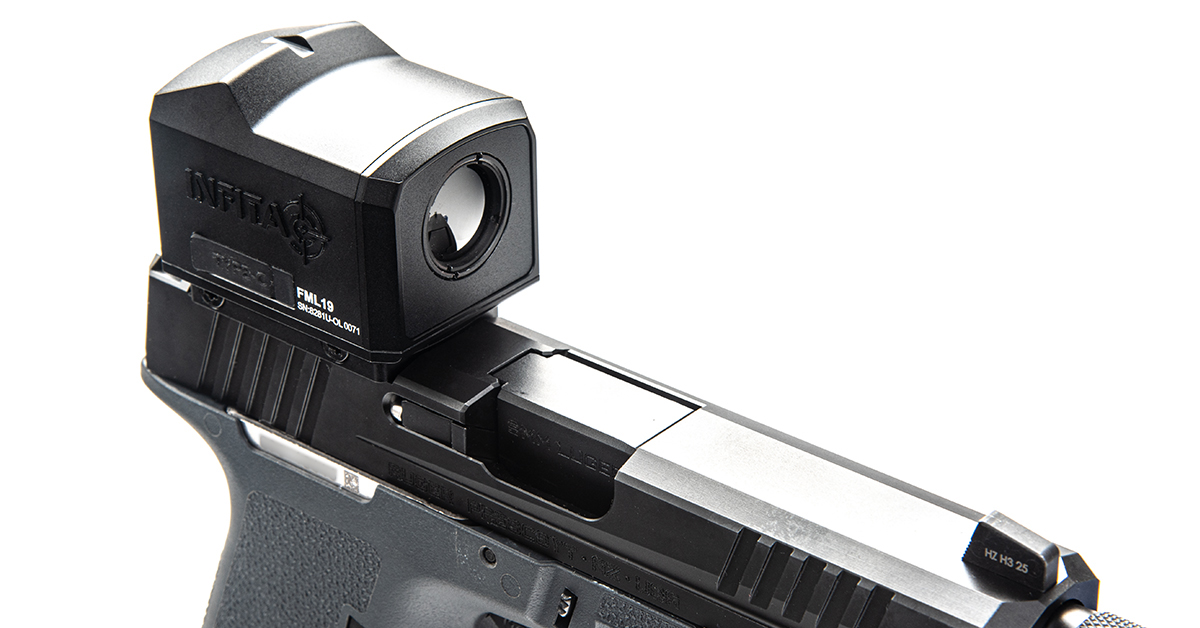
I ran the FMP 13 and could identify and engage small heat signatures out to 30 yards when mounted on a pistol thanks to its 256×192 thermal sensor. So, when it came out, I had to try the FML 19 and its larger, more powerful sensor.
As a dedicated night hunter, I was glad I did.
The Package
The FML 19 weighs all of four ounces and is two inches long. It adds approximately 1.7 inches of height to a pistol, with a width of 1.5 inches.
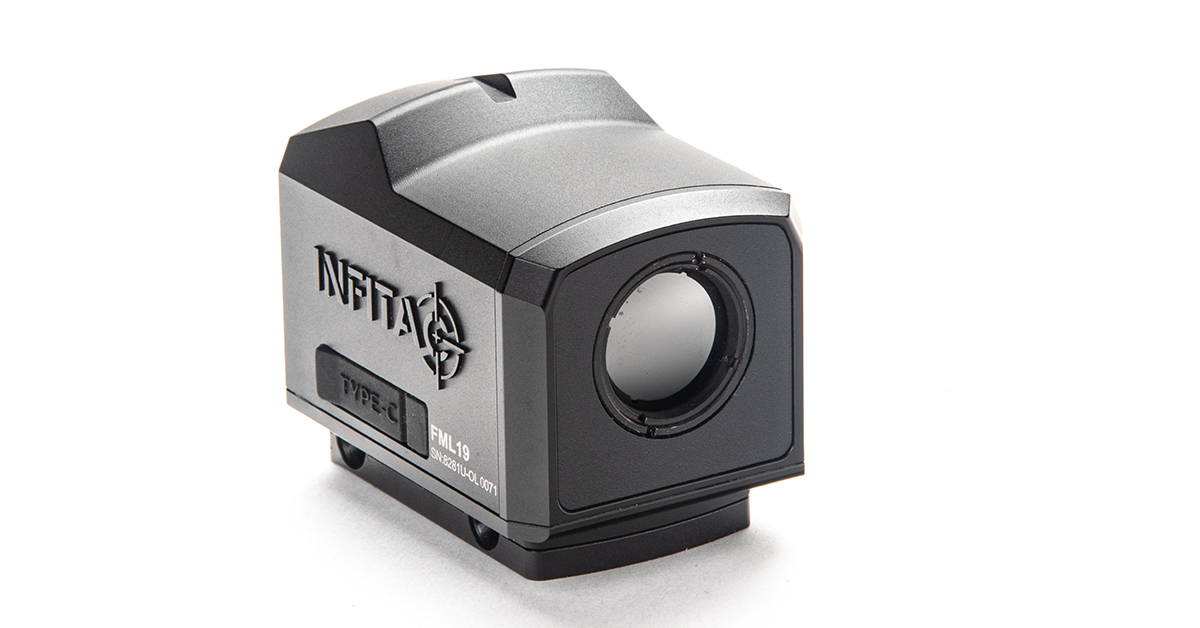
Inside the black, 7075-T6 aircraft-grade aluminum housing is a 384×288 resolution thermal sensor operating at 60 Hz. The unit’s 19 mm objective lens is made of Germanium, while the rear 360×300 rear display pops at a nice 1.4 inches.
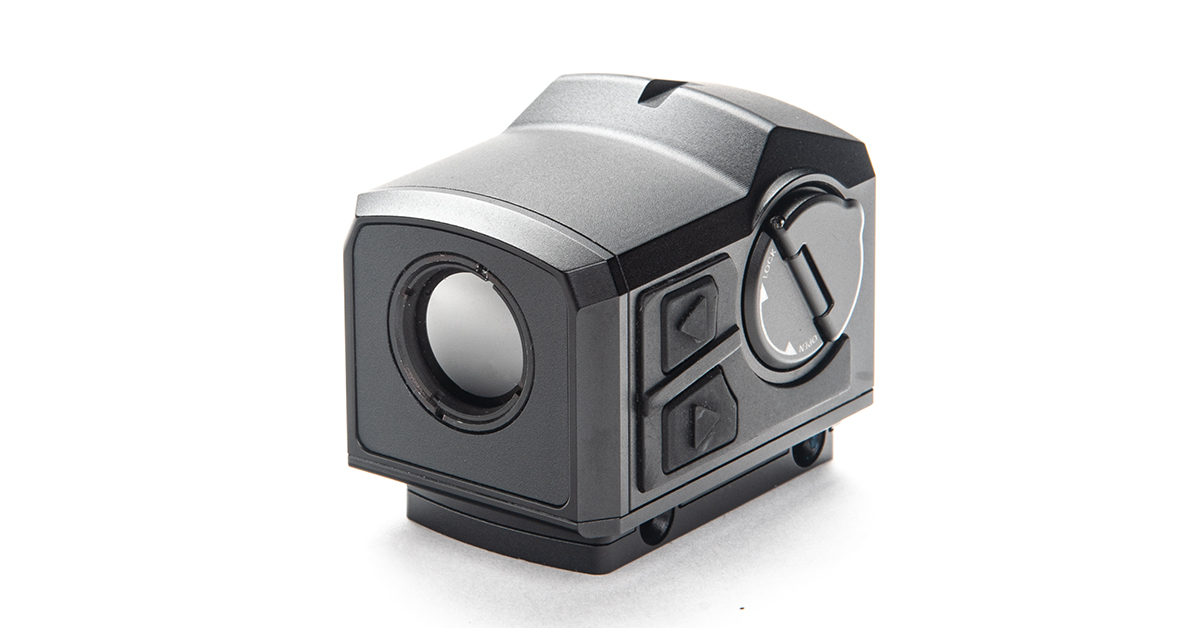
Infitac does not rate the thermal’s eye relief distance, but I held it out to arm’s length and easily viewed the reticle and thermal images.
The thermal features three reticle options: a 6 MOA dot, a 6 MOA dot centered inside a 65 MOA circle, and 6 MOA dot inside a 130 MOA circle. Color palette options are White Hot, Black Hot, Red Hot, and Rainbow.
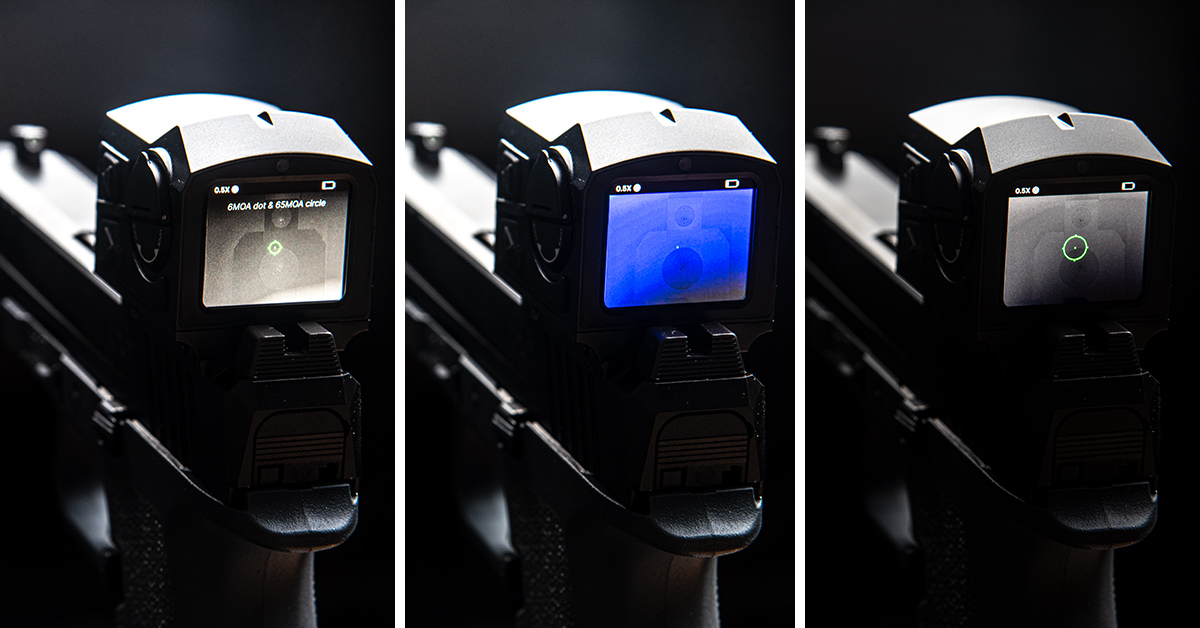
The unit features Auto Brightness and can be manually adjusted for brightness and contrast. Base magnification is 0.5x and can zoom to 1x.
Power On
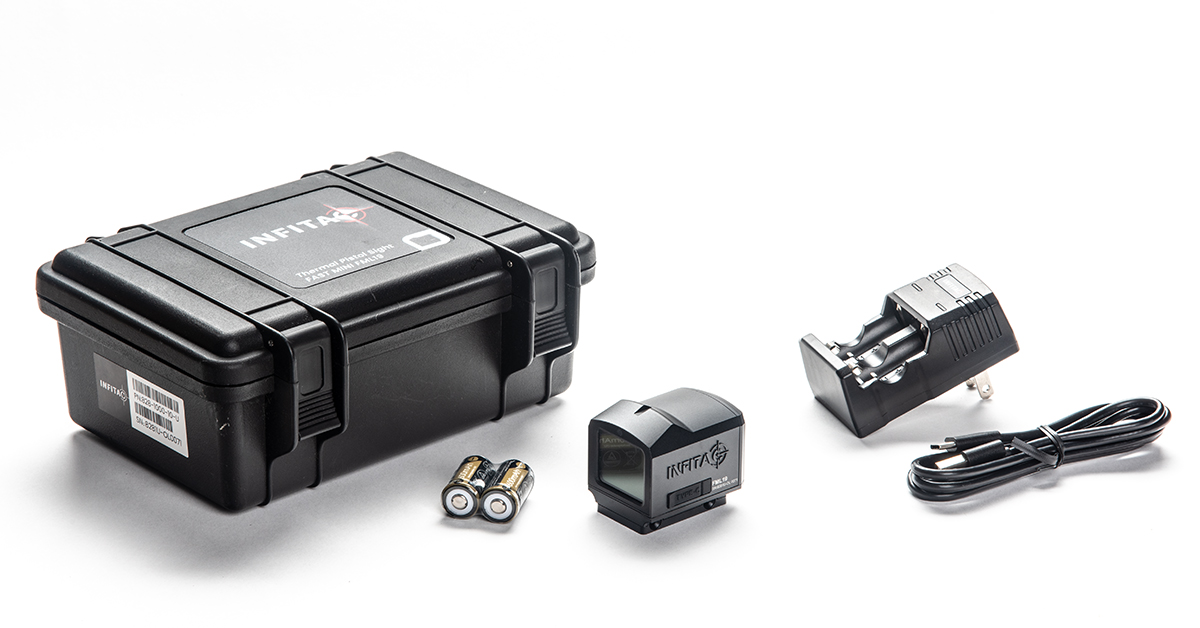
The FML 19 runs on a single 3.7V rechargeable CR2 battery, a pair of which are included with the unit. Also included are a CR2 battery charger and the required USB Type-C cable. The thermal has a standby feature to conserve battery life, as well as a shake awake setting that turns it back on when the unit senses vibration.
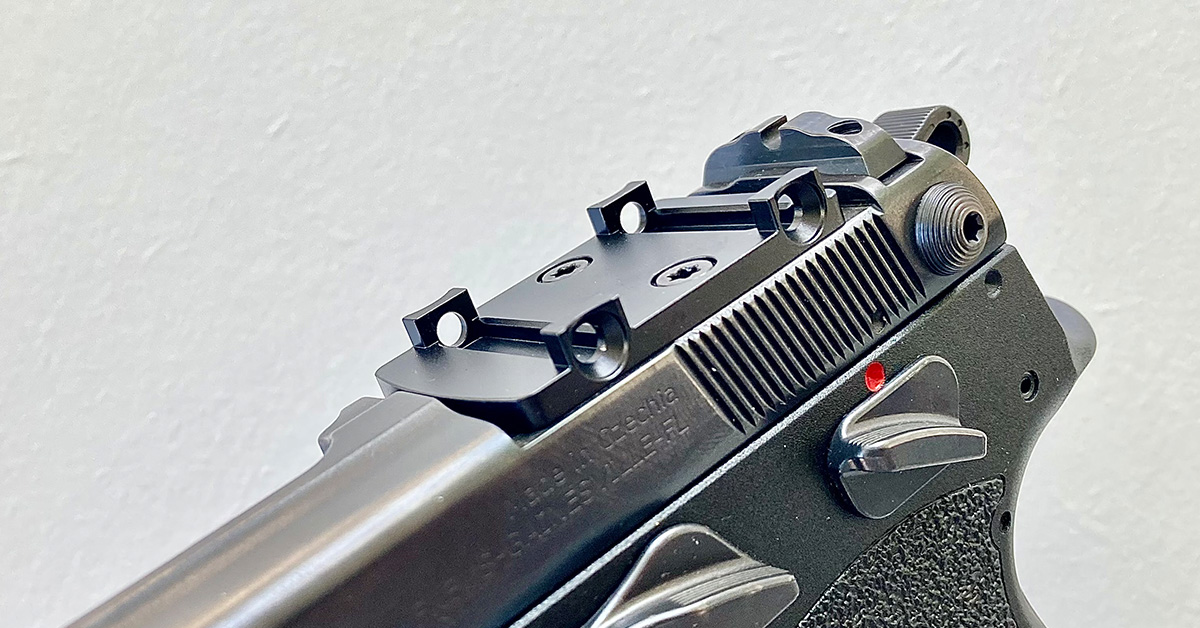
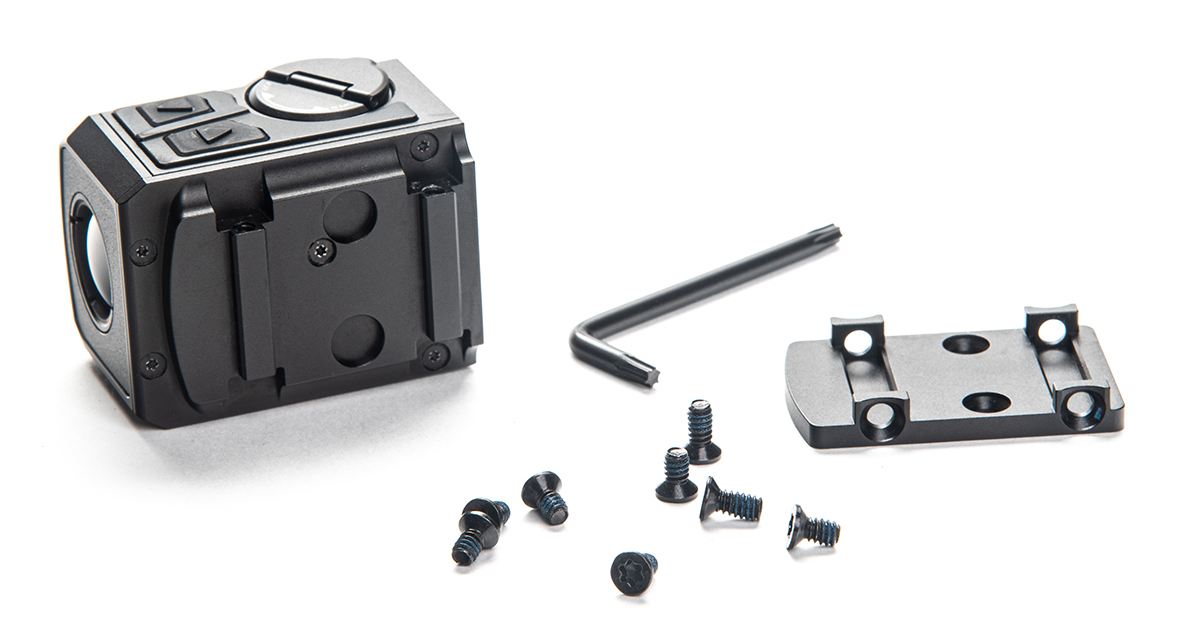
The bottom of the FML 19 fits the RMR optic footprint, and the included mounting bracket is a standard RMR interface compatible with most RMR pistol bases. You first mount the bracket onto your pistol with the included screws. Then, you attach the FML 19 onto that bracket, securing it with four (included) screws. The needed Torx wrench is also part of the FML 19 package.
Recoil Management
While both the FML 19 and it’s “little bro” FMP 13 can handle .357 Mag and .44 Mag handgun recoil, Infitac USA recommends not to run the units extensively on handguns in these calibers as damage may occur with such long-term recoil exposure.
Instead, I first ran my test unit FML 19 on my FK BRNO PSD chambered in the proprietary 7.5 FK. Essentially a 30-caliber round, 7.5 FK bullets launch out of the PSD’s 5.3 inch barrel between 1,800 and 2,000 feet per second, depending on the load, and pack over 700 foot-pounds of energy at the muzzle.
To me, the recoil feels less than 357 Magnum, making the PSD a solid choice for the FML 19.
Range Time
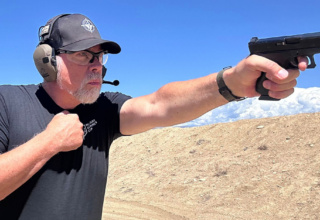
At my outdoor shooting range, I zeroed the FML 19 and the PSD at 12 yards using a rest. My targets were a smallish HotHands heat pack taped to a cardboard rectangle.
The FML 19 zeroing process was to first take a couple shots at one of my targets and then adjust the separate, red zeroing reticle to the point of impact, save that setting, and then shoot again.
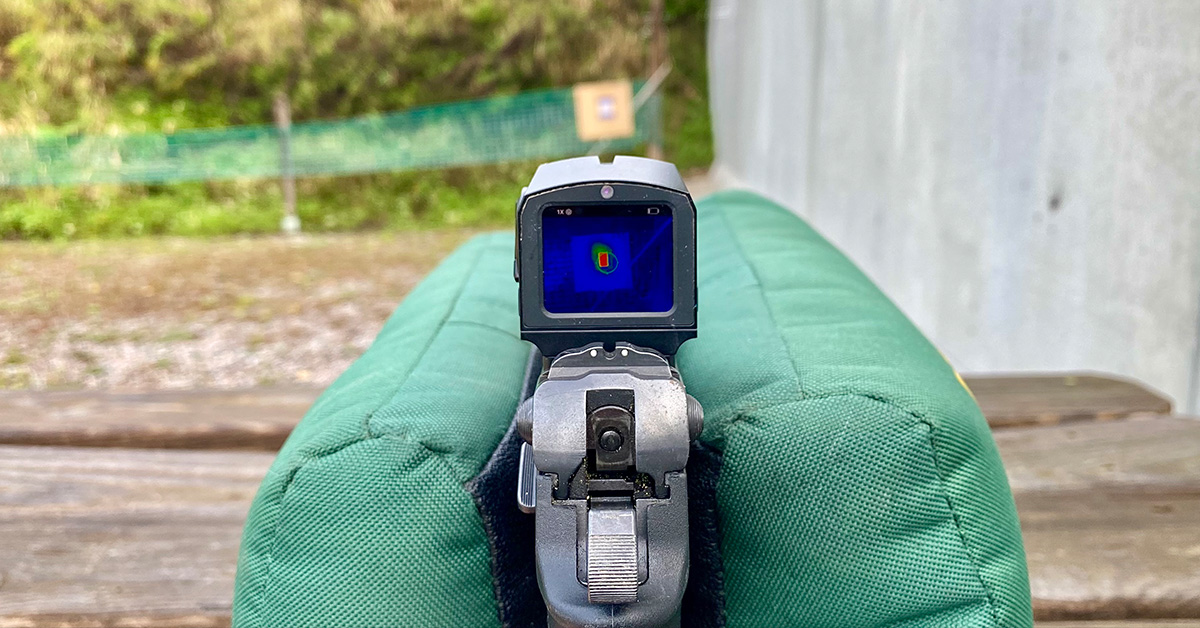
The ZERO function is accessed by either entering the MENU and then moving the zeroing reticle’s X and Y axis with the button on the left side of the housing or one accessing the ZERO function by the touch screen.
That’s right. The little display screen is a touch screen, too, and running your fingertip over the screen in various directions allows you to make assorted adjustments.
Swipe up or down on the display screen, for example, to change color palettes. Once in the ZERO function, tapping the “+” and “–” icons on the display moves the zeroing reticle’s X and Y axis locations. These can also be moved with the unit’s control buttons on the left side of the housing.
My first shots hit several inches high of the HotHands and approximately two inches right. I entered the ZERO function and moved the red zero reticle to the area of impact and saved this setting.
This wasn’t easy to do in the daylight. It was a sunny day, too, and the glare off the display was bad enough that I had to move to a shaded area to make the adjustments,
But the adjustments worked and four of my next five rounds drilled the heat pack at 1.3 inches.
Going Longer
I moved to a 25-yard lane.
My initial shots were at a piece of black duct tape on cardboard backing; the tape showed up well, absorbing the sun’s rays. I had to re-zero the FML 19 at this distance because shots hit just left of the tape.
I was running low on the 7.5 FK ammunition, so I fired off my last ten rounds at a larger HotHands, approximately 3×5-inches, and made a solid group of 10 rounds at 2.4 inches.
Half those rounds hit a bit high, but that was on me.
The HotHands showed up well at 25 yards in the sunlight and would be even more visible at night.
Rimfire Rifle
It seemed to me the FML 19 on a rimfire rifle would be especially useful for thinning out populations of smaller night-time varmints.
First, I needed Infitac’s PM01 Picatinny Rail Mount, a quick release mount that secures to a pic rail with an RMR footprint attachment surface on top.
I attached the PM01, with the FML 19 added, onto a Bergara Micro Rimfire (BMR) Bolt Action chambered in .22 LR. The BMR features an 18-inch carbon fiber barrel, a Bergara Performance Trigger, and a black synthetic stock with gray specks. The rifle weighs just five pounds. Ammo is mag-fed, and the BMR sells with a 5- and a 10-round magazine.
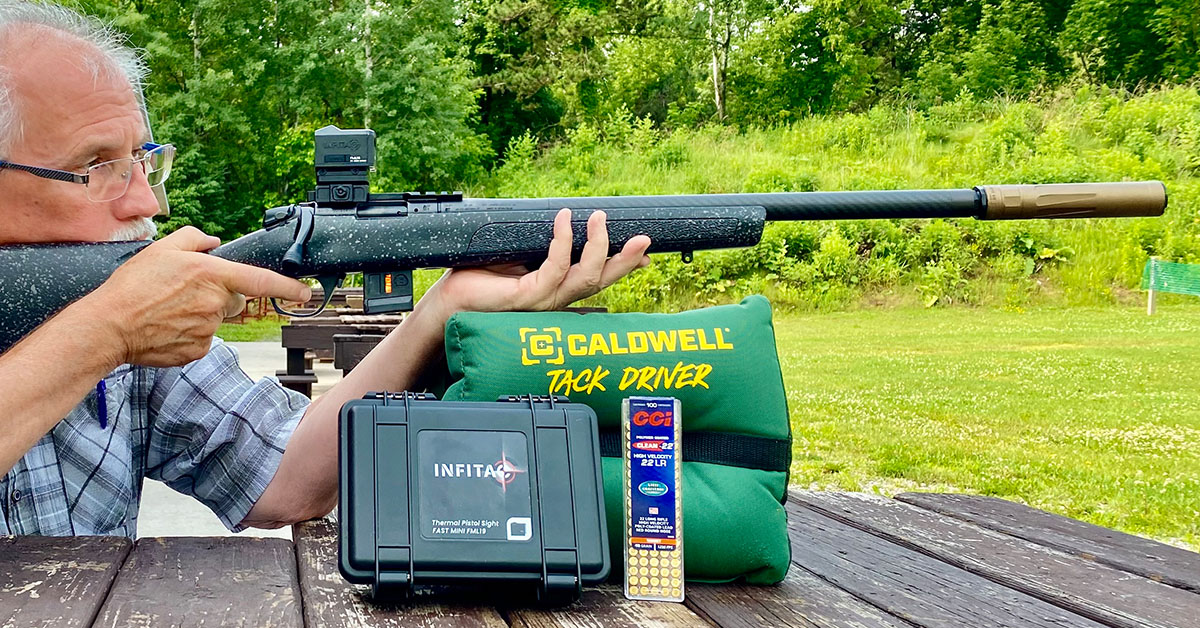
Last, I direct-threaded a Dead Air RXD22Ti rimfire suppressor. Dead Air worked with Ruger to match this suppressor with the gunmaker’s rimfires, and the result is a svelte Titanium tube featuring a 3D-printed, single-piece Triskelion core and titanium retaining cap. The RXD22Ti is under six inches in length and weighs only 5.6 ounces.
For ammunition, I relied on CCI Clean-22 launching a 40-grain red poly-coated bullet.
From 30 to 50 Yards
I zeroed the rifle and FML 19 at 30 yards. My first three rounds hit high and right. I went into the ZERO function, adjusted, and my next four rounds hit the HotHands for a .85-inch group, although a bit low and left of center.
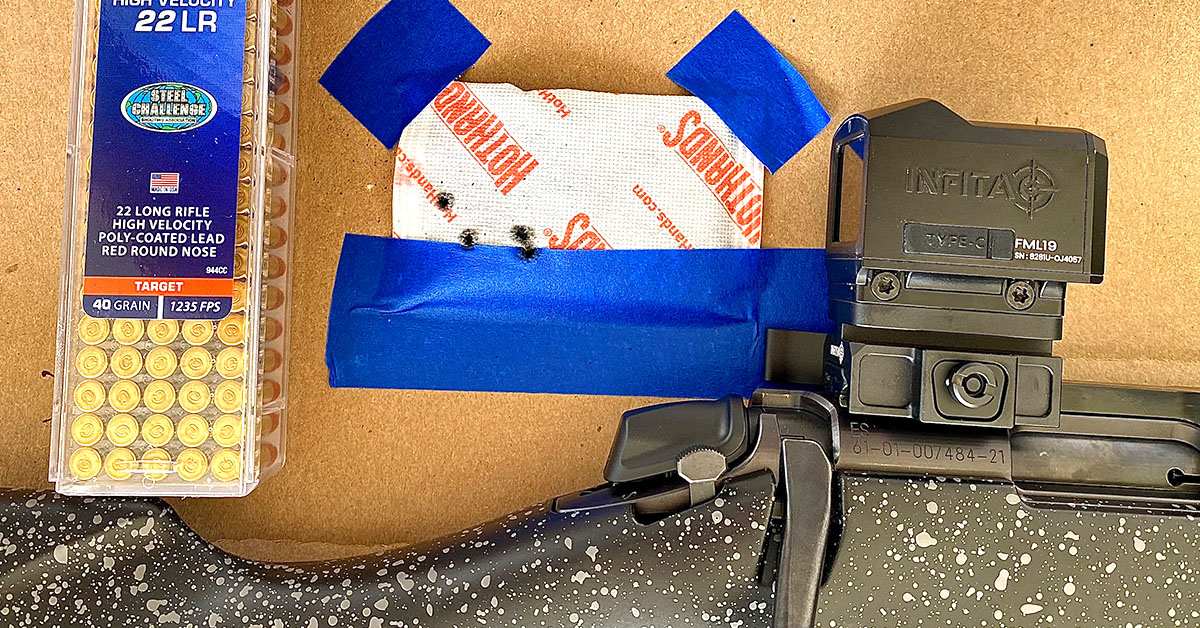
At 50 yards, I made five shot groups at 1.8 and 2.2 inches, with my best coming in at 1.55 inches.
As with the pistol testing, the bright sunlight was the biggest hurdle, bouncing significant glare off the display.
A Night Hunter
Though the FML 19, like all thermals, works during the day, the unit is made for the night.
I took the unit on my unloaded PSD to a friend’s land near my home in north-central Wisconsin. My friend has several food plots on his property and deer show up nightly to grab a meal.
I got there right at dark and sat on the edge of a food plot. A half hour later, several whitetail does popped out of the wood line at approximately 35 yards, their images sharply outlined.
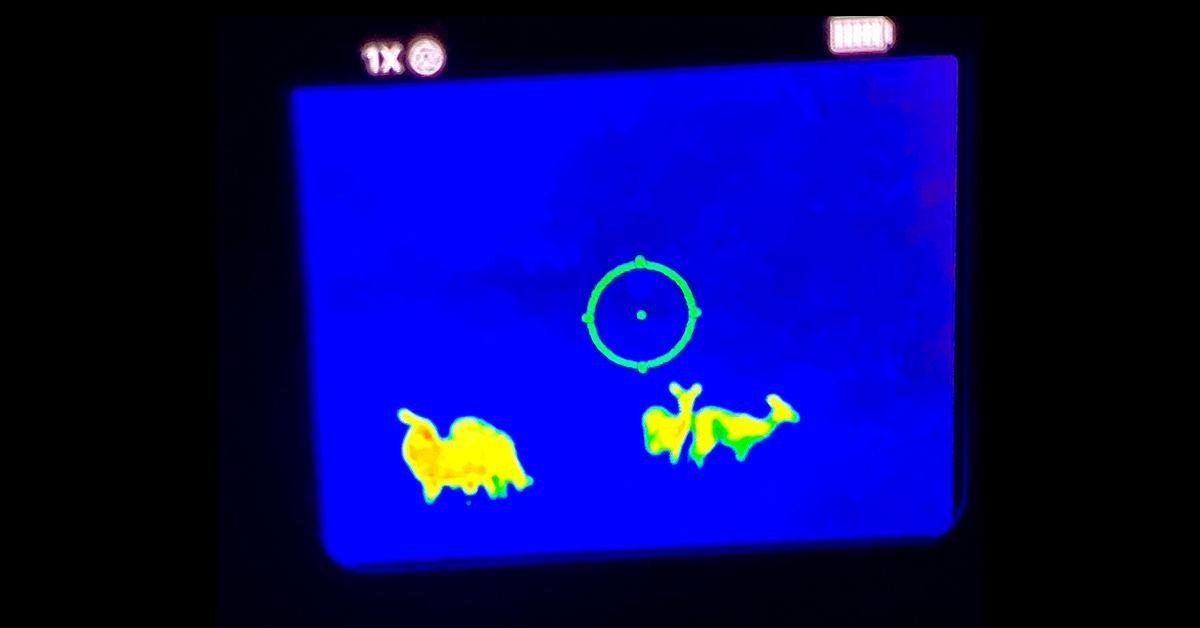
Of course, I’d never shoot a deer at night with a thermal-equipped firearm! Extremely illegal.
Still, the deer images proved to me that shots on coyotes and hogs at this distance — quite legal at night in many, many states — and out to 50 yards would’ve been relatively easy.
No, you will never drop a hog or coyote at 200 yards with this little thermal. But if you are up for nighttime hog and ’yote hunting with a pistol and can get in close, the FML 19 is a fine choice.
Infitac USA FML 19 Thermal Pistol Sight Specifications
- Thermal Sensor: 384×288@12μm
- Frame Rate: 60 Hz
- NETD, mk: ≤20
- Objective Lens: 19mm, Germanium
- Detection Range: 1,100 yards
- Recognition Range: 165 yards
- Magnification: 0.5x
- Digital Zoom: 1x, 2x
- Display Type: 1.4 in., 360×300
- Window Size: 1.0x.60 inches
- Reticle System: 6 MOA dot, 6 MOA dot & 65 MOA circle, 6MOA dot & 130MOA circle
- Color Palettes: white hot, black hot, red hot, rainbow
- IP Rating: IP67, 33 ft. (10m) depth
- Max. Recoil: 1200 g/s²
- Operating Temperature: -4°F to +122°F
- Weight: 4 oz.
- Dimension: 2×1.5×1.7 in.
- Includes: RMR footprint mounting adapter, mounting screws, and wrench, 2x heat targets for zeroing, 2x CR2 rechargeable batteries, USB-C cable, lens cloth, user manual
- MSRP: $1,199.00

- Infitac USA FML 19 Pistol Thermal - November 9, 2026
- TESTED: Ravin’s New R8 Crossbow - September 30, 2026
- Winter’s The Right Time—For Coyote and Varmint Hunting - January 4, 2018