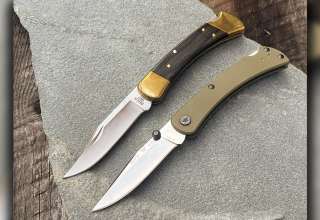
Arguably the most iconic lockback knife in history gets a major update. Meet the all-new Buck 110 Crossbar Lock.
by Dexter Ewing; photography by Marty Stanfield, Marty Stanfield Photography
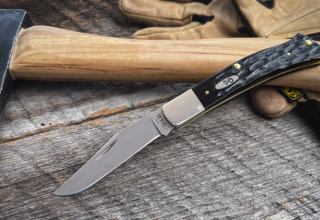
The legendary Buck 110 Folding Hunter dates to 1963 and is an iconic knife that is still in production to this day. While trends come and go, knife models also come and go. Few have the staying power of the Buck 110.
Why?
The answer is simple.
The 110 is a sturdily built folding knife that is designed to withstand heavy use and abuse. While originally conceived to be a folding hunting knife to serve field dressing tasks and camp utility chores, the 110 quickly found its way onto the belts of construction workers, tradesmen, law enforcement, and even the military. It was pretty much the tactical folder of its day. As years progressed, variants of the 110 appeared with assorted handle materials, blade steels, and an even more compact version (112 Ranger) for those who wanted a smaller folder with the same build quality as the 110.
This year, Buck introduces what probably is the most significant update to the 110 platform ever — the 110 Crossbar Lock.
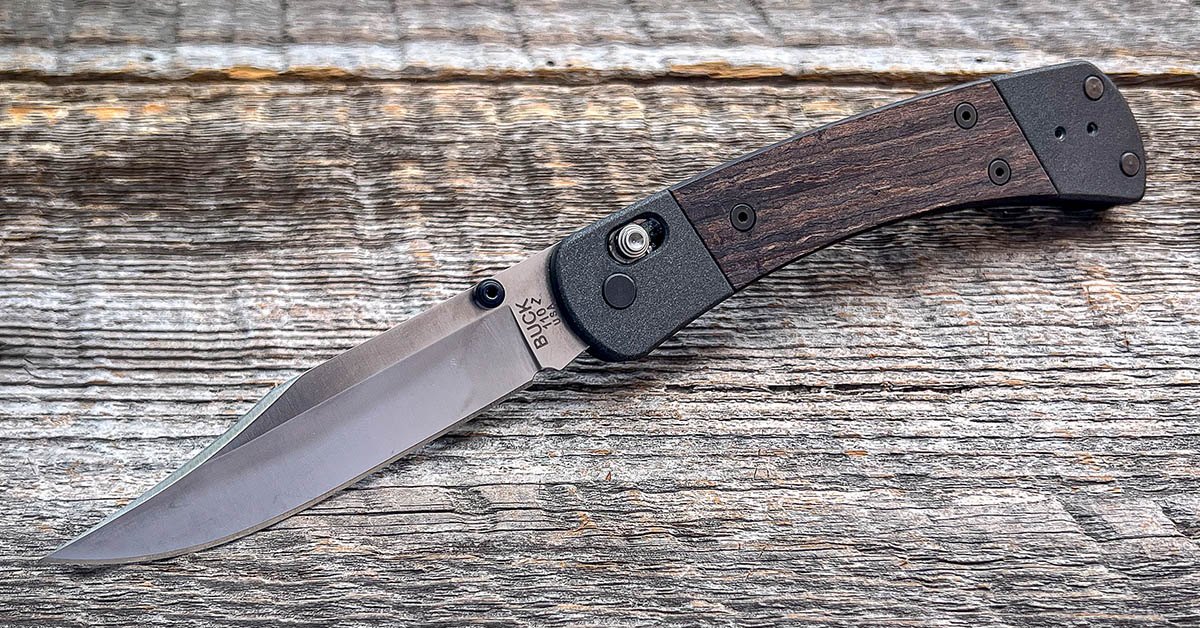
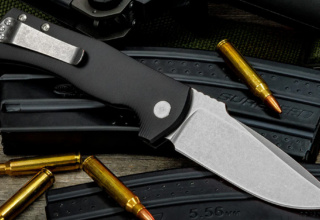
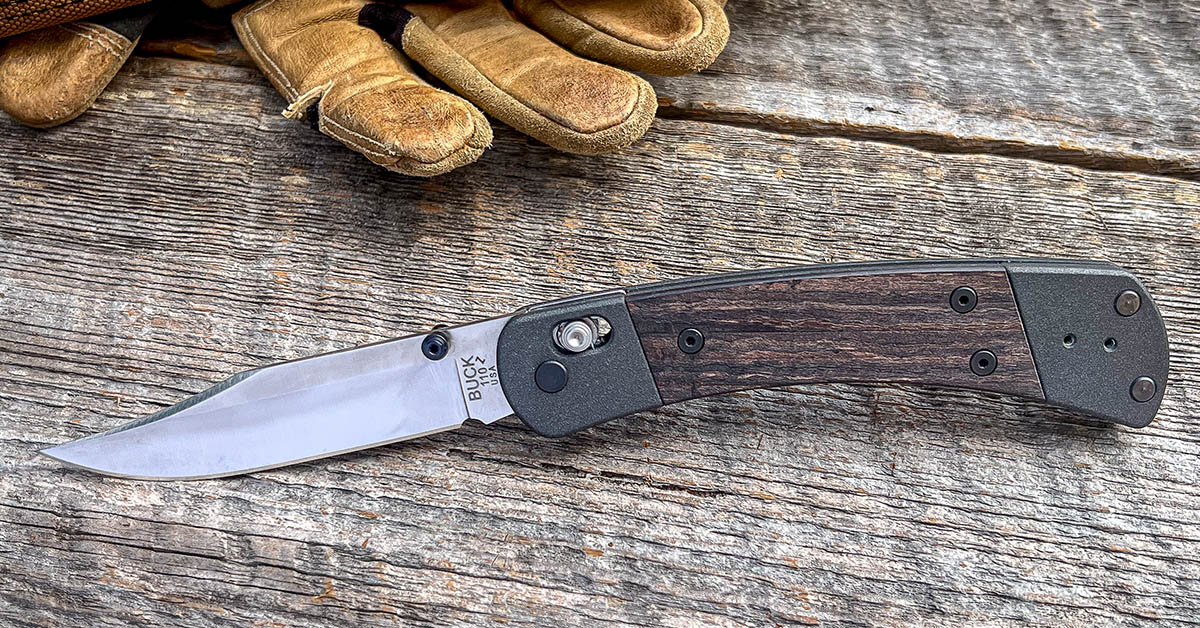
This model refreshes the 110, bringing it into the modern day knife market by incorporating such conveniences as ambidextrous thumb studs for one-hand opening, CPM MagnaCut blade steel for ultimate edge-holding and corrosion resistance, an ambidextrous crossbar lock blade lock for maximum security, a deep carry pocket clip that carries the knife blade tip up in the pocket, and a lightweight yet strong aluminum frame, making the entire knife weigh less than the original.
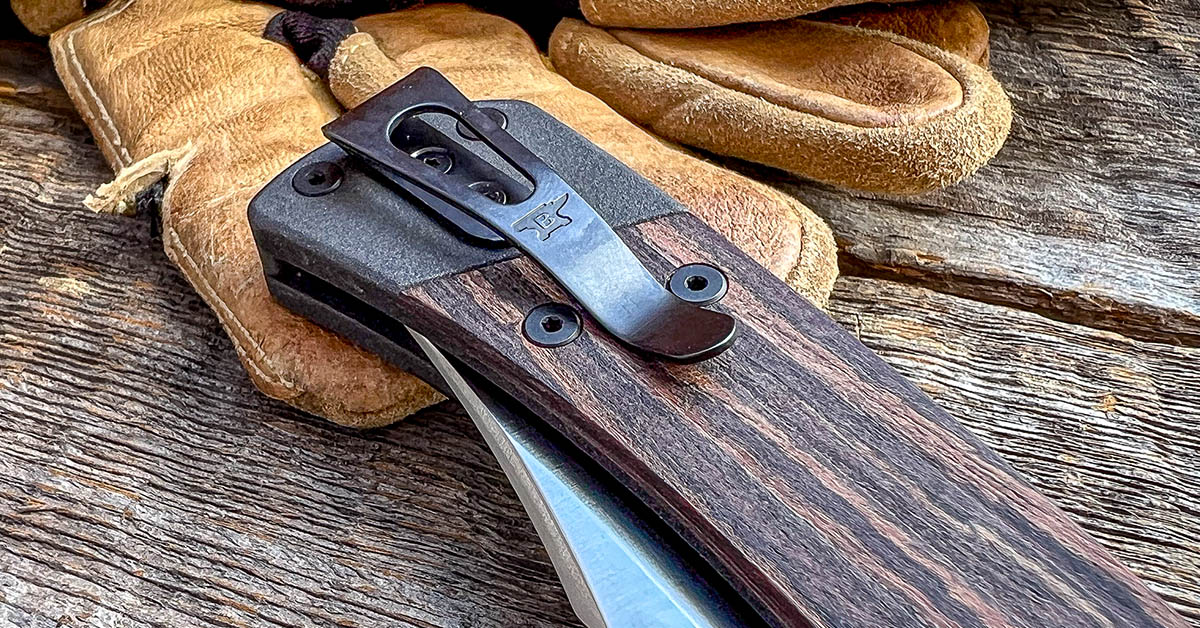
The original 110 is carried by a leather belt sheath supplied with each knife. The new one is carried in the pocket via the pocket clip — no sheath needed.
The 110 Crossbar Lock is an exciting blend of modern and traditional. The legendary Buck 110 DNA is clearly evident; witness the clip point blade and the double handle bolsters with the ebony wood inlay. These modern updates make this 110 Crossbar Lock appeal to the younger knife crowd, introducing them to the legendary design that defined a new class of production knives — the lockback folding hunter.
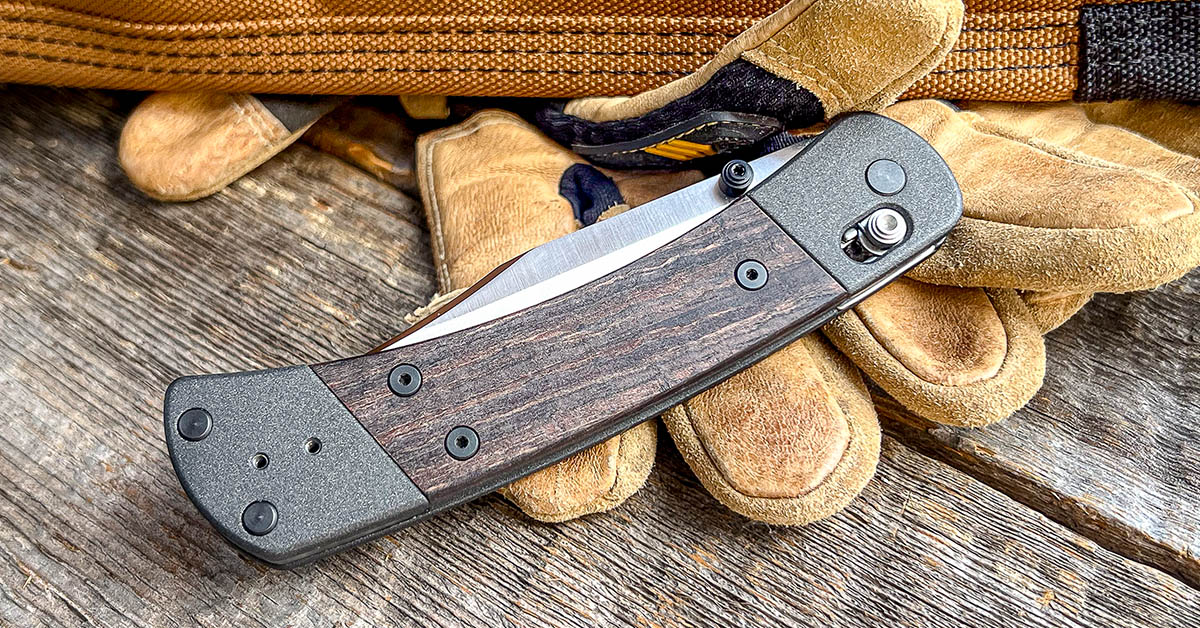
The 110 Crossbar Lock shares the exact same dimensions as its older brother. The blade length is 3.75 inches, making it long enough to take care of your toughest cutting chores yet compact enough so the knife rides in your pocket comfortably. Overall length is 8.6 inches, so this is a formidable work knife that has universal appeal to folks who use knives frequently.
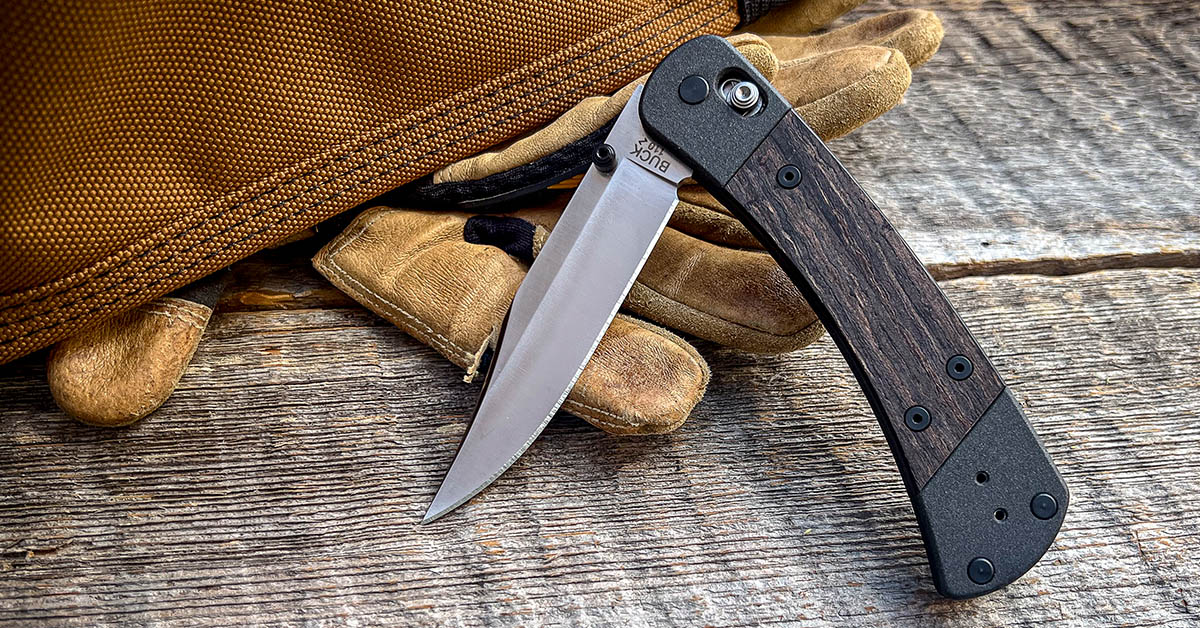
If you are not familiar with CPM MagnaCut steel, know that this is the best high-performance stainless steel that you can currently buy on the market. It features superb edge-holding capabilities to keep you working more and sharpening less. At the same time, MagnaCut also has high corrosion resistance — quite possibly being as close to what knife aficionados call the perfect steel. Compared to the original 110’s 420HC stainless blade, the 420HC is a softer steel that won’t hold its edge long but is also fairly easy to resharpen.
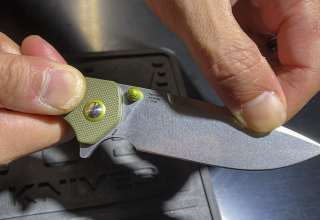
MagnaCut is, though, a bit more difficult to sharpen, so be sure to acquire some diamond-coated sharpeners for use on this blade.
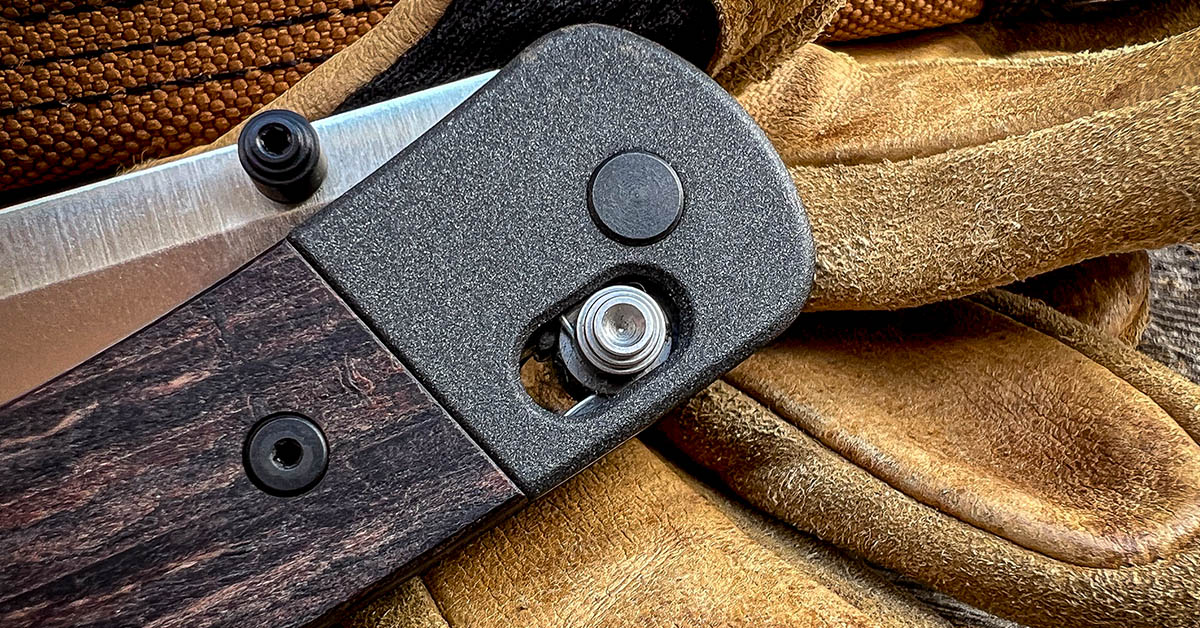
The original 110 features a tried-and-true lockback mechanism to secure the blade open. It engages with a positive “click” to let you know the lock is engaged. This lock rarely ever fails but the downside to a lockback is that it requires two hands to unlock and fold the blade closed. The crossbar lock mechanism is ambidextrous and offers one-hand operation as well. It’s very secure, never slipping and losing lock integrity.
How does this knife perform?
Like the original 110, the 110 Crossbar Lock is a workhorse. The lighter frame, the MagnaCut steel, the crossbar lock, and the ambidextrous thumb studs are all modern conveniences that make single-blade folders such as this that much easier to use and carry. The hollow grind of the blade gives the edge a lot of “bite.” It’s evident that this blade has a huge appetite from the moment you cut something with it. It’s a confident cutting tool that will serve well in the outdoors or the trades.
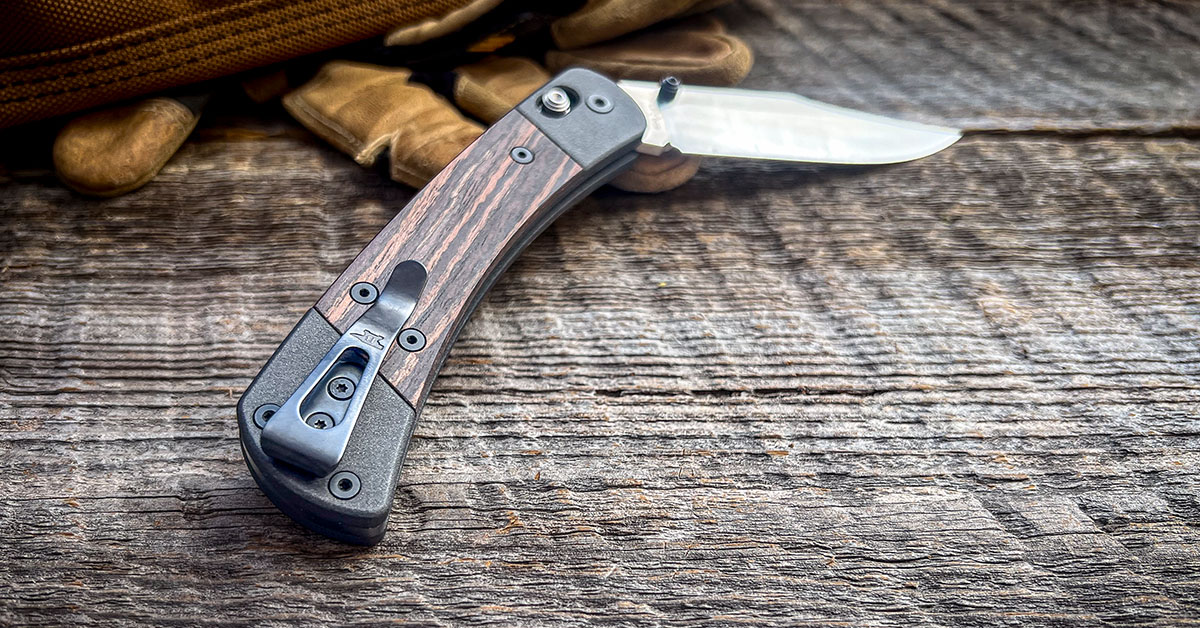
There is no question the overall quality of the build will definitely hold up to some serious use. If you’re a fan of the 110, you need to check this out. Even if you are not a fan of the 110, this is a unique enough knife to justify one in your collection/EDC rotation. The 110’s design is rock solid and has endured the test of decades of hard field use, and the original is still in production today. That speaks volumes of the 110’s staying power.
With the 110 Crossbar Lock, the modern advancements incorporated into this design will no doubt carry this design way ahead into the future while still being cognizant of its heritage. This is fitting because, after all, the 110 is the original tactical folder (if there were such a thing as tactical folders back in its day). MSRP is set at $315.00, and the knife is made in the USA.