Learning to shoot and operate your handgun effectively with your non-dominant hand should not be considered an optional skill set
by Paul G Markel
A few months ago, I was a guest on Straight Talk with Bill Frady — a daily radio show. Bill brought me on as an SME for firearms training and the topic was, “How can a person with a critical injury to their dominant hand learn to operate a self-defense gun using only their non-dominant hand?” One of Bill’s audience members had posed that question, having sustained just such an injury.
Naturally, I had thoughts on the matter. Bill and I chatted about it for a bit, but one segment on a radio show did not seem enough. I felt like I needed to put something down on paper, and our esteemed editor thought that was a valid idea.
This had not been the first time that subject — one-handed shooting due to injury — had come up. Many years ago, my oldest son had shoulder surgery, and the corresponding arm was out of commission and in a sling for four to six weeks. We went to the range and practiced operating a self-defense handgun with only one hand.
Hardware Choices
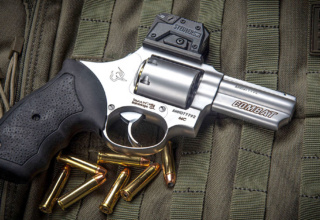
One of the first responses to this one-handed issue has been, “Shift to a double-action revolver.”
Yes, that can be one answer; however, if you’ve been carrying a compact pistol, such as a Glock 19 or the slimmer Glock 48, and then overnight switch to something like a J-frame S&W revolver, you may feel even more handicapped. Contrary to popular belief, the double-action revolver is NOT the easiest gun to learn and use. Mastering the DA trigger press on a short-barreled wheelgun takes a serious amount of dedicated effort and practice. Also, we need to acknowledge that you get five or six shots total. If you run out and need more shots, executing a one-handed reload on a compact DA revolver is quite an uphill climb.
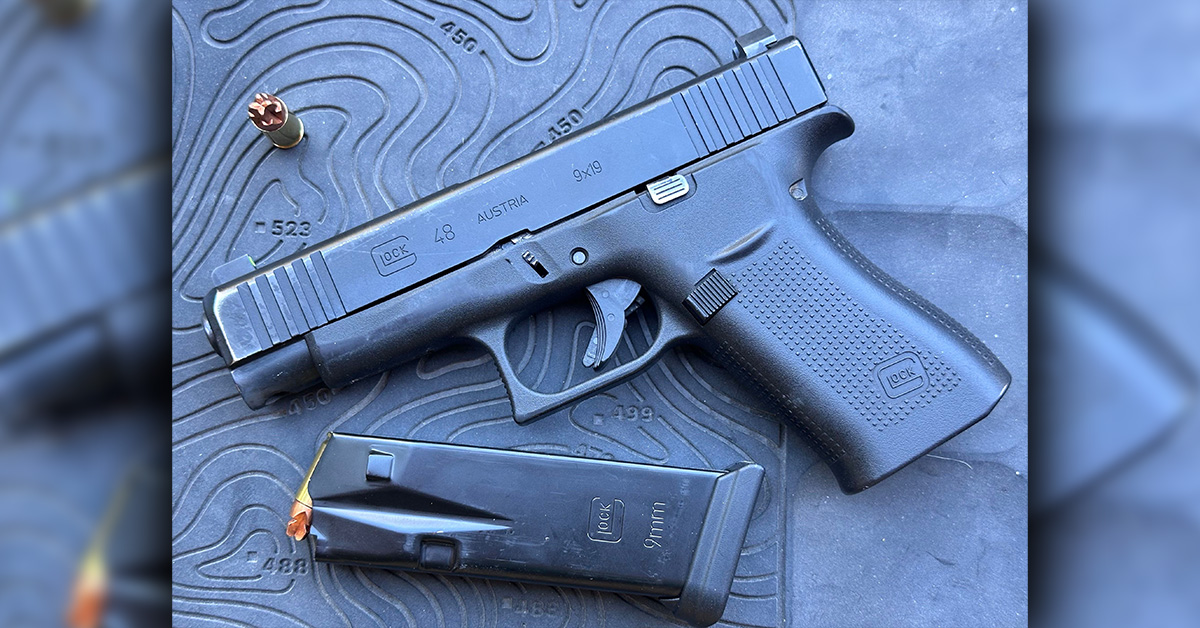
There is no reason why you cannot learn to run a semi-auto single-handed. Keep in mind, you don’t lose points for having rounds still in your gun when the fight ends. If the gun is empty, though, and you need more, the penalty can be much greater.
The gun choice needs to be one that can be operated just as well with the left hand as the right. While it is not as common as it used to be, many pistols are built with the idea that the shooter will be using their right hand as the dominant one. The SIG P226 is a great gun, but it was purpose-built with right-handed shooters in mind.
The current crop of PFSF (polymer-framed, striker-fired) pistols have few manual controls and can generally be used just as well with the left hand as the right. Some have ambidextrous mag releases, and many of those that don’t can be switched over. Yet an ambidextrous or switchable mag release is not a requirement. With training and practice, you can just as easily drop an empty mag by depressing the magazine release button with the middle finger of your left hand rather than the thumb of your right hand.
Some high-level shooters who are right-handed actually prefer that set-up. My recently departed friend, Super Dave Harrington, was a righty, but he deliberately set up his pistols to eject the magazine by using the middle finger on his shooting hand. I know this for a fact because Dave used to practice mag changes in the living room of the house we shared while working as military contractors.
Regarding the slide lock/slide catch, you don’t really need to worry yourself about that. You are going to be learning to run the slide single-handed, and the more you practice doing so the better you will get at it.
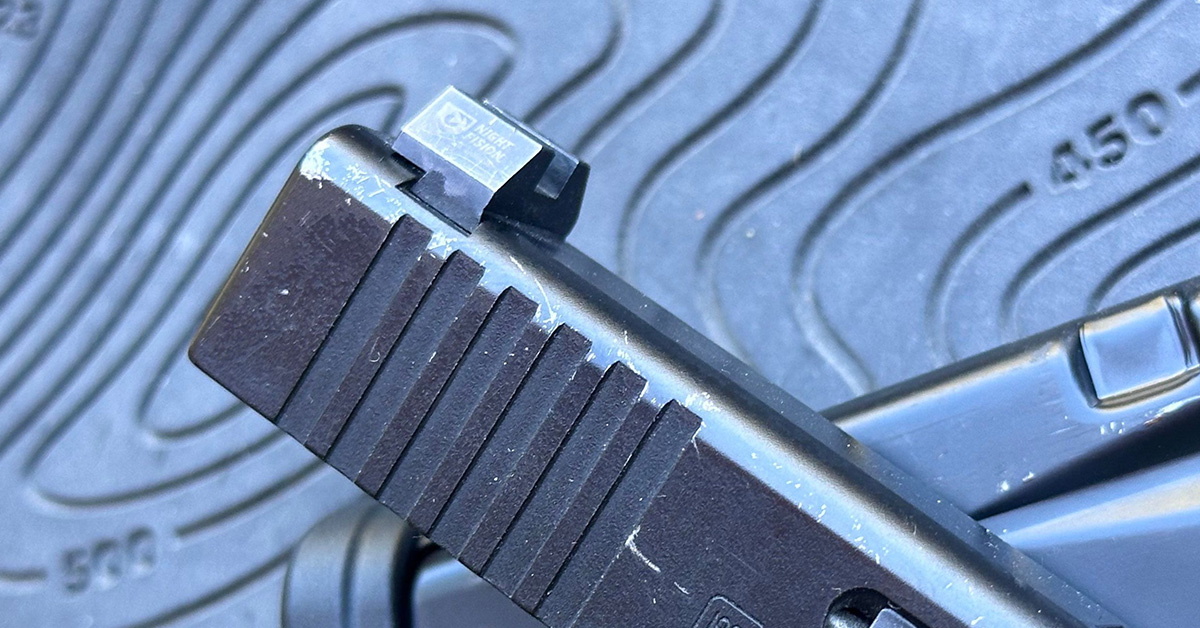
Also, in the gear category, the rear sight needs to be steel and have a 90-degree edge for you to hook/catch on your belt, holster, et cetera. Sloped or “snag-free” sights are a no-go at this station. If you have an RDS/PMO mounted to the slide, those will work as well.
The small plastic sights that come on some pistols are also a “no-go.”
Methodology and Training
If you have never trained or practiced with your off-hand because your groups aren’t “tight” or you feel uncoordinated, it is going to take some time to feel comfortable doing so. Fear not…it will come with dedicated effort.
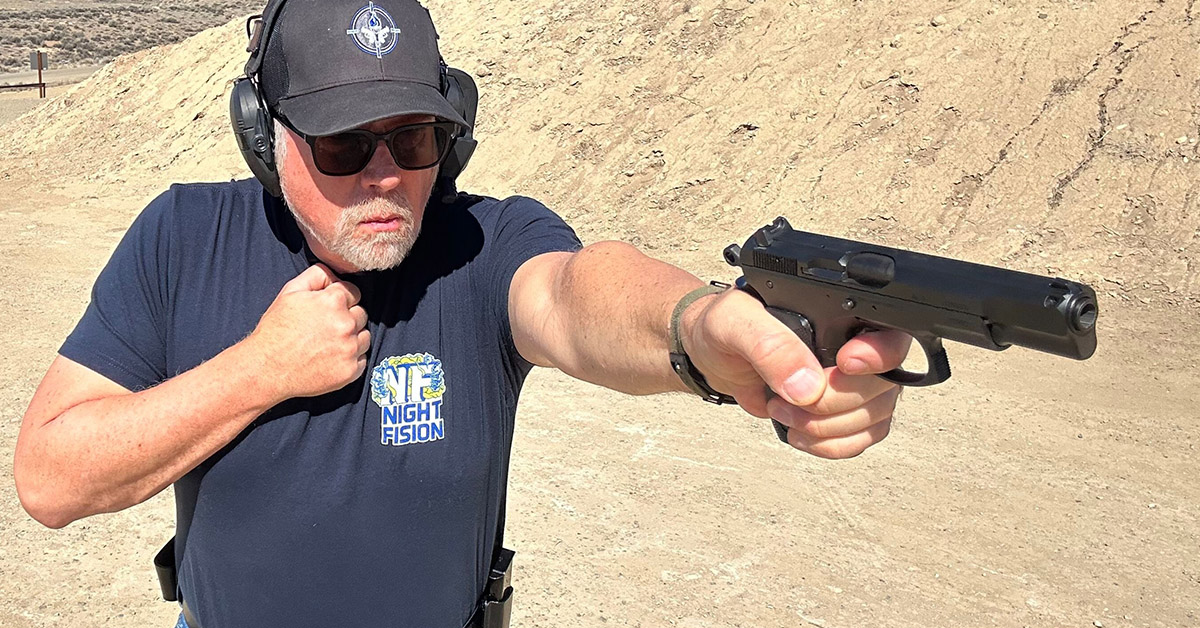
The first thing to address is your dominant eye. If you have a dominant right eye, but find yourself required to use your left hand, lining up the front sight with your strong eye is as simple as giving the pistol a slight cant to the right, about 30 to 45 degrees. Don’t fret about lining up the rear; just put your focus on the front and your built-in center fixation bias will ensure that the front is lined up properly in the rear.
Take the time to work on a purposeful and deliberate trigger press. If your trigger press looks like you are having a Grand Mal seizure, none of the rest matters. More good news…you can work on improving your non-dominant hand trigger press by deliberate and purposeful dry fire. When you dry-fire, put your focus on the front sight. The goal is for the front sight to barely move when the striker-releases/hammer drops.
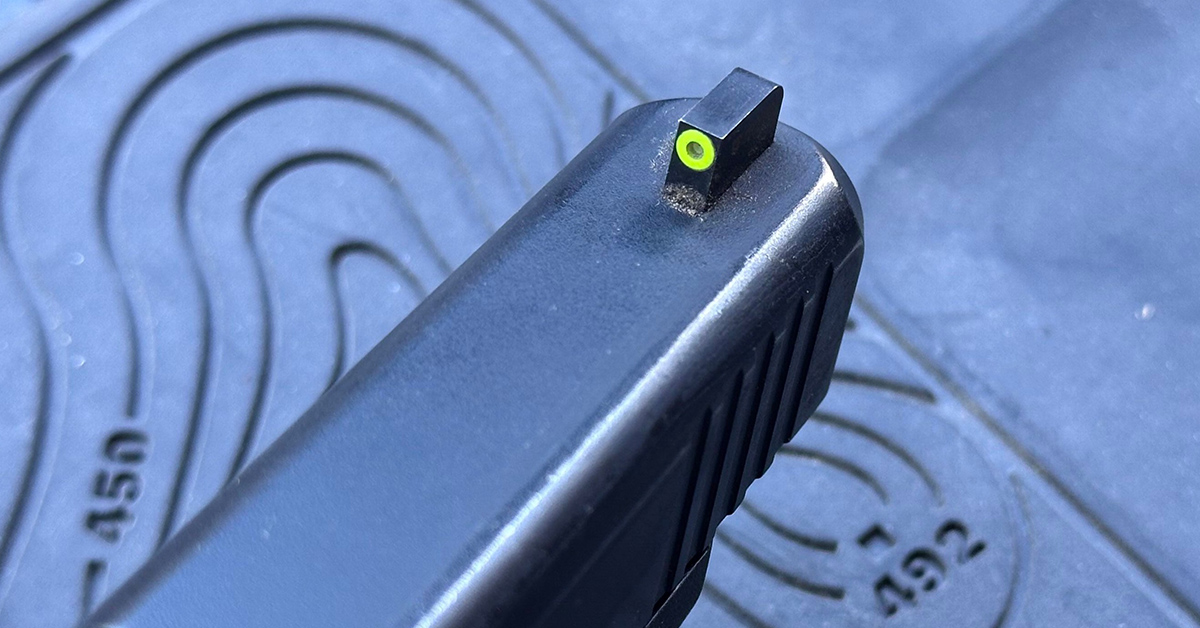
If you find your shots going all over the place, you need to get back to that perfect trigger press. A trick to ensure that it is so is to put your mental focus on that front sight and then begin the trigger press motion. If you are doing it right, the gun will fire as a bit of a surprise. The mantra that we teach is “Let the gun fire. Don’t force it to fire.”
Don’t expect perfect results in one day or even a week. The purpose is to see/feel continuous improvement as time progresses. Speaking of time, for the love of all that is holy, throw the shot timer in the garbage can.
Colonel Charlie Beckwith, the founder of Delta Force, addressed the desire to go fast in his book Delta Force. While Delta was training for the Iranian hostage rescue mission, Col. Beckwith noticed the tendency of the men to put speed ahead of skill and he said the following:
Speed for its own sake is the worst thing we can do. The object is to work on method. It’ll be done faster when it is done methodically.
Loading, Loading Again, and Stoppages
Regarding loading and then loading again, if the gun runs dry, there are a few ways to practice this.
First, we would suggest that once your gun has been loaded properly for self-defense/EDC, that you resist the urge to unload it every time you go to bed. If you have kids, figure out a secure storage option. If, for some reason, you do find yourself continuously loading and unloading, you are going to have to replace the top round often or risk a bullet set-back situation and a first shot stoppage.
As for the issue of loading, when the magazine runs dry, there are three thoughts on the topic.
First, we need to secure the pistol in some fashion in order to find another magazine with our one good hand. In the police academy, they taught us to stick the pistol into our open duty holster, jam a fresh mag in, and pull back the slide with our belt. That worked fine for large duty holsters; however, if you are carrying concealed, particularly with some type of IWB or AIWB holster, either your cover garment is going to fall down over the holster after you draw or it is still going to be a chore to get the gun back in the holster under stress.
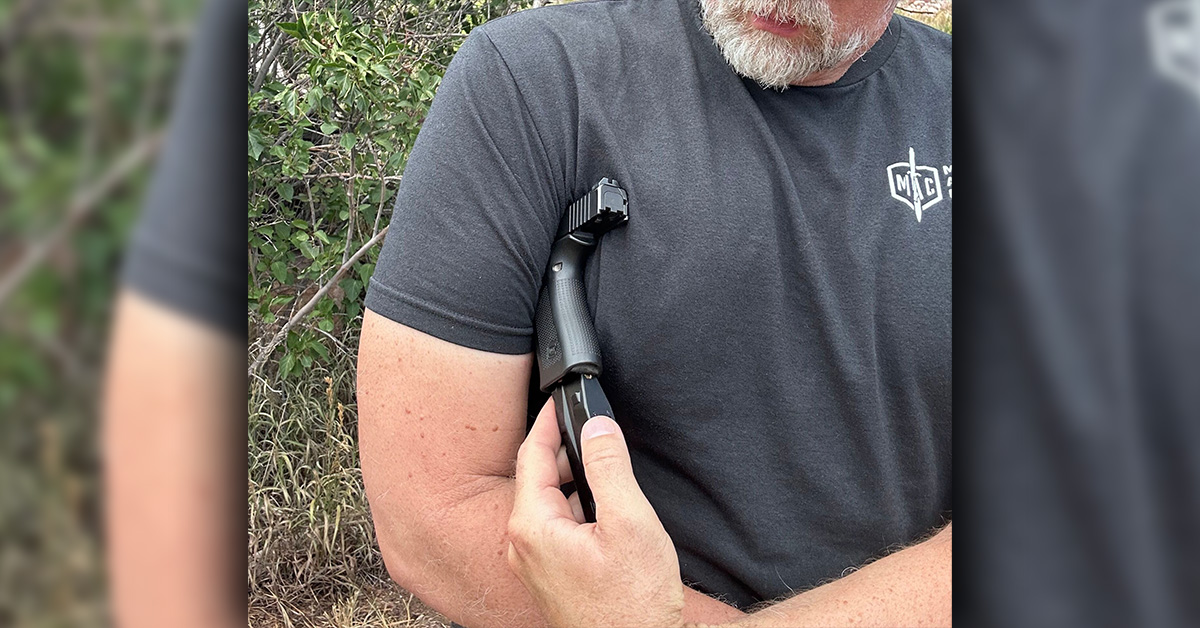
For concealed carry, there are two preferred methods for securing the pistol for reloading: trapped under the opposite arm against the chest if that arm has the strength, or dropping to a kneeling position and pinching the pistol between the calf and quad in the back of the knee.
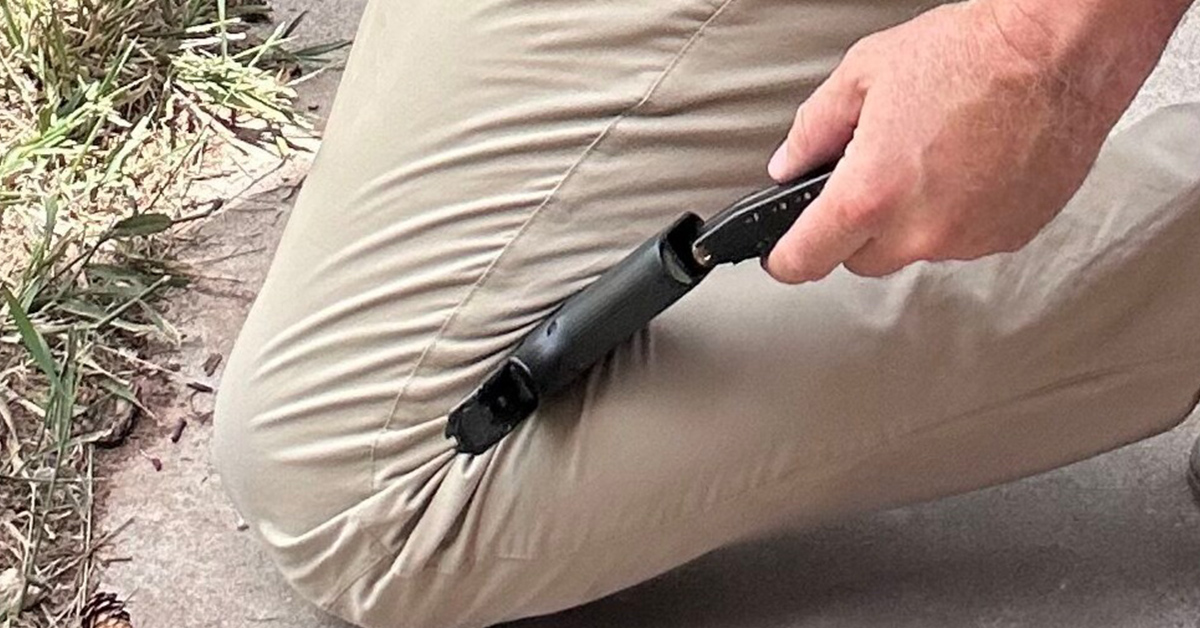
Naturally, for the reloading process, step one is to drop the empty magazine and let it fall away. Going back to hardware, be sure your pistol has “drop-free” magazines. Your extra/spare mag is logically going to be on the same side as your pistol since you are down to one hand.
Jam the magazine into the pistol and then retrieve it with your good hand. Remember my advice to disregard the slide lock? Step One: tap the base of the magazine on your hip to ensure it is fully seated. Step Two: roll the gun over and hook the rear sight on your belt, waistband, holster, or whatever gives you some resistance. Push down hard against the belt to run the slide back to full spring compression. Step Three: Keep fighting if you need to do so.
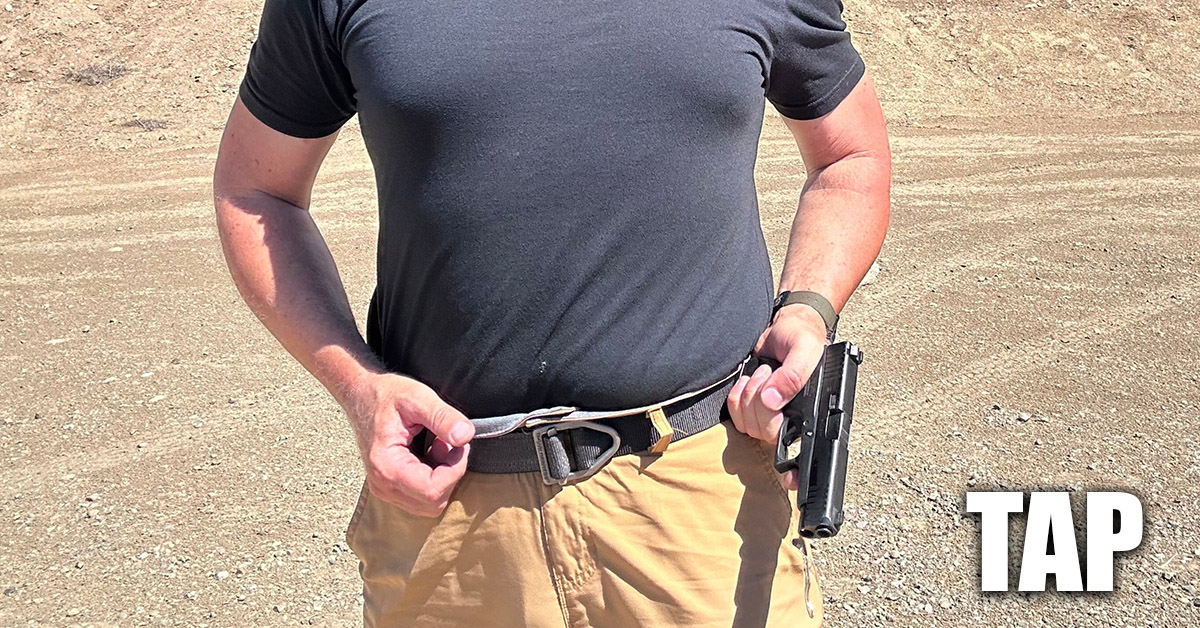
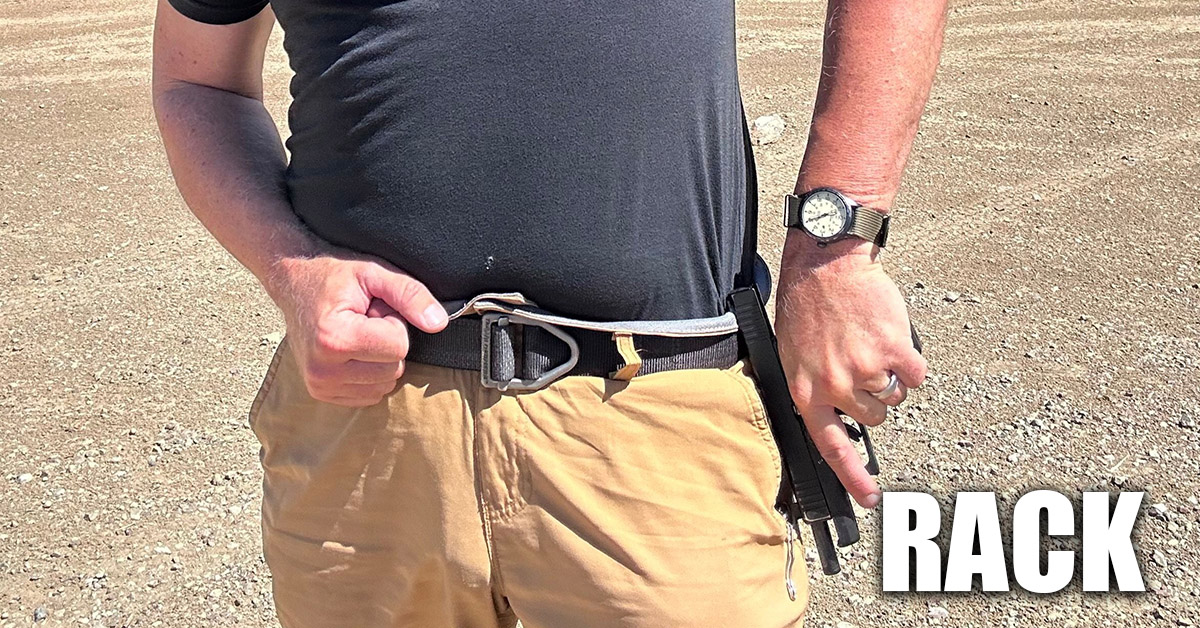
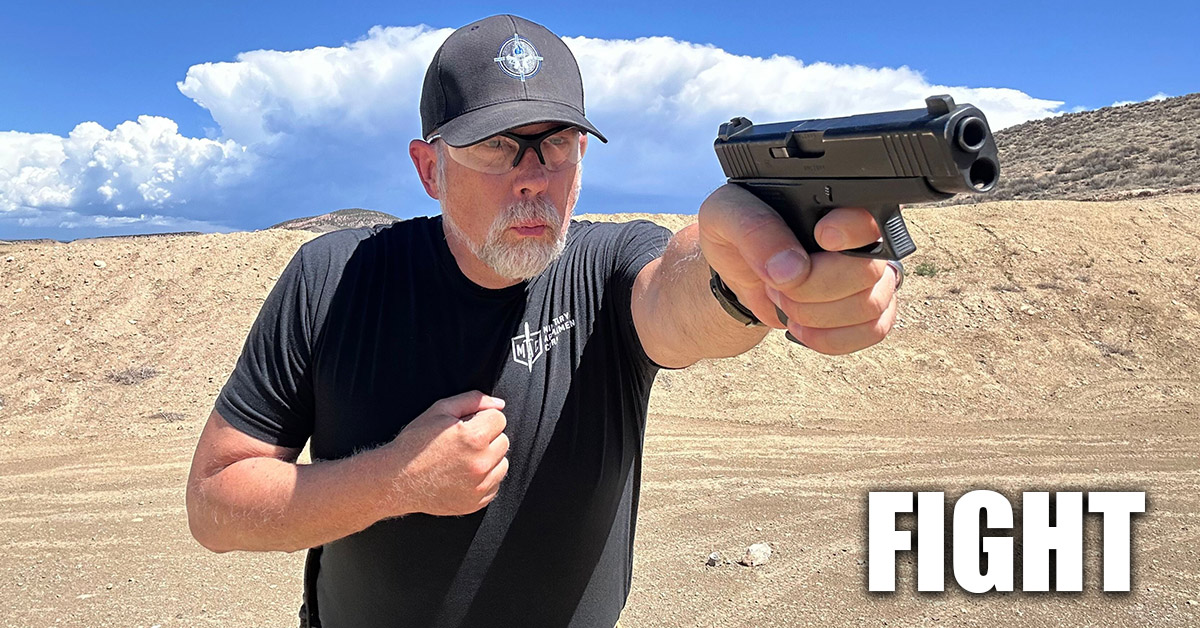
The great thing about mastering the one-handed reload procedure addressed above is that the basic movements — tap, rack, fight — are identical in the event that you get a Type 1 or Type 2 stoppage. If you are shooting and the gun stops making noise unexpectedly, take a big step off the X, tap the mag base on your hip, and pull back the slide using your belt. The more you execute the tap/rack maneuver during your loading process, the better at it you will become, and that physical motion will be there when you need to clear a stoppage.
Parting Thoughts
Whether you practice one-handed pistol shooting and operation because you are physically down to one working hand or you are training so as to deal with a temporary injury to either your dominant or non-dominant hand, such is a worthwhile form of training and practice.
Shooting with only one hand helps to increase your physical coordination, which will make your two-hand shooting better. My current suggestion to graduates from Student of the Gun University is to make a habit of dividing practice sessions in thirds; ⅓ two-handed, ⅓ right, and ⅓ left.
I genuinely hope you found this helpful.