Enclosed emitter red dots may not be the sleekest PMO option, but with compact models such as the new Steiner MPS-C, they may be the best option for today’s concealed carry practitioners
by Rob Reaser
There’s no question that enclosed emitter red dot sights have muscled their way into the pistol-mounted optic (PMO) world. And to that I say, “Hoorah!”
Sure, even the most compact among their ranks are still bulkier than conventional compact and micro-compact PMOs, but that line of demarcation is ever shrinking. What you give up, though, with marginally larger dimensions and a little more weight is justifiably negated, in my opinion, by what you gain with an enclosed emitter design. The emitter is fully protected inside the sight housing, meaning that debris and muck are easily dispatched if they get onto the lenses and the emitter is protected from damage by the enclosed chassis. The overall construction of the enclosed emitter design also tends to be more robust than that of open emitters, making them ideal for hard service use.
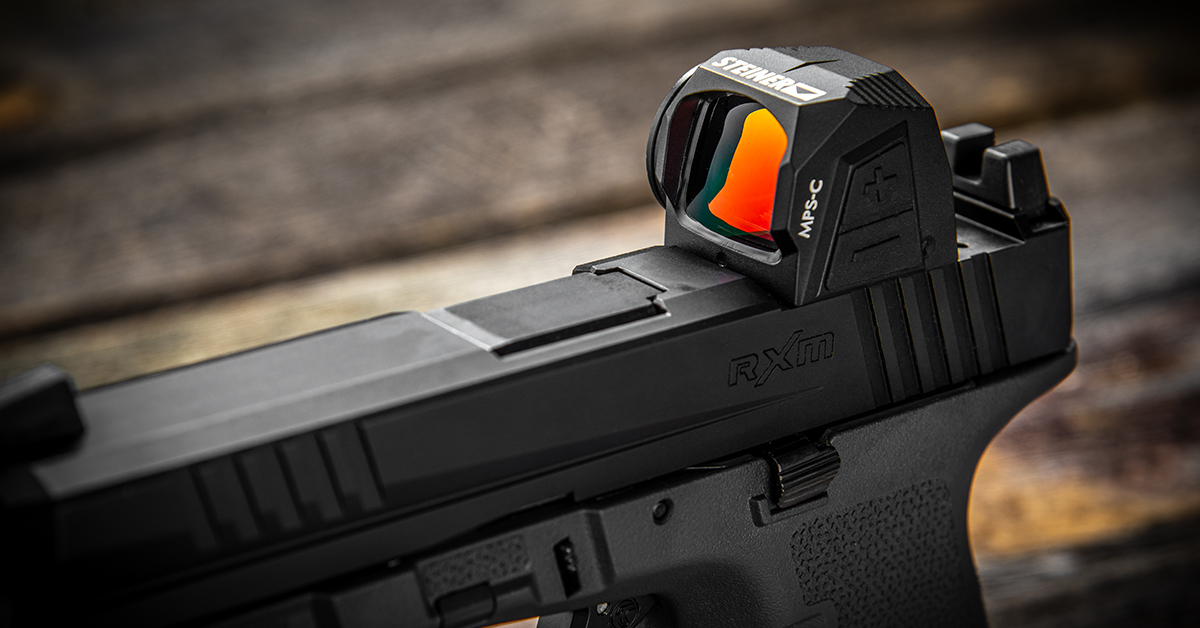
Now, we are watching enclosed PMOs evolve into even more compact forms, the latest of which is the newly released MPS-C from Steiner.
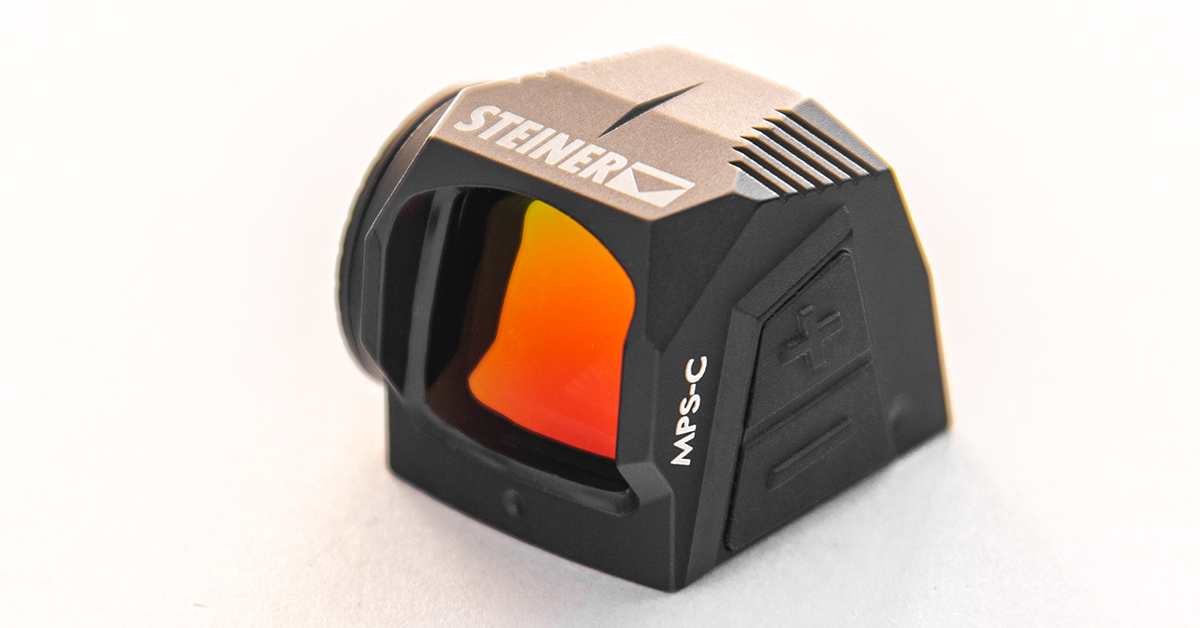
Coming in at a L/W/H of 1.46×1.27×1.08 inches, the MPS-C is a tidy unit perfectly suited for concealed carry pistols. It boasts smaller overall dimensions than enclosed emitter pistol models from Trijicon, Aimpoint, and Vortex. Holosun‘s EPS and SCS models are slightly tighter, but only in width and height.
- Holosun SCS-Carry-GR: 1.6×1.0x0.95
- Holosun EPS-RD-MRS: 1.63×1.19×0.99
- Holosun EPS-Carry RD-MRS: 1.63×1.07×0.95
- Vortex Defender-CCW: 1.6×1.2×1.1
- Aimpoint COA: 1.8×1.1×1.2
- Trijicon RCR: 1.8×1.2×1.3
- Vortex Venom: 1.84×1.27×1.20
- Vortex Defender-ST: 1.8×1.3×1.20
- Aimpoint Acro: 1.9×1.3×1.2
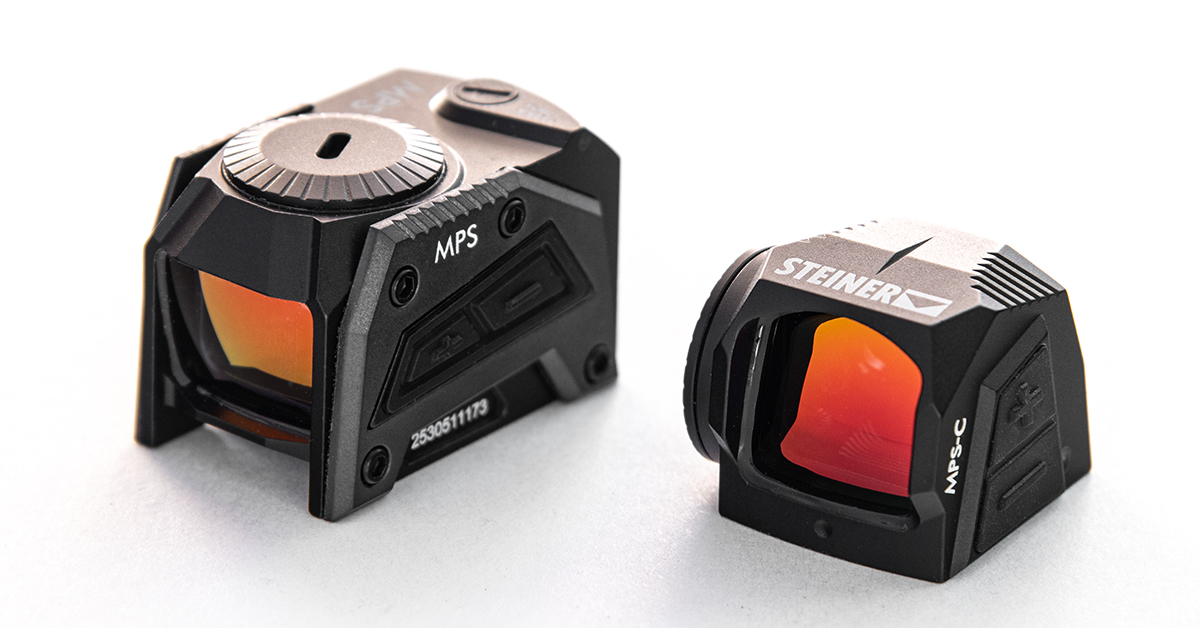
The MPS-C is the logical offspring of Steiner’s original MPS enclosed emitter sight, which we have previously reviewed and tested on several pistols as well as on SBRs. As you can see, the MPS-C is notably smaller in size than the MPS.
But here’s something interesting. Although the MPS is dimensionally larger than the MPS-C, the latter has a larger viewing environment (21×19 mm objective lens; 22.18 mm ocular lens) compared to the former (20×16 mm objective lens; 21×16 mm ocular lens).
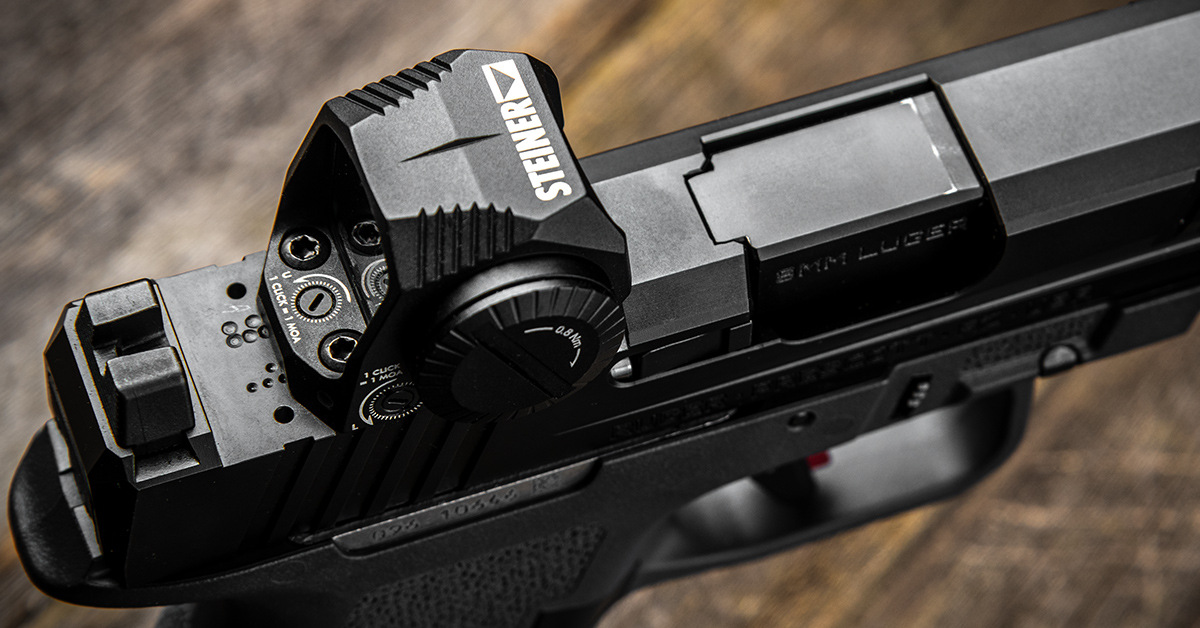
The MPS-C mounts to the RMS-C footprint. For testing, I used the Ruger RXM, which offers direct mounting compatibility with RMR, RMSc, and Delta Point Pro patterns.
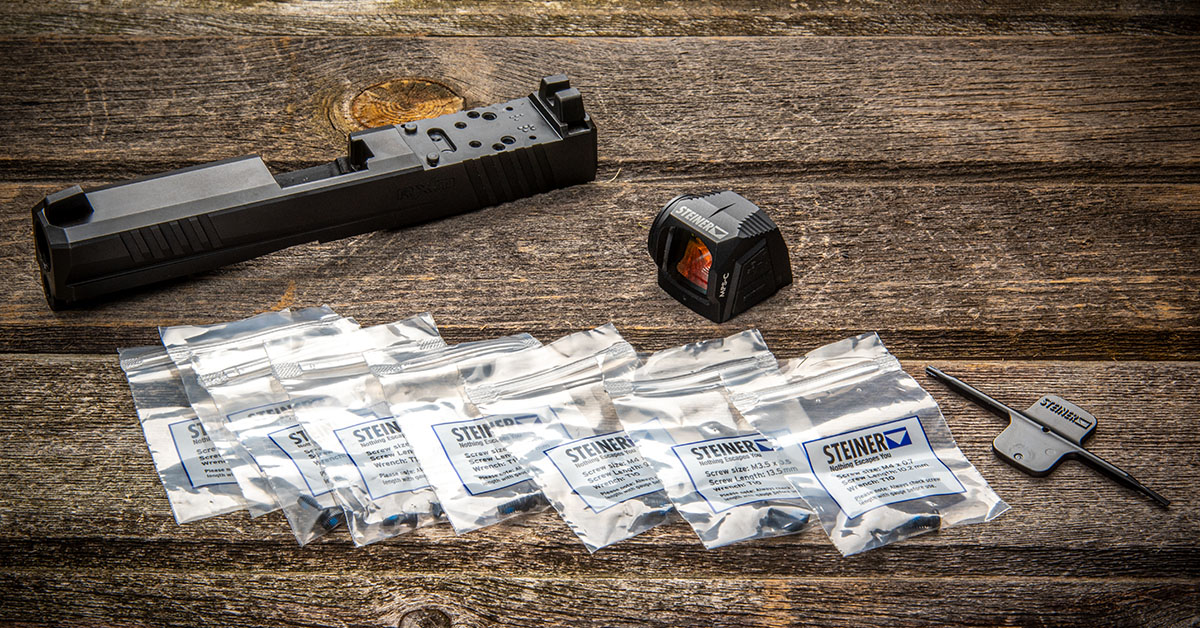
To maximize compatibility with a broad range of pistol slides, the optic comes with eight sets of mounting screws of different sizes. These cover several popular gun configurations across various manufacturers, such as Glock, Stoeger, Beretta, Springfield, Canik, Sig S&W, FN, Kimber, and HK.
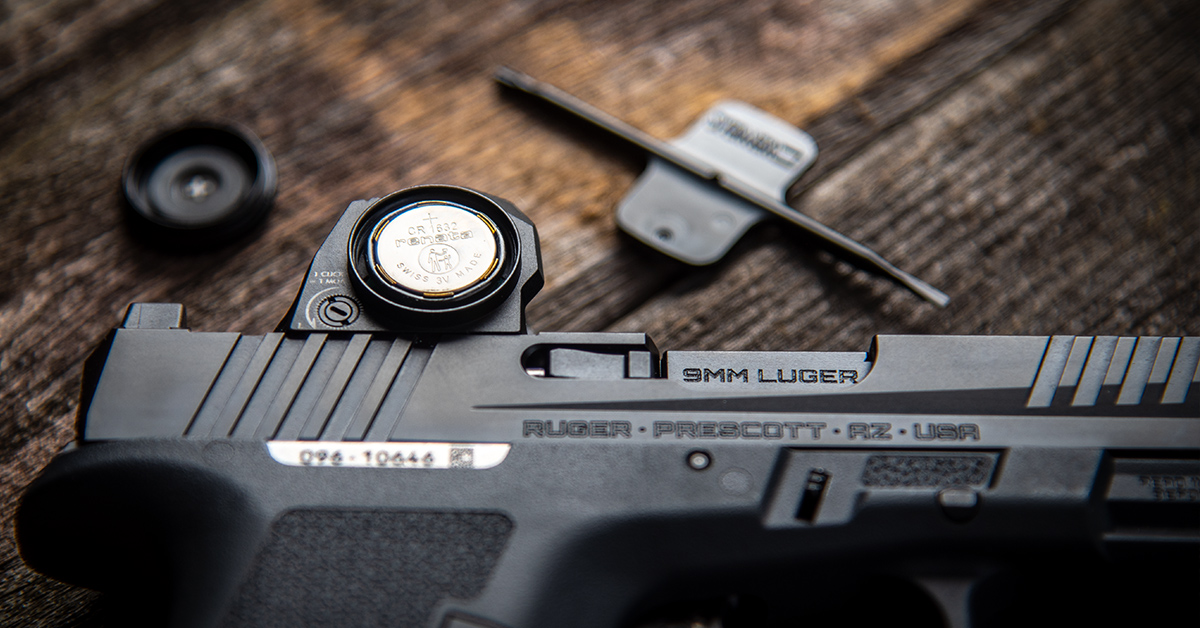
A side-mounted battery means you can change the battery without removing the optic from the slide. Aways a plus. Powered by a CR1632 battery, the MPS-C offers 10 day/night and 2 NV-compatible illumination settings.
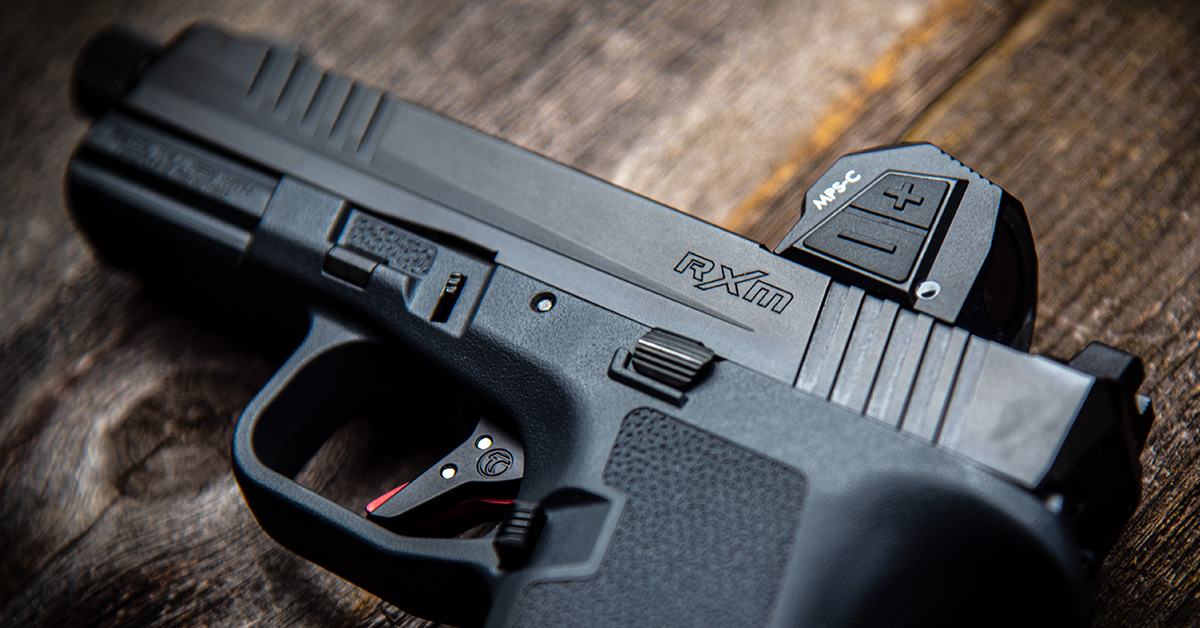
Illumination adjustment comes via soft-touch buttons on the left side of the housing. This is actually one of the standout features of the MPS-C because these buttons are BIG by most compact PMO standards. It makes running through the illumination settings fast and positive. No pushing with a fingernail to make adjustments. Similarly, it’s easy to depress both buttons simultaneously when disabling or enabling automatic shut-off or when applying the key lock.
The MPS-C is designed to turn off automatically after 13 hours; however, that doesn’t mean the unit keeps the red dot illuminated for that amount of time. After two minutes of no movement, the integrated motion sensor will shut off the emitter. It will, though, turn back on immediately when motion is detected. This allows for enhanced power savings and an extended battery life of up to 46,125 hours at the lowest setting. The MPS, by comparison, has a battery life of 13,000 hours at medium brightness.
After 13 hours, the motion sensor automatically turns off, and the unit must be manually turned back on by pressing the “+” button. There is also a built-in memory so that the reticle automatically powers up to the last illumination setting.
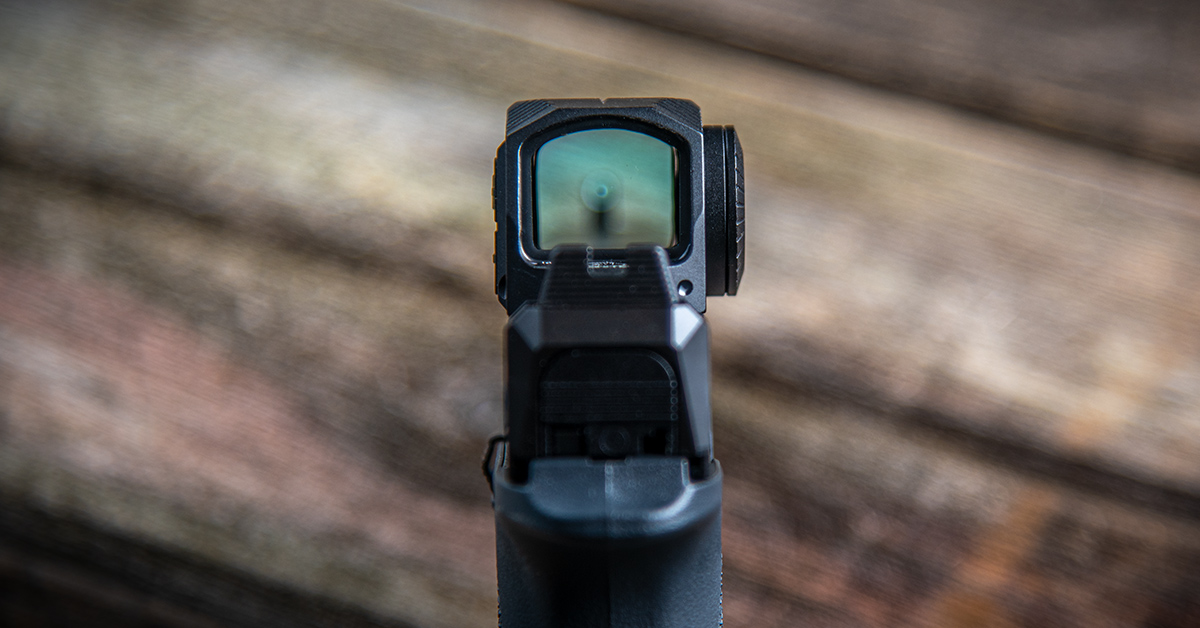
The MPS-C, in addition to its generous viewing environment, sits low in the slide, allowing for easy visibility of most factory open sights. That, too, is a major plus. On my Ruger RXM, the optic lets me see my front and rear factory sights with room to spare and delivers a perfect co-witness to the zeroed red dot.
Speaking of the red dot, Steiner engineered this one at 1.6 MOA (compared to 3.3 MOA for the MPS sight). That is a good bit smaller than most PMO reticles, which typically run 3-3.5 MOA. I like this smaller reticle because, despite its smaller size, it is in no way difficult to pick up in drills and it covers less of the target when the situation calls for more deliberate aiming at distance.

As I mentioned in the opening, enclosed emitter red dots tend to be bulkier in dimension than open red dots. Yet with the current crop of compact enclosed emitter models like the MPS-C, you’ll see no effectual difference between the two in normal EDC/CCW applications.
For my evaluation, I carried the MPS-C and Ruger RXM combo in Galco’s standout Concealable 2.0 belt holster with the optic cut.
I didn’t even know it was there.
Steiner MPS-C Specifications
- Magnification: 1x
- Footprint: RMS-C
- Emitter Type: enclosed
- Reticle: 1.6 MOA red LED dot
- Brightness: 12 levels (10 day/night, 2 NV compatible)
- Weight: 1.13 oz
- Dimensions: 1.46 x 1.27 x 1.08 in
- Window Size: 21×19 mm (objective); 22.18 mm (ocular)
- Eye Relief: unlimited
- Housing: hard-anodized aluminum (Class III)
- Adjustment (elevation & windage): 50 MOA
- Battery: CR1632
- Battery Life: up to 46,125 hours (lowest setting)
- Additional Features: shake-awake technology
- MSRP: $574.99