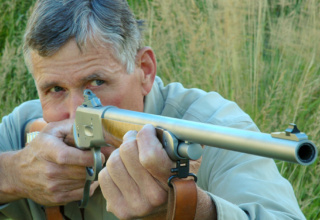
Established in 1995 but with roots going back to 1526, Beretta Holding heads one of the oldest companies in the world and is the largest firearms group on the planet. We talked to President and CEO Dott. Pietro Gussalli Beretta to learn more about the company behind some of the biggest names in the hunting and shooting sports segments.
by Rob Reaser
[EDITOR’S NOTE: Since publication of this article, Ruger and Beretta Holding S.A. have announced a strategic cooperation agreement. Refer to the press release at the end of this article for details.]
While most of our readers — and firearms enthusiasts and consumers in general — maintain “condition yellow” (to borrow from Col. Jeff Cooper’s color code awareness system) regarding new products and technologies coming to market, few invest much time being concerned with the higher-level goings-on across the firearms industry. A couple decades prior, major moves in the shooting and hunting segments — particularly buyouts and acquisitions — were big news.
Heads popped up like a coyote sneaking into a prairie dog town. We wanted to know who was doing what, and how it might impact us.
Today, not so much.
We’ve practically become numb to larger companies and investment groups purchasing smaller brands. It’s just the way it is, so we are relatively immune to the shock of seeing a favorite brand being folded into a conglomerate. We prepare, with a shrug and a sigh, for the nature and soul of that cherished brand to diminish under the thumb of “corporate efficiencies.” It has happened too often for us not to be skeptical; however, sometimes, these transfers of ownership deliver benefits for the consumer and even result in saving the brand from disappearing altogether.
Some corporate tremors, though, penetrate deeply and are felt widely. This is especially true for us as Americans, whose identities are securely pinned to our Constitutional guarantee of personal and national defense through the individual ownership and use of firearms. The patriots among us balk at the slightest notion of anything that might potentially disturb that right or that could impact in negative fashion the treasured, heritage brands that support our passionate lifestyles.
The most recent such seismic event occurred in 2024, when the Prague-based Czechoslovak Group sought to acquire Vista Outdoors’ Kinetic Group, which held several legacy American ammunition brands, including big names like Federal, Remington, CCI, Speer, and Hevi-Shot. The contentious boardroom wrangling and global/domestic political maneuvering leading up to this acquisition had the shooting sports industry whirling with uncertainty, questioning of motives, and no small amount of concern (which we reported on) as to what would become of these dependable brands under non-US ownership.
To date, all the handwringing and pearl-clutching by some have been for naught. These brands have stayed “American” and American employment continues in their manufacture.
Now, if you pay any attention to the latest industry buzz, you know that we have another seismic event currently underway. This time, the titan clash is between the publicly traded Sturm, Ruger & Co. Inc., a respected 77-year-old American firearm manufacturer and owner of the Marlin and Glenfield firearm brands, and Beretta Holding S.A., the privately-owned umbrella over which sits the 500-year-old Beretta firearm manufacturing concern along with eight other firearm brands (Benelli, Franchi, Sako, Tikka, Stoeger, Uberti, Chapuis Armes, and Holland & Holland), two optics manufacturers (Burris and Steiner), several ammunition and component manufacturers (including RWS, Norma, Geco, Rottweil, SwissP, and MFS), a suppressor manufacturer (Hausken), and the Serbal brand of hunting clothing.

What exactly is going on between Ruger and Beretta Holding? It can be somewhat confusing for those of us who are not steeped in the machinations and lingo of high-level finance and fiduciary responsibilities, but the abbreviated version is that Beretta Holding, which owns, as of this writing, 9.95 percent of Ruger’s outstanding common stock, is seeking to acquire an additional 20.05 percent of Ruger’s outstanding shares and to establish a Board presence. In essence, Beretta Holding desires to own 30% of Ruger stock (you can read more in this March 26, 2026 press release from our friends at The Outdoor Wire) and to seat four Beretta Holding nominees onto the Ruger Board.
On the other side of the fence, Ruger leadership is resisting this action. You can read their latest response to date in this press release posted March 10, 2026.
This is all quite interesting, but as an outlet focused on our readers and our shared interests, we’re not tossing a dog into this fight. We are as familiar with Ruger and the company’s sister brands, their products, and their representatives with whom we work just as we are familiar with the subsidiary companies under the Beretta Holding umbrella.
Friends and colleagues, all!
But one thing that this current scuffle has brought to the surface — for us, anyway — is Beretta Holding.

We have, for years, dealt with the various Beretta Holding entities…Benelli, Steiner, Franchi, Burris, Stoeger, Beretta, et cetera. And while we knew that each brand is ultimately owned and guided by the parent entity, Beretta Holding, it always seemed like we were dealing with individual companies, not parts of a larger conglomerate. And this is somewhat unique in our perspective because each brand under the Beretta Holding umbrella has always felt wholly independent, lacking the typical corporate constrictions and shared protocols we’ve become accustomed to with other large, multi-brand concerns.
In short, from a practical, day-to-day observation and our dealings with these brands, it’s as if Beretta Holding doesn’t even exist. Out of sight, out of mind, so to speak.
Why is this? Is it just our imagination?
This whole affair raises questions, so we decided to get answers…straight from Beretta Holding President and CEO Dott. Pietro Gussalli Beretta. Mr. Gussalli Beretta is a 15th-generation descendant of the Berettas who founded the firearm manufacturing operation in 1526. And, yes, Beretta celebrates its 500th year of operation this year, making it the oldest, continually operating firearm manufacturer in the world.
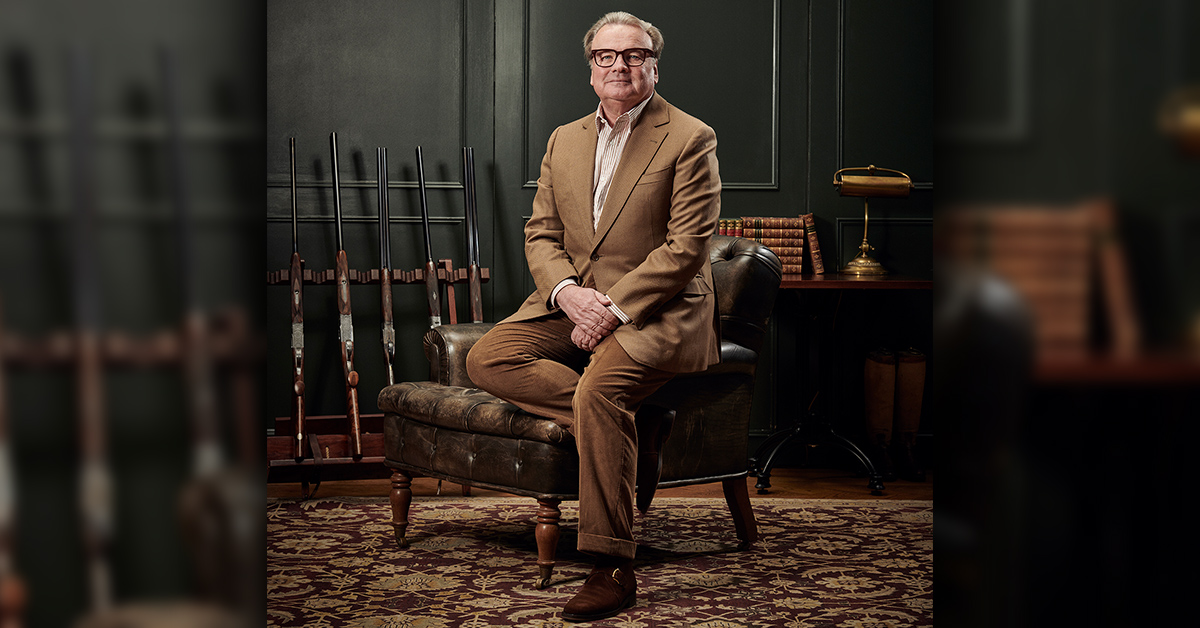
Interview with Pietro Gussalli Beretta, Beretta Holding President and CEO
Shoot ON: Thanks for taking a few moments of your time for this interview, Mr. Pietro Gussalli Beretta. As mentioned in the lead-up to this interview, from our perspective, Beretta Holding is essentially invisible to the consumer and even to many of us who work in the shooting sports and firearms industry. The individual brands seem extraordinarily independent and retain their distinctive personalities. That is something we don’t often see with brands inside a typical holding company. Is this by design or is it a reflection of Beretta Holding’s corporate philosophy and culture?
Pietro Gussalli Beretta: From the beginning, Beretta Holding’s role has been that of an industrial steward rather than a marketing umbrella.
Each of our brands was acquired or developed because it already possessed a strong identity, a distinct line of products, and a clear relationship with its customers. Preserving that identity is not only a sign of respect for the people who built those companies, but also a strategic choice. In our industry, authenticity matters. Hunters, sport shooters, and professionals quickly recognize when a brand loses its soul. We work very carefully to ensure that never happens.
At the holding level, our responsibility is to provide long‑term stability, capital, and strategic guidance. We invest in manufacturing excellence, research and development, and global expansion. Our companies operate independently. A Beretta shotgun, a Benelli semi‑automatic, or a Tikka rifle should never feel as if they were designed by the same companies, because they are not.
This approach is deeply rooted in our culture as a family‑owned group. Being privately held allows us to think in decades rather than quarters. We can afford patience, and we can afford diversity. Our philosophy is that strong brands are built from the inside out, by people who are close to the product and to the customer, not from the top down.
Shoot ON: Looking at Beretta Holding’s revenue breakdown from your 2024 Annual Report, Europe represents 50% of revenue, with North America delivering 39%. Further, 66% of overall revenue is from sales to the civilian and sport segments, with only 34% coming from military and law enforcement sales. One would think that, given the restrictions of private firearm ownership across Europe and the limited hunting opportunities on the continent (compared to North America) that these numbers would be reversed. Obviously, most Beretta Holding brands are not what we would call “price value” products here in the US but are firearms that hold an upper tier position and price point in the market. Is the civilian market in Europe bigger than what we Americans believe or are there other factors such as pricing that are limiting North American sales within your portfolio?
Pietro Gussalli Beretta: No matter the region, the key factor is diversification. Beretta Holding is not only firearms. Ammunition, optics, and apparel contribute meaningfully to our revenue.
A customer may purchase a firearm infrequently, but continues to invest regularly in ammunition, optics, and equipment.
Europe has a long‑established and resilient culture of hunting. Also, disciplines such as Olympic shooting and clay sports have deep roots across Italy, Germany, France, Nordics, the UK, and Central Europe. These customers are knowledgeable, demanding, and willing to invest in quality products designed to last decades.
In parallel, Europe is also an important market for governmental customers. Many European armed forces, police units, and institutional customers maintain long‑standing relationships with our Group, in firearms, ammunition, and optics.
In the United States, our strongest civilian sales are concentrated in sporting shotguns, high‑quality ammunition, and increasingly optics and accessories.
Most of our products are deliberately positioned above the entry‑level price segments, not because we are targeting exclusivity, but because of how they are engineered, manufactured, and supported. Our firearms are designed for long service lives, tight tolerances, and consistent performance over tens of thousands of rounds.
Our U.S. civilian business is strong, profitable, and strategically central to the Group. North America remains one of our most important markets, not only for revenue, but also for innovation and product development. Today, Beretta Holding operates nine companies – with 700 employees – in the United States, with manufacturing, R&D, and commercial activities across multiple states.
Shoot ON: The last several years have been challenging for firearms and ammunition manufacturers across the board. While everyone enjoyed high sales volumes during the early phase of the “Covid years,” supply chain disruptions soon followed. Most recently, U.S.-imposed tariffs have been problematic. How has Beretta Holding managed these challenges?
Pietro Gussalli Beretta: The past few years have tested the entire firearms and ammunition industry. Demand spiked during the early Covid period, followed quickly by supply‑chain disruptions, logistics constraints, and rising costs. More recently, U.S. tariffs have added further pressure.
We managed this environment by relying on industrial depth rather than short‑term fixes. Beretta Holding operates a diversified manufacturing and distribution network across the world, which allowed us to rebalance sourcing, adjust production flows, and avoid dependence on a single geography or supplier.

Shoot ON: What are the key differences between North American hunting and shooting sports consumers compared to our counterparts in Europe, and how do you approach these differences in your marketing strategies from a Beretta Holdings perspective?
Pietro Gussalli Beretta: In North America, hunting and shooting are activities with frequent use, faster product cycles, and a wide range of price points. Consumers are very performance‑driven and expect innovation, accessories, and practical features.
In Europe, participation is more regulated and tradition‑driven. Purchases are less frequent but more considered, with greater emphasis on craftsmanship, heritage, precision, and long‑term ownership.
From a Beretta Holding perspective, we do not apply a single global marketing model. We allow our brands to adapt locally. The goal is simple: speak differently to different cultures, but always deliver the same standards of quality, reliability, and long‑term value. Holland & Holland and Stoeger, for instance, are incomparable.

Shoot ON: How much collusion exists between Beretta Holding subsidiaries in terms of shared technology, design innovation, or other substantive resources? For example, could we see Benelli’s recently introduced A.I. barrel technology being shared among select Franchi, Beretta, and Stoeger models, or do you take the view that competition among brands is the best path to innovation? In other words, “iron sharpens iron.”
Pietro Gussalli Beretta: We focus on synergies, not standardization.
Each brand remains fully independent in how it designs, positions, and applies technologies. Nothing is imposed, and nothing is copied blindly. Brands decide what fits their customers and their identity.
Consider: the M9, carried by generations of American service members; Benelli shotguns trusted on ranges and in the field; Sako precision rifles built for serious hunters; and Stoeger pump and semi‑auto shotguns that define accessible reliability. These brands don’t compete with each other; they serve different shooters, by design.
However, Beretta Holding companies benefit from a shared global distribution network, which gives our brands efficient access to key markets while allowing them to maintain distinct relationships with dealers and customers at the local level.
Shoot ON: Let’s talk stewardship for a moment. Roughly two-thirds of Beretta Holding’s revenue comes from the civilian and sport segment compared to one-third coming from defense and law enforcement sales. Suffice to say, hunting firearms are a major, if not the major, revenue generator for your company. Given that Beretta Holding takes a long view of investment strategy, it would follow that the company or its subsidiaries take a similar view toward wildlife and habitat conservation, as well as hunter and shooting sports recruitment. What are some of the initiatives, both internationally and in the U.S., that Beretta Holding or its brands actively support?
Pietro Gussalli Beretta: As you note, a significant share of our revenue comes from civilian and sport shooting, with hunting firearms at the core of that ecosystem. That makes conservation, habitat protection, and the recruitment of future hunters and shooters not optional, but essential to the long‑term health of our industry.
Across the Group, our brands support a wide range of wildlife conservation initiatives. In the United States, this includes long‑standing partnerships with organizations such as Safari Club International Foundation, Ducks Unlimited, Rocky Mountain Elk Foundation, Wild Sheep Foundation, and the National Fish & Wildlife Foundation, as well as support for the National Shooting Sports Foundation and programs promoting safe, responsible participation.
Many of our brands also focus on connecting conservation with people – from youth engagement and hunter recruitment to supporting veterans and first responders. Examples include National Sporting Clays, Scholastic Clay Target Program and the Benelli Invitational with Freedom Hunters, support for organizations such as the Marine Raider Foundation and Rocky Mountain Heroes Foundation, and participation in conservation‑focused events like the Southeast Wildlife Expo.
Shoot ON: Since Beretta Holding, by itself, is relatively unknown to the US shooting sports consumer — despite its 31-year history — what should US consumers know about the company?
Pietro Gussalli Beretta: What U.S. consumers should know is that Beretta Holding is one of the quiet pillars of the American firearms industry. In the U.S. shotgun market, our brands are category leaders, holding top positions in pump-action shotguns, premium semi-automatic shotguns, and over/under shotguns.
For more than 30 years, we have invested directly in the U.S. – in manufacturing, jobs, distribution, and innovation, not just imported products. We operate nine companies in the United States and support a broad ecosystem serving hunters, sport shooters, and professional users. That matters in an industry shaped by cycles, regulation, and constant pressure.
Shoot ON: We want to thank you for your time, but we have one final question to wrap up this interview on a somewhat speculative note. As head of the world’s largest firearms group and as someone whose business it is to look far down the road, where do you see the hunting and shooting sports industry in, say, 10 to 20 years from now? Trends? Innovations?
Pietro Gussalli Beretta:
I usually avoid predicting the future. What I can say is that progress rarely comes from radical reinvention. It comes from solving very practical problems better than before. Take something like Benelli’s Advance Impact barrel technology: it’s not about changing what a shotgun is, but about extending effective range, improving consistency, and giving the shooter more confidence at distances that would have been considered marginal not long ago. That’s the kind of innovation that actually matters in the field.
Over the next 10 to 20 years, I expect better materials, better barrels, better ergonomics, smarter integration with optics and ammunition, and a strong focus on reliability and longevity.

*********
Ruger and Beretta Holding S.A. Announce Strategic Cooperation Agreement
Sturm, Ruger & Company, Inc. (NYSE-RGR) (“Ruger” or the “Company”) today announced that it has entered a Strategic Cooperation Agreement (“Agreement”) with Beretta Holding S.A. (“Beretta Holding”), the Company’s largest shareholder. The Agreement reflects a shared commitment to long-term value creation, constructive engagement, and stability for Ruger’s shareholders, employees, customers and industry partners.
Under the terms of the Agreement, Ruger is expected to allow Beretta Holding to increase its investment to up to 25% of the Company’s outstanding shares. The minimum partial tender offer price shall be $44.80 per share in cash – which represents a ~20% premium to the Company’s 60-day volume-weighted average share price prior to Beretta Holding’s tender offer announcement. Such tender offer has not yet commenced and will be subject to applicable regulatory approvals.
In connection with this increased investment, Beretta Holding will have the right to nominate up to two independent directors following the 2026 Annual Meeting of Shareholders and regulatory approval. At that time, the Company will temporarily expand the Board. The nominees will be subject to Ruger’s Nominating and Governance Committee process and qualification criteria.
As part of the agreement, Beretta Holding has committed to a three-year standstill, during which it will not, among other things, initiate or support any proxy contest or similar action. Over that period, Beretta Holding will also vote its shares in alignment with the Ruger Board’s recommendations on all matters (except in cases where leading independent proxy advisory firms, ISS or Glass Lewis, issue an adverse recommendation or in certain extraordinary transactions not involving Beretta Holding).
Additionally, Beretta Holding has withdrawn its director nominations for the 2026 Annual Meeting of Shareholders and only Ruger Board-recommended candidates will be up for election at the meeting.
These provisions, together with other provisions in the Agreement, are designed to safeguard Ruger’s independence and stability while increasing alignment of Beretta Holding with all shareholder interests.
“This agreement is strategically valuable and will benefit all Ruger stakeholders,” said John Cosentino, Chairman of the Board of Ruger. “As a Board, our responsibility and duty is to act in the best interests of all shareholders. This agreement provides stability, avoids further expense and distraction, and creates a framework for productive engagement with Beretta Holding while preserving Ruger’s independence and governance standards.”
The Agreement is positive for Ruger and its shareholders and enables Ruger and Beretta Holding to explore avenues for commercial cooperation in a manner that complies with all applicable laws. Importantly, Ruger will remain an independent U.S. public company – preserving its brand, heritage and strategic direction – while benefiting from Beretta Holding’s admirable legacy and global industry leadership.
“We are pleased to have reached this Agreement with Ruger. This cooperation is fully aligned with the Group’s strategy to further strengthen our presence in the United States, a key market where we have been active for several decades, and it reflects our commitment to continued longterm development.” said Dott. Pietro Gussalli Beretta, Chairman and CEO of Beretta Holding. “We are eager to work with the Company toward our shared goal of strengthening execution and positioning Ruger for value creation.”