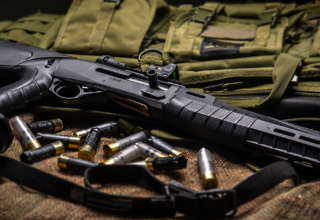
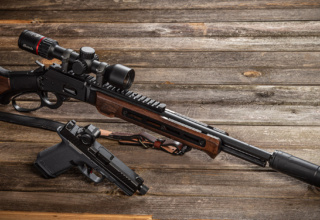
An easy-shooting, easily controlled shotgun is good for any application, but especially so when your life depends on that tool in your hands. Here are some considerations for dealing with recoil in a defensive shotgun.
by Bob Campbell
When most think of a shotgun, the overwhelming impression formed in their minds is of punishing recoil. That is only to be expected, especially if your exposure to shotgun recoil is limited and unpleasant.
Shotgun recoil cannot be eliminated but it may be re-directed and made more comfortable.
There are many areas of study in handling shotgun recoil. The proper stance — leaning into the shotgun — is first. If you don’t grip the shotgun properly and keep the stock hard into the shoulder while leaning into the shotgun, nothing else will help. But even so, shotguns kick and kick a lot and hard with defense loads and heavy field loads.
There are several solutions.
The Ammo
Depending on the role the shotgun fills, reducing the payload is an option. While reduced recoil loads with less velocity may still be effective, I don’t wish to reduce the payload itself.
Reduced recoil 12-gauge loads usually use 8 buckshot pellets and velocity reduction to improve control. Powder, payload, and velocity are well balanced. The pattern is often excellent. I use standard #00 buckshot for home and area defense. Some of these loads are effective to 25 yards or so. Federal’s Flitecontrol wad loads keep a coherent pattern and hit hard. In the majority of instances I have investigated, a single load of #00 buckshot is all that is needed. Just the same, we don’t go about armed with a single-shot shotgun.
I am not willing to compromise wound potential. Some deploy the ineffective mini shells in their shotguns. These aberrations are unreliable even in purpose-designed shotguns intended to feed these stubby shells. The pattern is sad compared to 2 ¾ inch shells.
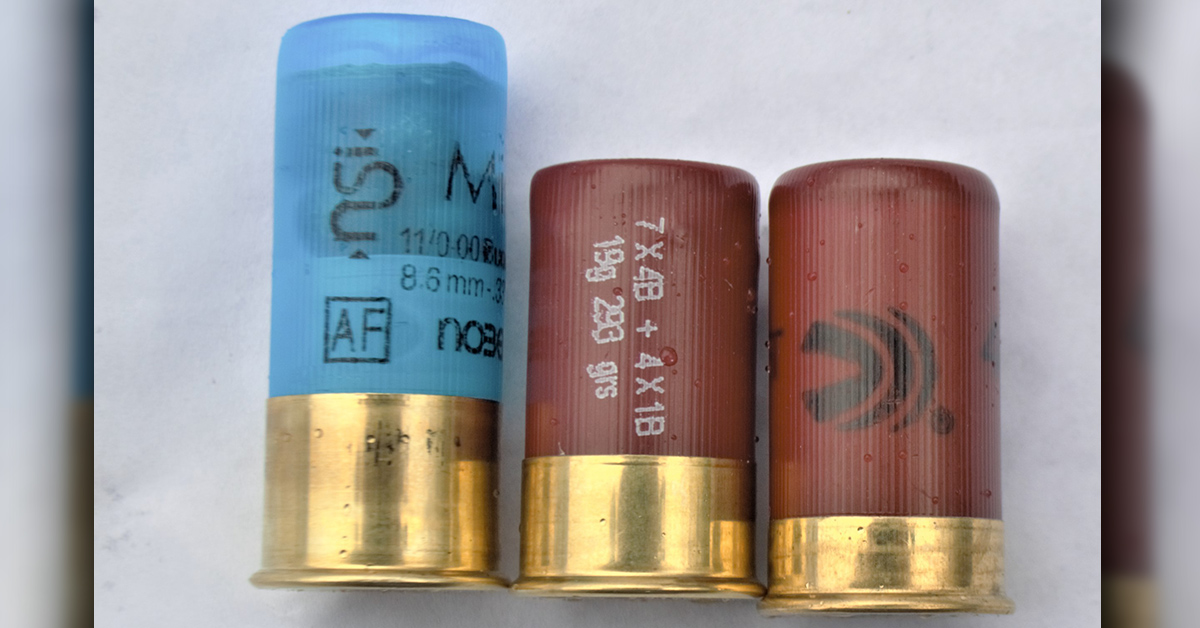
Those mini shells with a mixed load of different-size shot often throw the load all over the paper. Suffice to say, I have no use for them. And, of course, they will not operate effectively in any self-loading shotgun.
Before you take umbrage at my comments, do yourself a favor that may save your life. Take a box or two of mini shells and function test them in your shotgun. Then conduct a pattern test at ten yards. The serious-minded evaluator will realize these are not viable defense loads by any stretch. Cycling reliability is a concern unless you deploy a double-barrel single-shot shotgun — and even then, you have limited wound potential.
The primary advantage of a shotgun load is that it is the anatomical equivalent of an eight-car crash or 6.5 earthquake. Don’t neuter your advantage here.
The Shotgun
Shotguns are fired largely by feel. You smoothly track the target, squeeze the trigger, and fire.
A stock that fits the shoulder and body well is essential. While the weight of the shotgun is a factor in recoil, there is only so much leeway in shotgun weight. I don’t like the economy grade riot guns with thin stocks; they are a poor choice. A full-size stock with a decent recoil pad is ideal.
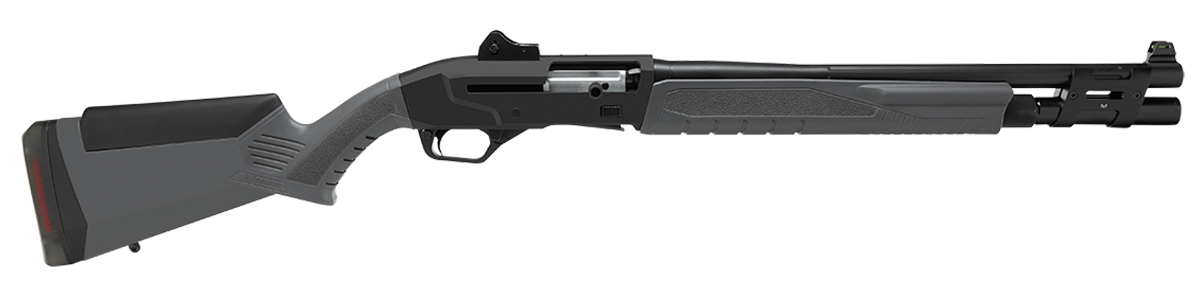
As an example, the Savage Renegauge comes from the factory with a gel-filled recoil pad. Some use AR- or AK-type shotguns — even bullpups. I may only conclude that they don’t understand shotguns.
I was taught to shoot shotguns by a hard man and a long-time instructor who, frankly, frightened everyone. He understood shotguns. These “alternate style” firearms are limited in usefulness. If you disagree, go shoot a 3-Gun match with your alternate shotgun and get back to me.
All this said, the shotgun kicks. It must, as it throws a heavy payload.
Let’s look at some things that may help in controlling recoil. And remember most of all: train hard! I have been involved in making sense of disaster scenes, and they are hypnotic when you are personally involved in the disaster. Time moves in a different frame of reference and only training counts for anything.
Gas-Operated Action
If you use a gas-operated shotgun, you are effectively adding a recoil-limiting device. The action soaks up a great deal of the recoil. Compared to a pump-action or single-action shotgun, the semi-auto shotgun shoots softer, helping to mitigate recoil flinch during practice and allowing faster follow-up shots for most shooters.
Stock Swap
Shotgun stocks are an interesting study. A single-shot .410 I owned for years — an Ithaca lever-action — kicked out of proportion for its weight. The stock angle was just not correct. It was bearable but sharper than a KelTec KSG .410. An older H&R 20-gauge with a simple LimbSaver recoil pad is a joy to fire and exhibits only modest recoil. I am in danger of waxing poetic over the Savage Renegauge stock, but it simply makes the shotgun a pleasure to fire — coupled with its gas system. But then some of us have a Mossberg 500 or Remington 870 we would love to use more if it kicked less. What can we do? Plenty…and the result is a huge upgrade in fit, function, and bling factor.
Let’s look at how a conventional shotgun stock works.
Basically, it is like getting a whack on the shoulder with a well-directed board delivering more than 2,000 pounds of energy behind it. Then someone decided to angle the board to take the brunt of hurt out of the equation and to put a rubber cushion on the part that contacts the shoulder.
Another guy feels sorry for you and adds a gel-filled pad. It isn’t a gentle push with a shotgun. It is a hard shove. The physics of action and reaction come into play, so an intelligent stock design makes a great difference.
A properly designed stock should mitigate recoil and at the same time increase practical accuracy with a good fit. We are getting into angles, the divine angle, or perfect equation, for recoil mitigation.
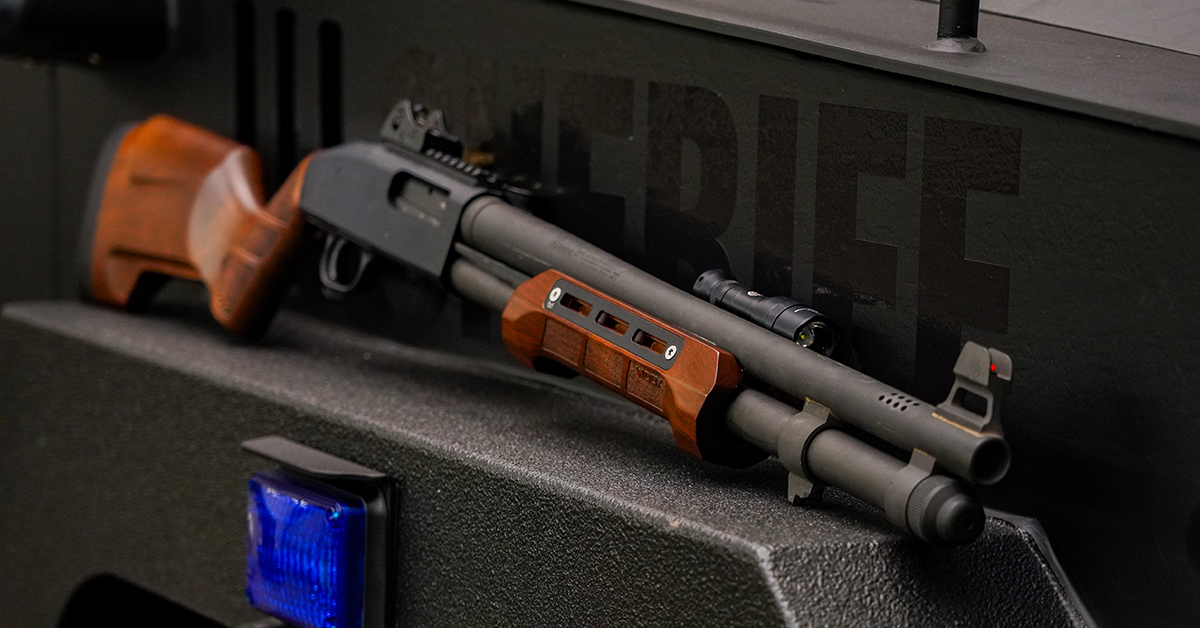
Consider the Woox stocks. These feature the finest high-grade American Walnut, and the lines and grain are gorgeous. But that is really the bonus. The Gladiatore stock features adjustable length-of-pull. This makes the stock useful for more body shapes and sizes. The stock features a special grip angle that is extremely efficient in controlling recoil. Rather than running straight to the rear, the stock re-directs recoil down a sideroad and back, which means less pain on the shoulder. The microcell recoil pad is efficient and, in the end, we have a great setup for reducing recoil.
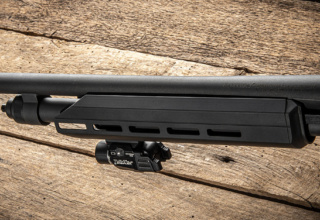
Notably, the butt stock is attached to the shotgun with an aluminum coupling. The forend isn’t as important in controlling recoil but offers a generous hand fit. The Woox forend features M-LOK rails for mounting a light. The Gladiatore is available for select Mossberg and Remington shotguns. My example has made a huge difference in the handling and comfort of a Mossberg 500. The Mossberg 500 is famously reliable and, with this stock, I can practice more often and find my times in addressing multiple targets somewhat better.
Stock Modification
The FalconStrike recoil reducer is derived from a mechanism originally intended to absorb recoil in heavy aircraft landing gear. Working on hydraulic principles, the FalconStrike recoil device is easily installed — but when ordering, be careful with your measurements and be certain to order the correct size. There is a good spread of sizes, and you will be able to fit the popular shotguns with this device.
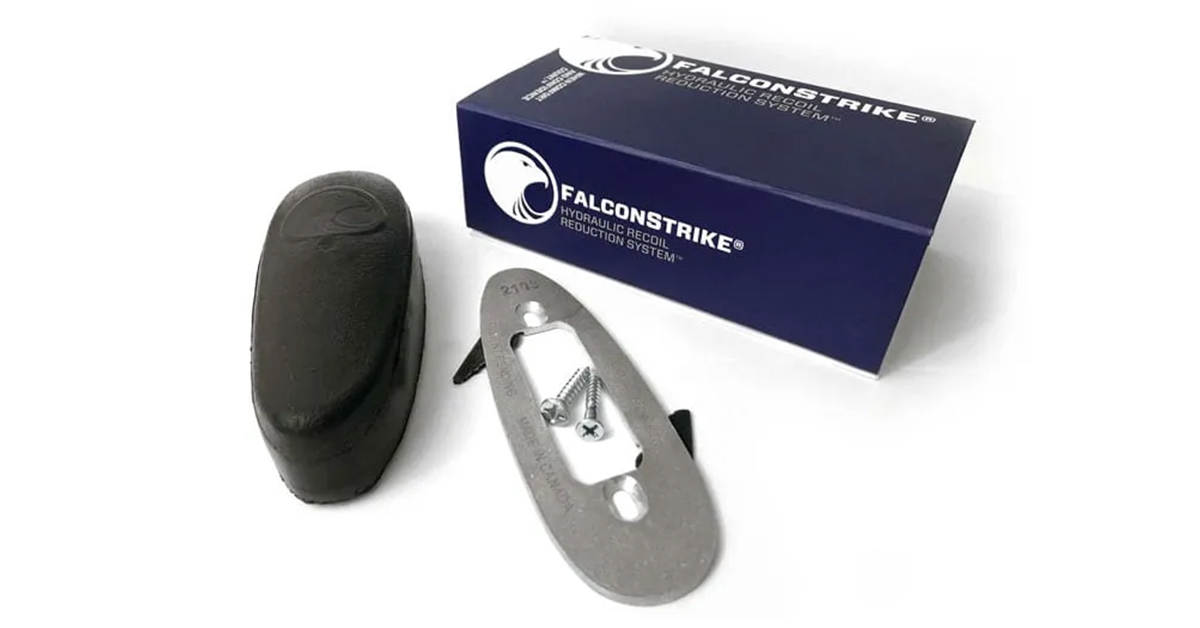
The conversion is simple. First, remove the existing butt plate or recoil pad. The FalconStrike unit’s butt plate is installed once you drill holes for the mounting screws. The rubber cover is rolled back over the hydraulic unit during installation. Locking tabs on the unit are spread away from the device before you press the butt plate in for a good fit. Be certain the positioning tabs are closed properly to lock the FalconStrike in place. Next, roll the rubber cover over the device. That’s it.
FalconStrike claims as much as 80-percent recoil reduction with this device. This type of thing is difficult to measure without instruments. I tried several shotguns with it and the level of recoil reduction is apparent — certainly 50-percent seems reasonable. With heavy loads the 80-percent figure may be accurate. The device works as designed and as claimed, and makes for an important tool in recoil reduction.
While I am not certain of the actual amount of recoil reduction, I am certain the device moves the shotgun from painful and a chore to fire to a pleasant shooter.
That is something.
Choke Tube Porting?
I prefer a full choke for personal defense shotguns. I like to center the load versus the bird hunter’s desire to catch the bird in a small part of a cloud of shot. Buckshot doesn’t always follow the same rules as other shot, but in general, a full choke tube will provide tighter groups.

I like the Avian X full choke tube. This is a ported tube. Choke tube porting provides less muzzle flip as a primary advantage. When firing this choke tube in the Woox-modified Mossberg, I found the shotgun to be even more comfortable.
The Big Picture
The value of the defensive shotgun boils down to the platform’s ability to deliver decisive terminal results. This, by nature, necessitates a sufficiently robust and proven load — generally #00 buckshot — that will boom and buck. Is it worth it? You better believe it.
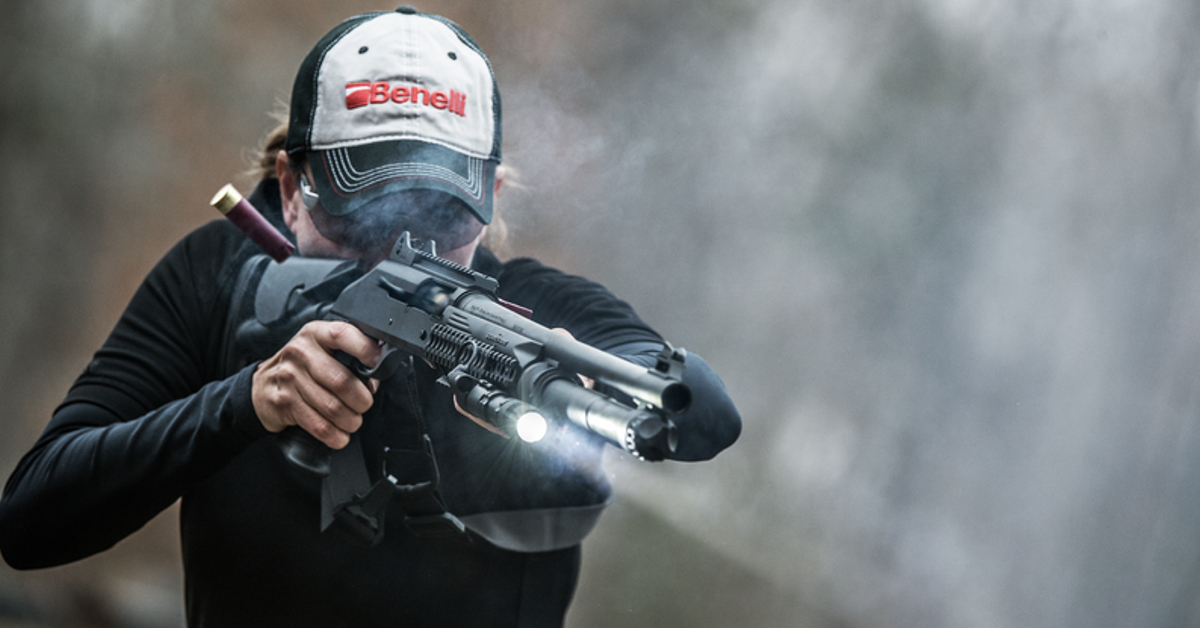
The key is to develop a defensive shotgun configuration that is comfortable for practice shooting and in martial scenarios (yes…like any gun, a defensive shotgun demands training and practice to be effective). You must be able to utilize lethal payloads that tend to punch back. Fortunately, careful consideration of the chosen shotgun and select modifications and adjustments such as those presented here can help minimize the challenges of shotgun deployment.