Released in 1976, adopted by the U.S. DoD in 1985, presented in two of Hollywood’s biggest action films, the Beretta 92 is still fan favorite after a 50-year run
by Paul G Markel
I was born in the late 1960s, raised in the ’70s and “came of age” in the ’80s. Although too young to truly remember the Vietnam War being played out on the nightly news, I do remember hearing the adults talk about it. Additionally, I can recall from elementary school age hearing and reading about the Cold War between the United States and the USSR. That time frame is where our story begins.
In 1975, for all intents and purposes, the entire modern world was affected by the Cold War in some form or fashion. Most of the nations in western Europe, to include Italy, were members of the North Atlantic Treaty Organization (NATO). The Soviet Union and the Warsaw Pact nations controlled eastern Europe, much of Asia, and were hell bent on spreading the wonders of worldwide communism. Stopping the Soviet, and by extension the Communist Chinese, expansion was NATO’s primary goal.
Of the many lessons from WWII, the NATO allied nations realized that having all different cartridges and calibers amongst allies was a huge logistical nightmare. Therefore, NATO came up with a Standardization Agreement, shortened to STANAG, in order to have commonality in training, communications equipment, field gear, and ammunition. There are actually numerous STANAGs. The one that concerns us here is STANAG 4090, officially approved for NATO in 1964, which established the 9mm Luger pistol cartridge as the 9x19mm NATO. The agreement assured two things. First, the 9mm Luger/Parabellum cartridge was not going anywhere, despite what some Americans might have thought, and, secondly, all the NATO allies were looking at their standard sidearms to determine if an upgrade was in order.
The United Kingdom, for instance, had the P-35 Hi-Power pistols in 9x19mm and were satisfied to keep them; however, during WWII, Italy issued numerous pistols to its army, primarily chambered in .380 ACP or .32 ACP.
After the war ended, Italy adopted the Beretta M1951 in 9mm Parabellum and, while better than their WWII sidearms, it had room for improvement. For instance, the M1951 pistol held either eight or ten rounds of 9mm, depending on the configuration, and it used a single-action trigger mechanism.
Beretta Model 92
In the 1970s, single-action semi-automatic pistols were viewed as antiquated — out-of-date, if you will — by the militaries of the world. What most firearms manufacturers were doing at that time was to try and come up with a worthy double-action-to-single-action pistol based upon the Walther P38 trigger design. While the P38 was a fine pistol, it did have a limited capacity of eight rounds. During the Cold War, every nation wanted small arms that held lots of ammunition.
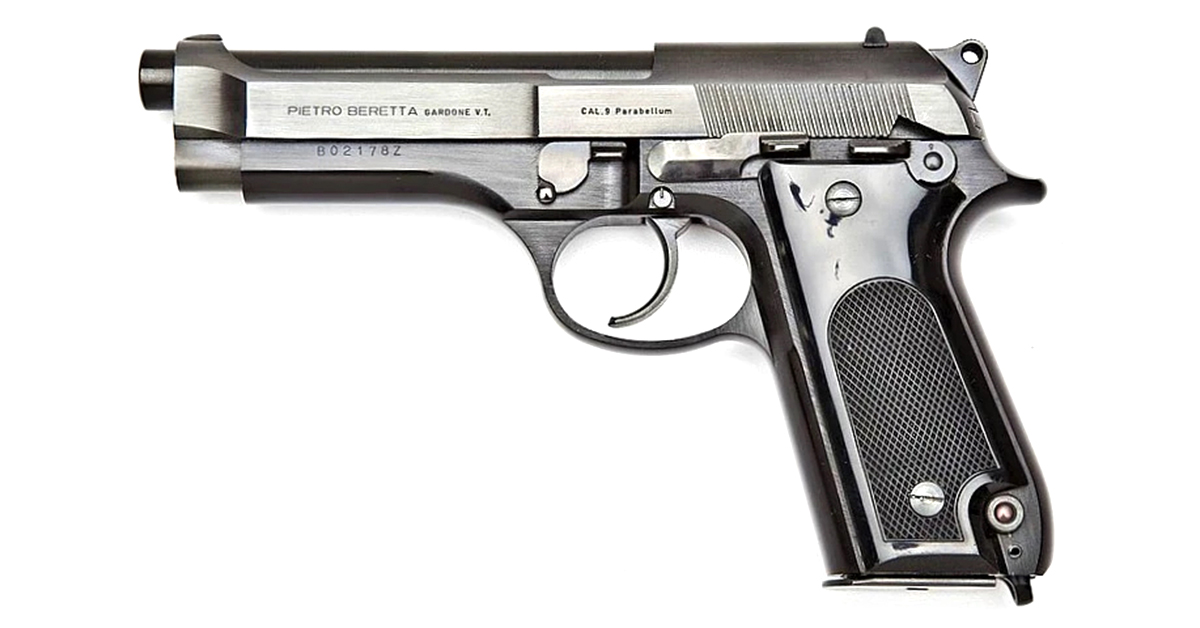
Beretta, founded in 1526, was and is the oldest firearms manufacturing company still in business today. The development of what would be the replacement for the M1951 took place in 1975 and the Beretta Model 92 pistol was put into full production and released to the public in 1976.
While the slide and barrel design on the M1951 and the Model 92 are nearly identical, there were many changes and upgrades. As mentioned, the goal for the new pistol was to adopt a DA/SA trigger design, which they did. Also, capacity was doubled with the use of a 15-round staggered, dual-column magazine. The first Model 92 had a frame-mounted safety lever in the spirit of the M1911A1 or the P35 Hi-Power, and the magazine release button was located at the base of the grip.
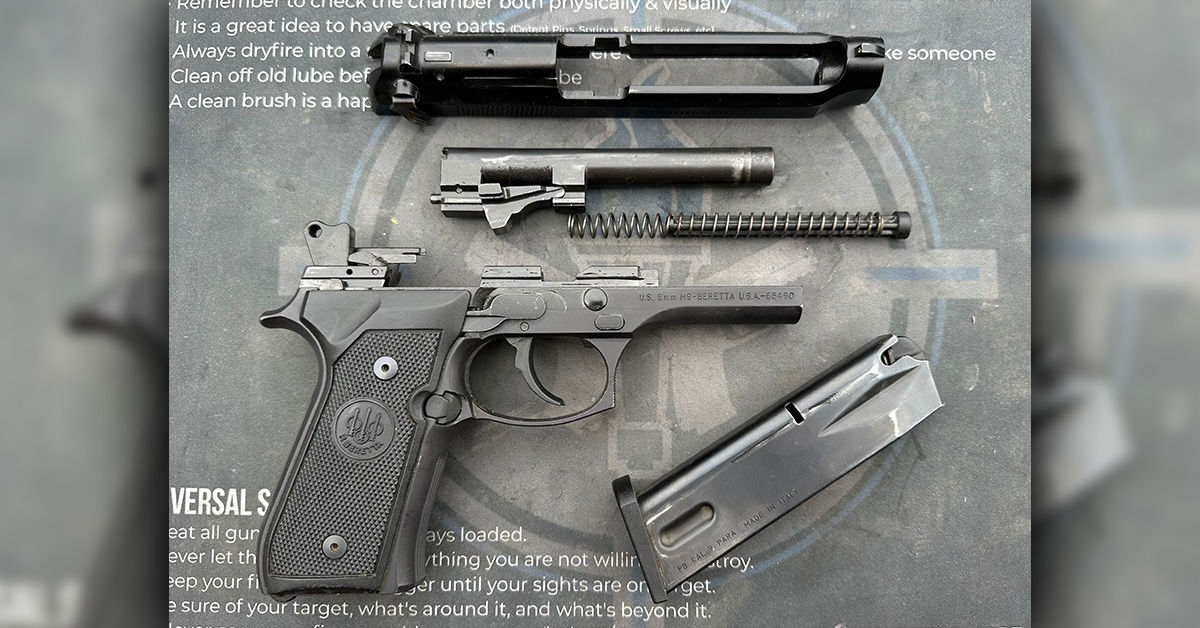
The Model 92S upgraded the pistol to a slide-mounted decocker/manual safety; however, it was the Model 92SB that moved the pistol into the configuration that most of us are familiar with today. The “SB” in 92SB stood for “safety block” — an internal firing pin safety block. The magazine release button was also moved to a more standard position, directly behind the trigger guard on the left side of the frame. Naturally, Italian law enforcement agencies and military branches began to adopt the new Model 92 pistol.
It was the Beretta Model 92SB that moved the Italian firearms maker into the US Army’s Joint Service Small Arms Program. This project was where the Army started looking for a permanent replacement for the aging M1911A1. The JSSAP specifications for the new pistols were:
- Chambered in 9mm NATO caliber
- Detachable magazine with capacity of at least 13 rounds
- Magazine catch that ejects magazine without the use of the second hand
- First round trigger pull to be double-action, follow-ups single-action
- Slide stop that locks the slide open when the magazine is empty
- Durability of 5000 rounds with no more than 8 malfunctions (stoppages)
- Safety System: thumb-safety system, ambidextrous; de-cocking device to safely lower a cocked hammer; firing pin block when the hammer is lowered
The Beretta 92 pistol was submitted and tested as the XM9. The use of “X” by the US Army in the name of small arms stands for “experimental.” Heckler & Koch, Steyr, SIG, Colt, Smith & Wesson, and Walther all submitted pistols to the JSSAP for evaluation.
M9 Beretta
On January 14, 1985, the US Department of Defense announced that Beretta was the winner of the JSSAP contest, and a five-year contract was awarded to the Italian arms maker. The American gun press, the gun culture, and old veterans went nuts. The active-duty military members, the vast majority of whom did not carry pistols, simply shrugged their shoulders and moved on with their lives.
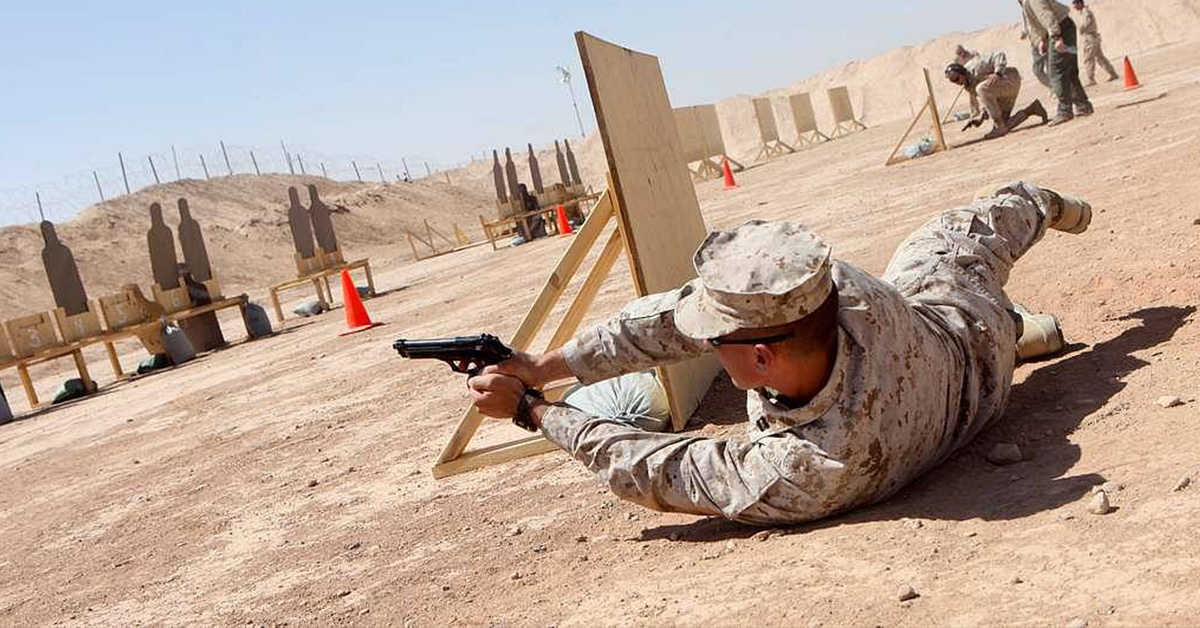
Naturally, the massive undertaking to replace the M1911A1 with the new M9 took some time. Years, actually. The rollout was incremental, with Tier 1 units getting their new guns first and a trickledown effect to the rest of the US military.
When I entered the US Marine Corps in 1987, the standard issue pistol was still the M1911A1. Arriving at my first permanent assignment, the Marine Detachment aboard the USS Forrestal, I carried the .45 ACP pistol on duty. It was not until sometime in late 1988, maybe early 1989, that my unit received its allotment of M9 pistols. We viewed them as modern and “cool,” especially compared to the ragged out .45s that we had.
California Love
It was not just the Italian and United States armies who embraced the Model 92. Out on the west coast of the United States, the Los Angeles Police Department started testing and evaluating the Model 92 during the same time as the US Army and officially adopted them in 1986. The Los Angeles County Sheriff’s Department officially adopted the Model 92 in 1988.
The specific model they chose was the 92F, with slight cosmetic differences from the 92SB but identical functionality.
The endorsement of the LAPD and LA County Sheriff quite naturally led Hollywood moviemakers to start inserting Beretta 92 pistols into their films. The two most effective Beretta 92 commercials came in the form of Lethal Weapon in 1987, with Mel Gibson’s character favoring the new pistol over his partner’s old wheelgun. That film was followed in 1988 by another movie set in Los Angeles, Die Hard, where the hero, once more, took on the bad guys with a Beretta pistol in hand. One can only imagine the number of Beretta 92 pistols purchased by Americans after those two movies came out.
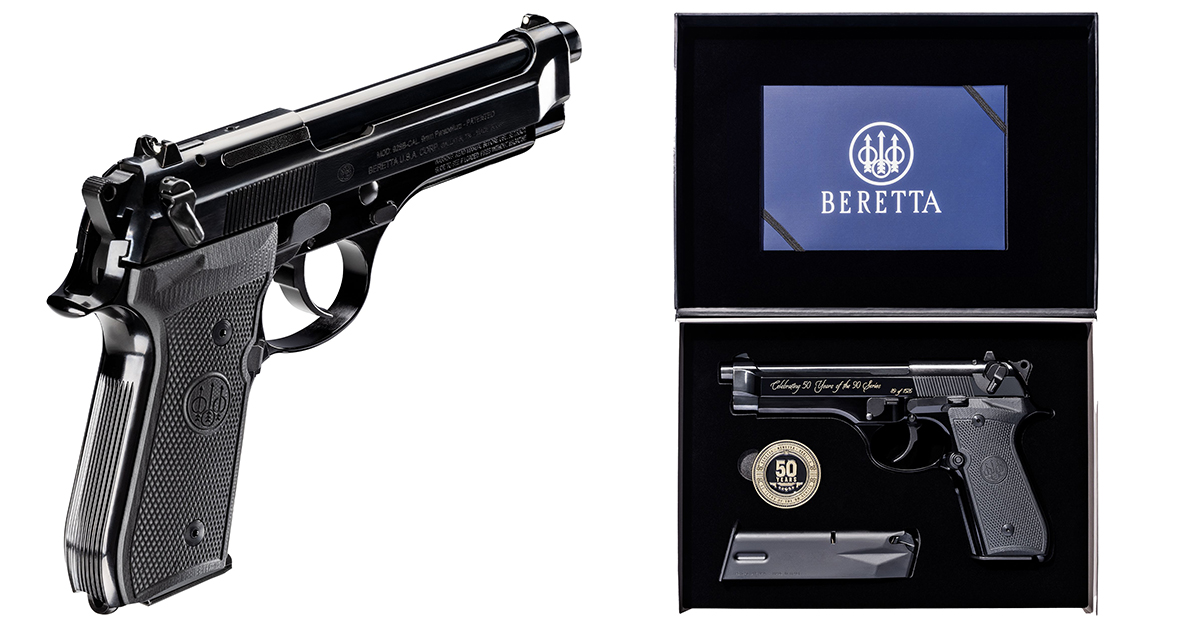
50th Anniversary Special Edition 92SB
In order to commemorate and celebrate the 50th birthday of the Model 92, Beretta has released a special, limited-edition 50th Anniversary Model 92SB. This pistol comes in a commemorative box with a limited-edition challenge coin, two magazines, and a history booklet of the 90 Series. There is gold scrolling on the slide indicating the special edition, and they are producing 1500 units.
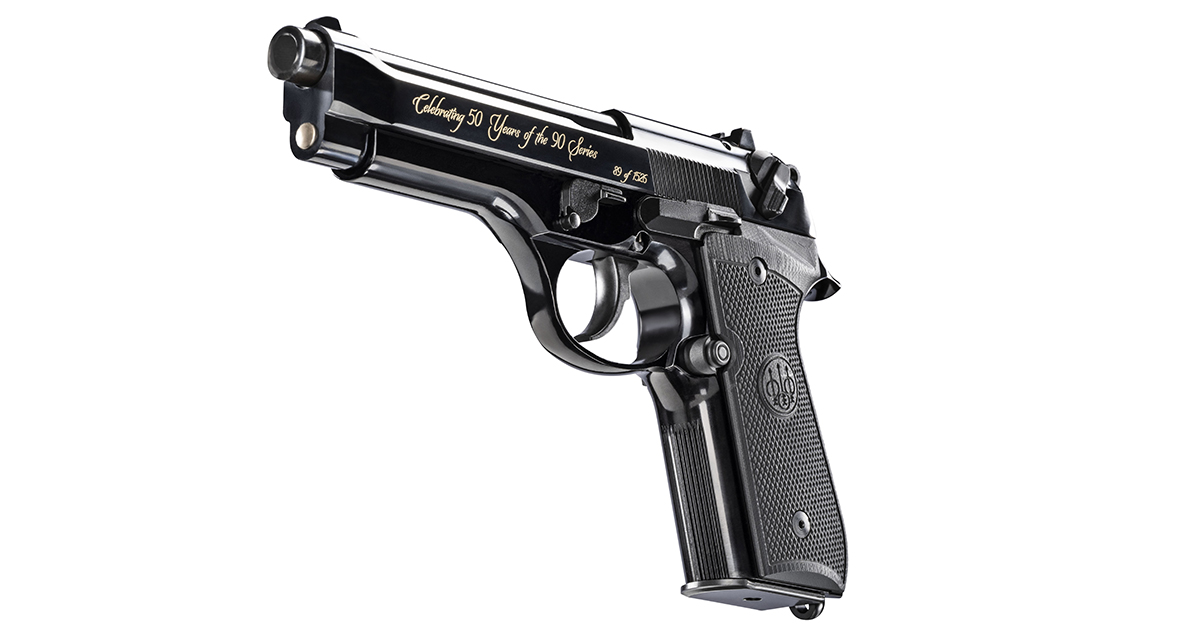
We have not been able to confirm that Bruce Willis and Mel Gibson received two of the first special edition units to come off the line, but we are still checking. It would be a shame if they did not, as those two men were arguably the most prolific Beretta pistol salesmen in history.
Good, Bad, or Indifferent?
Was the Beretta 92/M9 a perfect pistol? No. “Perfect” would not be the term I would use. Was it a quality pistol that served the purpose for which it was intended? The answer is, most certainly, yes. It is human nature to view history through rose-colored glasses. Gun people view the M1911A1 as having been the perfect fighting pistol and some still hold to the idea that we should have never replaced it. That is simply not true. The 1911 was a good gun, but it was far from perfect.
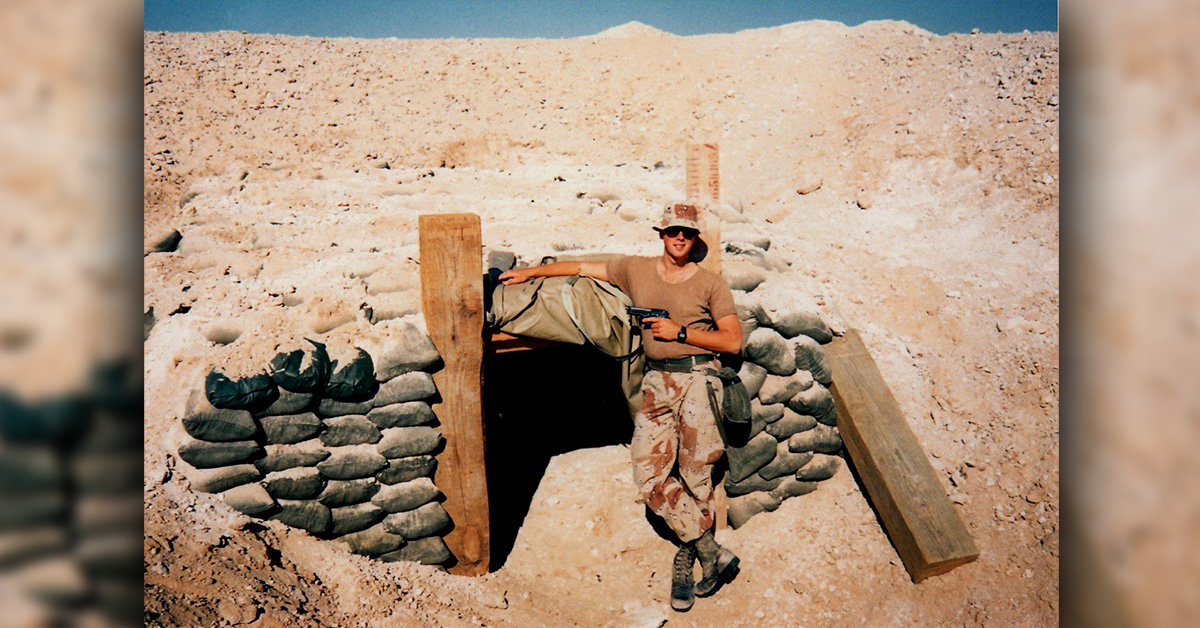
As someone who carried both the 1911 and the M9 and was there during the transition period, I find it both funny and a bit frustrating to hear modern history revisionists, those who were either not alive or in diapers in 1987, pontificating about the Beretta 92 on socialist media. Just the other day, I saw a video clip where the “influencer” claimed the M9 was “unreliable.” That is patently false. The stock Beretta 92/M9 would reliably feed all manner of 9mm ammunition, to include “hollow points” right out of the box — no break-in required. Such could not be said for circa 1980s M1911A1 pistols.
The men in charge of the LAPD and LASD were not fools. There was a good reason why those massive law enforcement agencies adopted the 92F for patrol use. Was/is the Beretta 92 a large pistol? Yes, it most certainly is. If you have petite hands, it might seem too big, but that is not a design flaw. The pistol was designed for duty use, not concealed carry.
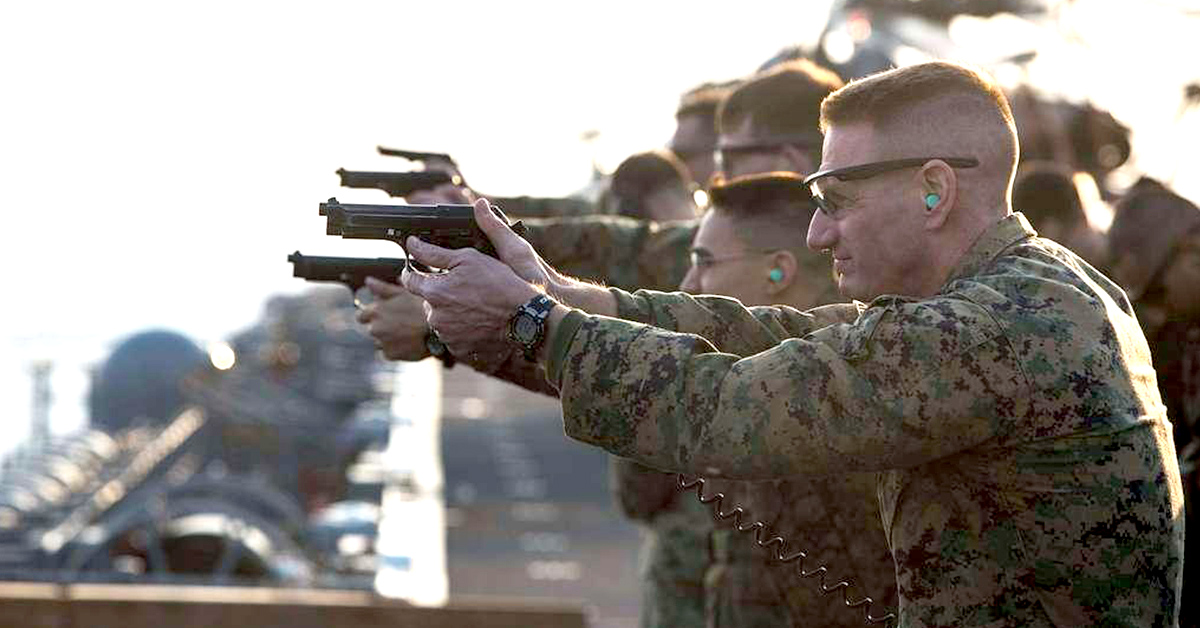
During GWoT, while working as a Small Arms & Tactics Instructor for the US DoD, I used the M9 daily, as that was the pistol our students were issued. While active duty in the Marine Corps, I probably put a few hundred rounds through an M9; however, as an instructor, I put thousands of rounds a year through the gun.
To be fair, the open slide of the M9, which essentially eliminated the Type 2 or “stovepipe” stoppage — an issue that plagued the M1911A1 — did allow sand, grit, and dust to get into the action. While deployed to Gulf War Part 1, I and the others armed with the M9 took to the habit of cleaning our pistols quite often. Of course, such is not a big concern for garrison use or carry on the streets of Los Angeles.
Full disclosure — after leaving my Military Contractor position, I did not carry the 92/M9 on a regular basis, instead carrying a lighter, striker-fired pistol. Nonetheless, this special anniversary review inspired me to get behind my Italian blaster once again.
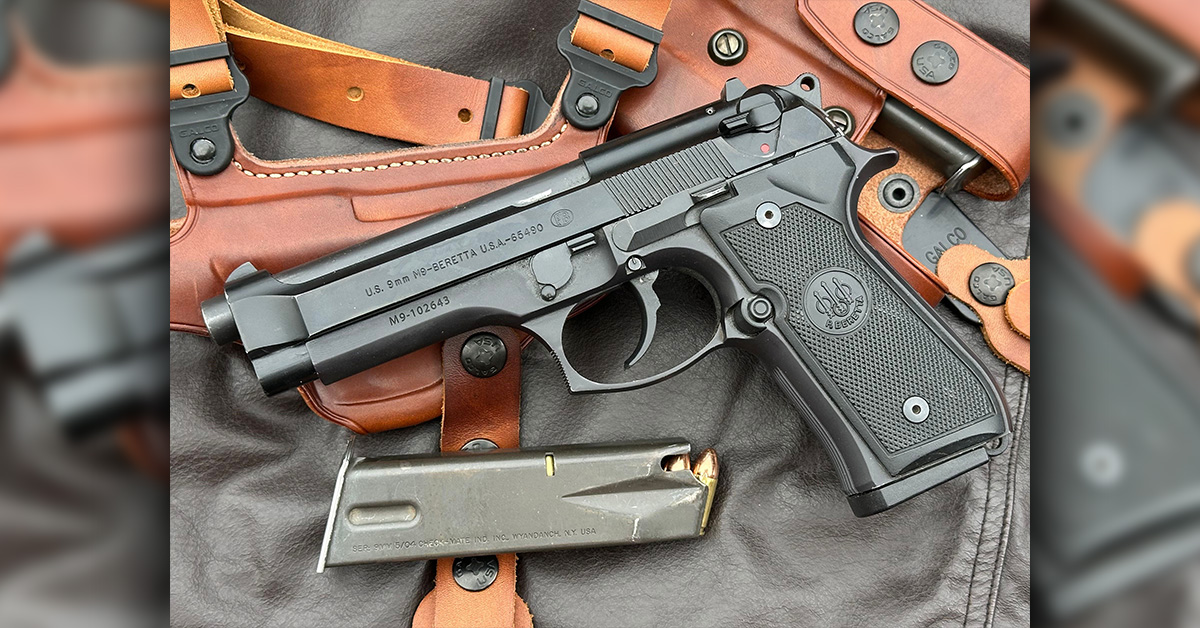
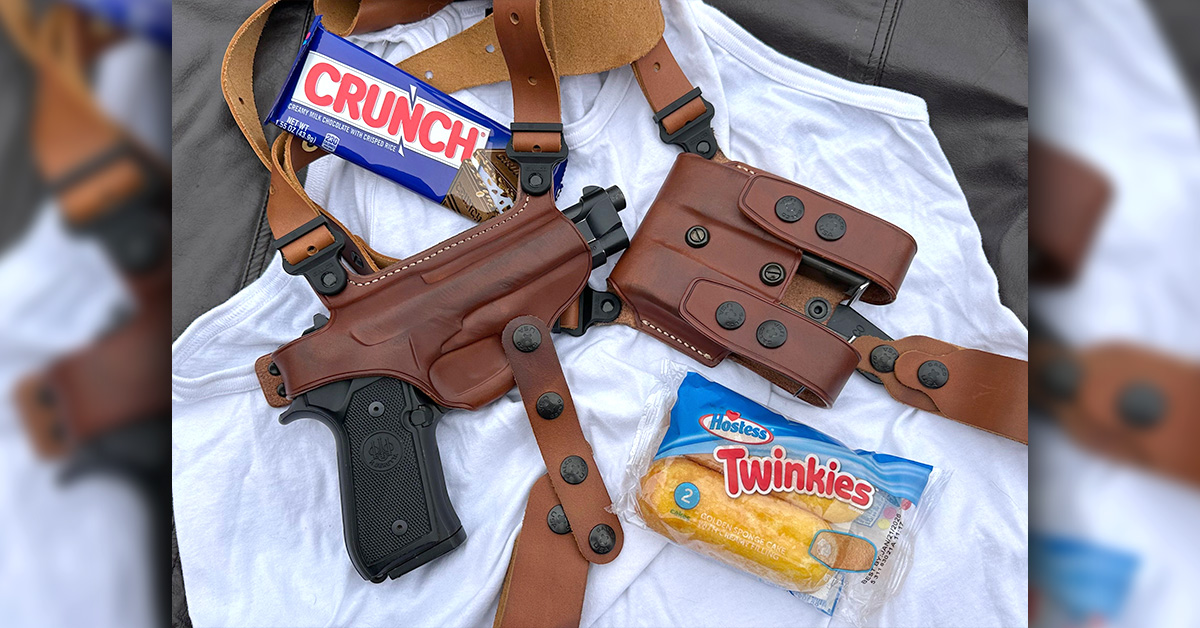
I was particularly pleased to find out that Galco Gunleather stocks the original Die Hard Movie Rig, the exact copy of the one John McClane (Bruce Willis) wore in the film. I ordered one the moment I got the green light for this article. For those of you who have only ever carried your guns in plastic, you don’t know the pride of ownership of a genuine leather rig such as this. And, when the mercury drops and it gets cold outside, shoulder holster carry is practical and useful.
My personally-owned M9 long ago had a new operating spring kit installed. The DA press, verified with a trigger pull gauge, is a consistently smooth 9.5 pounds and the SA press is 4.5 pounds. While my hands are not overly large, they are big enough, so the 92/M9 is a pleasure to shoot. The pistol absorbs the mild recoil of the 9mm NATO cartridge. The guns are also as accurate, or more so, than 99.9 percent of the hands of those who hold them. If someone tries to tell you the Beretta 92 is “not accurate,” to put it mildly, they are full of crap.
Do I expect the 50th Anniversary of the Beretta 92 to see a resurgence of police agencies and armies adopting them? No, I do not; however, this is a good time to consider where we were, where we are, and how far we have come in the world of duty guns. If I were to be handed a Model 92 and told that was all I could carry, I’d be fine with that. After all, it was good enough for John McClane and Martin Riggs.
Beretta 92SB Repro Specifications
- Caliber: 9x19mm
- Action: DA/SA
- Capacity: 15 rounds
- Grip: G10
- Barrel Length: 4.9 inches
- Overall Length: 8.5 inches
- Weight (empty): 34.1 ounces
- MSRP: $1449