These three simple drills will move you toward faster and more precise red dot deployment with your defensive handgun
by Frank Melloni
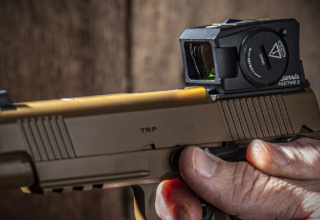
Designed to shorten the amount of time between drawing and firing, if used incorrectly, red dots can actually slow shooters down. Concentrating on the dot itself, along with settling it more than needed for a particular target, takes away most of the benefit of mounting one on your gun. Working with instructor Chris Urrutia during the Vortex Edge shooting program, we learned a concept inspired by Hwansik Kim of the Practical Shooting Training Group, known as the “Three Confirmations.” This idea, and its associated drills, help us to better understand and utilize a red dot. Just as with iron sights, target distance and size determine how much sight picture you need to accurately place your shot, speeding up the overall process.
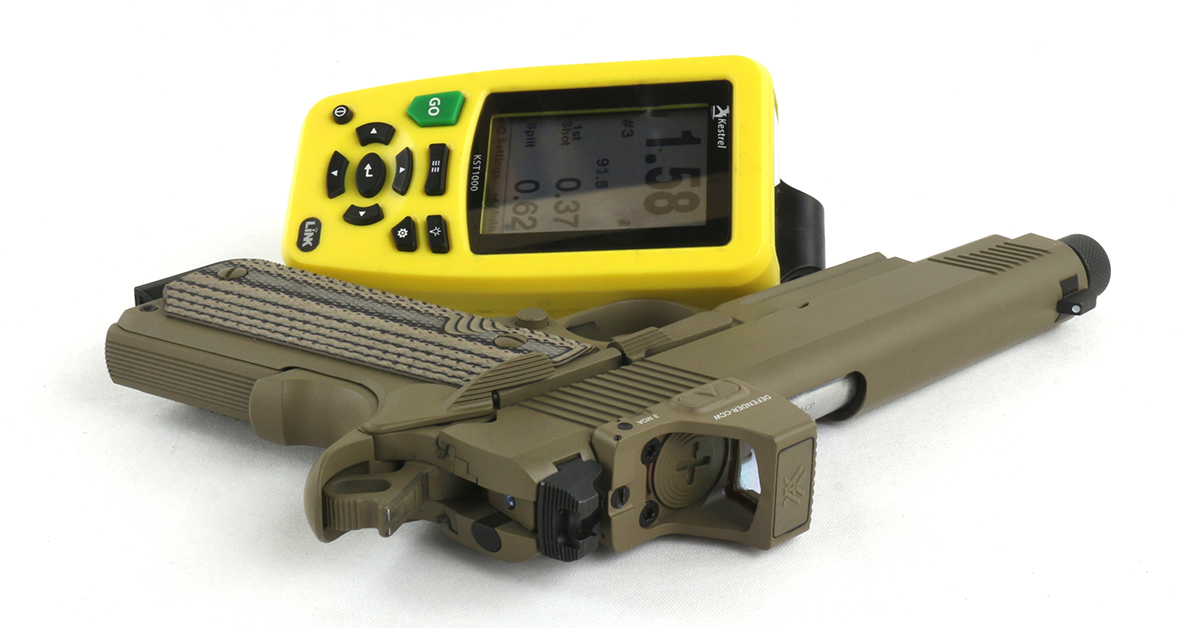
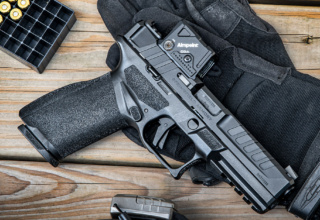
For this series of drills, you’ll need at least 50 rounds of ammunition, a red-dot-equipped pistol with a compatible holster, a standard IPSC cardboard target, and a shot timer.
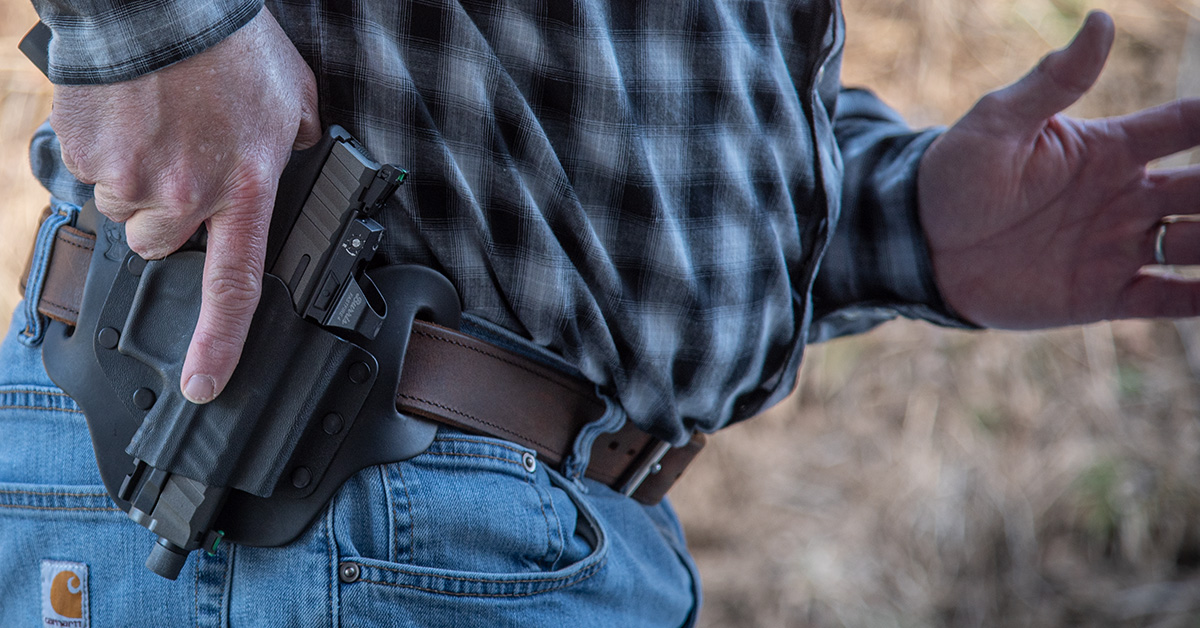
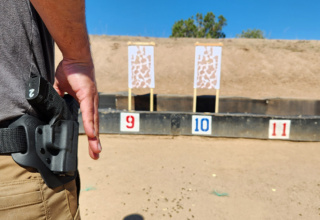
Check with the range to ensure that you’re permitted to draw from a holster, as well as shoot targets at various distances. Ideally, you’ll want to be able to place the target at five, ten, and 15 yards, or be able to move back as you shoot. Use the times listed as starting points and log your progress, constantly trying to achieve a new personal best.
Confirmation 1
Confirmation 1 refers to the least amount of dot visibility possible and promotes predictive shooting as opposed to reactive or corrective shooting. In essence, you are firing based on the prediction of your dot being where you want it as a product of good alignment with the target, proper stance, grip, and index. This differs from the other two types, where you’re pressing the trigger as a response to the information you’ve received from the dot.
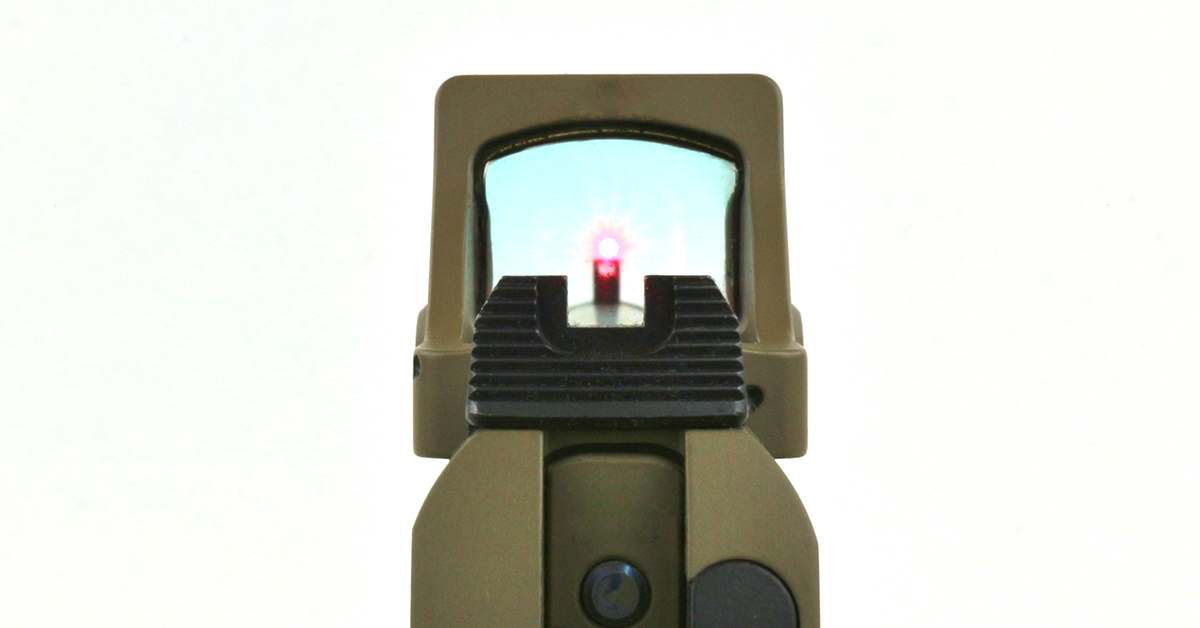
Some might compare this to point shooting, which is fair, just so long as your definition of point shooting involves seeing a haze of the front sight. In the same manner, Confirmation 1 will present a flash of red light within the “A-zone” of the target. This level of confirmation is most useful for targets within seven yards, but it can be applied to 15 yards or more if the scoring standard allows.
- Hang the target at five yards.
- Standing square to the target, at the start signal, draw and fire five rounds in less than 2.25 seconds.
- Repair the target and move to ten yards.
- Standing square to the target, at the start signal, draw and fire five rounds in less than 2.65 seconds.
- Repair the target and move to 15 yards
- Standing square to the target, at the start signal, draw and fire five rounds in less than 3.45 seconds.
Confirmation 2
Confirmation 2 allows for more dot visibility. This confirmation is useful for reduced-sized targets or targets that are partially obscured. Your dot will not be entirely settled, but you should be able to determine that it is round, mimicking a slowly bouncing ball. This will be your first exposure to reactive shooting, where you’ll spend time observing the dot placement and reacting to that information by either adjusting or firing a shot. In the iron-sight world, this is the equivalent of having a well-focused front sight, with little regard for where it is in relation to the rear sight.
- Hang the target at five yards.
- Standing square to the target, at the start signal, draw and fire five rounds in less than 3.55 seconds.
- Repair the target and move to ten yards.
- Standing square to the target, at the start signal, draw and fire five rounds in less than 3.95 seconds.
- Repair the target and move to 15 yards.
- Standing square to the target, at the start signal, draw and fire five rounds in less than 4.75 seconds.
Confirmation 3
Confirmation 3 is the highest level of confirmation you will achieve in this drill, and also the most you would ever want during real-life use. It is reserved for ultra-precise pistol shots, such as a distant steel gong or a target placed tightly between a pair of no-shoots.
This confirmation involves a completely settled dot, with an iron-sight equivalent being a perfectly placed front sight within the rear notch. This is known as corrective shooting, as small corrections will take place, if needed. Ensure that the moment the dot is settled and is where it needs to be, your finger is moving to the trigger, as putting additional time into this isn’t going to improve your shooting. Conversely, the extra time you spend with your arms extended will begin to fatigue your muscles and actually decrease your accuracy.
- Hang the target at five yards.
- Standing square to the target, at the start signal, draw and fire five rounds in less than 3.85 seconds.
- Repair the target and move to ten yards.
- Standing square to the target, at the start signal, draw and fire five rounds in less than 4.25 seconds.
- Repair the target and move to 15 yards.
- Standing square to the target, at the start signal, draw and fire five rounds in less than 5.05 seconds.
Meeting the time standards takes a bit of work, much of which can be accomplished through dry-fire exercises.
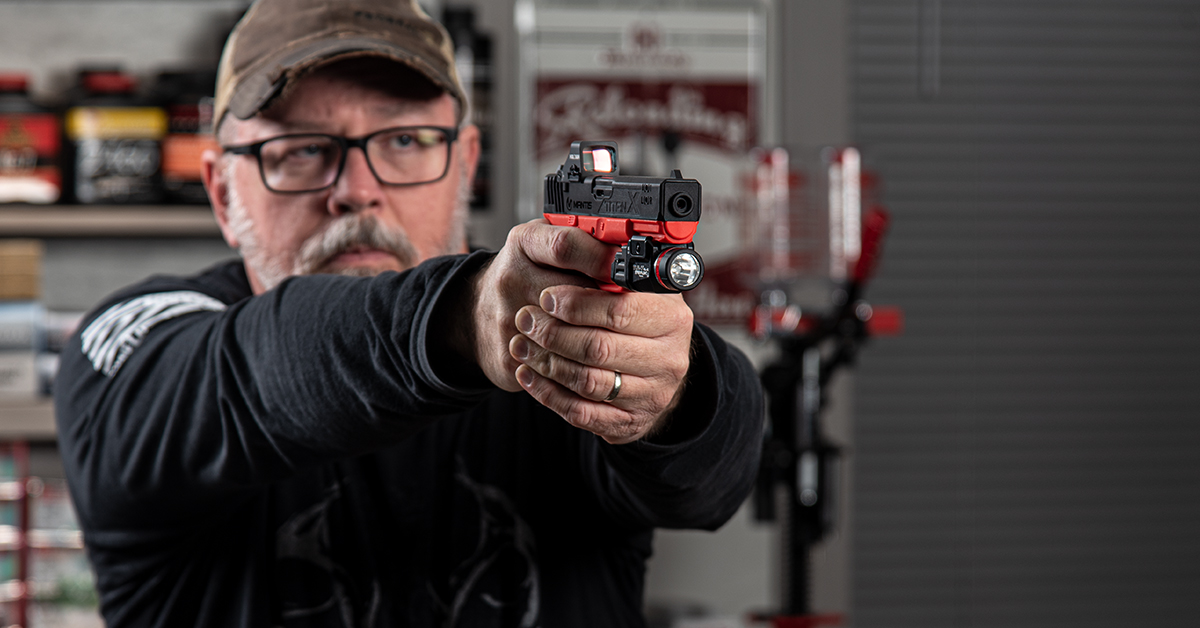
Above all, proper grip, stance, and presentation are paramount to shaving time, but many shooters have a natural hesitation to press the trigger without a “perfect” sight picture. This is where live fire becomes increasingly beneficial, as it will build trust in the process when you witness holes where you want them, faster than you ever thought possible.
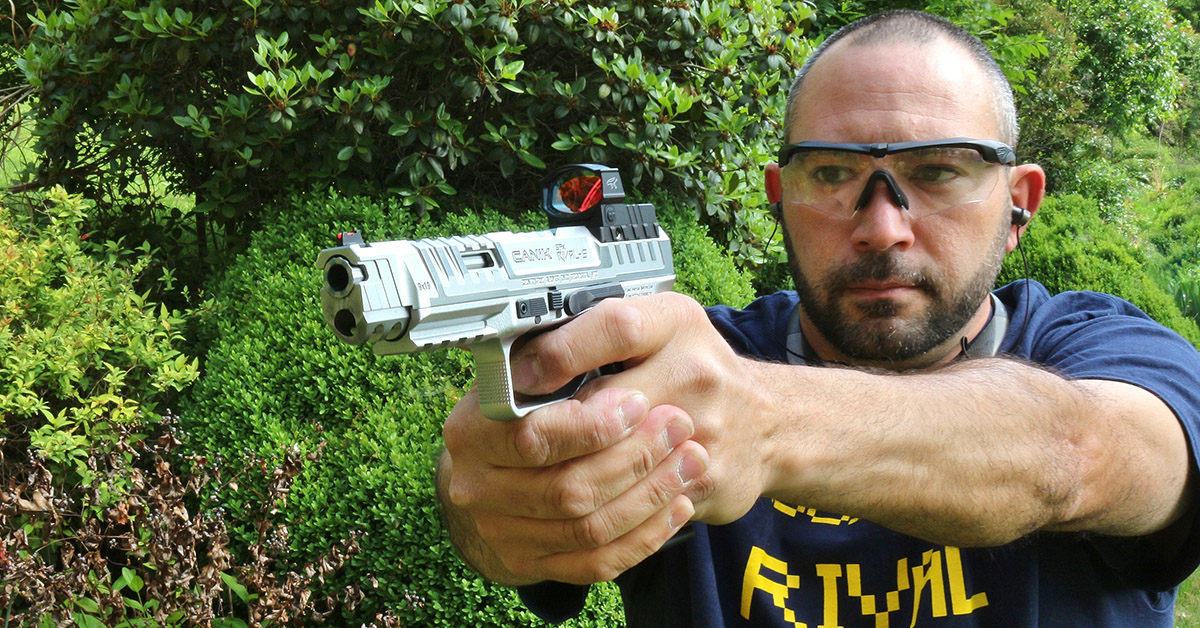
Be sure to crawl before you run, and when in doubt, recruit an accredited instructor to help you along your way.