Before there was a .50 BMG, our frontier West inspired flurries of fifties. This lever-rifle is a worthy heir.
by Wayne van Zwoll
“I figured if I liked it, other shooters would.”
Frank Ehrenford handed me the 8-pound lever rifle, brushed stainless in walnut. In profile and in hand, it clearly had elements of Winchester’s 1886, 1892, and ’71.
“It’s chambered in .500 Smith & Wesson Magnum.”
Developed in 2003 for S&W’s X-Frame double-action revolver, the .500 hurled nearly 2,900 ft-lbs of punch from its 10-inch barrel. A 22-inch rifle barrel should send 3,000, I surmised — half again the moxy of the .50-110 Sharps “buffalo” cartridge of 1872…
Silkily, with muted clicks, the lever swept a handload into the chamber.
Offhand, bead centered in the bolt-top aperture, I dropped the hammer. A thunder-clap from 41.5 grains of Hodgdon’s H110 hurled a 400-grain bullet into a heavy steel plate 50 yards out. It rocked on its chains. Snick-snick. The magazine was empty before Frank got the rifle back.
“You’re grinning,” he said.
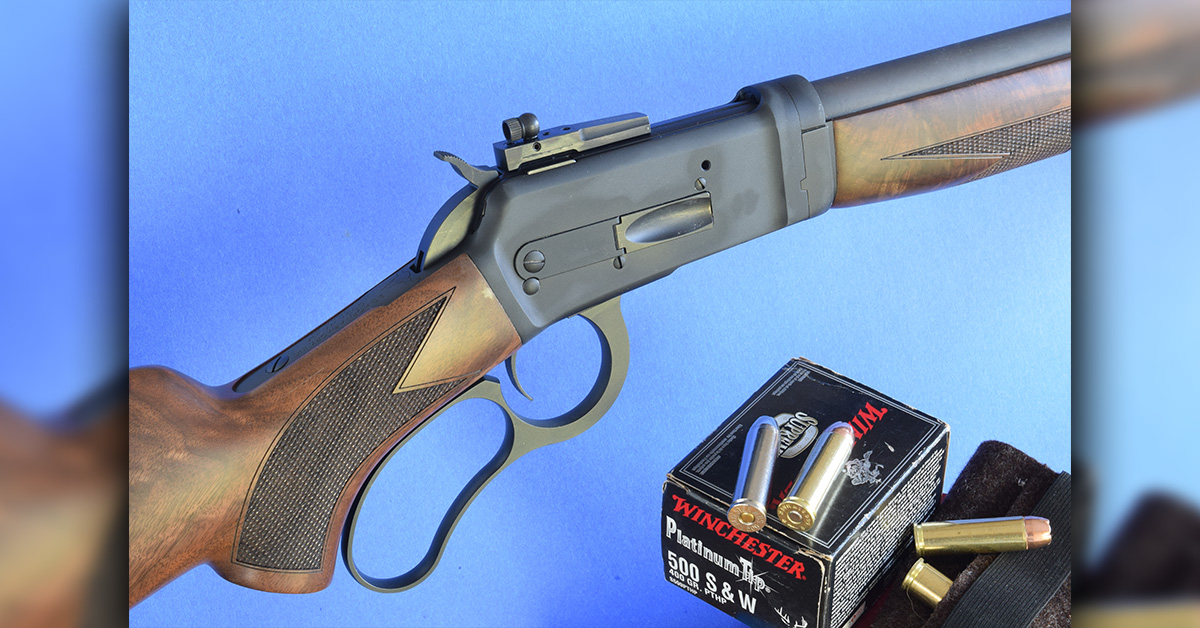
That was 14 years ago, when Bighorn Armory introduced its Model 89. Its vertical locking lugs, rising smoothly to marry bolt with receiver, borrowed directly from those John Browning had first used in the single-shot rifle that drew Winchester’s attention in 1883. Later appearing as the Model 1885, it ignited a 17-year partnership that resulted in a winning series of Winchester lever rifles. The 1886, bored for a suite of powerful cartridges, netted John $50,000 — “more money than you could find in Ogden.”
Delighted with the 1886, Winchester VP Thomas Bennett offered Browning $10,000 for a short-action version “if I get it in three months — $15,000 if you finish in two.” John told him the price was $20,000. “But you’ll have it in 30 days. If I’m late, it’s free.”
The Model 1892 arrived early. Listing at $18 in .25-20, .32-20, .38-40, and .44-40, it sold to the walls, abroad as well as in the U.S. It remained in Winchester’s line until 1941.
The Model 1886 gave way in 1936 to an update, the Model 71. It was chambered only for a new .348 cartridge, which remained specific to that rifle. The 71 fell from Winchester’s catalog in 1957.
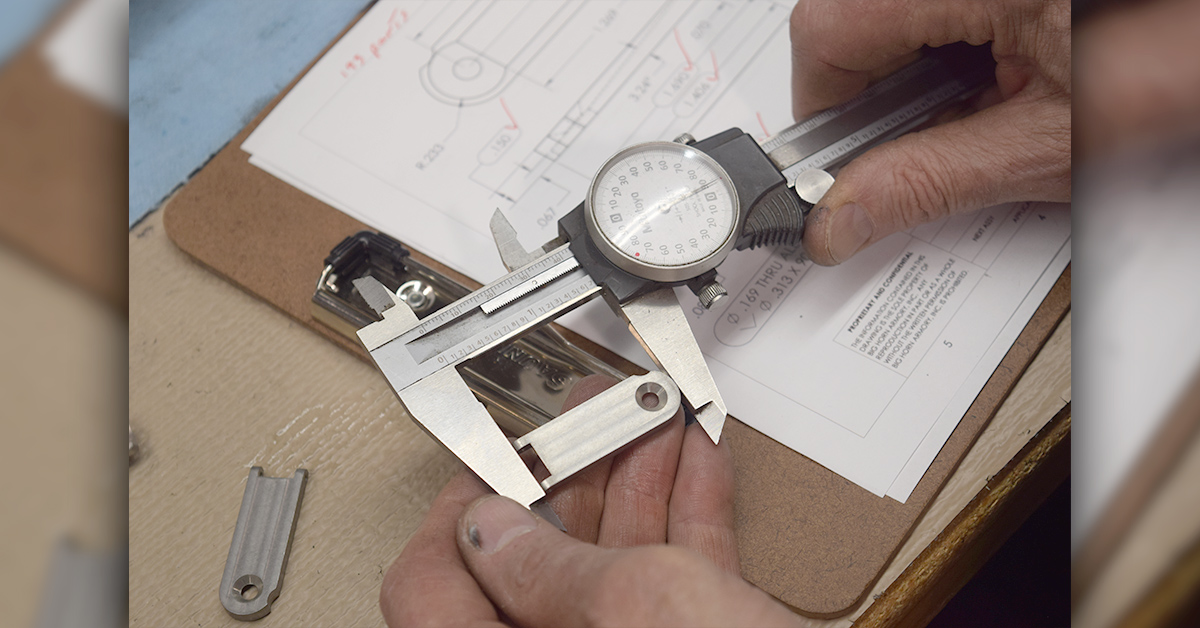
Incorporating the best features of these famous lever rifles in a new action, Frank Ehrenford took advantage of modern CNC machining to hold close tolerances. He used 17-4 stainless steel — stronger and more weather-resistant than pre-WW I and Depression-era carbon steels — for the receiver and action. The barrel, of 416 stainless, was button-rifled 1-in-24. But the Bighorn Model 89 retained the hand-fitted walnut stocks dear to all lever-rifle enthusiasts.
“I’ll loan you one,” he told me. It arrived promptly from the Cody, Wyoming shop.
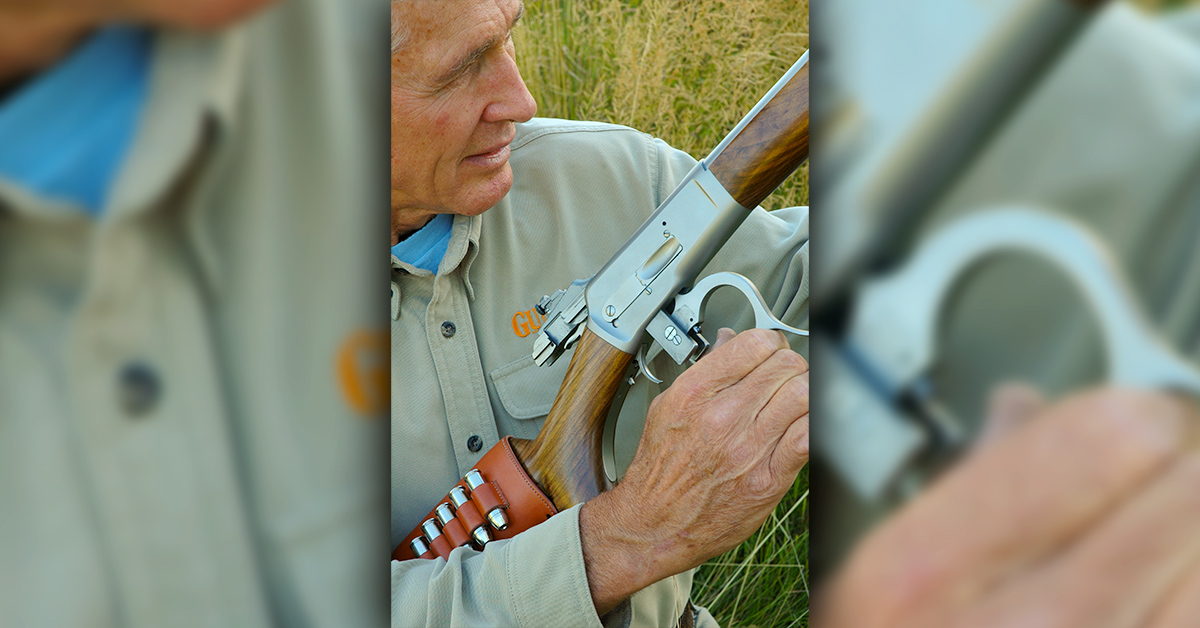
The action of that 89 cycled with grace, its lugs rising as if on bearings in their machined races to wed bolt with receiver. The hammer yielded smoothly to my thumb, its spring maintaining even pressure in the long, smooth arc past a crisp half-cock to a ready crouch.
A two-thirds magazine was dovetailed to the 22-inch, 416 stainless barrel of the sample rifle just forward of the forend cap, which featured an integral swivel stud. (An 18-inch carbine barrel had a full-length tube.) An XS front sight paired with a bolt-mounted XS aperture. The lever loop and guard, more generous than on Winchesters, accepted my big fingers. A honey-and-black stock of “specially treated walnut” glowed under flawless satin finish. The wood was exceptionally well fitted to the receiver, barrel, and upper and lower tangs, all with a muted stainless sheen.
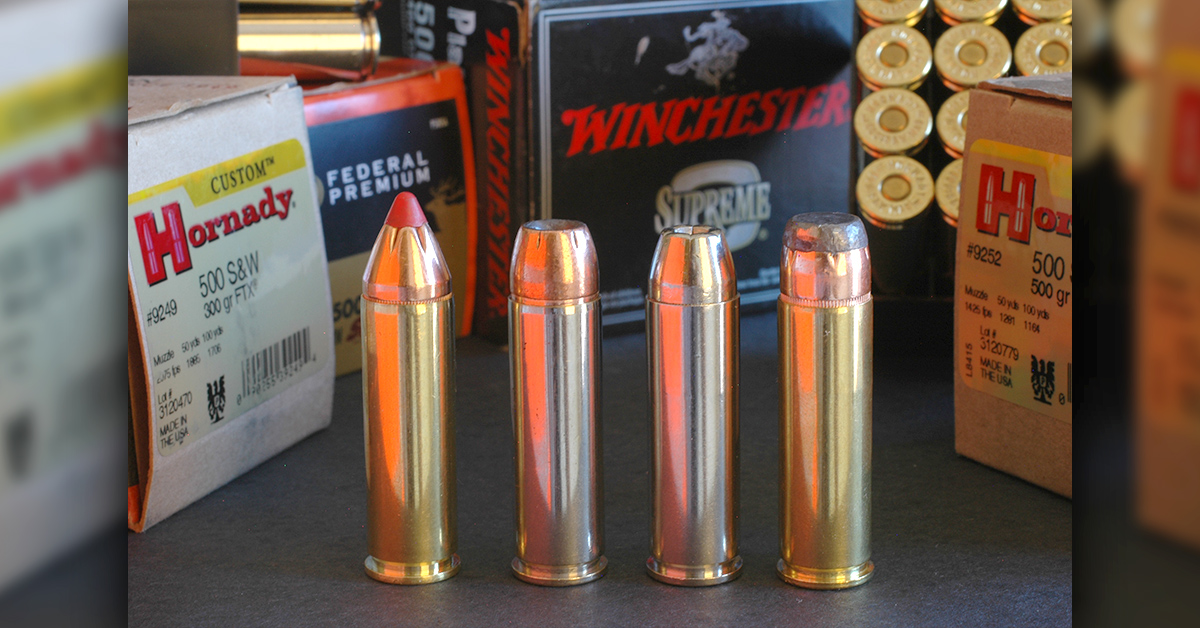
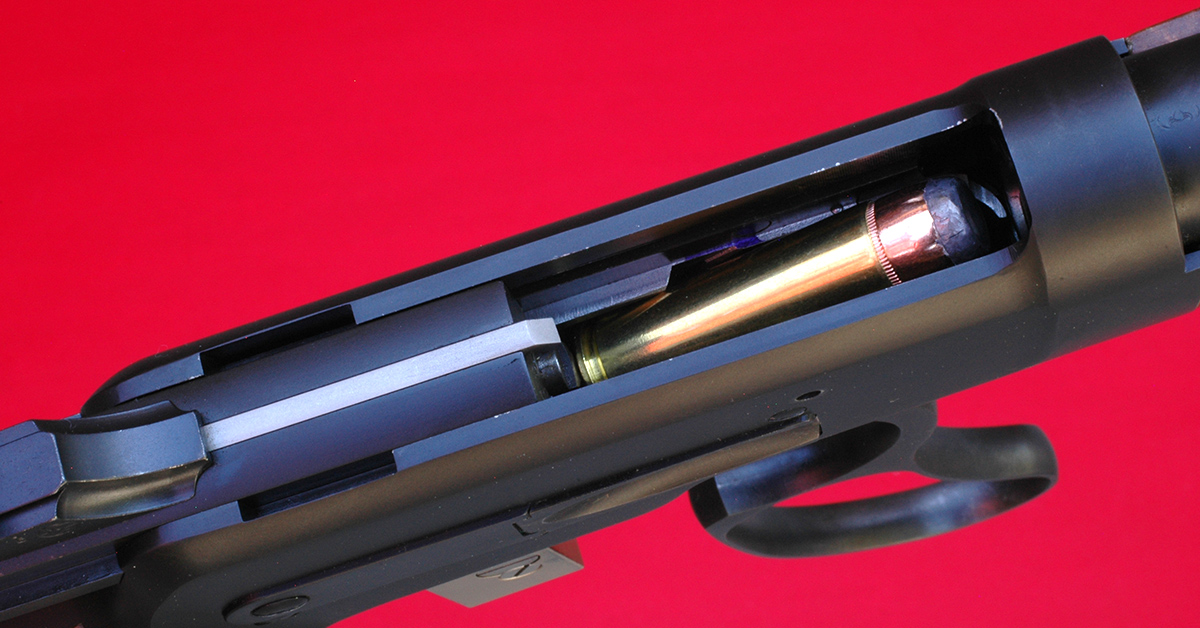
Commercial .500 ammo chambered easily. The rifle had no hiccups with 350-grain Hornady FTX bullets, 350-grain hollow-points, 400-grain flat-points, and Winchester 400-grain Platinum Tips. A sturdy extractor, high on the bolt face, pulled fired cases with authority; the plunger ejector tossed them smartly.
Reports on the accuracy of rifles with metallic sights presume much of the shooter. Quartering a bullseye with a high-power scope from a bench is easy; shooting well with “irons” requires keener vision and experience.
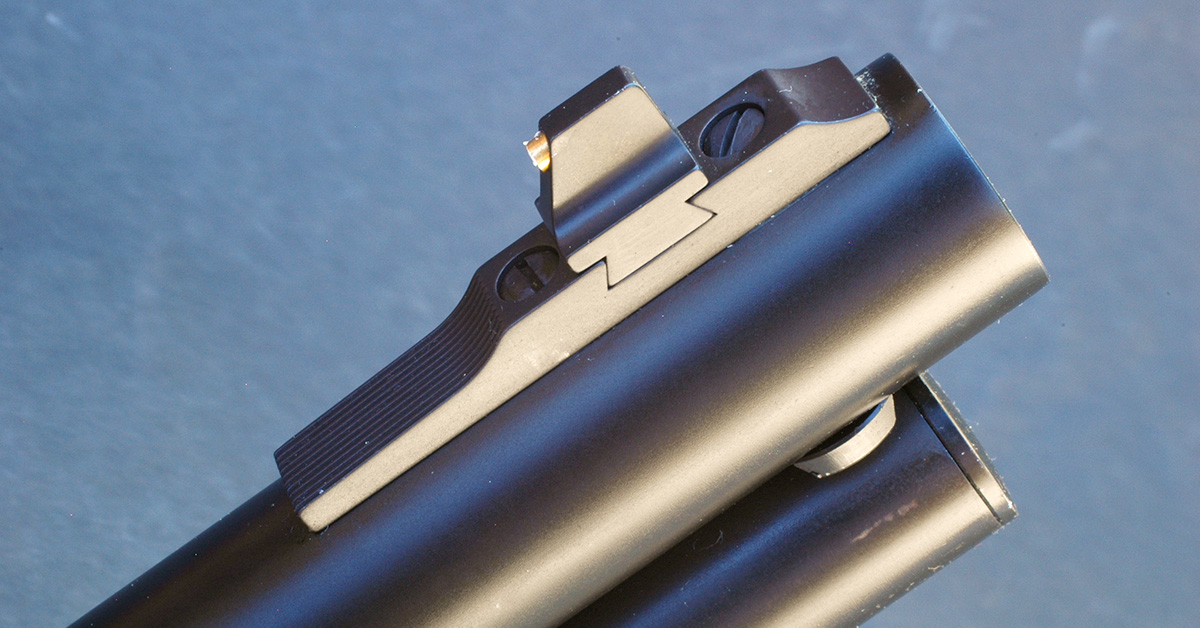
But arguably, scopes don’t belong on lever rifles with 19th-century profiles. Also, while the .500 S&W brings more than 1,500 ft-lbs to 150 yards (from a rifle barrel), its bullets trace steep arcs that far out; and as a rule, I try to keep my metallic-sight shooting at game to 100 yards. Given that limit, there’s no need for minute-of-angle precision. A rifle that delivers 4-minute groups will center big game vitals at 100 yards and kill reliably twice that far.
Consistent aim with a generous bead hinges on using a bulls-eye big enough to see around its rim. Often, my aging eyes will bring the target into sharper focus at 50 yards than at 100. So, that’s where the Bighorn 89 got its first bench exercise. Herewith, the results:

Recoil? While the .500 S&W is a handful in a revolver, the 89’s thick pad and well-proportioned stock tame both the bite and muzzle rise. Still, 350-grain bullets exit as fast as from a rifle in .450 Marlin or a .45-70 loaded hot. Figure 36 ft-lbs from a 7 ¾-pound rifle, about what you’ll also endure from 200-grain loads in a .338 Winchester Magnum.
My lovely Model 89 sample returned in due time to the Cowboy State. Then Frank retired, Greg Buchel taking the president’s chair at Bighorn Armory. “We’ve refined the 89’s mechanism,” he told me, “and introduced a Model 90 in .460 S&W, a 90A in .454 Casull, and a 90B in .45 Colt. The lever loop is a tad bigger, he added, for easier use with gloves. Standard barrel length is now 18 inches; the magazine holds seven cartridges.”
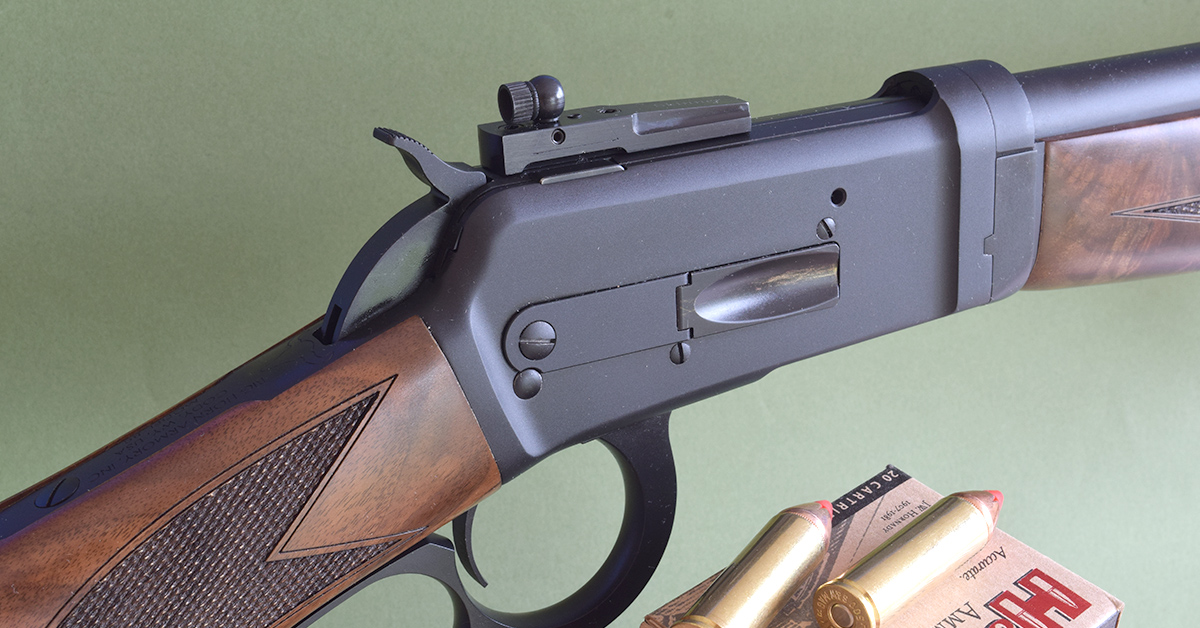
The sights have changed. “After the XS sights of early 89s, Craig Lauerman and his Marble Arms crew supplied an adjustable bolt peep and a sturdy front blade with a gold bead. While these suited the 89 very well, we’ve since installed Skinner sights, from Montana. They’re the best ever!”
Greg pointed out that Bighorn rifles now feature new metal treatment: salt bath nitriding. “Glock uses it in handguns. It produces a hard, thin surface shield. You can still choose brushed stainless finish or what we call Hunter Black on the Model 89 and 90. We accept special orders, too: color-cased and antique finishes on receivers, maple stocks and fancy walnut. Longer and shorter, even octagon barrels.”
When he mentioned a Model 89 Take-Down, I bit.
The walnut on the supplied Take-Down is dark, spectacularly figured walnut, with red highlights. Butt and forend match beautifully. Point-pattern checkering is tasteful and neatly done. Inletting is skin-snug. As before, the action cycles compliantly, with the feel of well-fitted machinery. Parts move in and out of battery smoothly. Hornady’s 300-grain FTX bullets slip eagerly into the chamber, as do its 500-grain flat-nose XTPs, Federal’s 325 Swifts, and Winchester’s 400 Platinum Tips. At lock-up, this carbine is rattle-free. Trigger break is crisp at 5 ¾ pounds. A tad heavy. There’s minimal creep.
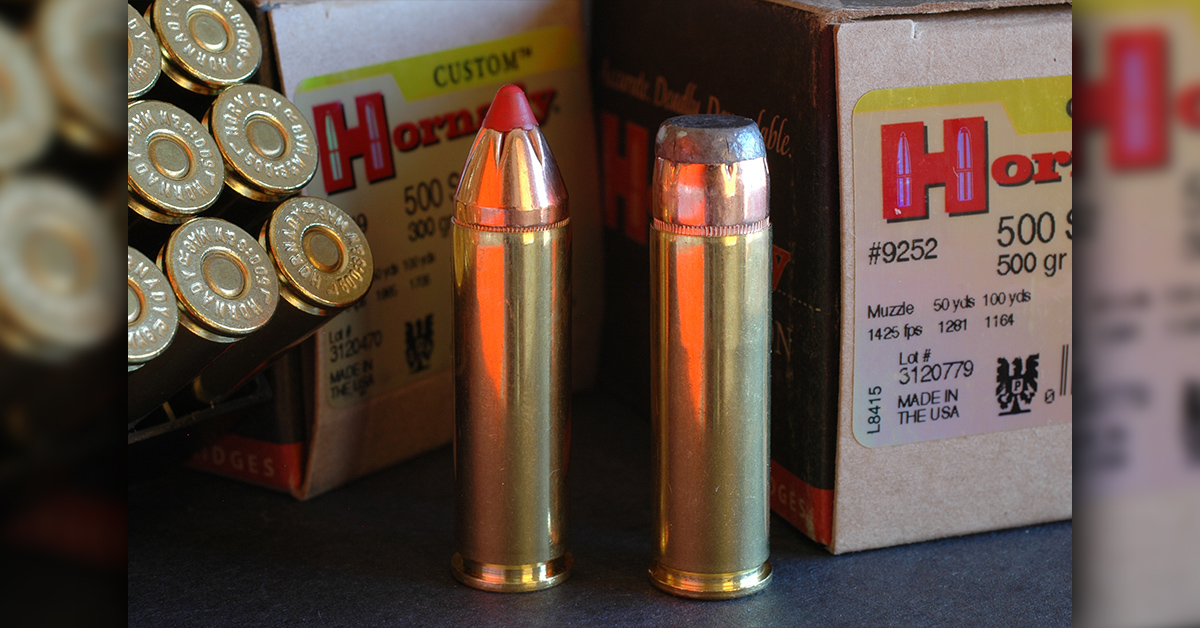
At the range Bighorn Armory’s sight setting put bullets of 300 to 500 grains near target’s center, though predictably the various bullet weights strung impact points vertically. Hornady’s factory-loaded 500-grain XTPs shot the best group: just under an inch at 50 yards. Winchester 400-grain Platinum Tips clumped almost as tightly. Lighter bullets — Hornady 300s and Federal 325s — printed coffee-cup groups.
The average group size, at just a shade over 2 inches, edged the 2.25-inch average for the first 89 I used.
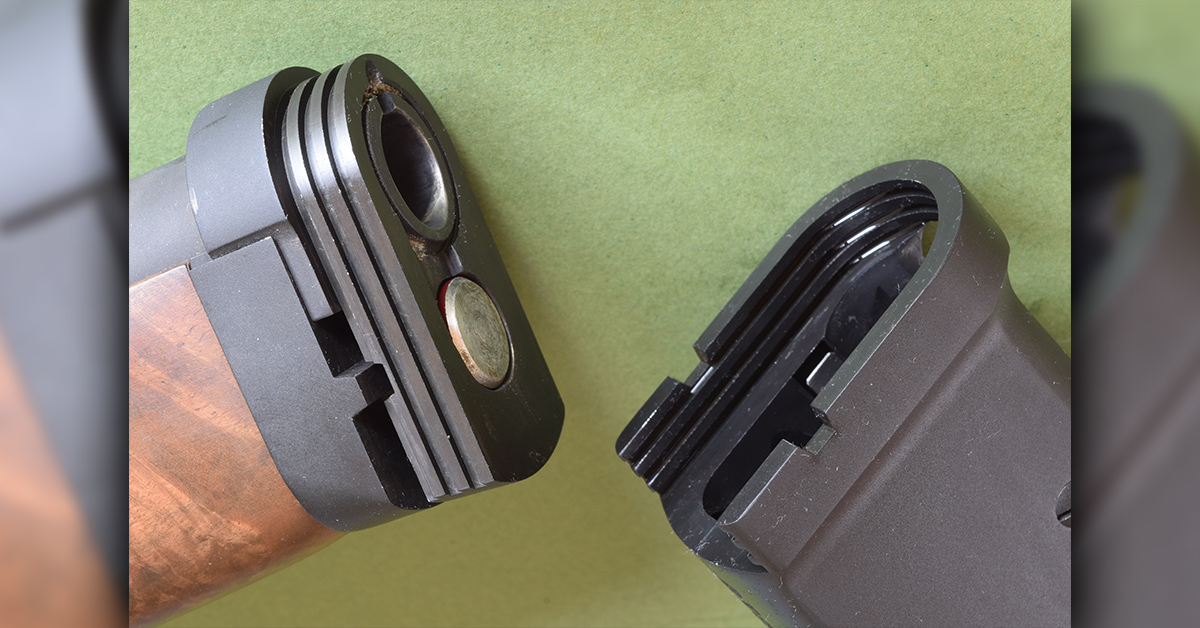
The take-down feature is patterned after that of John Browning, whose patent for it (#781765, in 1905) was the only one he received for such a device. As rendered in Bighorn Armory’s 89, it comprises three vertical splines on the receiver face, with mating splines on the barrel assembly. Take-down is tool-free. With the rifle unloaded, action fully open and muzzle up, you simply grasp the knurled front of the magazine tube with your fingers and turn it clockwise, opposite the intuitive direction for un-doing most threaded unions. If the tube resists, insert an Allen wrench in the provided hole. (The sample rifle needed no extra nudge here.) You’ll feel a stop in the rotation. At this point, the barrel assembly will have moved slightly away from the receiver. Now you can separate the barrel and receiver by pulling the barrel gently down, perpendicular to the rifle’s axis. Re-assemble in reverse.
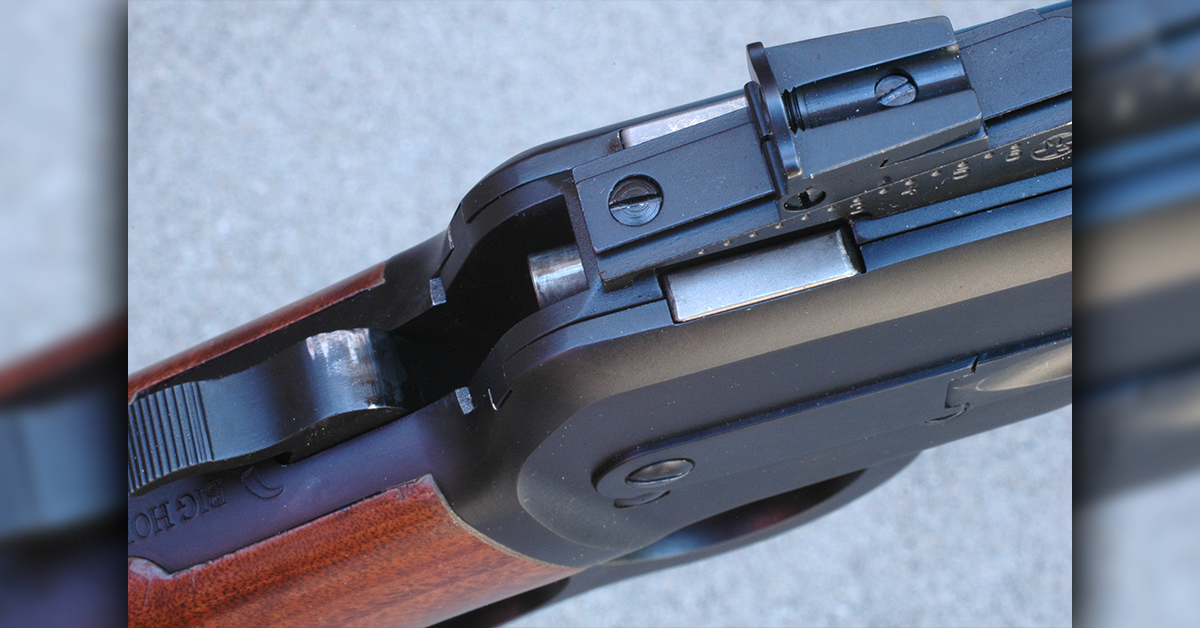
The 89 with this carbine-length barrel is nicely balanced and comes to my cheek quickly, sights aligned. Per many lever-actions, it feeds best if cycled briskly. And it gets even smoother with use. Greg suggests heavy, flat-nose and hollowpoint bullets, which chamber readily. “The 89 is made for them!”
Bighorn Armory sells a leather “Alaska sling” for the 89, also a handsome butt cuff with cartridge loops. For big-bore enthusiasts who don’t share my traditional leanings, there’s a “tactical” version of this rifle, a black laminated stock earning its Black Thunder moniker. It has a top rail, a muzzle brake, and an M-LOK rail underneath for a flashlight or other accessory. John Wayne would blanch.
When shortly after its 2012 debut I first fired a Model 89, it listed for $2,289. Improvements and inflation have hiked that fee considerably. Bighorn Armory lever-actions start at $2,999; the Take-Down fetches $3,999 at retail. A good value? If you want a “big fifty,” it’s still less costly than a pristine Sharps. You get a truly stout, well-built lever mechanism in a nimble, handsome rifle that fires the most powerful short big-bore cartridge commonly available, hurling bullets that upend the continent’s toughest game.
You can even holster a revolver chambered for the same load.
A Confusion of .50s
Our first 50-caliber cartridge of note was the .50-70 Musket, which served U.S. troops in various Springfield rifles from 1866 until 1873, when the Army adopted the .45-70 in its “trap-door” Springfield of that year. The .50-70 Musket sent 425- and 450-grain lead bullets 1,275 and 1,260 fps. Energy: 1,535 and 1,488 ft-lbs. It was popular during the height of the buffalo slaughter in the 1870s, inspiring Winchester to release more powerful .50s. As late as 1934, Francis Bannerman & Sons of New York peddled .50-70 Springfield rifles and cartridges. Both were gone by WW II.
A shorter .50 U.S. Carbine cartridge fed the Model 1870 Springfield Carbine. Its 400-grain bullet at 1,200 fps turned up less than 1,300 ft-lbs of energy; but mounted troops using shorter, lighter rifles than the infantry relished the milder recoil. Carbine cartridges could be used in .50-70 rifles, but not vice versa.
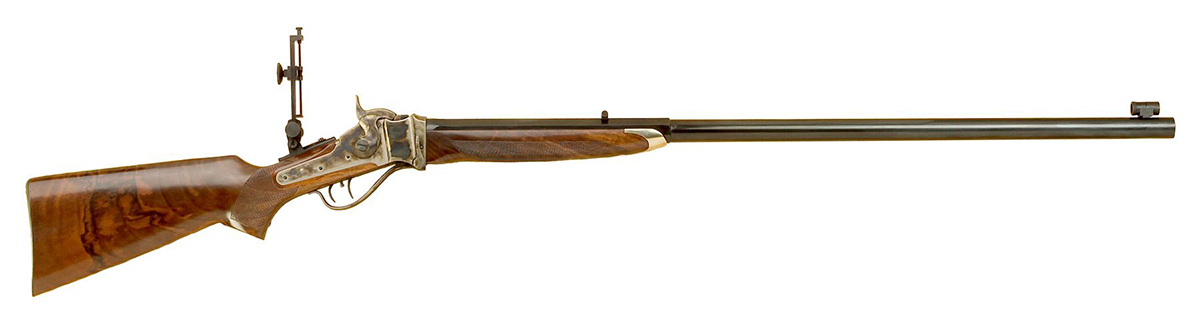
Sharps introduced its 2 ½-inch .50-90 “big fifty” in 1872, in time to claim thousands of buffalo. Also called the .50-100 and .50-110 Sharps, depending on the load, it drove 335- to 473-grain bullets that carried 1,630 to 1,920 ft-lbs out the muzzle. It and the more powerful 3 ¼-inch .50-140 Sharps that came out in 1880, after the great herds had been shot to remnants, fired .509-diameter bullets. Evidently, the .50-140 Sharps was also called the .50-140 Winchester, not to be confused with Winchester’s .50-110 — or the Winchester .50-100, .50-105, or 50-110 High Velocity with the same case! This Winchester series began life as the .50-100-450 in 1887 for the lever-action 1886 rifle. Winchester used .512-.513 bullets in these .50s (as it had for its .50-95 offered in the Model ’76 in 1879). The High Velocity smokeless load blessed the Model 1886 in 1916 with about 3,300 ft-lbs of smash.
Other .50s, for Maynard and Bullard rifles, appeared in the 1880s. They played relatively minor roles in military action and hunting.