Did the standard three-shot group become obsolete and of no value or have our chains been yanked by the high-speed, low-drag crowd? Let’s put a critical eye on this “Fuddism” and a few more…
by Mike Dickerson
There are several clichéd practices in rifle shooting that some might call a Fuddism, meaning those practices belong to Fudds, who are generally defined as older shooters or those who cling to old ways of doing things. Those Fuddisms no longer apply to the self-imagined cool kids, or so they think. What the cool kids forget is that many clichés became clichés for a reason. They embody truth and practicality.
It has become fashionable, for example, for some outdoor publications to insist that everyone must shoot 20-shot groups to gain any idea of how their rifle actually performs. There’s no doubt that this approach can be beneficial to competitive long-range shooters or very long-range hunters, but one editor I know went so far as to call three-shot groups useless. Another insisted 20-shot groups were necessary to “quantify” the accuracy of your rifle and asserted that three-shot groups are “not statistically significant.”
I beg to disagree, which is a polite way of saying that’s a load of bovine excrement. As Mark Twain said, “There are lies, damned lies, and statistics.”
This pro-20-shot-group argument has an elitist odor. The proponents I know are accomplished long-range shooters in competition and in the field. The average hunter is not and has little interest in “quantifying” the accuracy of their rifles. They just want to zero their gun and kill a whitetail or hog within 200 yards — or, more often, within 100 yards — and the woods whitetail hunter using an iron-sighted lever-action rifle has even less need to shoot a 20-shot group to know where his gun is hitting.
Notably, most of the writers and editors who push the 20-shot method get their ammo or reloading components for free. The average guy or gal does not, and may have little interest in shooting one or more full boxes of expensive premium ammo to zero a hunting rifle. Ammo makers would like it if you did, but rifle makers are not going to line up to embrace a 20-shot accuracy standard. Their sub-MOA accuracy guarantees would be very unlikely to stand up, and that would have as much to do with the ammo and the shooter as it does with the rifle. Very few shooters can maintain absolute consistency in their shooting form over a span of 20 shots. Of course, the 20-shot crowd also asserts that accuracy guarantees are worthless. Again, I disagree. They serve as a signal that a gun maker is willing to stand behind their product.
Proponents of the 20-shot approach disregard traditional average group size as an indicator of accuracy, preferring to calculate mean radius using a time-consuming procedure and for-purchase apps. This approach can turn a rifle that shoots sub-3/4-inch average three-shot groups into something like a 1.5-inch shooter. The response of many hunters to that should be, “Yeah, so?” For most hunters who shoot game at common distances, a 1.5-MOA rifle works just fine, assuming you can hold on the center of an eight-inch vital zone. Anyone who argues otherwise is stretching the limits of mathematical probabilities.
For those condemning three-shot groups, I would suggest that you need a less myopic perspective. Think about it. If three-shot groups were actually that ineffective and useless, virtually no one would have ever killed anything in the entire history of hunting with rifles.
History says otherwise.
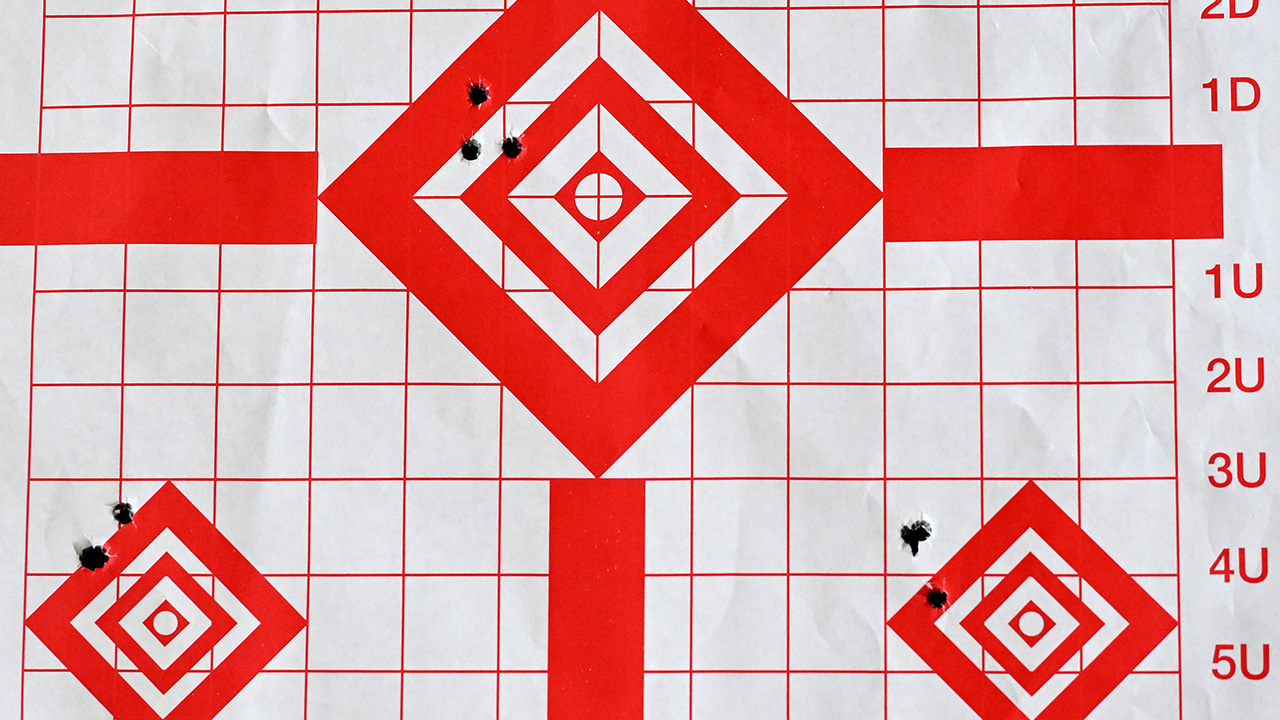
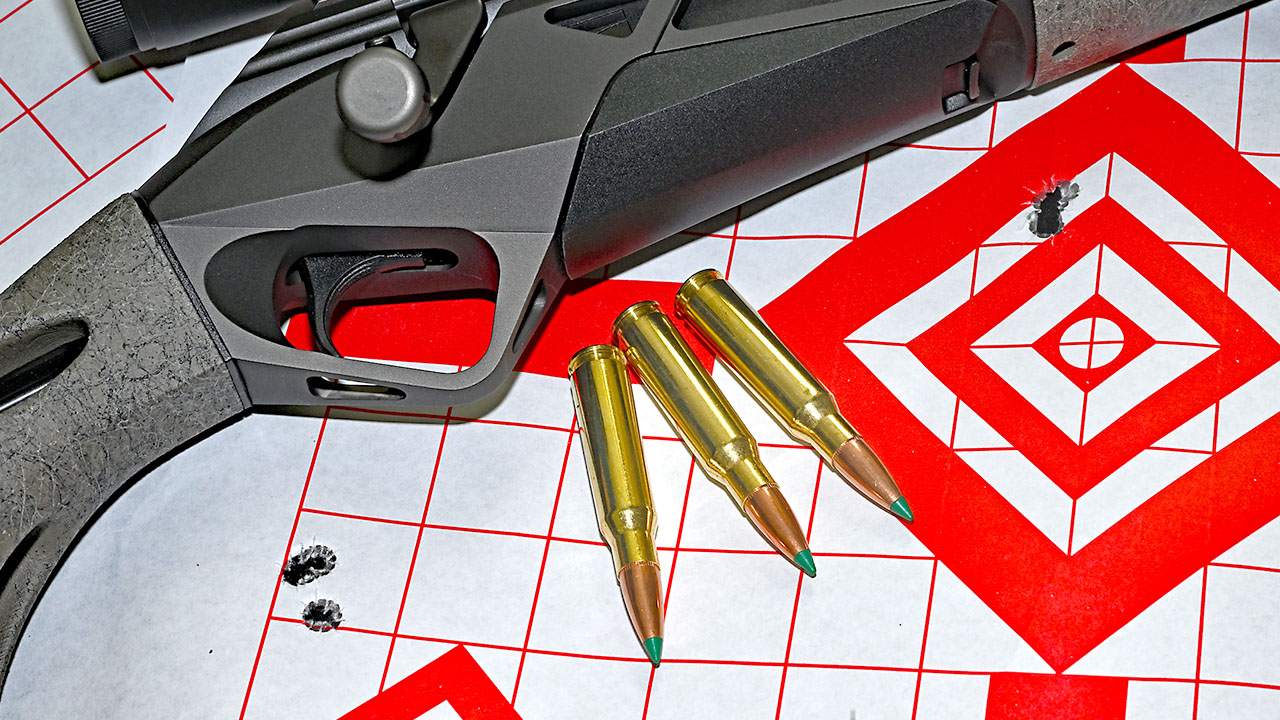
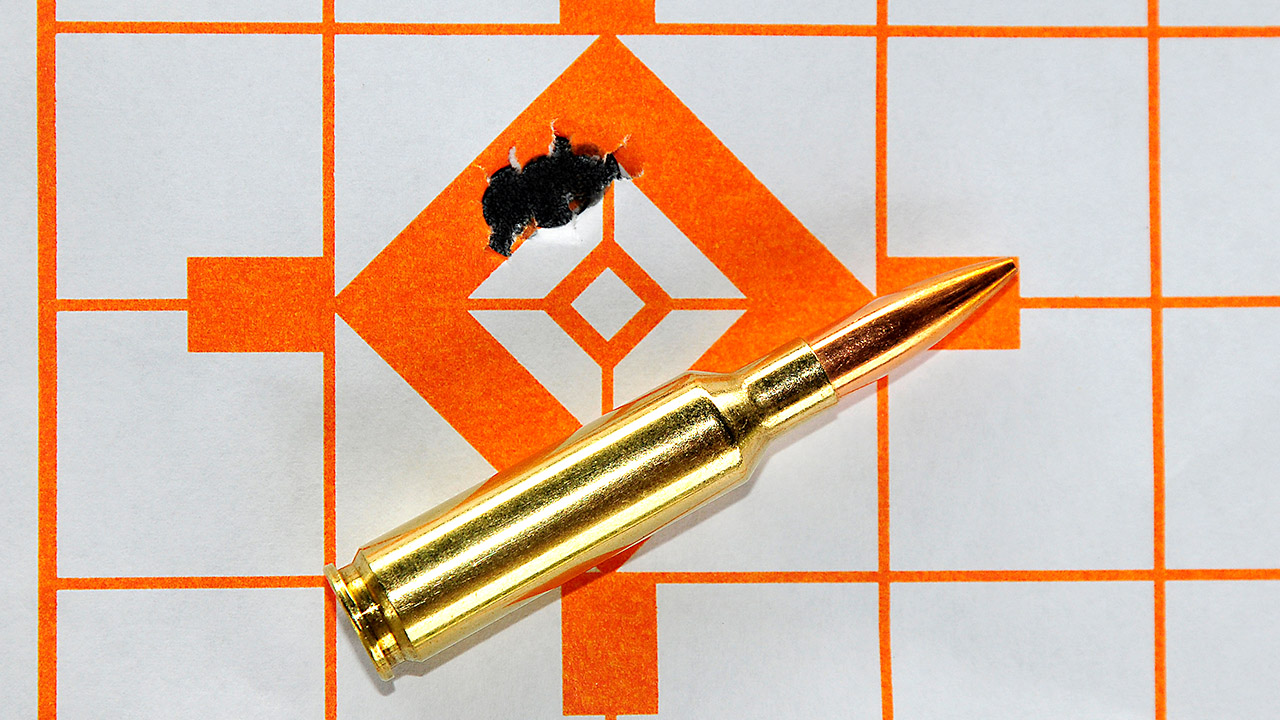
In my own case, during a lifetime of testing and reviewing rifles using mostly three, three-shot groups per load, I can assure you I knew what each of those rifles was capable of. Loads that shot poorly were always evident, as were loads that shot well. As the photo above shows, with three groups showing consistent points of impact and group sizes, that is not what detractors would call “accidental accuracy.” The trick is to find a load that the rifle likes and shoots consistently well.
If you are a pure accuracy nerd and want to super-zero with 20-shot groups, knock yourself out. Otherwise, the old three-shot standard will get the job done if you use a decently accurate rifle, feed it ammo it likes, and do everything else correctly. In a lifetime of hunting with rifles zeroed with three-shot groups, I have never — repeat, never — missed an animal because my zero was off. Each of the few misses I ever had was due to misjudging distance in the days before laser rangefinders became common, misjudging the wind, or pulling a shot in one case.
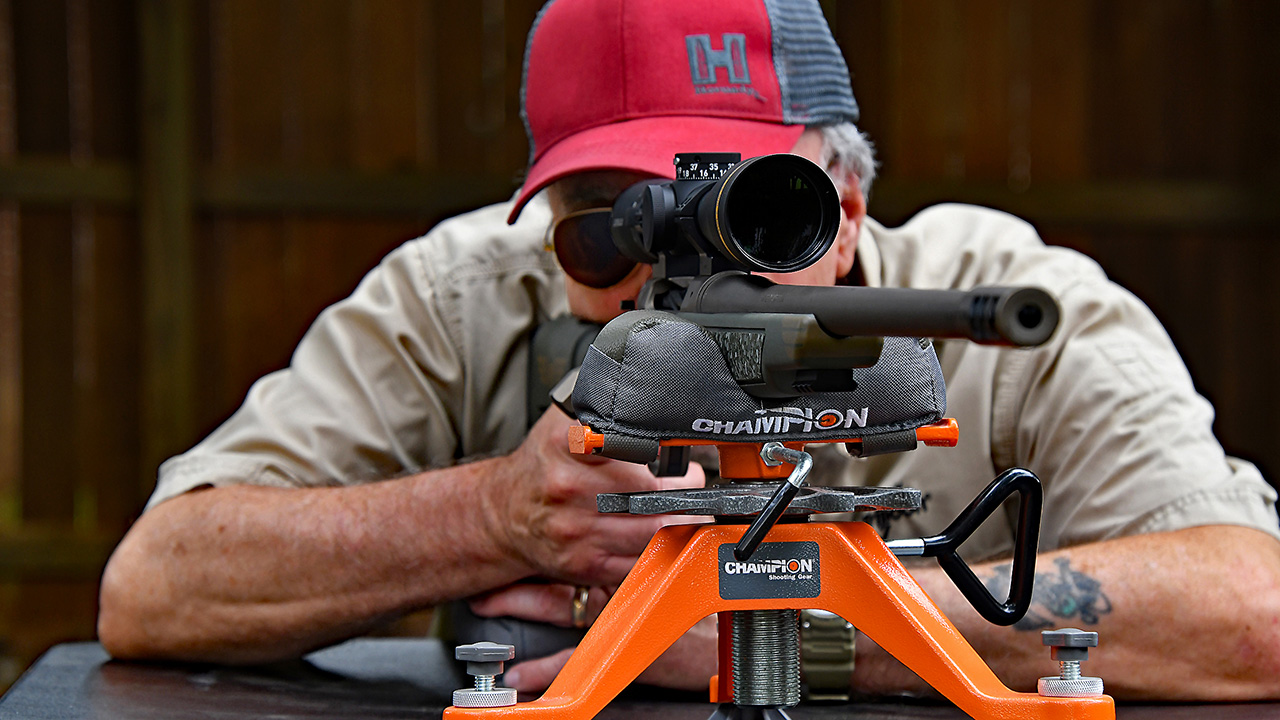
This brings us to another “Fuddism” relevant to the travelling hunter: always check your zero upon arrival at a hunting destination. I have, at times, encountered younger hunters who arrived in a hunting camp insisting that their rifle setup was so rock-solid that they didn’t need to verify zero. Some regretted that. I religiously check zero before a hunt because changes in altitude, humidity, et cetera can cause shifts in point-of-impact. I have also sat on an airplane, looked out the window, and watched as airline baggage-handling gorillas literally threw my rifle case onto the tarmac.
Again, shooting a three-shot group to check zero upon arriving at a hunting destination is typically fine. You don’t need to shoot more if your rifle keeps putting the first shot where you want it to go out of a lightly fouled, cold bore. That’s the shot that counts most in hunting. If you can’t get a rifle to hold a consistent zero with any ammunition, you have problems that a 20-shot group won’t solve.
It has also become fashionable in recent years to label those who use a Maximum Point-Blank Range (MPBR) zero as Fudds. Again, there’s a whiff of elitism in this criticism from people who don’t realize that the unwashed masses don’t give a hoot how good those people are at dialing turrets. It makes no difference in how they hunt. If a MPBR zero has always helped them punch tags, they will keep using a MPBR zero.
MPBR, simply stated, means zeroing your rifle high at 100 yards so that the bullet still impacts within an eight-inch circular vital zone (for deer-sized game) out to 300 yards. This typically means zeroing about three inches high at 100 yards with most modern centerfire hunting ammo. The goal is to have your bullet impact no more than four inches high at 150 or 200 yards and drop no more than four inches low at 300 yards, keeping you in the kill zone with a little margin to spare. In some cases, with speed-demon cartridges, this works out as far as 400 yards.
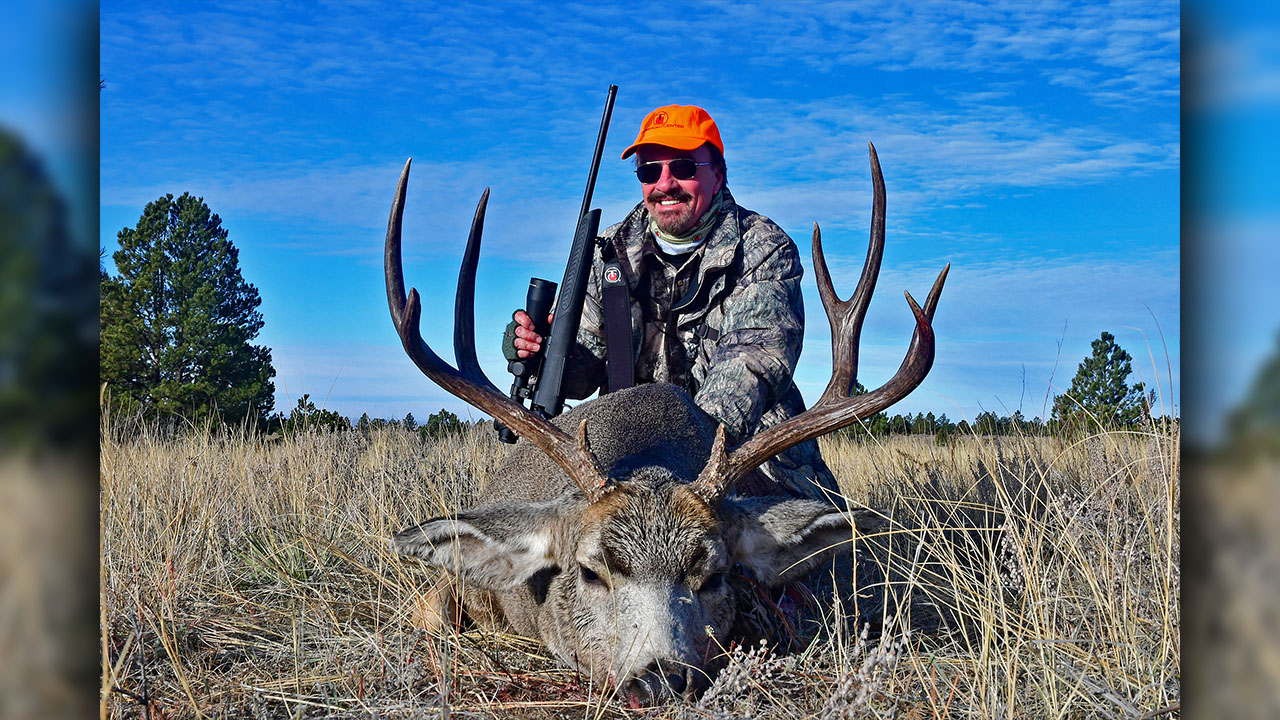
The chief benefit of using a MPBR zero is that it’s fast. You simply hold dead on for a target within your predetermined range limitation. Dialing scope turrets to the correct distance in the field may take time you don’t have. I vividly remember shooting a nice mule deer in Wyoming when I had about two seconds to make the shot before the buck disappeared into the woods. Had I dialed for distance, I never would have tagged that buck.
This doesn’t mean that dialing turrets is a bad thing. It means the MPBR zero is better if you only plan to shoot animals within 300 yards or so, using most modern centerfire rifle cartridges and a reasonably accurate rifle. If you are likely to take longer shots, dialing turrets or using Bullet Drop Compensating (BDC) riflescope reticles is the way to go.
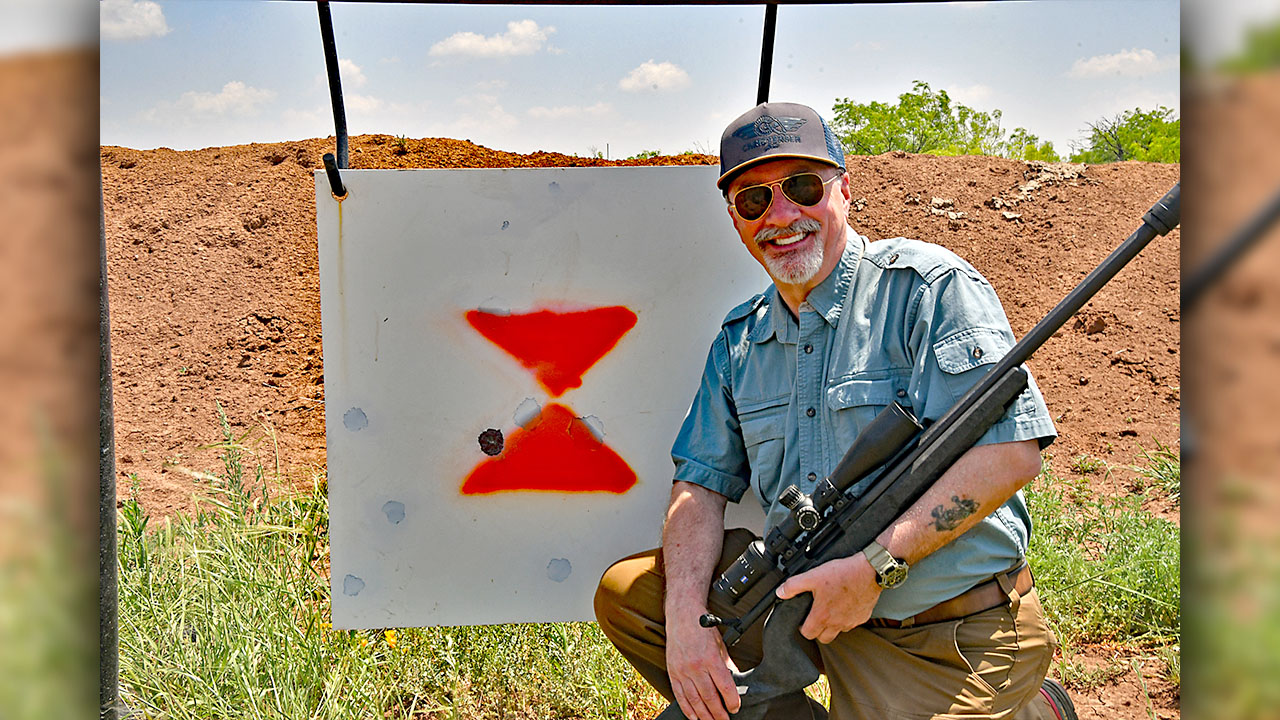
While I have shot animals out to 500 yards, and targets beyond one mile, I prefer in most cases to hunt using the MPBR method. That’s because I grew up as a Western hunter, and I prefer stalking to get within range rather than relying upon equipment to assassinate an animal at long range. Call me a Fudd. I don’t mind. That’s my personal preference. Yours may differ, and that’s fine.
Here’s another piece of Fuddish advice. If you’re going to shoot at animals at long range, don’t just rely on math to put your bullet on target. Practice shooting at the maximum distance you plan to take a shot, and every 100 yards in between, to verify that your bullet is going to hit where the math says it will. Those of us with decades of field experience know that the math does not always add up. It’s not uncommon for point-of-impact to be spot on at long distance, but a little lower or higher at mid-range than it’s supposed to be, or vice versa. Bullets do not always behave the way mathematical formulas say they are supposed to behave.
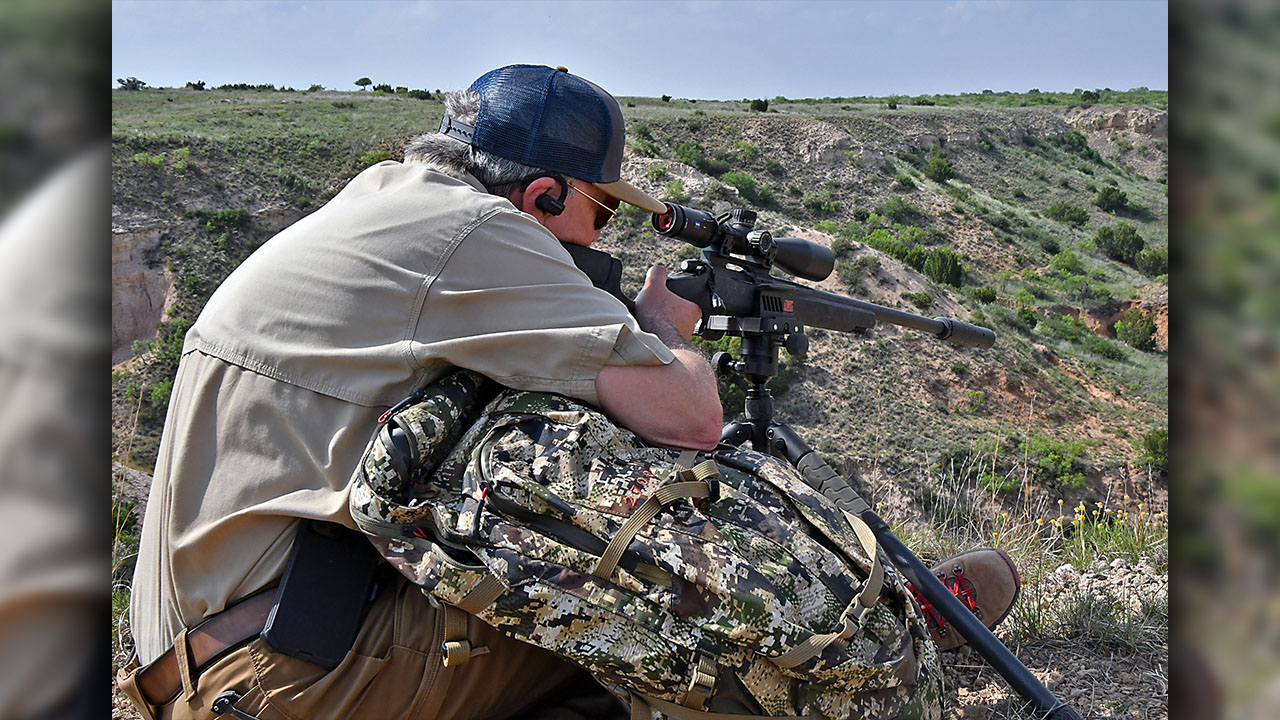
While you’re at it, practice shooting at those distances from a variety of field positions rather than assuming that your accuracy at the bench will automatically translate into the same accuracy in prone, kneeling, or improvised field positions. These positions can alter your eye-scope alignment — and even your trigger pull — enough to cause a significant shift in point-of-impact.
Another piece of Fuddish advice: take a rest…always. Game animals deserve your best effort to place a precise, quick-killing shot. Whether you use shooting sticks, bags, or whatever, carry some sort of rest and learn how to build a solid shooting position in the field. Some of my lever gun-loving pals will disagree with this, asserting that manly men are meant to shoot offhand while standing on two legs like manly men should. Of course, when doing so, they are typically shooting at relatively close range and not trying to kill a deer, pronghorn, or elk at 400 yards.
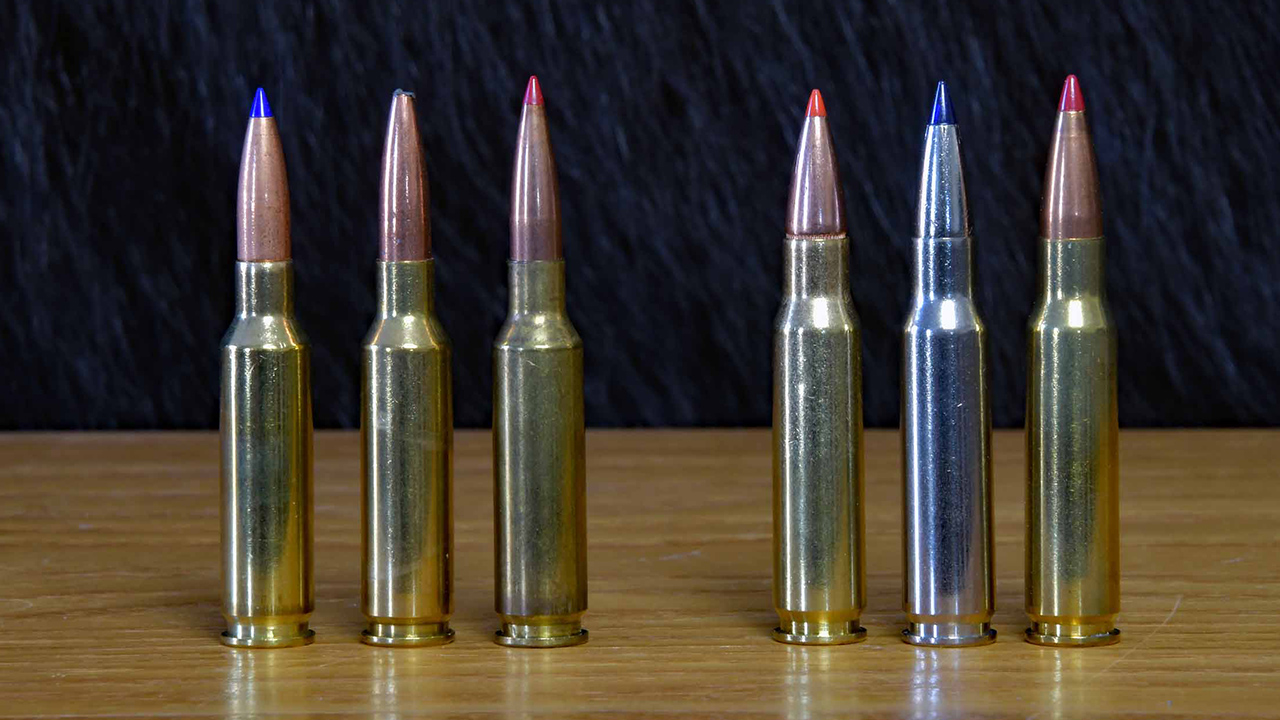
If possible, when hunting with factory ammo, use rounds from the same box with which you zeroed the rifle . There can sometimes be subtle differences between lots and even boxes of ammo.
Learn to read the wind and know how it affects your bullet’s flight. Understand that whatever the wind is doing while you’re aiming will be history when the bullet leaves the barrel, and it’s all too easy to miss by overcompensating and holding too far off an animal. When you’re unsure, here’s a Fuddish trick that may save you. Wait until the animal is broadside, facing into the wind, and put the crosshairs on the leading edge of the chest. This gives you all the animal’s chest cavity as a margin of safety unless you’re shooting at truly long distance or the wind is howling.
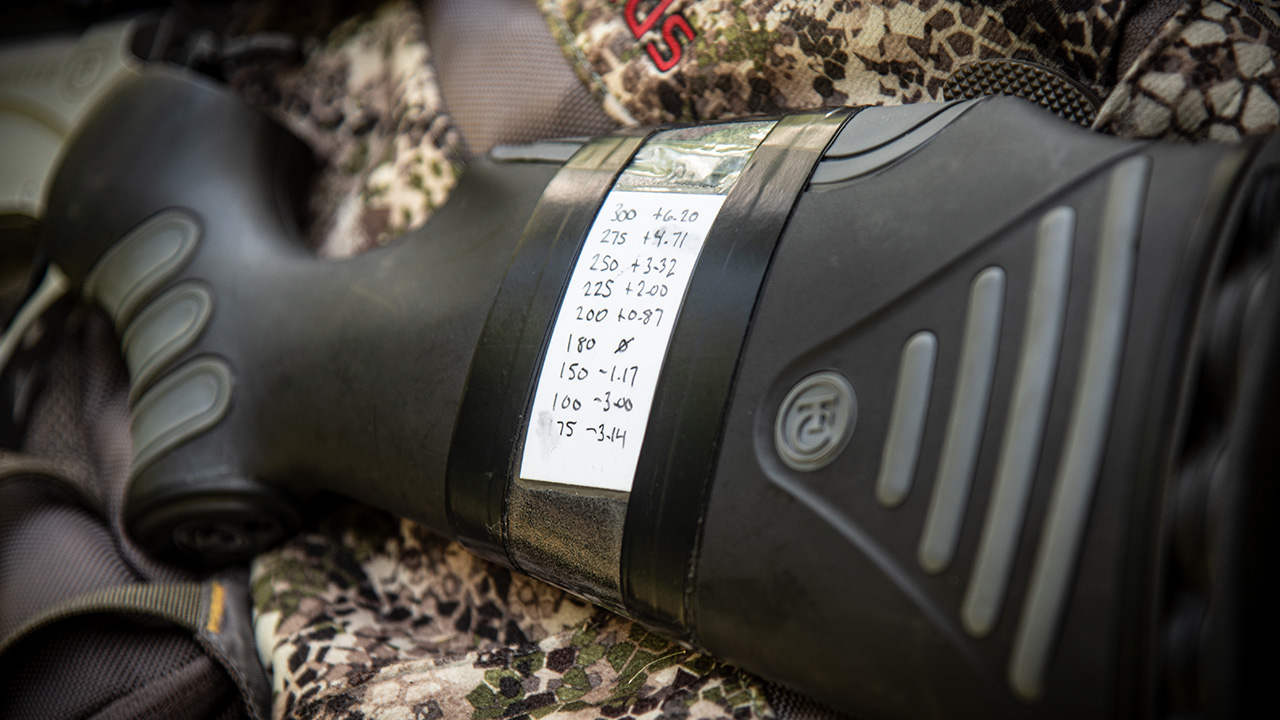
If you’re going to dial, make a dope card. Tape it to the stock of your rifle so you can see corrections at a glance, which is much faster than fishing a card out of your pocket.
Finally, it you’re going to hunt, learn how to actually hunt. Learn the differences between forms of still hunting, stand hunting, spot-and-stalk hunting, et cetera, and when one technique is better than the others. Learn about the animals you’re hunting and how they behave under different conditions at different times in different parts of their habitat. Learn what they like to eat and how to pattern their behavior to increase your odds of success. Learn how to judge trophy quality in the field. Learn about other animals in the ecosystem you’re hunting in. Learn woodcraft, navigation, and survival skills.
Learn that hunting isn’t just about hunting. It’s about the joy of seeing sunrises in places that others never see, and finding peace from spending quiet, contemplative time in nature.
If you can’t be bothered to learn any of this, you’re just a shooter, not a hunter. So maybe think twice before labelling someone a Fudd. They may just have some answers that you and your technology don’t yet possess.
- In Defense of Three-Shot Groups and Other Fuddisms - August 10, 2026
- ACCURACY PROVEN! Benelli’s Lupo Alpha Bolt-Action Rifle - July 13, 2026
- TESTED: Riton 5 Primal 3-18×50 Riflescope - December 24, 2025