Steadying a rifle is neither the first nor the last step to a center hit. It’s just the most difficult.
by Wayne van Zwoll
“Is the sight on target? OK. Hold it still now…”
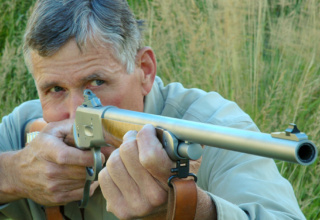
That’s common coaching, but worthless. No one can hold a rifle still. All we can do is limit our body’s motion and grab any inert support within reach.
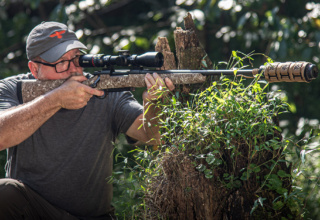
Prone, sitting, kneeling, or standing, the first requisite for a center hit is a position that allows the sight to relax onto the target. Taking advantage of the rifle’s natural point of aim, you minimize the shake of pounding pulse, twitching muscles, and the incipient slip of joints on your rickety frame. There’s still wobble, but you’re not inducing more by trying to aim where the rifle doesn’t want to point. If the sight orbits about the target’s center, it will spend most of its time near that spot. And the bullet will land there. The closer you can get to the ground, the steadier your aim. As a tall tree sways to a breeze but a storm won’t move a stump, so your body becomes more stable as you lower its center of gravity. There’s less surface exposed to wind, but also less shimmy imparted by your heartbeat and tiring muscles. Height magnifies shake.
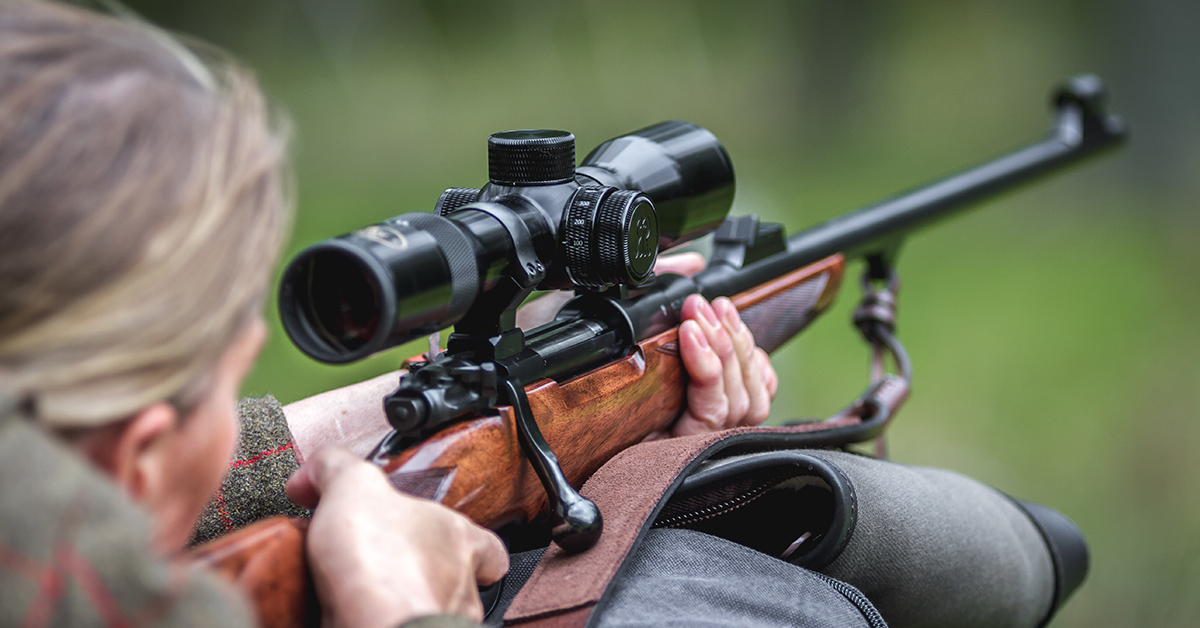
Another advantage of a low shooting position is greater ground contact. Offhand, only your feet kiss Mother Earth. Sitting and kneeling, your body is a tripod. Prone, a veritable pasture bears your mass and absorbs your quivers.
Support for the front of the rifle adds stability, too. I get that from a rifle sling, having learned its value decades ago in competition. When planning to use a borrowed rifle on a hunt, I pack my Brownell’s Latigo sling. More than a carrying strap, it has a loop that adjusts independent of sling length. In use, it’s taut from the front swivel to above the triceps of my left arm, which is locked against a knee sitting and kneeling and gripped by the ground prone. Thus, the sling has a low “anchor” as it transfers rifle weight from left arm to shoulder and snugs the butt into my other shoulder. The sling’s rear section is loose. My match rifle’s sling has no tail at all because I don’t carry that rifle on my shoulder.
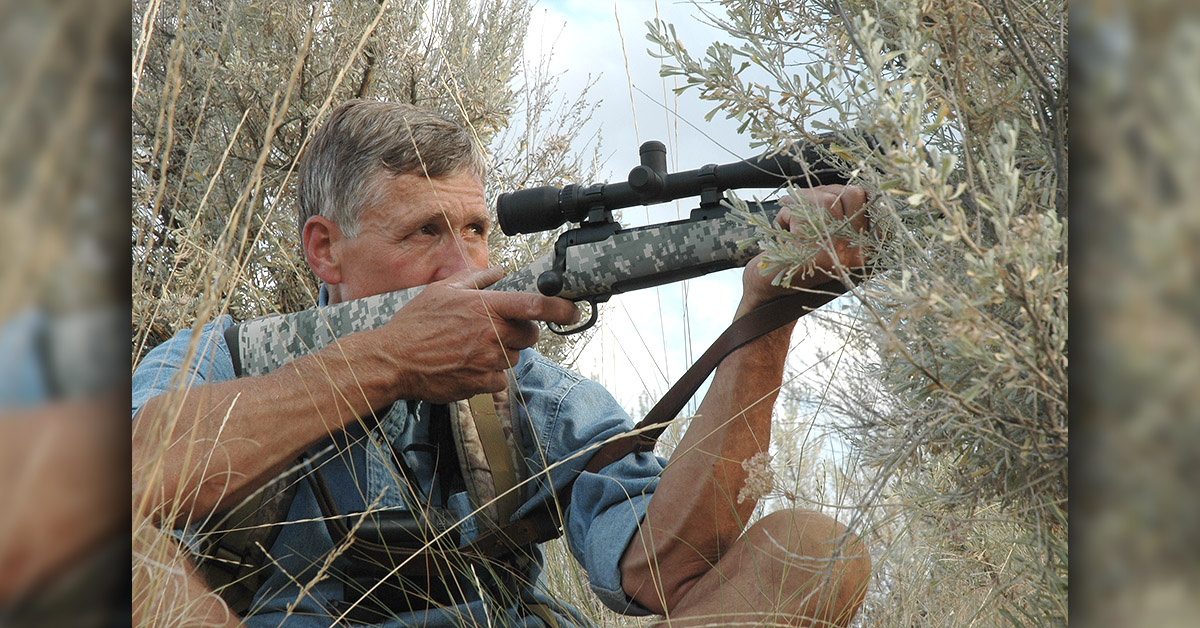
A shooting sling is of little use offhand. With no way to secure the left elbow, you can’t bring the front section taut.
So effectively does a sling steady a rifle that in prone matches aperture sights often deliver scores equal to those shot with 20x scopes. Given the choice of a deer rifle with good metallic sights and a sling, or a rifle with a scope and no sling, I’d opt for “irons” and the sling, even where long shots are the rule.
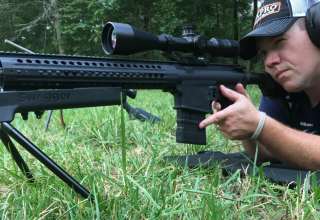
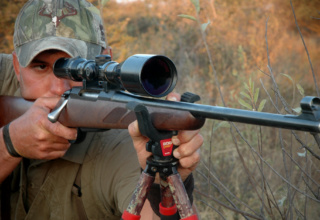
Still, few hunters routinely shoot with a sling these days. The bipod has upstaged it. Aluminum, titanium, and carbon fiber (CF) make bipods lighter. Long leg extensions suit them to sitting and kneeling positions as well as prone. Instead of relying on the press of your arm against a knee, a bipod plants two feet solidly upon rock or in the earth. Infinite leg adjustments adapt it to uneven terrain, even steep slopes. A bipod has no contact with your body so, unlike a sling, doesn’t carry pulse-bump to the rifle. While not scabbard-friendly or an easy fit in rifle cases, most bipods can be quickly dropped and attached.
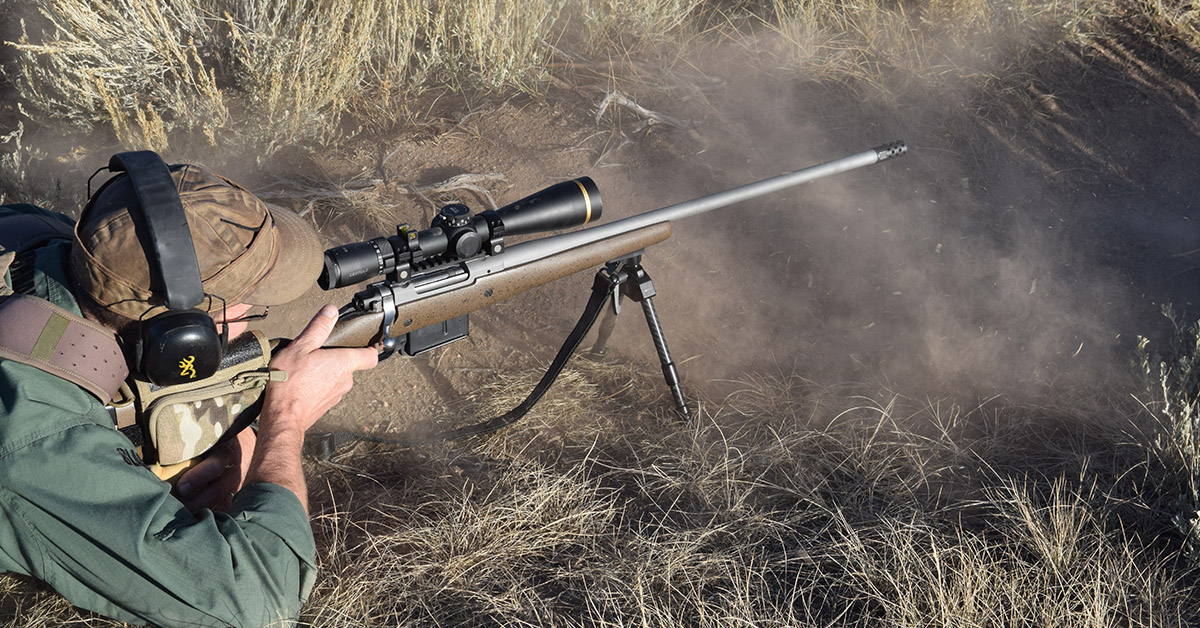
Traditionally, bipods have been pinned to the rifle’s front swivel stud. Newer options include M-LOK slots and Versa-Pod’s spigot mount. Embedded or affixed to an adapter, this steel peg protrudes from the forestock parallel with the barrel; the bipod slides over it. Side-mounted swivel pockets on “tactical-style” bolt rifles don’t pair well with a bipod or a shooting sling. My Gunwerks rifle also has a short Pic rail up front to accept a Versa-Pod adapter.
A bipod isn’t all sugar and cream. It adds front-end bulk and weight to the rifle. Depending on the attachment, it can chafe your shoulder on the carry. Some grab brush in thickets and clack against rock on cliff-side trails. To deploy most bipods, you must pull each leg into place. Then there’s the added motion, noise, and lost time as you adjust it for shots begging taller support.
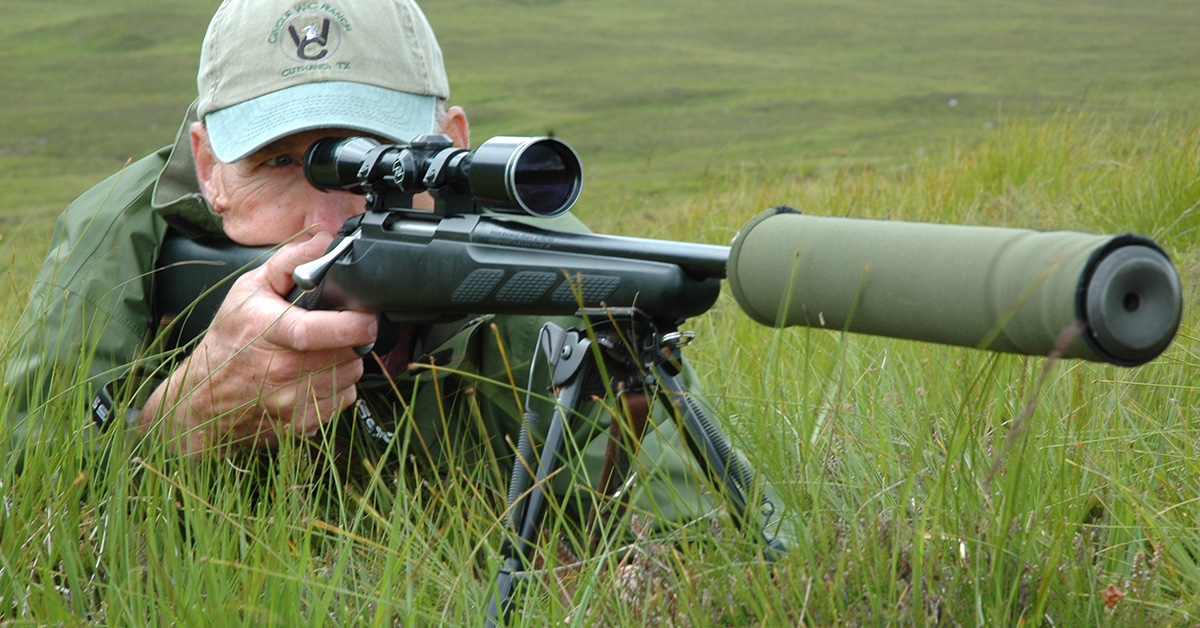
The proliferation of bipods has lured me to try several. I’ve returned to the Harris bipod, designed in Detroit in 1965 by Gerald (Jerry) Harris. A decade later, he moved to Barlow, Kentucky, where, in 1979, he established Harris Engineering with Margaret Harris and Susan Wilkerson. Stout, affordable, and easy to install and deploy, it’s made of steel. I lean hard into bipod support and don’t want it to yield any more than joints demand. There is an argument in favor of limited flex in bipods: It permits modest adjustment in aim after you’re in position.
As with chain saws and automobiles, the benefits of a bipod depend a great deal on how it’s used.
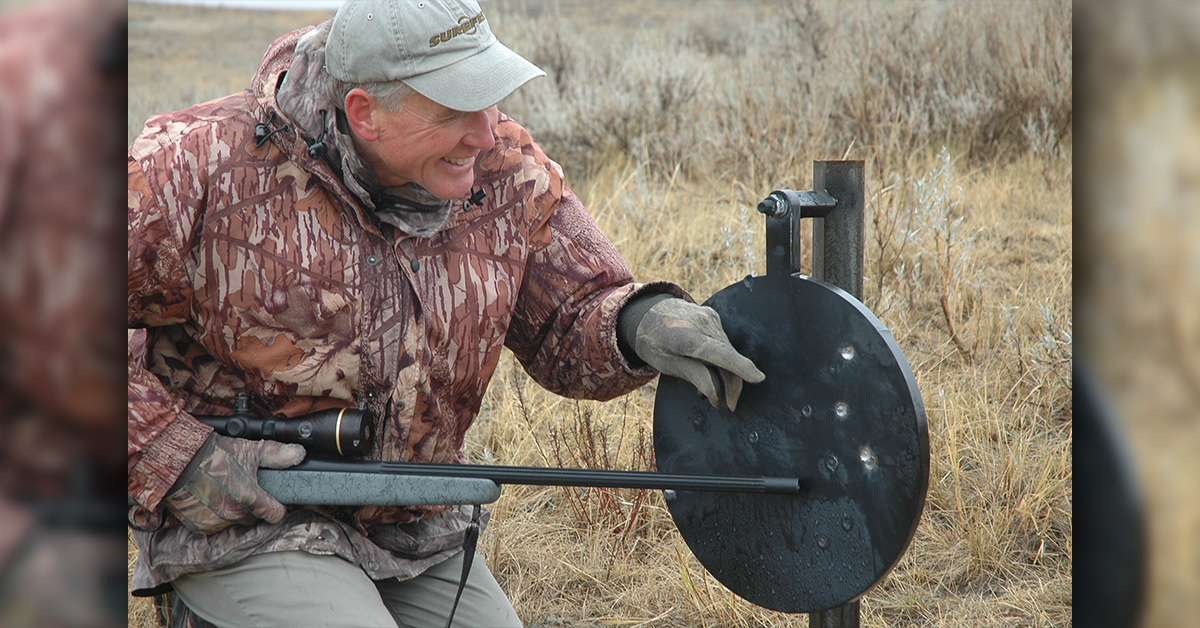
Most of my shooting over bipods has been prone at steel targets far away. Most results have pleased me. As to the muffed shots, the bipod was innocent. One day, at ranges to 1,000 yards across varied terrain, I had the good fortune to smack every plate. The competition included just one fellow with a clean score. In a sudden-death shoot-off, I added too little elevation. The bipod just steadied the rifle where I aimed.
Consistent hits result from consistent technique. On a hunt, landform, weather, even clothing can force changes in the most practiced shooting position. Game about to vanish can nudge you to fire before your pulse subsides. Pressure on the bipod can also affect where the bullet goes. When I fall prone, bipod legs, already sprung, hit the ground near enough that when my belly lands I must shove the rifle ahead to get proper eye relief as I cheek it. This push gives the bipod a forward lean that jams its feet into grass or dirt. With my cheekbone, it also presses the rifle down so the feet won’t slip, even on rock.
A solidly set bipod ensures the rifle’s butt is snug in your shoulder, mitigating recoil’s jab and its displacing effect on the rifle. Recovering aim then burns less time.
Pressure forward and down from the rifle’s wrist loads the bipod, putting up-pressure on the forestock. Consistency here matters! As varying sling tension can cause shots to string vertically, so changing the push behind a bipod moves bullets.
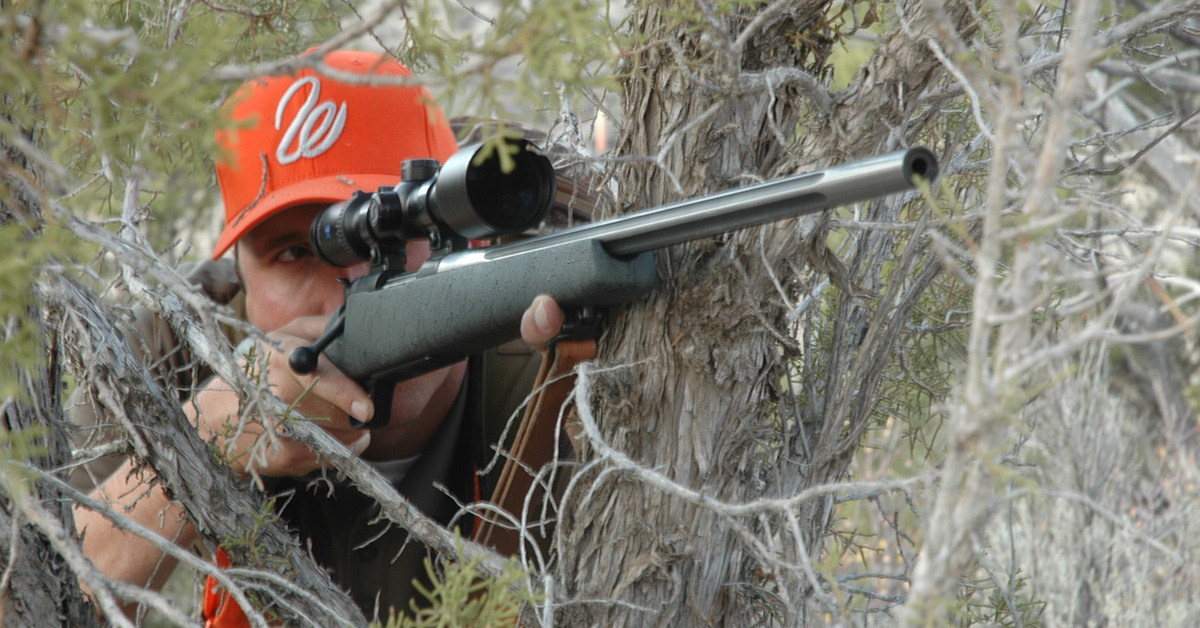
What if conditions don’t permit timely bipod set? Well, as in moving a refrigerator, anemic assist is better than none. But many hunters are too soon satisfied with bipod position and pressure — just as they can hurry themselves into a “good enough” position and accept a shaky sight picture. Undue haste before a shot can ruin it as surely as jerking the trigger.
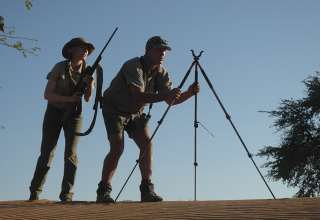
No trim, lightweight bipod that folds neatly into the rifle can help with offhand shots. Ironically, offhand is the least stable position. It’s also the go-to option for hunters compelled to fire at rousted game scooting for cover or those whose bullets must clear tall sage or long grass. Crossed sticks have served as supports from all positions (even horseback!) since shooters lit fuses on 12th-century hand-cannons. They were used by post-Civil War market hunters sitting in black-powder smoke to sweep the last bison herds from our Great Plains. In Zimbabwe in the mid-1980s, crossed sticks, bound at their junctures with strips of leather or inner tube, seemed to me very slim and flexible. Native trackers handled them deftly. Sticks appeared like magic in the perfect place at just the right height under the rifle, sometimes before I saw the game! Commercial long-limbed bipods and tripods have since blessed sub-Saharan Africa.
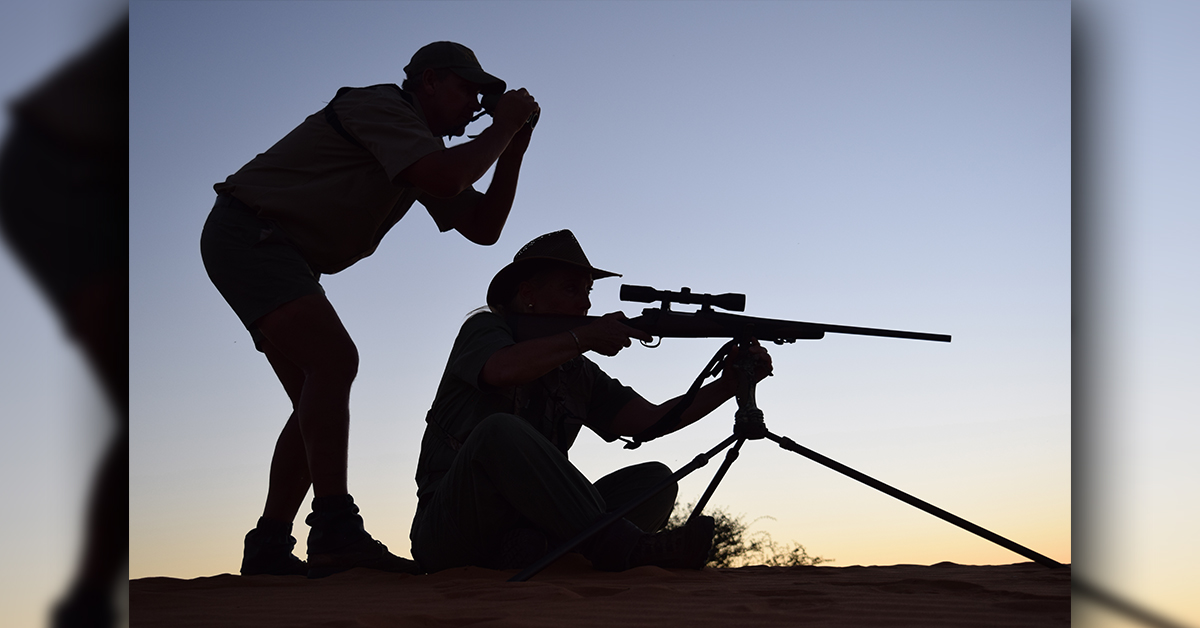
Three legs are much steadier than two, nixing the rocking motion of novice hunters who haven’t learned to plant bipod feet well forward. That way, as the hunter leans into the rifle, the feet dig into the ground and apply steadying pressure like that of short bipod legs prone, though the slant is opposite.
Commercial tripods have gained favor because they’re easier than sticks to control with one hand, and height adjustment can be made quickly without re-setting the legs, then locked. The grip-actuated ball on some models affords smooth lateral and vertical shift to refine aim or follow moving game. A padded cradle babies the rifle and can keep it from slipping or twisting.
Of course, a commercial tripod lacks the charm, simplicity, and light weight of slender hand-pared sticks. With either, you must take control as soon as they come to hand. First-timers on safari commonly try to direct the tracker holding a bipod under the rifle: “Move it up a little … no, too much … better now, but it’s too far left … a little more ….” Eventually the doomed animal leaves. Grab that support! Move it yourself! It’s not a grandfather clock!
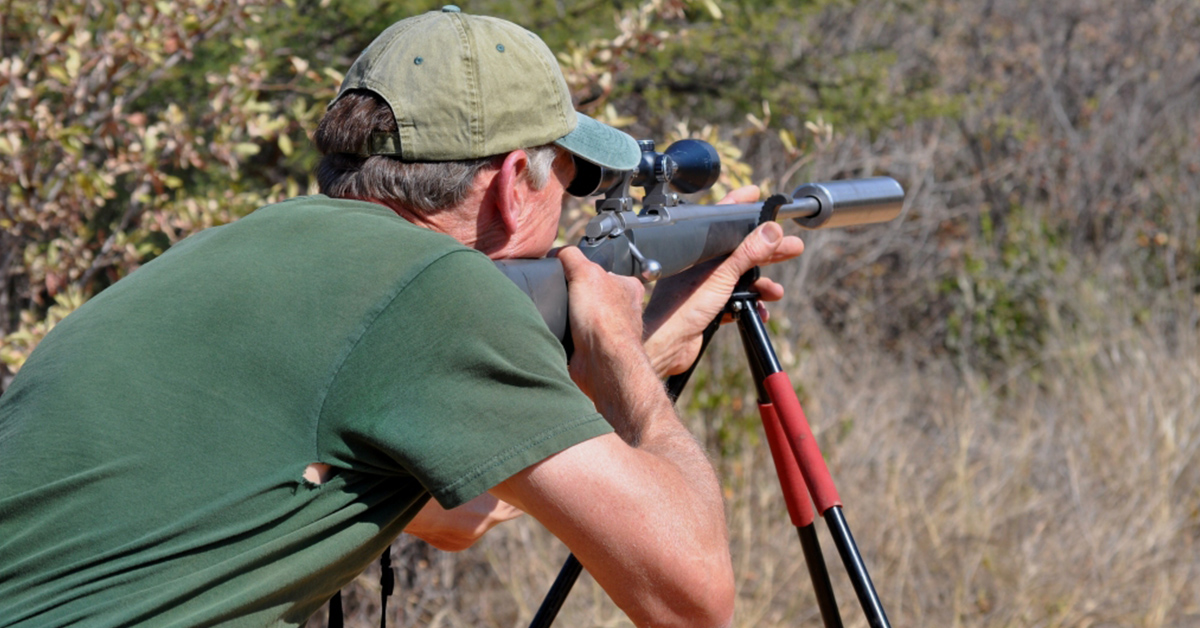
There are myriad ways to rest a rifle on sticks or a tripod standing. Three basic options all require use of your left hand. You can hold the rifle as if using no support, the back of your hand steadied by the tripod, as if by a tree limb or tall rock. Or you can grasp the binding of sticks or the grip of a commercial tripod and rest the rifle’s forestock across the V or saddle. The best technique in my view is to curl three fingers around the neck of the support and pinch the rifle lightly between thumb and index finger. Pork-chop hands allow me to do this more easily than someone with smaller fingers. But most shooters can use most tripods this way, controlling both the rifle and its support as they seek a flat spot on rough terrain or a slot through which to thread a bullet. Control is crucial in recoil. Fumbling your .375 or tripod can void any chance for a timely second shot!
Even with stone-solid support up front, offhand shots are difficult. That’s because standing, your stack of wobbly joints, rubbery muscles, and hiccupping synapses keep moving the rifle’s other end. That is why leaning forward into the rifle matters. As you relax with extended left hand around sticks or tripod, your body’s weight anchors the support. You’re not jiggling or weaving wildly about. Dead-still is still a wish; but you’re closer to steady enough.
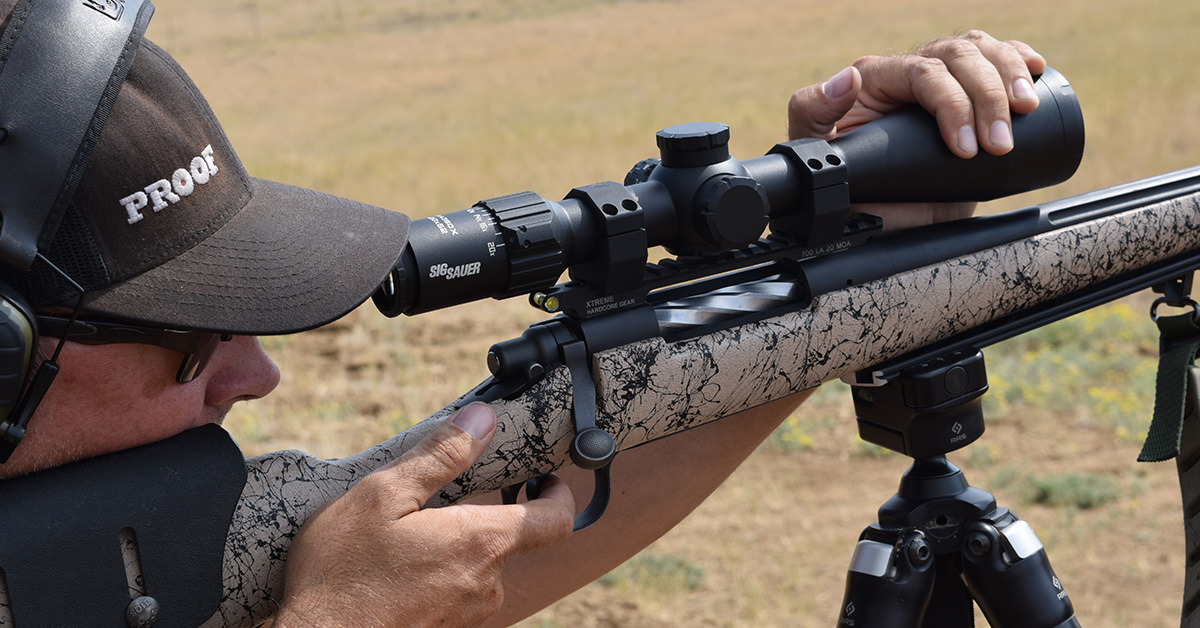
I’ve killed relatively little game from sticks and tripods. But on 20 trips to Africa, I’ve seen many beasts shot that way. Few hunters I’ve hosted have practiced offhand skills, with or without support. PHs have learned that an afternoon firing at targets over tall grass helps prevent misses and crippling hits.
My offhand shooting reached its zenith in my youth, when weekly practice kept my rimfire scores from the bottom of the board. It has deteriorated since the days of nickel candy bars and 22-cent gasoline. Often humbled, I’ve come to recognize when “almost steady” isn’t steady enough. After a client wounded a blue wildebeest with a paunch hit, the PH and I tracked the bull. He spied it looking back from a brush-patch 300 yards off. “Best shoot. Otherwise, we’ll be hours reeling him in.” Alas, his tripod couldn’t keep the reticle from jitterbugging in and out of the wee slice of visible rib. Resisting the urge to fire, I shook my head. The PH scrambled to a tree. “How about here?” I set the sticks on the other side of the bole and arranged my body in a lattice of limbs. “Can you hurry?” he hissed. The bull was more patient and stood until my torso steadied. At the rifle’s crack, he vanished. The “thwuck” of a lethal hit floated back.
Finding game demands more time and effort than positioning your body and steadying the rifle. Care given those final steps of a hunt pays big dividends.
What’s ARCA?
Recently, the ARCA (or Arca-Swiss) way to attach tripods has become the darling of long-range shooters. Fashioned in Germany in the 1990s to marry big cameras to tripods, an ARCA set-up comprises a dove-tailed plate fitted to a rifle’s forend rail and a tripod-mounted clamp that grips it.
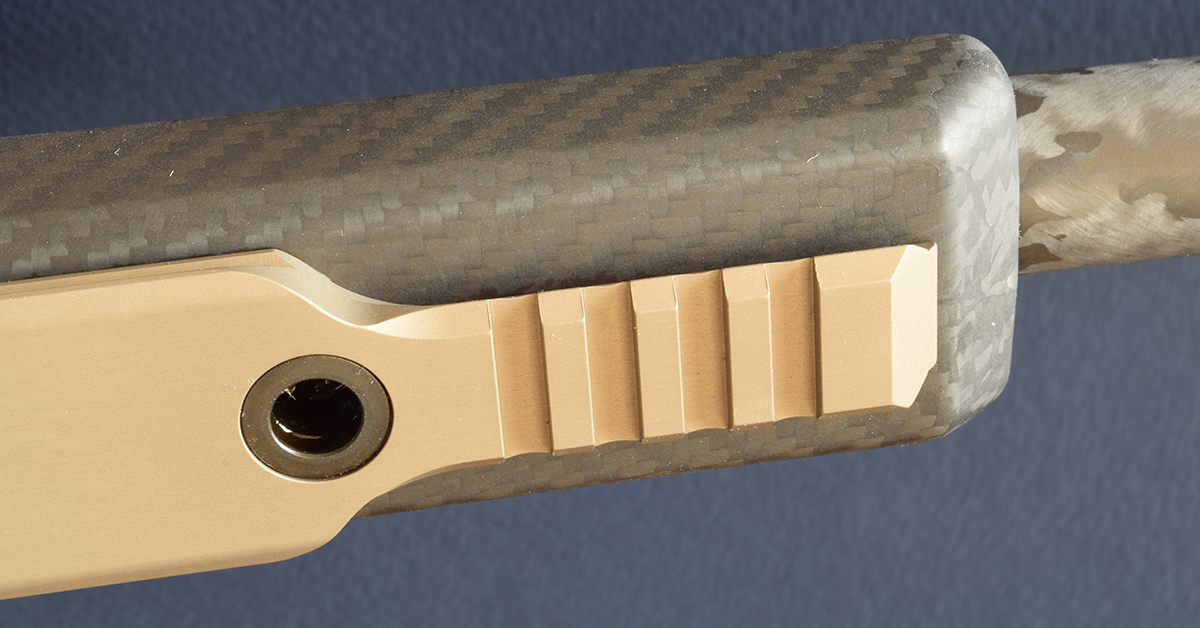
Generous, finely machined mating surfaces make ARCA unions very strong. So joined to a rifle, a heavy tripod becomes a pedestal to support the unattended rifle or steady it for a shot standing. A grip-actuated ball on the tripod can move the rifle incrementally on any axis and lock it onto the target with a twist of your hand.