Right on price, high on features and performance, the new Canik Phantom enclosed-emitter red dot delivers real bang for the buck
by Rob Reaser
A couple days ago, handgun manufacturer Canik announced the launch of Canik Optics. The debut offerings in this new line for Canik includes two optic categories — open-emitter and enclosed-emitter — each of which are available for compact or full-sized pistol applications.
This makes sense for a starting lineup. Compact and micro-compact handguns dominate the EDC choices for most concealed carry practitioners, and with enclosed-emitter red dots gaining significant traction in the last few years among the EDC and defense professional groups, the new Canik optic line — while limited to four initial product offerings — pretty much covers all the bases.
Canik Optic Portfolio
The Canik Optic launch introduces two optics series: the Onyx and the Phantom.
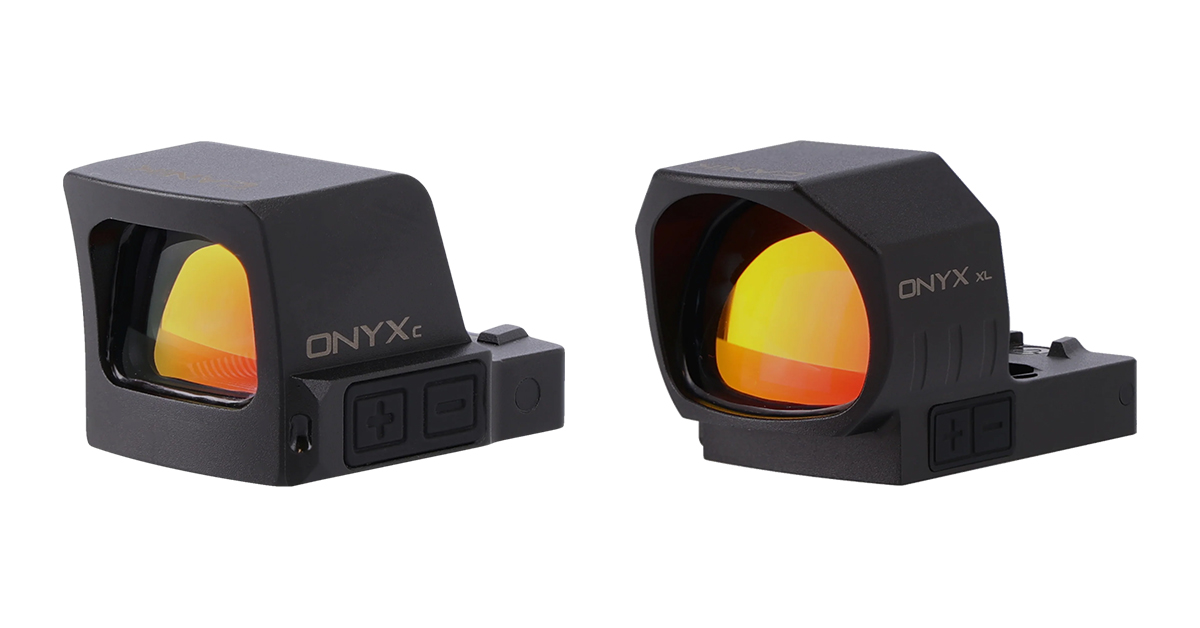
The Onyx series is your conventional open-emitter red dot. The ONYX-c is the smallest of the lot and was developed for use on compact and micro-compact handguns and uses the RMSc footprint. The Onyx XL is a larger unit to fit handguns with an RMR footprint. While suitable for general-purpose use, it is optimal — thanks to its large viewing window — for competition applications as well as for defense.
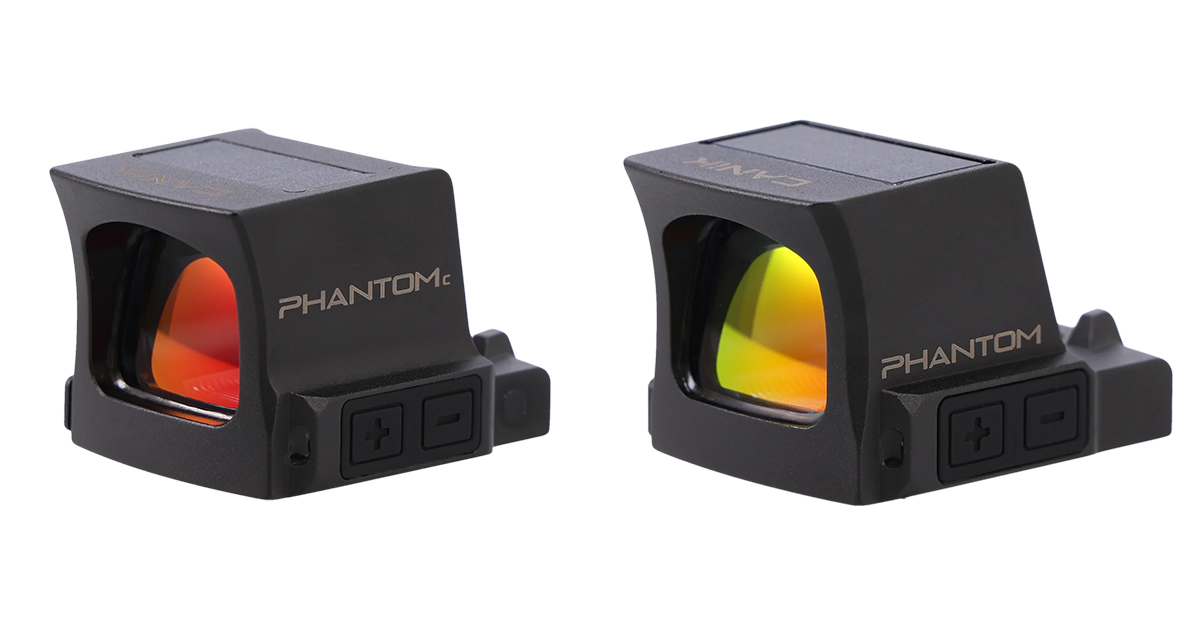
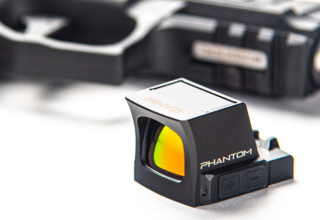
The Phantom series represents Canik’s enclosed-emitter offerings. As with the Onyx series, the Phantom series covers both compact/micro-compact PHANTOMc (Shield RMSc footprint) and full-size PHANTOM (RMR footprint) pistol platforms.
In addition to the enclosed-emitter design, the Phantom series optics are also distinguished by their solar capabilities.
As for price, the Onyx and Phantom series hit a comfortable MSRP mark: $259.99 for the Onyx and $299.99 for the Phantom.
Canik Phantom Overview
For my first rodeo with the new Canik optics, I chose to try out the Phantom enclosed-emitter red dot for a couple reasons.
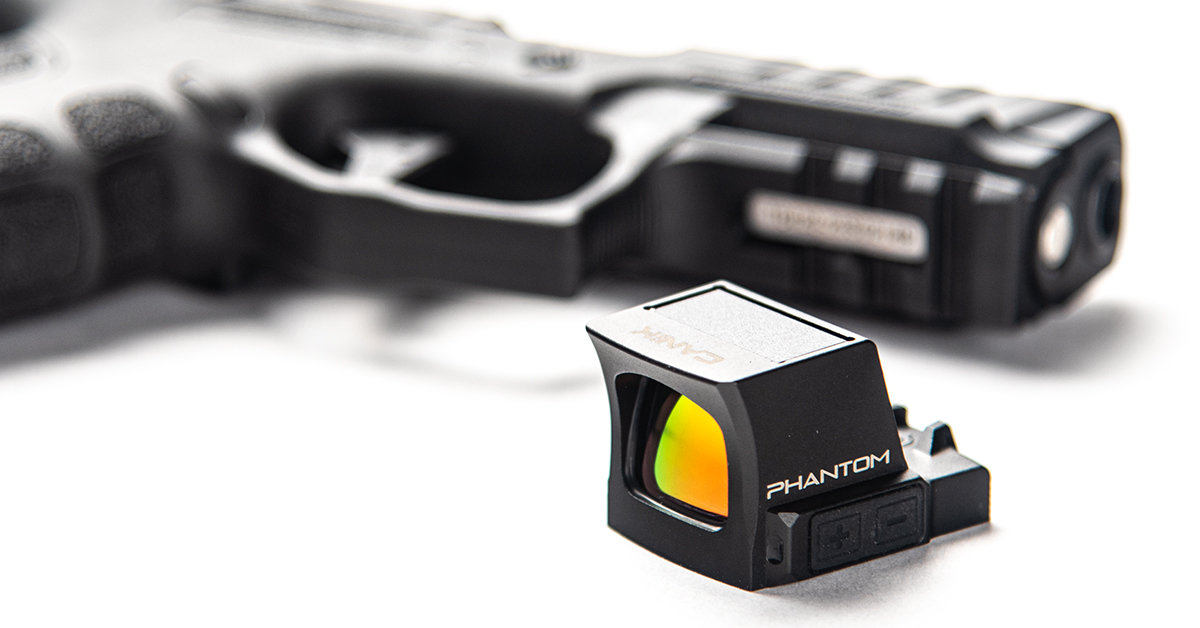
First, I’m totally onboard with enclosed-emitter sights. Daily carry can be a dirty business, so there is great comfort and confidence knowing that the emitter can’t be blocked by random debris or other obstructions. Second, the “dual-fuel” nature of the Phantom means never worrying about the battery conking out and being left with no sight. The solar backup will keep things running.
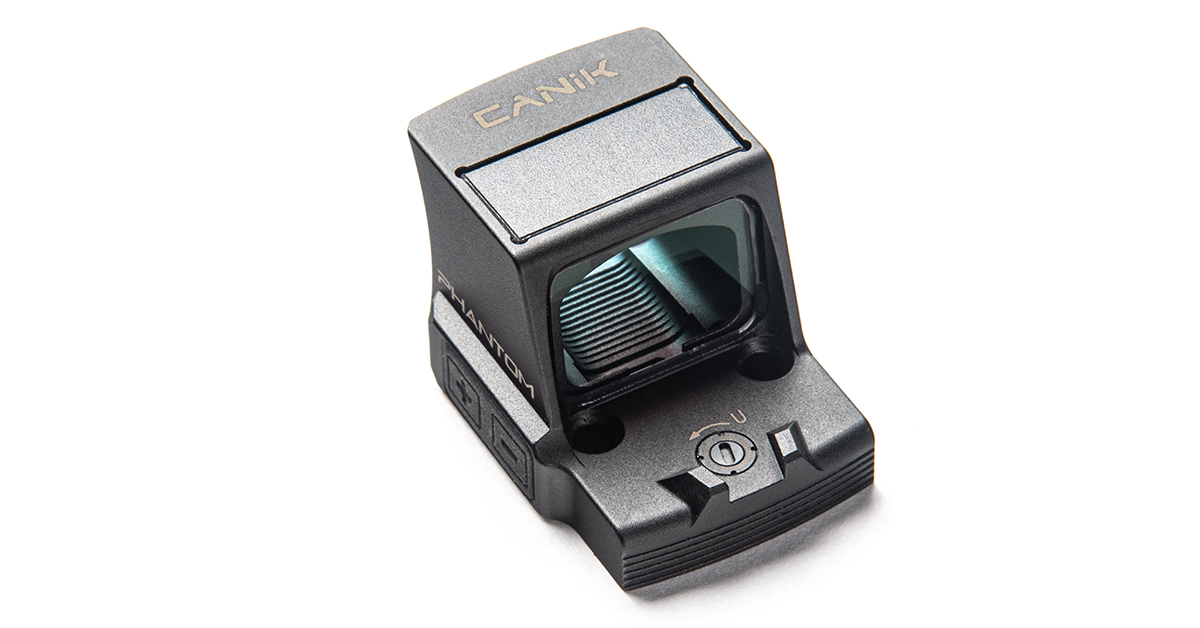
The solar panel is nestled in the top of the unit’s aircraft-grade aluminum chassis. If the battery becomes depleted or malfunctions, the Phantom will continue to operate at all illumination and reticle settings so long as there is sufficient ambient solar light reaching the panel.
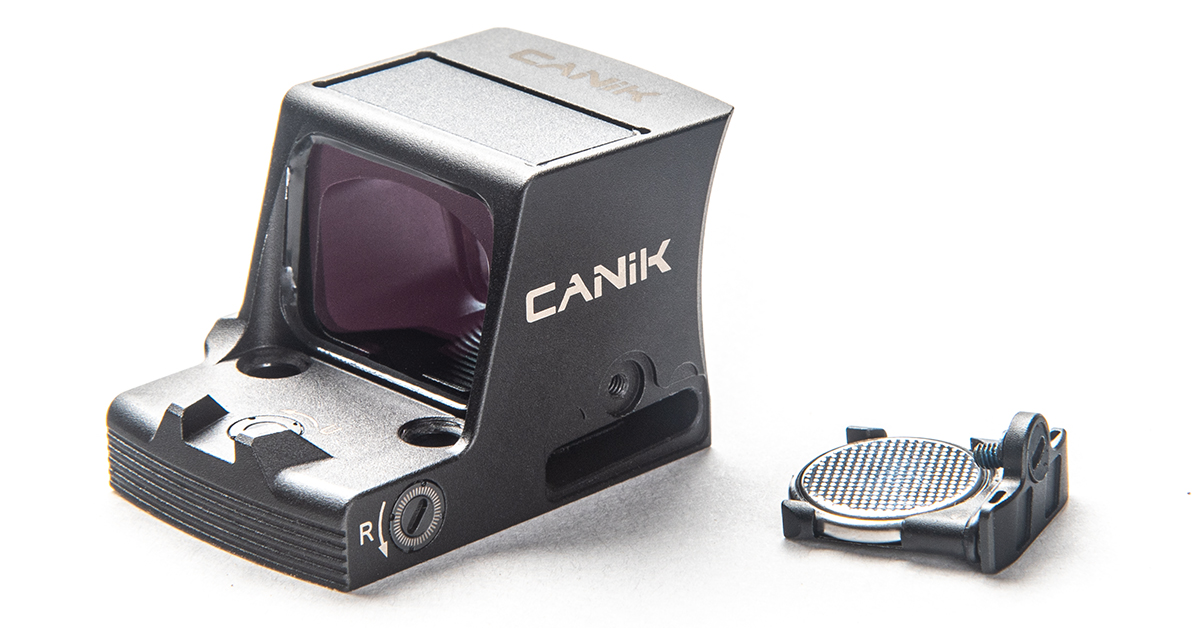
Primary power for the Phantom comes from a CR1620 battery, the compartment for which is located at the bottom of the chassis. This side-compartment design allows for easy battery changing without losing zero, and the low mounting position (versus a top-of-chassis battery compartment) promotes a lower center of gravity relative to the slide — a minor, minor detail, but there it is.
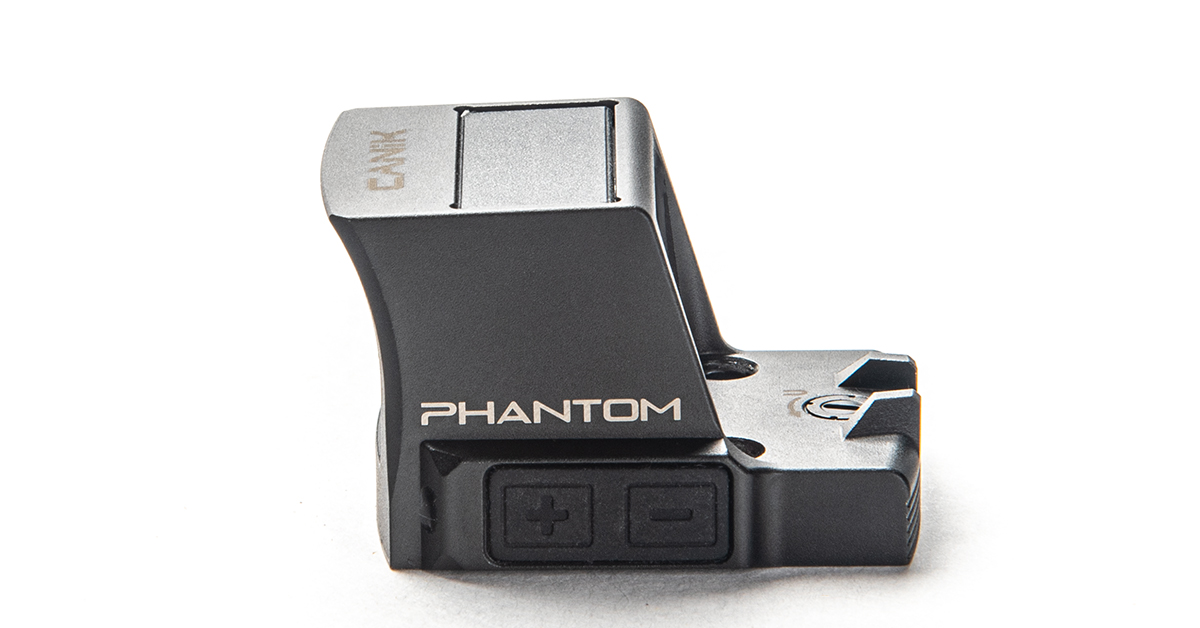
Operational controls are the expected “+” and “-“ buttons positioned on the left side of the housing. These control the 10-level illumination settings (8 daylight and 2 NV) as well as reticle selection, on/off function, and auto/manual brightness control.
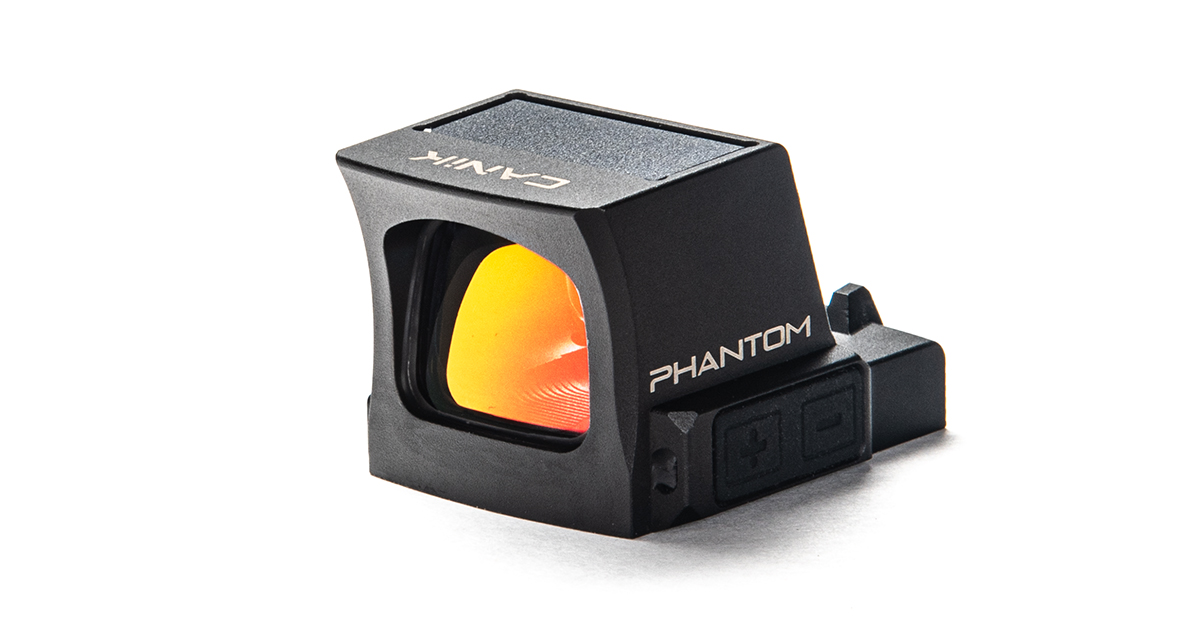
Located in front of the button panel is a forward-facing light sensor. When you engage the auto brightness control, this sensor automatically increases or decreases the reticle illumination based on the ambient light on your sight picture. That is a powerful tool that ensures the reticle remains highly visible when you transition from, say, a dark room to bright sunlight and that the illumination won’t blow out your dominant eye vision should you go from bright light into a dark setting.
It is a slick technology that worked flawlessly during testing (transitioning from outside sunlight to the workshop and into the pitch blackness of my gun closet).
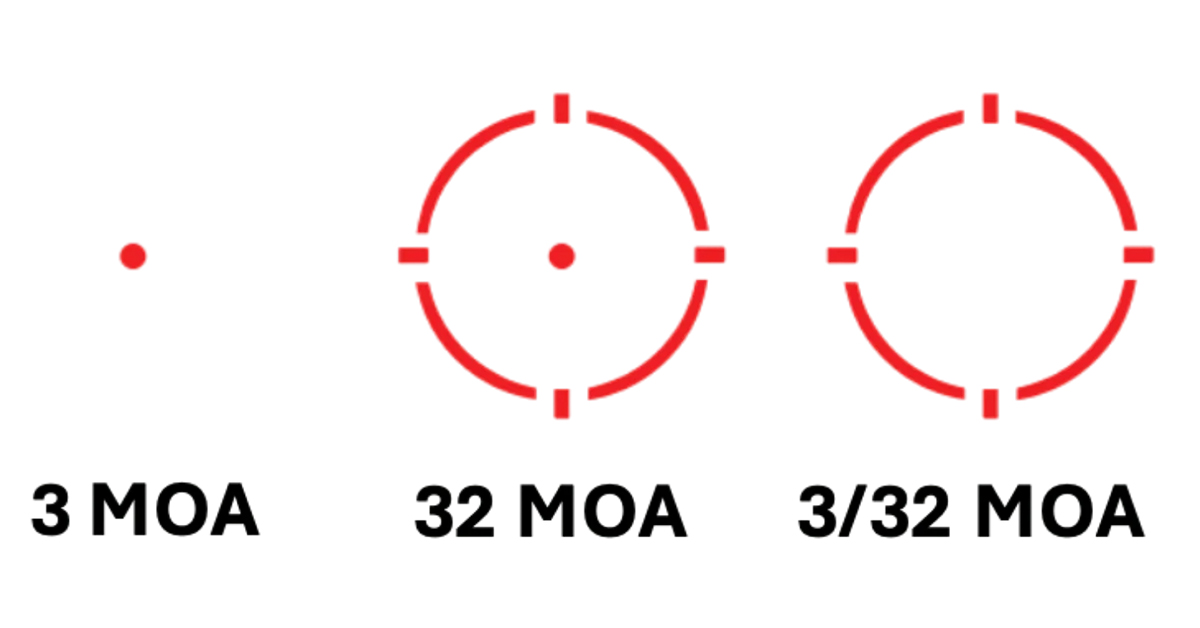
The Phantom (along with the PHANTOMc and ONYXc models) lets users choose between three reticle configuration: 3 MOA dot, 32 MOA circle reticle, and 32 MOA circle reticle and dot combo. Changing between the three involves pushing and holding the “+” button for about three seconds.
The circle reticle isn’t for me, although some users may find great value with this design. I do, though, appreciate the small 3 MOA dot, as it allows for more precise aiming as you stretch out your target distance.
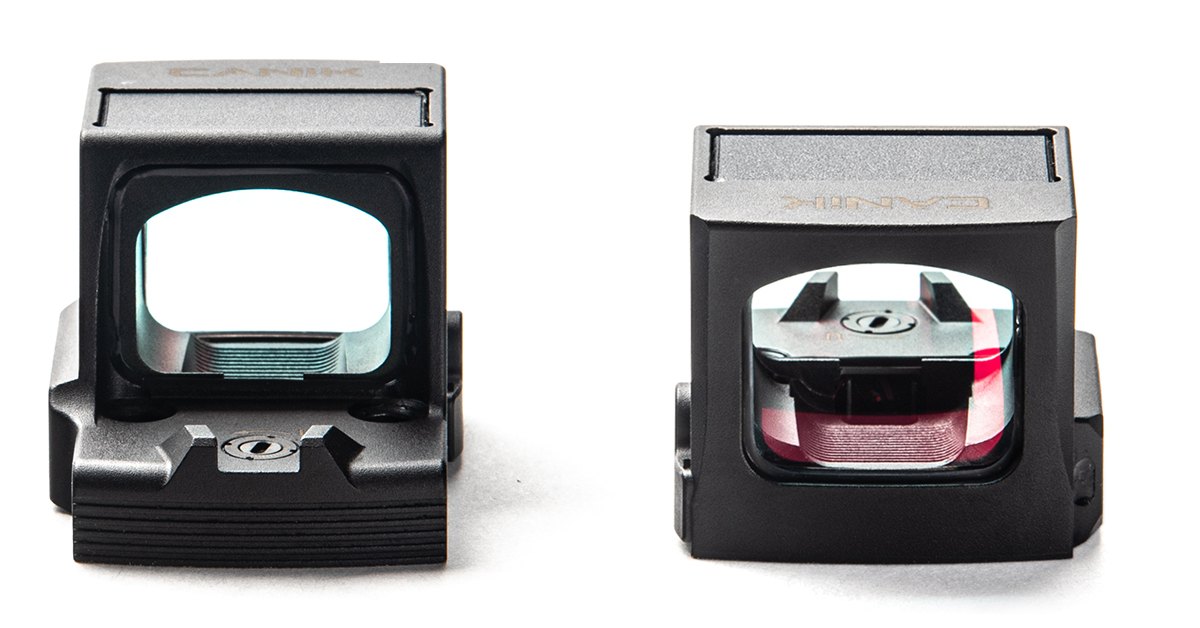
The Phantom’s viewing window is 0.8 x 0.69 inches — smaller than some red dots, bigger than others. I found it to be a good balance that allows for quick sight picture acquisition while permitting a relatively tight profile suitable for concealed carry use.
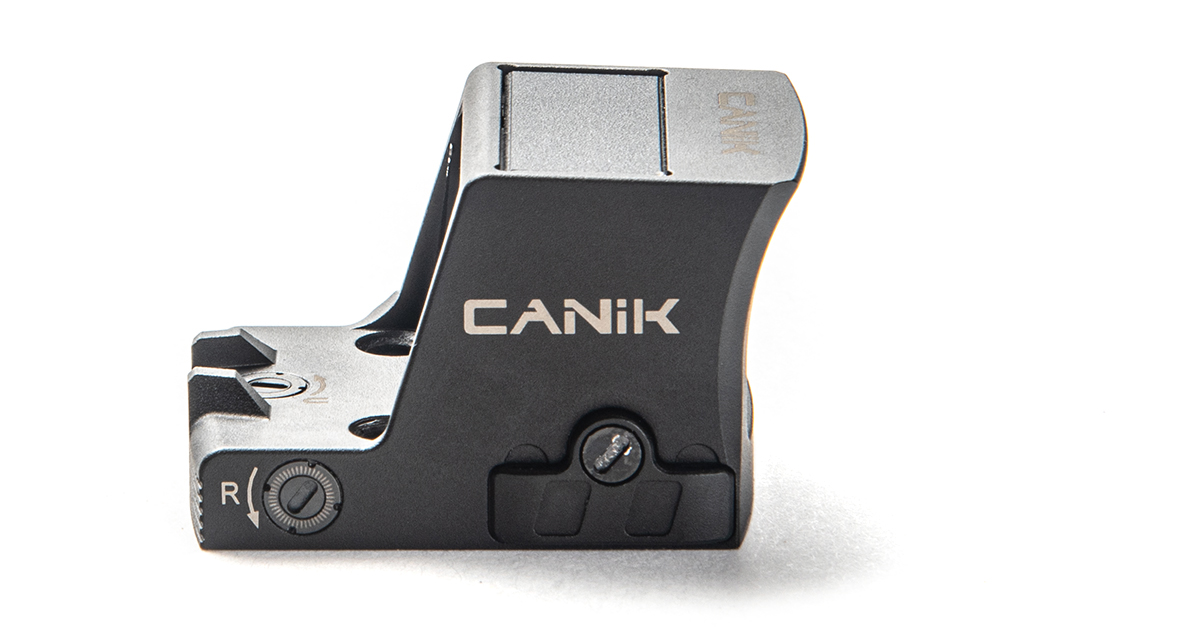
Windage and elevation adjustment are 1 MOA per click. The adjustment screws do offer audible and tactile feedback; however, both are subtle to the extreme. You must feel and listen very carefully to register the clicks. If I could suggest a future upgrade for this optic, this would be the focus.
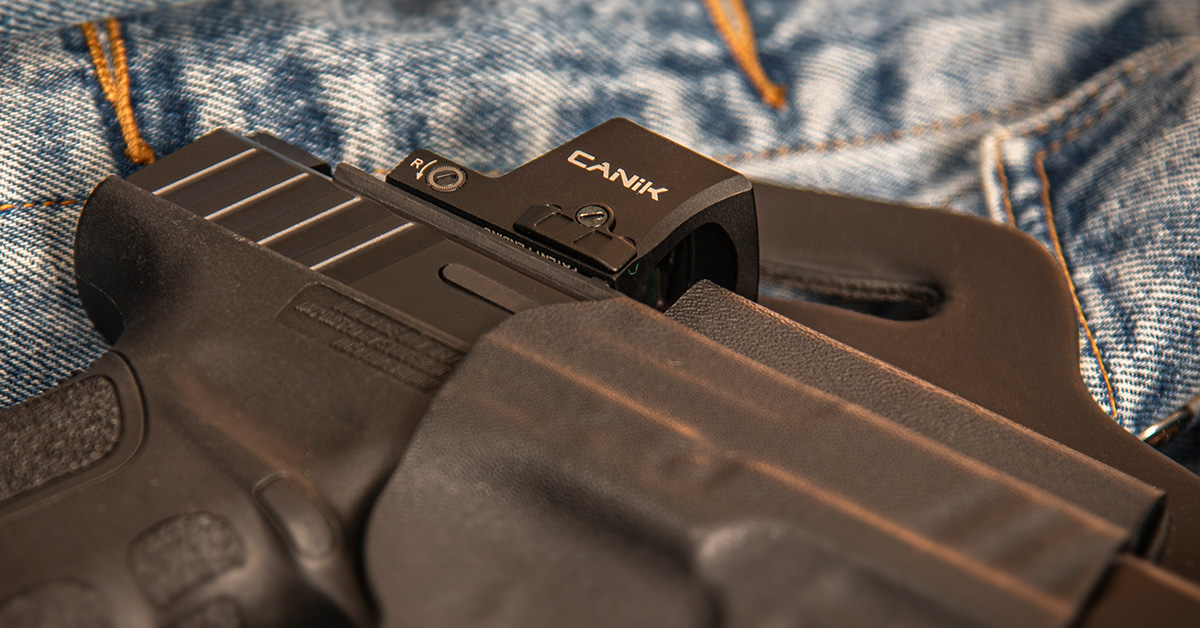
You’ll also note from the side view that the Phantom boasts a prominently curved lens hood in front. Canik calls this the Tactical Concave Face. While this profile serves to keep precipitation off the front lens, its main purpose is to protect the lens during one-hand slide manipulation.
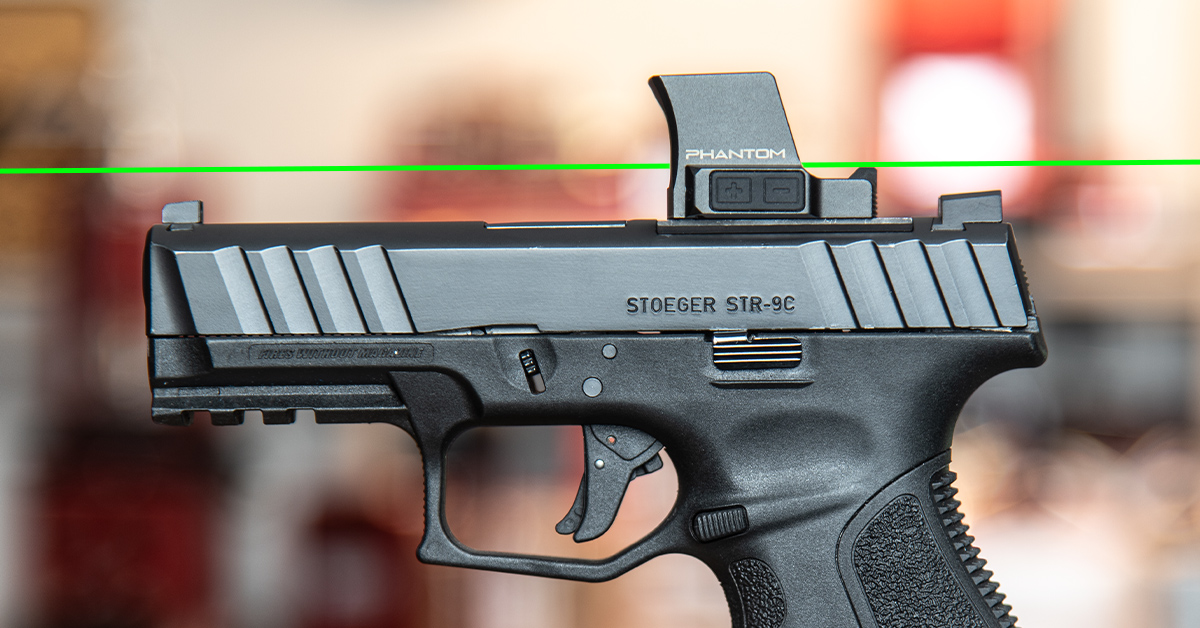
Something to be aware of is that while the Phantom does include an integrated rear sight, you can probably count on needing to install optic-height open sights if you wish to retain backup sight capability. Even if your pistol’s slide is RMR-compatible, allowing for direct mounting of the optic, the likelihood that the Phantom’s rear open sight will deliver point-of-aim/point-of-impact alignment with your gun’s factory front sight is probably nil. My Stoeger STR-9C, which served as the pistol platform for this test, required an RMR adapter plate. That added an additional 0.10 inches to the mounted height of the optic, effectively negating the use of the factory sights — front or rear.
Evaluation Summary
In the couple of weeks I had the Canik Phantom sight in hand, I came to appreciate the features and quality packed into this unit — especially for its $299.99 price point.
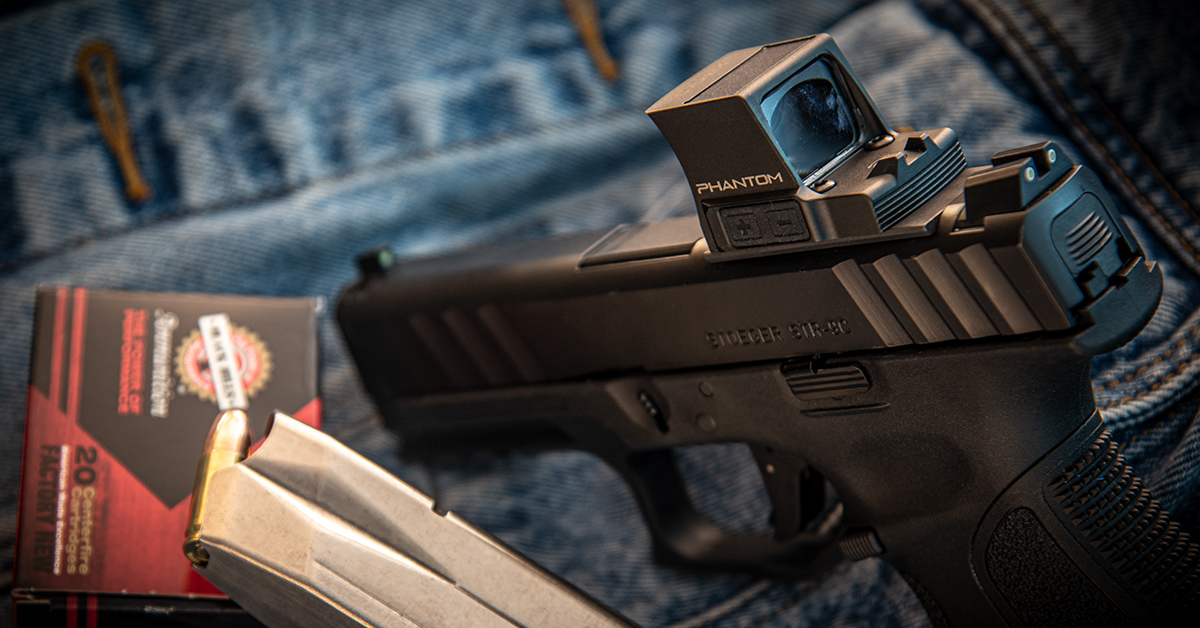
With its dual-power (solar and 50K-hour battery) capabilities, forward-sensing automatic illumination option, multiple reticles, and enclosed-emitter design, it’s hard to ask for more in an EDC-friendly optic. For an enclosed-emitter red dot, the housing is notably short and compact, further lending itself to concealed carry use.
If you’re mindful of your wallet, the Canik Phantom is worth a hard look.
Canik Phantom Enclosed Emitter Red Dot Specifications
- Magnification: 1x
- Reticle: multi-reticle (3 MOA dot / 32 MOA circle / both)
- Mount Pattern: Trijicon RMR footprint
- Battery: CR1620 + solar panel
- Battery Life: up to 50,000 hours
- Brightness: 10 levels (2 NV + 8 daylight) + auto-adjust
- Dimensions L x W x H: 1.77 × 1.24 × 1.10 in.
- Window Size: 0.8 × 0.69 in.
- Sleep Mode: after 4 minutes of no movement
- Motion Activated: Yes
- Housing: aircraft-grade aluminum
- Adjustments: 1 MOA windage/elevation
- Waterproof: IP67
- Operating Temperature: -30°C to +60°C
- Eye Relief: unlimited
- Parallax: parallax-free
- MSRP: $299.99