Able to deliver tight, hard-hitting payloads at turkey-killing ranges, Benelli’s SBE 3 20-gauge with the A.I. (Advanced Impact) barrel is also light to carry and boasts a cream puff recoil impulse. Warriors of the long beard never had it so good.
by Rob Reaser
Last year, Benelli added a few more shotguns to its famed Super Black Eagle 3 A.I. (Advanced Impact) line, one of which was a sweet-looking 20-gauge setup. While the A.I. barrel technology has had duck hunters and clay buster revved up since Benelli first introduced it a few years ago, my engine merely idled.
You see, I have never been able to shoot anything out of the air with a shotgun. I’ve tried. I’ve failed…repeatedly. Can’t do it. Maybe there’s a “horse whisperer” type trainer out there who could help me figure it out. I don’t know, but I doubt it. Thus, I’ve long ago considered myself to be a hopeless case in the art of wingshooting.
But you don’t shoot turkeys on the wing, and boy, do I like to shoot turkeys. So, I saw the new SBE 3 A.I. shotgun in 20-gauge as a way for me to try out this Advanced Impact business and, with a couple boxes of Fiocchi Golden Turkey TSS ammo in hand, see what all the fuss is about.
Typically, I run 3.5-inch magnum loads in my 12-gauge pump shotgun for turkey. I suffer through the pattern testing and red dot zeroing processes with as few shots as possible because, well, 12-gauge magnum loads hurt. A lot. I also suffer the big loads because I hate turkeys. Love the hunt, hate the birds. If you are a veteran turkey hunter, no further explanation is required. You probably hate them, too.
Anyway, by my reckoning, a 20-gauge SBE 3 with the A.I. barrel sounded like the best of all worlds. A good TSS loading like Fiocchi’s Golden Turkey #9 combined with the A.I. barrel should make jelly out of a turkey head without knocking the teeth out of my head.
I got the chance to test my theory last week when I convened with some industry friends at our frequent haunt in southern Ohio. We have hunted whitetails in these habitat-rich Ohio River bottomlands for a few years, but this would be my first outing to pursue the big bird in those hardwoods and abandoned pastures. For the hunt, Benelli loaned me the SBE 3 A.I. 20-gauge I’d had my eye on for nearly a year.
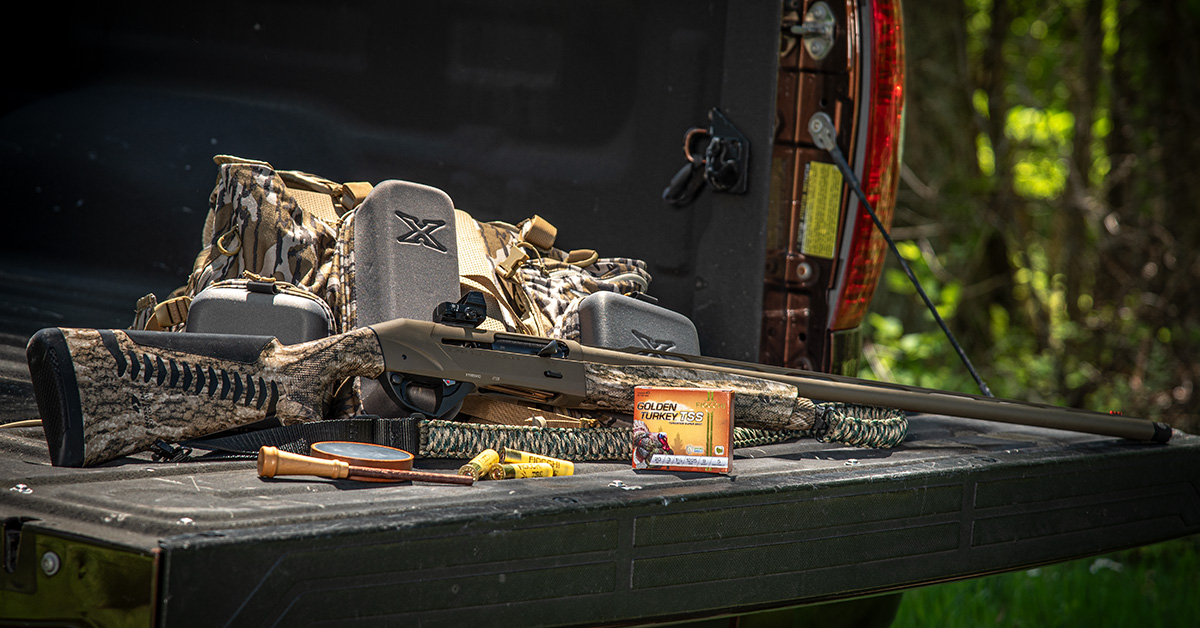
When I arrived at camp, Priority One was to get the shotgun dialed in with the TSS load and see how the shot would pattern at 40 yards.
To the Bench
Now, forty yards — even out to 60 yards — is not a big stretch for modern shotguns and turkey loads, whether you are using TSS, lead, or a hybrid shot blend. Forty- to 60-yard shots, though, is not the goal of a turkey fanatic. This battle is not a fight between beak and bird shot; it’s mental warfare; it’s strategy; it’s pitting one’s nerves, patience, and calling technique against a winged and bearded enemy that has all the advantages and rarely plays by the honorable rules of engagement. The point is not merely to tip over a gobbler at some way out there distance simply because you can. The goal for those of us who love turkey hunting/hate turkeys is to shoot them in the face with a “Take that!” at as close a distance as possible. You want that turkey so close he rings your bell with a lust-fueled gobble before you ring his bell for good.
Nevertheless, patterning your turkey gun at extended distance is important not only to ensure your shotgun/load combo delivers point-of-aim/point-of-impact performance but also to ensure your pellet density is sufficient for a quick, lethal kill.
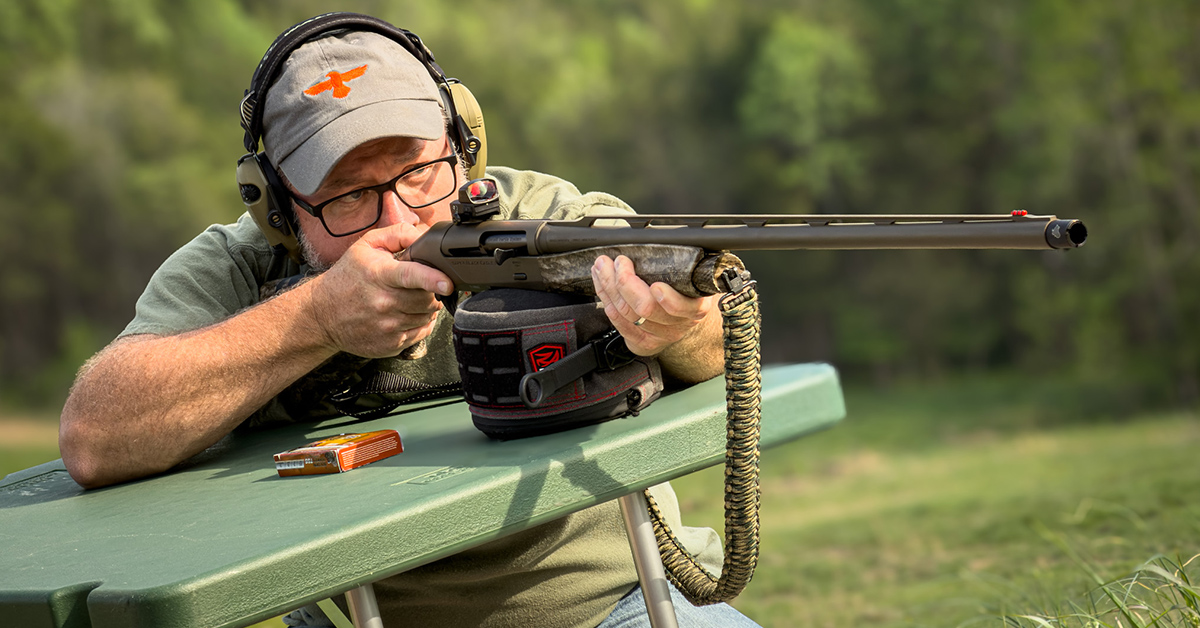
To that end, we set up MTM Case-Gard’s Predator Shooting Table and used of one Real Avid’s new Ratchet Rest shooting bags for support. The load — Fiocchi’s Golden Turkey TSS. The 20-gauge load comes in #9 TSS for a total shot weight of 1 3/8 ounces. With a 1225 fps muzzle velocity, no tom is going to shrug off a hit to the noggin’ with that — assuming the payload hits the mark.
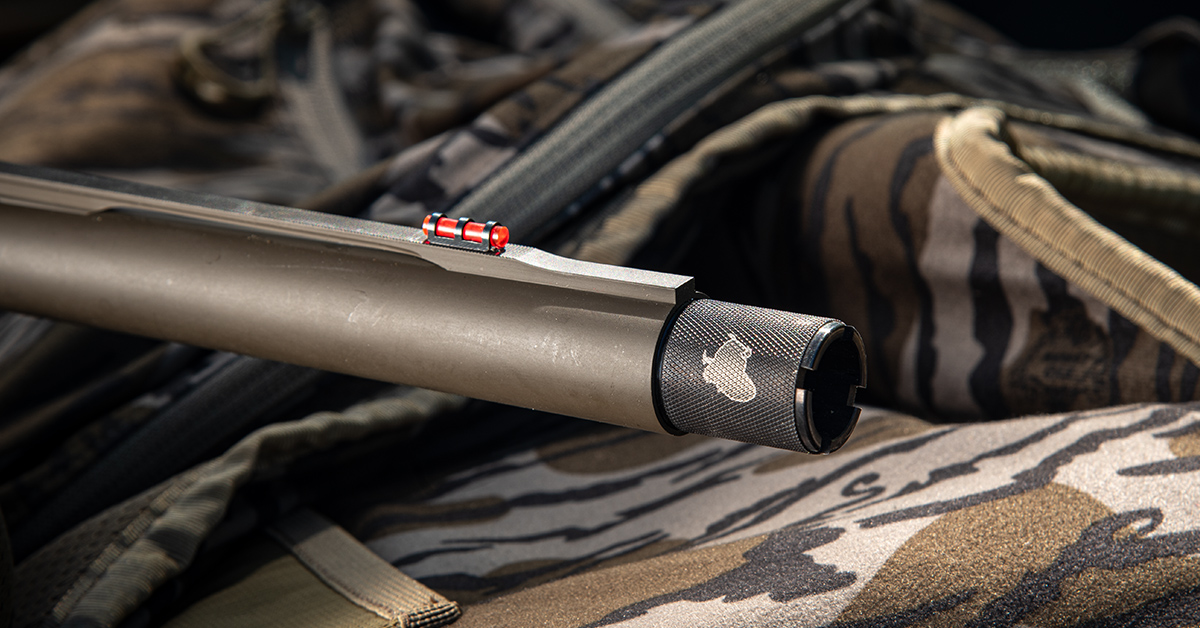
To give ourselves a not-unfair advantage, we displaced the included Benelli extended choke with an early production choke made by our friends at Trulock. This 0.590 five-step turkey choke is designed specifically for the 20-gauge Benelli A.I. barrel and is currently in limited quantities. If you’re interested, call Trulock at 229-762-4678 or visit their website.
I set up the target at 40 yards — the optimal pattern-testing distance, I think, for a turkey gun. The first shot put me slightly high and left but it still would have smoked a gobbler. With TSS ammo now being rare as hens’ teeth (yeah, that pun didn’t come out of nowhere), I took two more shots to get the Burris FastFire 4 red dot perfectly zeroed.
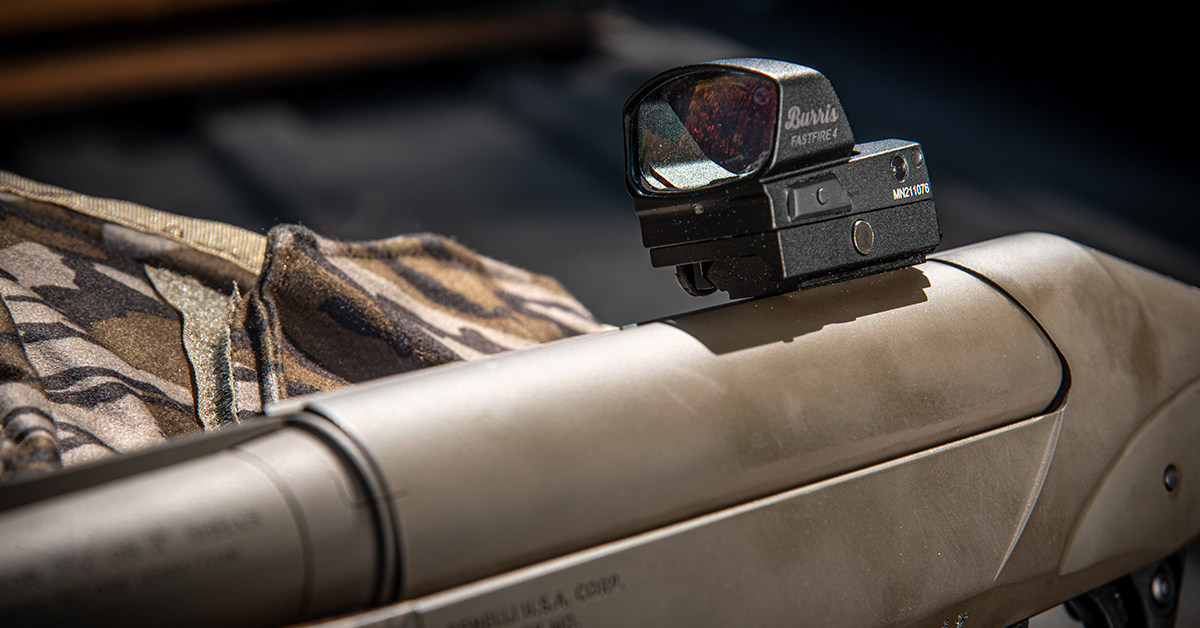
Folks, I know that a bazillion gobblers have fallen to turkey guns with nothing fancier to aim with than a simple gold bead at the end of the barrel. That was your grandad’s turkey gun with your grandad’s ammo and your grandad’s natural inclination for long strings of colorful metaphors when he missed his bird. When you’re shooting scientifically-engineered barrels like the Benelli A.I. along with a superior choke tube that manages modern, souped-up shotshell loads, a bead sight is a fool’s choice. You need a red dot, and you better be taking rifle-like aim or you’re likely to spout a few metaphoric expletives of your own the next time you pull the trigger on a tom.
At close range, there is little to no margin for aiming error.
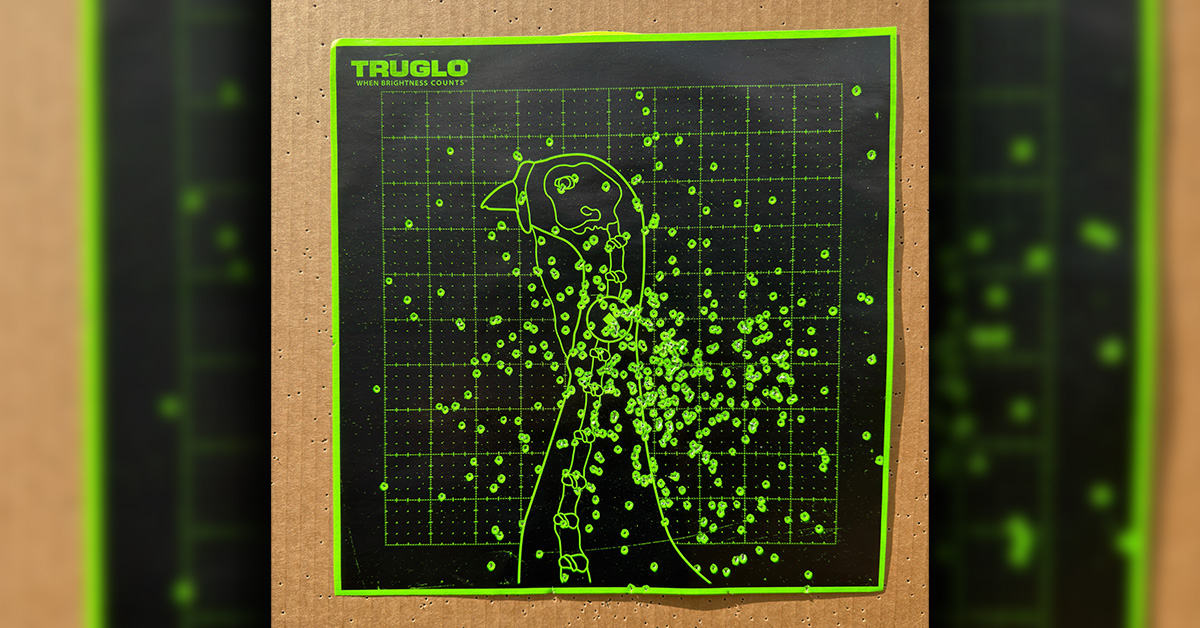
They say a picture is worth a whole lot of words. This one certainly needs no further explanation. All I would need to do would be to apply basic marksmanship skills and the gun/ammo combination would do the rest.
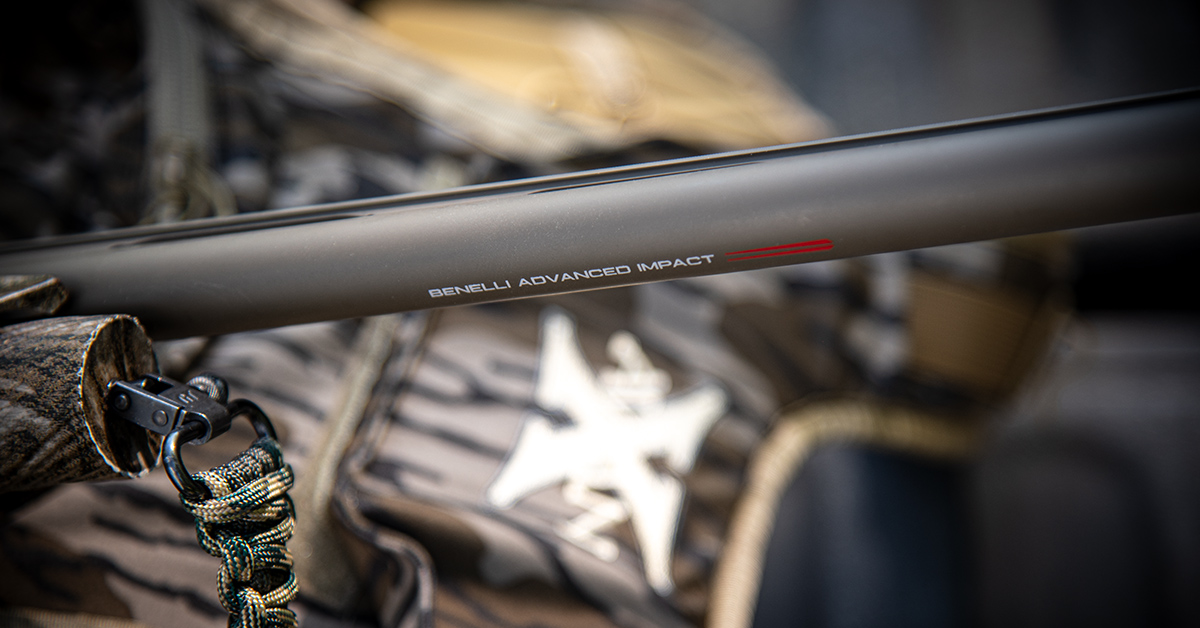
How much of that exquisite shot pattern was credited to the barrel or to the combination of the barrel, choke, and ammunition is open for discussion. Answering that would require more detailed testing than I could accomplish the evening before a hunt. I would guess it is a little of all the above. Whatever the case, you can slide over to Benelli’s Advanced Impact page, read more about the A.I. technology, and watch several ballistics test videos highlighting various loads shot through the A.I. barrel and a standard barrel contour for comparison.
To the Field
We had five hunters in camp and three mornings to hunt. By 0515 on Day One, we’d mainlined our coffee and were out the door, off to our designated hunting areas.
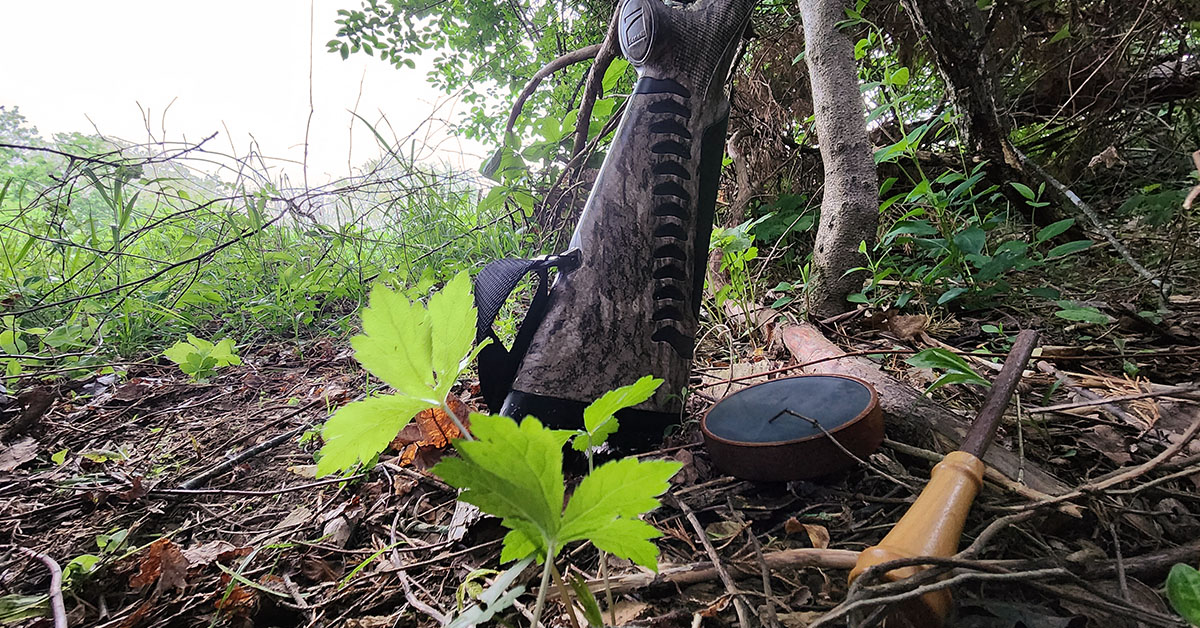
I went to the same area where I’d taken a nice whitetail four months earlier using the soon-to-be-released T/C Encore ProHunter CFT-X. What’s great about this property we hunt is that it is a perfect mix of old pastures and hardwoods that are loaded with oak, hickory, beech, cherry, and features thick understory in most areas. A more perfect habitat for deer and turkey I’ve yet to see.
Yet despite the potential, the birds were uncommonly quiet. Cool temps, stiff breezes, and a low ceiling seemed to dampen the birds’ mood. I heard one gobbler across the valley on land where I did not have permission to hunt and that was the only excitement of the day.
So goes turkey hunting.
And so went turkey hunting the following morning.
We were limited to morning hunts because Ohio — like several Eastern/Midwest states — cuts off spring turkey hunting at noon. This, supposedly, is to ease the pressure on nesting hens, which forage in the morning for bugs and vegetation before tending their clutch of eggs the rest of the day. Don’t know if that’s true or if it’s an excuse game biologists use to control the harvest. Believe what you will.
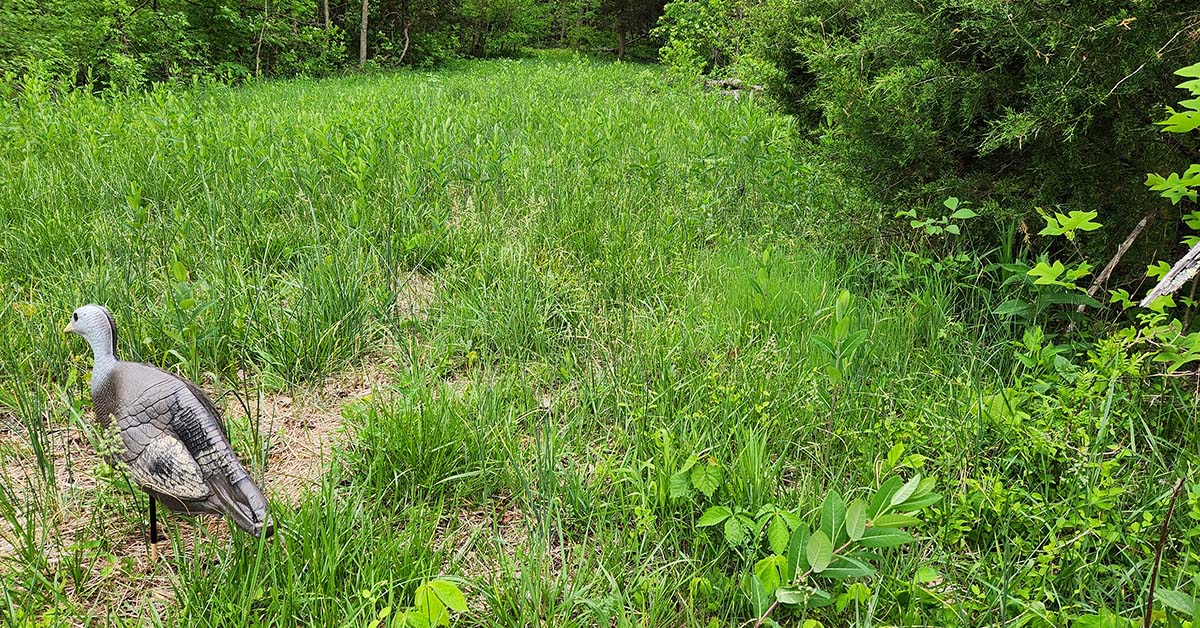
Our last morning proved to be a bit more engaging. The gobblers, antsy after a couple days off from doing gobbler things, got a bit more vocal. I heard one that wasn’t too far off but left it alone because it seemed to be close to where my buddy was hunting. Eventually, I texted him and asked, “Is that bird hung up or what?” His reply: “I didn’t hear any bird.”
Crap.
Sometimes, especially after leaf-out, it can be tough to pinpoint gobblers.
Game On
After a couple of sits, I checked my onX map and bushwacked to a spot that would get me near where I thought I had heard that turkey. Eventually, I stepped into the end of a multi-fingered pasture and spied a group of 8-10 birds about 300 yards away. I had forgotten my binoculars at camp, so I figured this was the same pile of jakes that my buddies had run into the first morning.
Having only three hours left of our hunt, I decided that, jakes or not, I was going to shoot a bird with a beard before heading home. I made a sneak across a powerline right-of-way and got to the wood line adjacent to where the birds were feeding. After several calls with no answers, I slipped closer along the wood line and spotted them 100 yards off. By this time, it was all or nothing, so I hammered my slate call, and they couldn’t take it anymore.
Here they come…
GAIM VR Shooting Simulator
The evening prior, all of us in camp had a big time testing out a product from a sister company of Aimpoint called GAIM.
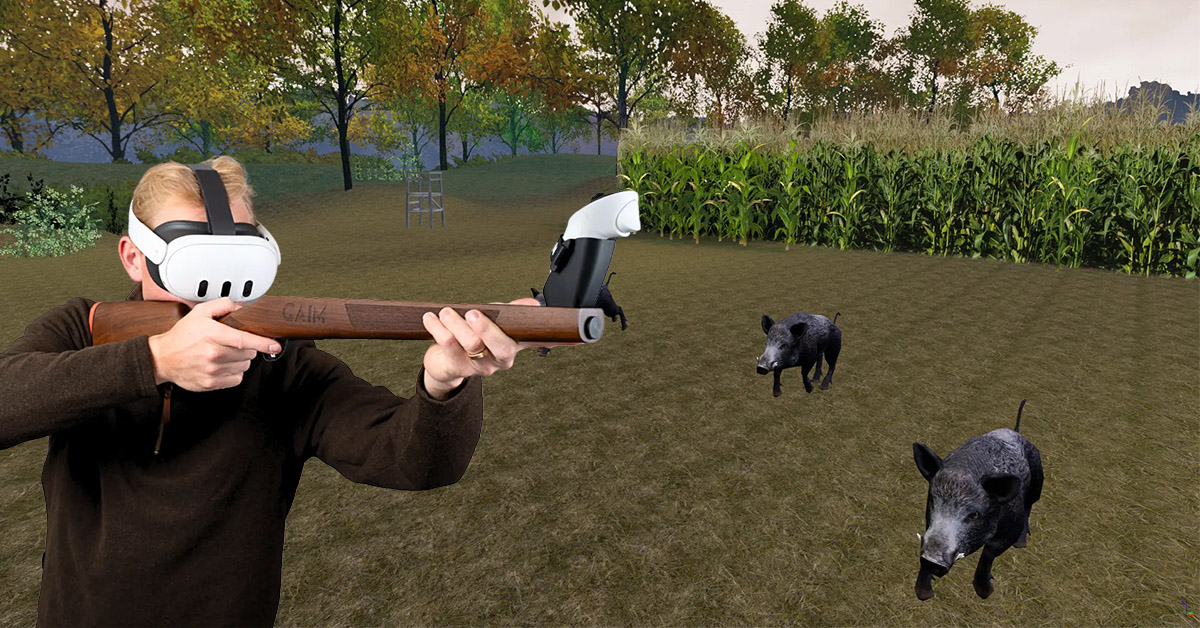
GAIM is a virtual reality hunting and shooting sports simulator system that is almost too expansive and too cool to describe. It combines hardware (a rifle or a pistol plus a Bluetooth trigger and Meta Quest holder) with a software package (your choice) in one of several shooting scenarios that you can purchase individually or in scenario bundles. These include scenarios for handgun, rifle, and shotgun. Bundles offered cover wing and clay, clay, hunting, and sport shooting. The system operates through the popular Meta Quest VR system, which you must purchase separately.
There is a lot to explore with the GAIM system, including the multiple feedback and evaluation data you can use to really hone your training. The best overview is to watch the video below or to work your way through the assorted videos on the GAIM YouTube channel.
I spent so much time with the handgun scenarios that I developed a cramp in my back. It’s that much fun. Ditto for the hunting scenarios, which focus on shooting moving targets. I started out rather poorly when shooting running animals, but the more I practiced the higher my kill ratio climbed.
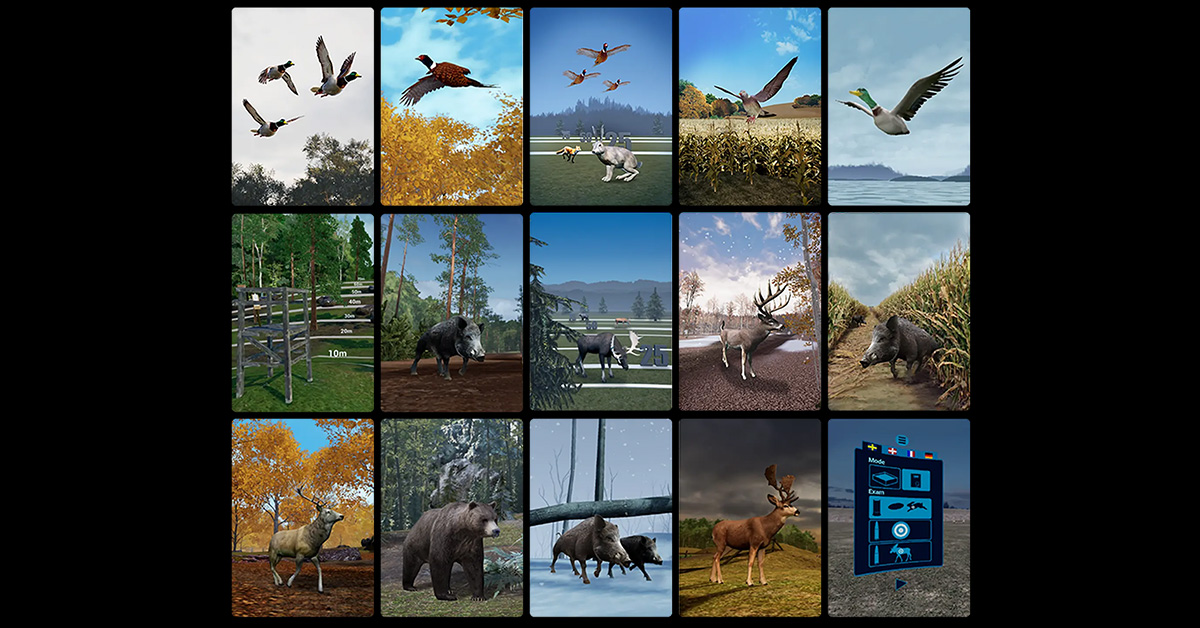
Why am I talking about this in a turkey hunting story? Because I’m giving partial credit to my GAIM system practice the night before for what happened next…
Back to the Hunt
Once I’d set the hook on those birds, they headed my way in a hurry. I had only a few seconds to tuck myself into the brush before the first one zipped by my two-foot shooting hole at about five yards.
This was going to be tough.
The rest of the birds then followed the first at around 10 yards distance, hot-footing it in single file. Given my tight shooting window through the brush, I barely had time to verify that they had beards — short as they were — before they were out of my shooting lane.
Peering through the brush, I picked one and, as I’d practiced the night before with the GAIM system, followed its track until the bird came into view. At this super-short distance, there was no “leading” the bird and no margin for aiming error. I kept the FastFire red dot a couple of inches below the bird’s head as it moved into my shooting window and pulled the trigger.
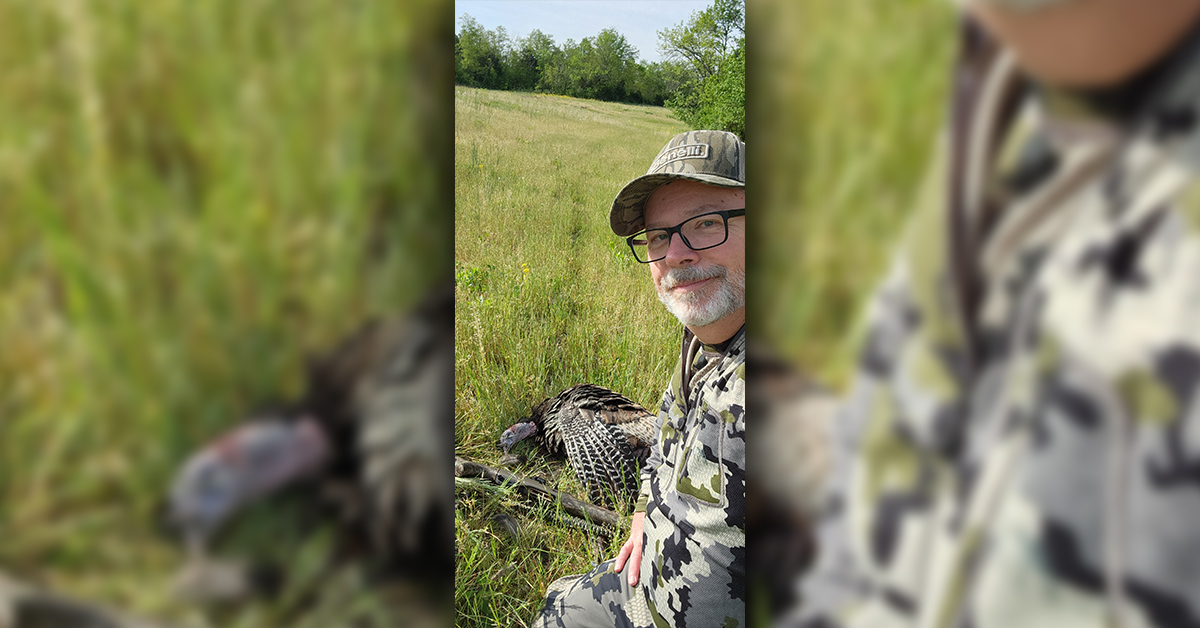
Battered and deep-fried wild turkey fingers and gravy were officially on the menu.
The shot was slightly toward the back of the neck, so I managed not to blow his head off. Instead, the bird caught the edge of the tight pellet column. Heck…the wad probably smacked him in the head.
Avian-X Ridge Runner X Vest
Heading back up the ridge to where we parked the truck, I got to test out the game pouch on Avian-X’s new Ridge Runner X turkey vest [insert smiley face!].
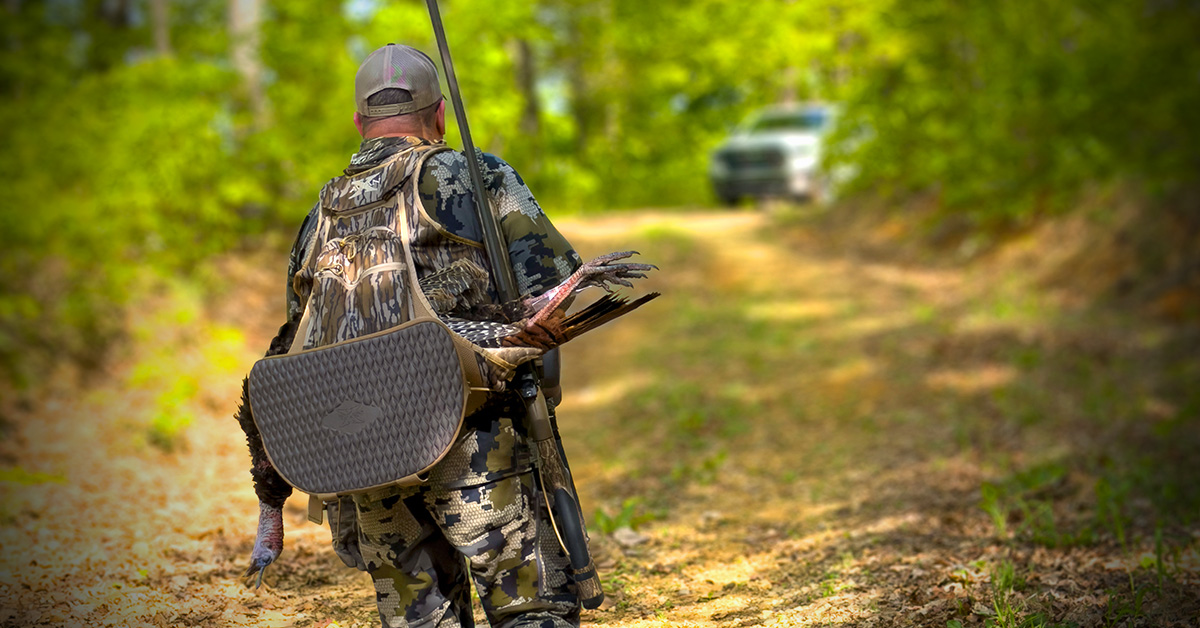
I’ve worn a lot of different turkey vests over the years, so it takes a lot to impress me.
The Ridge Runner X impressed me.
For starters, it is exceptionally comfortable and form-fitting, with adjustable straps that customize the vest to your torso length and girth. The material is soft and quiet, and the integrated EVA-molded pouches are intelligently designed and well placed. It even has a padded back panel — perfect for leaning against a tree and taking a nap when you should be looking for turkeys.
The seat pad secures to the back panel (which has two zippered pockets plus the game pouch). This makes it easy to deploy the pad or to return it to its run-and-gun position.
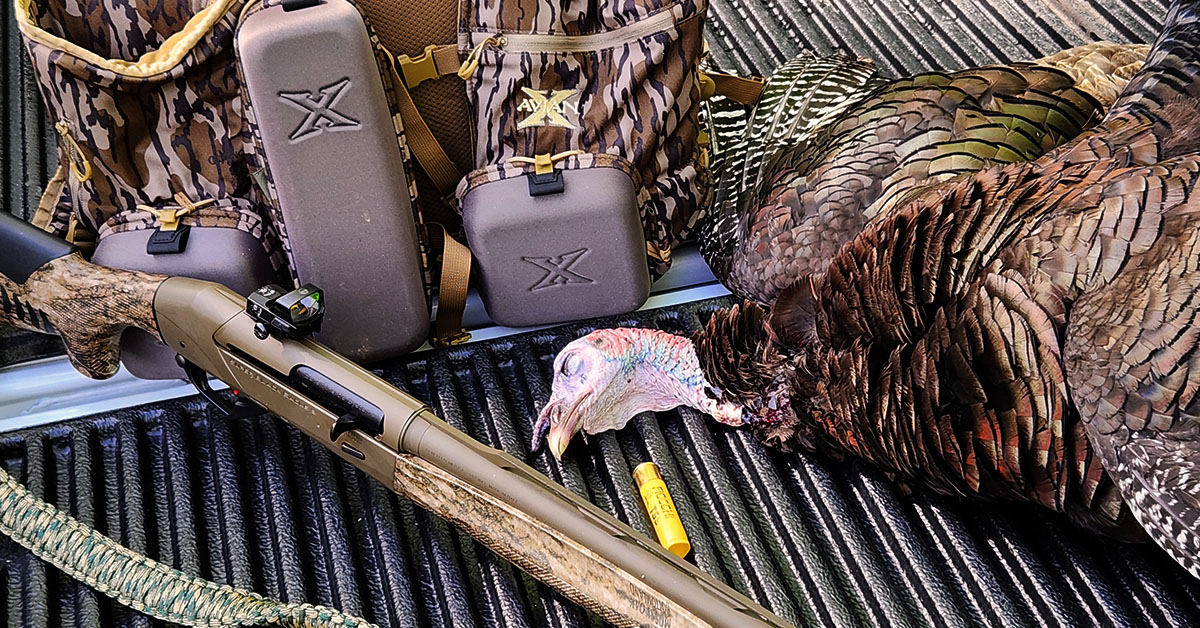
The best features, in my opinion, are the EVA-molded pouches. There are three of them on the front of the vest. I first thought they would make the vest awkward and bulky, but that proved not to be the case. Their structured design and internal compartments make it easy to get to your calls, ammo, or other needful items. The pouch “lids” close via magnets and a bungee loop.
Everything about this vest is designed with the experienced turkey hunter in mind — smart and efficient.
Final Thoughts
Without access to TSS loads, I would not hunt turkeys with a 20-gauge shotgun (although I know that many a bird has fallen to well-placed 20-gauge lead shot). If TSS is available, though, I can recommend no finer platform to send it downrange than Benelli’s SBE 3 A.I. in 20-gauge. The gun is light, reliable, easily managed thanks to good ergonomics, and it hits the target with hammer-like authority. Best of all, you deliver that downrange wallop without paying the price at the shoulder. Between the semi-auto Inertia Driven cycling and Benelli’s ComfortTech 3 recoil-reduction system, this turkey buster is a pleasure to shoot. Just add a quality red dot and you, too, can get the upper hand on those ornery birds.
Maybe…
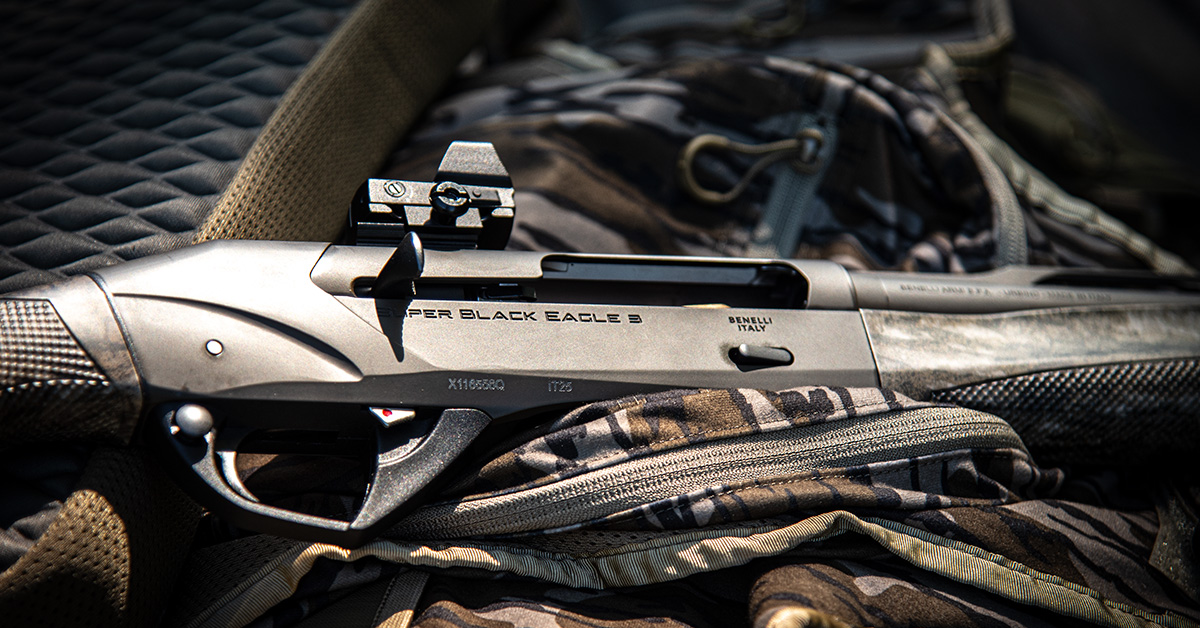
Benelli Super Black Eagle 3 A.I. (#12381) Specifications
- Action: semi-auto
- Bore: 20-gauge
- Barrel Type: Benelli Advanced Impact (A.I.)
- Chamber: 2 3/4- and 3-in.
- Min. Recommended Load: 2-1/2-dram, 7/8-oz. loads
- Capacity: 3+1
- Barrel Length: 28 in.
- Stock: ComforTech 3
- Stock Finish: Mossy Oak Bottomland
- Receiver Finish: Patriot Brown Cerakote
- Barrel Finish: Patriot Brown Cerakote
- Choke: AI Extended Crio (C, IC, M, IM, F)
- Sight: red-bar front
- Drilled & Tapped: yes
- LOP: 14-3/8 in.
- Drop @ Heel: 2-3/8 in.
- Drop @ Comb: 1-3/8 in.
- Overall Length: 49.5 in.
- Average Weight: 5.9 lbs.
- MSRP: $2,849