From its startup in Montana to current production in Sweden, North Fork bullets build on a proven legacy…but will this dog hunt?
by Mike Arnold
“I know you normally use bullets and ammunition from other manufacturers, but I wondered if you would be willing to try out some bullets from the North Fork folks.”
My buddy John McAdams, host of the Big Game Hunting Podcast, had just interviewed me for an upcoming episode. When John and I meet up at conventions or on his show, we mainly just chat. As usual, he was adept in leading our “chat” down richly fun paths, including my experience with the performance of various calibers and bullets on recent hunts for species as diverse as ‘fanged’ Muntjac deer, [non-fanged] whitetails, [massively fanged] leopards, Cape Buffalo, and fallow stags.
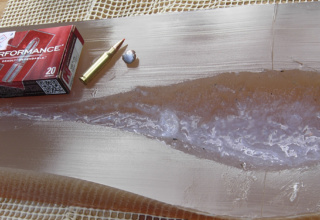
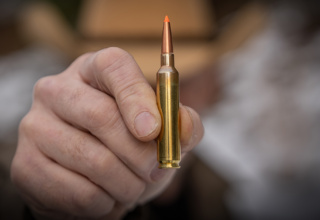
John’s question about the North Fork products didn’t catch me off-guard quite as much as it might have because another good friend, Larry “Mr. Whitetail” Weishuhn, mentioned in a recent conversation that John represented North Fork. I told John that I was indeed interested in having a go with North Fork products. Before the day was out, he supplied a link to their 160-grain, .284 semi-spitzer bonded soft point for my perusal. I liked what I saw, and John sent a box my way.
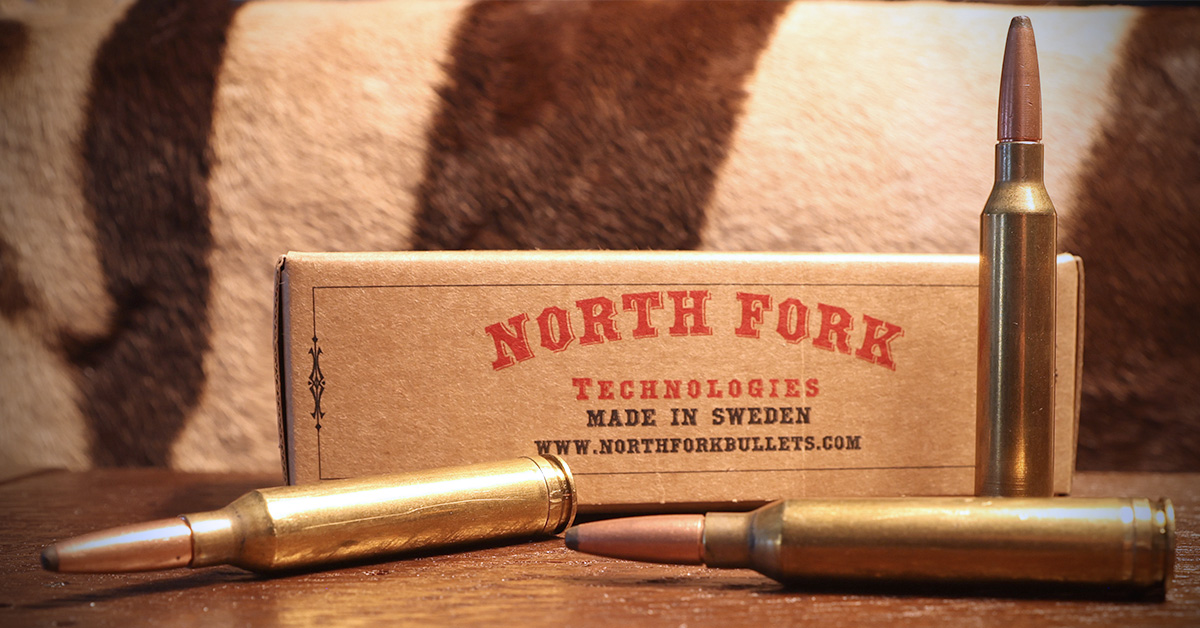
To back up for a moment, in case you don’t know North Fork bullets (I confess to having only a little bit of their history committed to memory), their founder, Mike Brady, began the business in 1996 out of Glenrock, Wyoming. Mike used Jack Carter’s iconic Trophy Bonded Bearclaw as his starting point. The heritage begun in 1996 is still apparently in force, with the current owners and staff of North Fork adopting the mission to produce the highest-quality bullets for their clients. Or, in North Fork’s words, provide “hunters with unparalleled accuracy, penetration, and reliability.”
The production of this bullet line moved to Kristianstad, Sweden, in 2020. The current (2025) designs available from North Fork include: Bonded Lead Core, Semi Spitzer (SS), Percussion Point (PP), Flat Point (FP), Pure Copper, a.k.a. Copper Expanding (CPX), Flat Point Solid (FPS), and Cup Point Solid (CPS). As of this writing, bullets designed for longer range, including those with boattails, were in the testing stage.
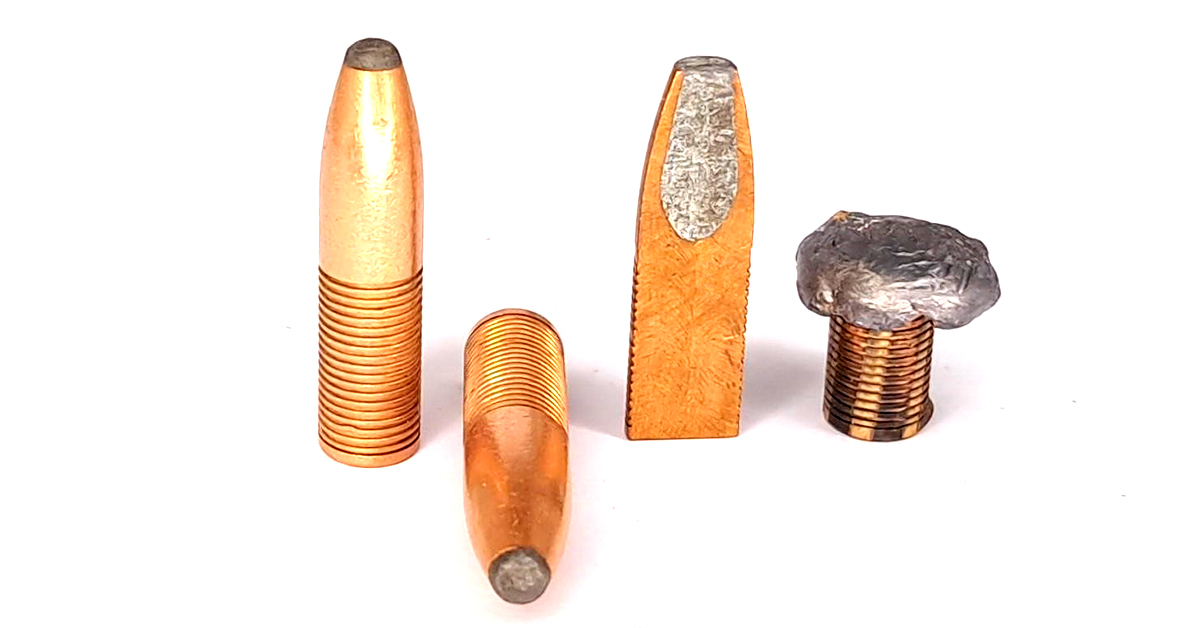
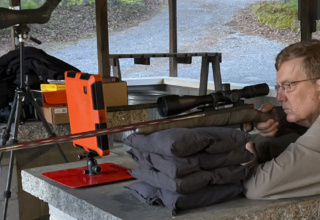
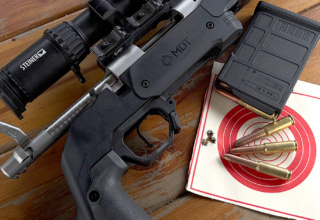
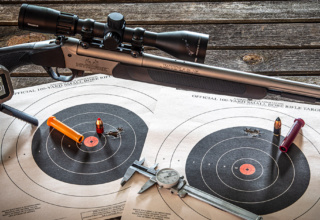
My goals for this first encounter with the North Fork products were modest. I would use the bullets for reloading a middle-of-the-road (with regard to predicted velocities and trajectories) round. The data collected at the range would be those normally gathered: muzzle velocity, trajectory at 100-300 yards, and, of course, accuracy from the bench and from my standing 4StableSticks field rest.
A brief explanation about why I limit the maximum distance of my shots to 300 yards (sometimes 400 yards).
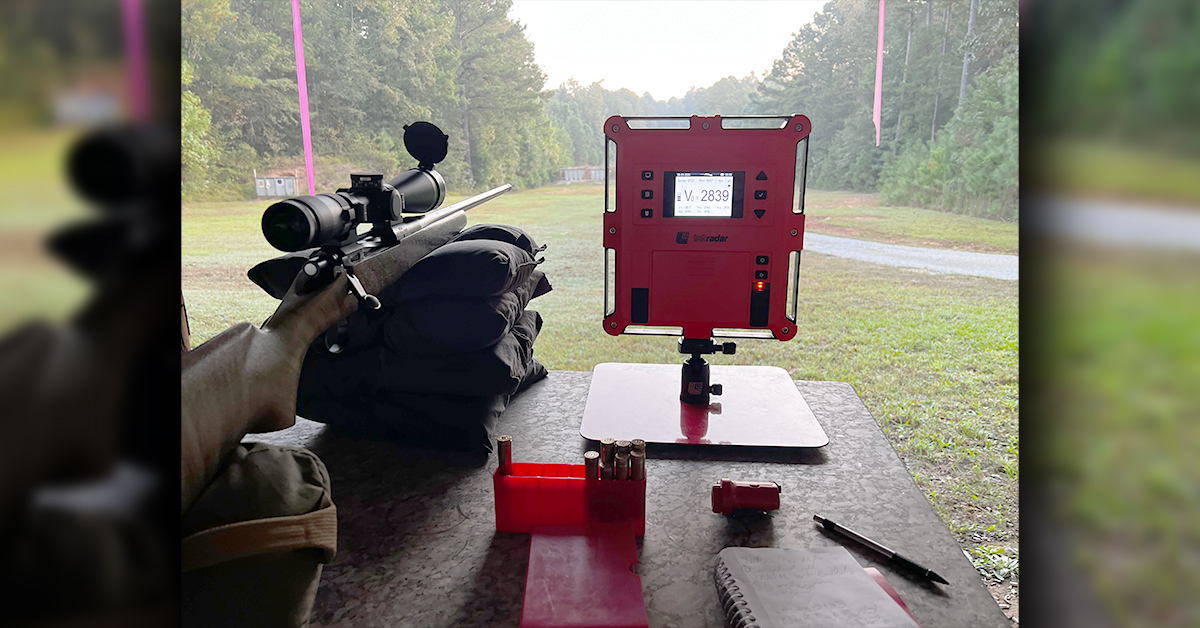
The answers are both prosaic and philosophical. The prosaic is that my gun club only has targets out to 400 yards. The philosophical, if you’ll allow me to wax for a moment, is that I don’t think most hunters realize that the claims of many firearms/ammunition/optics companies are unrealistic. I mean simply that most of us couldn’t hit the kill zone of a deer-sized animal consistently from a field rest at 200 yards, let alone the 1000 yards hinted at by so many “experts.” Keep in mind that 200 yards is shooting lengthwise down two University of Georgia football fields stacked endzone-to-endzone (yep, I teach at UGA). That is a long distance for most of us. I am someone who fired sub-0.5 MOA groups (twice in a row) at one mile. Yet, I believe that to be an ethical hunter, I should stalk to within 300 yards to take the shot on a game animal.
Anyway, enough waxing.
Before a hunt, or when reviewing a new rifle or bullet, I dedicate hours at the range, beginning with the bench when using a new rifle and/or a new handload, but with most of the practice shots fired from my much-loved 4StableSticks shooting rests. I use the latter because my reviews have hunters and not bench shooters in mind.
Don’t get me wrong, I love trying to obtain the tiniest groups from the bench, even at times seeing how I would perform at one mile; however, I am primarily a hunter, so when I read a review, I ask whether the shooter(s) fired at targets from field rests and/or positions often encountered on hunts. I am also a scientist-geek, so I ask about the type of data collected — for example, whether accuracy estimates came from the factory or handloaded ammunition.
In this review, of course, I used handloaded ammunition. The fact that I love handloading comes straight from my dad…and from being pretty far along on the OCD scale. The latter is why I am a finicky scientist, and the OCD tendencies come in handy when you deal with things that could go ‘boom’ in bad ways.
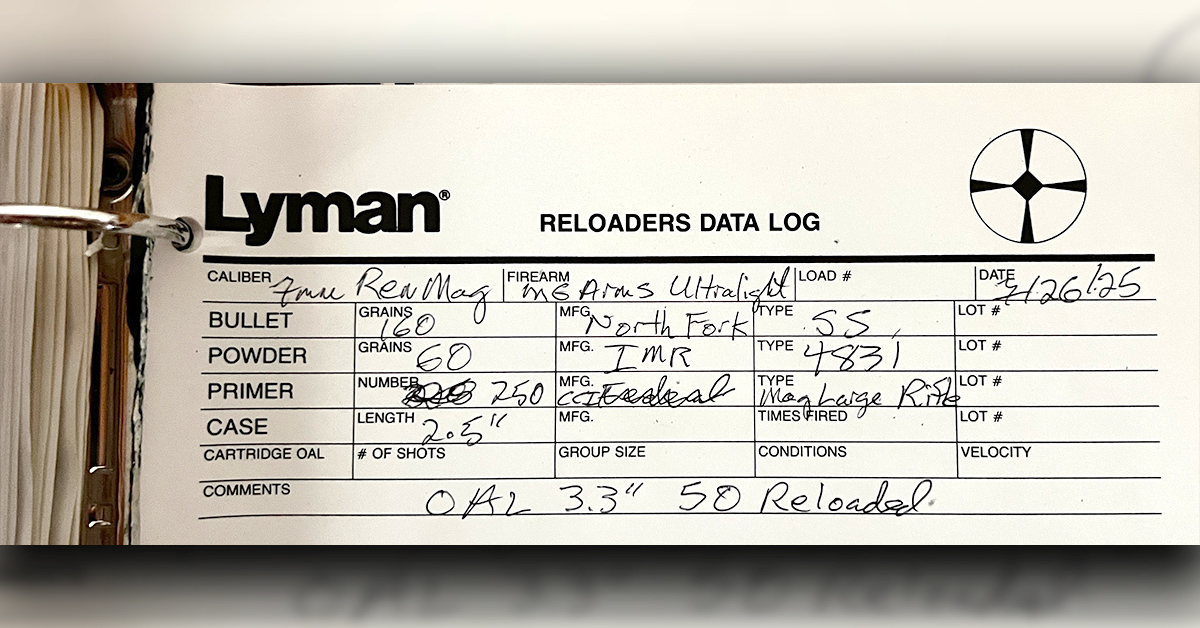
I chose a load a few grains below the maximum from my Nosler reloading manual. That ended up with the 160-grain North Fork bullet sitting on top of 60-grains of IMR 4831. The overall length that works best in my pet MG Arms Ultralight 7mm Remington Magnum is 3.3 inches. Sometimes, when I drop the bolt handle, it is tight, but the accuracy from several different bullet weights and powder loads indicates that’s what the rifle prefers.
So, how did the rifle + load + bullet perform?
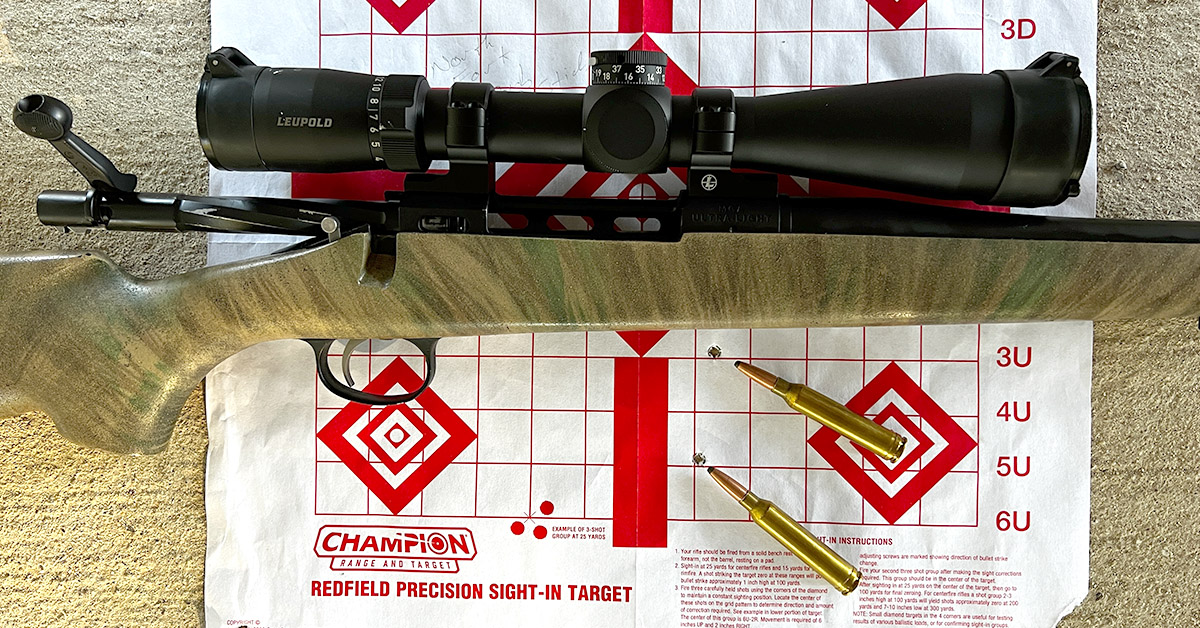
First, the mean muzzle velocity from five rounds was 2900 + 22fps. The trajectory at 100 yards was +1.5 inches, at 200 yards -3 inches, and at 300 yards -8 inches. Let me point out that, depending on how you hold your face against the stock and the position of your shoulder, these trajectories will vary. I know, again, that other writers might disagree; however, from many years of shooting the same rifles, at the same session, with a buddy also shooting them, I’ve found that to be correct. Anyway, those are the trajectory values I would list in my notes to take on a hunt. As for the accuracy at each distance and rest type, they are also a good indicator of what you might not read in other reviews.
I present the data as they come. When you look at the bar graph, you’ll note that the 100-yard MOAs are greater than the 200- and 300-yard estimates. First, I must state that they really aren’t statistically different from one another. I did not fire enough rounds at each distance and rest combination to provide that kind of definition. The trend, though, is clear. My accuracy became greater as I fired more rounds. That is also what most reviewers won’t mention. Understandably, just like any athlete, we must warm up. Also, like any professional, we often have limited time to collect the data, and we use what we get. Regardless, my groups became tighter the more I shot.
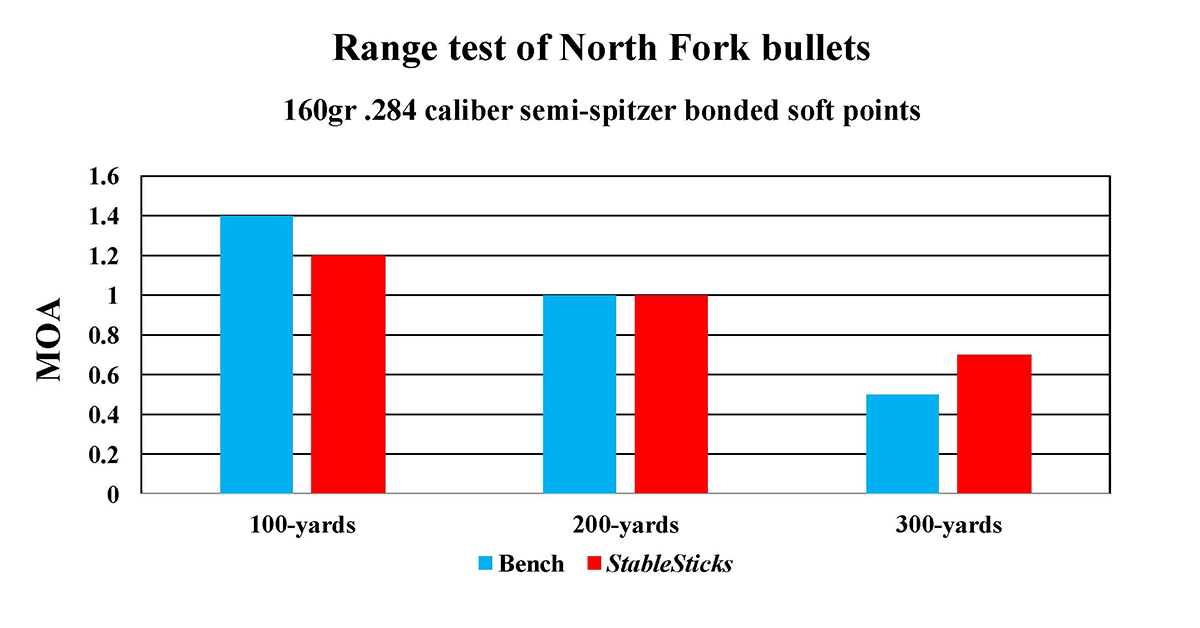
If you look at the MOAs from my shooting — especially at 100 yards — you might conclude, “That was not an accurate load since you only achieved 1.4 and 1.2 MOA off the bench and 4StableSticks rest, respectively.” But remember, the main purpose of this test was to let hunters know how well they can expect a load to perform. What do my achieved data translate to in inches on a game animal? At 100-yards, those MOAs are ~1.4 and 1.2 inches in diameter. Imagine the heart/lung area of a whitetail and you’ll see the point I’m making. You hold steady on those areas and you have venison for your freezer. Likewise, the accuracy at 200 and 300 yards is also well within the heart-lung target area. In other words, my first rough attempt at producing a load for my rifle with these North Fork bullets resulted in accuracy and trajectories to kill an animal ethically out to as far as I want to fire at a game animal the size of a Georgia whitetail.
Given that the North Fork design is based around a tried-and-true bullet (i.e. the Trophy Bonded Bearclaw) lauded by all of us who hunt, I’ve discovered an accurate and deadly combination I intend to exploit on an upcoming safari.

- TESTED: North Fork Semi-Spitzer Bullets - March 11, 2026
- TESTED: Vortex Razor HD Spotting Scope…Clarity for the Distance - July 24, 2024
- Shooting for the Mile! - June 19, 2024