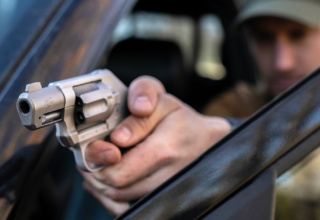
Too often, personal defense students practice shooting fast to the detriment of critical thinking and life-preserving tactics. Time to reevaluate what defensive firearm training is all about.
by Paul G Markel
You know what they say: the surest sign of intelligence is someone who agrees with you…or words to that effect.
This article has been rolling around in my head for a while now and I have felt for quite some time that it was necessary. A couple of days ago, I came across a post from Paul R. Howe, US Army Master Sergeant, Retired, former member of SFOD-D (Delta Force). The post was a quote from Mr. Howe:
“Through intense training we have been taught and conditioned to shoot faster than we think. This is a dangerous practice.” – Paul Howe
Those two sentences, while they do not cover completely what I have to say herein, could be used as a summation of the idea: speed kills.
“Good,” someone just said, “that’s what you are supposed to do with pistols and rifles…kill the bad guy.”
The problem is, when you teach yourself to shoot faster than you think, it is not the bad guy that gets killed, it is the innocent person, the good guy.
Shot Timers for Martial Training — the Time is Over
It has likely been around forty years since I was first introduced to the digital shot timer, a device that “hears” the sound of gunfire and measures the difference from the time the “beep” went off and the noise was perceived. When the technology for such devices came around, some of the most forward-thinking firearms instructors rapidly embraced the shot timer. Finally, they had a way to measure or quantify improvement in their students down to fractions of seconds. Also, they could set a measurable standard. For example, during my first professional training course, the basic standard was to draw, shoot, and hit the target from five yards in two seconds.
Many of you reading this are thinking, “Of course you need to have measurable standards. Shot timers give us that.”
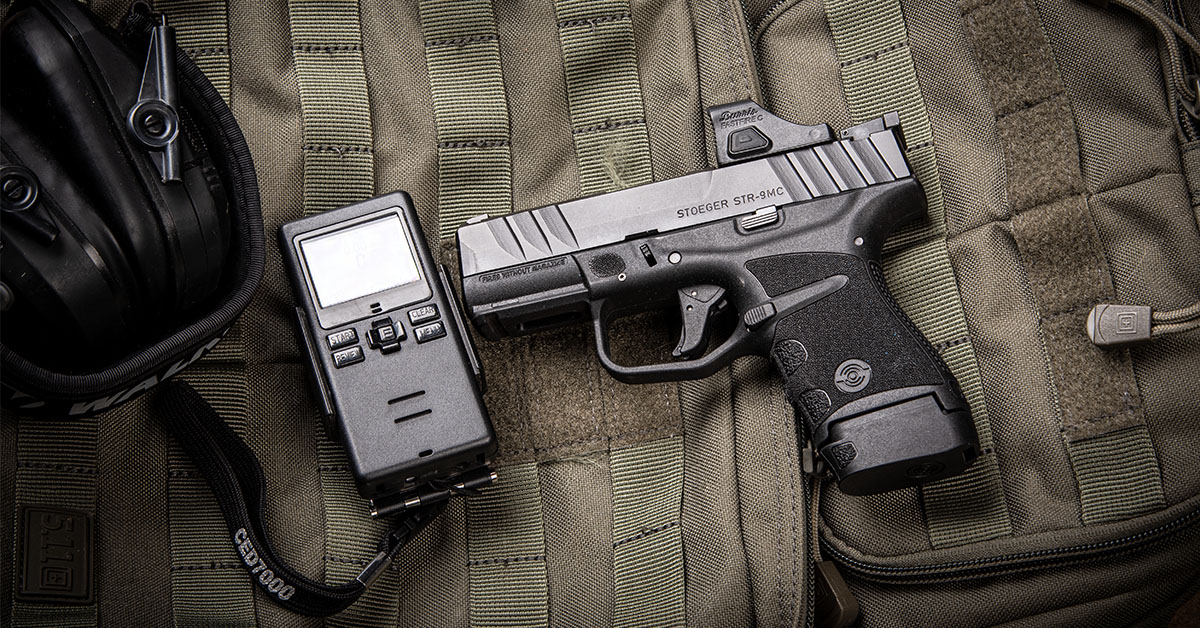
By the 1990s, shot timers were a part of every shooting school. Students were taught that the faster they shot, the better they were. It did not take long for “going fast” to become the end all, be all.
When we are considering the martial use of firearms, that is to say “self-defense fighting,” the Four Pillars of Fighting are mindset, tactics, skill, and gear in order of most important to least important for success and survival.
Allow me a moment.
When I was a young man getting into the martial arts, I read a memorial for a black belt karate instructor who was accosted and stabbed to death on the streets of New York City by some hoodlum. A punk. That story seemed unreal to me. How could a black belt, a master of his art, be defeated by an untrained punk? Certainly, the black belt instructor could punch and kick faster and better than some teenage mugger. It didn’t make sense to me at the time.
It was not until years later that I remembered that incident and I was able to understand the failing of the black belt or the advantage of the street hood. When it came down to fighting skill, the black belt most certainly had an advantage, but skill was not the deciding factor. The factor was mindset. I can only assume that the karate instructor was a moral person and when he trained and sparred that he followed the rules of the competition. We can safely assume that the black belt was not a bully or a thug and did not make it a practice to victimize others; however, the teenage thug who murdered him engaged in all the aforementioned negative behaviors. The attacker’s mindset was that he was going to do whatever he needed to, up to and including stabbing his victim, to get what he wanted. In this incident, mindset trumped skill.
I have been involved in professional firearms training, from a martial standpoint, either as a student, a coach, or as an instructor, for forty years now. What I have witnessed is that when shot timers are inserted into martial training drills, the priority for the student becomes speed. They race the clock to shave off fractions of seconds. Other critical aspects of training, though, are left behind and forgotten.
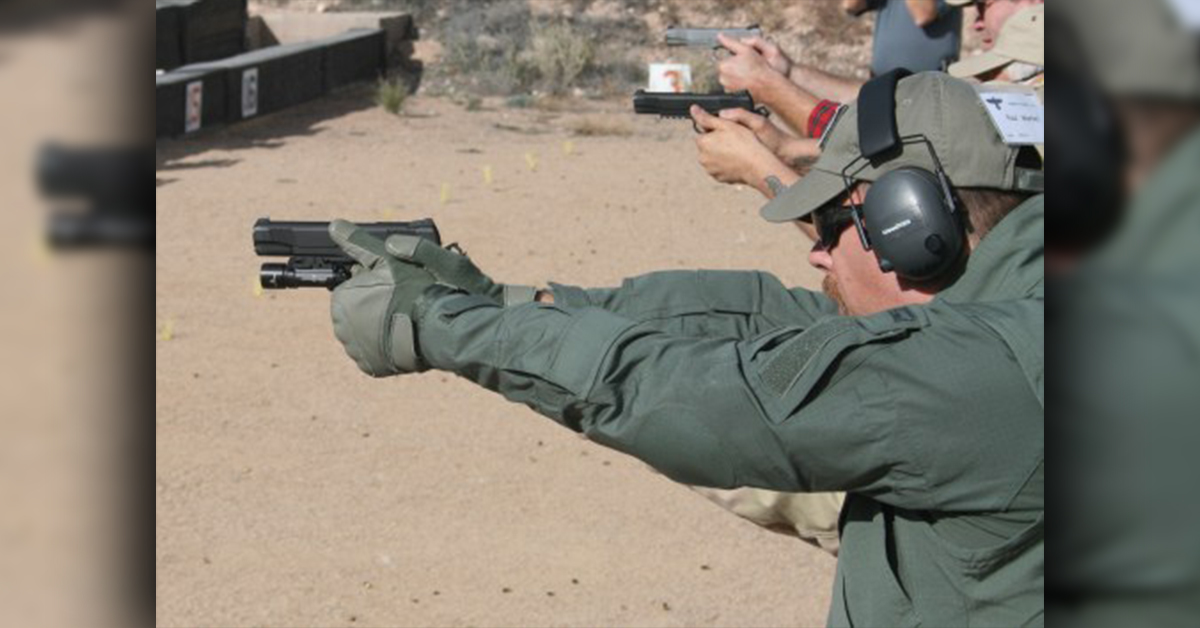
One of the basic axioms or tactics of gunfighting is to “get off the X” or, if you find yourself in a gunfight and you are not behind cover, your feet need to be moving. Yet if people are trying to beat the clock, moving their feet and getting off the X before they fire the first shot slows them down and increases the time on the shot timer. If you really want to shoot fast, you shoot from a flat-footed stance. You don’t move.
Additionally, I have witnessed, in person, masterclass shooters — men who competed for a living — flub a draw because their mental focus was trying to beat the shot timer. Also, there are several infamous videos on the internet where people shot themselves, generally in the leg, while they were racing the shot timer.
Speed out of the holster also tends to translate to speed back to the holster. Once more, numerous negligent discharges have occurred with people shooting themselves while rushing back to the holster. What we witness is, rather than focus on proper technique, the mindset is to go as fast as possible because those in question have been conditioned, as Paul Howe stated, to believe that going faster than the other guy is the goal.
When it comes to physical skills, regardless of the endeavor, can we “will” ourselves to go faster or just be fast because we want to be fast? Can a 100-meter sprinter get faster by just trying to “run faster?” The answer is, naturally, no.
When you watch or observe someone who is at the top of their game, you will see what they have done is pared down the physical movements to only those that are absolutely necessary to accomplish the task. There are no extraneous or superfluous movements or motions in their form. We call this the Sculptor Method. The sculptor sees the masterpiece inside of the stone and removes everything that is unnecessary until the work of art is revealed. This is an extremely purposeful and meticulous process. The goal is perfect movement, not speed. Perfect movement will result in rapid execution. Focusing on speed leads to rushing. Rushing leads to mistakes.
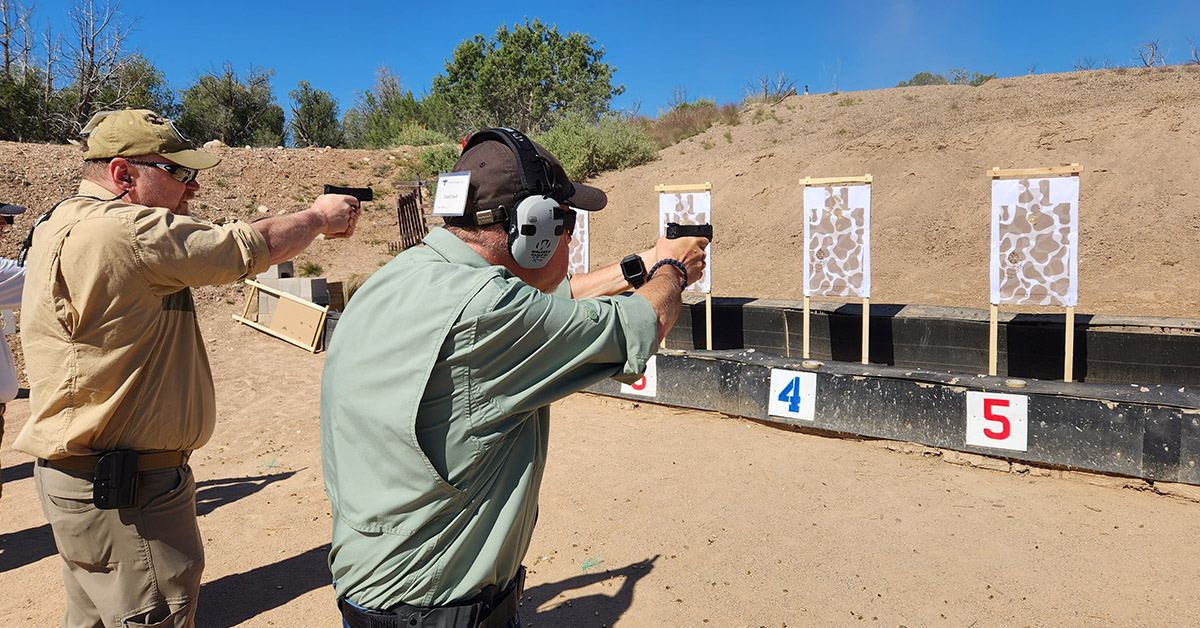
Even people who are extremely fast shooters do not get that way by just trying to go fast. Max Michel, once crowned “the fastest shooter in the world,” confided in me that he didn’t practice going fast during his training sessions. “When I train, I actually go about half speed. What I am doing is removing any and all movements that are not necessary. I’m perfecting every single move, which translates to speed.”
The primary problem with adding shot timers to defensive or martial training is that the student will, as a part of human nature, begin to focus on time to the exclusion of mindset and tactics. Instead of using cover properly, easing their way around it and only exposing a minimum amount of the body, what they will do is run up to cover, stick their gun around the side, expose half of their body, and shoot as fast as they can.
Wyatt Earp, a man who survived innumerable gunfights, was quoted as saying, “Fast is fine, but accuracy is final. You must learn to be slow in a hurry.”
Yet someone says, “The person who shoots the fastest is the one who is going to win the gunfight. So, you must practice shooting fast. Therefore, shot timers are valid.”
Yep, I just heard more than one of you say that. Under the adrenaline-fueled stress of a life-or-death fight, you will go as fast as your practiced physical skills will allow you to go. I am reminded of another quote: “In a gunfight, the winner is not the one who is fastest, it is the one who makes the fewest mistakes.”
Larry Vickers, US Army Master Sergeant, Retired and member of SFOD-D has a valuable quote regarding practicing to go fast: “No one will ever have to tell you to shoot faster in a gunfight.”
Additionally, Colonel Charlie Beckwith, the founder of Delta Force, addressed the desire to go fast in his book Delta Force. While Delta was training for the Iranian hostage rescue mission, Col. Beckwith noticed the tendency of the men to put speed ahead of skill and he said, “Speed for its own sake is the worst thing we can do. The object is to work on method. It’ll be done faster when it is done methodically.”
Kris “Tanto” Paranto, one of the heroes of the 9/11/12 Benghazi Attack, put it this way: “If you are trying to go fast, you have [#%*!] up.”
Competitions and Timed Games
Humans like to play games, and Americans, in particular, like to play shooting games. Games are fun. Games also drive sales of game-related gear. Games additionally do not have the psychological weight of acknowledging a life-or-death struggle.
“How does that matter?” you might ask. People don’t like to think about or acknowledge that the world is a dangerous place, filled with dangerous people and situations. Such heavy thoughts are pushed to the back of their brains. Games are meant to be fun and enjoyable, not serious.
Don’t believe me? For nearly 20 years I have been teaching traumatic medical training to military, law enforcement, and citizens. The common theme for schools that teach traumatic medical training — stop-gap methods to keep a person alive until the professionals arrive — is that those classes are the hardest to fill. Statistically, you or someone you love is a hundred times more likely to be critically injured in a vehicle crash, on a job site, or even at home, than you are to need a gun for self-defense. Given that reality, how many of you reading this have taken such training and carry the gear?
When discussing this subject with my late friend, James Yeager, he stated, “Every gun guy likes to envision himself as the hero, the white knight who blasts the bad guys without ever getting a scratch. In our medical class we force them to address the ugly reality that good people can and do bleed to death. That’s not cool or sexy, so people don’t sign up.”
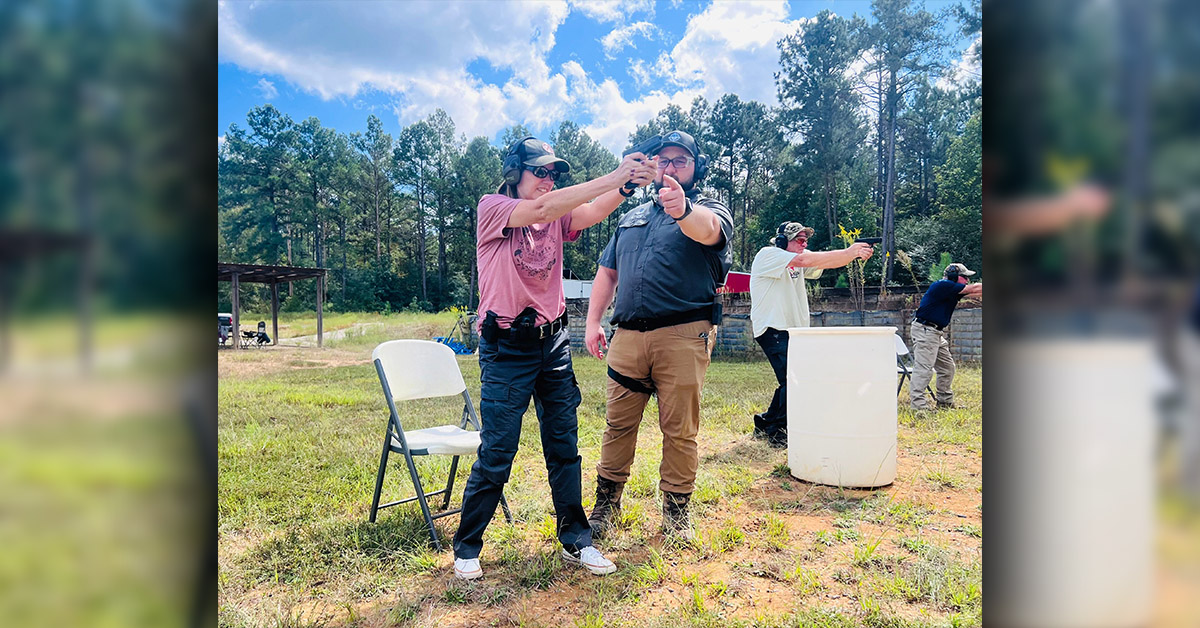
Americans are far more likely to participate in games than to attend martial training; however, they cloak themselves in a psychological security blanket by saying things like, “Shooting competition prepares you for gunfights” or “The stress of competition mimics the stress of a life-or-death situation.” No one who has ever been in an actual life or death fight would ever say such things, but we’ve been hearing that thoughtless nonsense ad nauseam for decades.
Unless the competition is dedicated marksmanship without a time limit, how do you win ribbons and trophies in a gun game? You shoot faster than the other guys. You play to beat the clock. This is when the one guy out there says, “The time constraint offers the same stress as fighting.”
No, it doesn’t. Stop saying that.
Play Like You Practice
Back in high school, I’m sure it was one of my football coaches who introduced me to the phrase, “You play like you practice.” That was the explanation given to us young athletes to help us understand why rigorous, difficult practices were necessary. In the Marine Corps infantry, we used to say, “The more you sweat in peace time, the less you bleed in war.”
The simplest way to put it is that you will not “rise to the occasion” under the stress of a life-threatening attack. You will do whatever you have done the most, or whatever you have mastered in practice is what you will do.
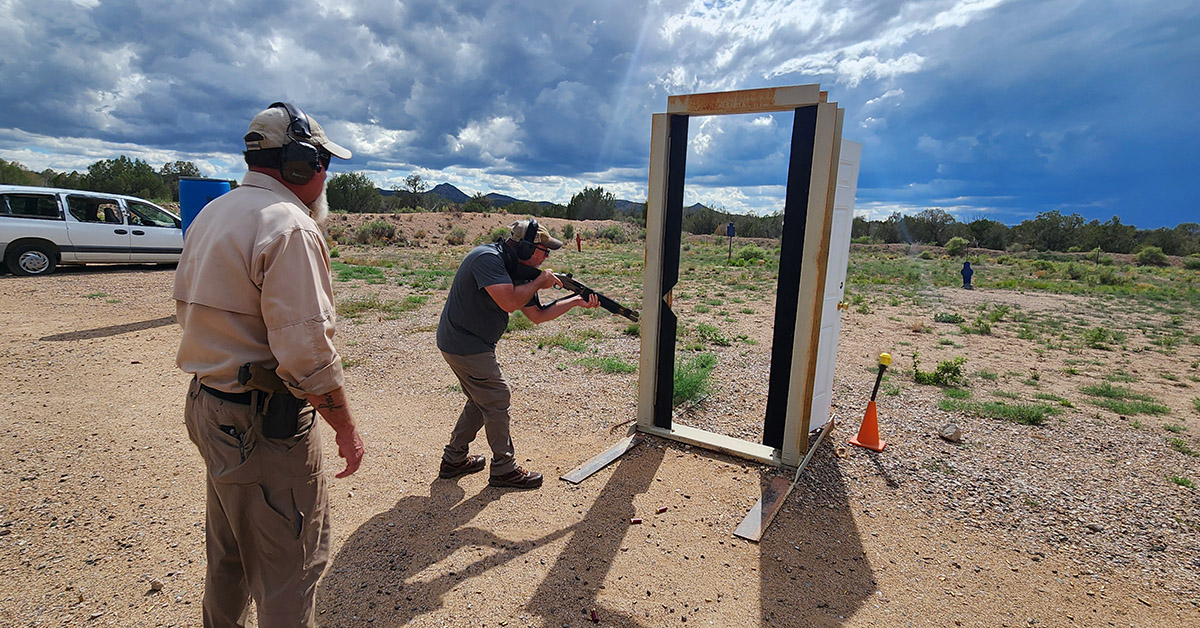
Getting back to tactics, such as use of cover, let us say that you took a defensive pistol class once and the instructor showed you how to “pie the corner” and meticulously use cover to the maximum advantage. Then you go out and get involved in a gun game league. You shoot monthly matches and, in the matches, you must shoot from around simulated cover. Do you slow down, pie the corner, and meticulously use the cover to your advantage? No, you do not. Why? Because doing so would slow you down and put more time on the clock. Instead, you stick your gun around the cover material, expose most of your body, and blast away as fast as you can.
We now go back to the understanding of playing like you practice. If you ever found yourself in a gunfight, would you use cover like you did in that one class, ten years ago, or would you use it like you have done in your monthly shooting games for the last three years? During the Norco Bank Robbery incident, only one police officer was killed. The man did everything right, except for his use of cover. He made one mistake and paid for it with his life.
Temporary Autism
I was listening to an interview with a retired UK SAS trooper, and he mentioned the book “Blink” by Malcolm Gladwell. That inspired me to purchase and read it. Gladwell offers many recommendations and poses many questions throughout the text, but it was chapter six that should be read by every small arms and tactics instructor.
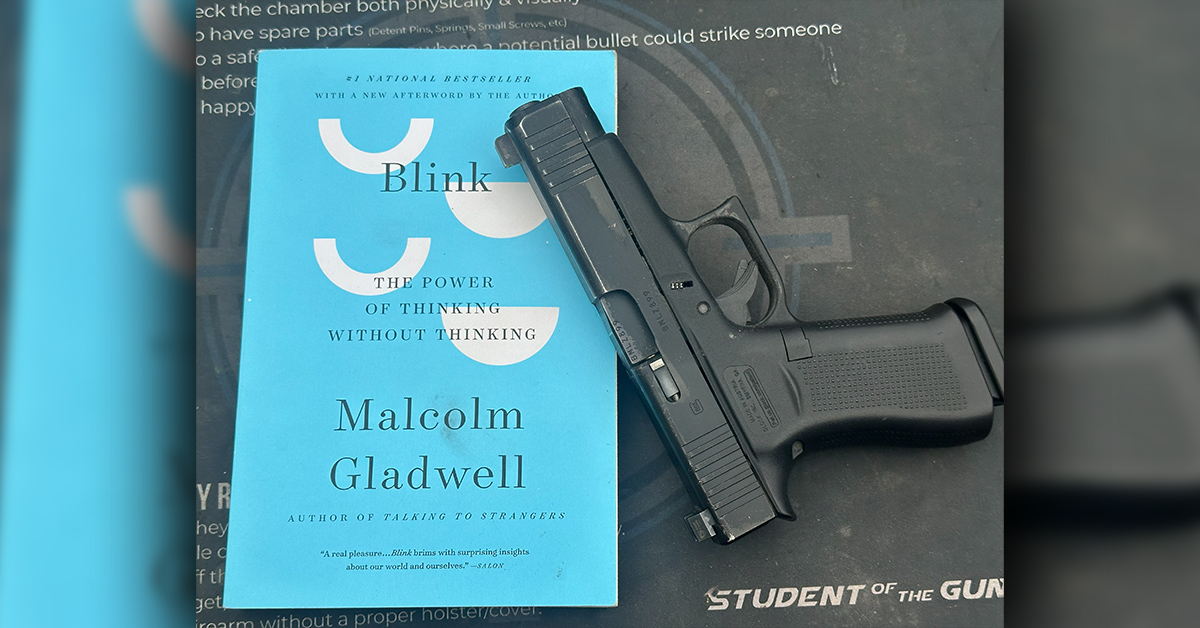
In chapter six, the author examines an incident in New York City where four police officers shot an unarmed man to death. The officers “thought” for sure that the man had a gun, but he was actually holding his wallet. As you would expect, there was a lengthy investigation. Gladwell and others examined that incident, as well as others, and used a phrase as a potential explanation for how something like the negligent killing could happen. Gladwell called it “temporary autism.” This is the inability to recognize normal social cues and behaviors that would allow you, in a very short span of time, to make the correct judgment.
To go back to the beginning, the NYPD officers found themselves in a position where, as Paul Howe said, they were shooting faster than they were thinking. We witness this on a regular basis when an “accidental” shooting occurs.
Another term used to describe that moment in time where a critical decision must be made in a very short amount of time is “white space.” White space is the moment in time where you have the capacity to determine whether or not to fire your gun and either stop a deadly threat or not shoot an innocent person.
The good news is that you have the opportunity to train yourself to make good decisions under high stress and improve your use of white space. The bad news is that in order to do so, you must put yourself into uncomfortable situations. Critical decisions are made in the prefrontal cortex of the brain; however, when we train, we are building up our automated response mechanisms.
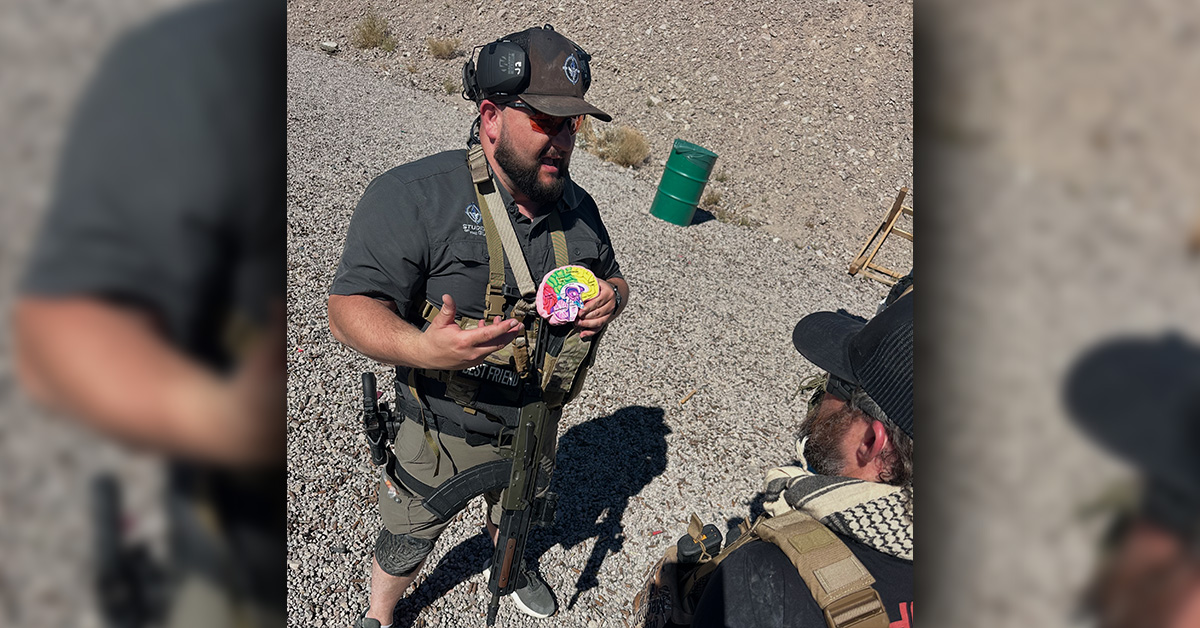
When a police officer realizes that the guy he just stopped for speeding has pulled out a gun, he should not have to think “Oh no! That is a threat. Where is my gun?” or “I need to reach down and unsnap my holster, then draw my pistol.” Those responses must be automated. Your “impulsive” or (habit) system is in your brain’s basal ganglia, which plays a key role in the development of emotions, memories, and pattern recognition. Patterns, such as reflexively drawing your pistols and moving your feet.
The one response that we absolutely should not be automating is pressing the trigger. The first time I ever had to draw a gun on a threatening human, it was as if the gun just appeared in my hand, pointed at the threat, safety off, ready to go. But…there was that white space in that moment in time to make that critical decision.
Ballistic Problem Solving
What we want to avoid is to condition our students to become shooting robots; unthinking, reactive creatures that press the trigger as a reflexive or conditioned response.
Beep! Bang!
Years ago, when I was a police officer, there was an incident where a SWAT team was executing a high-risk warrant on a house. The team out front shot a tear gas canister into the house in question and, being thermobaric, the canister set the curtains on fire. There was a team making an approach from the rear of the house. When the team in the rear heard the men at the front yelling “Fire! Fire!” They pointed their guns at the house and opened up.
In the aftermath, the powers that be determined that the officers, when on the range, had been conditioned to shoot only after the range master yelled the word, “Fire!” They had hundreds and thousands of training reps programmed where they heard someone yell “Fire” and then immediately fired their guns.
Whether it is the beep of a timer or a single word such as “fire” repeated over and over again, we need to come up with exercises in training that require the student to first engage their brains in a way that forces deliberate thought. We call this process Ballistic Problem Solving. There are many ways we can do this, but the key is to force the shooter to first engage in conscious decision-making and then to launch bullets.
Parting Thoughts
Yes, I understand full well that scores of readers have been conditioned to believe that shot timers are a critically important part of firearms training. We also deal with the cognitive dissonance where, despite all the information that has been provided herein, you like gun games and you have bought into the lie that shooting competitions prepares you for real world life and death conflicts. Your belief in regurgitated platitudes does not alter reality.
Take this information and do with it what you will.