Too often, formal firearm training involves reactive programming rather than critical thinking and problem solving…and that is dangerous. Don’t become a shooting robot!
by Paul G Markel
It might have been twenty years ago by now, but I was attending a law enforcement tactical training course, and the instructor shared a story about a SWAT team raiding a suspected drug house. The men were broken into two teams: one at the front door and one coming in on the back of the house. When the front of the house team fired a tear gas canister into the house, said canister set the curtains on fire, as they tend to do. Seeing the billowing flames and smoke, the front of the house team started yelling, “Fire! Fire! Fire!” The back of the house team heard the command, and more than one officer dutifully took aim at a window or door and let rounds fly.
Naturally, all those in the class who heard the story chuckled at the miscommunication. The instructor, though, was making the point that, for their entire careers, the officers in question would go to the training range and their cue to shoot their guns was a person behind them yelling “Fire!” Under the stress of the raid, they simply reverted to what they had practiced.
There is a more recent story about a GWoT combat veteran who became a police officer. While approaching a house, the veteran’s partner turned and said, “cover me.” The vet in question proceeded to put several rounds from his pistol in the direction of the house, thus providing the cover fire that his partner requested. Again, recipients of the story laugh, but the communication error should be obvious. In the infantry, covering me or giving me cover includes you launching bullets. In the police world, giving me cover simply means to watch, but only shoot if you see a threat materialize.
Yes, these are two extreme situations, but they highlight the need for both thoughtful communication and the perils of teaching people to reflexively pull a trigger based on a given cue.
Building Shooting Robots
In today’s world of AI, many read the title and envisioned a real-world manifestation of the Terminator — a robot that shoots you. While that is a natural response, what will be discussed here is the tendency of certain schools or instructors or even shooters themselves to turn students into shooting robots who reflexively fire their guns after some Pavlovian signal or command.
This year, 2026, will be the 40th Anniversary of my first formal firearms training course. During the last four decades, I have attended innumerable training courses: military, law enforcement, and private. Fortunately, I have witnessed progression or evolution where some organizations are concerned. Nonetheless, we are not yet where we should be.
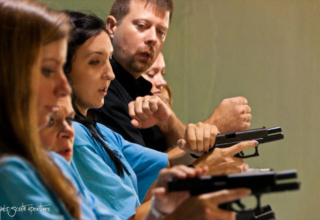
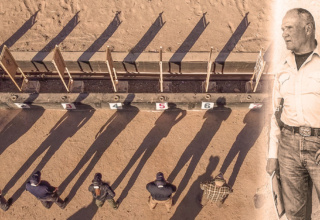
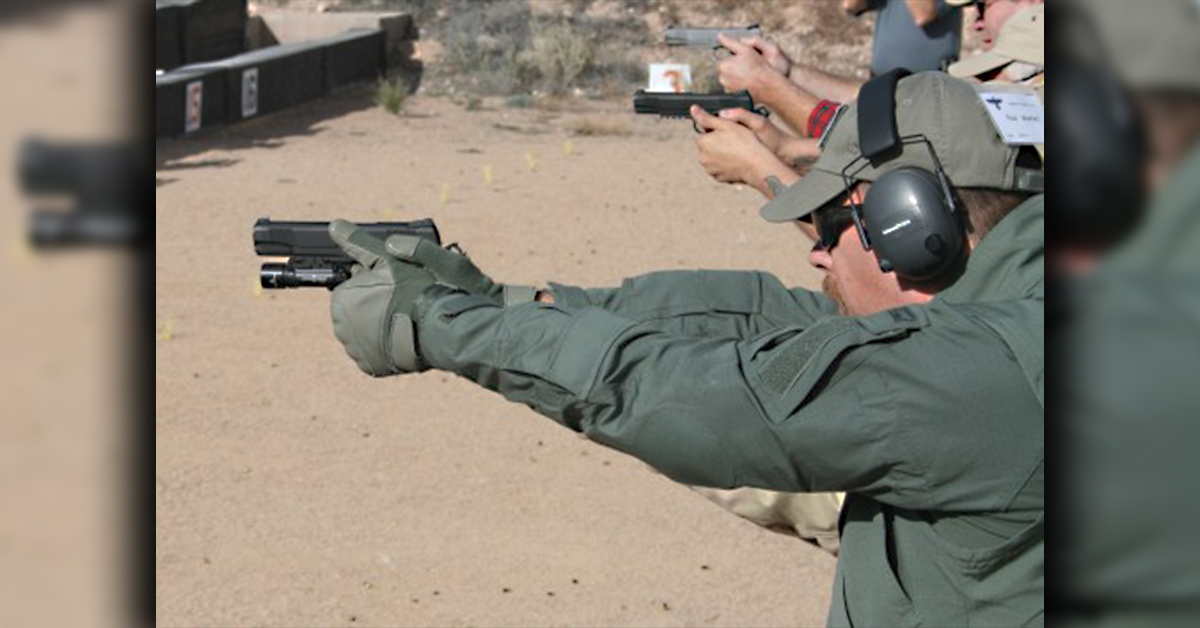
Not too long ago, I was at a shooting school that still heavily relies upon shot timers as the indication for shooters to fire their guns. Before each shooting drill, the instructors would follow protocol and go through a series of warning orders. It went something like this: “Shooters, make ready,” followed with, “Shooters, standby.” Then, only after the instructor was satisfied that all shooters on the left and right were standing by at the ready would he push the shot timer button.
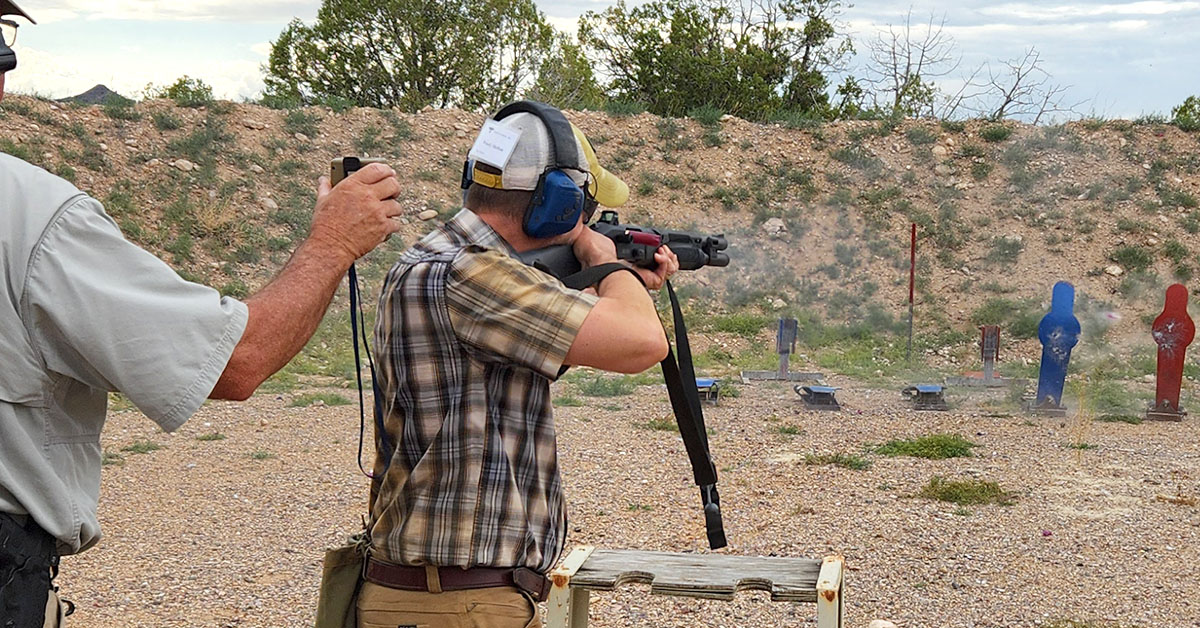
It makes me sad that there are people reading this right now who might consider the previous and think, “Well, that sounds about right to me.” Folks, the previous school experience was purported to be a gunfighting training class. The implied goal was to prepare the students for a self-defense shooting. In reality, all it was doing was turning them into shooting robots who were conditioned to draw and fire their pistols only after being given specific preparatory commands and an audible signal.
It’s not just waiting for the “beep” that helps build shooting robots. The “Cold Range” mentality is still far too prevalent. By cold range, we mean that students are forbidden by policy to have a loaded firearm on their person unless they are standing on the firing line with a coach/instructor. Every time the students move to the firing point, the cadre staff run them through a kabuki dance of pulling out their guns and loading them. Then, after the drill is completed, they have a reverse kabuki drill where they are conditioned to needlessly fiddle with guns that should be left alone in the holster.
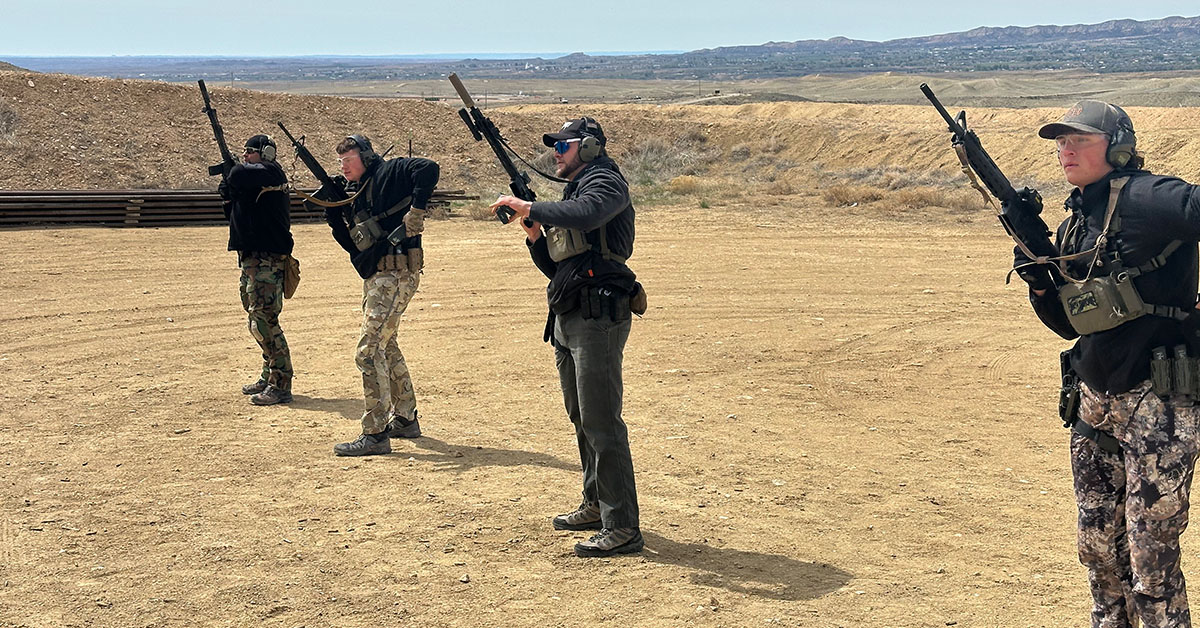
Such cold range behavior is the antithesis of martial training, and it conditions the students to be both comfortable with having an empty gun in their holster (a dangerous habit) and they are also conditioned to fiddle with or “administratively handle” their firearms. Somewhere in the neighborhood of 99.78% of all negligent discharges occur during administrative handling, aka fiddling, of guns. To put in plainly, people don’t have NDs when they are in the process of deliberately shooting or when their gun is secured in the holster. The more often you fiddle with a gun the greater your chance of an ND. When fiddling with a gun is a programmed response from so-called training, that, in itself, is negligent.
Compounding the cold range stupidity is the requirement of many schools or competitions to have the student/competitor “drop the hammer” (press the trigger) during the “unload and show clear” process. This conditions the person to reflexively press the trigger. The trigger press should NEVER be reflexive but instead be purposeful and consciously deliberate. Out of touch, unthinking morons who command you to “drop the hammer” or “snap the trigger” as a part of the gun clearing process need to be called out for what they are — dangerous imbeciles who are attempting to program their robot shooters for a future negligent discharge.
When you practice reflexively and thoughtlessly pressing the trigger, such as in the “unload show clear” idiotic kabuki dance, you are practicing for your future negligent discharge. And believe me, it is coming.
Thinking with a Gun in Your Hand
Now comes the good part, the part where we offer a positive alternative to the problems highlighted above. First, we need to stop and consider exactly what our goal or goals is/are. Many moons ago, all our classroom instruction in the Marine Corps began with “Terminal Learning Objectives.” The instructors laid out the goals for the training. This is why we are here and this is what we hope to learn.
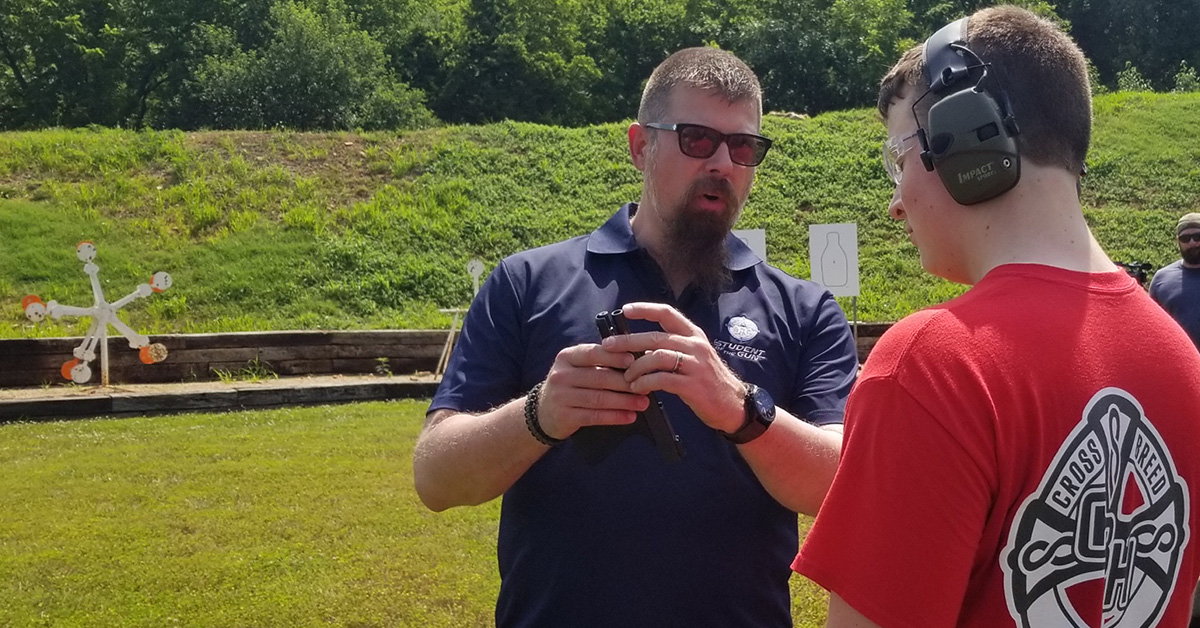
Regarding firearms training, we absolutely must honestly assess our goals. Are we here to learn how to use a firearm in a martial fashion to support the concept of self-defense? If the answer is yes to that, we have an extremely serious undertaking and the physical behavior we engage in needs to support that goal.
In our classes (Student of the Gun University), the command for students to fire their guns varies based upon the drill. Sometimes the command to begin is the word “Fight!” Other times, the student is required to solve a simple but important problem — engaging their problem-solving brain — before they draw and shoot the target. During other drills, the cue to begin could be the sound of a person screaming for help or the noise of gunfire.
All our live-fire training is hot-range training. Students are briefed on the four Universal Safety Rules and told exactly what is expected of them. They are also instructed to be ready to go when they walk up to the firing point. We don’t stop and remind people to have a loaded gun on their person. If they were negligent in loading their gun, when the drill begins, everyone else’s gun makes noise and theirs does not. That is what we call learning.
Also, you cannot trick yourself. The only way to learn to act and behave as though you are carrying a loaded gun is to actually carry a loaded gun. We go to training to learn how to behave properly in a controlled environment. How can you, with good conscience, refuse to allow people to carry loaded guns during training but then expect them to do so out in the real world?
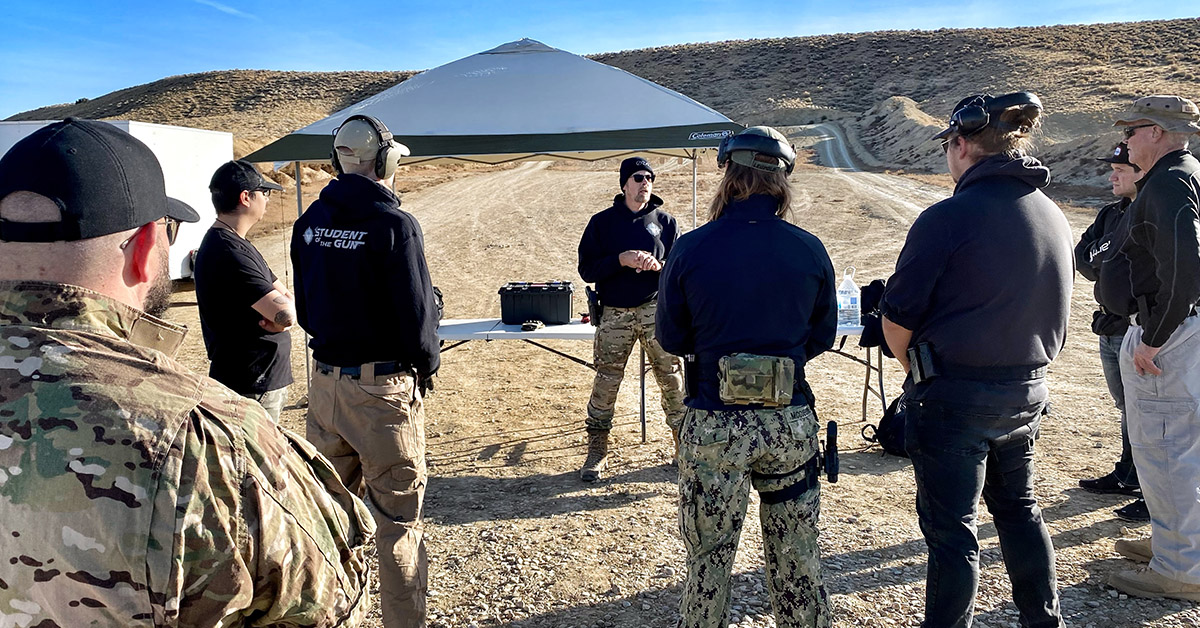
We use the term Ballistic Problem Solving as a way to encourage thinking with a gun in your hand. The martial use of a firearm requires you to make good/correct decisions all while employing a deadly force tool. There is no room for error. We can’t call time out and do it over again a second time. If the situation does not unfold as we expected, we must push through and use our brains to figure it out.
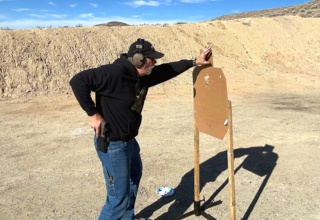
During our P201 Martial Application of the Pistol course, I remind students that I will not be there standing behind them to give them the command to fire in a parking lot, grocery store, or their living room when they are faced with a deadly threat. They must learn to think and rapidly make correct choices.
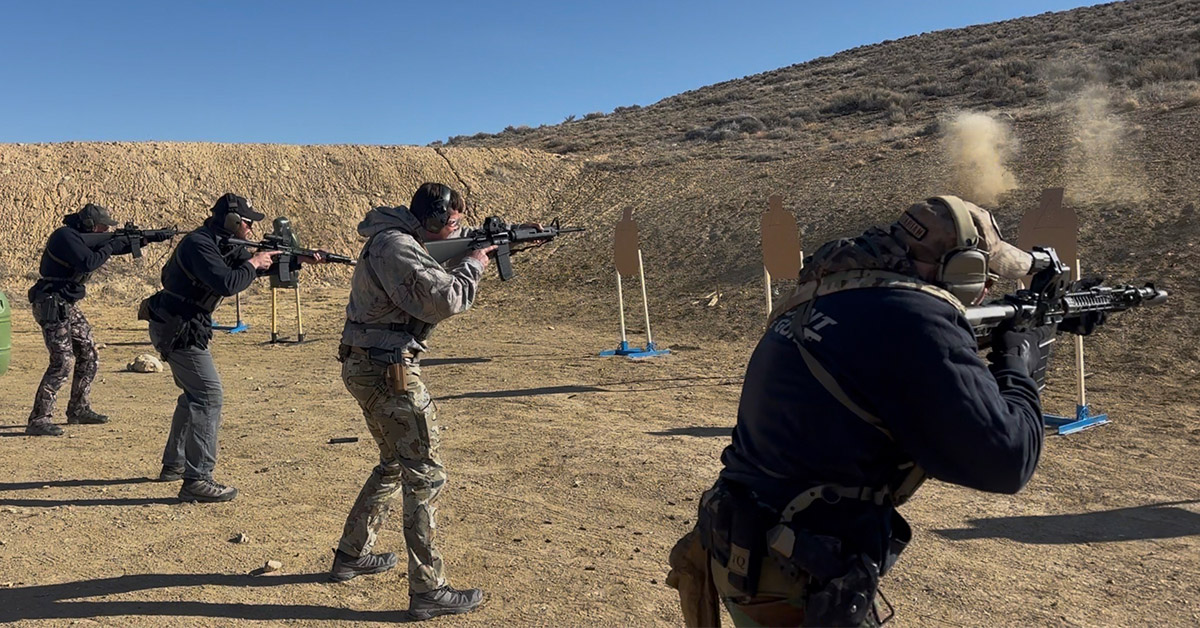
If we all agree that people who carry guns should be able to think on their feet and make rapid, correct decisions, all while potentially employing a deadly force tool, when should they learn to do that? If you treat your students like bumbling morons who must be told twice to load their gun and get ready and then you program them to only pull out the gun at the sound of the timer beep, how do they ever learn to think with a gun in their hands?
The question is simple: do we want gun carriers who can be trusted to make sound decisions and think on their own or do we just want to go on building shooting robots?