The simplest replacement item in your pistol can also be the one component that causes big problems. Time to talk about pistol recoil springs…
by Paul G Markel
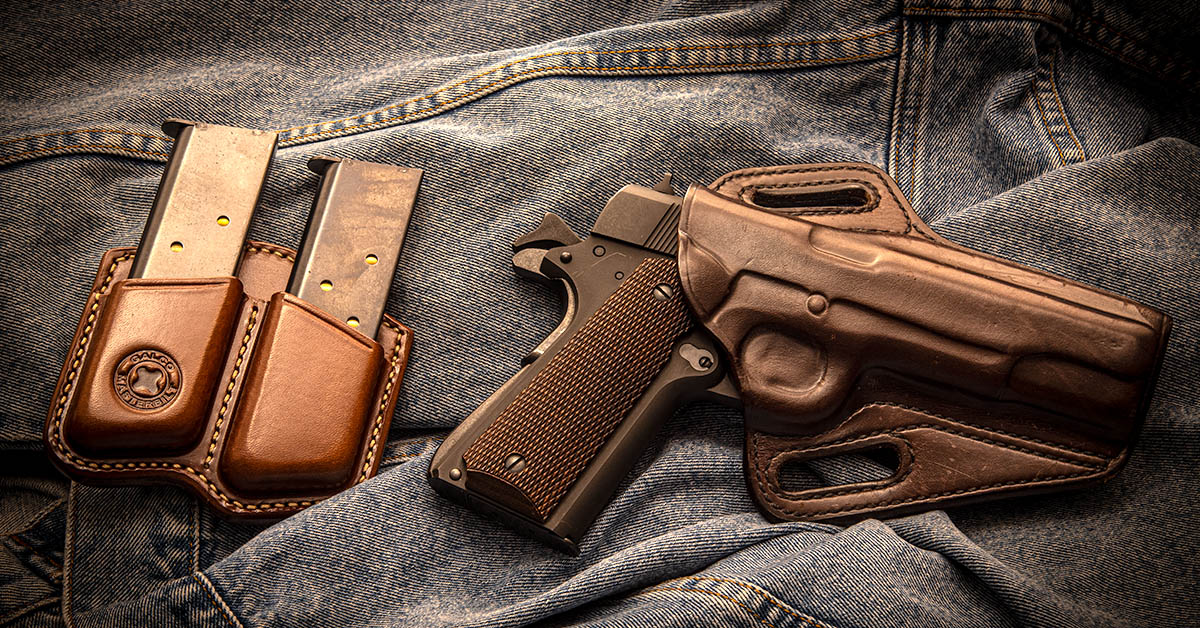
It was late August of 1987, and it was hot in Jacksonville, NC, the home of Camp Lejeune United States Marine Corps base. Well, I wasn’t actually stationed on Lejeune. That was for more permanent personnel. I was attending USMC Infantry School at Camp Geiger.
Despite the sweltering heat and humidity, I was upbeat as that day was pistol qualification day. I feel certain that they loaded us up on “cattle cars” not “deuce and halfs” as we weren’t really going to the field, just the pistol range. Exactly one year prior to that day I had taken a four-day tactical handgun course with John Farnam and had used an M1911A1, putting over 1000 rounds downrange. Though only a Private, I felt as though I had more experience shooting that pistol than anyone present, cadre instructors included.
When we arrived at the pistol range, we were given the requisite, approved military safety briefing, during which the four universal safety rules were never discussed. But we were told where to stand, never to pick up the pistol until given the command to do so, and, if the gun stopped working, point the muzzle downrange and raise your left hand. An armorer or coach would come over and fix it. I wish I were kidding here. While they did not give us much marksmanship instruction, save how to align the sights, they did go over the course of fire, the time allotment, and number rounds we were expected to fire.
All these years later I remember the large, long, OD green wooden crates that the armorers carried over under the power of two men. Inside there were dozens of M1911A1 .45 ACP pistols. On the firing point, we were given two 7-round magazines and a single brown cardboard box of 230-grain ball ammo.
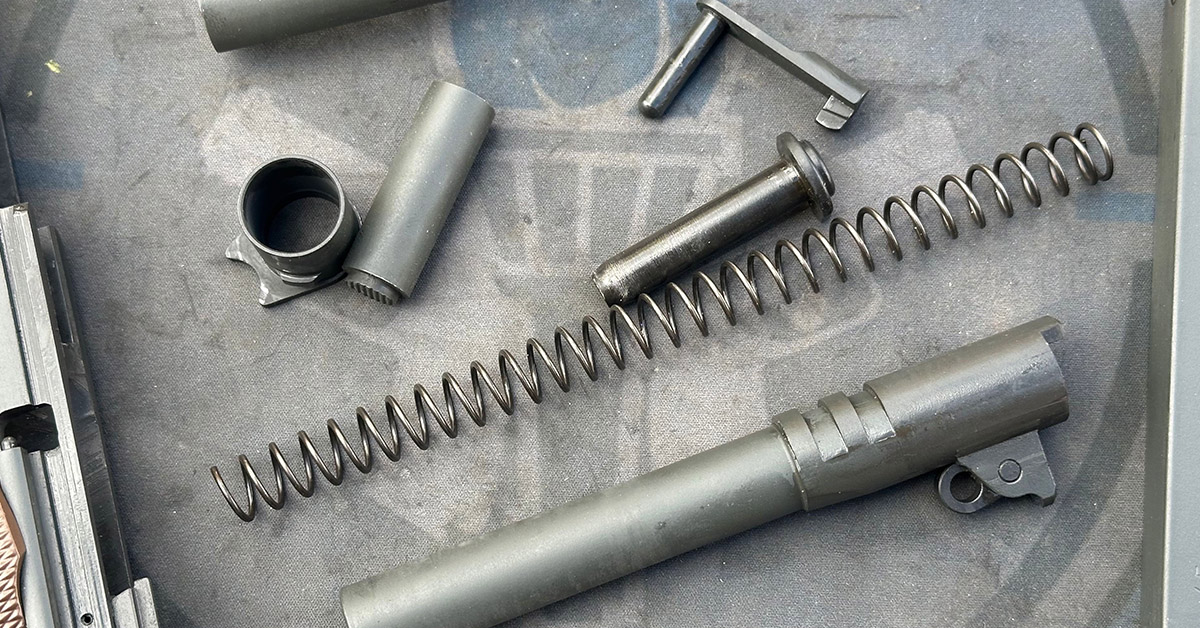
When it was time to pick up my pistol, I held it in my hand and shook it, the gun rattled. Sometime early on during the qual course, I was shocked to see parts of my gun launch downrange. When I fired the pistol, the barrel bushing, recoil spring, and plug all shot downrange, landing in the grass somewhere. I was surprised by that and raised my left hand like a good Private. When the armorer came over, I told him what happened and I was even more surprised that he was completely unphased. The Lance Corporal simply took the pistol from my hand trotted off and returned with an identical model so I could finish the course.
When the scores were tabulated on the paper bullseye targets, I was terribly disappointed to find that I had only qualified as a “Marksman.” In boot camp, I had qualified as an Expert with the M16A2; however, life goes on and I would get the chance to requal a few months later in Sea School, where I was gratified to not only shoot “Expert” but to be honored with Class High Shooter.
Maintenance or Repair?
As time went by and I gained more experience and knowledge about how things worked in the Marine Corps and military in general, I discovered that when it came to preventative maintenance for small arms, there basically was none, save for requiring the troops to scrub their guns to the point where the finish began to wear off. Parts were never replaced unless they actually broke.
When I brought up the subject of my first pistol qual to an older and wiser Marine, he laughed and said, “You would have been lucky to see any of the original rifling in that barrel.” Then he explained, “Those barrels date back to World War II and have had tens of thousands of rounds fired through them. The Marine Corps does not put new barrels in pistols unless the old ones break.” When I realized that the pistol I had been shooting was essentially a smooth-bore .45 from 25 yards, I considered myself lucky to have hit the paper.
When the US Department of Defense decided to switch to the M9 Beretta in 1986, their fleet of WWII era M1911A1 pistols were worn out. That is, with the exception of special operations units who had dedicated gunsmiths to trick out their guns.
Upon being issued a brand new M9, that pistol seemed light years ahead of the old .45s. Also, we actually trained with the new handguns and, despite the heavy first shot DA trigger pull, qualifying as an “Expert” was not that hard.
That was the good news; however, by 2007, when I was working full-time as a Small Arms & Tactics instructor for the DoD as a military contractor, those “brand new Berettas” were now over twenty years old and the exact same maintenance/repair logic was applied to them as was the 1911. The armorers never replaced parts unless something broke, and that included recoil springs and the barrel-mounted locking block that was unique to the M9.
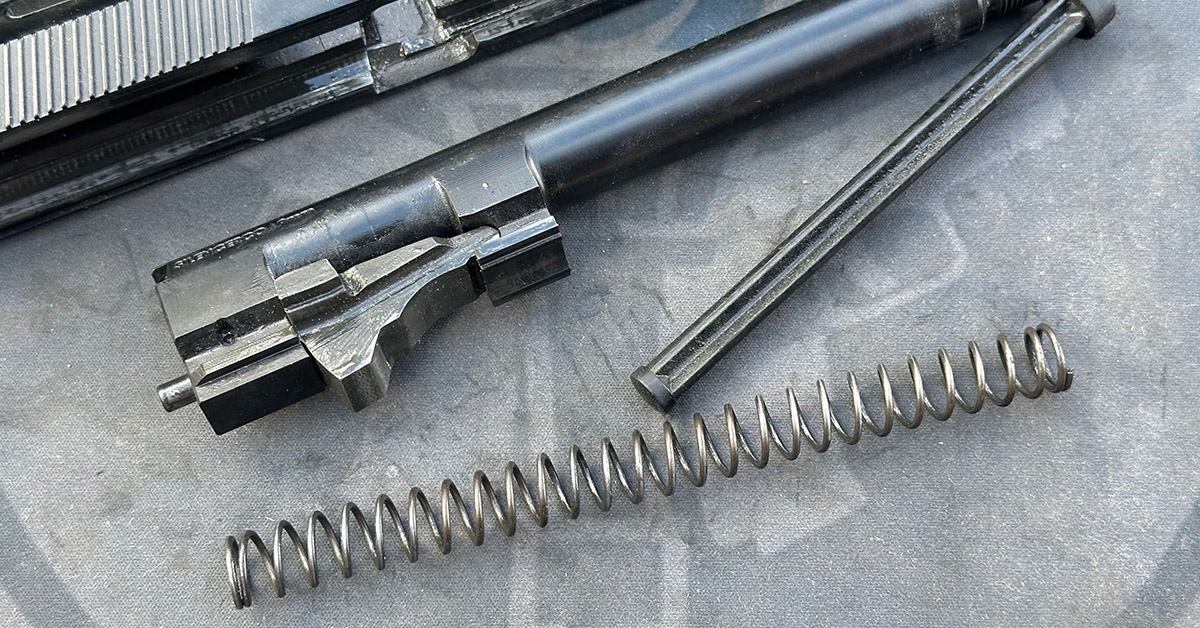
It was the locking block that broke most often on the M9. When one would break, the common reaction of the old guard was, “See, this thing is a POS. We should have kept the 1911.” The former Seals on our team would carp with righteous indignation, “That never happened with our SIGs.”
Not once did I ever hear someone ask, “When was the last time the recoil spring was changed?” In truth that would have been a rhetorical question because the answer was “never.”
Just like clockwork, when the US Army adopted the M17 pistol, the troops felt like it was a good idea because the “old Berettas” were all junk. To be fair, there is not a single pistol out there that could be as neglected and abused as were the M1911A1 or the M9 and hold up for 30-plus years. Just wait until the year 2037 and ask the troops what they think about the M17.
Recoil Springs: The Easiest and Most Useful Maintenance
Handguns are simple machines and, as such, they function the best when they are cleaned, lubed, and well-maintained. The cleaning and lubrication part is straight-forward. Lube goes on all the metal parts that slide against other metal parts. Light lubrication goes on steel parts that are subject to corrosion.
In order to speak intelligently on the spring issue, I reached out to several manufacturers and experienced gun makers and asked them their opinions regarding when to change a recoil spring on a pistol.
My guy at Beretta said, “I’m not aware of an official guideline other than what is in our manuals. They list 5,000 for recoil springs. Personally, I do ~3-4k for recoil springs as they’re cheap. For locking blocks, the manuals don’t list a replacement interval. The average life is about 22k (military testing). I’d inspect when cleaning after the 12k mark and replace around 15k.”
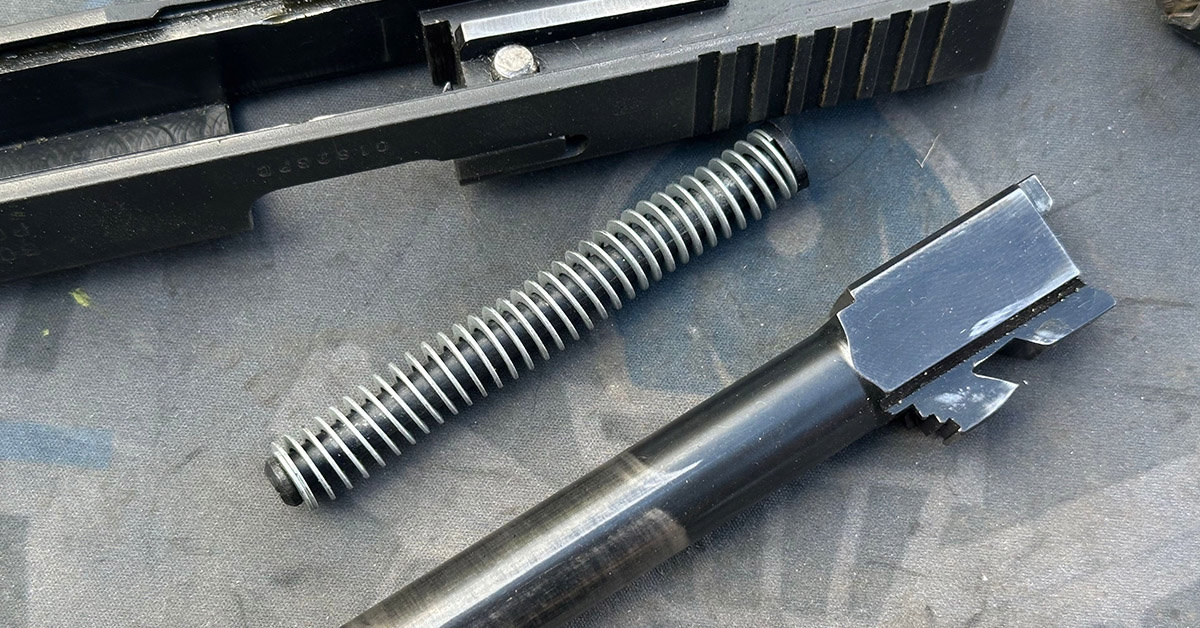
From GLOCK, my contact said, “We recommend changing the recoil springs in the GLOCK 22 and 23 every 3,000 rounds. With the 9mm versions, you can go to 5000 rounds.”
My contact at CZ USA stated, “Our general guide on recoil springs is to change them every 5,000 rounds, (for 9x19mm) while other springs generally won’t need to be replaced until 15-20,000 rounds.”
The sagest advice came from Bill Wilson, Master Gunsmith and founder of Wilson Combat.
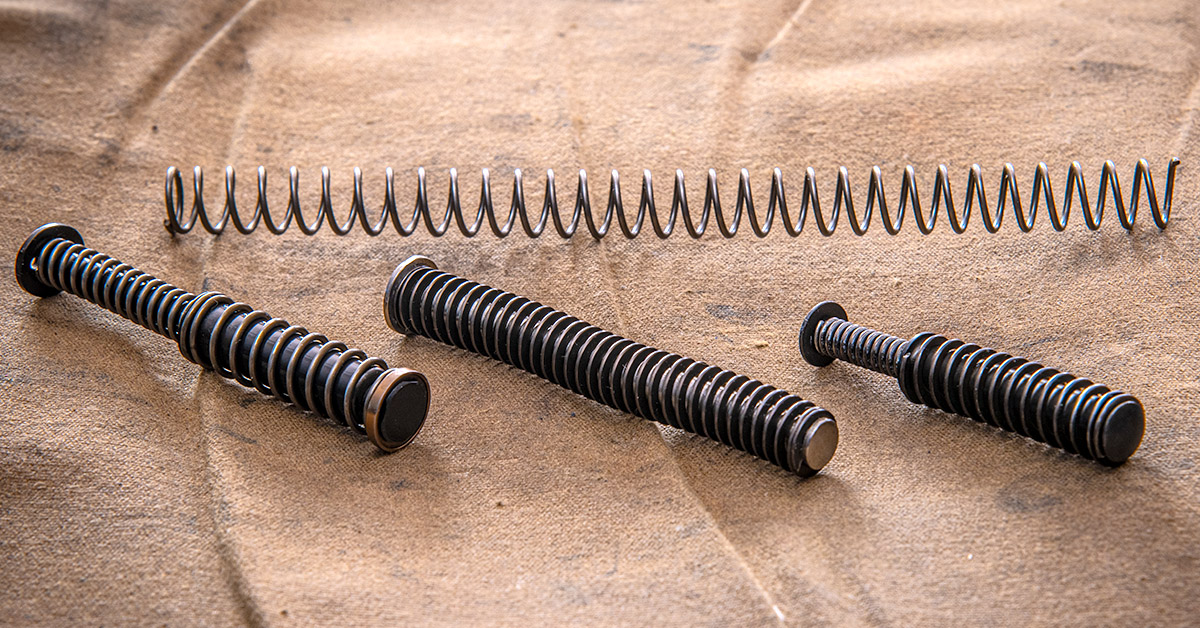
“It depends on several factors,” Bill said, “caliber, barrel length, spring type (round wire or flat wire), spring material (music wire, stainless, or chrome silicone). Basically, worst case Colt Officers .45 with a round music wire spring: 500-1000 rouds. Best case 5-in. 1911 9mm with a flat wire chrome silicone: 10,000 rouds +. Flat wire lasts longer than round wire. Regarding material, music wire is least and chrome silicone has the best durability with 17-7 stainless in the middle.”
When we consider the military pistols discussed previously, those used by a training command could literally have tens of thousands or rounds fired through them on the original factory springs. Is it a wonder that the locking blocks on the M9s would break on older guns? I can’t even imagine the number of rounds that were fired through my Infantry School 1911 from WWII until I showed up in the summer of ’87.
Magazines
After recoil springs, the other part that is simple to replace is the magazine. Magazines are not designed to last forever.
During my early Marine Corps career, I was on the pistol range with an M1911A1 and, on one of the two mags I was issued, the feed lips were so worn that for every round I fired, two unfired cartridges would launch out of the ejection port along with the spent brass. Again, I wish I were kidding. Did the armorers throw that mag away? Nope. When we were done that day, they tossed it into the box with all the other mags.
Keeping track of magazines that all look alike is made far easier when you take a tactical paint pen and put numbers on them. If you find that you are constantly getting double-feed or failure-to-feed stoppages with mag #3, toss that sucker in the trash and replace it. You should have a minimum of three magazines for your semi-auto pistol. Also, keep in mind that aftermarket magazines that seem really cheap when compared to the factory mags are so for a reason.
Old Guns and LE Trade-In Guns
Naturally, if you just purchased a new pistol, you are likely not concerned about the previous as you are just getting started but you should keep it in mind; however, if you inherited a pistol from your dad or granddad or maybe you bought a used gun, how many rounds have been fired through it and has the recoil spring ever changed? Recoil springs are the least expensive preventative maintenance. Just order a new one.
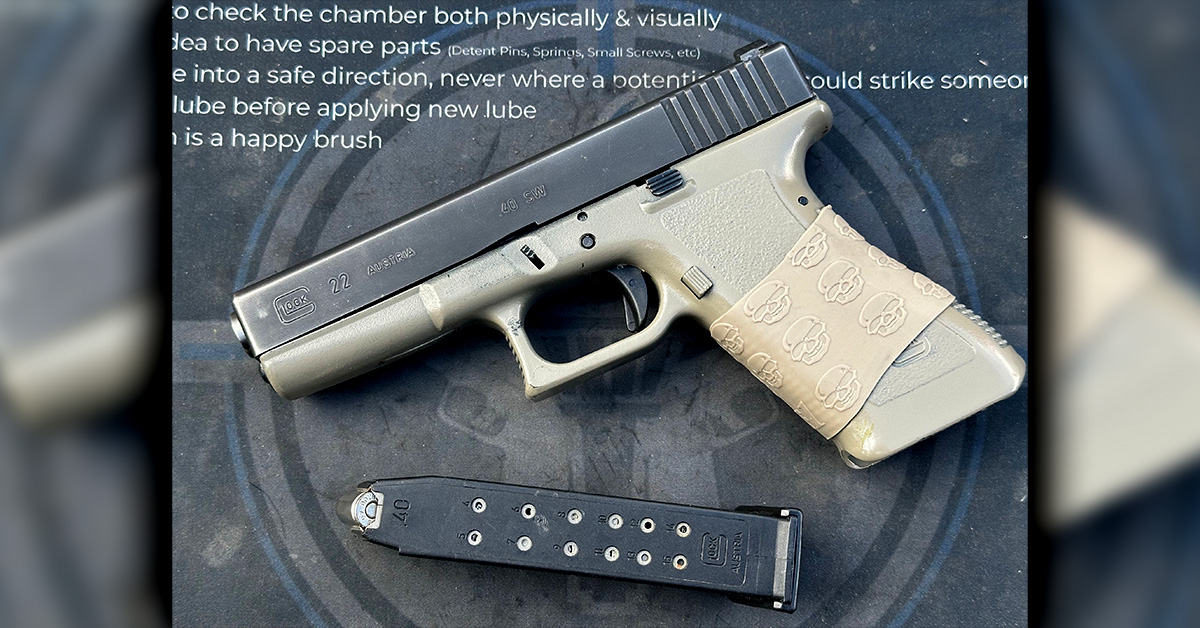
Something else I learned from my time as a police officer was that agency guns are treated much like military guns. Preventative maintenance consists of occasional cleaning and lubrication. Unless a part breaks, they don’t replace them.
For about ten years or so, LE trade-in .40 S&W pistols have been popping up online and in local gun stores at bargain prices. It is a safe bet that the recoil springs in those guns were never changed during their entire service life. If you decide to buy one of these guns, I would definitely change out the recoil spring as well as completely disassemble it and inspect the internal components: pins, locking blocks, et cetera. You might be surprised to discover a broken pin or block.
Years ago, I completely disassembled a Glock .40 S&W LE pistol and found that the locking block came out in two pieces. How long had it been broken? Who knows?