Big-bore air rifles are becoming more popular in hunting circles. We tested Gamo’s new TC-50 in .50-cal. on some tough Florida hogs — sausage making ensued.
by Mark Houlahan
If you’ve been around firearms for any length of time, you no doubt spent many of your early days creating memories with a Daisy air rifle — shooting bottles and cans or perhaps assisting in rodent control on the farm. You may have even graduated to a CO2-powered rifle or pistol for target practice before your dad or granddad introduced you to a .22 rimfire. These air rifles and pistols, usually .177-caliber but also available in .22-caliber pellet form, remain great training tools for young shooters and can even help teach adults proper rifle and sling positioning, breathing rhythm, optics use, and trigger control.
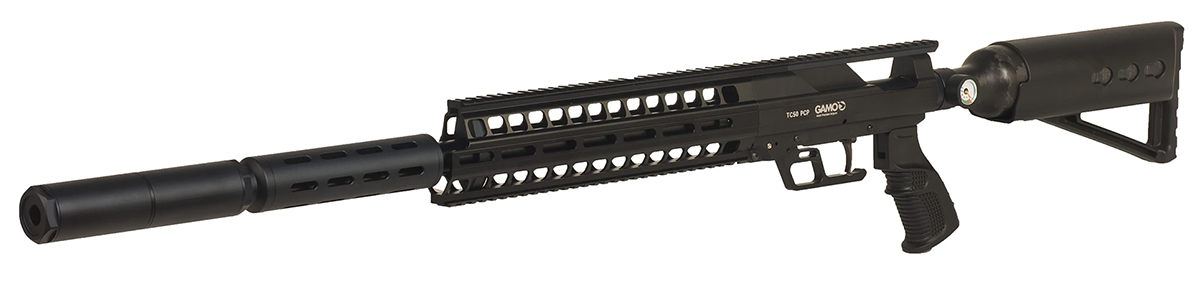
Today, the air rifle market is one of growing technology, power, and caliber that can be used for training, varmint control, and even medium to large game hunting. Take Gamo’s latest, for example: the Big Bore TC-50 air rifle. We recently had the opportunity to get behind the trigger and experience one for ourselves via a Florida wild hog hunt at the famed Osceola Outfitters and we walked away duly impressed and with a freezer full of pork sausage.
What is a PCP Air Rifle?
If you look back on air rifle technology, you can see we’ve come quite a way with how the pressure is provided to send the projectile downrange. Originally, you had the standard pump-action rifle. You could pump the rifle manually a specific number of times to build pressure. One pump would be sufficient for plinking cans off the fence, or you could give it a few more pumps to ensure you take down that small varmint decimating your mom’s garden.
Next, you could move up to the spring or nitro piston-based rifles. These use either a spring or a sealed compressed gas chamber in place of the spring to power the piston that fires the pellet and only requires a single pump of the actuating system. Of course, we can’t forget CO2 as well. While more common in pistols, there are CO2 powered rifles, and these trade the pumping action for a pressurized air canister you load into the firearm as your pressure source.
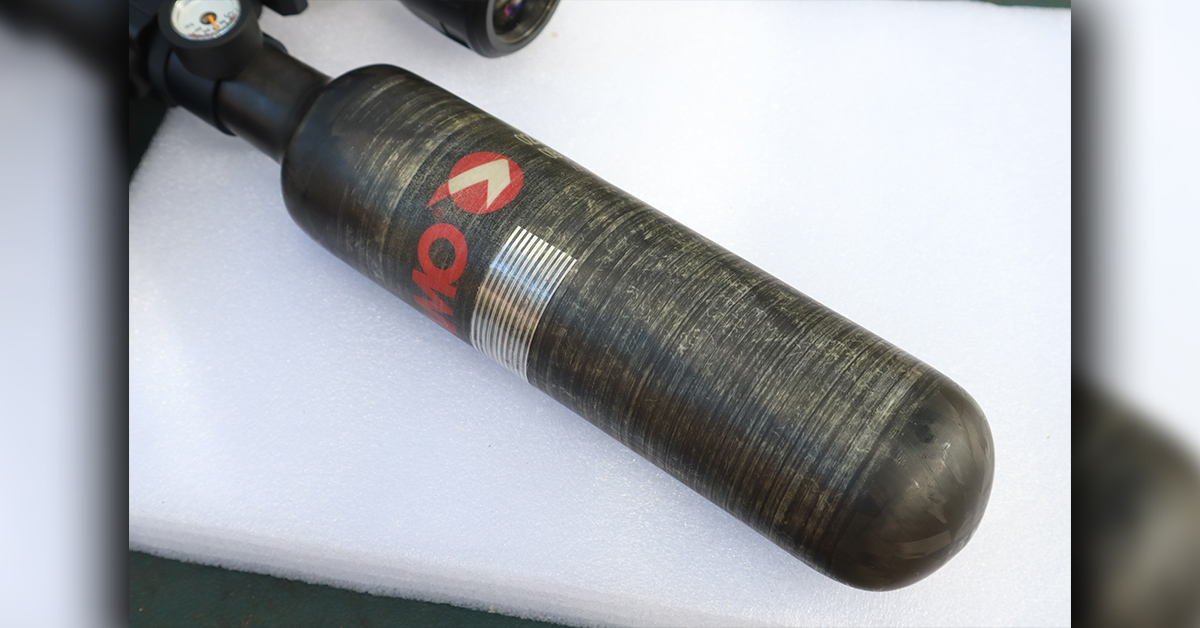
Lastly, there is the relatively new PCP air rifle (commercially growing for the last 20 years or so when compared to over 100 years for traditional air rifles). PCP stands for “pre-charged pneumatic.” Think of a PCP air rifle as similar to the original pump action design but without the need to pump up the air chamber and running at much higher pressures (upwards of 3,000 PSI).
Charging Options for the PCP Air Rifle
Unlike manual pump-action air rifles or the one-time-use CO2 cartridges, a PCP air rifle requires a high-pressure air source to charge the reinforced carbon fiber air tank that is part of the rifle. There are a few routes you can take to accomplish this, each with its own pros/cons.
Hand Pump – While you can use a hand pump, this isn’t your typical bicycle pump. A PCP hand pump is a specialized air pump for filling PCP air rifles. While it is the lowest cost option, and it can be used in the field (since YOU are the power source), be ready for a serious workout if filling a rifle that is empty. A hand pump might be a good option for “top offs” between rounds if you want maximum pressure with each round fired, but you’ll most likely have a heart attack before you finish filling a rifle by hand at over 200 pumps!
SCBA (SCUBA) Tanks – A standard SCUBA-style tank is safe for the PCP air pressures you need and can be filled quickly at most dive shops or even some fire stations, but these tanks are not light and do require said fill stations. You can also seek out carbon fiber tanks (used by firemen) versus the traditional steel or aluminum dive tanks. The carbon fiber is rated to hold higher pressure (more fills) and is lighter. So, while they are somewhat portable and can allow filling in the field, once empty, you’re done for the day. Also note that SCUBA tanks must be inspected and pressure tested. They must also be labeled for air gun use.
High-Pressure Compressor – Most will consider a high-pressure compressor a necessary piece of equipment once you go down the PCP rabbit hole. These compressors, usually about the size of a small 110-volt MIG welder, provide direct filling of your PCP air rifle and, depending on the model, can be used with either 110-volt AC current or 12-volt DC current (wired into your side-by-side or UTV) for in-field use. Obviously, the compressor motor will make noise when running, so for in-field use, that may not be the best option if you’re on a hunt.
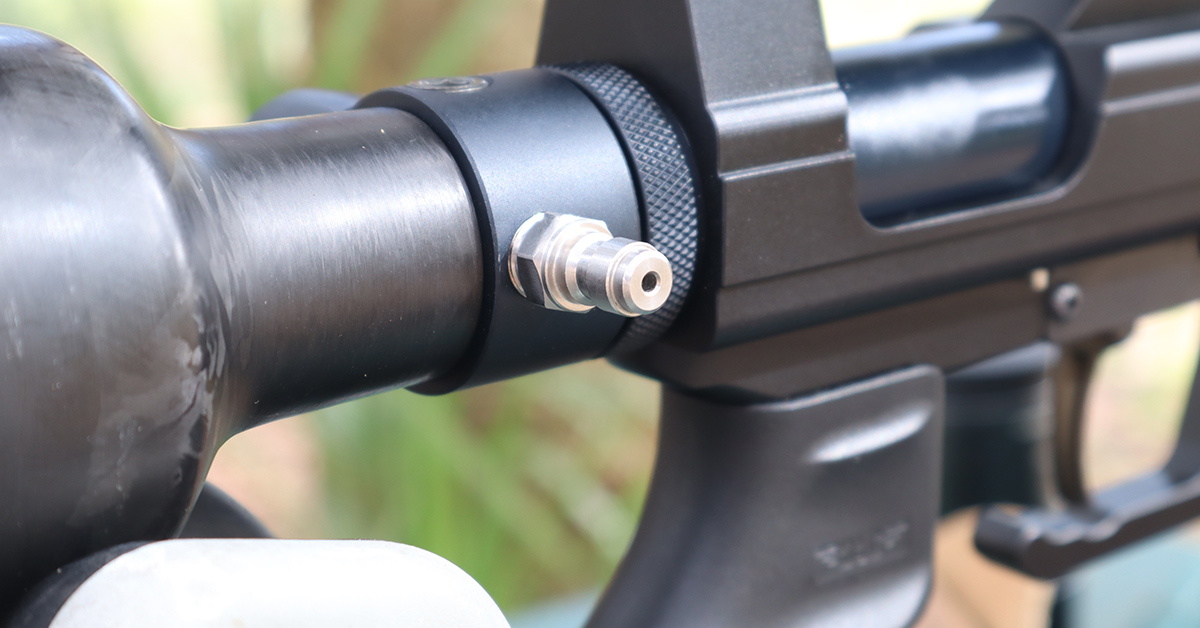
For our testing purposes, we used a 110-volt high-pressure air compressor at our base camp, which allowed quick refills while performing bench testing and sighting of our optics. For hunting needs, we found that the large caliber and velocity meant quick one-shot kills, so we didn’t really have to worry about refilling during our spot-and stalk hog hunting in the early morning or late afternoon peak hours. The TC-50, while a single-shot air rifle, can reliably fire roughly five times on a fully charged air tank, providing additional, albeit slower, follow-up shots.
Using A PCP Air Rifle for Target, Competition, or Hunting
You may think hunting with an air rifle means a .177 or .22 pellet and stalking squirrels and other small game. Traditionally, that may have been the case, but with the advent of higher velocity PCP air rifles and larger caliber slugs, medium to large game can certainly be ethically taken with proper shot placement. Generally speaking, anything .30-caliber and up is a minimum for larger animals, and on our hog hunt, we had no issues taking mature Florida hogs with both .457- and .50-caliber slugs with single shots into the vital zone.
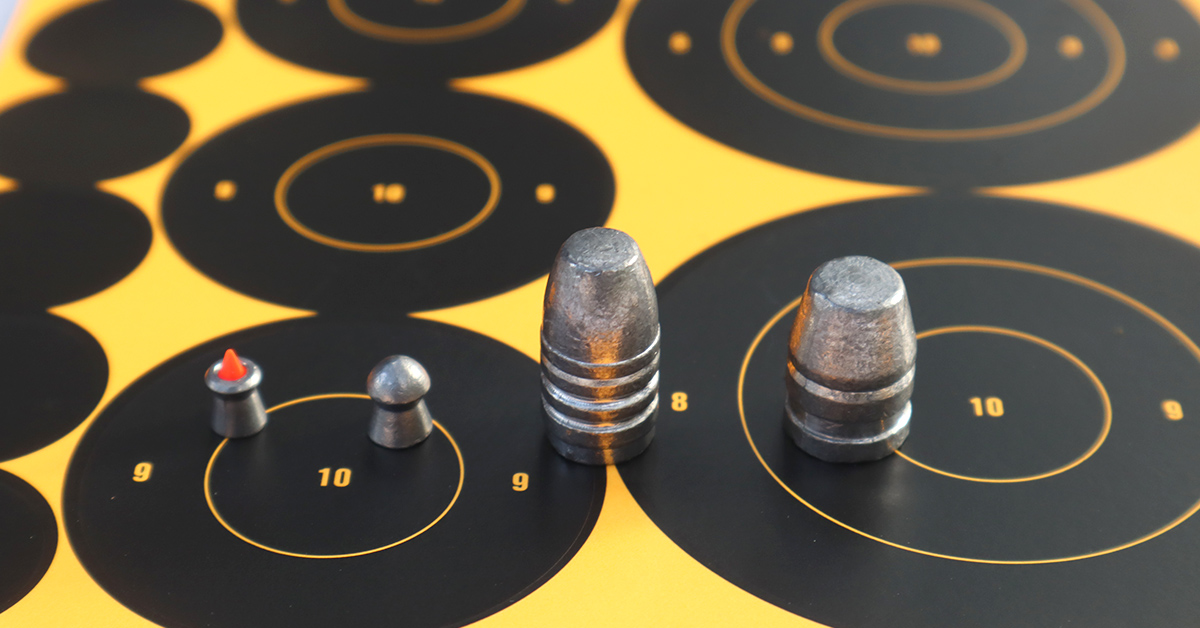
Obviously, air pressure and the velocity of the round play a large part here, as does the range in which you’re shooting. With the larger calibers we were shooting, you’re looking at muzzle energy of more than 400 pounds (with a cast 336-grain slug) at 900 feet per second; that is good out to 100 yards or slightly farther. With smaller calibers between .30 and .40, you’re most likely looking at under a 100-yard shot, which for medium game like a hog is still very workable.
Air rifles are known to be viable options for target and competition use through several well-known shooting programs, such as those offered by CMP, NSSP, SAR, and others; however, those are generally limited to .177 or .22 pellets for youth programs. Larger calibers are generally used to ring steel out to 300 yards and beyond in specialty competitions such as the Rocky Mountain Airgun Challenge’s Big Bore Slug Challenge and other events where large caliber air rifles with high foot pounds of muzzle energy are necessary. So, there is that option to keep your trigger finger happy outside of hunting season.
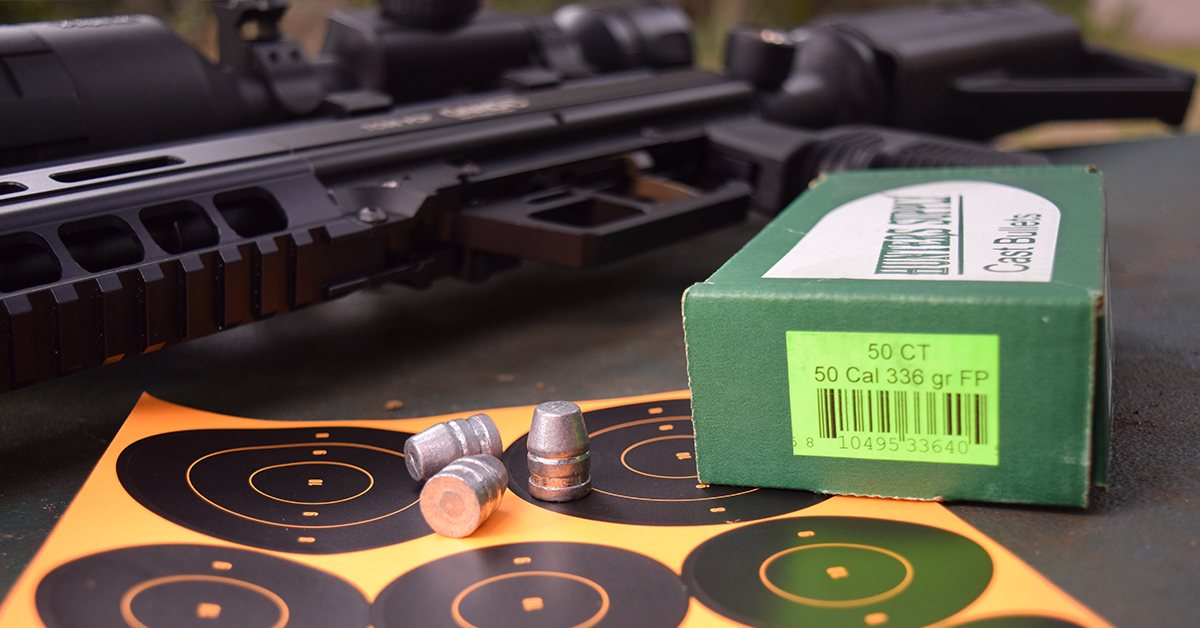
Construction, Sights, and Operational Controls
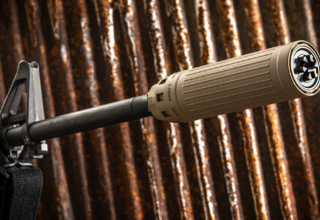
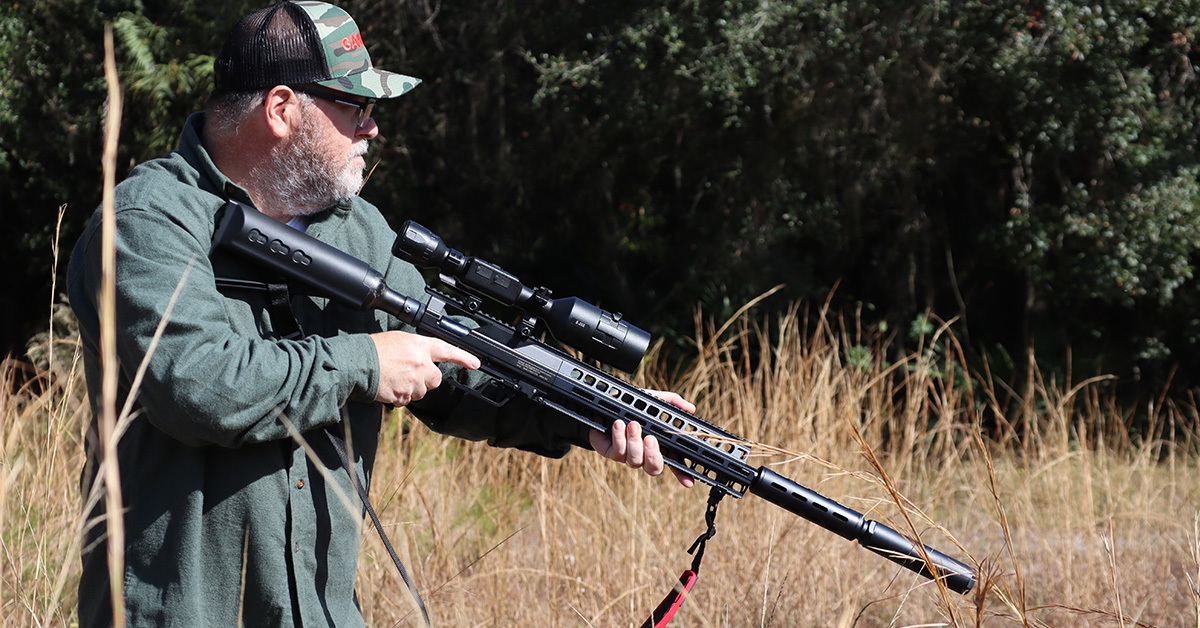
The Gamo TC-50 features an aluminum body that is made up of the main trigger/chamber assembly and a tactical rail system. The 24.80-inch-long barrel is metal-jacketed rifled steel with an attached sound moderator. The action includes a single cocking system (you use the trigger guard to cock the rifle to either half or full power) with a two-stage trigger. The manual safety is a fore/aft slide button on the right side of the rifle that is automatically placed into “SAFE” every time the trigger guard cocking system is actuated. There is also a secondary safety/release that must be manipulated to return to the trigger guard to its closed position.
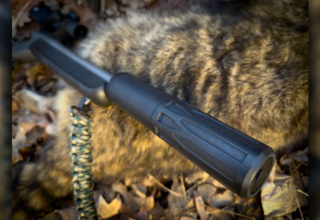
The included sound moderator is quite functional. Inquiring minds wanted to know just how effective it is, so we found an adjustable wrench and removed it to fire a few unsuppressed rounds at the bench. The subsequent unmuffled report had several hunters stick their heads out wondering just what it was we were shooting! So, yeah, it works.
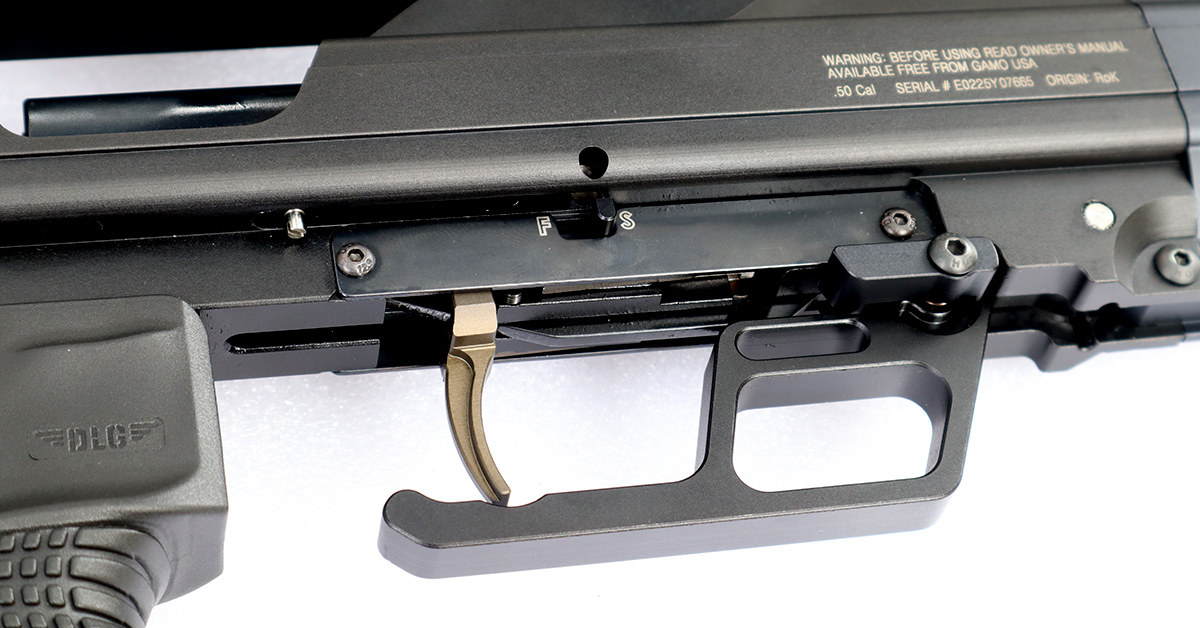
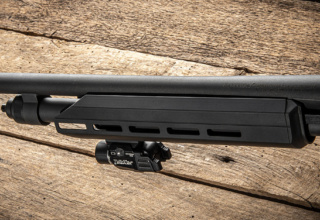
Between the body and tactical hand guard/rail system there is a total of 19.75 inches of M1913 picatinny rail on the top of the rifle for optic mounting (the TC-50 does not ship with an optics, so take your pick). There is an additional 12 inches of pic rail on the bottom for foregrips, bipods, or other M1913 accessories. You’ll also find nearly 12 inches of M-LOK slots at the three and nine o’clock positions of the hand guard for sling mounts or other M-LOK goodies.
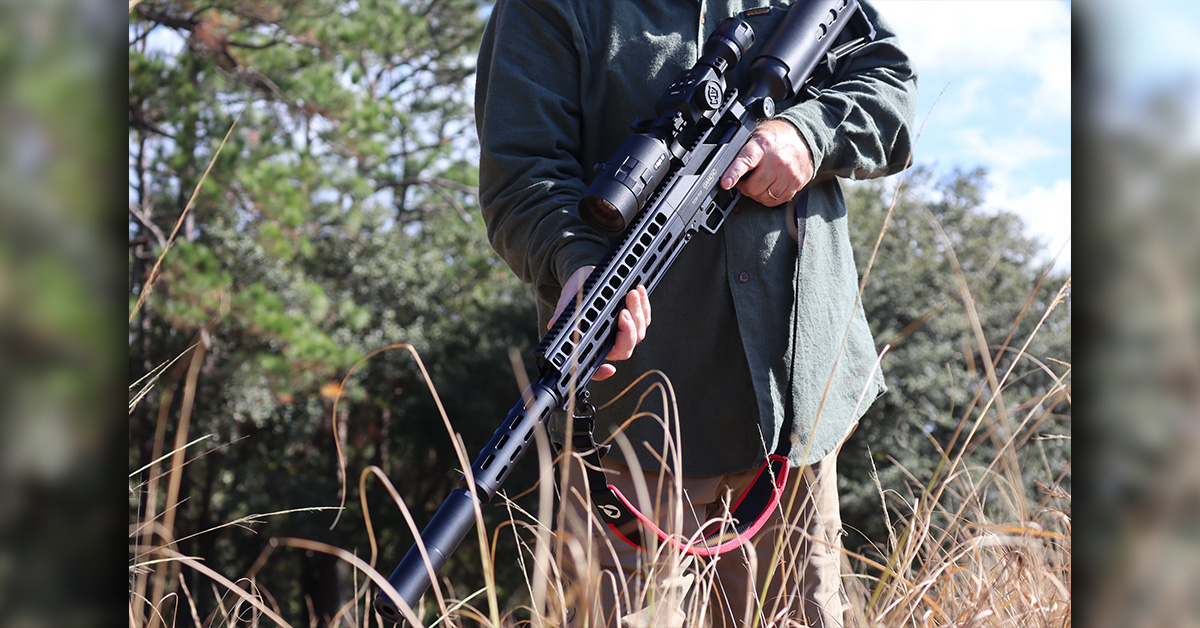
The pistol grip has an AR-15 feel to it. Aft of the main rifle body is the carbon fiber high pressure air storage cylinder with a pressure gauge on the left side and a fill valve on the right side. A plastic “stock” sleeve fits over the carbon fiber cylinder and is not adjustable for length-of-pull or comb height; however, we do feel it wouldn’t be that hard to add a 3D printed spacer of some sort to the end of the cylinder that would allow making the LOP longer if needed.
On The Range
Being new to the platform and the fact that Gamo had fitted the sample rifles with various optic options (there were five of us on the hunt, along with the Gamo crew), I took the time to bench test the rifle to get familiar with it and to double-check the optic’s zero.
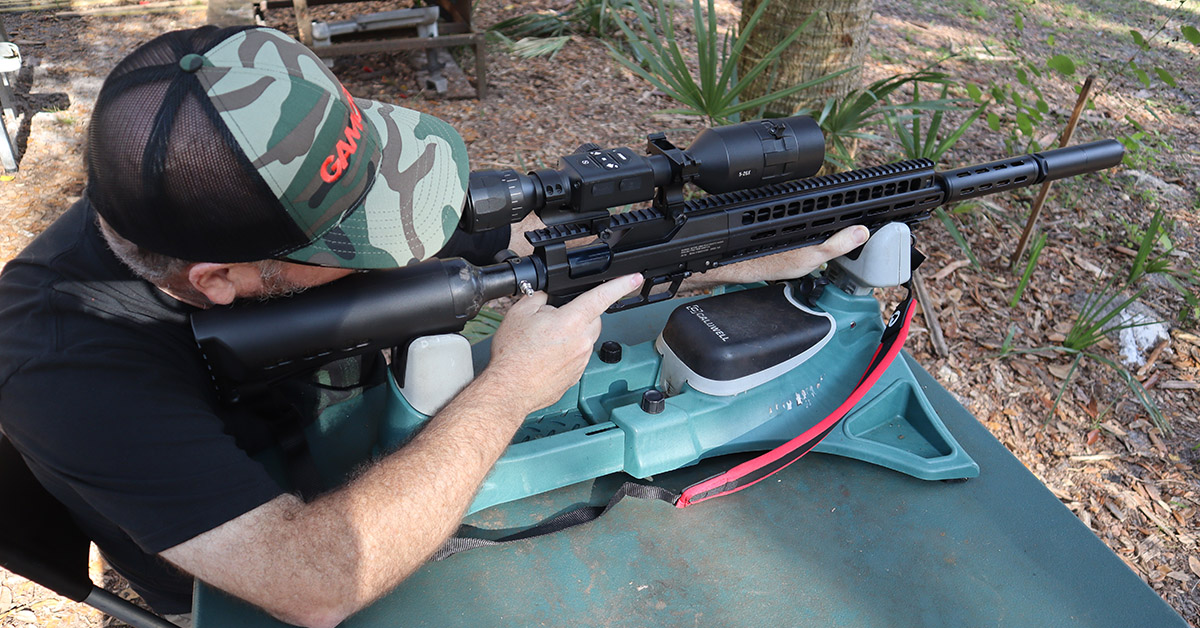
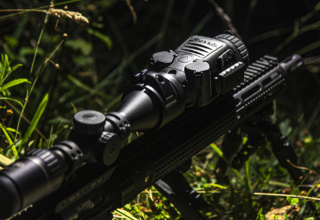
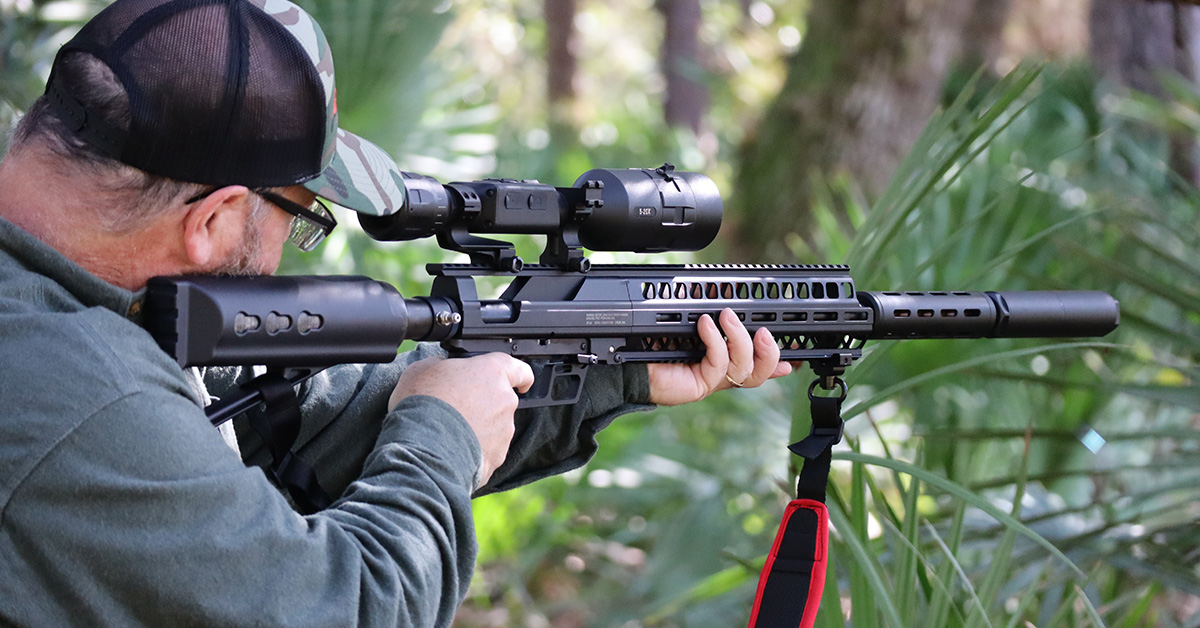
The TC-50 featured an ATN X-Sight 4K 3-14 scope with night vision. Knowing we were going to be mainly doing spot-and-stalk hunting at Osceola Outfitters with ranges under 50 yards, I was able to put rounds on paper quickly and keep three shot groups under about an inch and a half.
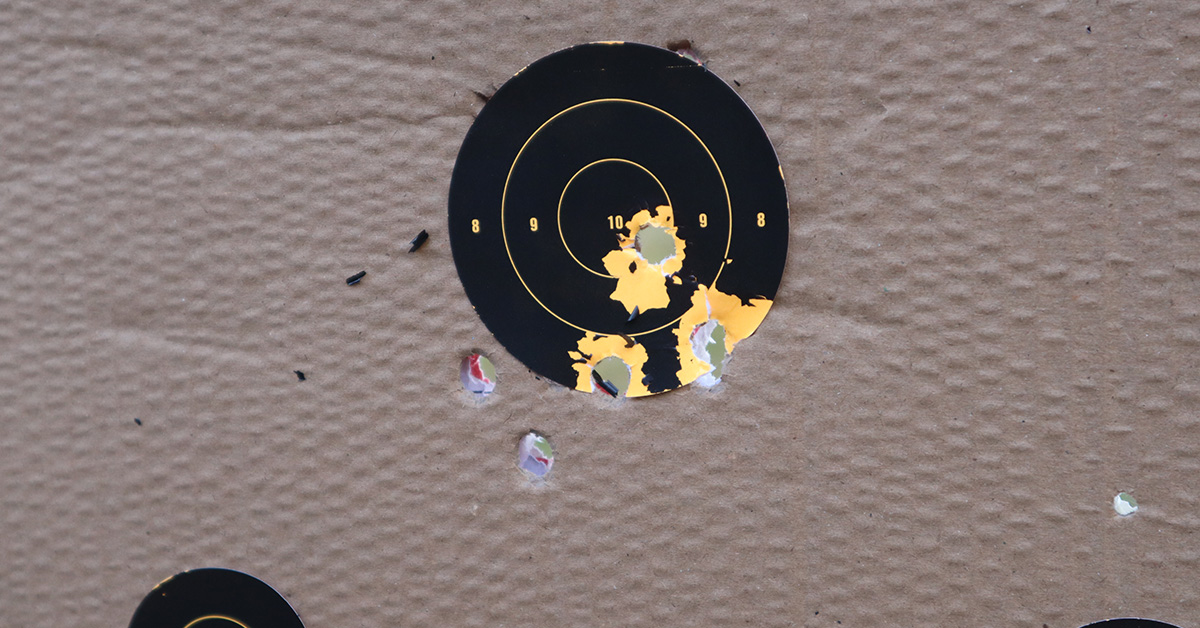
I was a bit surprised at the report of the TC-50’s muzzle. Perhaps I thought of my old .17 pump rifle from my youth, but the high-pressure air charge of the TC-50 means you’ll experience a higher level of sound than you’d expect from a traditional air rifle. Did I feel I needed hearing protection? Not in the least, but when you fire that .50-cal. slug at your target, even with the factory sound moderator, it’s possibly going to startle nearby game.
Taking Medium to Large Game
With our scopes setup and all our gear charged and ready, it was time to hit the trails. Being relatively new to hunting medium to large game, I was blessed to have Osceola Outfitters’ very own Hoppy Kempfer be my guide on this hunt. With decades of experience under his belt, I knew I was in capable hands and wouldn’t come home empty-handed.
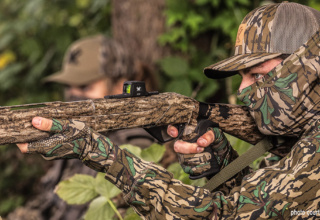
Driving out to various sections of the property, Hoppy led us right into the thick of things and we encountered several groups of hogs. With careful, quiet instruction from Hoppy, we were able to get within 25 yards or so of several large sows and place accurate, ethical kills each time with the TC-50. Our limit was two hogs for the trip. I managed to fill that quota on the second day of the hunt.
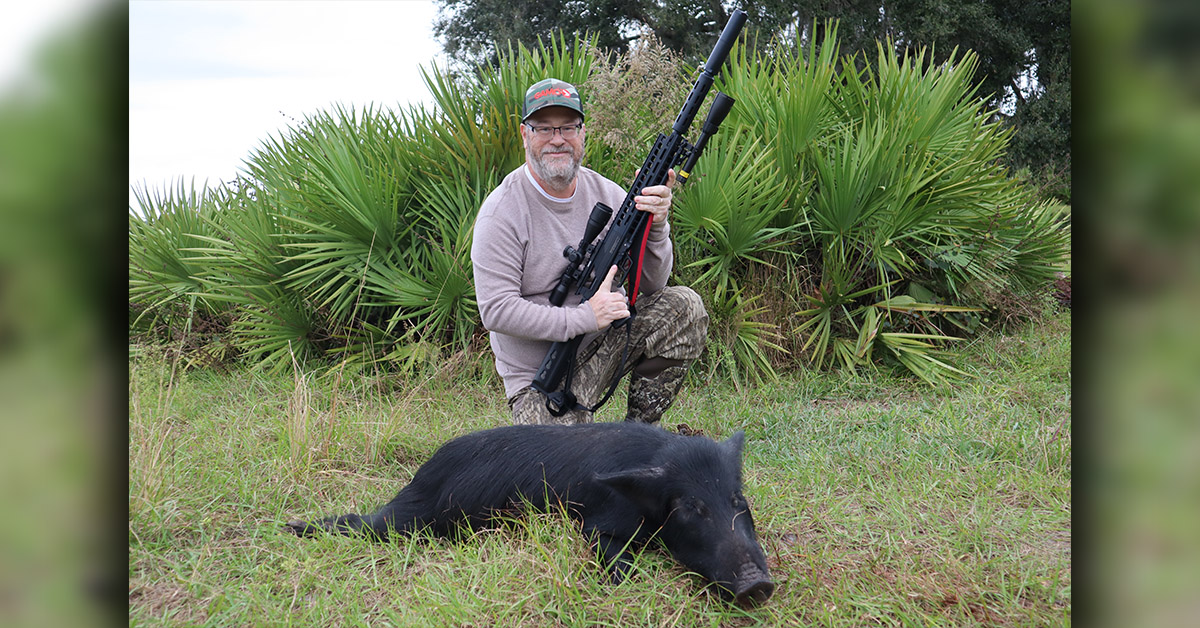
In our dinner conversations with Hoppy, his sons, and all the hunters in camp, everyone felt that the TC-50 was more than capable as a medium to large game alternative to traditional firearms of similar or smaller calibers. The lower noise levels, accuracy, and lack of felt recoil all being high marks in our discussions. Being a PCP air rifle, it also allows hunting for those that can’t technically own a firearm because an air rifle is not considered a firearm and therefore does not require a 4473 transfer. It is, though, essential to confirm if air rifle hunting of such game is legal in your state and how your state or locality classifies air rifles in general.
Closing Thoughts
Whether you’re controlling the local varmint ingress on your property or planning to put some meat in the freezer, a PCP air rifle is certainly up to the task. The Gamo TC-50 provides the ability to do both in a low recoiling, easy to use form factor.

The single-shot functionality and need for a high-pressure air source should be taken into consideration for the type of hunting you’re planning, but with a pocket full of .50-cal. slugs and a full air tank, you’re good for four to six shots, which, frankly, is often all you need. You should experience PCP air rifle hunting yourself to decide, but like me, once you have your hands on one, you’ll agree that you’ll need to add one to your arsenal.
Gamo Big Bore TC-50 Specifications
- Model #: TC-50
- Action: breach-load pre-charged pneumatic air system
- Caliber: .50
- Capacity: single shot
- Barrel Length: 24.8 in.
- Barrel: steel with sound moderator
- Optic Compatibility: full-length Picatinny rail (19.75 in.)
- Stock: fixed over PCP air tank
- Grip: pistol
- Safety: right-side fore/aft slide with auto reset
- Finish Color: black
- Overall Length: 45.79 in.
- Average Weight: 7.8 lbs.
- MSRP: $1,099
- FIELD TEST: Gamo’s TC-50 Big Bore Air Rifle - February 6, 2026
- The 411 On 2011 Pistols - December 17, 2025
- Active In-Ear Protection is “IN!” - August 21, 2023