One bullet may not do it all, but the triple-threat 25 Creedmoor comes pretty darn close
by Richard Mann
Hunters used to own only one rifle. It wasn’t really until well after World War II that owning multiple rifles chambered for different cartridges for different uses became prevalent. This is why 0.25-caliber rifle cartridges like the 250 Savage (1915), 257 Roberts (1934), and the 25-06 Remington (1969) used to be so popular. They were perfectly suited to varmints and deer, which were the most common game animals Americans hunted.
By the end of the 20th century, rifles became less expensive and hunters began to diversify and many owned varmint and big game rifles. This pretty much ended the dual-use appeal of the once very popular 0.25-calibers. But today, we have a new 0.25-caliber cartridge. The 25 Creedmoor not only offers dual use, but it’s also a triple threat.
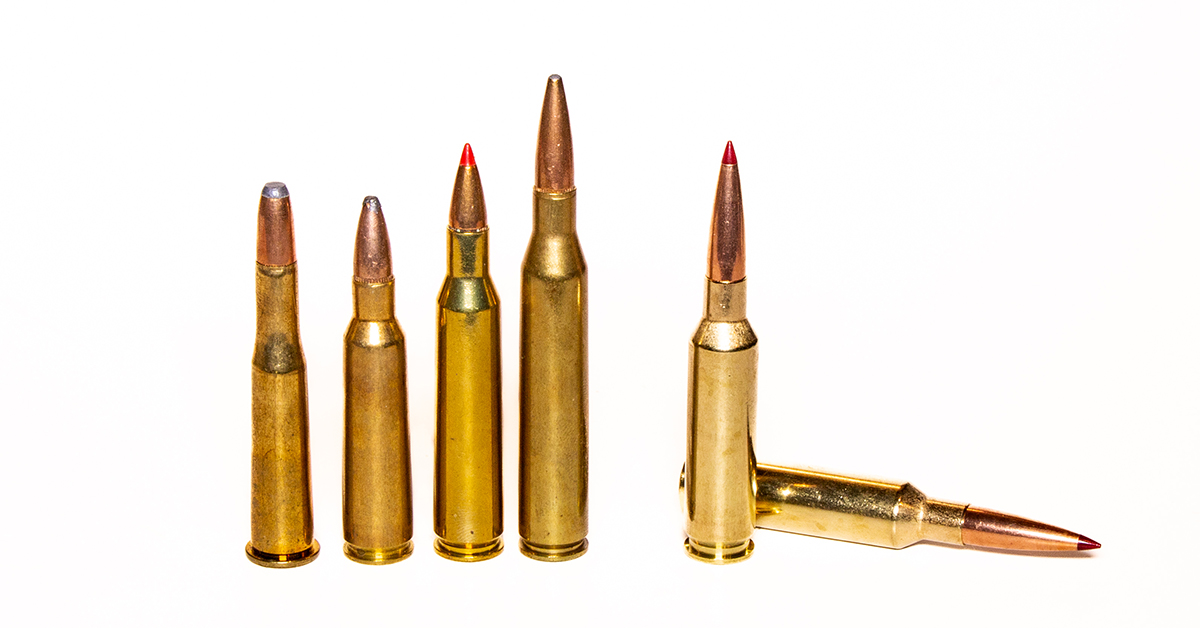
I’ve always been fond of 0.25-caliber cartridges because I appreciate their versatility; however, I just never felt there was a perfect example of a 0.25-caliber cartridge. The 25-35 Winchester is a short-range deer cartridge. The 250 Savage was fast, just not fast enough. Handloaded, the 257 Roberts had everything, but factory loads are anemic and it’s best housed in a long action. The 25-06 was ballistically ideal but also required that long action. Then there’s the 257 Weatherby Magnum, but it is a fire-belching, ear-splitting menace. Finally, per SAAMI (Sporting Arms and Ammunition Manufacturer’s Institute), all these cartridges are specified with slow twist barrels, which are not compatible with modern bullets with high ballistic coefficients (BCs).
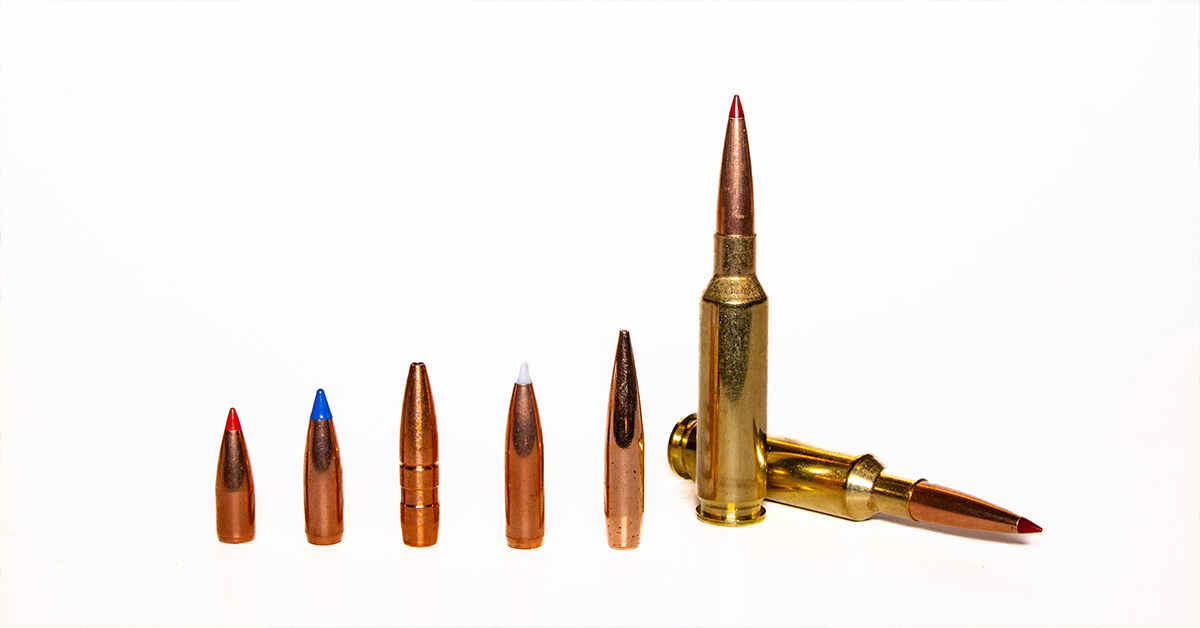
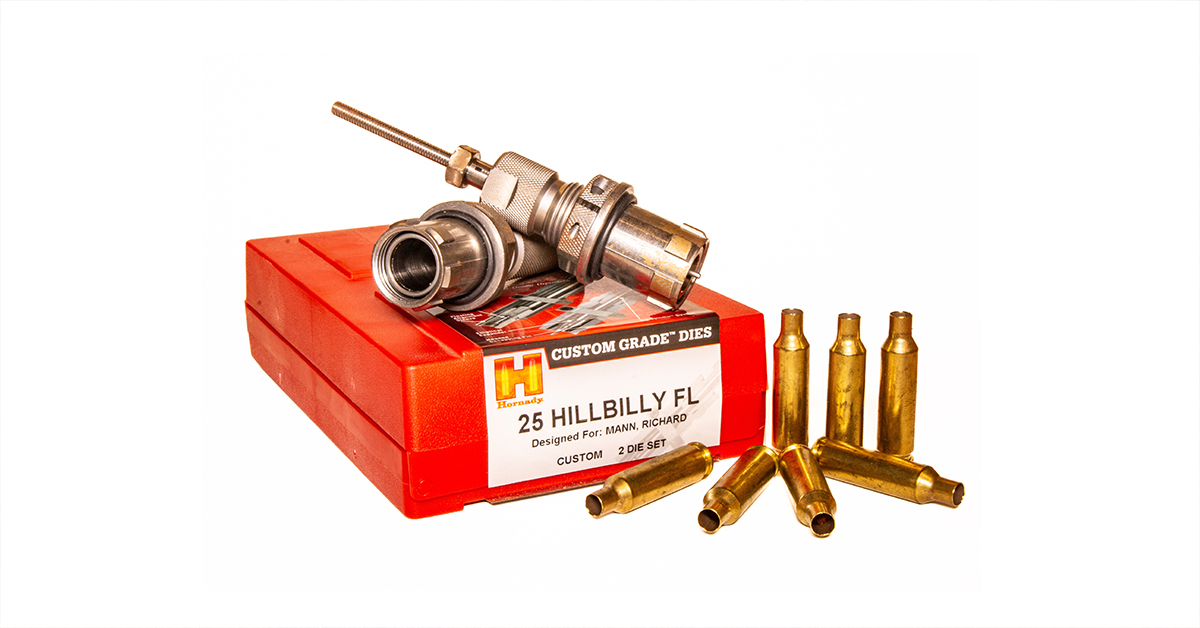
There is one wildcat 0.25-caliber cartridge that was moderately popular. The 250 Savage Ackley Improved (250 AI) has a cult-like following and delivers in terms of ballistics. You must, though, fire-form your brass, and fire-forming brass is a pain in the butt. Not long after the 6.5 Creedmoor was introduced, I realized that if I necked the 6.5 Creed case down to 0.25-caliber, I’d have a cartridge case with a sharp 30° shoulder that would hold just a smidgen more gunpowder than the 250 AI. But more importantly, I realized if you used 6.5 Creedmoor bushing dies, I could neck 6.5 Creedmoor brass down to 0.25-caliber and not need special and expensive reloading dies. All I needed was a chamber reamer and I’d have the short action 0.25-caliber cartridge of my dreams.
So, that’s what I did. In late 2015, I contacted Dave Manson at Manson Precision Reamers and asked for a chamber reamer of the exact dimensions of the 6.5 Creedmoor, but with the neck sized so it would take 0.257-caliber bullets. When the reamer arrived, I had Dove’s Custom Guns chamber a Proof Research carbon fiber barrel with a 1 in 8 twist and screw it onto a Remington 700 action. Then, I went to the loading bench to see what my new wildcat cartridge would do.
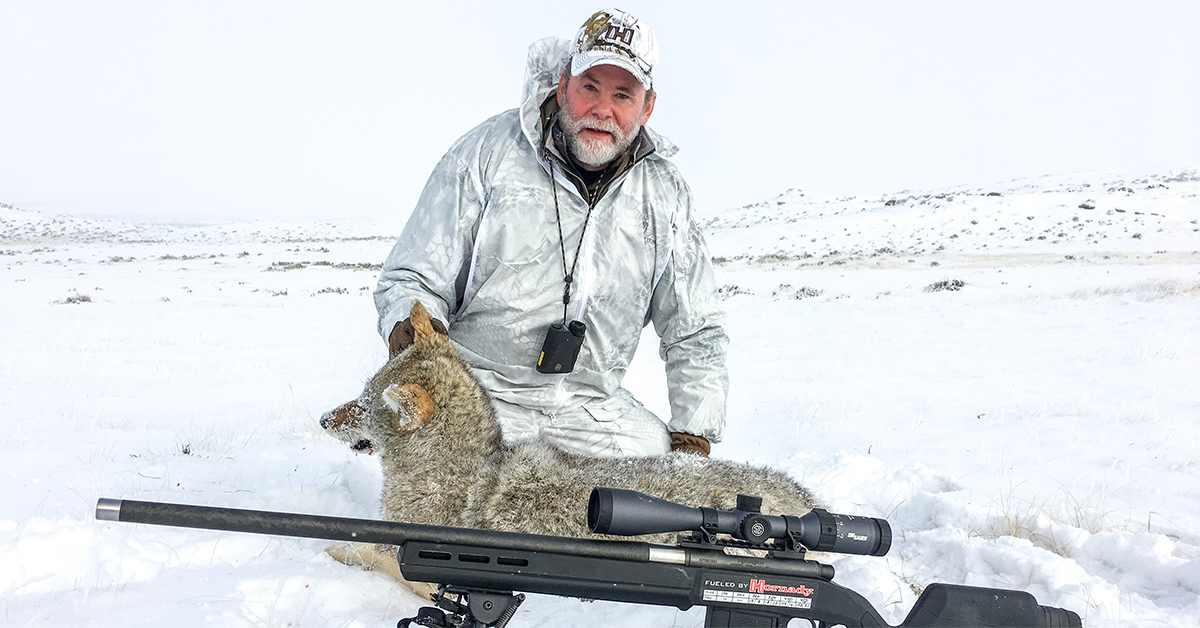
I found it could duplicate and slightly exceed 250 AI ballistics and run right on the heels of the 25-06 Remington, but out of a short action rifle. With the 24-inch Proof barrel, I was pushing 75-grain Hornady V-Max bullets to almost 3600 fps and 115 Berger VLD bullets were approaching 3100 fps. In January of 2017, I took the rifle to Wyoming on a coyote hunt and slayed song dogs, up close and at distance. I was hunting with Neal Emery, who worked at Hornady, and I suggested they consider legitimizing the cartridge; however, Hornady had been working on the 6mm Creedmoor, and since there were more high BC bullets available in 6mm Creedmoor, they introduced it later that year.
There’s nothing wrong with the 6mm Creedmoor as a long distance or varmint cartridge, and it is even suitable for deer. The advantage my wildcat cartridge offered, though, was the use of heavier bullets for deer and larger big game. I needed a name for it and sort of in a way to poke fun at all those wildcat cartridge creators who want to make a name for themselves — so they’ll be famous — I decided to call it the “2Fity-Hillbilly.” This was also partly because two other West Virginians (hillbillies) helped me with the project, but mostly because a cartridge like the one I created is all the centerfire rifle cartridge any hillbilly needs while hunting in a hillbilly state like West Virginia.
I liked the cartridge so much I had another rifle built for it, but this time I went with the lighter and more compact Remington Model Seven action and a shorter barrel. Over the last decade, I’ve used both to take a bunch of whitetail deer and a bunch of coyotes. The cartridge performs just like you would expect a fast-stepping 0.25-caliber cartridge to perform, but it’s not just for hunters. I was not the only one who realized the potential of necking the 6.5 Creedmoor down to 0.25-caliber.

Distance competitors saw the potential as well, and this soon led to even higher 0.257-caliber BC bullets being offered. One of the first was the 131-grain Blackjack bullet, then there was the 110-grain Hornady ELD-X, several bullets from Berger to include their 0.613-BC, 133-grain Elite Hunter, and Hornady’s 138-grain A-Tip Match, which has a crazy high BC of 0.695.
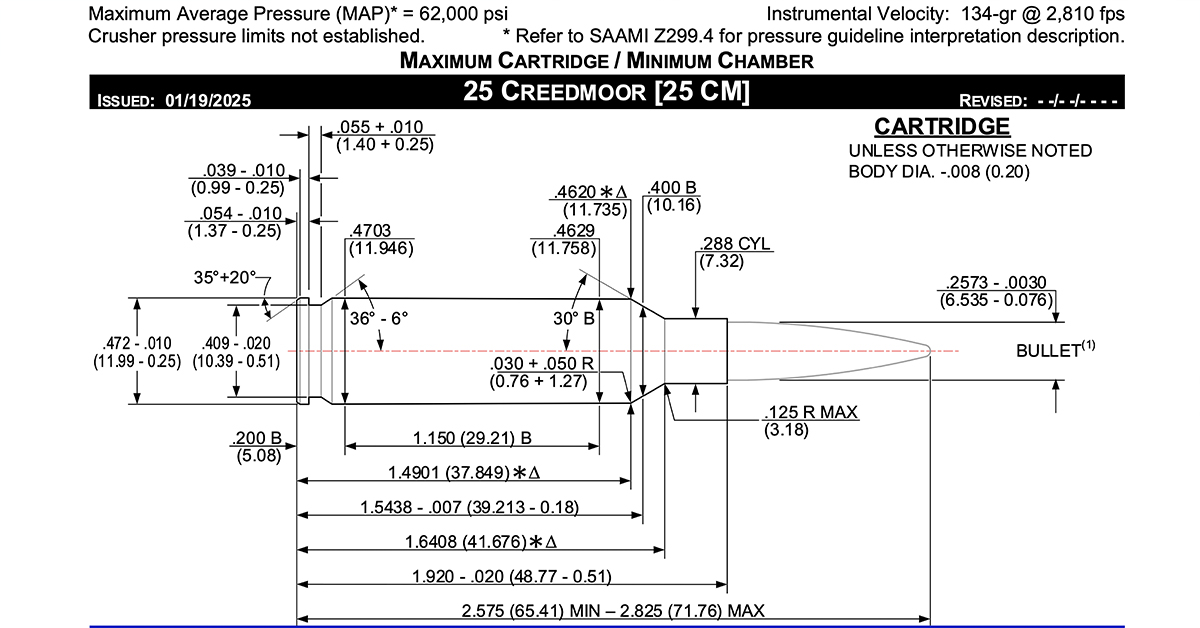
Hornady saw the rising appeal of the cartridge and in 2025 legitimized it through SAAMI and called it the “25 Creedmoor.” I guess you could say with the popularity of all the other Creedmoor cartridges, the 25 Creedmoor was inevitable; however, I do think Hornady has slightly missed the mark with their marketing. Granted, it will perform as well or better than the other Creedmoors for distance shooting, but what it really does better is what 0.25-caliber rifle cartridges have been doing best since the 250 Savage was introduced eleven decades ago — that is, providing the optimum combination varmint and big bullets from one cartridge. And, too, with the 25 Creedmoor’s fast, 1 in 7.5 twist rate, with modern, high BC bullets, it’s not only a groundhog, coyote, and deer killing machine, it’s the least recoiling and flattest shooting long-range cartridge currently available in factory form.
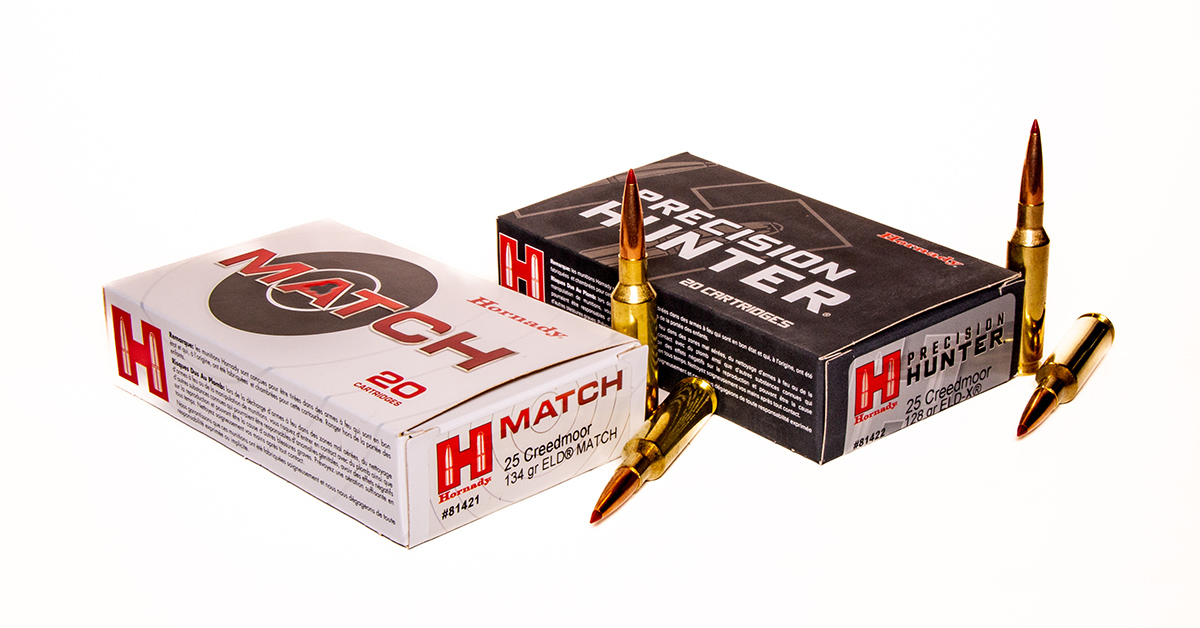
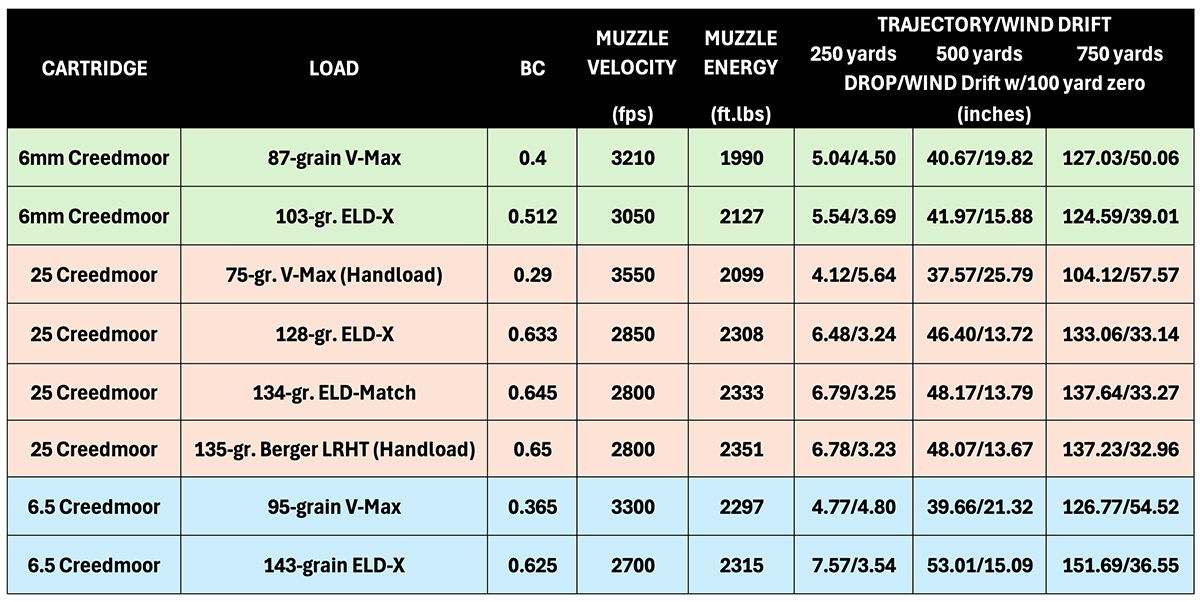
The 25 Creedmoor will handle heavier bullets than the 6mm Creedmoor and lighter bullets than the 6.5. Hodgdon’s website already lists some data for handloaders, and when trajectory, wind drift, impact velocity, and kinetic energy are all considered, the 25 Creedmoor outperforms both, up close and at distance. All we need now are rifle manufacturers to step up, and for ammunition manufactures to offer a good selection of varmint, big game, and target bullet factory loads. If all this happens, the 25 Creedmoor will likely go down as the best of all the 0.25-caliber rifle cartridges and as the true triple threat of the rifle cartridge world.
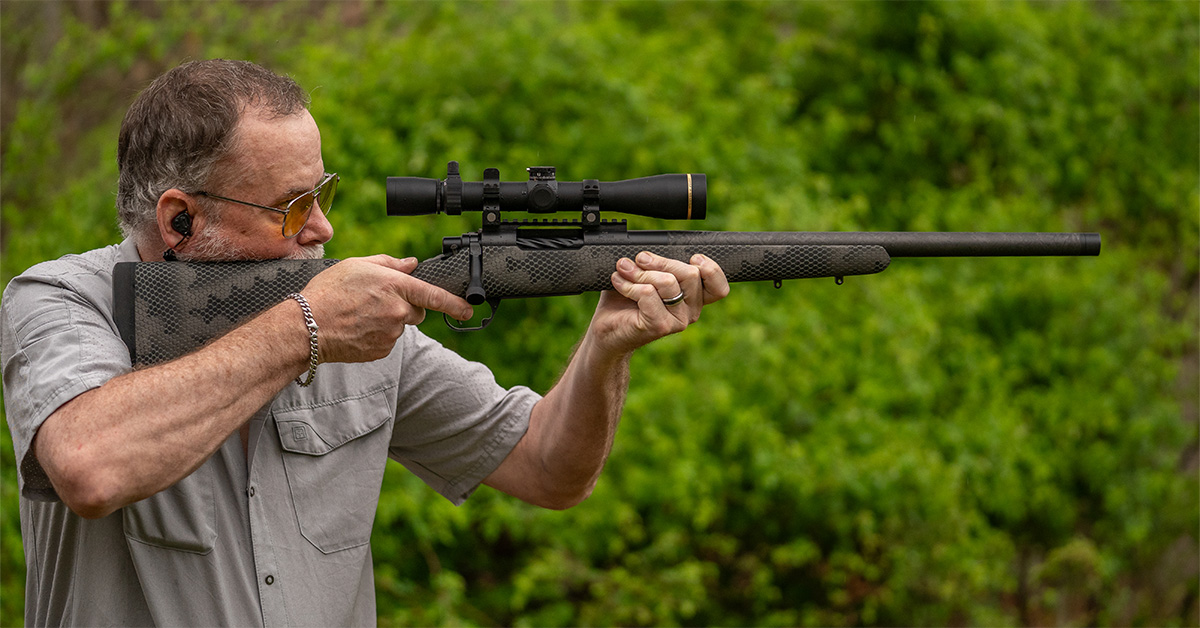
I doubt the 25 Creedmoor will return us to the days of hunters only having one rifle. Owning only one rifle is never much fun. I’ve got my 25 Creedmoor. Actually, counting a 5.3-pound tack-driving Glacier Ti from Proof Research that I’m on the fence about buying, I have three of them. Three, because no one has just one rifle anymore, and I’m not too sure you can have too much of a good thing.

- Custom Guns: Are They Worth It? - April 8, 2026
- Exploring the 25 Creedmoor - March 18, 2026
- Meet the 284 Winchester - February 18, 2026

-
FIELD TEST: Ruger Super RedHawk .22 Hornet
This mighty big revolver runs a mighty small payload, but don’t think for a minute that th… -
Shoot ON Reloading Series Part 12: Reload Ammunition Test
We put a bow on our exhaustive reloading series with a final test and comparison of our lo… -
Defensive Shotgun Buckshot Shootout
How do the top defensive shotgun buckshot loads compare to each other? The results may sur…
-
Custom Guns: Are They Worth It?
Most factory guns are pretty darn good, but you don’t know how good a gun can be until you… -
Meet the 284 Winchester
Hitting the scene as the first short magnum cartridge, the 284 Winchester solved a pile of… -
What is SAAMI?
Do you know who establishes the standards for the manufacture of firearms and ammunition i…
-
TESTED: North Fork Semi-Spitzer Bullets
From its startup in Montana to current production in Sweden, North Fork bullets build on a… -
Meet the 284 Winchester
Hitting the scene as the first short magnum cartridge, the 284 Winchester solved a pile of… -
What is SAAMI?
Do you know who establishes the standards for the manufacture of firearms and ammunition i…
Check Also
Custom Guns: Are They Worth It?
Most factory guns are pretty darn good, but you don’t know how good a gun can be until you…