If you are struggling with vision issues, an occluded eye gunsight — a half-century-old sighting concept developed for long guns — might offer a solution for your pistol shooting challenges
by Paul G Markel
For nearly forty years, I have been a coach, instructor, and/or teacher in the field of firearms. One of the first lessons you learn as a coach is to listen to the student and to be sure that they actually understand what is expected of them. If you discover that they do understand that part, but they are not performing, then you need to search for the reason why the latter happens to be.
Sometimes, a student understands what is expected of them, but they just need more time and reps to get their body to do what their brain is telling it to do. This can be particularly true when the student in question has psychological scars from doing something in a suboptimal or just plain wrong way. This has also been referred to as “training scars.” We say “training scars,” but often the issue isn’t from actual training; it is from an untrained person just “practicing” what they think they should be doing.
What happens, though, when the student both understands what is expected of them and is diligently attempting to do so, but they still cannot seem to get it right? We need to dig in a bit further and be sure that they are seeing what they need to see.
Human Vision
When I was training active-duty military students, vision issues only rarely came up because a soldier, sailor, Marine, et cetera needed to have 20/20 vision or vision that was corrected to 20/20 to be on active duty. When I enlisted back during the Cold War, I had uncorrected 20/20 vision. Now, with my glasses on, I have 20/15 vision. Minus my prescription glasses, I am nearsighted, but I can still function just fine without them for most tasks.
There are numerous factors that affect human vision — age being a big one — that we cannot get around. When it comes to using a firearm, we have traditional sights, front and rear, and we now have a plethora of 1:1 optical sights as well as magnified optics. My experience is that nearsighted people can see their front sight clearly, but the aiming dot in the optic tends to be fuzzy. With corrected vision, the aiming dot becomes clear. Farsighted people can see the target clearly, but a traditional front sight tends to be fuzzy. Often, we find that an optical sight is what helps farsighted shooters see both the aiming dot clearly and the target.
Then we have the issue of Lasik surgery and vision correction. I have never had such; however, I discovered that the tendency with Lasik is to correct one eye to be nearsighted and the other eye to be farsighted. I also discovered that Lasik only lasts for so long and its benefits can diminish over the years.
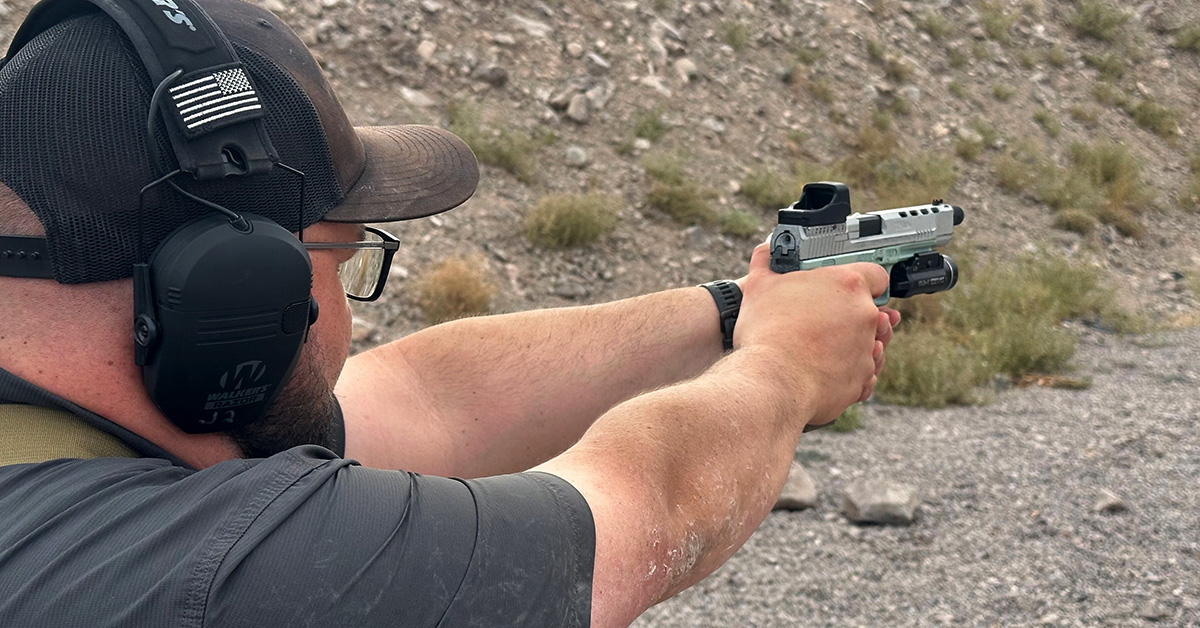
One issue that has arisen during our training classes has been a student with Lasik-corrected vision and the simultaneous near and farsightedness issue. When stationary (not moving), most students tend to figure it out just fine, putting rounds on target where they need to be. We discovered, though, that when we required the students to move and shoot or engage in shooting from unconventional positions, the wheels started to come off, so to speak. Yes, there are new issues to deal with when moving or shooting around cover, but there seemed to be more than just the movement causing issues. When digging deeper, we found that the students were struggling with the need to see the front sight clearly and to maintain target focus while moving, kneeling, prone, and so on. It seemed as though there was a kind of information overload being placed on the person’s vision.
The Scientific Method
During our standard after-action/brain dump session that we do as a part of all our training classes, Jarrad and I sat down and considered how the students had performed and if there were any areas for improvement from a teaching standpoint. One item that came up, and has come up several times, was that a student with one of the aforementioned vision issues — farsightedness being the most common — seemed to benefit and perform better when loaned a pistol with a 1:1 red dot optic if they did not have one. But what about the near/far combination situation?
We decided to use “The Scientific Method” to address that issue. Step One in the accepted Scientific Method is to “Ask a question.” Formulating that question would be an important step, so I took some time to consider it. An easy question might be, “Can a red dot help shooters who have vision issues?” Such a question, though, did not seem likely enough.
Recently, I read the book called “The Quiet Professional” about Major Dick Meadows, US Army Special Forces. In the book, there is a section regarding the famous 1970 Son Tay prison camp raid that took place during the Vietnam war. Major Meadows was instrumental in planning, training for, and executing that operation. Decades ago, I read an article about the raid, probably in Soldier of Fortune magazine, so it was nice to refresh my memory with the book.
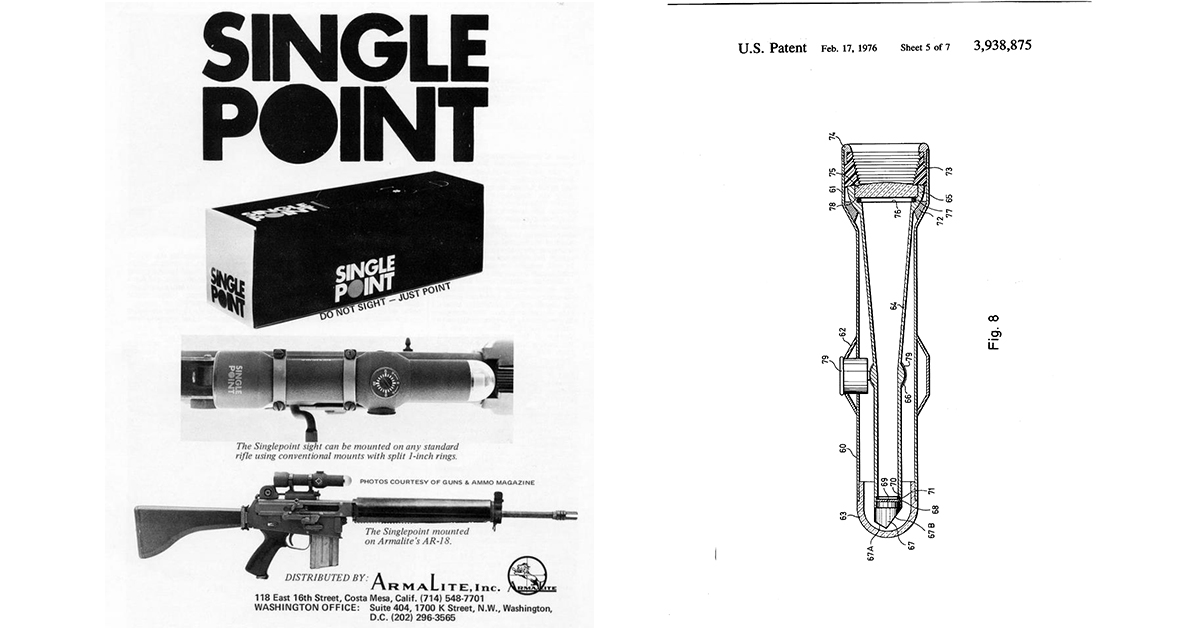
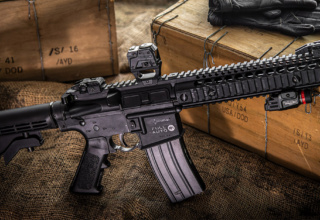
A piece of new tactical gear used by the Special Forces commandos in 1970 was a device called the “Singlepoint” sight. Not really an optic in the conventional sense, the Singlepoint was an Occluded Eye Gunsight, or OEG, and it mounted to the carrying handle of their XM177E2 weapons. How the OEG worked was to provide an aiming dot that would be viewed/perceived by the dominant eye (shooting hand side) while the opposite eye would view/perceive the target. As you could not “see through” the sight, you needed to keep both eyes open. The brain takes the information provided by both eyes and puts together the whole package: sight alignment, sight picture, target picture.
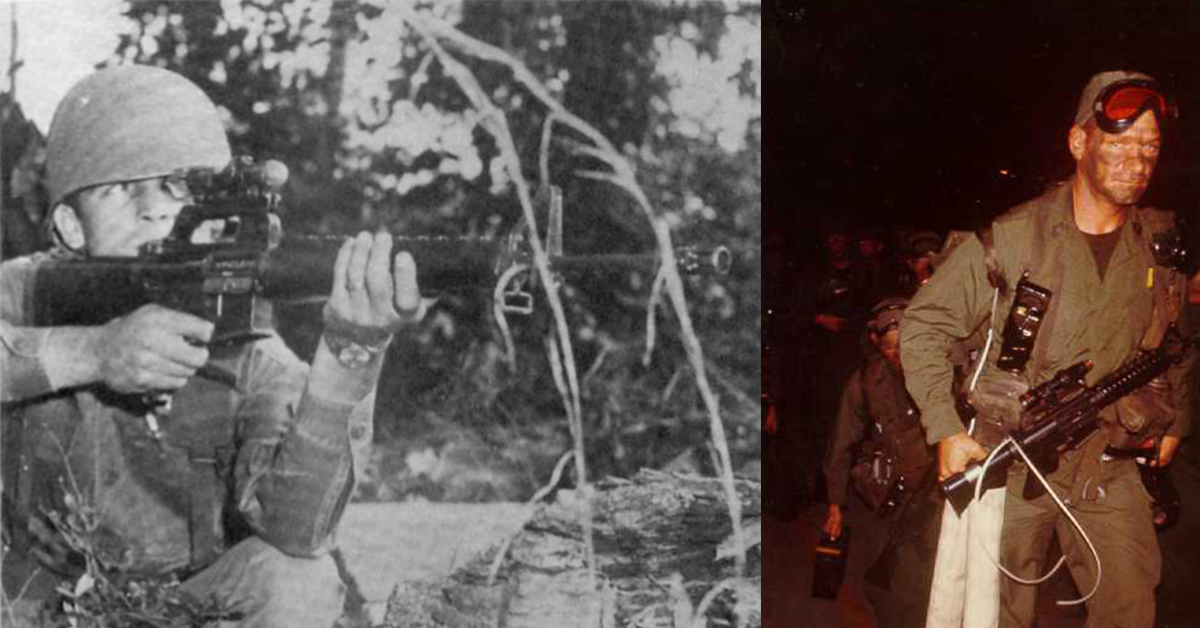
What the Special Forces discovered was that the raiders could make fast and accurate shots on target both day and night using this OEG. This was naturally long before Aimpoints or the GPNVG-18 night vision devices and laser target designators. During the actual raid, dozens of NVA soldiers were killed with zero losses to friendly personnel. While the Singlepoint gunsight is now a thing of the past, there still is the Armson USA company making such OEG devices for rifles.
My question therefore became, “Could an OEG-style pistol sight benefit shooters with various vision issues, particularly the issue of being both near and farsighted simultaneously?”
The next step, or Step 2, in the scientific method is to do background research. The Special Forces experience during the both Son Tay raid train-up and execution provided enough research data and experience to know that the concept was valid for long guns; however, could the same be said for handguns?
Step 3 in the scientific method is to construct a hypothesis. For this, our hypothesis was, “If we provide the shooter with an OEG-type sight on a pistol, they will be able to both utilize/focus on the aiming dot with their dominant eye and use their non-dominant eye to gather the target information, thereby limiting their vision issue handicap?”
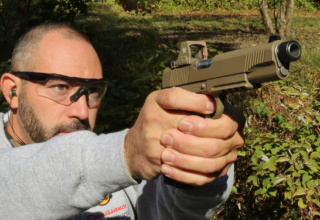
Step 4 is to test the hypothesis through experimentation. The first thing I needed to do was to come up with an OEG-type of sight to mount on a pistol. As mentioned, the primary company still producing OEGs is Armson USA, but their focus is on sights for long guns, not pistols. The pistol itself was not so much a critical component, but I wanted it to be a full-sized handgun that would fit well in a shooter’s hands. I went to the gun locker and pulled out my Canik SFX 9mm pistol.
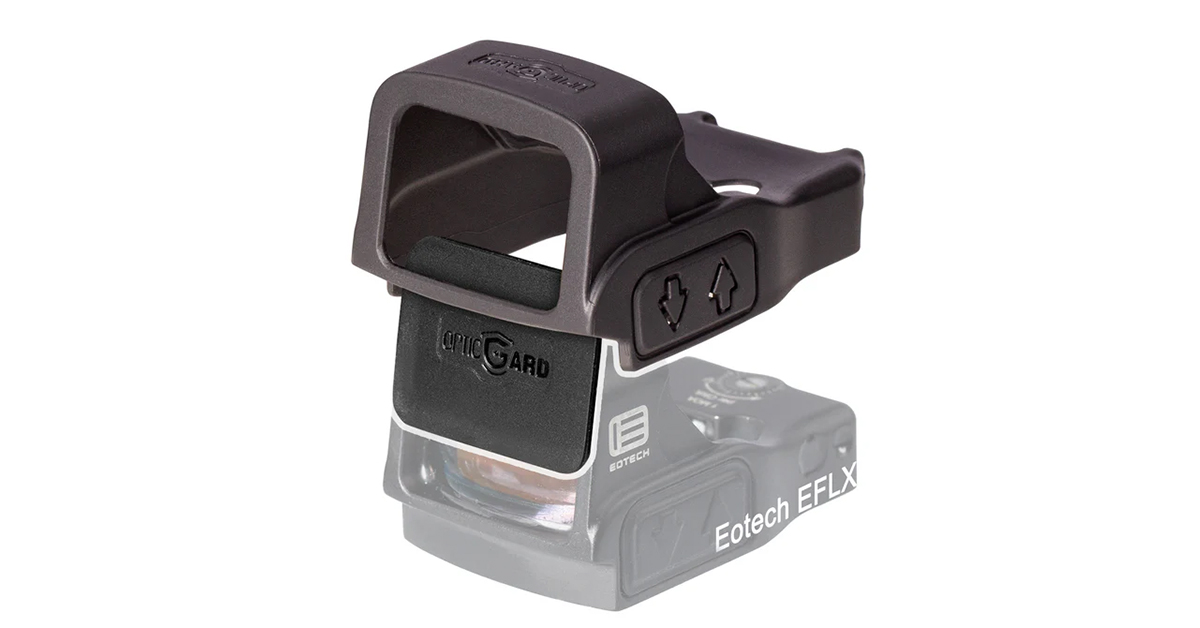
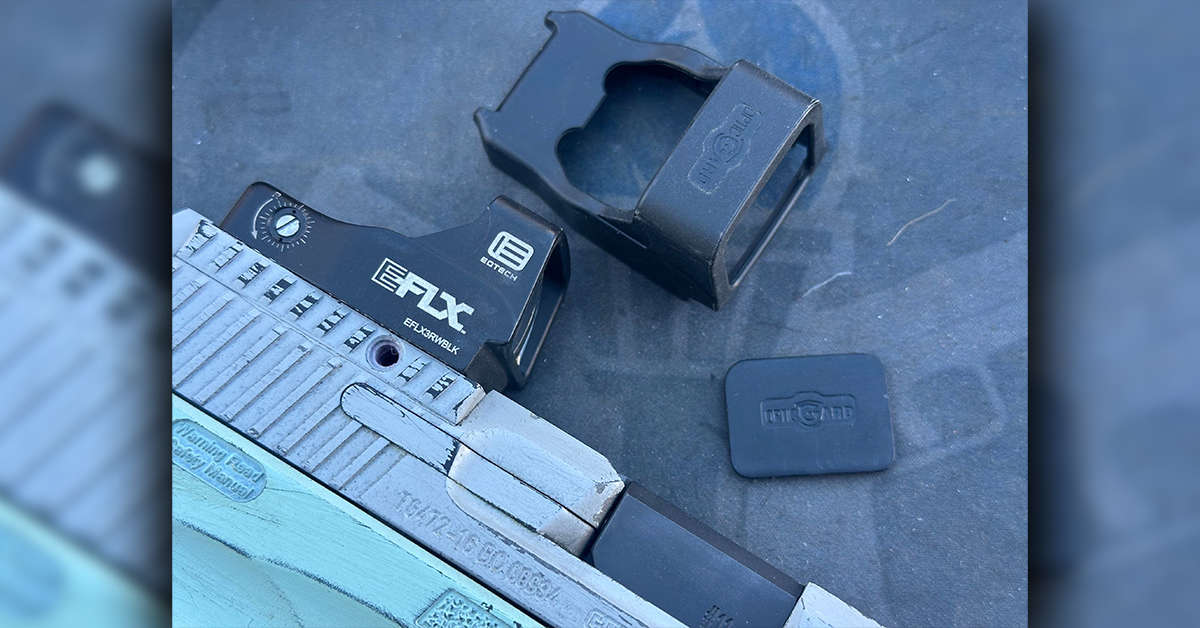
To come up with an OEG-type sight, it seemed obvious that what was needed was some type of mini-red dot sight designed for handguns. While it might be possible to just tape over the lens, getting tape residue on the lens was not something I wanted to do, and it turned out that I did not need to. Recently, I discovered a company called “OpticGard” that produces polymer protective covers for many of the most popular red dot optics available. One of the features of the OpticGard is that they come with a removable protective cover that shields the lens. The black cover is opaque so you cannot see through it. Perfect!
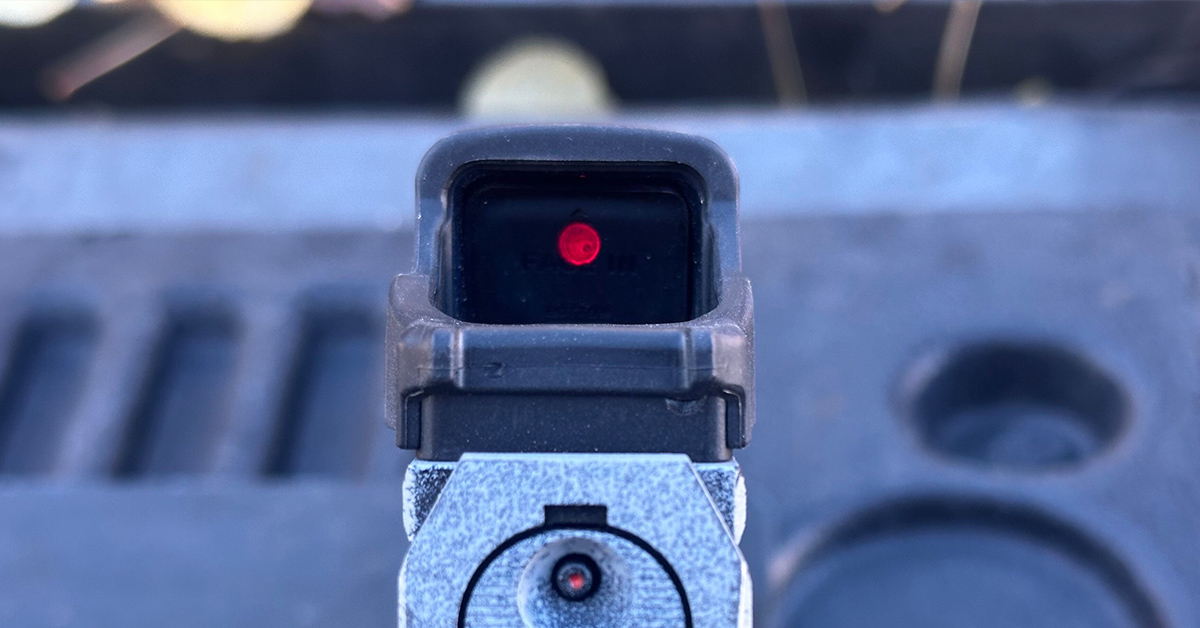
The mini red dot that I planned to use was an EOTech EFLX. I went online and ordered an OpticGard for the EFLX, and when it arrived, I was pleased to find that it was the perfect solution to my issue.
With all the gear in place, the next step in experimentation would be to zero the optic on the pistol using one single load of 9mm ammunition to reduce variables. Wanting to eliminate variables in velocity deviation, I chose the Black Hills HoneyBadger 125-grain subsonic 9x19mm load. Black Hills has a stellar reputation for quality control in all steps of the manufacturing process. This choice will be as close to “perfect” as I could get in regard to eliminating ammo variables.
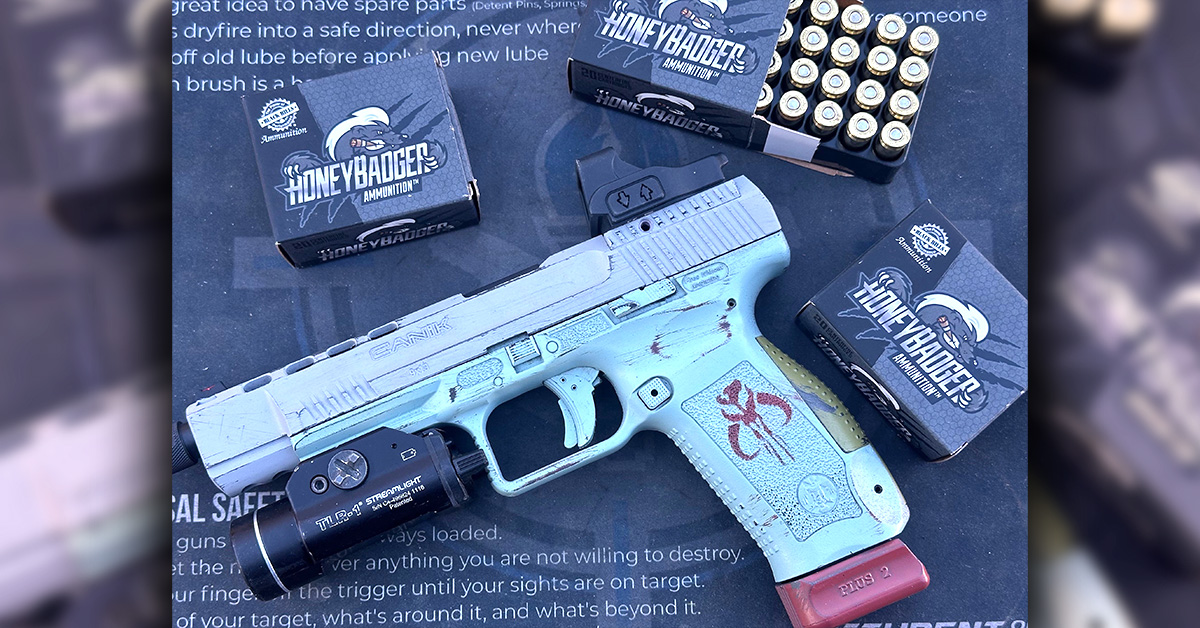
The EFLX optic was zeroed meticulously from the bench for a ten-yard zero on the Canik pistol. One of the reasons I chose the SFX was that it has one of the best out-of-the-box factory trigger presses. It’s not too light, but it is consistent and reliable. The pistol has a 5-inch barrel, a full-sized frame, and weighs 1.83 pounds — not too heavy, not too light. Since I was using an OEG set up, the idea of “co-witnessing” sights was moot.
Fortuitously, we (SOTGU) had another training class coming up. Although this course was our Martial Application of the Rifle R201 program, we would have willing volunteer students to test out the pistol OEG concept.
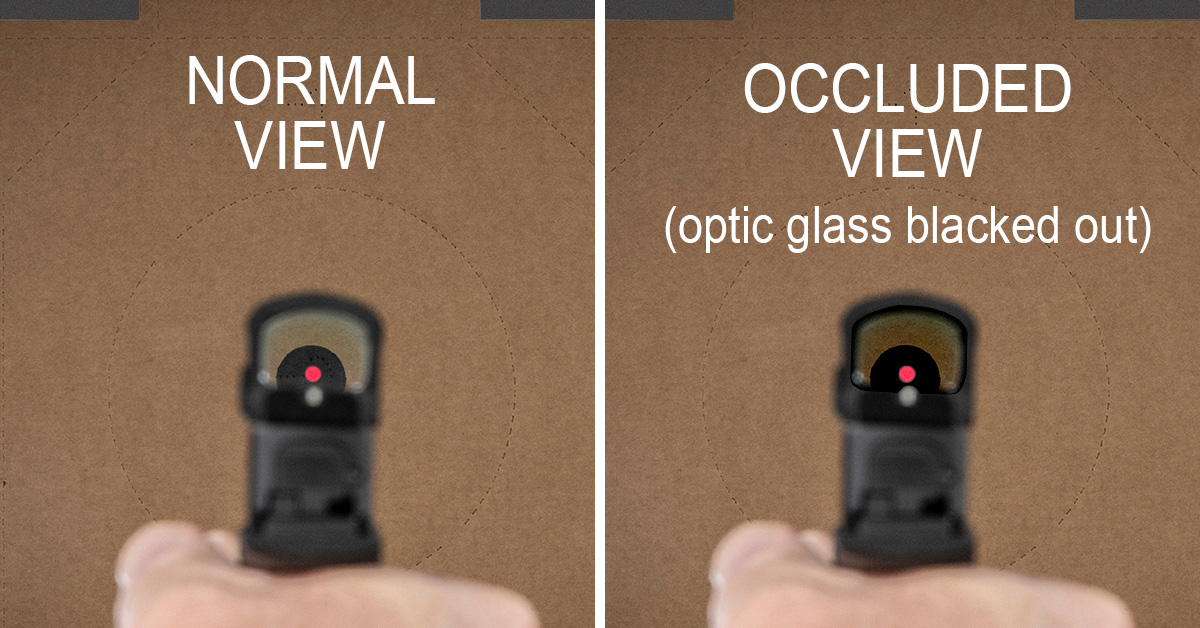
And so, with the hypothesis in place, we set about experimenting. I was the first test subject, but I had several more lined up. I had shooters who had 20/20 vision, nearsightedness, and farsightedness. Unfortunately, I did not have anyone with Lasik-corrected vision.
This first test was simple. From only five yards we had shooters fire at a 3-inch target using a two-hand hold while standing. To a person, all were able to put five rounds into that target without a problem. Then we moved back to 10 yards and a half-silhouette on paper. Once more, using the same hold, all testers were able to put five rounds into the target.
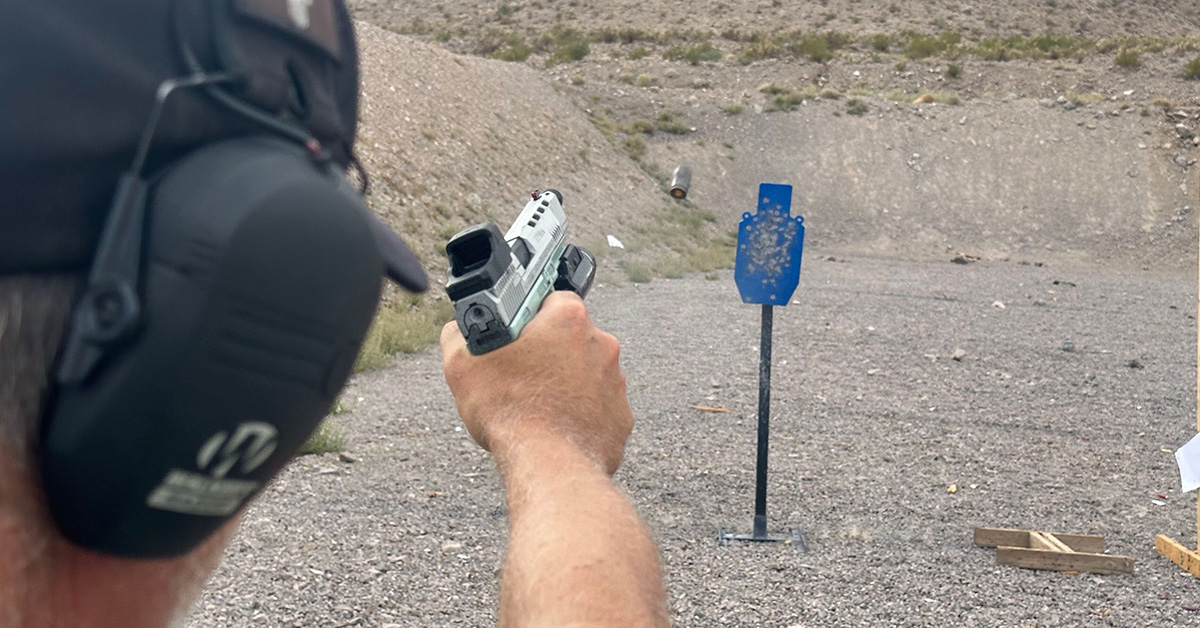
Next, we moved over to a reactive steel target, again in the ½ silhouette configuration. From 15 yards, the clang of steel was consistent. There were a couple of misses here and there, but the shooters were interviewed and admitted that it was a human error, not an equipment failure.
Moving on to single-handed shooting on steel from 10 yards, both dominant and support hand, the steel rang with monotonous regularity. Then we proceeded to have shooters move forward and backward, straight on and at angles. The OEG did not hamper the process.
In order to test the OEG set up at distance, we moved back to 25 yards, and I picked the most advanced shooters with rock solid marksmanship skills. Despite the distance to the ½ silhouette, we had a 100-percent success rate with shooters firing 10 shots each.
My son and lead coach, Jarrad, had a personal GLOCK Model 45 pistol with an identical EOTech EFLX. We took the OpticGard cover off the test gun and put it on his pistol. Jarrad was able to put all rounds on the steel from 15 and then 25 yards.
Also, we had shooters who normally wore prescription glasses shoot sans Rx lenses and just wear clear eye protection. Whether nearsighted or farsighted, all shooters experienced success.
Step 5: Analyze Your Data and Draw a Conclusion
From my personal range time and the two-day training class with volunteer shooters, we considered the results we witnessed and we interviewed the students. Some students had iron sights on their personal pistols, and some had optics. To a person, all the participants not only stated that the OEG did not hamper their shooting, but the consensus was that it improved their sight and target focus. One shooter who had an optic on his personal handgun stated that he actually performed better with the OEG setup than with his non-occluded red dot.
Also, several of the shooters who fired the OEG pistol without their Rx glasses stated that they were surprised that they were able to experience the successful hits on target. Both Jarrad and I ran drills with and without our prescription glasses and even out to 25 yards we were able to achieve 100-percent hits on steel.
Step 6: Communicate Your Results
While the previous testing might not have been exhaustive, it did provide repeatable and positive results. Despite having the lens covered and preventing the dominant eye from looking through the lens and seeing the target, the non-dominant eye provided ample target information for the brain to put it all together. Granted, the successful use of the OEG concept has been proven previously, as we discussed earlier with the Special Forces Son Tay raid; however, setting up a handgun with an OEG-style aiming system, despite seeming counter-intuitive at first glance, proved to be not only a workable situation, based upon the feedback from the test subjects, it did not hamper their success and many thought that it actually improved their shooting.
Parting Thoughts
Overcoming vision issues can be a challenge for both instructors and their students. What we have attempted to do here is to offer a viable solution to those who have been facing challenges with their vision when it comes to successfully using a handgun. Naturally, no sighting system in the world can overcome a lack of fundamental marksmanship skill and replace the ability to manipulate the trigger without moving the pistol off target. If true trigger discipline has been achieved, though, the OEG setup might be a useful tool in your toolbox.