Even though the 9mm Luger has been around for more than a century, it remains the best cartridge choice for a self-defense pistol
by Richard Mann
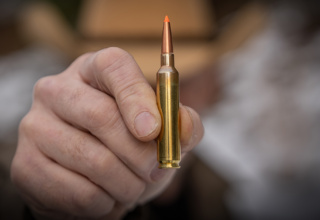
It might be hard to accept the fact that the best self-defense pistol cartridge we have in this modern world is more than 100 years old. The 9mm Luger was created in 1901, and while that might make it an antique, engineers and ballisticians have had more than a century to develop better pistols and ammunition for it. The 9mm Luger is the most popular self-defense cartridge in the world, not because it has been around longer than the others, but because it offers the best equilibrium of performance when all things are considered. Let’s look at the cartridge, its ballistics, and shootability to better understand why it is generally the best choice.
Different Names
The 9mm pistol cartridge is usually referred to as simply the “nine-millimeter,” but according to SAAMI (Sporting Arms and Ammunition Manufacturer’s Institute), its correct name is “9mm Luger.” Over the years, though, the cartridge has also been referred to as the 9×19 Parabellum, 9mm Parabellum, and the 9mm NATO. Interestingly, “parabellum” is a Latin term that means “prepare for war,” which was derived from the phrase, “si vis pacem, para bellum,” which translates to, “if you want peace, prepare for war.” Except for 9mm NATO, all these names describe the same exact cartridge…almost.
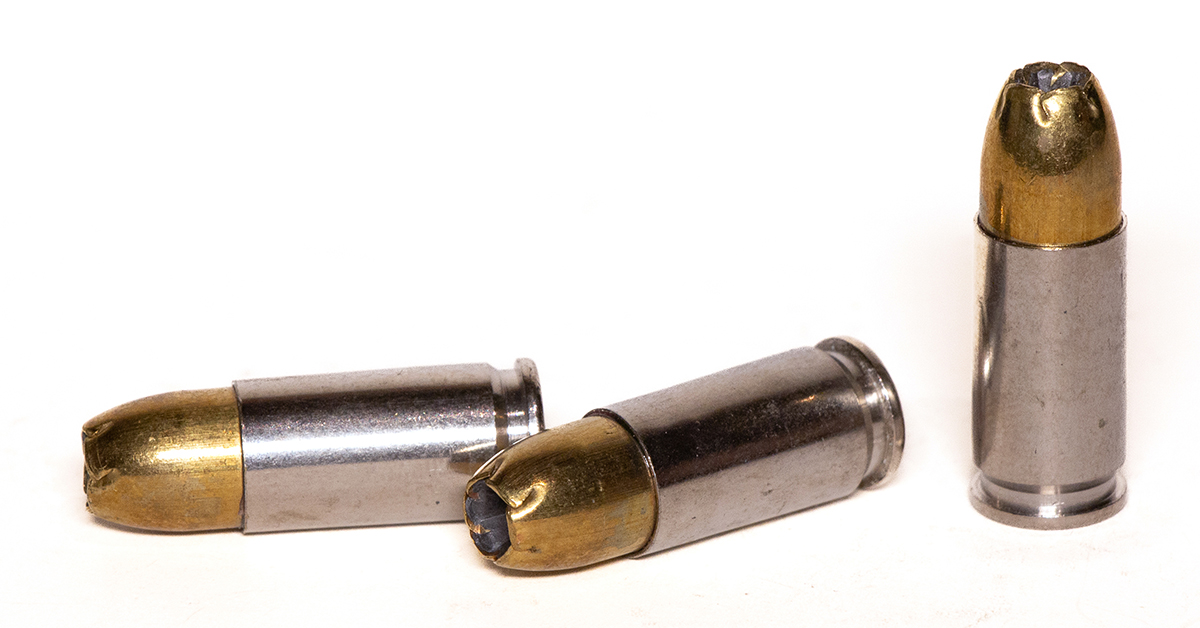
9mm NATO ammunition differs in that it is not loaded to SAAMI specifications. The 9mm NATO ammunition is loaded to the specifications set forth by the acquiring NATO military member, and the maximum average pressure of 9mm NATO ammo can exceed the pressure of commercial SAAMI-approved 9mm Luger or 9mm Luger +P ammunition; however, it should be safe to shoot all 9mm ammunition — standard, +P, or NATO — from a 9mm pistol with a +P rating.
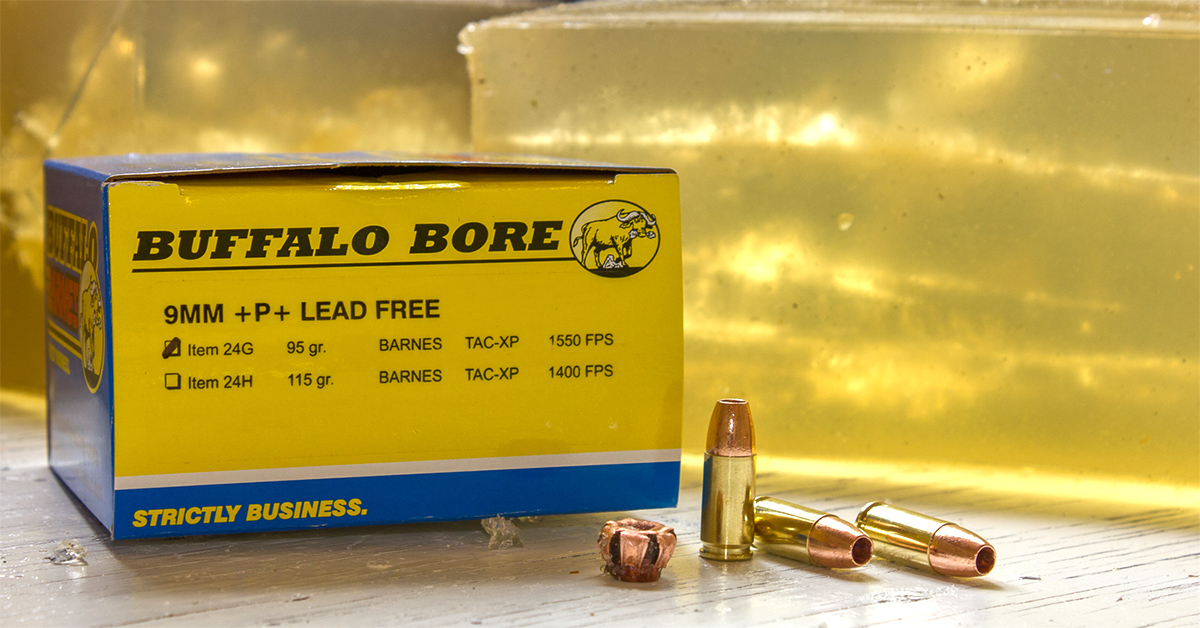
You can also find 9mm +P+ ammo, which is loaded to pressures that slightly exceed SAAMI 9mm +P pressures. Buffalo Bore, which is one manufacturer of +P+ 9mm ammo, addresses the compatibility of the +P+ ammo on their website with the following warning: “There is such a variety of 9mm pistols in public use that we will not determine what guns are compatible with which 9mm loads. It is up to you to determine the compatibility of any ammo with your particular pistols.” So, the wise advice is to proceed with caution.
SAAMI Specifications
SAAMI largely dictates the manufacture of ammunition in America. According to SAAMI, the 9mm Luger pistol cartridge should be loaded to a maximum average chamber pressure (MAP) of 35,000 psi. Additionally, from a 15-inch test barrel, velocities should be between 900 fps with a 150-grain bullet and 1,500 fps with an 88-grain bullet. SAAMI also specifies the standards for 9mm +P ammunition, with a MAP of 38,500 psi, and with instrumental velocities of between 1090 fps with a 135-grain bullet and 1375 fps with a 90-grain bullet. Additionally, SAAMI specifies the rifling twist rate at 1 turn in 10 inches, with an overall cartridge length of 1.169 inches.
Ballistics
Most who are interested in a defensive handgun cartridge are primarily concerned with terminal ballistics, but velocity and energy combined with bullet design and construction are what dictate terminal performance. All this information is generally compared by conducting tests in 10% ordnance gelatin or in some other ballistic media like Clear Ballistics. This testing produces a collection of performance data that generally includes bullet velocity, bullet energy, penetration depth, and recovered bullet diameter, and this is how organizations like the FBI compare terminal performance.
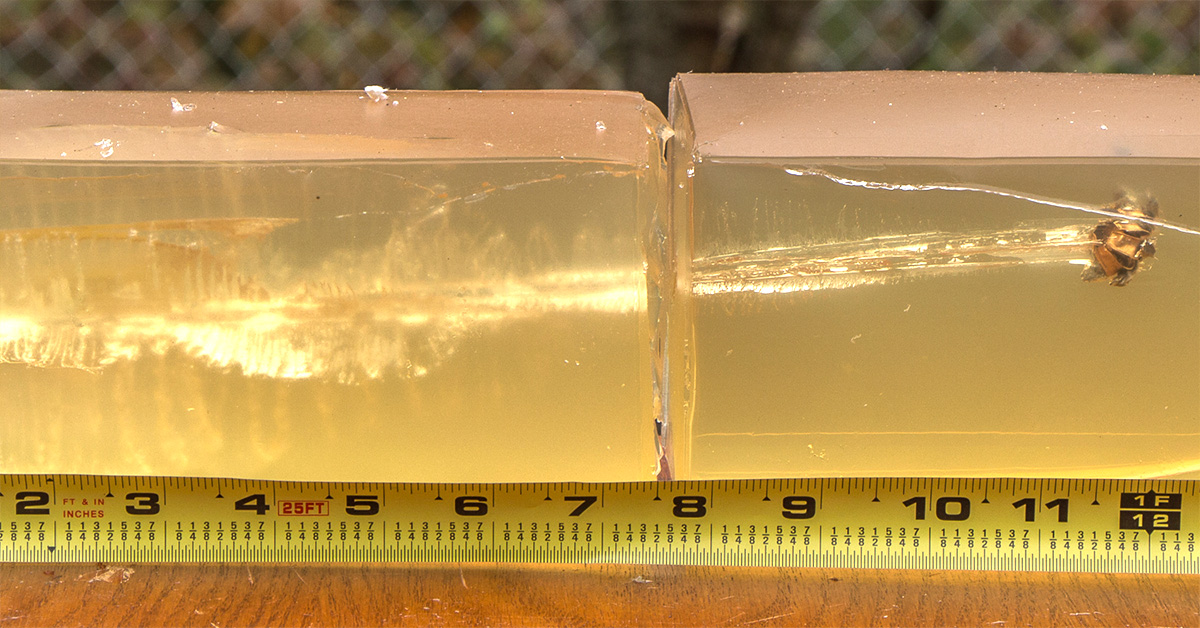
After the failure of a 9mm Luger bullet to stop a suspect during a disastrous shootout in Miami in 1986, the FBI pulled all their 9mm pistols from service. They also developed an ammo testing protocol that subjected pistol bullets to a variety of tests that required them to defeat intermediate barriers. The details of the test are somewhat complicated, but in essence, what the FBI was looking for was a bullet — defensive pistol load — that would penetrate between 12 and 16 inches in 10% ordnance gelatin and still deliver an average bullet upset of about 1.5 times the unfired bullet diameter, even after passing through various intermediate barriers.
About 30 years ago, the performance the FBI was looking for was most easily found with .40 S&W ammunition, and up until about a decade ago, that cartridge reigned as the most popular law enforcement duty cartridge; however, through those intervening years, the FBI discovered that even though they were using what they felt was the best fight-stopping ammo they could find, they were seeing no real advantage in the street. And, too, since 1986, manufacturers had been improving 9mm Luger ammunition. So, in 2015, the FBI went back to the 9mm.
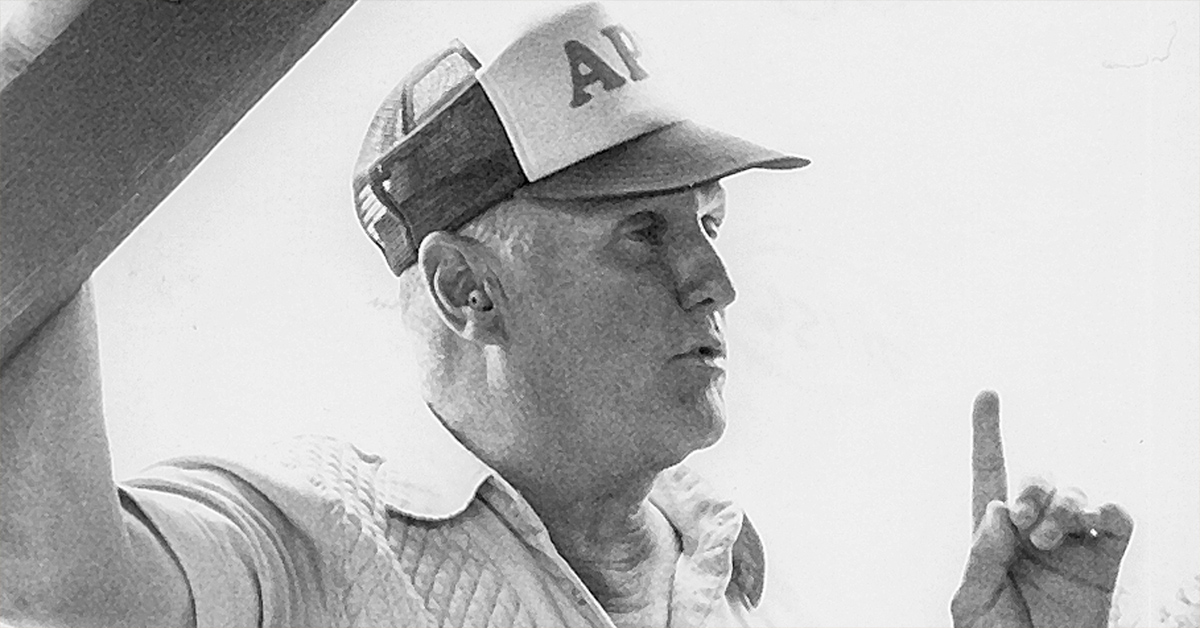
The reasons for this return to the 9mm were probably best explained by Bill Vanderpool. He was assigned to the FBI’s Firearms Training Unit at Quantico for more than 10 years and he told me he started the FBI’s Ballistic Research Program. In 2017, I asked Bill what he thought about the FBI’s return to the nine and he said, “I agree with the change. I think it was a good choice. It is easier to shoot accurately than heavier calibers.” He added that, “Technical advances have resulted in very efficient bullets. Forty-S&W pistols are usually 9mms with bigger bores. The nines have proven to hold up better.”
Totality of Circumstances
When it comes to ballistic comparison, some like to base their choices on penetration and others like to champion bullet upset. I like to include the crush cavity because it reflects both through the volume of the hole the bullet makes. All these things are important when it comes to wounding, but other things matter, too. Regardless of how deep a bullet will penetrate or how much it will upset, if it is not accurately delivered, none of that matters. Also, sometimes it’s important to be able to shoot multiple times, fast.
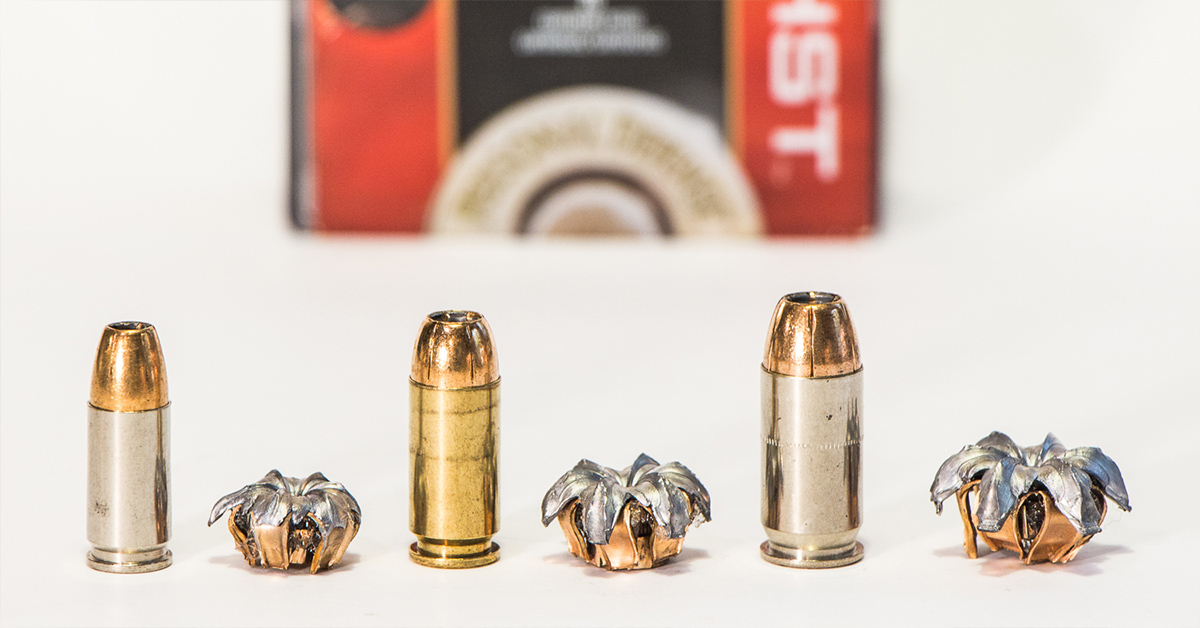
In the law, totality of the circumstances refers to a method of analysis where decisions are based on all available information rather than a single important factor, regardless of how important that factor might be. The FBI simply applied this line of reasoning to pistol cartridge selection, and it’s not a bad method of consideration for the armed civilian to follow. The included chart compares the ballistics, terminal performance, and recoil of six defensive pistol cartridges when firing what is considered one of the best self-defense pistol loads — the Federal HST. But pay attention to the averages, which very much replicate the performance of the 9mm Luger.
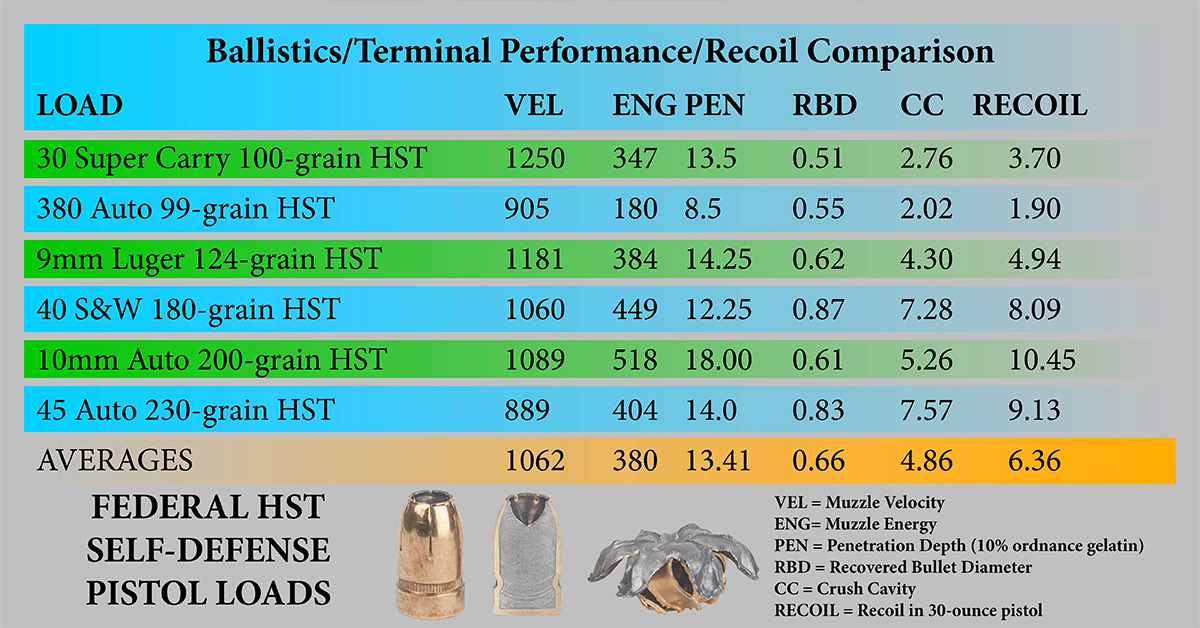
The totality of circumstances is that the 9mm Luger offers the best balance of terminal performance and recoil. The FBI realized this, and they decided their agents could deliver more accurate shots on target quicker with the 9mm Luger than with any other pistol cartridge.
The Illusion of Power
You might look at all this data and point out that the .40 S&W, 10mm, and .45 Auto cartridges have the best ballistic numbers, and that’s true. But the question is, are those numbers necessary given the intended target and are they worth the increase in recoil? Though there is really no such thing as overkill, you reach a point where a bullet that makes a larger hole and/or penetrates deeper offers no real advantage.
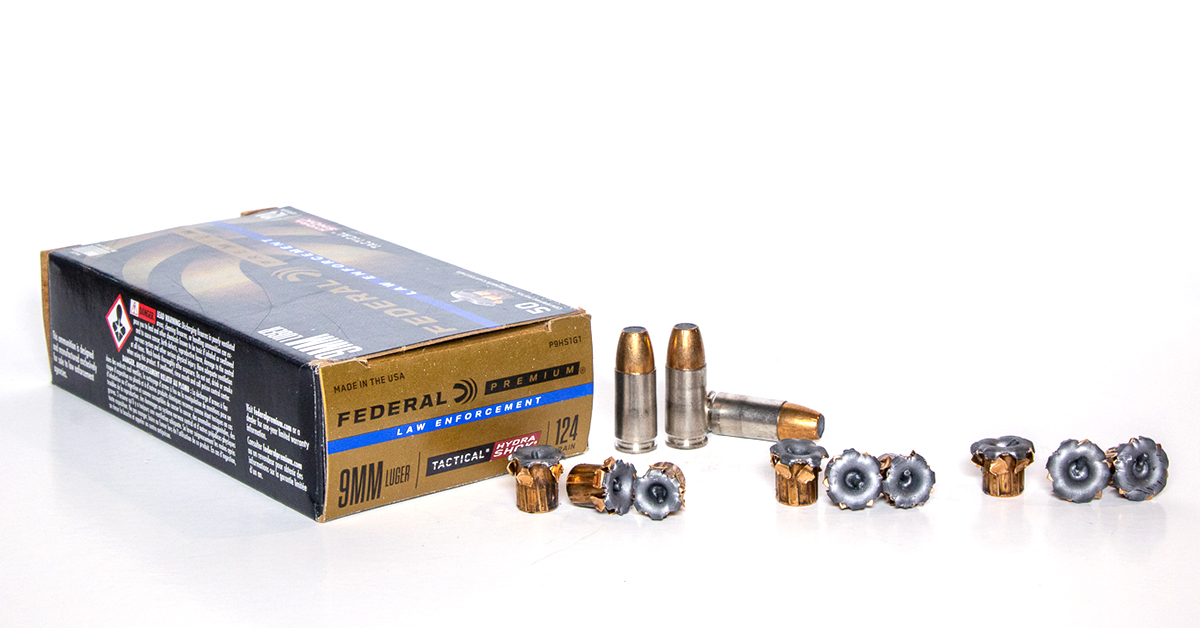
History has proven well-designed modern 9mm Luger bullets are sufficient for stopping a threat when properly placed. And, when given the recoil of the larger caliber cartridges, you can accurately shoot four 9mm bullets for every three from a .40 S&W, 10mm, or .45 Auto. Yes, these three cartridges can damage more tissue, but is it more than what is necessary, and is it worth the additional effort required to conceal the larger pistol that will hold less ammunition? If a 16-ounce hammer will drive the nail, why carry and swing a 20-ounce hammer?
Balance
In the end, you could say it is all about balance. As someone who wants to carry a pistol for personal protection, you not only need to balance the ballistics and terminal performance of the cartridge you can shoot with recoil, but you must also balance the size of the pistol you can comfortably carry with one that you can comfortably shoot and that will also hold a practical amount of ammunition.
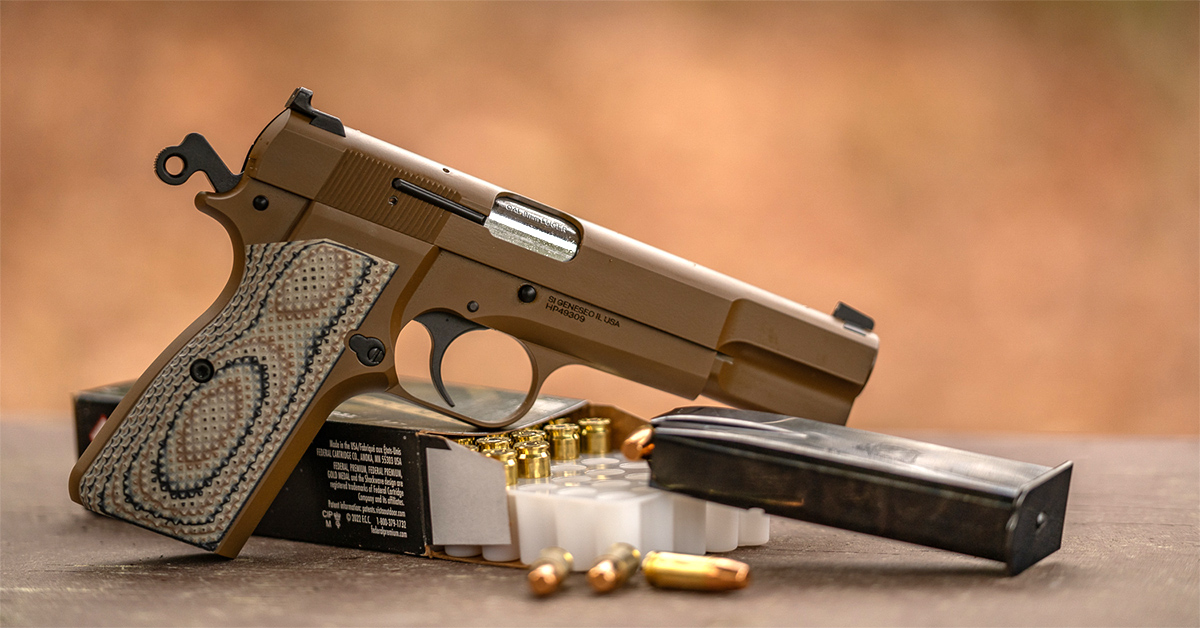
There is a reason a compact pistol chambered in 9mm Luger is the most popular pistol for personal protection and concealed carry. Shooters have discovered that a pistol with a 3.5- to 4.0-inch barrel that weighs between 24 and 32 ounces — fully loaded with between 10 and 15 rounds — gives them a pistol they can carry comfortably and shoot fast and accurately. Granted, some of us might be able to comfortably carry a larger gun chambered for a more powerful cartridge and still shoot it well. But with the guns at our disposal today, the 9mm Luger offers the best balance of the totality of the circumstances for most shooters.

- TESTED: Tract Optics Rimfire Riflescopes - October 2, 2026
- TESTED: Dan Wesson Kodiak 10mm Auto - August 19, 2026
- The 25 RPM: Weatherby’s New Quarter-Bore - June 22, 2026