Banish rifle wobbles with a sling — while you become a concrete-steady platform
by Wayne van Zwoll
My first deer fell to an offhand shot. But I seldom fire at animals from this rickety position now. Standing, I’ve just two points of ground contact, and my center of gravity is far above earth. Unassisted by shooting sticks or an improvised rest, the rifle dances crazily. A strap or sling can reduce the bounce, but standing, I can’t properly use either. That’s because my left elbow is hanging in space with nothing to brace it. Pressure to that arm moves it.
Prone and sitting positions bring me closer to the ground. Prone affords near-full-body intimacy with Mother Earth; sitting gives the rifle a tripod-steady base.
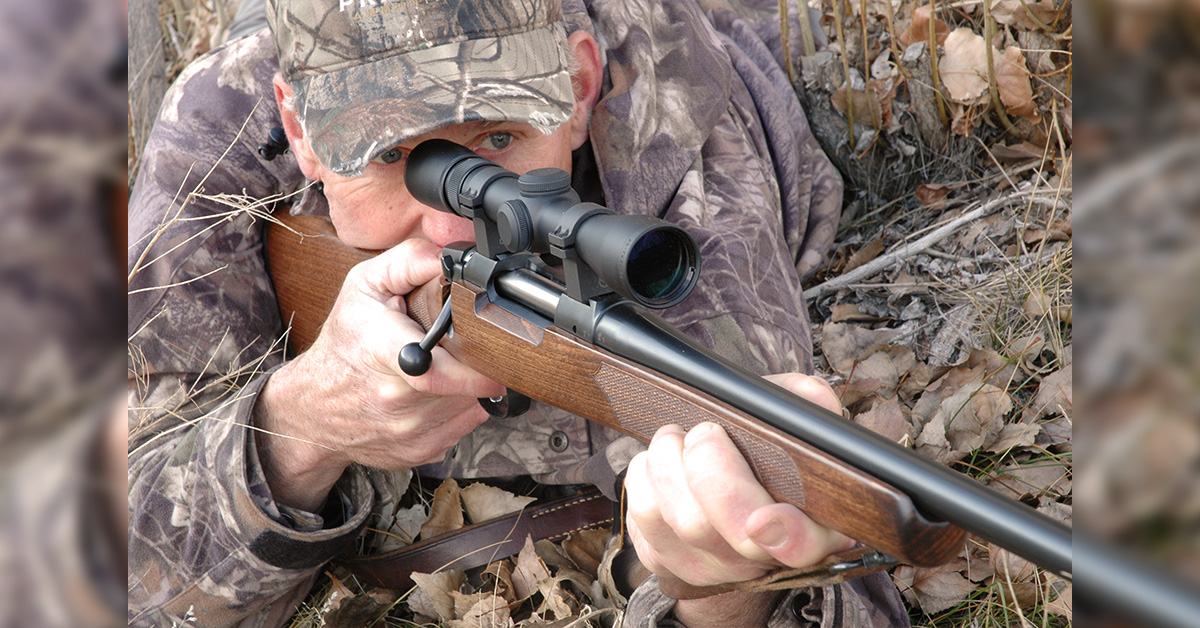
The more effort you must apply to cement a position, the less stable it will be. Bone support, sling tension, and a low center of gravity serve as a bench afield. I favor “bent leg” prone, my right leg cocked to lift my stomach slightly off the ground to nix pulse bounce. Up front, my left elbow is almost directly under the rifle. The sling, not muscles, cinches the position tight.
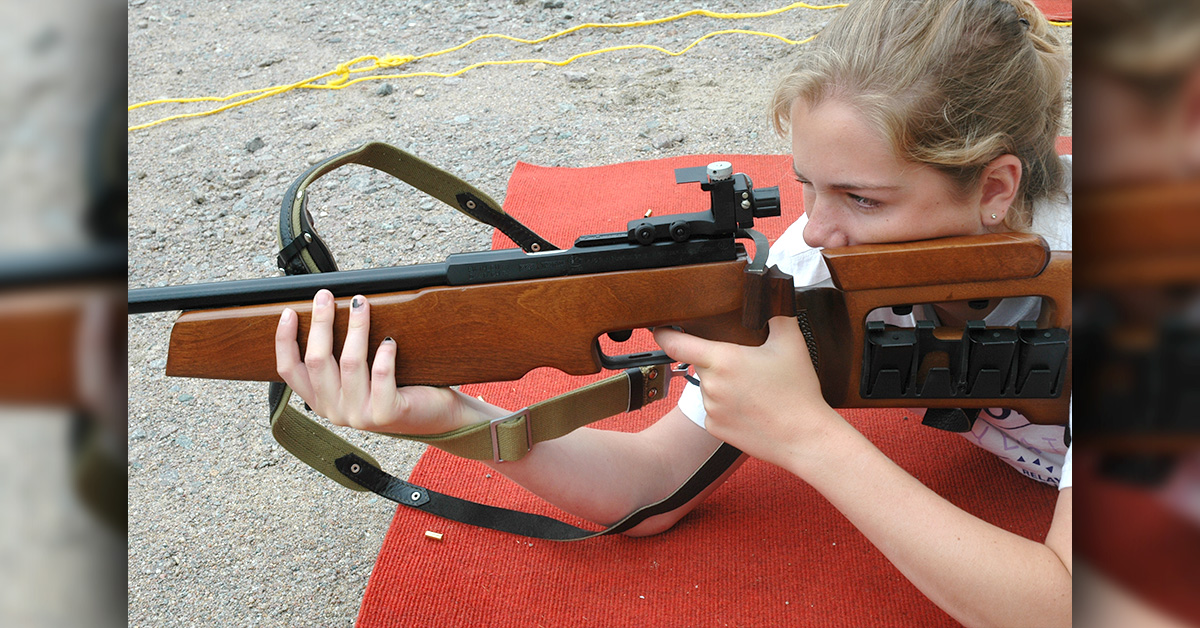
“Sling” is broadly used to describe a strap on a rifle. But these straps vary a great deal in design and material. Straps for carrying only are, well, just straps, of little value in steadying the rifle. A defining feature of slings used by competitive shooters and savvy hunters to “tug the wobbles out of the sight” is a loop adjustable independent of sling length. That loop grips your left arm (opposite if you’re left-handed) above the triceps. Taut to the front swivel, a sling pulls the rifle into your right shoulder while transferring the rifle’s weight to the beefy muscles of your left shoulder, which bear that forward mass while relaxed. The sling must be loose from your arm to the rear swivel. Tension at the rear would counter the rearward tug from the front swivel and pull the rifle away from your shoulder and the stock’s toe to the left, canting the rifle. Thus, a simple strap, without an adjustable shooting loop, fails to do the work of a sling.
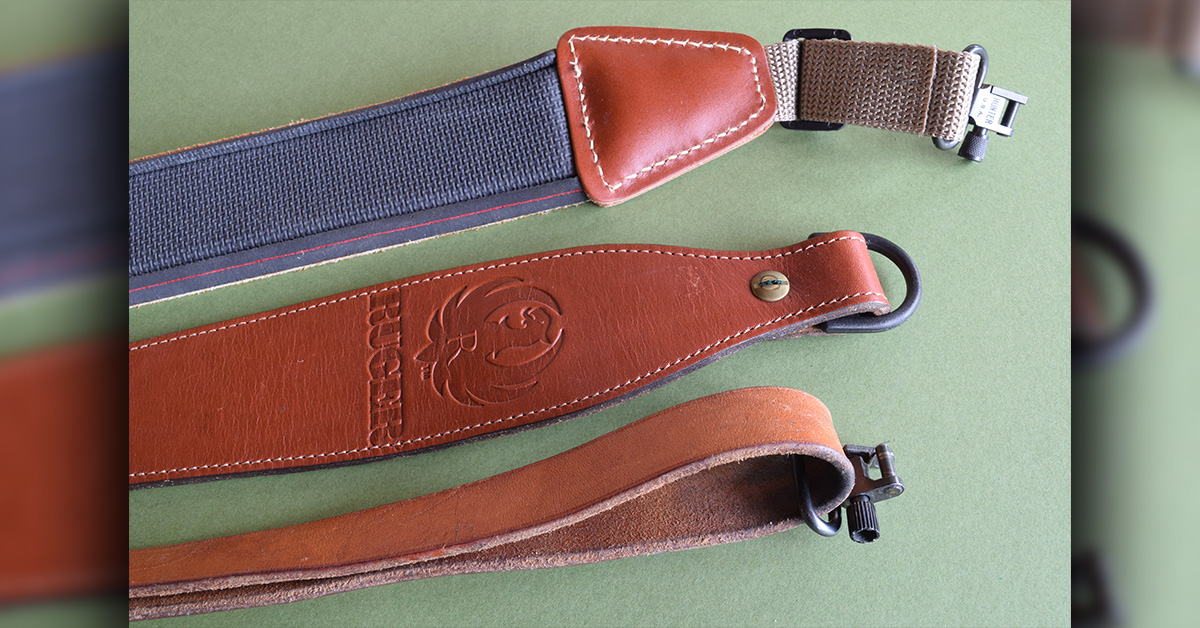
Carrying straps are legion, differing little in basic form. Though straps with broad top ends spread the rifle’s weight on your shoulder, easing that burden on long treks, they have no shooting loop. And the thick pad on some of these straps can get in the way. It cost a friend a poke at a fine buck when his sling flipped over the barrel as he cheeked the rifle. The front of the strap blocked his view just long enough to profit the deer. Embossed manufacturers’ names and images of big game, some in color, are common but useless strap embellishments. I’ve occasionally found the folded swivel attachments insufficient. Rubber lining on the body-side surface of carrying straps helps them stay on your shoulder. Sometimes, though, you’ll want to shed a sling quickly!
Synthetic webbing is upstaging leather on straps and slings. Durable, weatherproof, and quiet, it’s serviceable; however, I prefer flexible inch-wide leather. Its rough side grips clothing lightly but allows me to shift the loop at will. The finished side is a suitable cosmetic match to blued steel and walnut.
A sling can be of one-piece or two-piece design. A shooting sling for a target rifle requires no rear section because there’s no need to carry the rifle on your shoulder. The shooting loop is, in fact, the sling. A wide leather cuff distributes pressure and ensures blood flow during long days on the line. Hunting and military rifles, of course, require a rear attachment, for carry. Some slings on early U.S. infantry rifles had two sections, joined by double brass hooks. A one-piece sling named after gun writer Townsend Whelen eliminates one of the hook pairs; a leather thong serves for adjustment. I’m sweet on the one-piece Latigo sling peddled by Brownells, the gunsmith supply company. After using this sling for nearly five decades, I’ve found none better. One loop setting suits me in prone, sitting, and kneeling positions, but adjustment is easy, via brass buttons that pair central holes along the sling’s length. A ring securing the rear section to the loop is the only other hardware. The Latigo’s design keeps that ring from banging against the rifle.
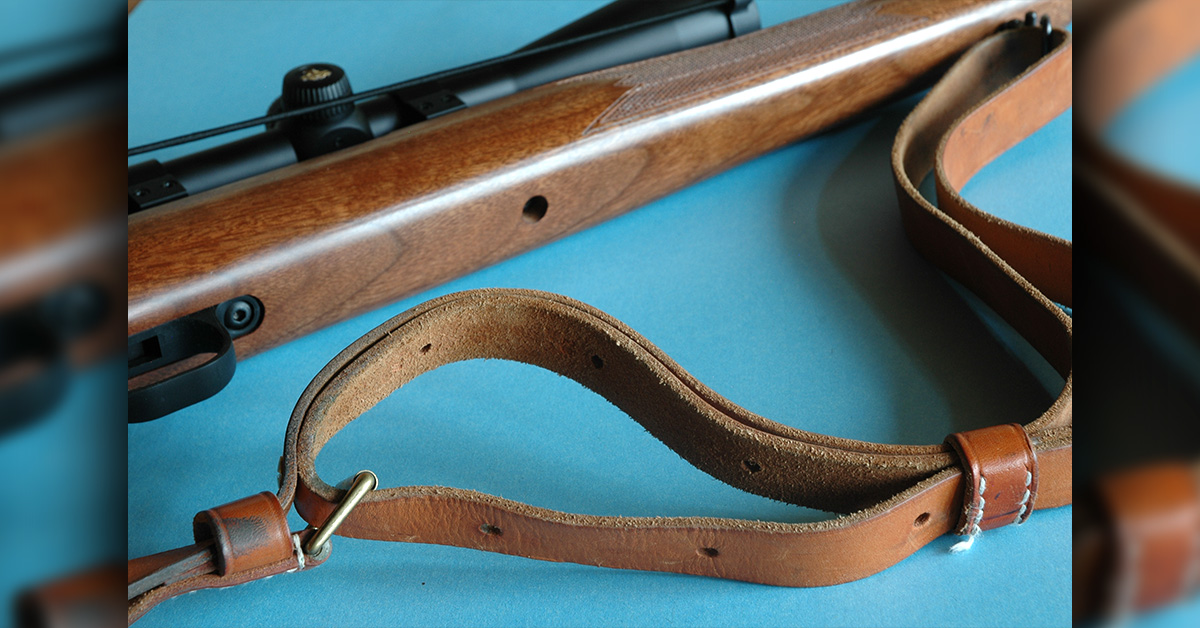
Notable among modern alternatives is the Ching sling, developed for muzzle-down rifle carry — a popular option for carbines. The Ching sling requires a third swivel stud just forward of the guard. Galco, prominent maker of holsters and other leather goods, has a modified version: the Safari Ching Sling. It is split much of its length. A short open loop or cuff, secured by brass buttons, bridges that split. Its position on the sling is easily adjusted. Ditto overall sling length. In use, the Safari Ching Sling accepts your left elbow through the split in the sling.
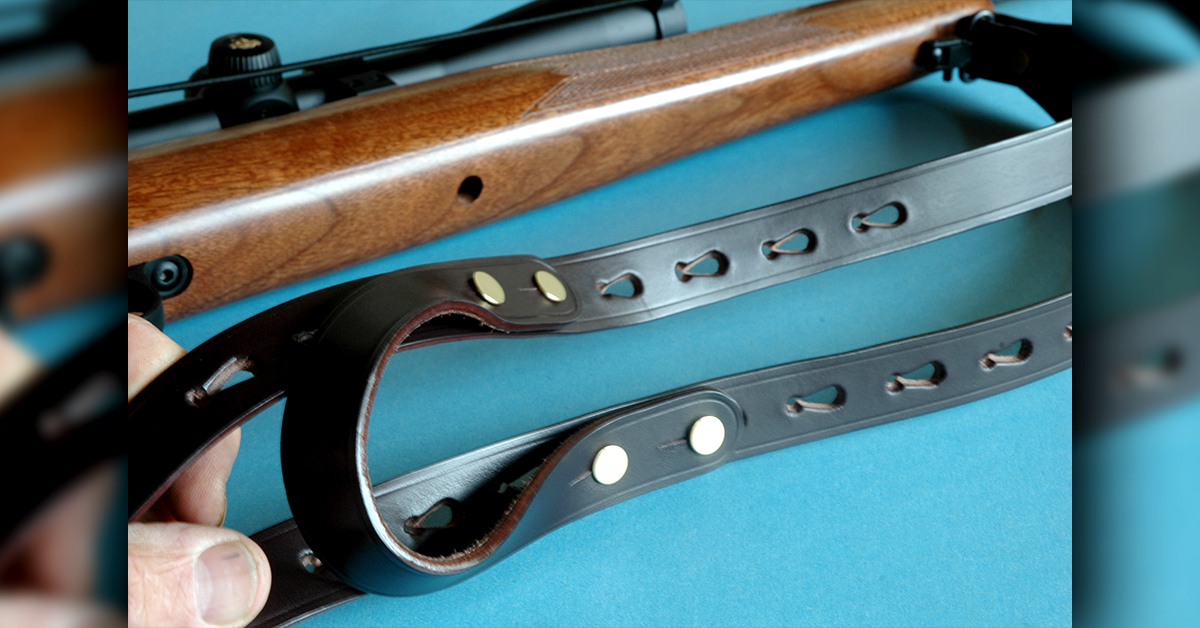
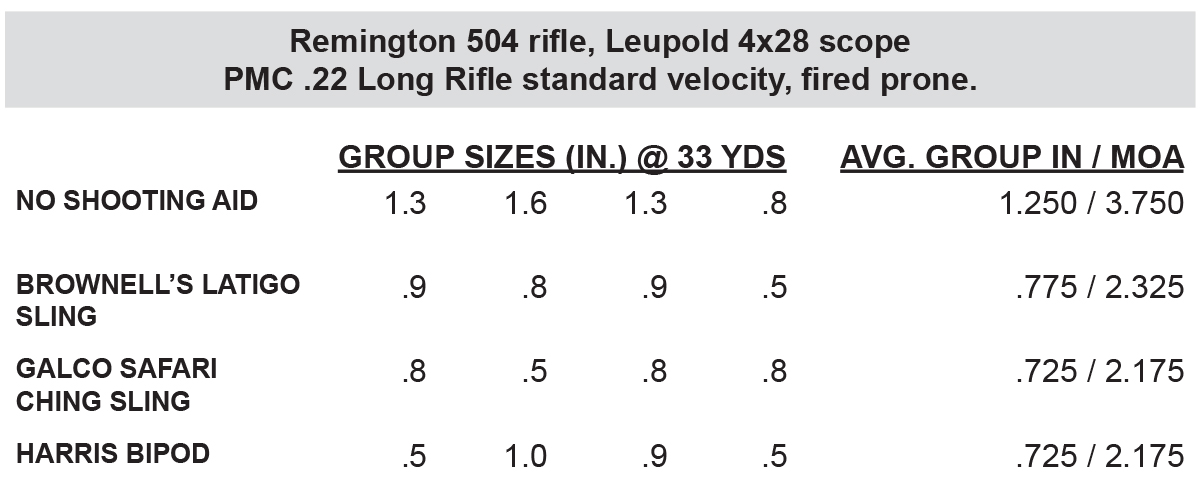
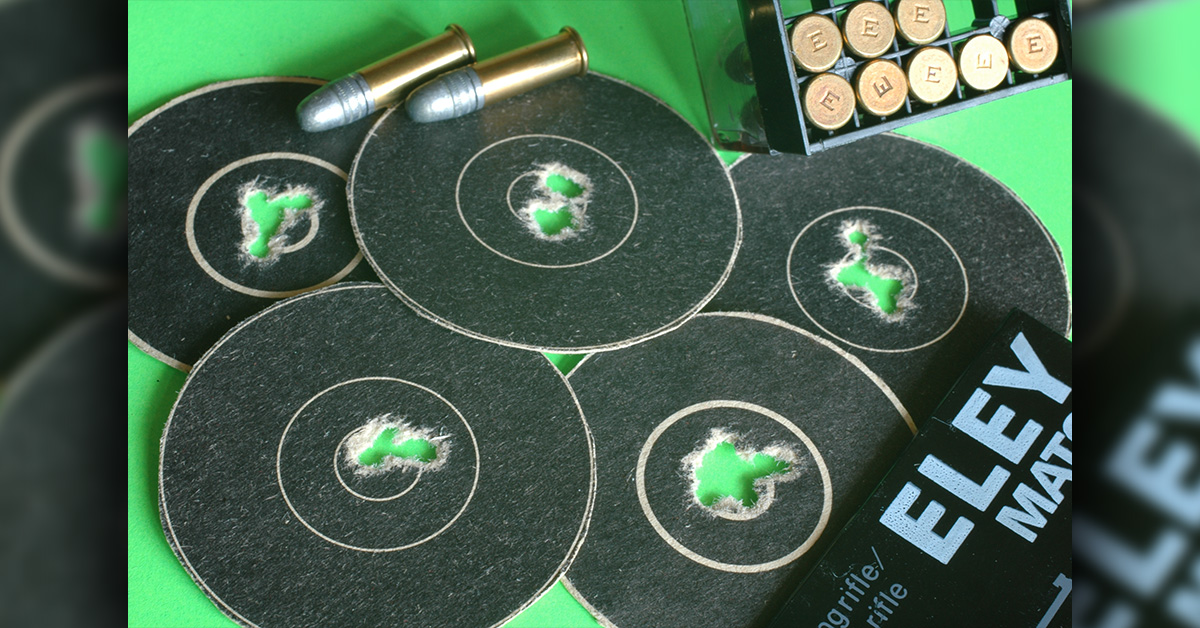
The simplicity, light weight, and fine quality of this sling appealed to me. So, I checked its utility against a Latigo sling and a Harris bipod on a 504 Remington .22 sporter with a 4x Leupold scope. I set a target at 33 yards. Using PMC standard-velocity ammo, I fired four five-shot groups prone, first with no steadying assist, then four groups each with Brownell’s Latigo Sling, Galco’s Safari Ching Sling, and the Harris bipod. I permitted myself one discarded shot per 20-round string.
Without sling or bipod, the rifle was hard to steady. One of the groups measured 1.6 inches, twice the smallest. Two others came in at 1.3. Average: 3.750 minutes of angle. Both slings snugged the groups considerably. Both also reduced variation in group size. The Safari Ching Sling edged the Latigo, 2.175 MOA to the Latigo’s 2.325. Almost identical results.
The bipod delivered the same average as the Galco sling: 2.175 MOA. Oddly enough, the tightest group for each sling and the bipod measured .5 inches. Greatest spreads for all three: .8 to 1.0 inch. Clearly, the slings and bipod helped send bullets to center.
Comparisons of two slings and a bipod: their effect on accuracy with a .22 sporting rifle…
Donning a sling quickly is easy. A couple of tips: Give the loop a half-turn out as you slip your left hand through the loop so it will lie flat against your left wrist when snugged. Flip your arm over it and grab the forend as you settle into position. Practiced, it’s one motion. Closing on an animal, I often have the sling in place but not snugged. The rifle rides in my left hand, angled across my front. Crouching or even elbowing my way those final yards, I’m ready to drop into a low position and tug the leather keeper up the sling. When the rifle’s butt meets my shoulder, the muzzle is nudged forward and the sling comes taut to the front swivel.
Most big game I recall shooting was taken from prone, my preferred position always. I’m as low as the earth permits, my sprawl seizing many times the contact allowed by higher positions. Prone lets me relax onto the rifle as my bones support it. Given a taut sling, my muscles have almost nothing to do. The sight calms quickly, instilling confidence that my bullet will hit the mark. For these reasons and because I’ve been blessed shooting prone in competition, my eye is ever seeking places to belly down. When the best place is behind me, I’ll give up yards to fire from there. Once, after humiliating myself with a missed off-hand shot at 40 steps, I rolled the buck from prone as it paused 265 yards across a draw.
Commonly assumed a position for long pokes across prairie and tundra, prone is versatile. When I could barely see a moose 90 yards off in British Columbia forest, I lay prone and threaded a .300 RCM bullet under the low-sweeping fir boughs. At sunset, after a day trailing Cape buffalo through thickets, my PH and I heard hoof-thunder ahead. I raced to a kopje poking above the bush, snugging the keeper, then flopping prone. The .375 settled as four bulls filed through a slot 90 yards off. The first softnose broke the near shoulder of the biggest; a solid flew for the finish. I’d not have risked a shot from any other position.
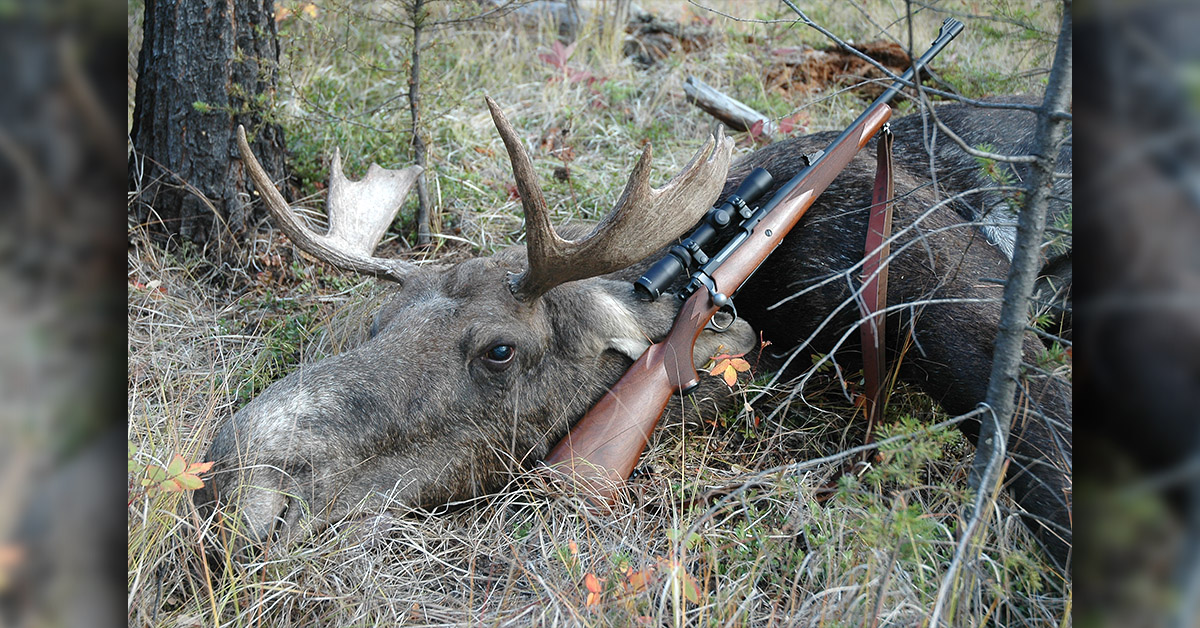
Of course, some places penalize a low rifle. Once, hunting mule deer, I slipped toward a bedded buck from 200 yards. This deer is doomed, I thought smugly as I crawled within 30 steps. But rather than kill the deer, I yielded to hubris and bellied closer. At 14 feet the buck rose. Alas, I was then in the bosom of a small swale, unable to lift my upper torso far enough to catch aim. Desperate, I forced the rifle up and fired. A rock in front of the muzzle exploded, spraying both of us with shards of basalt. The deer left.
In that case, firing from the sit earlier would have been more productive, if not as sporting. Sitting to steady the rifle can bring salvation on a still-hunt. Decades ago, high in Oregon’s Wallowa mountains, a mule deer appeared 250 yards below me. The steep slope and tall rocks between us precluded prone; but from a sit, I could easily aim downhill, and my sightline cleared the boulders. The crosswire in my Lyman 3x settled high on the shoulder. At the .270’s crack the deer collapsed. Hunting in Alaska, I was crossing a boulder field when three Dall’s rams burst from a chimney nearby. I sat and swung my ’03 Springfield with them. They slowed, the .30-06’s bead now on the shoulder crease of the biggest animal. It stumbled at the shot, fell to my second.
Arguably the most useful field position, an open sit puts the rifle above most grass and brush. It makes peace with uneven terrain and requires less ground space than prone. In most places, you can drop to this position more quickly than you can sprawl prone. Fanny on the earth, knees up, heels planted well apart, the trick is to lean forward, bringing the backs of your elbows against the fronts of your knees, flat on flat. Your body becomes a tripod, taut back muscles “locking” the elbow-knee union so joints don’t move. Resting elbows on the knees is bad form, as your back then has nothing to tug against. Your core muscles will then quiver as they try to keep you from falling over backward.
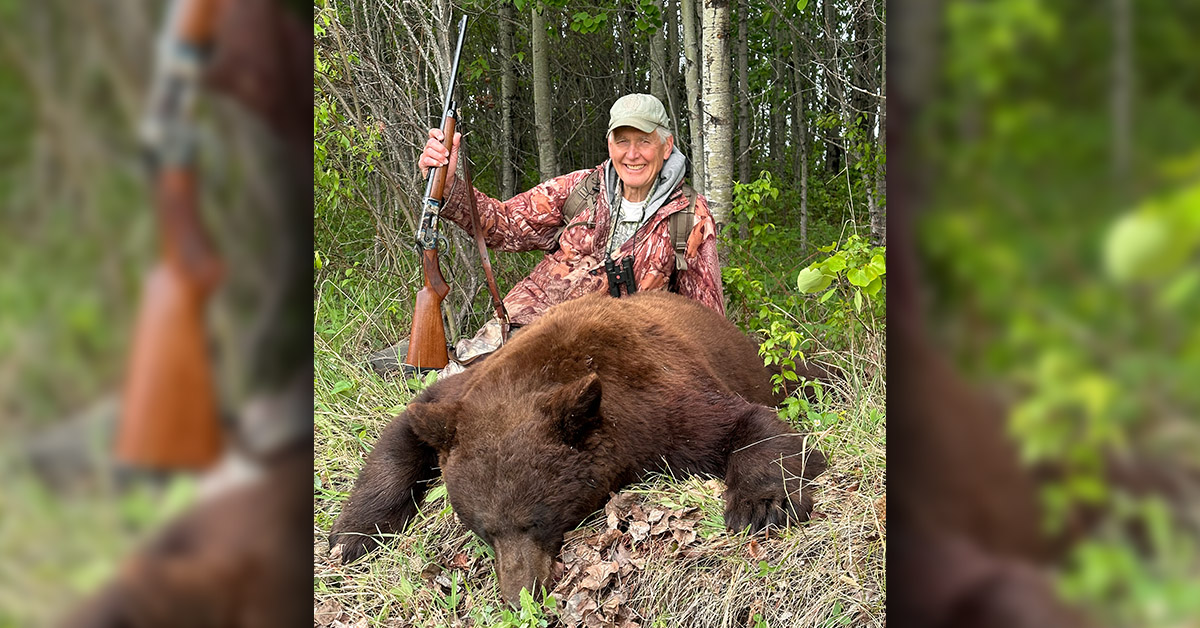
An open sit comes as easily as collapsing in a chair, and about as quickly. You can spin on your tush to follow moving game with your rifle or broaden your base for a steadier hold on uneven ground. It’s by far the best position for shooting across a draw, one slope to another. Slipping into a sling from an open sit is a cinch — though donning it as you drop to earth is good use of time.
Though versatile, that open knees-up position is not as steady on flat ground as the crossed-leg or “Indian” sit popular in the four-position matches of my youth. Legs jack-knifed under, calves on opposite insteps, a steep lean forward puts the backs of your elbows against your knees, lumbar muscles pulling them together. Alas, stretching legs and back to sink as low as needed for a tight crossed-leg position gets harder with age. Practice keeps them pliable. In college, I studied from an Indian sit, bent over books as my 11-pound match rifle tugged protesting muscles into submission.
A crossed-ankle sit is easier and faster to assume. It’s a standard position for the 200-yard stage of the National Match course, where riflemen drop to sitting from standing as targets appear. This rapid-fire event rewards shooters who cross their ankles while awaiting that moment, still more or less upright. The crossed-ankle sit is less useful afield, as your feet are almost joined, not spread to form a triangular base. Firing across slopes, you can tip. And your legs need a lot of space.
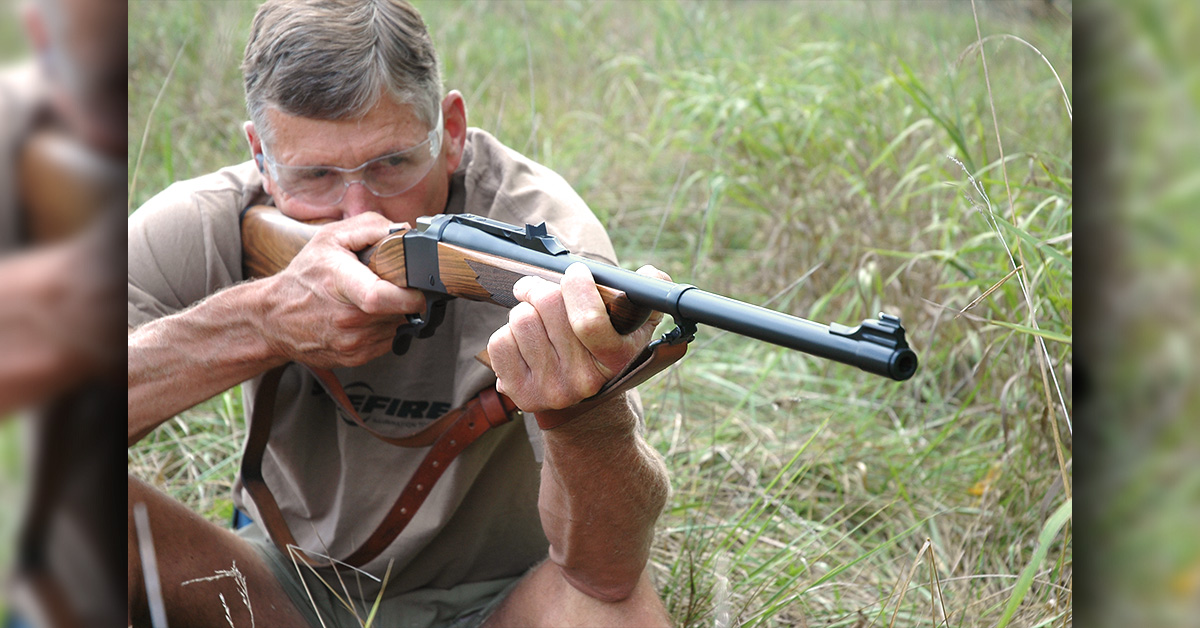
Prone or sitting, knowing where the rifle wants to point matters! To shoot accurately, you must hew to its natural direction of aim. Forcing it onto the target, even a little bit, when your position plants the sight elsewhere is folly. The rifle will wobble more, your body will tire sooner, and the barrel will seek its preferred place as the trigger breaks, sending the bullet in that direction. While re-positioning yourself quickly off-hand is easy, it’s a chore prone and sitting. Once loaded prone, your elbows are anchors. When your bottom hits the sod sitting, you’re committed.
Dropping prone, I know where my left elbow and left hip must be relative to a target so that the sight aligns effortlessly with it. Sitting, I know the rifle will point across my left little toe, so as I collapse into position, that toe determines the arrangement of my body. You’re smart to practice falling into these low positions on a lawn, a small target a few yards off. Standing, focus on that target. As soon as you hit the ground, before you align the sight, close your eyes. Relax as the rifle steadies. Now open your eyes. Is the sight on target? If not, tweak the direction of your body before you bring it to earth.
Sometimes, an offhand shot is all you’ll get. But flopping prone or dropping to a sit, you have the best chance of killing game that tarries a second too long. Because prone or sitting, you can use a sling.