During WW I, they kept Italy mobile. Then they built a two-stroke engine bike. Shotguns followed.
by Wayne van Zwoll
The school near our house was rural, its baseball diamond vacant on weekends. A neighbor knocked early one Saturday. I was 11. He was tall, just out of college, leaning on a cased shotgun. “I need to shoot this. Want to come?” Pie-eyed, open-mouthed, I froze, a silent prop for the screen door. He’d never asked me before. I had never fired a shotgun.
“Yes! Now? The ball field?” I lunged for sneakers, swung the door wide. “Come in! I’m ready!”
He set a soup can on the pitcher’s mound, then at home plate eased a gleaming 12-bore Model 12 from the case. (Rookiest of rookies as a shooter, I’d worn out my bedside Gun Digest.) Fumbling the red shotshell against the lifter, I felt the bolt slide back, then home, snickety-clunk. My forward hand strained to steady the barrel. Boom! The can and pitcher’s mound vanished in an eruption of dust. Recoil backed me up, but I kept my feet. My grin wouldn’t leave.
Decades and a spate of shotguns later, I tossed a Benelli Montefeltro to cheek. The grin returned. This gun was much lighter, feathery in hand. Yet its vivacity cost nothing in civility or balance. It smoked a double as if the first bird had undone itself.
An Uncommon Start
In 1911 in Pesaro, Italy, the widowed Theresa Boni Benelli invested family money in a garage to secure a future for her six sons: Giuseppe, Giovanni, Filippo, Francesco, Domenico, Antonio (“Tonino”). With six additional workers, they grew a business repairing bicycles and motorcycles. During WW I, they helped keep Italy’s army mobile. But to Theresa the shop was just a start. She sent Giuseppi and Giovanni to study engineering in Switzerland. After armistice, the Benelli Garage produced an engine in-house. The 75cc two-stroke fit a bicycle frame. In 1921, the brothers built and sold their own motorcycle, with a 98cc engine. Five years later, a 175cc four-stroke in a four-speed bike earned international acclaim. Tonino, the youngest Benelli, won races on tuned versions. Giuseppe’s engineering talent yielded a brilliant re-design in 1927. The brothers followed with 250- and 500cc bikes. A super-charged four-cylinder was shelved when WW II re-imposed a military focus.
Benelli’s payroll had grown to 800 when Allied bombs and Nazi depredations left the factory in ruins. Gamely, the men salvaged what tooling and parts they could. On shredded battlefields they picked up nearly 1,000 motorcycles, most English, to revive for civilian use…
Wait a minute! Doesn’t Benelli make firearms? Is this the same company?
It does and it is. But the hunting and shooting industry boasts several brands that took sharp turns in their adolescence before making products that came to define them.
Other Winding Histories
SIG, for example. In 1853 near the Rhine Falls in Switzerland, Friedrich im Hoff, Heinrich Moser, and Conrad Neher started building wagons. A decade later, they earned a Swiss Army contract for 30,000 Prelaz-Burnand rifles. The Swiss Wagon Factory became Schweizerische Industrie-Gesellschaft, SIG the merciful acronym. By then, German gun-maker J.P. Sauer & Son was established in Suhl. Iron-rich earth, then The Thirty Years War fueled firearms production there. A fire in 1753 leveled 150 shops engaged in gun-making and charred records that might have confirmed Sauer’s earlier genesis. Arson in the wake of WW II forced another recovery. Then a pistol project joined SIG and J.P. Sauer & Sons. The SIGARMs brand dates to 1985; it appeared on U.S.-built pistols in ’92. The SIG Sauer moniker followed in 2007.
Arthur W. Savage, born in 1857 in Kingston, Jamaica, had little in common with prominent gun designers of his time. Son of a British Special Commissioner, he got a fine education in England and the U.S. In Australia, after university, he bought a ranch, married, and began siring eight children. He proved an able stockman. Eleven years on, sale of his cattle empire brought him a Jamaican coffee plantation, an enterprise he tended while indulging his interests in explosives and heavy machinery. He and a colleague designed the Savage-Halpine torpedo. When the U.S. Navy demurred, they sold it to Brazil. Then Savage invented an ingenious repeating rifle.
Sailing from Germany in 1891, Frederick Leupold, 16, was sick in steerage. But by ’98 he joined other bold men climbing Chilkoot Pass for Klondike gold. Finding only hardship, he and Adam Voelpel returned to Massachusetts. C.L. Berger & Sons, a maker of survey instruments, took the engineer back at $12 a week. But soon, Frederick and Adam moved west, setting up their own shop in Portland, Oregon. In 1914, inventor J.C. Stevens joined them. After Voelpel’s death a decade on, the company became Leupold & Stevens. In 1944, an errant cut in surgery doomed Frederick Leupold. Son Marcus shifted the company focus. His Merchant Marine service inspired a solution to the problem of fogging in riflescopes — replace air in the tube with dry nitrogen. In 1947, Leupold & Stevens built the first fog-proof scope in the U.S.
Settling on a Path
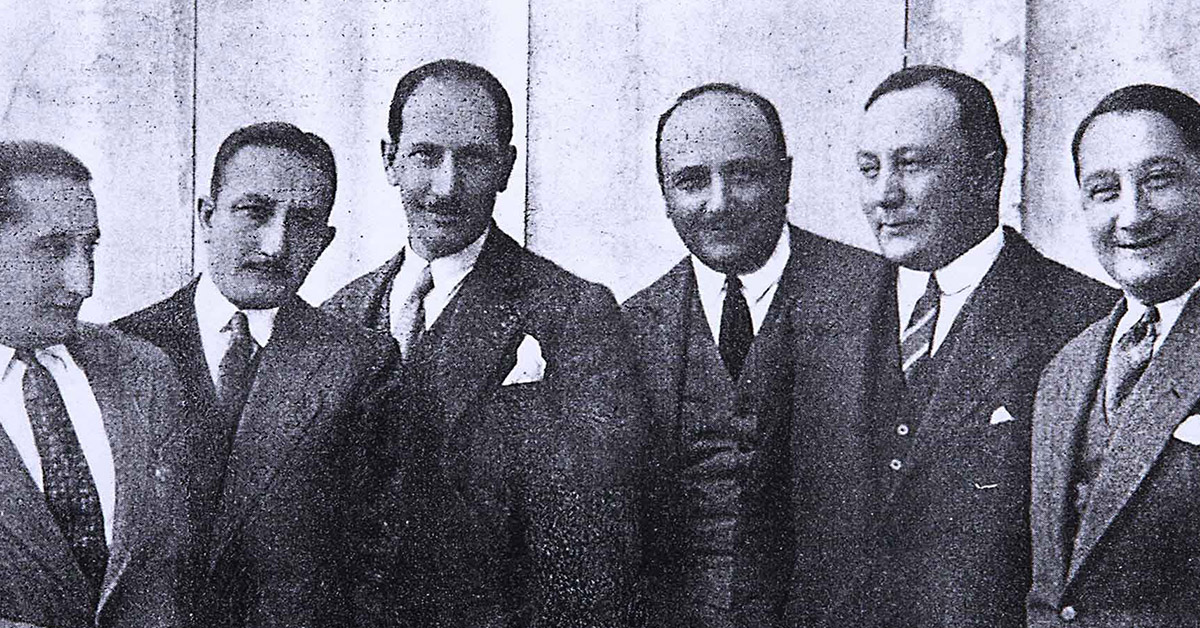
Firearms manufacture had occurred to the Benelli brothers before WW II. Keen bird hunters, they were even then convinced the future of sporting shotguns lay in autoloaders. But production plans didn’t take shape until 1967, when the family established Benelli Armi S.p.A in Urbino, Marche, Italy. That year, too, bright Bologna inventor Bruno Civolani designed an inertia-driven action. Remarkably simple, it was also reliable and quick — five shots per second if your finger could keep up! Civolani’s mechanism would become Benelli’s Inertia Driven System.
Recoil had been and would be used in other actions. A blow-back design works for low-pressure cartridges like the .22 rimfire and .380 ACP. Spring pressure and the bolt’s mass seal the breech. After the pressure drops, the bolt retracts from the stationary barrel to eject the case and on return chamber another cartridge. A short-recoil action, useful in more powerful pistols like the 1911 and Glock, was also applied to the “Double Automatic” shotgun developed by Val Browning. The barrel is not fixed. It and the bolt move rearward together a short distance then unlock, a spring returning the barrel to its original position while the bolt continues its eject-and-feed cycle. Long-recoil mechanisms keep barrel and bolt joined to the rear of the bolt’s travel. After a brief pause for ejection, the bolt follows the barrel forward to feed it. Browning’s Auto 5 was among the first shotguns to feature this design.
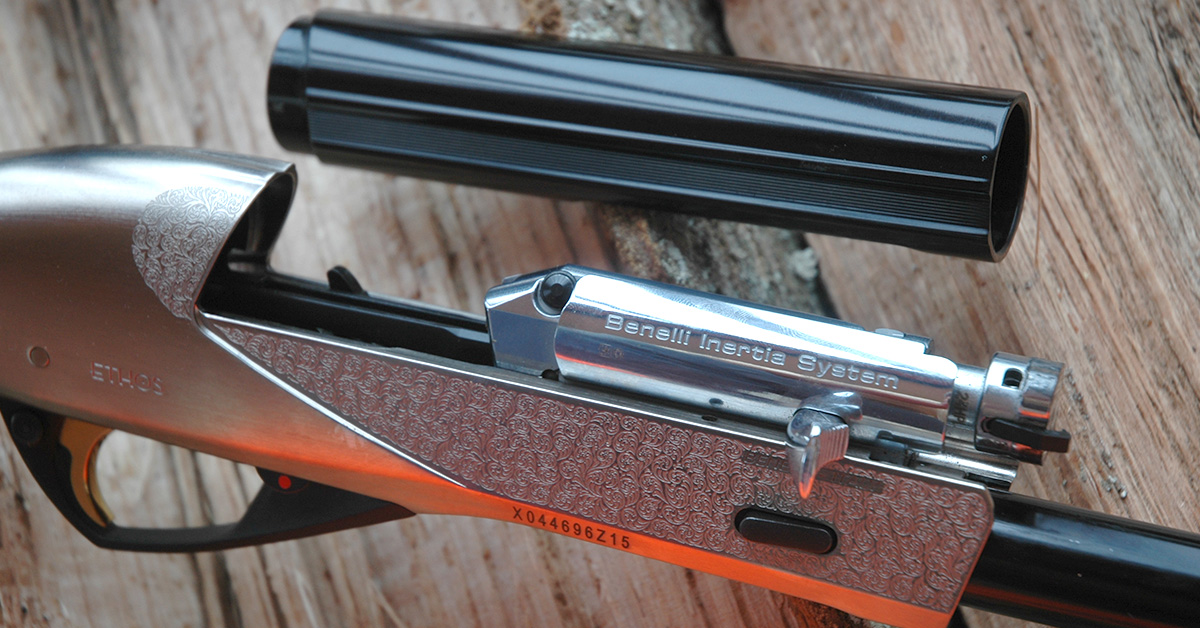
In Benelli’s Inertia System the bolt body’s inertia keeps it briefly stationary as recoil moves the rest of the gun (including its fixed barrel) rearward. This delay compresses a spring between the bolt and its separate rotating head. At full compression, the spring drives the bolt rearward into an eject-feed cycle. Comprising just three main components, Benelli’s design is simplest. Per other recoil-based mechanisms, it avoids the fouling of autoloaders that bleed high-pressure gas to cycle the action.
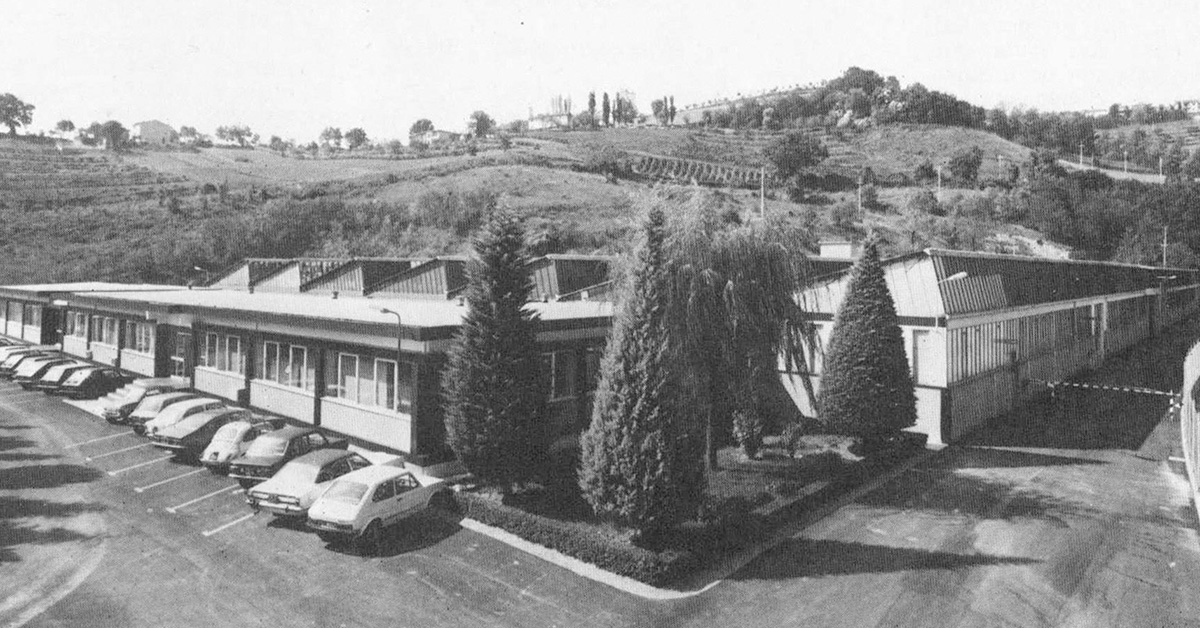
Benelli’s Urbino factory went up fast. By the end of 1968, its first full year of production, it had shipped 2,000 Model 121 shotguns, all 12-bores. A 20-gauge, the SL 201, appeared in 1973. A couple of years later Paolo Benelli founded Benelli Iberica in Spain.

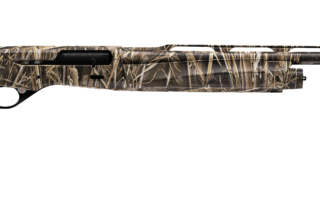
The M1Super 90 shotgun arrived in 1984 with a magazine cut-off and shims forward of the wrist to adjust stock pitch. Chambered for 3-inch shells, it soon won favor in waterfowl blinds. In 1986, Benelli followed it with a left-hand version. About then, it introduced the first of a “Raffaelo” family of guns, which freed the bolt’s sleeve from the barrel. In 1991, the Super Black Eagle was the first autoloader stateside to fire 3 ½-inch shells. An instant hit with goose hunters, it appealed to many others and remains one of the most successful of Benelli’s game guns.
Within months after opening a Benelli USA office in Accokeek, Maryland, in 1997, the company announced a modular, combat-style M4 shotgun. This 8 ½-pound 12-bore is gas-driven, per military spec, and fires 2 ¾- and 3-inch shells interchangeably. The first shipment went to the U.S. Marines in 1999. All our armed services have had access to the M4.
Benelli manufactured its first hunting rifle in 2002. The autoloading R1 came in .30-06 and .300 and .338 Win. Mag. Only one other auto stateside matched its punch.
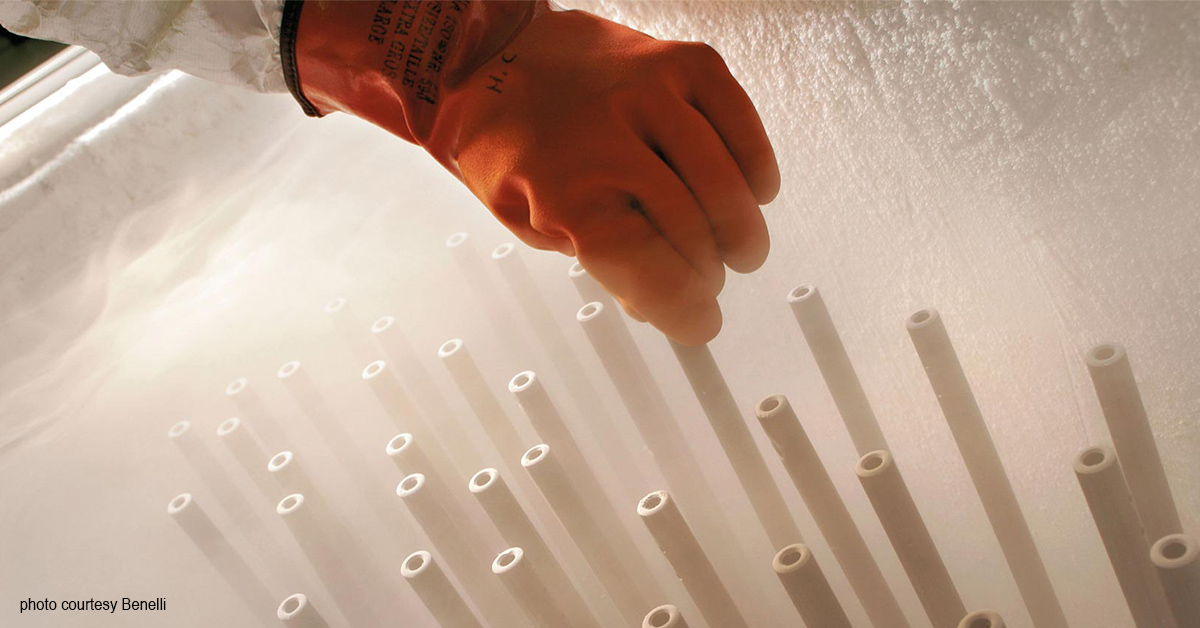
A year earlier, Benelli had begun experimenting with cryogenic treatment of its barrels and chokes — “relaxing” hammer-forged steel by cooling it to extremely low temperatures. Each shot expands a barrel radially and in length. Pete Paulin of Cryo Accurizing told me, “The cryogenic process keeps dimensional changes consistent by easing stresses at the molecular level.” Done slowly to prevent cracking, it brings steel to -300 degrees F. (Absolute zero, or 0 Kelvin, is -457 F). Used since the 1940s in other industries, cryo treatment of rifle barrels dates to Paulin’s work in 1992. Barrel-makers assure me it’s not voodoo. Improvement in rifle accuracy ranges from minor to significant. In shotguns, cryo is most helpful if you’re not already missing easy birds.
A Shotgun Legacy Grows
In 2007, Benelli celebrated 40 years of shotgun manufacture, claiming a period total of 2 million firearms sales. It also acquired all rights to the Franchi brand. Two years later, it unveiled a .223 auto rifle for law enforcement and a Vinci modular shotgun. The Raffaelo Power Bore, an update of the ’87 model, reduced incidental bolt retraction and let the shooter complete lock-up with a flick of the hand.
By this time, Benelli’s commitment to southpaws had made its selection of left-hand 12- and 20-bore autos the largest in the world. Also notable: the company’s focus on trimming weight. Its lightest 12-bore scales a mere 5.7 pounds, its lightest 20 just 5.1.
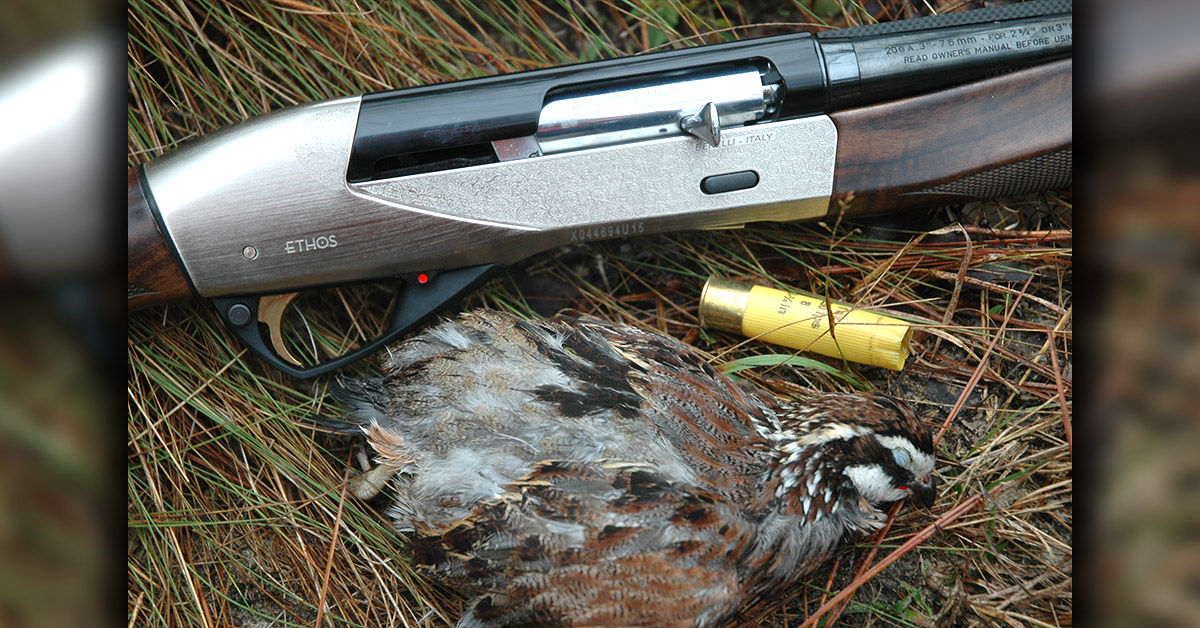
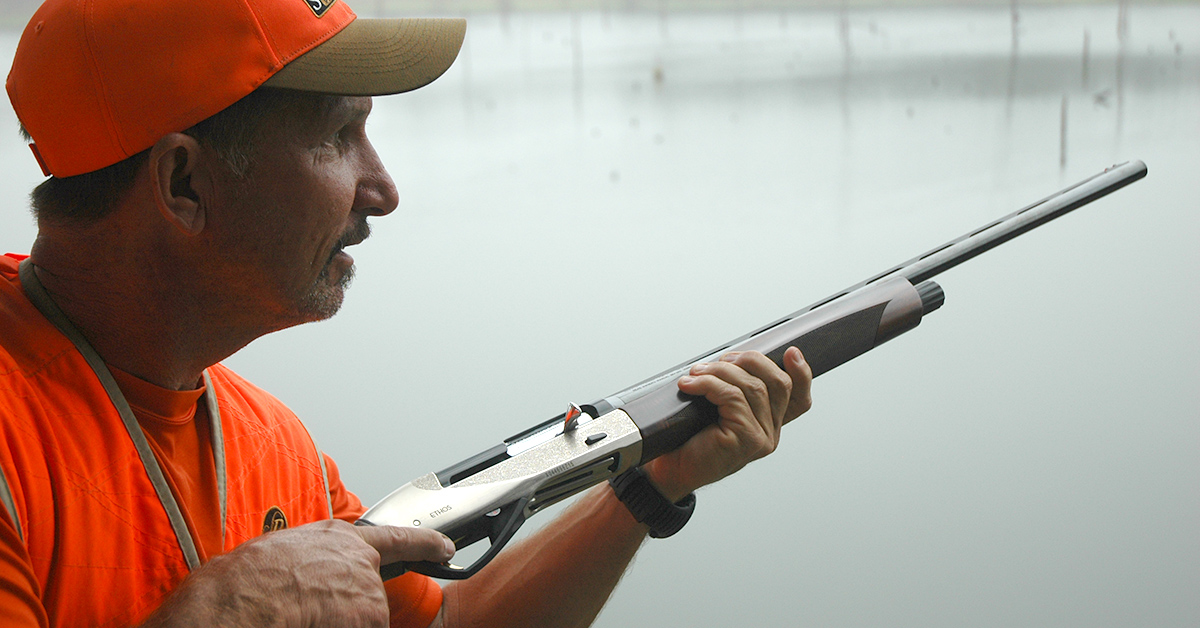
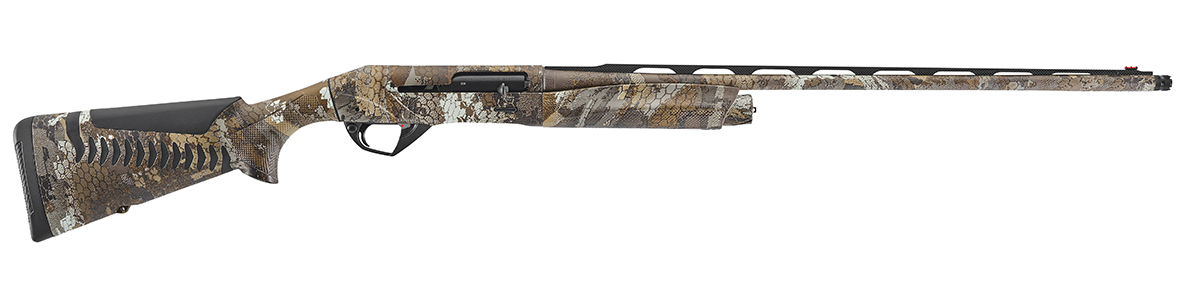
Shortly after the 2014 debut of Benelli’s slim, lightweight Ethos, I carried one on a Georgia quail hunt. Bobwhites routinely shame me; but the Ethos, lithe as a Montefeltro, did its best to salvage my ego. Fresh details and a racy profile appealed to upland gunners. A year later the company unveiled its Model 828 over/under shotgun, developed by ex-Managing Director Luigi Moretti. Then in 2017, Benelli began expanding its Armi factory. At the same, the Super Black Eagle 3 appeared with a beveled loading port and two-piece latch that makes no-look shell insertion easy. Its CombTech cheek pad was a logical follow-on to the ComfortTech stock of 2005, whose shock-absorbing chevrons bleed recoil gradually, front to back, A 20-gauge SBE 3 would arrive in 2022, a 28-bore a year later, both with 3-inch chambers.
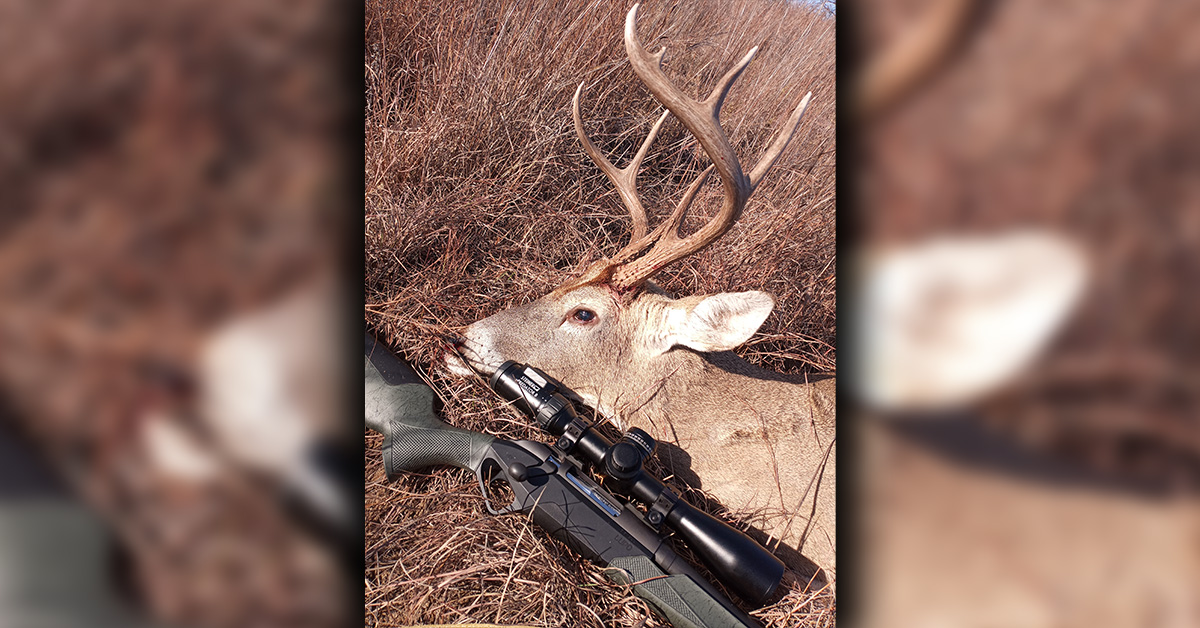
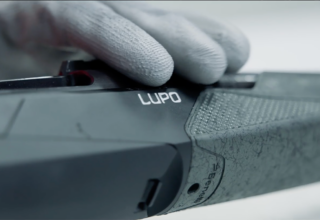
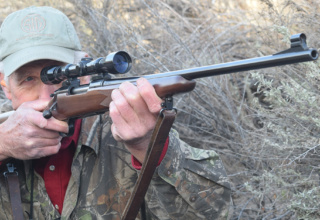
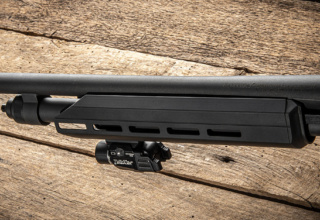
In 2020, Benelli entered a crowded bolt-rifle market with the distinctly angular Lupo. It’s an easy rifle to shoot, smooth-cycling, and accurate. Quick to point, it tumbled a whitetail I surprised still-hunting. On the Lupo’s heels came Benelli’s rugged M2 and Nova Speed auto and pump shotguns for “dynamic” smoothbore competition. In 2022, a re-configured Montefeltro featured a beveled port and trimmer profile.
Latest in Benelli’s product line at this writing: the Advanced Impact barrel/choke system, trotted out in 2024. Cryo-treated choke and matching barrel boast new internal profiles for “faster, harder-hitting and denser patterns” with lead and steel. Neither A.I. barrel nor choke can be interchanged with traditional components.
For a gun company launched a decade after Sputnik, Benelli has made fast strides indeed!
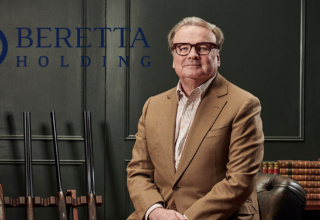
Footnote: Beretta acquired Benelli in 1983. At this writing, besides Benelli and Franchi, Beretta Holding owns Beretta USA, Sako, Tikka, Stoeger, Uberti, Chapuis, Burris, Steiner, and Swiss Defence.
What About the Bikes?
Ramping up motorcycle production after WW II, the Benelli brothers split. Most worked to grow the Pesaro company; Giuseppe left in 1946 to establish BBC Automobili with Giuseppi Beretta and Luigi Castelbarco. Then he started MotoBi. By the late ’60s, a tsunami of technically advanced Japanese models ate into Italy’s market share. In 1989, Benelli’s sale to tycoon Giancarlo Selci spared it bankruptcy. In ’95, the Merloni Group of Fabriano acquired a majority stake, pouring more coal to Benelli’s line with a 900cc Tornado. But in 2005, the brand sold again. China’s Qianjiang Motor Group served Geely Holding Group. Benelli joined a manufacturing colossus comprising 14,000 people “in a factory as big as a city.” Annual production: 1.2 million vehicles and 2 million engines.
In 2017, ideas and capital from Italy and China re-launched Pesaro-based Benelli in its birthplace, with two motorcycles. Other models soon joined the TRK and Leoncino 500.